
By:
Gilda Rodriguez dela Cruz
Market
Refers to the consumers
and customers for the
goods and services
produced by an
enterprise.
Also refers to the place
or location where
exchange og goods and
services take place
Marketing
All the activities involved
in providing customer
satisfaction by facilitating
the exchange of goods and
services from where they
are produced to the
ultimate user.
Produce goods or provide
services according to the
preferences of buyers
making up your market.
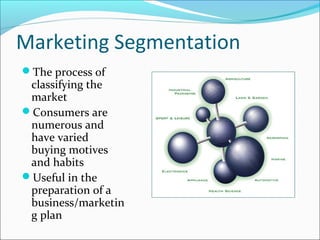
Marketing Segmentation
The process of
classifying the
market
Consumers are
numerous and
have varied
buying motives
and habits
Useful in the
preparation of a
business/marketin
g plan
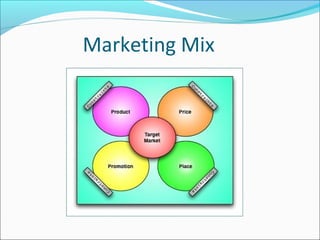
Marketing Mix
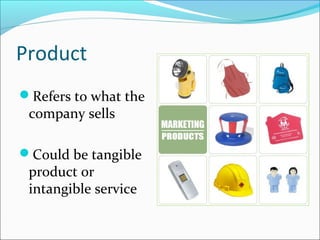
Product
Refers to what the
company sells
Could be tangible
product or
intangible service
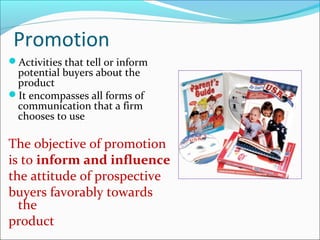
Promotion
Activities that tell or inform
potential buyers about the
product
It encompasses all forms of
communication that a firm
chooses to use
The objective of promotion
is to inform and influence
the attitude of prospective
buyers favorably towards
the
product
Promotional activities become necessary
when:
Competing products in
your target market are
alike
Buyer’s awareness of your
product and its features
are minimal
Products to be sold are
on self service or mail
order basis
5 forms of Promotion:
Personal selling
Advertising
Sales promotion
Point of purchase/product
display
Publicity
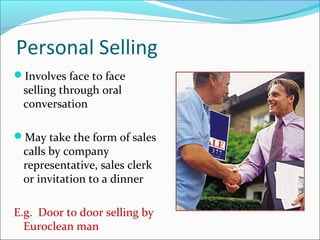
Personal Selling
Involves face to face
selling through oral
conversation
May take the form of sales
calls by company
representative, sales clerk
or invitation to a dinner
E.g. Door to door selling by
Euroclean man
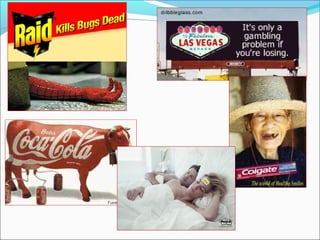
Advertising
Any paid form of
presentation and
promotion of ideas, goods
or services by an
identified sponsor
E.g.
- Tri media (print, radio
and television)
Sales Promotion
Continually creates and applies
reinforcing materials and
techniques to increase the
affectivity of salesmen, distributors
and dealers to sell the product
E.g.
Wrappers of the product as an
entry to a raffle, Free samples, Buy
one take one offers, Money refund
offers, Discounts, Demonstrations,
Taste tests
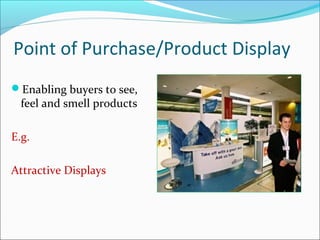
Point of Purchase/Product Display
Enabling buyers to see,
feel and smell products
E.g.
Attractive Displays
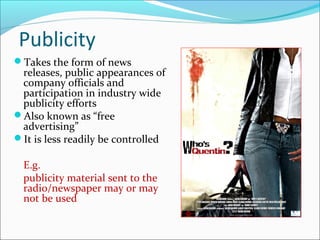
Publicity
Takes the form of news
releases, public appearances of
company officials and
participation in industry wide
publicity efforts
Also known as “free
advertising”
It is less readily be controlled
E.g.
publicity material sent to the
radio/newspaper may or may
not be used
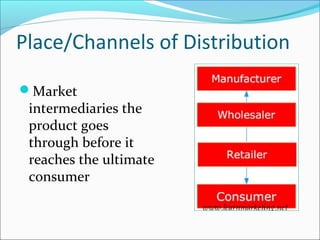
Place/Channels of Distribution
Market
intermediaries the
product goes
through before it
reaches the ultimate
consumer
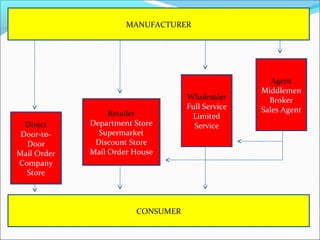
MANUFACTURER
Direct
Door-to-
Door
Mail Order
Company
Store
Retailer
Department Store
Supermarket
Discount Store
Mail Order House
Wholesaler
Full Service
Limited
Service
Agent
Middlemen
Broker
Sales Agent
CONSUMER
Price
Value placed on
goods and services
offered to the public
Factors that affect pricing decisions:
Cost of making the product
Marketing and
administrative costs
Prices of competitors
Ability of target customers
to pay
Supply and demand
situation
Image of the company
PRICING PRODUCTS
Factors to consider
when setting prices:
1. Internal factors
(marketing
objectives,
marketing mix
strategy, costs and
organization)
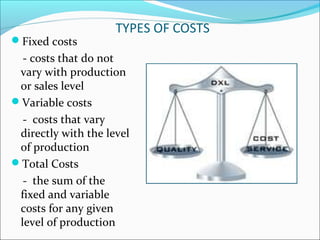
TYPES OF COSTS
Fixed costs
- costs that do not
vary with production
or sales level
Variable costs
- costs that vary
directly with the level
of production
Total Costs
- the sum of the
fixed and variable
costs for any given
level of production
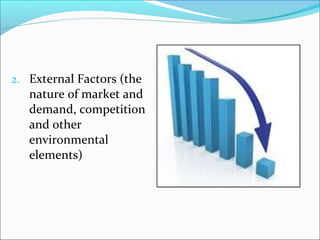
2. External Factors (the
nature of market and
demand, competition
and other
environmental
elements)
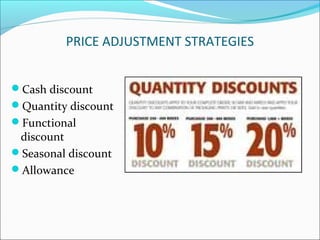
PRICE ADJUSTMENT STRATEGIES
Cash discount
Quantity discount
Functional
discount
Seasonal discount
Allowance

Basic Marketing Concepts

  • 1.
  • 2.
    Market Refers to theconsumers and customers for the goods and services produced by an enterprise. Also refers to the place or location where exchange og goods and services take place
  • 3.
    Marketing All the activitiesinvolved in providing customer satisfaction by facilitating the exchange of goods and services from where they are produced to the ultimate user. Produce goods or provide services according to the preferences of buyers making up your market.
  • 4.
    Marketing Segmentation The processof classifying the market Consumers are numerous and have varied buying motives and habits Useful in the preparation of a business/marketin g plan
  • 5.
  • 6.
    Product Refers to whatthe company sells Could be tangible product or intangible service
  • 7.
    Promotion Activities that tellor inform potential buyers about the product It encompasses all forms of communication that a firm chooses to use The objective of promotion is to inform and influence the attitude of prospective buyers favorably towards the product
  • 8.
    Promotional activities becomenecessary when: Competing products in your target market are alike Buyer’s awareness of your product and its features are minimal Products to be sold are on self service or mail order basis
  • 9.
    5 forms ofPromotion: Personal selling Advertising Sales promotion Point of purchase/product display Publicity
  • 10.
    Personal Selling Involves faceto face selling through oral conversation May take the form of sales calls by company representative, sales clerk or invitation to a dinner E.g. Door to door selling by Euroclean man
  • 11.
    Advertising Any paid formof presentation and promotion of ideas, goods or services by an identified sponsor E.g. - Tri media (print, radio and television)
  • 14.
    Sales Promotion Continually createsand applies reinforcing materials and techniques to increase the affectivity of salesmen, distributors and dealers to sell the product E.g. Wrappers of the product as an entry to a raffle, Free samples, Buy one take one offers, Money refund offers, Discounts, Demonstrations, Taste tests
  • 15.
    Point of Purchase/ProductDisplay Enabling buyers to see, feel and smell products E.g. Attractive Displays
  • 16.
    Publicity Takes the formof news releases, public appearances of company officials and participation in industry wide publicity efforts Also known as “free advertising” It is less readily be controlled E.g. publicity material sent to the radio/newspaper may or may not be used
  • 17.
    Place/Channels of Distribution Market intermediariesthe product goes through before it reaches the ultimate consumer
  • 18.
    MANUFACTURER Direct Door-to- Door Mail Order Company Store Retailer Department Store Supermarket DiscountStore Mail Order House Wholesaler Full Service Limited Service Agent Middlemen Broker Sales Agent CONSUMER
  • 19.
    Price Value placed on goodsand services offered to the public
  • 20.
    Factors that affectpricing decisions: Cost of making the product Marketing and administrative costs Prices of competitors Ability of target customers to pay Supply and demand situation Image of the company
  • 21.
    PRICING PRODUCTS Factors toconsider when setting prices: 1. Internal factors (marketing objectives, marketing mix strategy, costs and organization)
  • 22.
    TYPES OF COSTS Fixedcosts - costs that do not vary with production or sales level Variable costs - costs that vary directly with the level of production Total Costs - the sum of the fixed and variable costs for any given level of production
  • 23.
    2. External Factors(the nature of market and demand, competition and other environmental elements)
  • 24.
    PRICE ADJUSTMENT STRATEGIES Cashdiscount Quantity discount Functional discount Seasonal discount Allowance