Event Marketing
BREAKING IT DOWN
2 KINDS OF “EVENT MARKETING”:
 Promoting your event
to maximize attendance or revenue
(event planner’s perspective)
 Using events as a tool
for promoting your brand or product
enabling 2-way connection with a target audience
(sponsor’s perspective)
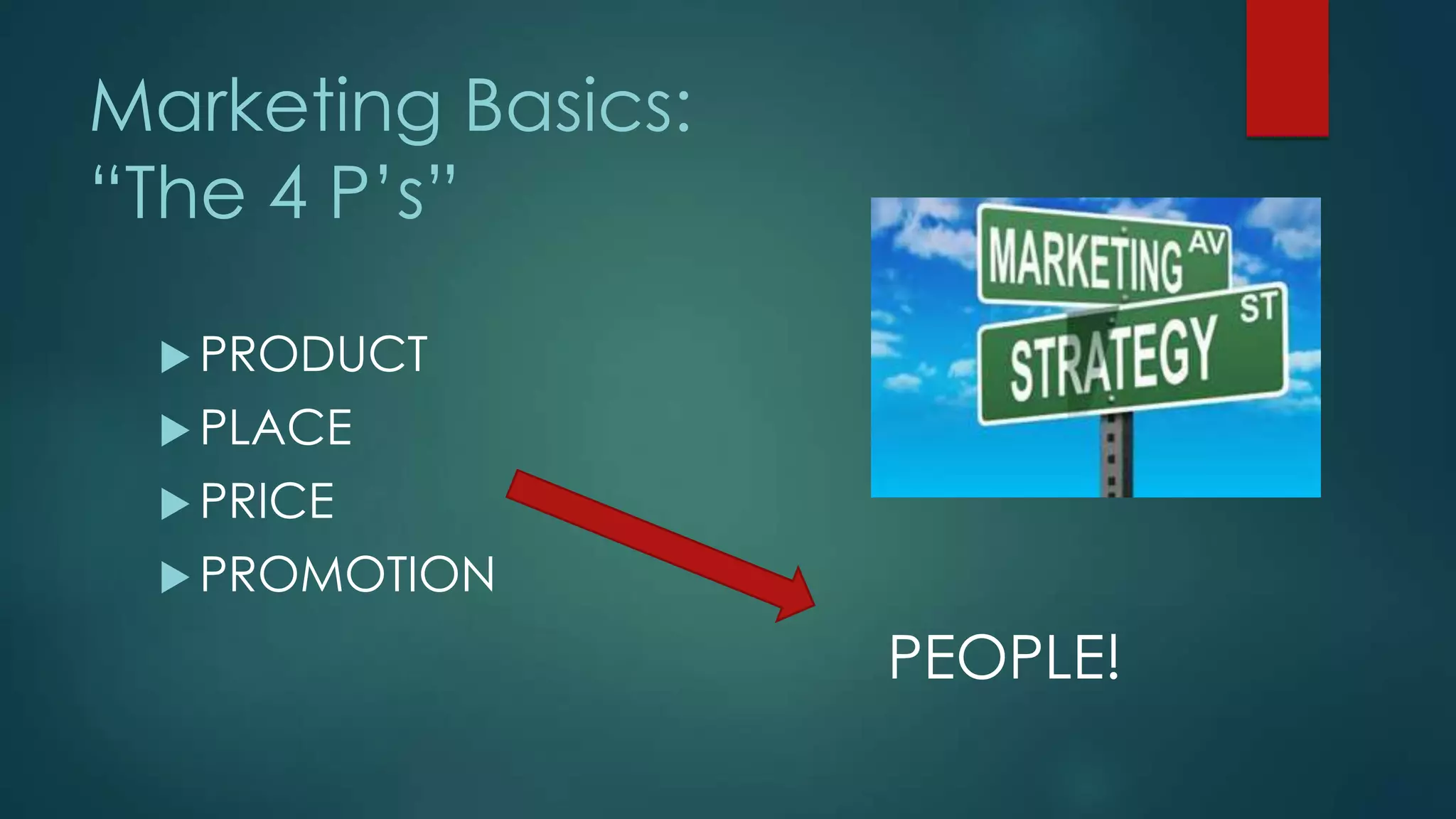
Marketing Basics:
“The 4 P’s”
 PRODUCT
 PLACE
 PRICE
 PROMOTION
PEOPLE!
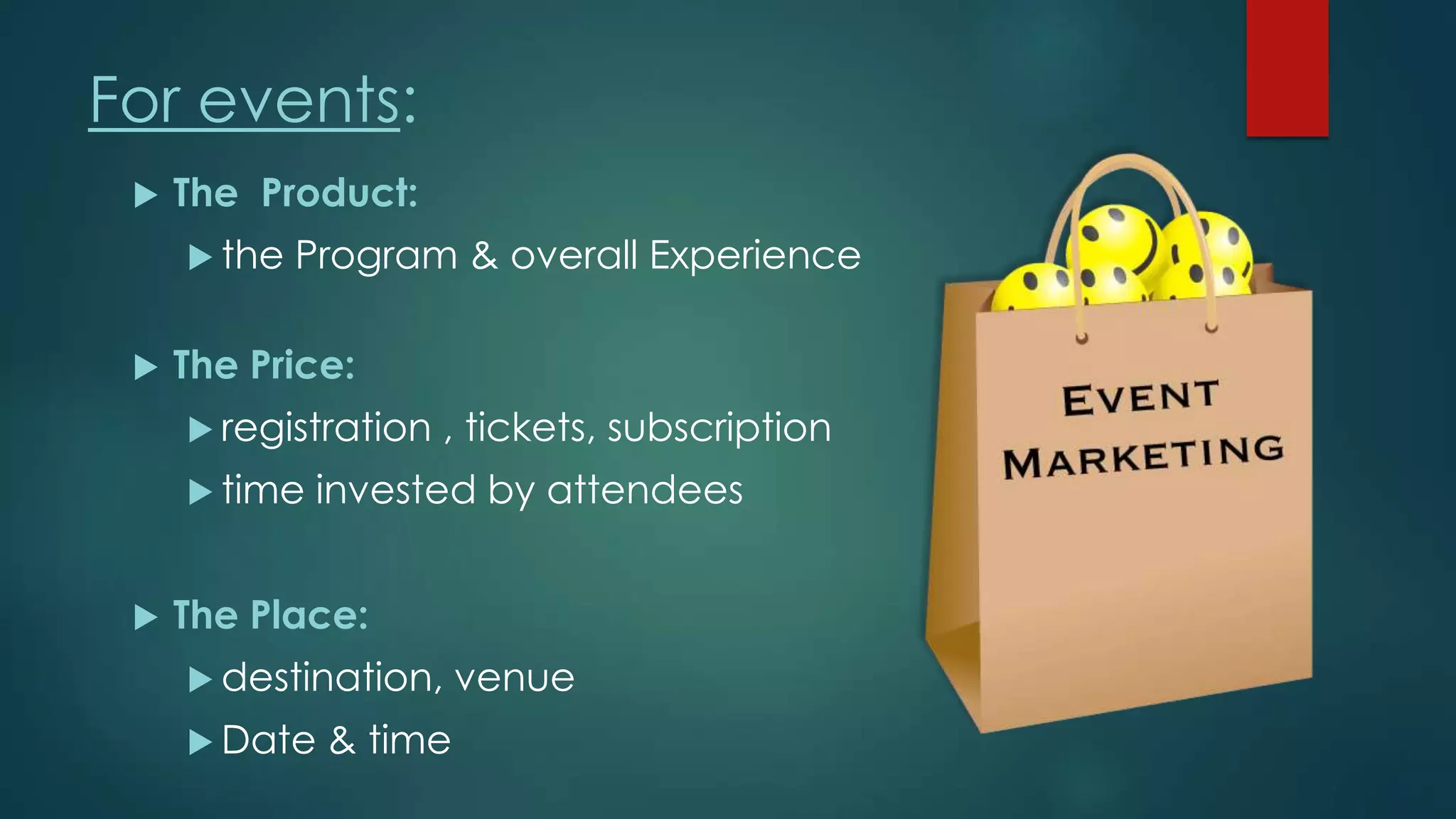
For events:
 The Product:
 the Program & overall Experience
 The Price:
 registration , tickets, subscription
 time invested by attendees
 The Place:
 destination, venue
 Date & time
What’s the difference between
“Marketing” & “Advertising?
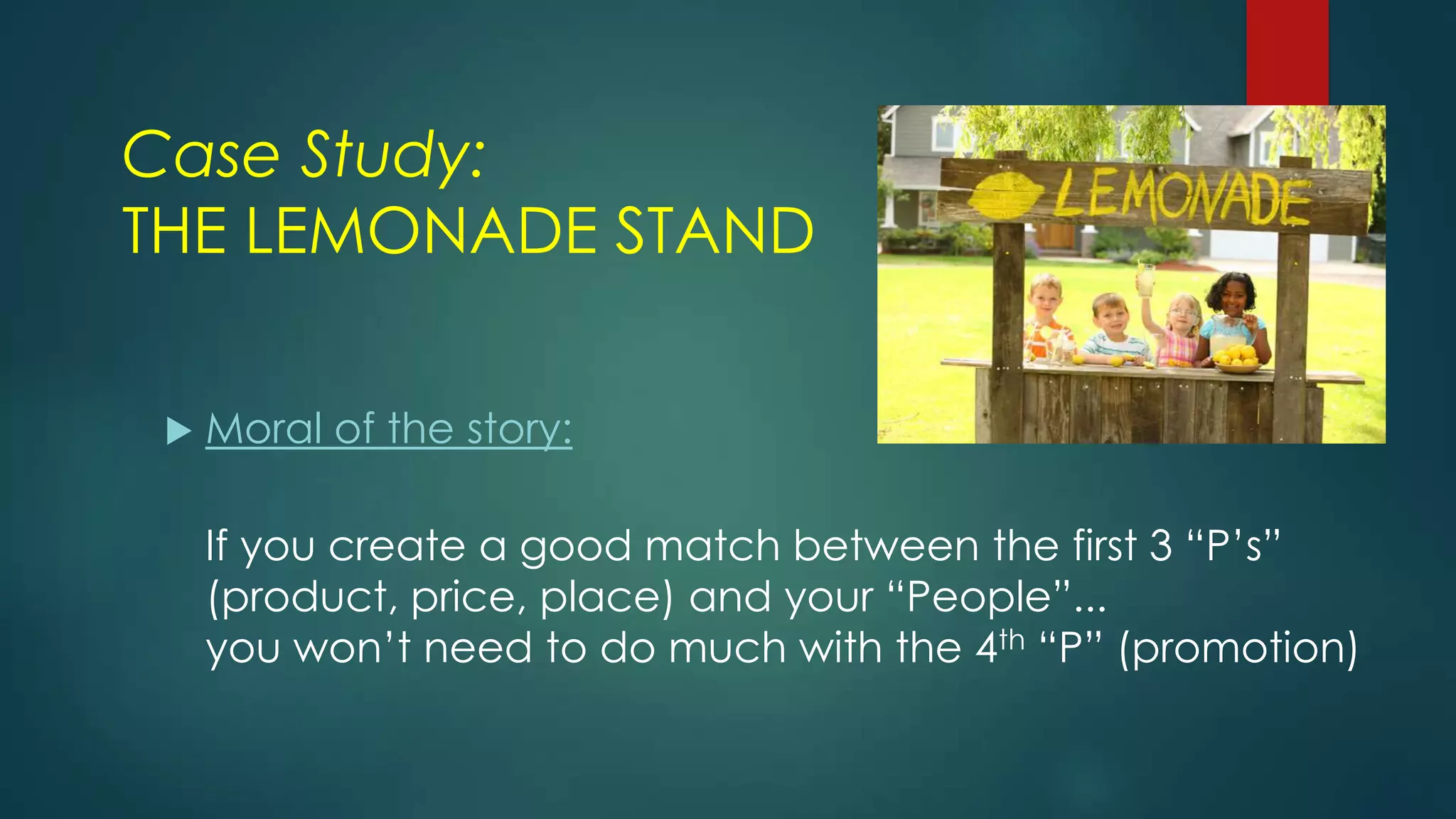
Case Study:
THE LEMONADE STAND
 Moral of the story:
If you create a good match between the first 3 “P’s”
(product, price, place) and your “People”...
you won’t need to do much with the 4th “P” (promotion)
The big secret:
“All four Ps need to be aligned
with your target audience.”
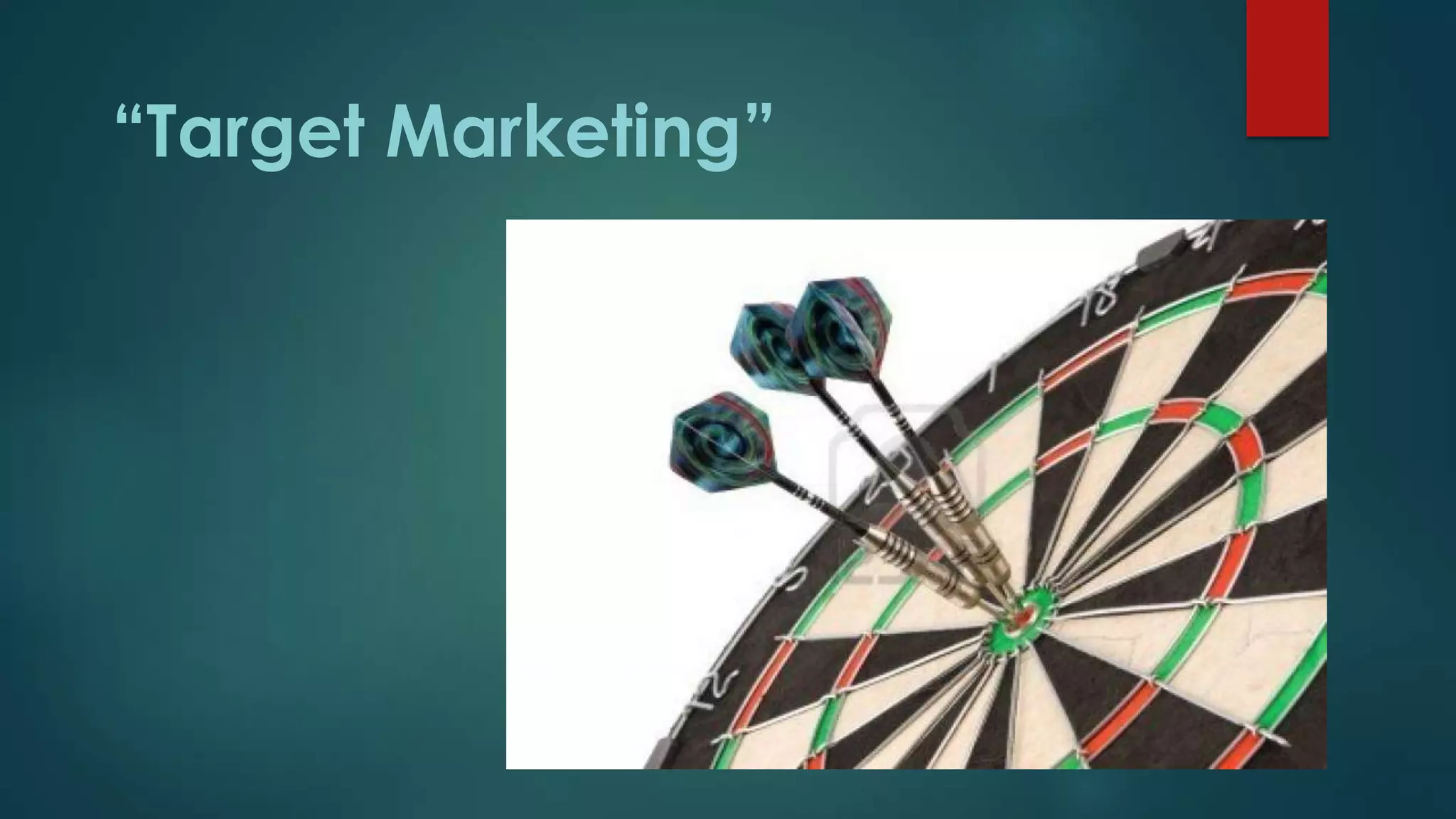
“Target Marketing”
“Segmentation”
Is it better to be
“all things to all people”,
or target a Niche?
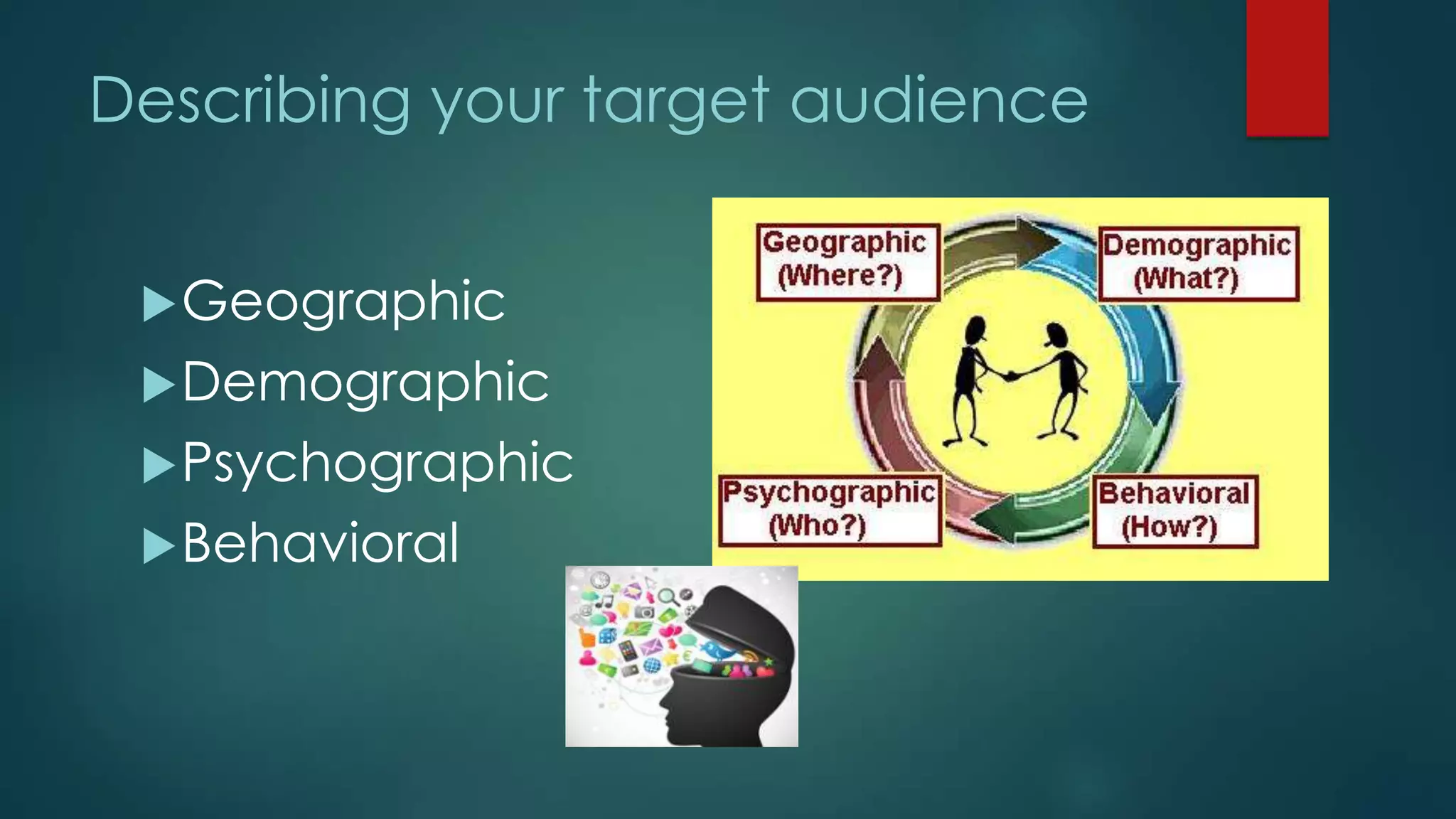
Describing your target audience
Geographic
Demographic
Psychographic
Behavioral
Examples of Psychographic Criteria
personal preferences, how we think
Psychocentric
vs.
Allocentric
Nielsen’s Lifestyle Segmentation System
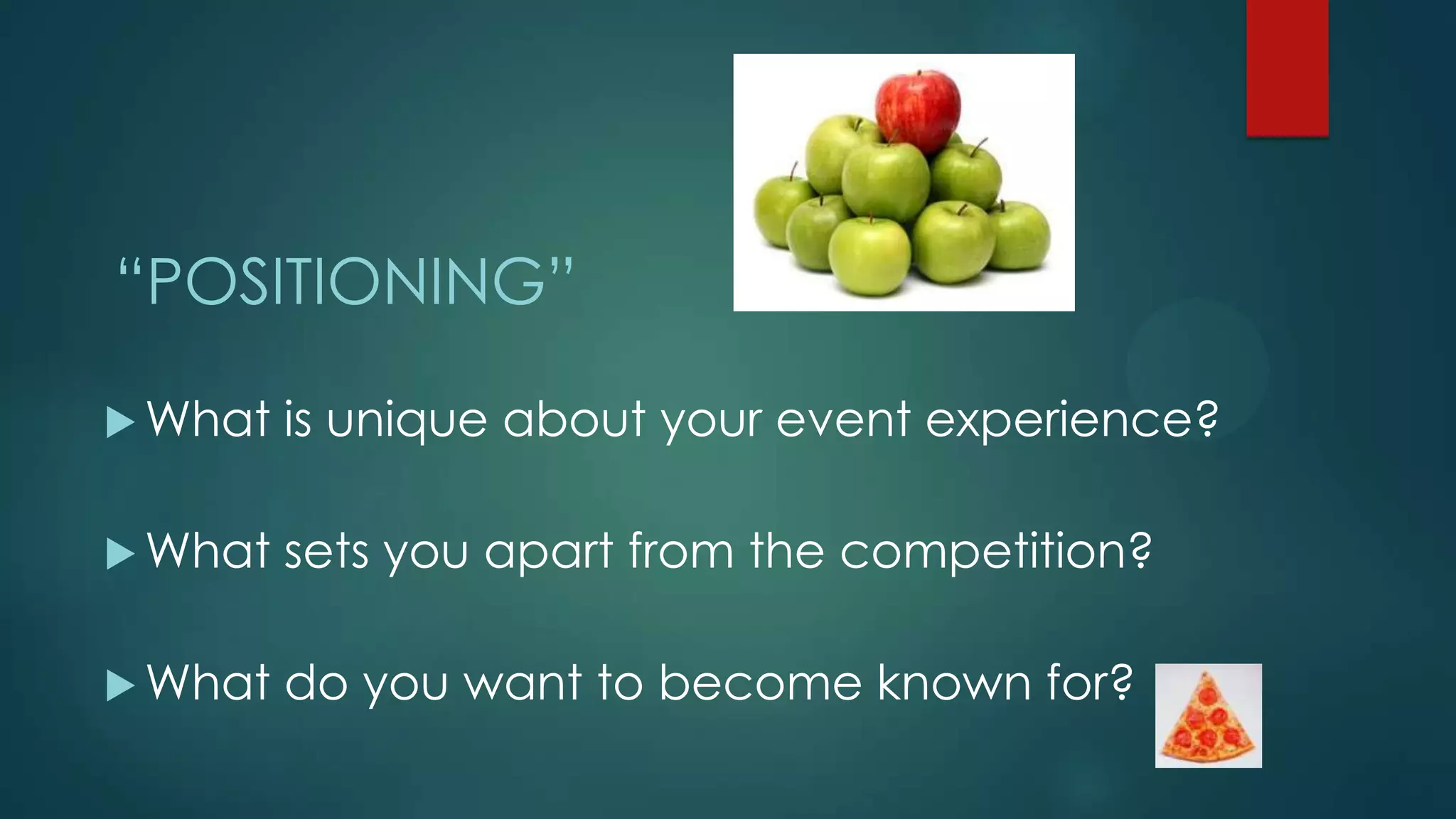
“POSITIONING”
 What is unique about your event experience?
 What sets you apart from the competition?
 What do you want to become known for?
How would you “position”
your project event experience?
(answers the question, “Why should I come?)
Timeout:
the 4th P:
PROMOTION
 Promotion really means
communication with your target audience
Three big questions:
 Where are they hanging out?
 Why am I communicating (objective)?
 What is my message?
Communication strategies:
 Paid Media Advertising (print, broadcast)
 Online media (websites, search, ads)
 Publicity (a.k.a. “earned media”)
 Social Media
 Personal Selling (example: Sponsorships)
 Event Marketing (using other events!)
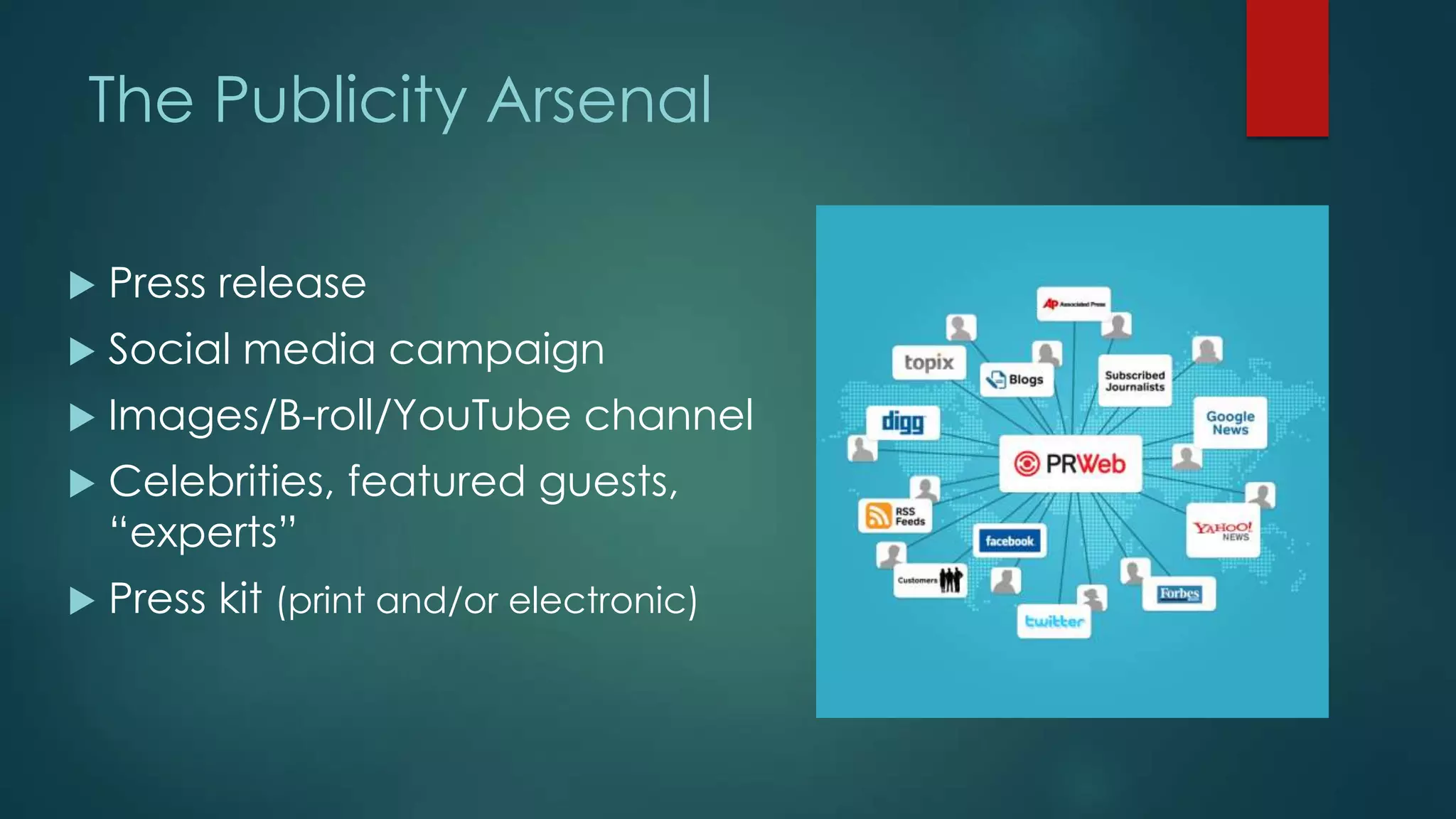
The Publicity Arsenal
 Press release
 Social media campaign
 Images/B-roll/YouTube channel
 Celebrities, featured guests,
“experts”
 Press kit (print and/or electronic)
The key to “earned media”:
“If you want people to talk about you,
you have to give them something
to talk about.”
(works for visuals
or video, too.)
So what’s your story?
 People are interested in people...
 so good stories are
almost always about people.
Brainstorm!
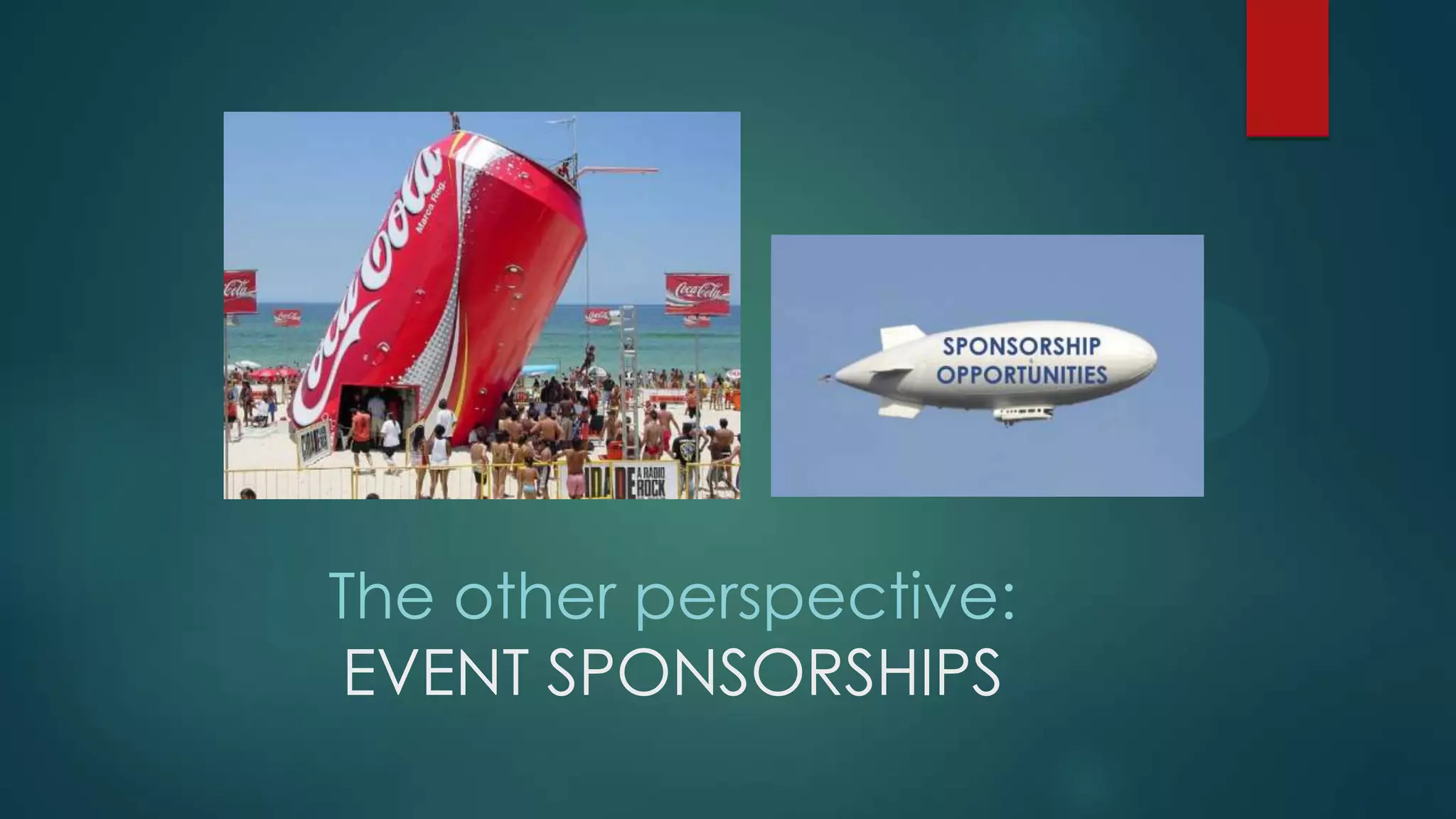
The other perspective:
EVENT SPONSORSHIPS
 DONOR – donates money or goods/services,
typically for the good of a non-profit organization or
cause (a philanthropic relationship)
 SPONSOR - provides money, goods or services in return
for advertising & promotional benefits and/or access to
a targeted audience , as a marketing expense (a
business relationship)
Difference between
a “Donor” and a “Sponsor”
Types of Sponsors:
 Title Sponsor – sponsor is part of the name of the
event: “KeyBank Vermont City Marathon”
 Presenting Sponsor – mentioned after the name of
the event: “The Rose Bowl, presented by AT&T”
 In-Kind Sponsor – provides goods or services, rather
than cash (airline tickets, food & beverage, media
exposure)
Sponsor types, continued…
 Official Sponsor – a product that is an event’s
exclusive sponsor
 Media Sponsor – print, radio, television or website
sponsors
 Co-Sponsor – shares sponsorship of event with other
sponsors
 Name/Logo Visibility in event promotional
messages and/or on-site at the event
 Opportunities to interact with a target audience
 Face-to-face networking & selling opportunities
 Demonstrate or distribute sample product
What you have to sell at your event:
 Opportunity to host key customers, clients or
employees at event
 Naming opportunities for places or activities
 Preferred location of a booth or presentation
 Promotional rights - posters, t-shirts, brochures,
special offers, etc.
What else can sponsors get?
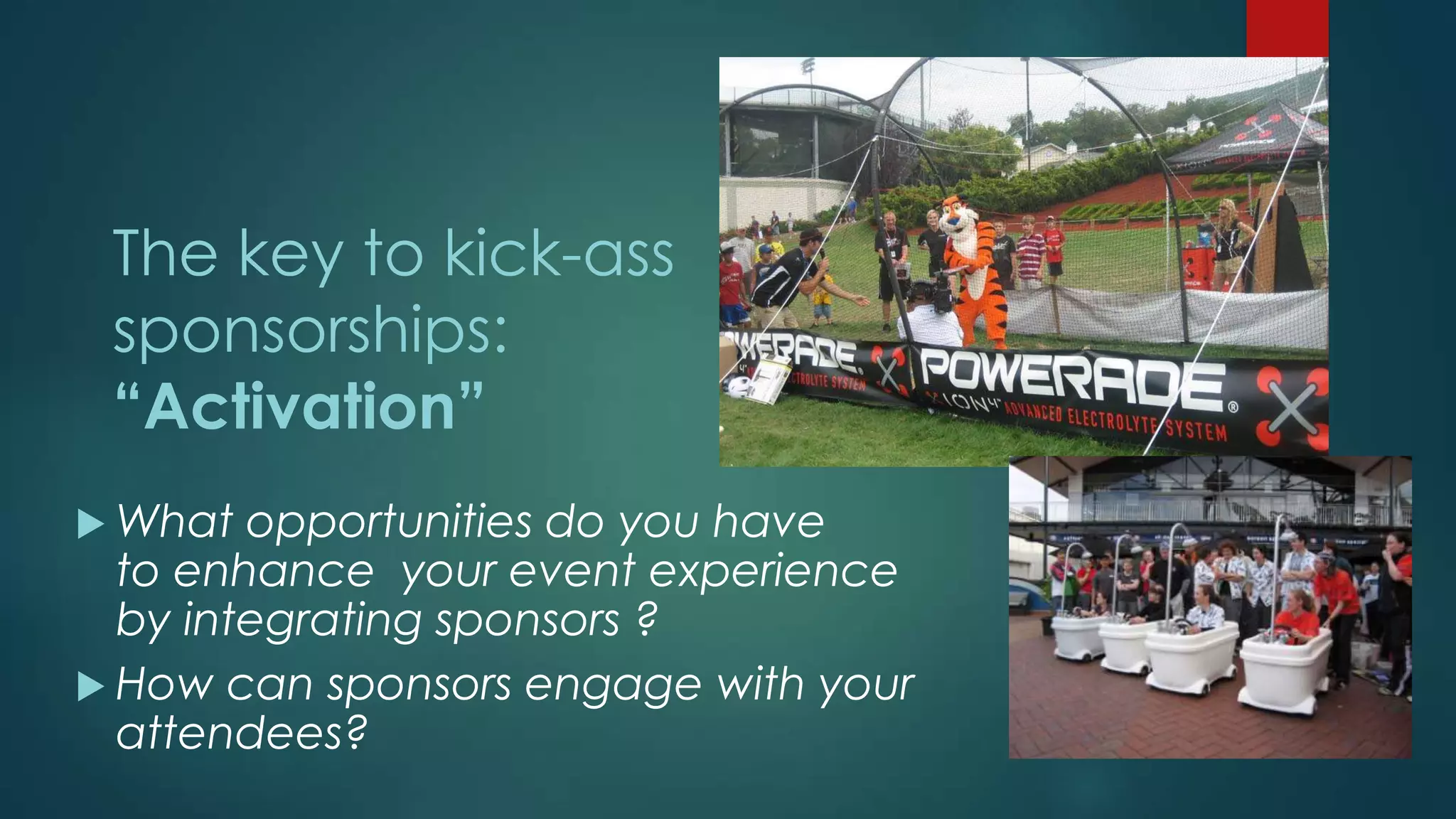
The key to kick-ass
sponsorships:
“Activation”
 What opportunities do you have
to enhance your event experience
by integrating sponsors ?
 How can sponsors engage with your
attendees?
Activation Channels:
1. On-Site (the experience)
2. On-Air
3. Online
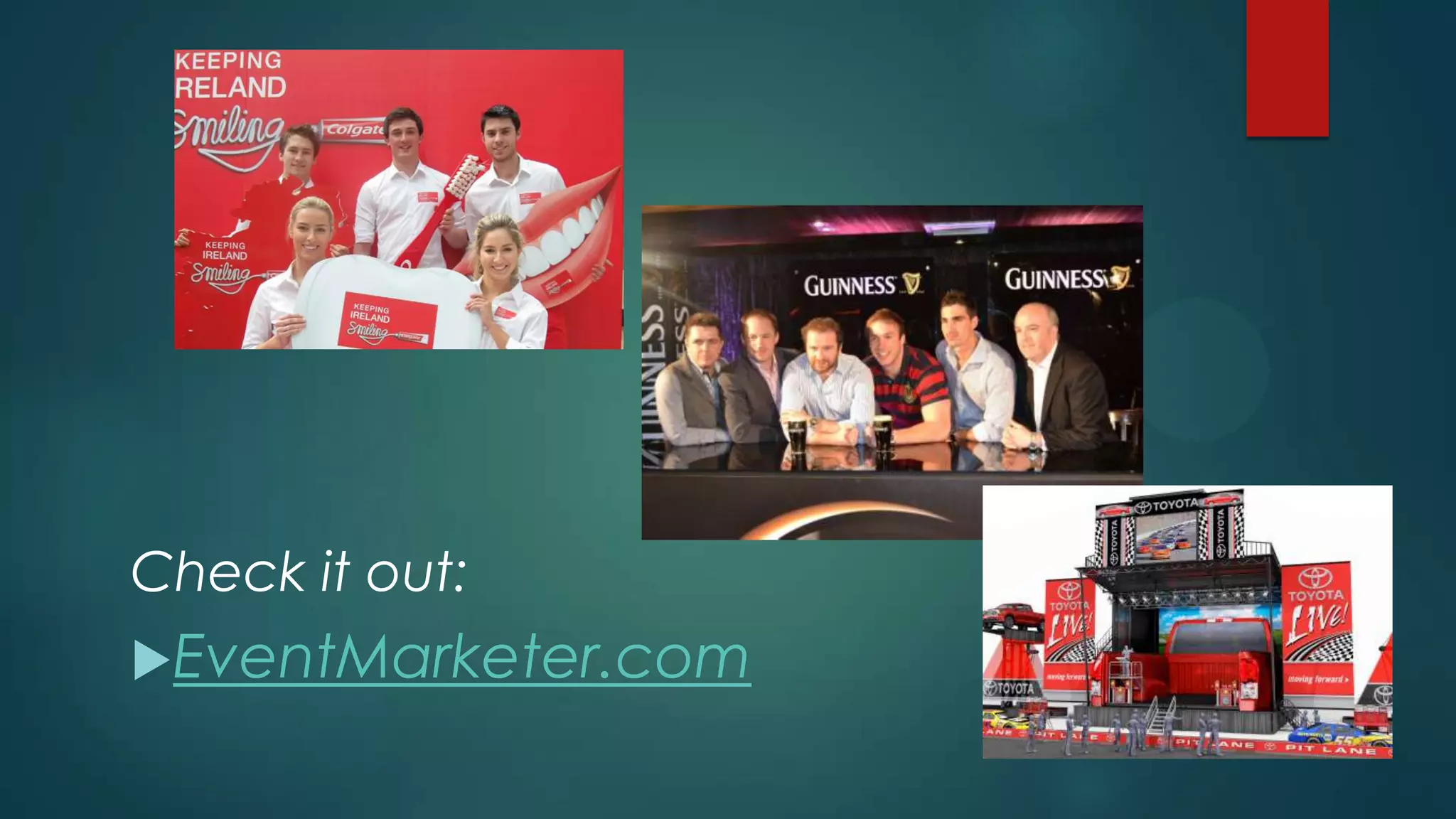
Check it out:
EventMarketer.com

Event Marketing: The Basics

  • 1.
  • 2.
    2 KINDS OF“EVENT MARKETING”:  Promoting your event to maximize attendance or revenue (event planner’s perspective)  Using events as a tool for promoting your brand or product enabling 2-way connection with a target audience (sponsor’s perspective)
  • 3.
    Marketing Basics: “The 4P’s”  PRODUCT  PLACE  PRICE  PROMOTION PEOPLE!
  • 4.
    For events:  TheProduct:  the Program & overall Experience  The Price:  registration , tickets, subscription  time invested by attendees  The Place:  destination, venue  Date & time
  • 5.
    What’s the differencebetween “Marketing” & “Advertising?
  • 6.
    Case Study: THE LEMONADESTAND  Moral of the story: If you create a good match between the first 3 “P’s” (product, price, place) and your “People”... you won’t need to do much with the 4th “P” (promotion)
  • 7.
    The big secret: “Allfour Ps need to be aligned with your target audience.”
  • 8.
  • 9.
  • 10.
    Is it betterto be “all things to all people”, or target a Niche?
  • 11.
    Describing your targetaudience Geographic Demographic Psychographic Behavioral
  • 12.
    Examples of PsychographicCriteria personal preferences, how we think Psychocentric vs. Allocentric Nielsen’s Lifestyle Segmentation System
  • 13.
    “POSITIONING”  What isunique about your event experience?  What sets you apart from the competition?  What do you want to become known for?
  • 14.
    How would you“position” your project event experience? (answers the question, “Why should I come?) Timeout:
  • 15.
    the 4th P: PROMOTION Promotion really means communication with your target audience
  • 16.
    Three big questions: Where are they hanging out?  Why am I communicating (objective)?  What is my message?
  • 17.
    Communication strategies:  PaidMedia Advertising (print, broadcast)  Online media (websites, search, ads)  Publicity (a.k.a. “earned media”)  Social Media  Personal Selling (example: Sponsorships)  Event Marketing (using other events!)
  • 18.
    The Publicity Arsenal Press release  Social media campaign  Images/B-roll/YouTube channel  Celebrities, featured guests, “experts”  Press kit (print and/or electronic)
  • 19.
    The key to“earned media”: “If you want people to talk about you, you have to give them something to talk about.” (works for visuals or video, too.)
  • 20.
    So what’s yourstory?  People are interested in people...  so good stories are almost always about people. Brainstorm!
  • 21.
  • 22.
     DONOR –donates money or goods/services, typically for the good of a non-profit organization or cause (a philanthropic relationship)  SPONSOR - provides money, goods or services in return for advertising & promotional benefits and/or access to a targeted audience , as a marketing expense (a business relationship) Difference between a “Donor” and a “Sponsor”
  • 23.
    Types of Sponsors: Title Sponsor – sponsor is part of the name of the event: “KeyBank Vermont City Marathon”  Presenting Sponsor – mentioned after the name of the event: “The Rose Bowl, presented by AT&T”  In-Kind Sponsor – provides goods or services, rather than cash (airline tickets, food & beverage, media exposure)
  • 24.
    Sponsor types, continued… Official Sponsor – a product that is an event’s exclusive sponsor  Media Sponsor – print, radio, television or website sponsors  Co-Sponsor – shares sponsorship of event with other sponsors
  • 25.
     Name/Logo Visibilityin event promotional messages and/or on-site at the event  Opportunities to interact with a target audience  Face-to-face networking & selling opportunities  Demonstrate or distribute sample product What you have to sell at your event:
  • 26.
     Opportunity tohost key customers, clients or employees at event  Naming opportunities for places or activities  Preferred location of a booth or presentation  Promotional rights - posters, t-shirts, brochures, special offers, etc. What else can sponsors get?
  • 27.
    The key tokick-ass sponsorships: “Activation”  What opportunities do you have to enhance your event experience by integrating sponsors ?  How can sponsors engage with your attendees?
  • 28.
    Activation Channels: 1. On-Site(the experience) 2. On-Air 3. Online
  • 29.