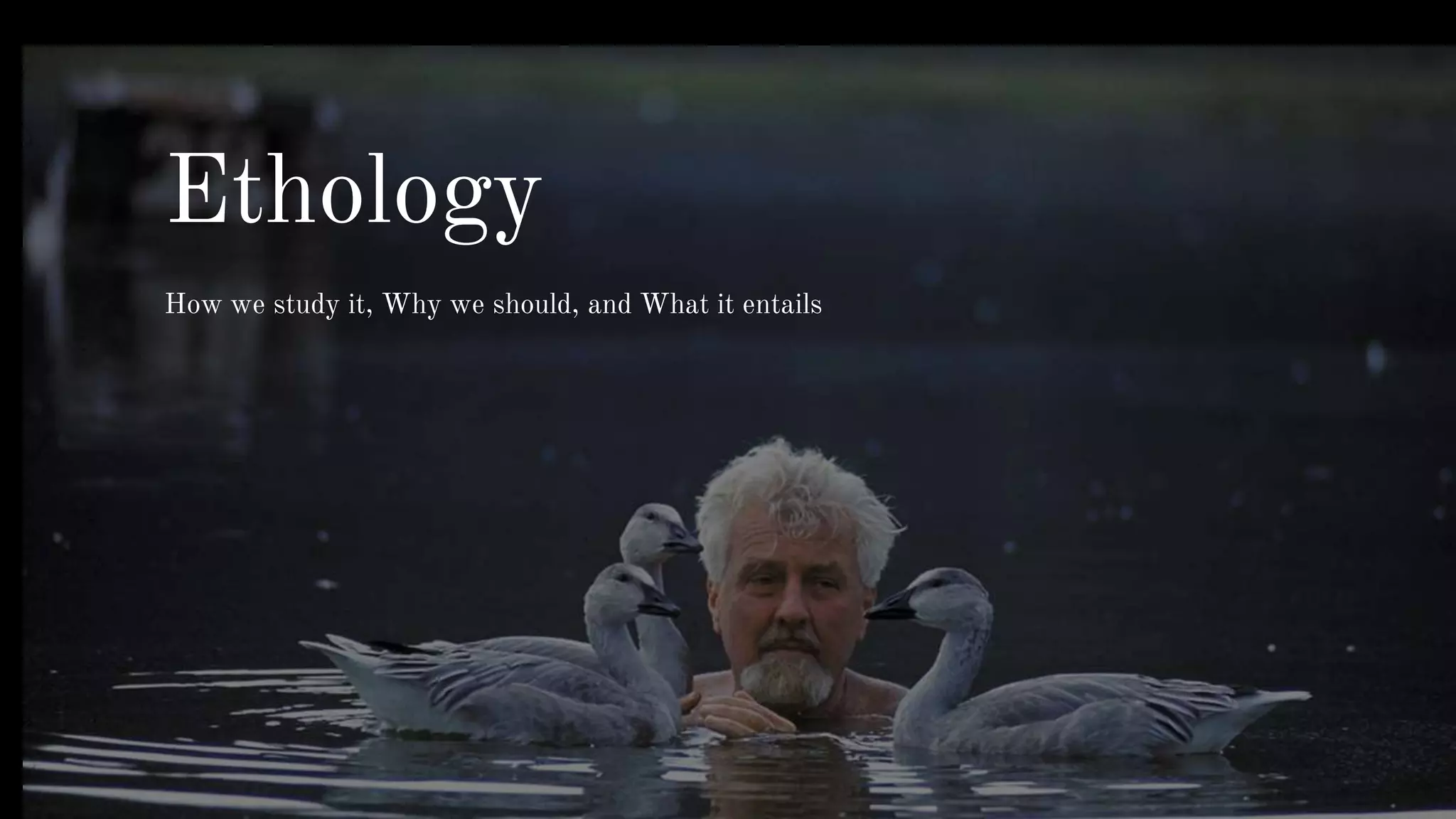
Ethology
How we study it, Why we should, and What it entails
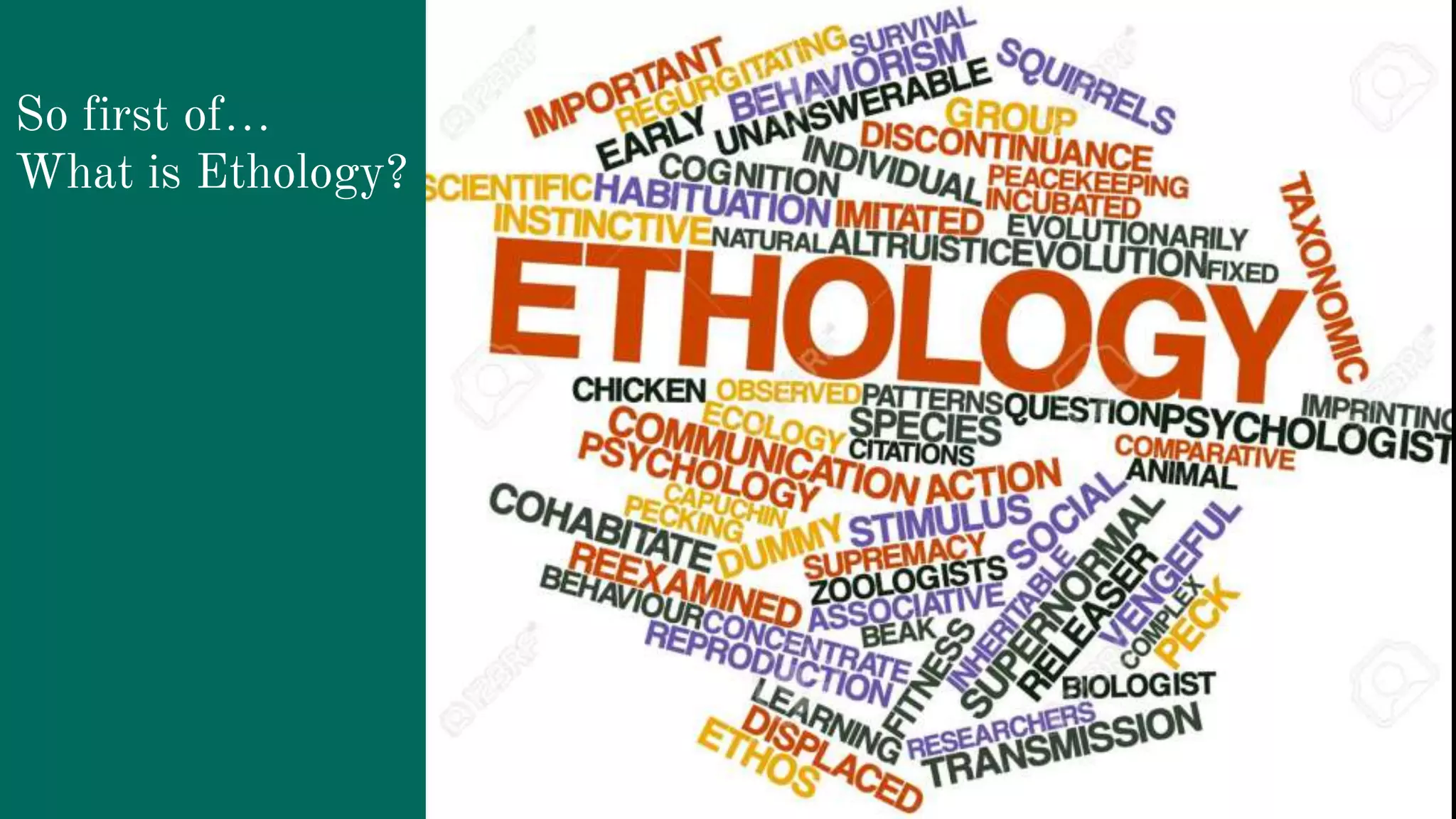
So first of…
What is Ethology?
Why do we
study ethology?
Know more about the natural world
Can draw parallels to human behavior and health
Determining the why it works may help better understand
ourselves
Implications for economic related animals
How do we study it?
Typically Ethograms
Also lab experiments (issues!)
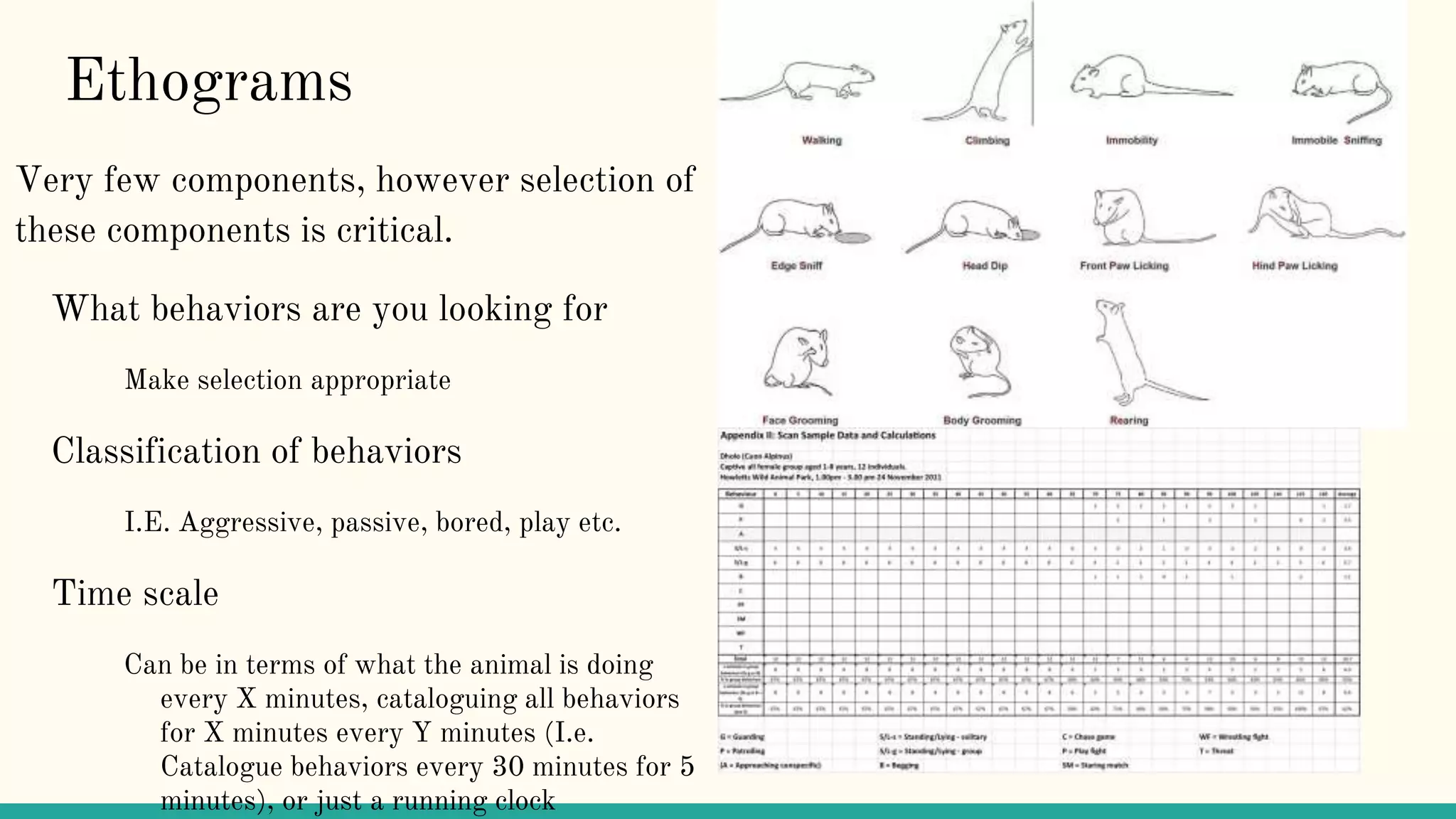
Ethograms
Very few components, however selection of
these components is critical.
What behaviors are you looking for
Make selection appropriate
Classification of behaviors
I.E. Aggressive, passive, bored, play etc.
Time scale
Can be in terms of what the animal is doing
every X minutes, cataloguing all behaviors
for X minutes every Y minutes (I.e.
Catalogue behaviors every 30 minutes for 5
minutes), or just a running clock
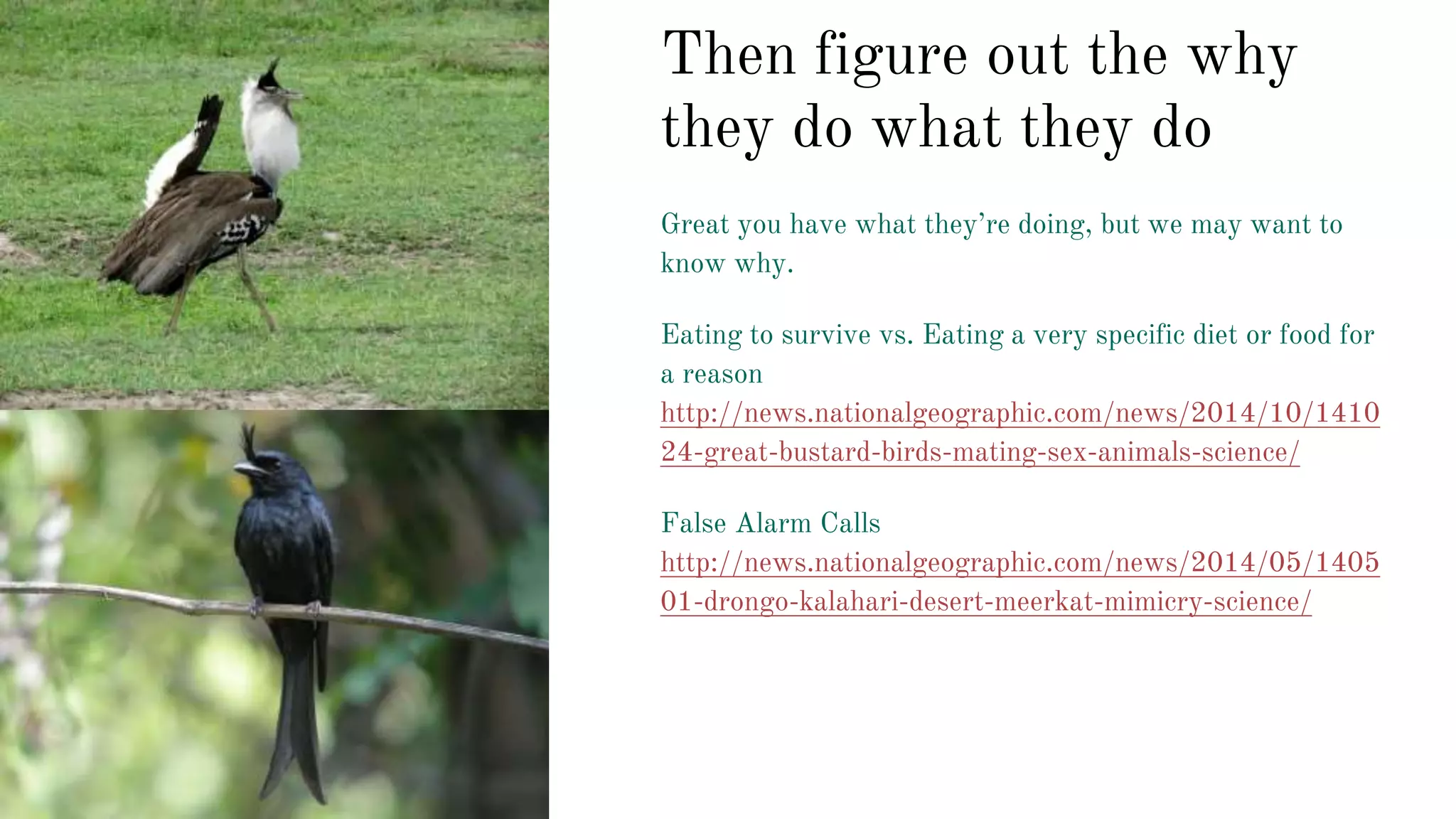
Then figure out the why
they do what they do
Great you have what they’re doing, but we may want to
know why.
Eating to survive vs. Eating a very specific diet or food for
a reason
http://news.nationalgeographic.com/news/2014/10/1410
24-great-bustard-birds-mating-sex-animals-science/
False Alarm Calls
http://news.nationalgeographic.com/news/2014/05/1405
01-drongo-kalahari-desert-meerkat-mimicry-science/
So let’s make
an example...
You are a space explorer stationed on an alien
world. Your mission is to collect data on the
dominant species there. Your team is running
ethograms and presenting you with all the data
they collect. Your job is to disseminate their
info and come to a conclusion.
Assumed Variables:
The planet is earth like
The dominant species inhabits most regions of
the world
Diet Studies
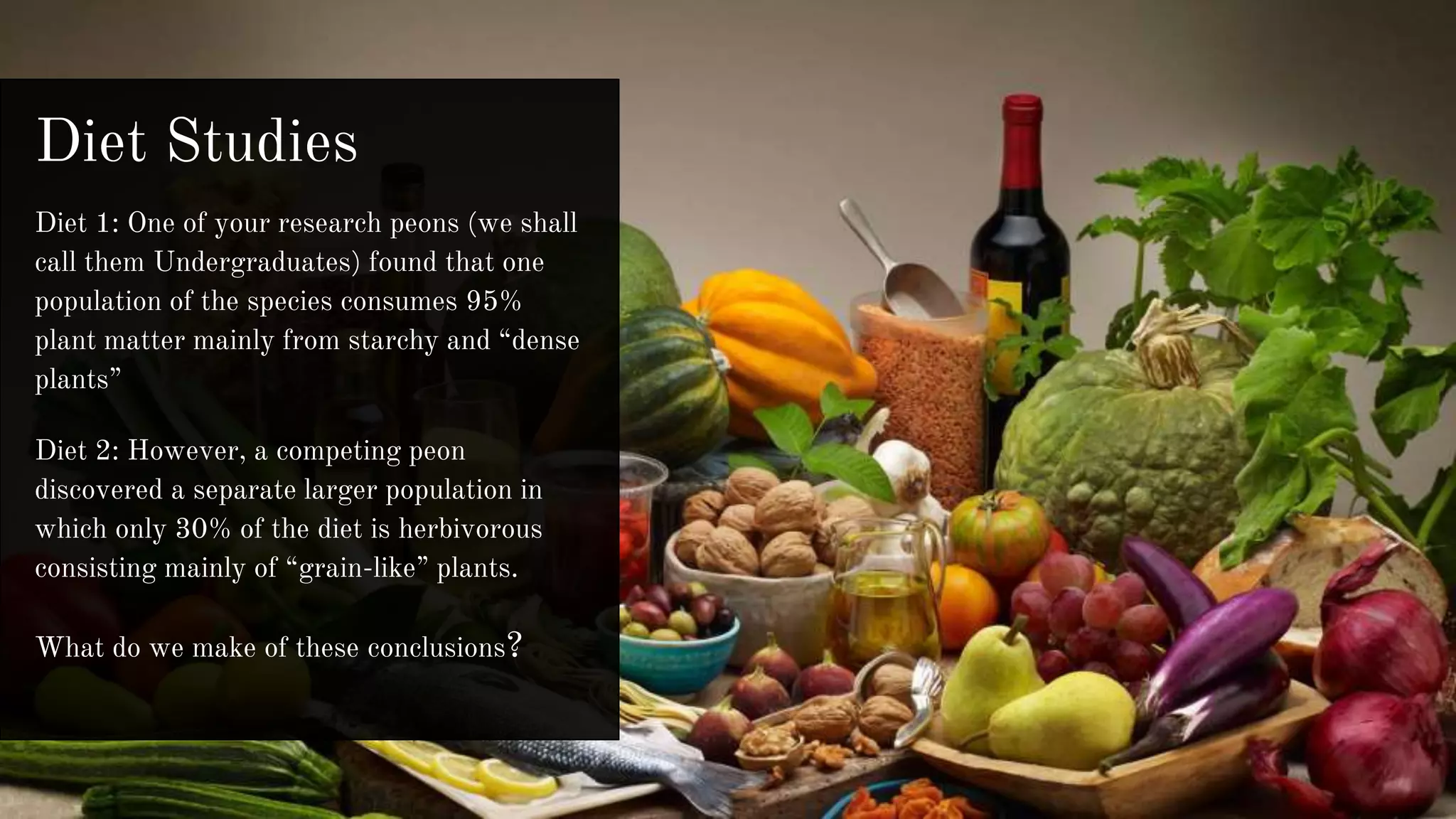
Diet 1: One of your research peons (we shall
call them Undergraduates) found that one
population of the species consumes 95%
plant matter mainly from starchy and “dense
plants”
Diet 2: However, a competing peon
discovered a separate larger population in
which only 30% of the diet is herbivorous
consisting mainly of “grain-like” plants.
What do we make of these conclusions?
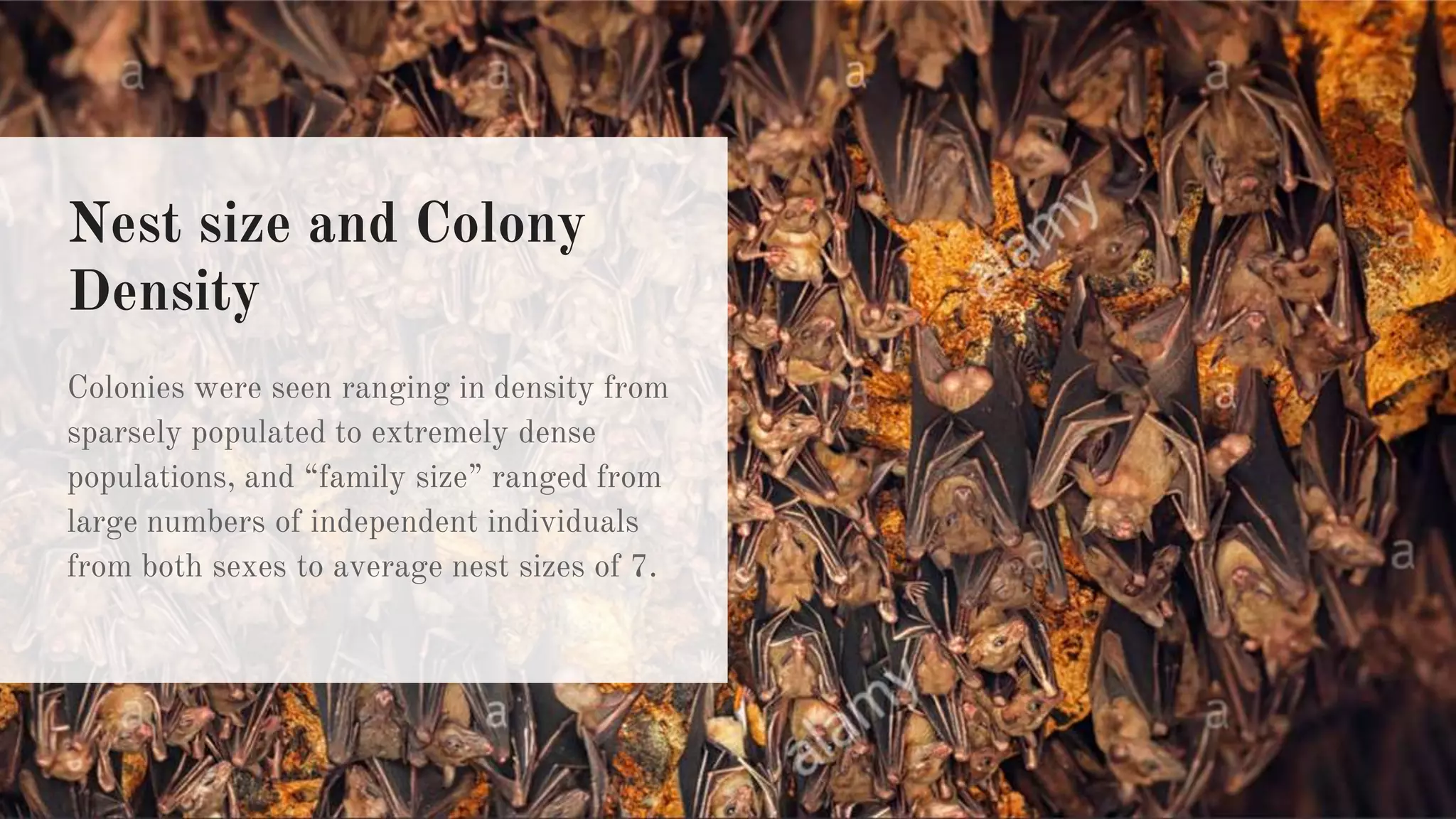
Nest size and Colony
Density
Colonies were seen ranging in density from
sparsely populated to extremely dense
populations, and “family size” ranged from
large numbers of independent individuals
from both sexes to average nest sizes of 7.
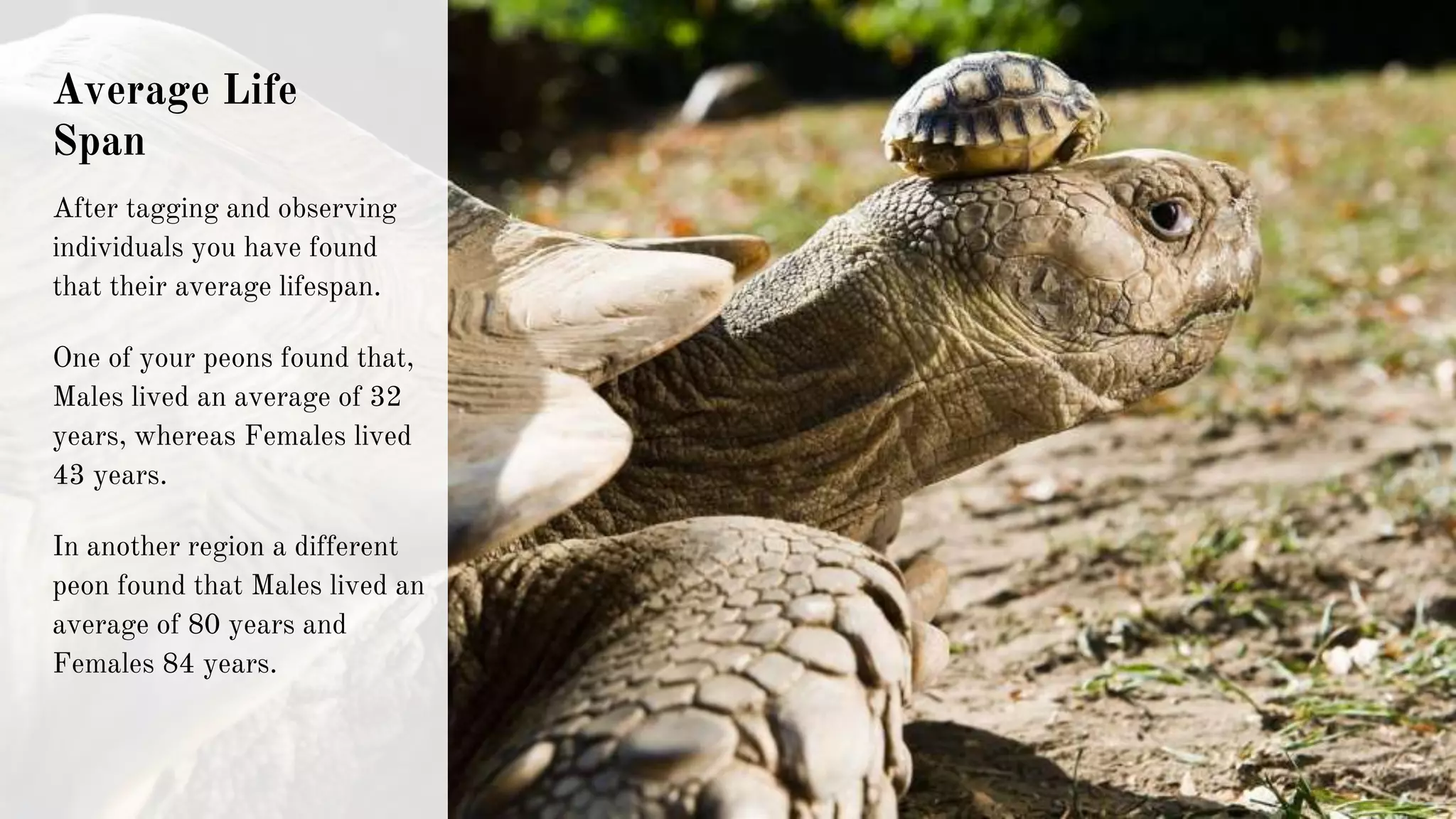
Average Life
Span
After tagging and observing
individuals you have found
that their average lifespan.
One of your peons found that,
Males lived an average of 32
years, whereas Females lived
43 years.
In another region a different
peon found that Males lived an
average of 80 years and
Females 84 years.
Here’s the thing….
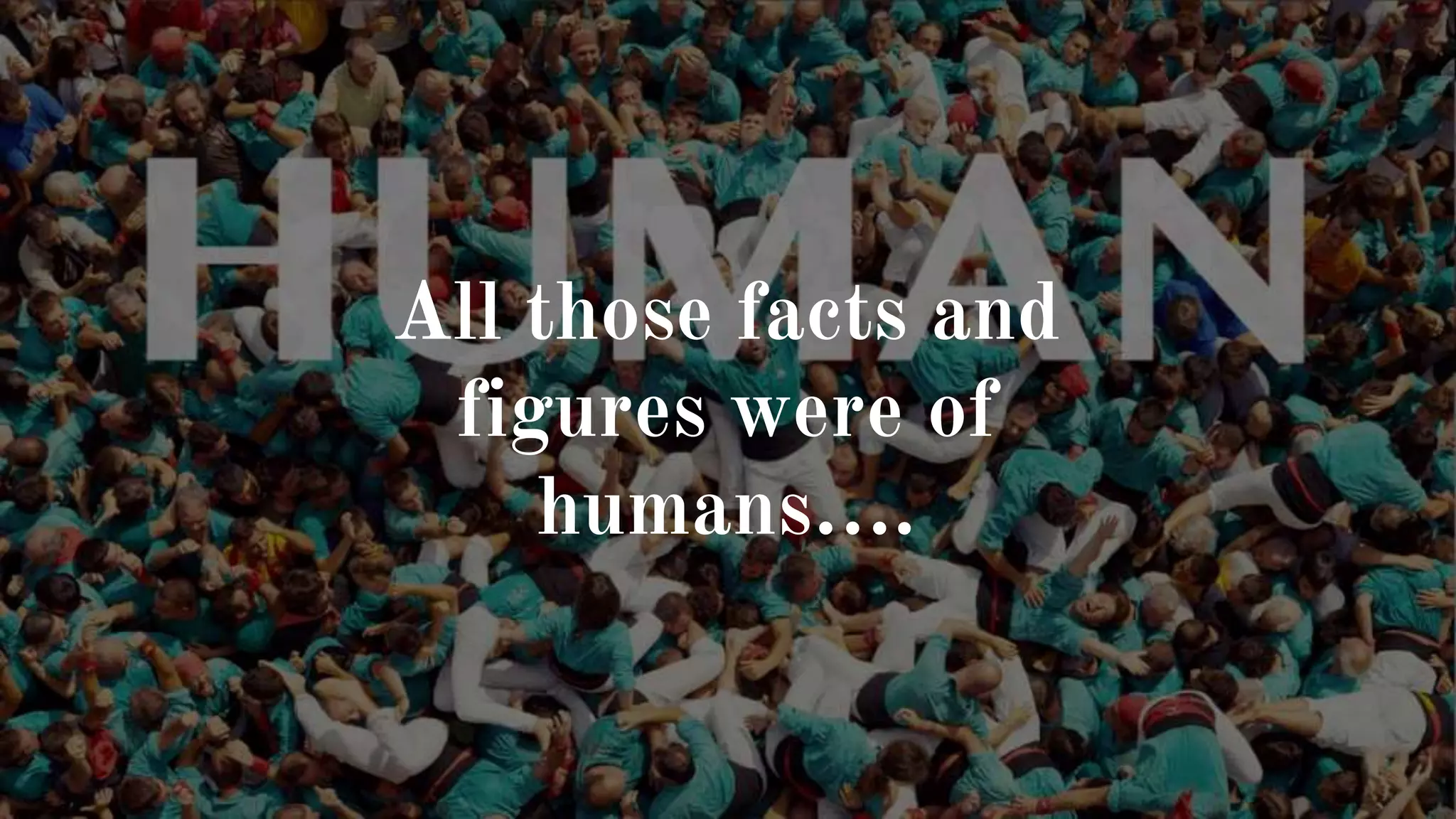
All those facts and
figures were of
humans….
Here’s where they came from...
Diet #1: Gujarat India- Mostly Vegetarian due to religion and food availability
https://en.wikipedia.org/wiki/Gujarati_cuisine *
Diet #2: Broadly speaking american diet: https://draxe.com/charts-american-diet/
Colony #1: Millenials in america http://www.truthrevolt.org/news/obamas-america-one-third-millennials-
broke-single-living-home
Colony #2: African Family Size in Kuwait https://www.nakono.com/tekcarta/databank/households-
average-household-size/
Age Region 1: Haiti https://en.wikipedia.org/wiki/List_of_countries_by_life_expectancy *
Age Region 2: Iceland https://en.wikipedia.org/wiki/List_of_countries_by_life_expectancy*
*And yes I used wikipedia….. Deal with it….
Knowing this. How does that change
your perception?

Ethology: How, Why, and What Animal Behavior is

  • 1.
    Ethology How we studyit, Why we should, and What it entails
  • 2.
    So first of… Whatis Ethology?
  • 3.
    Why do we studyethology? Know more about the natural world Can draw parallels to human behavior and health Determining the why it works may help better understand ourselves Implications for economic related animals
  • 4.
    How do westudy it? Typically Ethograms Also lab experiments (issues!)
  • 5.
    Ethograms Very few components,however selection of these components is critical. What behaviors are you looking for Make selection appropriate Classification of behaviors I.E. Aggressive, passive, bored, play etc. Time scale Can be in terms of what the animal is doing every X minutes, cataloguing all behaviors for X minutes every Y minutes (I.e. Catalogue behaviors every 30 minutes for 5 minutes), or just a running clock
  • 6.
    Then figure outthe why they do what they do Great you have what they’re doing, but we may want to know why. Eating to survive vs. Eating a very specific diet or food for a reason http://news.nationalgeographic.com/news/2014/10/1410 24-great-bustard-birds-mating-sex-animals-science/ False Alarm Calls http://news.nationalgeographic.com/news/2014/05/1405 01-drongo-kalahari-desert-meerkat-mimicry-science/
  • 7.
    So let’s make anexample... You are a space explorer stationed on an alien world. Your mission is to collect data on the dominant species there. Your team is running ethograms and presenting you with all the data they collect. Your job is to disseminate their info and come to a conclusion. Assumed Variables: The planet is earth like The dominant species inhabits most regions of the world
  • 8.
    Diet Studies Diet 1:One of your research peons (we shall call them Undergraduates) found that one population of the species consumes 95% plant matter mainly from starchy and “dense plants” Diet 2: However, a competing peon discovered a separate larger population in which only 30% of the diet is herbivorous consisting mainly of “grain-like” plants. What do we make of these conclusions?
  • 9.
    Nest size andColony Density Colonies were seen ranging in density from sparsely populated to extremely dense populations, and “family size” ranged from large numbers of independent individuals from both sexes to average nest sizes of 7.
  • 10.
    Average Life Span After taggingand observing individuals you have found that their average lifespan. One of your peons found that, Males lived an average of 32 years, whereas Females lived 43 years. In another region a different peon found that Males lived an average of 80 years and Females 84 years.
  • 11.
  • 12.
    All those factsand figures were of humans….
  • 13.
    Here’s where theycame from... Diet #1: Gujarat India- Mostly Vegetarian due to religion and food availability https://en.wikipedia.org/wiki/Gujarati_cuisine * Diet #2: Broadly speaking american diet: https://draxe.com/charts-american-diet/ Colony #1: Millenials in america http://www.truthrevolt.org/news/obamas-america-one-third-millennials- broke-single-living-home Colony #2: African Family Size in Kuwait https://www.nakono.com/tekcarta/databank/households- average-household-size/ Age Region 1: Haiti https://en.wikipedia.org/wiki/List_of_countries_by_life_expectancy * Age Region 2: Iceland https://en.wikipedia.org/wiki/List_of_countries_by_life_expectancy* *And yes I used wikipedia….. Deal with it….
  • 14.
    Knowing this. Howdoes that change your perception?