Animal Behavior
The things animals do….
Animal Behavior Vocabulary
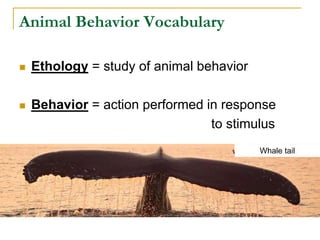
 Ethology = study of animal behavior
 Behavior = action performed in response
to stimulus
Whale tail
Vocabulary
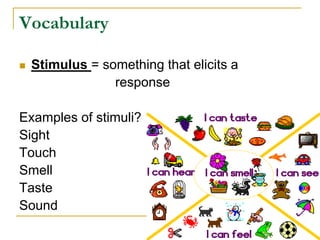
 Stimulus = something that elicits a
response
Examples of stimuli?
Sight
Touch
Smell
Taste
Sound
Stimuli
 External Stimulus =
something
outside the animal
e.g. sound, sight, smell, etc,
presence of another animal
Stimuli
 Internal Stimulus =
something inside the animal
e.g. hunger, fatigue, feeling cold,
hormones
Vocabulary
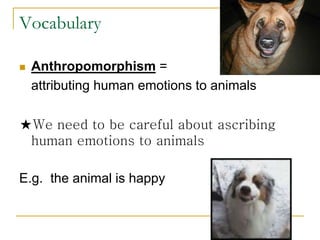
 Anthropomorphism =
attributing human emotions to animals
★We need to be careful about ascribing
human emotions to animals
E.g. the animal is happy
Types of behaviors
 Genetic / Innate
 Foraging
 Parental care
 Courtship
 Reproductive
 Offensive / defensive
 Territorial
 Migratory
 Social
 Inprinting
 Curosity
 Resting
 Elimination
 Learning
 Imprinting
 Habituation
 Classical conditioning
 Operant conditioning
 Reasoning
Types of Behavior
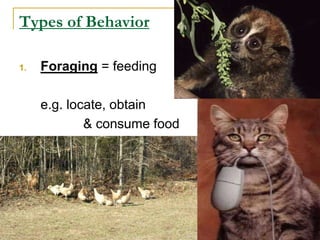
1. Foraging = feeding
e.g. locate, obtain
& consume food
Types of Behavior
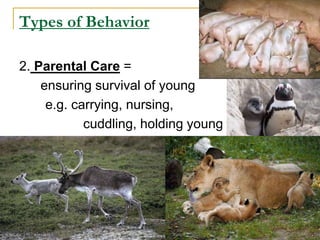
2. Parental Care =
ensuring survival of young
e.g. carrying, nursing,
cuddling, holding young
Types of Behavior
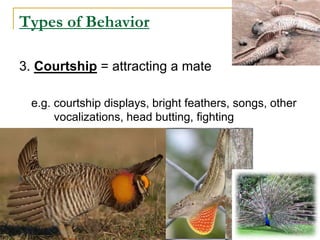
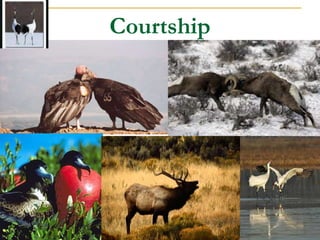
3. Courtship = attracting a mate
e.g. courtship displays, bright feathers, songs, other
vocalizations, head butting, fighting
Courtship
Types of Behavior
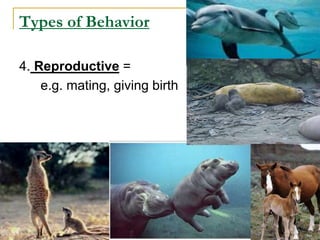
4. Reproductive =
e.g. mating, giving birth
Types of Behavior
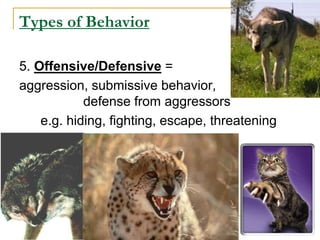
5. Offensive/Defensive =
aggression, submissive behavior,
defense from aggressors
e.g. hiding, fighting, escape, threatening
Types of Behavior
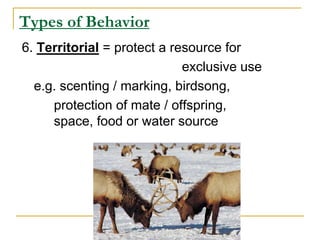
6. Territorial = protect a resource for
exclusive use
e.g. scenting / marking, birdsong,
protection of mate / offspring,
space, food or water source
Types of Behavior
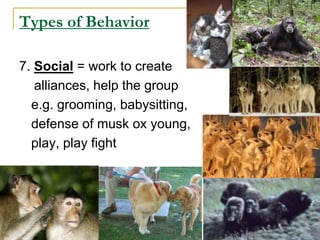
7. Social = work to create
alliances, help the group
e.g. grooming, babysitting,
defense of musk ox young,
play, play fight
Types of Behavior
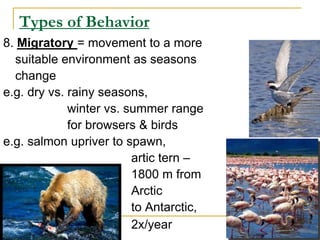
8. Migratory = movement to a more
suitable environment as seasons
change
e.g. dry vs. rainy seasons,
winter vs. summer range
for browsers & birds
e.g. salmon upriver to spawn,
artic tern –
1800 m from
Arctic
to Antarctic,
2x/year
Types of Behavior
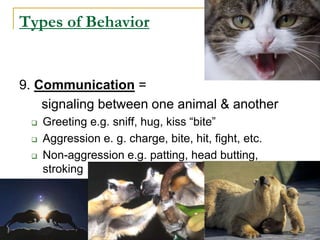
9. Communication =
signaling between one animal & another
 Greeting e.g. sniff, hug, kiss “bite”
 Aggression e. g. charge, bite, hit, fight, etc.
 Non-aggression e.g. patting, head butting,
stroking
Types of Behavior
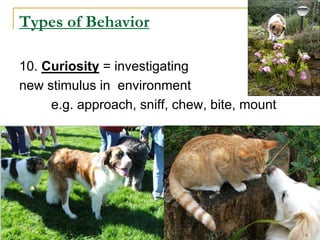
10. Curiosity = investigating
new stimulus in environment
e.g. approach, sniff, chew, bite, mount
Types of Behavior
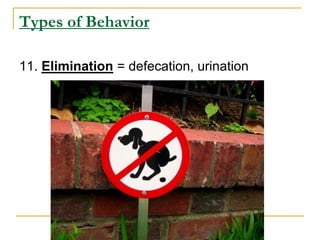
11. Elimination = defecation, urination
Types of Behavior
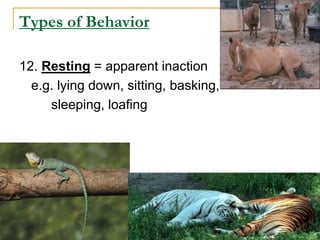
12. Resting = apparent inaction
e.g. lying down, sitting, basking,
sleeping, loafing
Types of Behavior
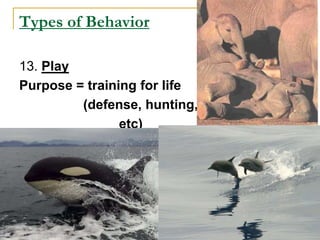
13. Play
Purpose = training for life
(defense, hunting,
etc)
Types of Behavior Development
2. Learning
 development of behaviors through
experience
 determines final shape of innate
behaviors
 5 types of learning
Types of Learning
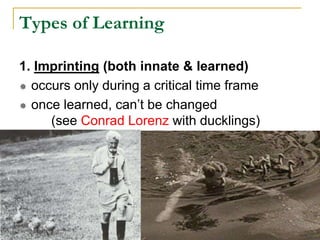
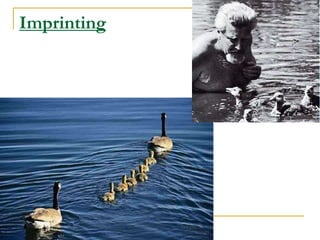
1. Imprinting (both innate & learned)
 occurs only during a critical time frame
 once learned, can’t be changed
(see Conrad Lorenz with ducklings)
Imprinting
Types of Learning
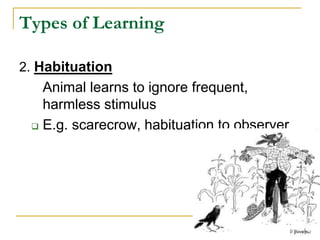
2. Habituation
Animal learns to ignore frequent,
harmless stimulus
 E.g. scarecrow, habituation to observer
Types of Learning
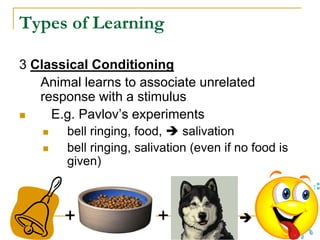
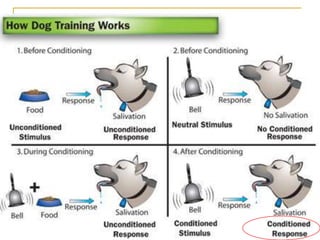
3 Classical Conditioning
Animal learns to associate unrelated
response with a stimulus
 E.g. Pavlov’s experiments
 bell ringing, food,  salivation
 bell ringing, salivation (even if no food is
given)
+ + 
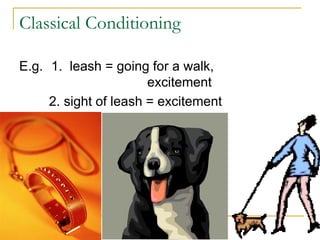
Classical Conditioning
E.g. 1. leash = going for a walk,
excitement
2. sight of leash = excitement
Types of Learning
4. Operant Conditioning and 5th Reasoning
 Animal learns to behave in a certain way
through repeated practice
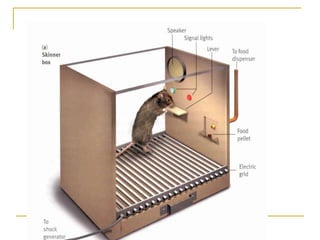
 Trial & error learning – animal tests
conditions for desired response
e.g. Skinner box
 Animal learns that a behavior gets a certain
response
 e.g. rat presses lever, gets food
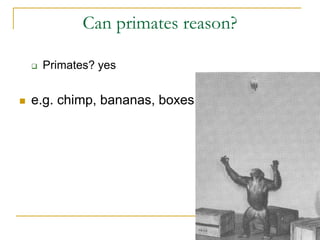
Can primates reason?
 Primates? yes
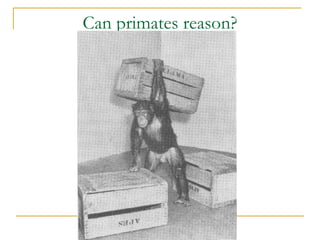
 e.g. chimp, bananas, boxes
Can primates reason?

Animal behavior

  • 1.
  • 2.
    Animal Behavior Vocabulary Ethology = study of animal behavior  Behavior = action performed in response to stimulus Whale tail
  • 3.
    Vocabulary  Stimulus =something that elicits a response Examples of stimuli? Sight Touch Smell Taste Sound
  • 4.
    Stimuli  External Stimulus= something outside the animal e.g. sound, sight, smell, etc, presence of another animal
  • 5.
    Stimuli  Internal Stimulus= something inside the animal e.g. hunger, fatigue, feeling cold, hormones
  • 6.
    Vocabulary  Anthropomorphism = attributinghuman emotions to animals ★We need to be careful about ascribing human emotions to animals E.g. the animal is happy
  • 7.
    Types of behaviors Genetic / Innate  Foraging  Parental care  Courtship  Reproductive  Offensive / defensive  Territorial  Migratory  Social  Inprinting  Curosity  Resting  Elimination  Learning  Imprinting  Habituation  Classical conditioning  Operant conditioning  Reasoning
  • 8.
    Types of Behavior 1.Foraging = feeding e.g. locate, obtain & consume food
  • 9.
    Types of Behavior 2.Parental Care = ensuring survival of young e.g. carrying, nursing, cuddling, holding young
  • 10.
    Types of Behavior 3.Courtship = attracting a mate e.g. courtship displays, bright feathers, songs, other vocalizations, head butting, fighting
  • 11.
  • 12.
    Types of Behavior 4.Reproductive = e.g. mating, giving birth
  • 13.
    Types of Behavior 5.Offensive/Defensive = aggression, submissive behavior, defense from aggressors e.g. hiding, fighting, escape, threatening
  • 14.
    Types of Behavior 6.Territorial = protect a resource for exclusive use e.g. scenting / marking, birdsong, protection of mate / offspring, space, food or water source
  • 15.
    Types of Behavior 7.Social = work to create alliances, help the group e.g. grooming, babysitting, defense of musk ox young, play, play fight
  • 16.
    Types of Behavior 8.Migratory = movement to a more suitable environment as seasons change e.g. dry vs. rainy seasons, winter vs. summer range for browsers & birds e.g. salmon upriver to spawn, artic tern – 1800 m from Arctic to Antarctic, 2x/year
  • 17.
    Types of Behavior 9.Communication = signaling between one animal & another  Greeting e.g. sniff, hug, kiss “bite”  Aggression e. g. charge, bite, hit, fight, etc.  Non-aggression e.g. patting, head butting, stroking
  • 18.
    Types of Behavior 10.Curiosity = investigating new stimulus in environment e.g. approach, sniff, chew, bite, mount
  • 19.
    Types of Behavior 11.Elimination = defecation, urination
  • 20.
    Types of Behavior 12.Resting = apparent inaction e.g. lying down, sitting, basking, sleeping, loafing
  • 21.
    Types of Behavior 13.Play Purpose = training for life (defense, hunting, etc)
  • 22.
    Types of BehaviorDevelopment 2. Learning  development of behaviors through experience  determines final shape of innate behaviors  5 types of learning
  • 23.
    Types of Learning 1.Imprinting (both innate & learned)  occurs only during a critical time frame  once learned, can’t be changed (see Conrad Lorenz with ducklings)
  • 24.
  • 25.
    Types of Learning 2.Habituation Animal learns to ignore frequent, harmless stimulus  E.g. scarecrow, habituation to observer
  • 26.
    Types of Learning 3Classical Conditioning Animal learns to associate unrelated response with a stimulus  E.g. Pavlov’s experiments  bell ringing, food,  salivation  bell ringing, salivation (even if no food is given) + + 
  • 27.
    Classical Conditioning E.g. 1.leash = going for a walk, excitement 2. sight of leash = excitement
  • 29.
    Types of Learning 4.Operant Conditioning and 5th Reasoning  Animal learns to behave in a certain way through repeated practice  Trial & error learning – animal tests conditions for desired response e.g. Skinner box  Animal learns that a behavior gets a certain response  e.g. rat presses lever, gets food
  • 31.
    Can primates reason? Primates? yes  e.g. chimp, bananas, boxes
  • 32.