TERMS TO KNOW 
Instinct – (reflexes and responses) what the animal 
has at birth. Ex. Nursing, searching for food. 
Habituation – learning to respond without thinking, 
response to certain stimulus is established as a result 
of habituation. 
Conditioning – learning to respond in a particular 
way to a stimulus as a result of reinforcement when the 
proper response is made.
TERMS TO KNOW 
Reinforcement – a reward for making the proper 
response. 
Reasoning – the ability to respond correctly to a 
stimulus the first time that a new situation is 
presented. 
Intelligence – the ability to learn to adjust 
successfully to certain situations. Both short-term and 
long-term memory are part of intelligence.
MAJOR TYPES OF ANIMAL 
BEHAVIOR 
Sexual 
Maternal 
Communicative 
Social 
Feeding 
Eliminative 
Shelter- 
Seeking
SEXUAL BEHAVIOR 
Useful in implementing breeding programs 
Examples of Sexual Behavior 
o Animals sexuality instinctive and simple response to the 
right stimulation(sight,scent). 
o Many animals species have specific mating or breeding 
seasons. 
o Some males animals dominate sexually by sheer force and 
size. 
o Sexual cannibalism
Bonobos 
mating
Typical 
muscovy duck 
intercourse,the 
male 
immobilises the 
female
Lessser 
kestrel 
mating
COMMUNICATIVE BEHAVIOR 
When some type of information is exchanged 
between individual and animals 
Examples of Communicative Behavior 
o Distress Calls – Lambs bleat, calves bawl, pigs 
squeal,wolf howl and chicks chirp 
o A cat marks to warn other animals to stay away 
o Farm animals respond to calls or whistles of the 
producer 
o Bulls bellow deeply to communicate aggressive behavior
WOLF HOWLING
CAT MIAOW
GOLDFINCH 
CHIRPING
PIGS SQUAELING
MATERNAL BEHAVIOR 
Females taking care of newborn and 
young animals 
Examples of Maternal Behavior 
o Mothers clean young by licking 
them 
o Mothers fight off intruders 
o Become aggressive in protecting 
they young after birth
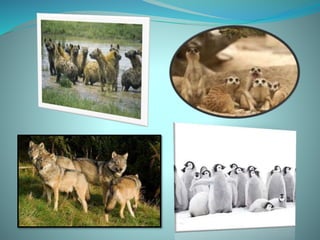
A mother 
animal 
taking care 
of her 
child.
SOCIAL BEHAVIOR 
Includes “fight or flight” and aggressive and passive 
behaviors between animals 
Includes interactions with other animals, humans and 
behavior during handling and restraint 
Examples of Social Behavior 
o Animals living together 
o Animals use pheromones to attract the opposite sex and in sex 
recognition in many species. 
o Many animals defend a territory 
o Dominance hierarchy of animals.
Male 
siberian 
tigers 
fighting 
each other
Animals 
living 
together
FEEDING BEHAVIOR 
Exhibited by animals when eating and drinking 
(Ingestive Behavior) 
oThe ability of animals to eat a variety of foods 
o Some animals obtaining nutrients by eating 
all of an organism. 
o The animals obtaining nutrients by consuming 
other organisms fluids. 
o Some animals exhibit hoarding and catching 
behavior in which they store or hide.
A mosquito 
drinking 
blood from 
a human
A rosy boa 
eating a 
mouse 
whole.
A red 
kangaroo 
eating 
grass.
A frog 
eating 
insect
Black bears have learned 
to choose minivans as 
targets for raiding food! 
(Nat. Geo)
ELIMINATIVE BEHAVIOR 
Elimination of feces and urine 
Examples of Eliminative Behavior 
o Cattle, sheep, horses, goats and chickens eliminate feces & 
urine indiscriminately 
o Hogs eliminate feces in definite areas of a pasture or pen 
o Cattle, sheep, goats and swine defecate while standing or 
walking, urinate while standing, but not walking 
o Cattle defecate 12-18 times/day, urinate 7-11 times/day 
o Horses defecate 5-12 times/day, urinate 7-11 times/day 
o Animals defecate & urinate more when stressed or excited 
o Animals loose 3% of their live weight when transported to & 
from market points (Shrink)
SHELTER-SEEKING BEHAVIOR 
Examples of Shelter-Seeking Behavior 
o Animals crowd together in snow and cold 
winds 
o Animals seek shelter of trees when it rain 
o In extreme situations, animals pile up to the 
extent that some get smothered
THANK YOU FOR LISTENING 
MAY GOD BLESS US ALL 
IMEE ALCAYDE AND GEMMA D.APA-AP

animal behavior

  • 2.
    TERMS TO KNOW Instinct – (reflexes and responses) what the animal has at birth. Ex. Nursing, searching for food. Habituation – learning to respond without thinking, response to certain stimulus is established as a result of habituation. Conditioning – learning to respond in a particular way to a stimulus as a result of reinforcement when the proper response is made.
  • 3.
    TERMS TO KNOW Reinforcement – a reward for making the proper response. Reasoning – the ability to respond correctly to a stimulus the first time that a new situation is presented. Intelligence – the ability to learn to adjust successfully to certain situations. Both short-term and long-term memory are part of intelligence.
  • 4.
    MAJOR TYPES OFANIMAL BEHAVIOR Sexual Maternal Communicative Social Feeding Eliminative Shelter- Seeking
  • 5.
    SEXUAL BEHAVIOR Usefulin implementing breeding programs Examples of Sexual Behavior o Animals sexuality instinctive and simple response to the right stimulation(sight,scent). o Many animals species have specific mating or breeding seasons. o Some males animals dominate sexually by sheer force and size. o Sexual cannibalism
  • 6.
  • 8.
    Typical muscovy duck intercourse,the male immobilises the female
  • 9.
  • 11.
    COMMUNICATIVE BEHAVIOR Whensome type of information is exchanged between individual and animals Examples of Communicative Behavior o Distress Calls – Lambs bleat, calves bawl, pigs squeal,wolf howl and chicks chirp o A cat marks to warn other animals to stay away o Farm animals respond to calls or whistles of the producer o Bulls bellow deeply to communicate aggressive behavior
  • 12.
  • 13.
  • 14.
  • 15.
  • 16.
    MATERNAL BEHAVIOR Femalestaking care of newborn and young animals Examples of Maternal Behavior o Mothers clean young by licking them o Mothers fight off intruders o Become aggressive in protecting they young after birth
  • 18.
    A mother animal taking care of her child.
  • 19.
    SOCIAL BEHAVIOR Includes“fight or flight” and aggressive and passive behaviors between animals Includes interactions with other animals, humans and behavior during handling and restraint Examples of Social Behavior o Animals living together o Animals use pheromones to attract the opposite sex and in sex recognition in many species. o Many animals defend a territory o Dominance hierarchy of animals.
  • 20.
    Male siberian tigers fighting each other
  • 21.
  • 23.
    FEEDING BEHAVIOR Exhibitedby animals when eating and drinking (Ingestive Behavior) oThe ability of animals to eat a variety of foods o Some animals obtaining nutrients by eating all of an organism. o The animals obtaining nutrients by consuming other organisms fluids. o Some animals exhibit hoarding and catching behavior in which they store or hide.
  • 24.
    A mosquito drinking blood from a human
  • 25.
    A rosy boa eating a mouse whole.
  • 26.
    A red kangaroo eating grass.
  • 27.
  • 28.
    Black bears havelearned to choose minivans as targets for raiding food! (Nat. Geo)
  • 30.
    ELIMINATIVE BEHAVIOR Eliminationof feces and urine Examples of Eliminative Behavior o Cattle, sheep, horses, goats and chickens eliminate feces & urine indiscriminately o Hogs eliminate feces in definite areas of a pasture or pen o Cattle, sheep, goats and swine defecate while standing or walking, urinate while standing, but not walking o Cattle defecate 12-18 times/day, urinate 7-11 times/day o Horses defecate 5-12 times/day, urinate 7-11 times/day o Animals defecate & urinate more when stressed or excited o Animals loose 3% of their live weight when transported to & from market points (Shrink)
  • 31.
    SHELTER-SEEKING BEHAVIOR Examplesof Shelter-Seeking Behavior o Animals crowd together in snow and cold winds o Animals seek shelter of trees when it rain o In extreme situations, animals pile up to the extent that some get smothered
  • 33.
    THANK YOU FORLISTENING MAY GOD BLESS US ALL IMEE ALCAYDE AND GEMMA D.APA-AP