

* Corneal collagen-
cross-linking for
veterinarians
* Collagen Cross-Linking
Dr Frank FAMOSE – DESV-ophta
frankfamose@gmail.com
Toulouse October 6th, 2016
2
CXL wetlab sponsors
ESVO-SFEROV
CXL wetlab
Basic principles and clinical indications
• Principles of riboflavin activation
• Tissular effects of cross-linking
• Riboflavin shield
• Conventional and non- conventional
indications
Riboflavin administration
• Chemical and physical properties
• Riboflavin solutions
• Principles of administration
UVA irradiation
• UV spectrum
• UV production
• The lamps
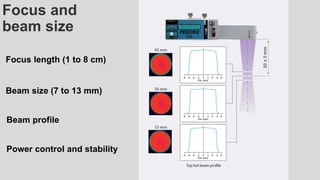
• Focus and beam size
• Lambert-Beer law
• Protocols
CXL step by step
What about money ?
Basic principles and clinical indications
Principles of riboflavin activation
Tissular effects of cross-linking
Collagen "polymerisation"
Anti-infectious effects
Keratocyte apoptosis
Riboflavin shield
Conventional and non- conventional indications
Conventional indications
Non conventional indications
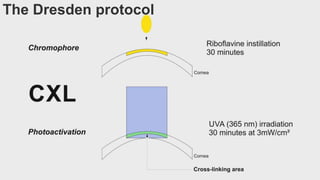
The Dresden protocol
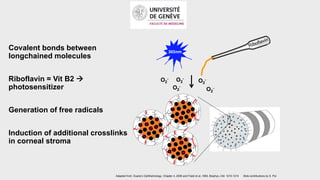
Covalent bonds between
longchained molecules
Riboflavin = Vit B2 
photosensitizer
Generation of free radicals
Induction of additional crosslinks
in corneal stroma
Adapted from: Duane’s Ophthalmology, Chapter 4, 2006 and Fratzl et al.,1993, Biophys J 64: 1210-1214
365nm
O2
-
O2
-O2
-
O2
- O2
-
Slide contributions by S. Pot
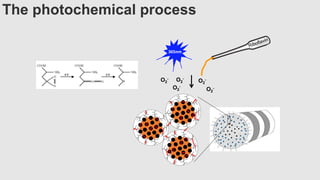
The photochemical process
365nm
O2
-
O2
-O2
-
O2
- O2
-
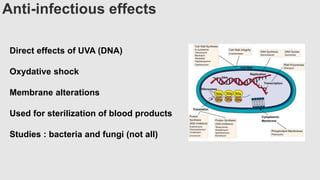
Anti-infectious effects
Direct effects of UVA (DNA)
Oxydative shock
Membrane alterations
Used for sterilization of blood products
Studies : bacteria and fungi (not all)
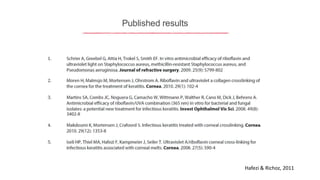
Hafezi & Richoz, 2011
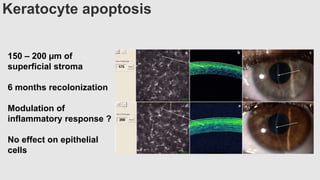
Keratocyte apoptosis
150 – 200 µm of
superficial stroma
6 months recolonization
Modulation of
inflammatory response ?
No effect on epithelial
cells
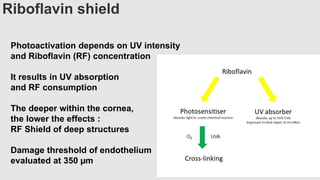
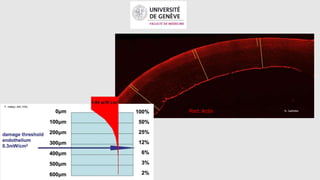
Riboflavin shield
Photoactivation depends on UV intensity
and Riboflavin (RF) concentration
It results in UV absorption
and RF consumption
The deeper within the cornea,
the lower the effects :
RF Shield of deep structures
Damage threshold of endothelium
evaluated at 350 µm
F. Hafezi, MD, PhD
N. GallhöferRed: Actin
Conventional and non- conventional
indications
Conventional indications (published)
Non conventional indications
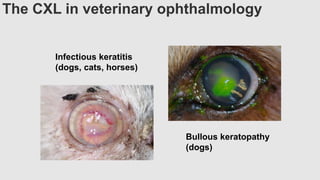
The CXL in veterinary ophthalmology
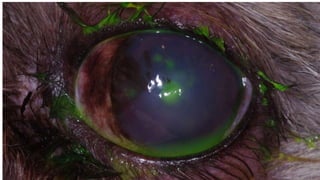
Infectious keratitis
(dogs, cats, horses)
Bullous keratopathy
(dogs)
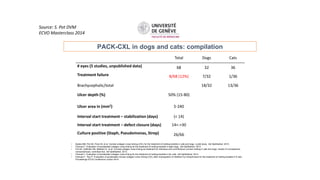
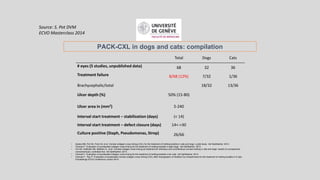
PACK-CXL in dogs and cats: compilation
• Spiess BM, Pot SA, Florin M, et al. Corneal collagen cross-linking (CXL) for the treatment of melting keratitis in cats and dogs: a pilot study. Vet Ophthalmol. 2013.
• Famose F. Evaluation of accelerated collagen cross-linking for the treatment of melting keratitis in eight dogs. Vet Ophthalmol. 2013.
• Pot SA, Gallhofer NS, Matheis FL, et al. Corneal collagen cross-linking as treatment for infectious and noninfectious corneal melting in cats and dogs: results of a prospective,
nonrandomized, controlled trial. Vet Ophthalmol. 2013.
• Famose F. Evaluation of accelerated collagen cross-linking for the treatment of melting keratitis in ten cats. Vet Ophthalmol. 2013.
• Famose F, Roy P. Evaluation of accelerated corneal collagen cross-linking (CXL) after impregnation of riboflavin by iontophoresis for the treatment of melting keratitis in 6 cats,
Proceedings ECVO conference London 2014.
Total Dogs Cats
# eyes (5 studies, unpublished data) 68 32 36
Treatment failure 8/68 (12%) 7/32 1/36
Brachycephalic/total 18/32 13/36
Ulcer depth (%) 50% (15-80)
Ulcer area in (mm2) 5-240
Interval start treatment – stabilization (days) (< 14)
Interval start treatment – defect closure (days) 14<->30
Culture positive (Staph, Pseudomonas, Strep) 26/66
Source: S. Pot DVM
ECVO Masterclass 2014
Non conventional indications
Adjunctive treatment for conjunctival graft
Corneal flap stabilization
Post-keratectomy (feline sequestrum ?)
Biosynthetic corneal implant fixation
Wound strenghtening
Riboflavin administration
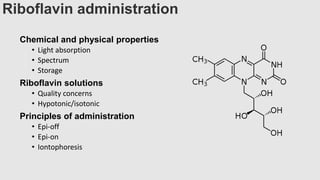
Chemical and physical properties
• Light absorption
• Spectrum
• Storage
Riboflavin solutions
• Quality concerns
• Hypotonic/isotonic
Principles of administration
• Epi-off
• Epi-on
• Iontophoresis
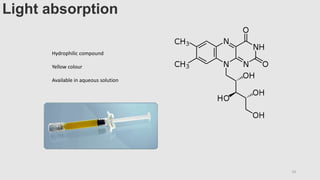
Light absorption
19
Hydrophilic compound
Yellow colour
Available in aqueous solution
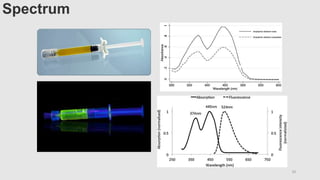
Spectrum
20
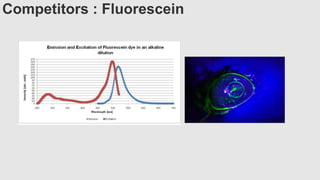
Competitors : Fluorescein
Storage
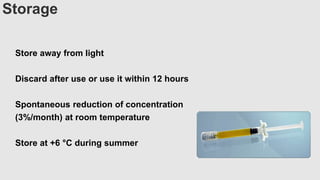
Store away from light
Discard after use or use it within 12 hours
Spontaneous reduction of concentration
(3%/month) at room temperature
Store at +6 °C during summer
Riboflavin solutions for CXL
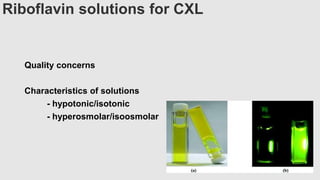
Quality concerns
Characteristics of solutions
- hypotonic/isotonic
- hyperosmolar/isoosmolar
Quality concerns
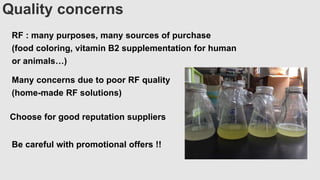
RF : many purposes, many sources of purchase
(food coloring, vitamin B2 supplementation for human
or animals…)
Many concerns due to poor RF quality
(home-made RF solutions)
Choose for good reputation suppliers
Be careful with promotional offers !!
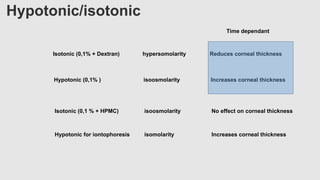
Hypotonic/isotonic
Isotonic (0,1% + Dextran) hypersomolarity Reduces corneal thickness
Hypotonic (0,1% ) isoosmolarity Increases corneal thickness
Time dependant
Hypotonic for iontophoresis isomolarity Increases corneal thickness
Isotonic (0,1 % + HPMC) isoosmolarity No effect on corneal thickness
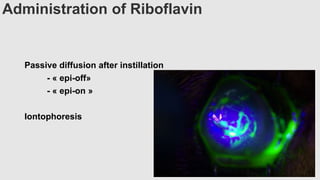
Administration of Riboflavin
Passive diffusion after instillation
- « epi-off»
- « epi-on »
Iontophoresis
Principles of administration
28
Epi-off
Conventional « epi-off »:
epithelial removal after trephination (keratoconus)
Window « epi-off »:
no additional epithelial removal (ulcerative keratitis)
Topical instillation :
one drop every two minutes for 20-30 minutes
Epi-on (transepithelial)
Enhanced transepithelial penetration of RF (BAC)
Reduced penetration of RF (compared to epi-off)
Less biological effects for keratoconus treatment
Not indicated for veterinary patients
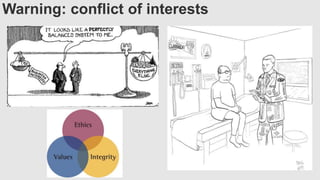
Warning: conflict of interests
32
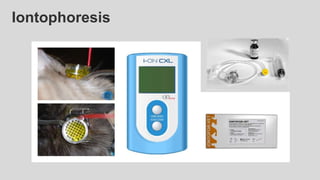
Iontophoresis
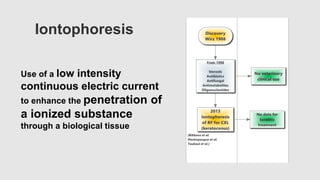
Use of a low intensity
continuous electric current
to enhance the penetration of
a ionized substance
through a biological tissue
Iontophoresis
Same therapeutic
effects (keratitis)
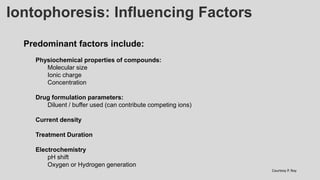
Iontophoresis: Influencing Factors
Courtesy P. Roy
Predominant factors include:
Physiochemical properties of compounds:
Molecular size
Ionic charge
Concentration
Drug formulation parameters:
Diluent / buffer used (can contribute competing ions)
Current density
Treatment Duration
Electrochemistry
pH shift
Oxygen or Hydrogen generation
Iontophoresis: pH shift issue
generatore- e-
+ -
2H2O => O2(g) + 4H + 2e+ -
H2O + 2e => H2(g) + 2OH
- -
Anode Cathode
+ -
Drug - OH-
OH-
Le temps limité d’application est avantageux en ophtalmologie, car le pH n’a pas le
temps d’évoluer (augmentation du pH à la cathode)
Drug + H+
H+
pHpH
Courtesy P. Roy
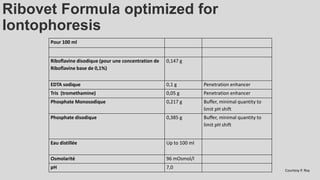
Ribovet Formula optimized for
Iontophoresis
Pour 100 ml
Riboflavine disodique (pour une concentration de
Riboflavine base de 0,1%)
0,147 g
EDTA sodique 0,1 g Penetration enhancer
Tris (tromethamine) 0,05 g Penetration enhancer
Phosphate Monosodique 0,217 g Buffer, minimal quantity to
limit pH shift
Phosphate disodique 0,385 g Buffer, minimal quantity to
limit pH shift
Eau distillée Up to 100 ml
Osmolarité 96 mOsmol/l
pH 7,0
Courtesy P. Roy
Take-home message
Don’t use Fluorescein immediately before RF
or 3rd generation quinolones 24h before CXL
Purchase RF solutions from certified medical companies
Store away from light and don’t reuse
Chose your RF solution according to your purpose
Do not substitute RF solutions (ex: isotonic for iontophoresis)
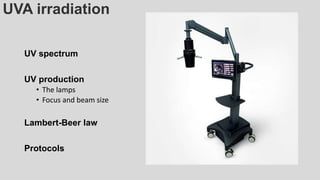
UVA irradiation
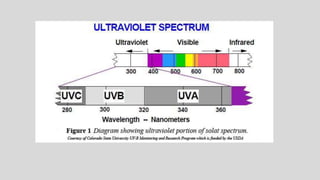
UV spectrum
UV production
• The lamps
• Focus and beam size
Lambert-Beer law
Protocols
The lamps
UVA production: diode Easy use
Ergonomy
- hand-held
- fixed to the operating table
- with support
Power (mW/cm²)
- fixed
- variable (continuous or not)
Price
Open or closed system
Focus and
beam size
Focus length (1 to 8 cm)
Beam size (7 to 13 mm)
Beam profile
Power control and stability
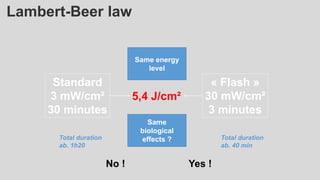
Standard
3 mW/cm²
30 minutes
« Flash »
30 mW/cm²
3 minutes
5,4 J/cm²
Total duration
ab. 1h20
Total duration
ab. 40 min
Same
biological
effects ?
Same energy
level
Lambert-Beer law
Yes !No !
Take-home message
Choose a good quality lamp
Choose Power/time according to your purpose
Protocols
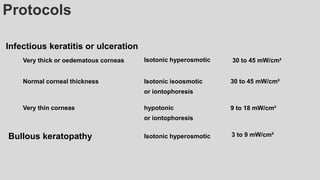
Infectious keratitis or ulceration
Bullous keratopathy
Very thick or oedematous corneas
Normal corneal thickness
Very thin corneas
Isotonic hyperosmotic 30 to 45 mW/cm²
Isotonic isoosmotic
or iontophoresis
30 to 45 mW/cm²
hypotonic
or iontophoresis
9 to 18 mW/cm²
Isotonic hyperosmotic 3 to 9 mW/cm²
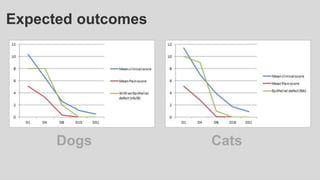
Expected outcomes
Dogs Cats
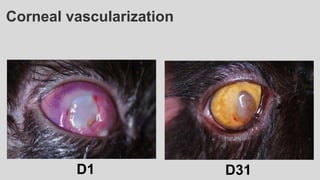
D1 D31
Corneal vascularization
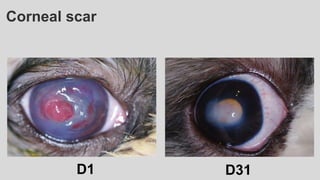
Corneal scar
D1 D31
PACK-CXL in dogs and cats: compilation
• Spiess BM, Pot SA, Florin M, et al. Corneal collagen cross-linking (CXL) for the treatment of melting keratitis in cats and dogs: a pilot study. Vet Ophthalmol. 2013.
• Famose F. Evaluation of accelerated collagen cross-linking for the treatment of melting keratitis in eight dogs. Vet Ophthalmol. 2013.
• Pot SA, Gallhofer NS, Matheis FL, et al. Corneal collagen cross-linking as treatment for infectious and noninfectious corneal melting in cats and dogs: results of a prospective,
nonrandomized, controlled trial. Vet Ophthalmol. 2013.
• Famose F. Evaluation of accelerated collagen cross-linking for the treatment of melting keratitis in ten cats. Vet Ophthalmol. 2013.
• Famose F, Roy P. Evaluation of accelerated corneal collagen cross-linking (CXL) after impregnation of riboflavin by iontophoresis for the treatment of melting keratitis in 6 cats,
Proceedings ECVO conference London 2014.
Total Dogs Cats
# eyes (5 studies, unpublished data) 68 32 36
Treatment failure 8/68 (12%) 7/32 1/36
Brachycephalic/total 18/32 13/36
Ulcer depth (%) 50% (15-80)
Ulcer area in (mm2) 5-240
Interval start treatment – stabilization (days) (< 14)
Interval start treatment – defect closure (days) 14<->30
Culture positive (Staph, Pseudomonas, Strep) 26/66
Source: S. Pot DVM
ECVO Masterclass 2014
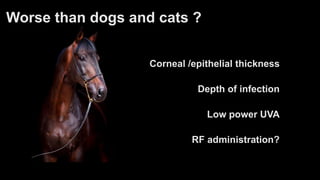
Worse than dogs and cats ?
Corneal /epithelial thickness
Depth of infection
Low power UVA
RF administration?
Marginal gains management
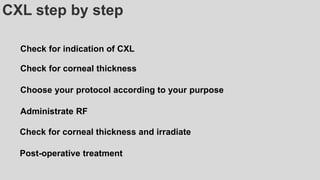
CXL step by step
Check for indication of CXL
Check for corneal thickness
Choose your protocol according to your purpose
Administrate RF
Check for corneal thickness and irradiate
Post-operative treatment
Continous improvement !
What about money ?
Cost analysis
Pricing
Financial analysis
Cost analysis
59
Lamp (15-17 k€ - ab 350 €/month for 4 years)
Riboflavin (35-125 €/treatment)
Anesthesia
Structure overheads
Human cost (in France : nurse – 30 €/hour, vet – 60 €/hour)
Pricing
What the price sould allow :
To cover the costs
To pay the shareholders
To invest
To replace the devices used in the process
What the price is what your client can afford and agrees to give you!
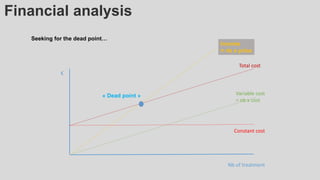
Financial analysis
Seeking for the dead point…
€
Nb of treatment
Constant cost
Variable cost
= nb x cost
Income
= nb x price
Total cost
« Dead point »
Example
DP =Constant cost/(Price – Variable cost)
Loan = 350 €/month
Cost of Treatment = 100 €
If price = 300 euros DP =1,75 treatment/month
If price = 400 euros DP = 1,17 treatment/month
If price = 500 euros DP < 1 treatment/month
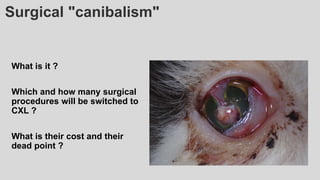
Surgical "canibalism"
What is it ?
Which and how many surgical
procedures will be switched to
CXL ?
What is their cost and their
dead point ?
The added value of CXL for keratitis
High-rate success
Better visual issues
Shorter anesthesia
No need of surgical material
Can be converted to conjunctival graft
Conclusion
No Fluorescein or 3rd G quinolones
Take care of your RF
Chose it wisely and don’t substitute
A good lamp
The right protocol
Analyse your results
Do it right !
66
CXL wetlab sponsors

ESVO_SFEROV_Wetlab_Cross-linking_Frank-Famose

  • 1.
    * Corneal collagen- cross-linkingfor veterinarians * Collagen Cross-Linking Dr Frank FAMOSE – DESV-ophta frankfamose@gmail.com Toulouse October 6th, 2016
  • 2.
  • 3.
    ESVO-SFEROV CXL wetlab Basic principlesand clinical indications • Principles of riboflavin activation • Tissular effects of cross-linking • Riboflavin shield • Conventional and non- conventional indications Riboflavin administration • Chemical and physical properties • Riboflavin solutions • Principles of administration UVA irradiation • UV spectrum • UV production • The lamps • Focus and beam size • Lambert-Beer law • Protocols CXL step by step What about money ?
  • 4.
    Basic principles andclinical indications Principles of riboflavin activation Tissular effects of cross-linking Collagen "polymerisation" Anti-infectious effects Keratocyte apoptosis Riboflavin shield Conventional and non- conventional indications Conventional indications Non conventional indications
  • 5.
  • 6.
    Covalent bonds between longchainedmolecules Riboflavin = Vit B2  photosensitizer Generation of free radicals Induction of additional crosslinks in corneal stroma Adapted from: Duane’s Ophthalmology, Chapter 4, 2006 and Fratzl et al.,1993, Biophys J 64: 1210-1214 365nm O2 - O2 -O2 - O2 - O2 - Slide contributions by S. Pot
  • 7.
  • 8.
    Anti-infectious effects Direct effectsof UVA (DNA) Oxydative shock Membrane alterations Used for sterilization of blood products Studies : bacteria and fungi (not all)
  • 9.
  • 10.
    Keratocyte apoptosis 150 –200 µm of superficial stroma 6 months recolonization Modulation of inflammatory response ? No effect on epithelial cells
  • 11.
    Riboflavin shield Photoactivation dependson UV intensity and Riboflavin (RF) concentration It results in UV absorption and RF consumption The deeper within the cornea, the lower the effects : RF Shield of deep structures Damage threshold of endothelium evaluated at 350 µm
  • 12.
    F. Hafezi, MD,PhD N. GallhöferRed: Actin
  • 13.
    Conventional and non-conventional indications Conventional indications (published) Non conventional indications
  • 14.
    The CXL inveterinary ophthalmology Infectious keratitis (dogs, cats, horses) Bullous keratopathy (dogs)
  • 16.
    PACK-CXL in dogsand cats: compilation • Spiess BM, Pot SA, Florin M, et al. Corneal collagen cross-linking (CXL) for the treatment of melting keratitis in cats and dogs: a pilot study. Vet Ophthalmol. 2013. • Famose F. Evaluation of accelerated collagen cross-linking for the treatment of melting keratitis in eight dogs. Vet Ophthalmol. 2013. • Pot SA, Gallhofer NS, Matheis FL, et al. Corneal collagen cross-linking as treatment for infectious and noninfectious corneal melting in cats and dogs: results of a prospective, nonrandomized, controlled trial. Vet Ophthalmol. 2013. • Famose F. Evaluation of accelerated collagen cross-linking for the treatment of melting keratitis in ten cats. Vet Ophthalmol. 2013. • Famose F, Roy P. Evaluation of accelerated corneal collagen cross-linking (CXL) after impregnation of riboflavin by iontophoresis for the treatment of melting keratitis in 6 cats, Proceedings ECVO conference London 2014. Total Dogs Cats # eyes (5 studies, unpublished data) 68 32 36 Treatment failure 8/68 (12%) 7/32 1/36 Brachycephalic/total 18/32 13/36 Ulcer depth (%) 50% (15-80) Ulcer area in (mm2) 5-240 Interval start treatment – stabilization (days) (< 14) Interval start treatment – defect closure (days) 14<->30 Culture positive (Staph, Pseudomonas, Strep) 26/66 Source: S. Pot DVM ECVO Masterclass 2014
  • 17.
    Non conventional indications Adjunctivetreatment for conjunctival graft Corneal flap stabilization Post-keratectomy (feline sequestrum ?) Biosynthetic corneal implant fixation Wound strenghtening
  • 18.
    Riboflavin administration Chemical andphysical properties • Light absorption • Spectrum • Storage Riboflavin solutions • Quality concerns • Hypotonic/isotonic Principles of administration • Epi-off • Epi-on • Iontophoresis
  • 19.
    Light absorption 19 Hydrophilic compound Yellowcolour Available in aqueous solution
  • 20.
  • 21.
  • 23.
    Storage Store away fromlight Discard after use or use it within 12 hours Spontaneous reduction of concentration (3%/month) at room temperature Store at +6 °C during summer
  • 24.
    Riboflavin solutions forCXL Quality concerns Characteristics of solutions - hypotonic/isotonic - hyperosmolar/isoosmolar
  • 25.
    Quality concerns RF :many purposes, many sources of purchase (food coloring, vitamin B2 supplementation for human or animals…) Many concerns due to poor RF quality (home-made RF solutions) Choose for good reputation suppliers Be careful with promotional offers !!
  • 26.
    Hypotonic/isotonic Isotonic (0,1% +Dextran) hypersomolarity Reduces corneal thickness Hypotonic (0,1% ) isoosmolarity Increases corneal thickness Time dependant Hypotonic for iontophoresis isomolarity Increases corneal thickness Isotonic (0,1 % + HPMC) isoosmolarity No effect on corneal thickness
  • 27.
    Administration of Riboflavin Passivediffusion after instillation - « epi-off» - « epi-on » Iontophoresis
  • 28.
  • 29.
    Epi-off Conventional « epi-off»: epithelial removal after trephination (keratoconus) Window « epi-off »: no additional epithelial removal (ulcerative keratitis) Topical instillation : one drop every two minutes for 20-30 minutes
  • 30.
    Epi-on (transepithelial) Enhanced transepithelialpenetration of RF (BAC) Reduced penetration of RF (compared to epi-off) Less biological effects for keratoconus treatment Not indicated for veterinary patients
  • 31.
  • 32.
  • 34.
    Iontophoresis Use of alow intensity continuous electric current to enhance the penetration of a ionized substance through a biological tissue
  • 35.
  • 36.
    Iontophoresis: Influencing Factors CourtesyP. Roy Predominant factors include: Physiochemical properties of compounds: Molecular size Ionic charge Concentration Drug formulation parameters: Diluent / buffer used (can contribute competing ions) Current density Treatment Duration Electrochemistry pH shift Oxygen or Hydrogen generation
  • 37.
    Iontophoresis: pH shiftissue generatore- e- + - 2H2O => O2(g) + 4H + 2e+ - H2O + 2e => H2(g) + 2OH - - Anode Cathode + - Drug - OH- OH- Le temps limité d’application est avantageux en ophtalmologie, car le pH n’a pas le temps d’évoluer (augmentation du pH à la cathode) Drug + H+ H+ pHpH Courtesy P. Roy
  • 38.
    Ribovet Formula optimizedfor Iontophoresis Pour 100 ml Riboflavine disodique (pour une concentration de Riboflavine base de 0,1%) 0,147 g EDTA sodique 0,1 g Penetration enhancer Tris (tromethamine) 0,05 g Penetration enhancer Phosphate Monosodique 0,217 g Buffer, minimal quantity to limit pH shift Phosphate disodique 0,385 g Buffer, minimal quantity to limit pH shift Eau distillée Up to 100 ml Osmolarité 96 mOsmol/l pH 7,0 Courtesy P. Roy
  • 41.
    Take-home message Don’t useFluorescein immediately before RF or 3rd generation quinolones 24h before CXL Purchase RF solutions from certified medical companies Store away from light and don’t reuse Chose your RF solution according to your purpose Do not substitute RF solutions (ex: isotonic for iontophoresis)
  • 42.
    UVA irradiation UV spectrum UVproduction • The lamps • Focus and beam size Lambert-Beer law Protocols
  • 44.
    The lamps UVA production:diode Easy use Ergonomy - hand-held - fixed to the operating table - with support Power (mW/cm²) - fixed - variable (continuous or not) Price Open or closed system
  • 45.
    Focus and beam size Focuslength (1 to 8 cm) Beam size (7 to 13 mm) Beam profile Power control and stability
  • 47.
    Standard 3 mW/cm² 30 minutes «Flash » 30 mW/cm² 3 minutes 5,4 J/cm² Total duration ab. 1h20 Total duration ab. 40 min Same biological effects ? Same energy level Lambert-Beer law Yes !No !
  • 48.
    Take-home message Choose agood quality lamp Choose Power/time according to your purpose
  • 49.
    Protocols Infectious keratitis orulceration Bullous keratopathy Very thick or oedematous corneas Normal corneal thickness Very thin corneas Isotonic hyperosmotic 30 to 45 mW/cm² Isotonic isoosmotic or iontophoresis 30 to 45 mW/cm² hypotonic or iontophoresis 9 to 18 mW/cm² Isotonic hyperosmotic 3 to 9 mW/cm²
  • 50.
  • 51.
  • 52.
  • 53.
    PACK-CXL in dogsand cats: compilation • Spiess BM, Pot SA, Florin M, et al. Corneal collagen cross-linking (CXL) for the treatment of melting keratitis in cats and dogs: a pilot study. Vet Ophthalmol. 2013. • Famose F. Evaluation of accelerated collagen cross-linking for the treatment of melting keratitis in eight dogs. Vet Ophthalmol. 2013. • Pot SA, Gallhofer NS, Matheis FL, et al. Corneal collagen cross-linking as treatment for infectious and noninfectious corneal melting in cats and dogs: results of a prospective, nonrandomized, controlled trial. Vet Ophthalmol. 2013. • Famose F. Evaluation of accelerated collagen cross-linking for the treatment of melting keratitis in ten cats. Vet Ophthalmol. 2013. • Famose F, Roy P. Evaluation of accelerated corneal collagen cross-linking (CXL) after impregnation of riboflavin by iontophoresis for the treatment of melting keratitis in 6 cats, Proceedings ECVO conference London 2014. Total Dogs Cats # eyes (5 studies, unpublished data) 68 32 36 Treatment failure 8/68 (12%) 7/32 1/36 Brachycephalic/total 18/32 13/36 Ulcer depth (%) 50% (15-80) Ulcer area in (mm2) 5-240 Interval start treatment – stabilization (days) (< 14) Interval start treatment – defect closure (days) 14<->30 Culture positive (Staph, Pseudomonas, Strep) 26/66 Source: S. Pot DVM ECVO Masterclass 2014
  • 54.
    Worse than dogsand cats ? Corneal /epithelial thickness Depth of infection Low power UVA RF administration?
  • 55.
  • 56.
    CXL step bystep Check for indication of CXL Check for corneal thickness Choose your protocol according to your purpose Administrate RF Check for corneal thickness and irradiate Post-operative treatment
  • 57.
  • 58.
    What about money? Cost analysis Pricing Financial analysis
  • 59.
    Cost analysis 59 Lamp (15-17k€ - ab 350 €/month for 4 years) Riboflavin (35-125 €/treatment) Anesthesia Structure overheads Human cost (in France : nurse – 30 €/hour, vet – 60 €/hour)
  • 60.
    Pricing What the pricesould allow : To cover the costs To pay the shareholders To invest To replace the devices used in the process What the price is what your client can afford and agrees to give you!
  • 61.
    Financial analysis Seeking forthe dead point… € Nb of treatment Constant cost Variable cost = nb x cost Income = nb x price Total cost « Dead point »
  • 62.
    Example DP =Constant cost/(Price– Variable cost) Loan = 350 €/month Cost of Treatment = 100 € If price = 300 euros DP =1,75 treatment/month If price = 400 euros DP = 1,17 treatment/month If price = 500 euros DP < 1 treatment/month
  • 63.
    Surgical "canibalism" What isit ? Which and how many surgical procedures will be switched to CXL ? What is their cost and their dead point ?
  • 64.
    The added valueof CXL for keratitis High-rate success Better visual issues Shorter anesthesia No need of surgical material Can be converted to conjunctival graft
  • 65.
    Conclusion No Fluorescein or3rd G quinolones Take care of your RF Chose it wisely and don’t substitute A good lamp The right protocol Analyse your results Do it right !
  • 66.

Editor's Notes

  • #7 First of all I would like to explain what crosslinking is. The term crosslinking refers to the formation of covalent bonds between long chained molecules. In corneal collagen crosslinking, Riboflavin - which is Vitamin B2 - is used as a photosensitizer. It generates free radicals when activated by UV-A light at 365nm. These free radicals induce additional covalent bonds, or crosslinks in the corneal stroma. These crosslinks occur supposedly at the surface of the collagen fibrils and within the proteoglycan rich coating surrounding them.
  • #9 Anti-infectious effects Know for a long time and used for preparation and sterilization of blood products Evaluated in vitro, ex vivo and in vivo in many infectious agents (caution with fungi) Mechanisms include direct effects of UV on bacterial DNA, membrane oxydations, oxydative stress
  • #11 Keratocyte apoptosis Due to the same effects as anti-infectious. Disappearance of keratocyte and late recolonization. No effects on epithelial cells (no RF concentration) but on endothelial cells (thanks to riboflavin shield) thought to reduce antigen presentation cells and thus modulate inflammatory corneal response
  • #12 Riboflavin shield UV absorption depends on anterior stroma RF concentration : decrease of biological effects through the cornea = protection of the deepest structures (find out the slides from T. Seiler) Consequence : security margins and minimal corneal thickness
  • #13 On the left side of the chart one can see the depth of penetration into the cornea indicated. The numbers on the right side of the chart indicate the decrease in UVA energy absorbtion by the corneal tissue. Note that the damage threshhold for the endothelium is reached at an approximate depth of 350micrometers. Energy absorbtion levels in the lens and retina are orders of magnitude smaller than the damage threshholds for those tissues.
  • #17 Brachycephalic: dogs 18/32, cats 13/35. Failures: 5/25 with standard protocol. 3/43 w accelerated protocol. But ulcers in standard prot studies larger.
  • #18 Non conventional indications Corneal flap stabilization biosynthetic corneal implant fixation post-keratectomy stabilization (feline sequestrum surgery) corneal perforation ?
  • #20 Light absorption hydrophilic compound orange colour, availlable in aqueous solution
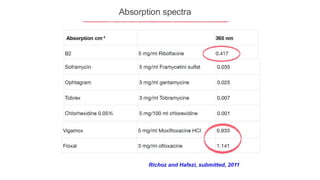
  • #21 Spectrum Two absorption peaks : orange ( ? nm) and UVA (365 nm) Trouver image du spectre Close to Fluorescein absoption spectrum, specifically in UV range, without the biological effects : consequence, do not use Fluorescein prior to CXL to avoid competition between the two molecules (Richoz 2014)
  • #24 Storage Protect from light exposure, discard after use Store away from light spontaneous reduction of concentration as 3 % per month (be careful with long peremption dates). Store at low temperature in summer.
  • #26 Quality concerns Riboflavin is a chemical compound used in many purposes and that can be purchased from many sources such as chemical suppliers, animal food producers or medical companies. Be careful with commercial offers. The cheaper is not the better About all the drawbacks observed during CXL prodecures are thought to be due to poor riboflavin quality (contamination, purity, storage). Price range is about 100 euros/dose (125 with iontophoresis device) Buy it from a "serious" supplier.
  • #27 Hypotonic/isotonic Depending of additional compounds, RF solution can be considered as - hypotonic - isotonic Effects on the cornea are different such as : hypotonic is hypoosmolar and tends to increase stromal thickness, and isotonic is hyperosmotic and tends to reduce corneal thickness. RF solution for iontophoresis is hypoosmolar but the short time of contact prevents any modificiation fo the corneal thickness. Faire le tableau avec composés du commerce.
  • #30 Epi-off RF is instilled directly in contact with the hydrophilic stroma ie after removal of the epithelium. This can lead to specific complications in humans in the treatment of keratoconus (infectious keratitis, pain...). This is not a concern in vet patients treated for ulcerative conditions. Therefore, epithelial margins are not always removed : this is called "window administration" with further diffusion under the ulcer margins. Duration of the instillation ranges from 20 to 30 minutes (Dresden protocol)
  • #31 Epi-on RF has to "cross" the epithelium for stromal impregnation. Many adjuvants can be used (BAK...) to enhance absorption.
  • #35 The principle of iontophoresis is to increase the penetration of a ionized substance through a tissue by the application of a constant electric current. It has been used for first time in ophthalmology in the beginning of the 20th century. Many studies have been conducted since 1990 for the delivery of many drugs in the eye (like steroids and so on). The first use of iontophoresis for riboflavin delivery was published recently for the treatment of keratoconus. For the moment, no veterinary clinical use of ionto has been described and no data for keratitis treatment is available.
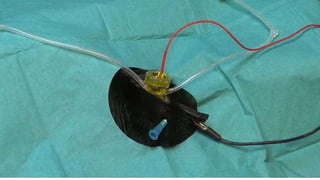
  • #36 The iontophoresis device we have used has three parts : The corneal electrode is maintained on the corneal surface by suction and is filled with riboflavin till the grid is covered. The generator applies a constant current between the electrodes The return electrode which is connected to a needle inserted under the frontal skin.
  • #44 UV spectrum UV spectrum can be devided in UVA, UVB and UVC according to their specturm (Find out the picture of the spectrum) Only UVA are efficient on RF activation, in 365 nm wave length
  • #45 The lamps There are many lamps commercially available. Some are very simple, based on diode technology, other are more sophisticated, including auto-calibration before and during corneal exposure. The prices depends on the power (from 3 mW/cm², to 45 or 60 mW/cm²), and on additionnal devices such as automatic exposure protocols, imbeded computer, auto-control, homogeneity of the beam. For lamps also, the cheaper is not the better. Plan to by also a UV meter if you buy a lamp without automatic calibration.
  • #46 Focus and beam size The power of the UV beam depends of the power of the lamp but also of the distance between the lamp and the eye (on the square distance to be perfectly precise). Some lamps have an automatic focus that determines also the size of the spot. Other have the ability to change the size of the spot within the same working zone. At the end, handheld lamps have a variable working distance and correct exposure could not be guaranted. The major argument of those who sell such lamps is : "it doesn't matter, exposure is not rocket science" The answer is : "if you want to do it right, everything matters"
  • #50 Protocols Following these indications, we can suggest many protocols depending on the aim of your cross-linking : - conventionnal protocol : Dresden protocol 30 minutes RF impregnation, 30 minutes irradiation at 3 mW/cm² : for collagen polymerisation and infectious keratitis treatment - accelerated protocol 30 minutes RF impregnation, 3-10 minutes irradiation at 10-30 mW/cm². For collagen polymerization (lower intensity) or keratitis treatment (higher intensity) - iontophoresis + accelerated CXL 5 minutes RF impregnation at 1 mA/cm² , 3 min at 30 mW/cm² for infectious keratitis Faire tableau résumé par indication
  • #54 Brachycephalic: dogs 18/32, cats 13/35. Failures: 5/25 with standard protocol. 3/43 w accelerated protocol. But ulcers in standard prot studies larger.
  • #57 CXL step by step Infectious keratitis : measurement of ulceration surface, stromal minimal thickness (>300 µm) corneal surface cleaning choice of RF impregnation protocol : iso or hypotonic, iontophoresis choice of UV delivery : conventional or accelerated Ultrathin corneas Need for RF shield : hypotonic RF + soaked contact lens Need for collagen : not to thin... Multiple lesions : multiple protocols Post-operative treatments : local atb till epithelial healing Bullous keratopathy Measurement of corneal thickness (just for fun) RF impregnation : hyperosmolar solution UV delivery : conventional or moderate acceleration (up to 9 mW/cm²) Faire tableau avec "best indications"
  • #60 Cost analysis the lamp, with a loan 4 years env 15000 euros (300 euros/month, to be confirmed) The RF, 100-125 euro per treatment Sedation or anaesthesia : depends on technique, animal weight, duration
  • #61 Pricing 600-800 euros/procedure
  • #62 financial analysis Dead-point analysis at one case/month
  • #66 conclusion Do it right for the beginning marginal gains : everything matters and could be improved all corneal diseases are not CXL indications but there are excellent indications for CXL Take the best to put all the chance on your side