Vitamins: Essential 
Nutrients 
{ 
By: Javier Ponce Jr 
HW499-01
The Basic Principles of 
Vitamins 
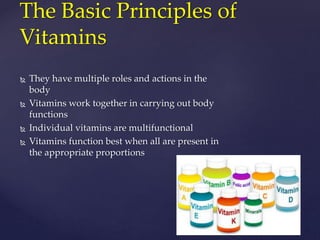
 They have multiple roles and actions in the 
body 
 Vitamins work together in carrying out body 
functions 
 Individual vitamins are multifunctional 
 Vitamins function best when all are present in 
the appropriate proportions
Why Are Vitamins 
Important to the body 
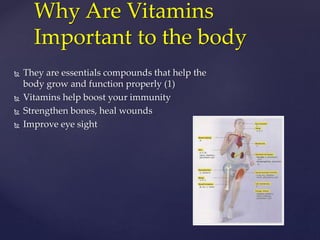
 They are essentials compounds that help the 
body grow and function properly (1) 
 Vitamins help boost your immunity 
 Strengthen bones, heal wounds 
 Improve eye sight
The Harms That Vitamins 
Supplements Can Have 
 According to the Organic Consumers Association in 
the USA, man-made vitamins cannot be used by the 
body in the same way as natural versions (2) 
 Synthetic vitamins are isolated and are not 
recognized by the body, they are often excreted in 
urine or stored in fat. (2) 
 In addition, synthetic vitamins may produce 
harmful side-effects. The synthetic version of 
vitamin A, retinol palmitate, for example, is 
significantly more toxic than the natural form.(2) 
 In a study in the American Journal of Clinical 
Nutrition in 2008, adults taking 1000mg of synthetic 
vitamin C (ascorbic acid) each day developed 
problems with energy metabolism. (2)
Benefits of Getting 
Vitamins From Food 
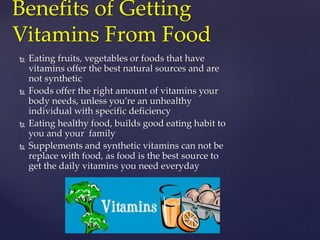
 Eating fruits, vegetables or foods that have 
vitamins offer the best natural sources and are 
not synthetic 
 Foods offer the right amount of vitamins your 
body needs, unless you’re an unhealthy 
individual with specific deficiency 
 Eating healthy food, builds good eating habit to 
you and your family 
 Supplements and synthetic vitamins can not be 
replace with food, as food is the best source to 
get the daily vitamins you need everyday
Fat-Soluble Vitamins & 
Water-Soluble Vitamins 
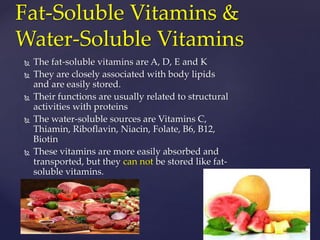
 The fat-soluble vitamins are A, D, E and K 
 They are closely associated with body lipids 
and are easily stored. 
 Their functions are usually related to structural 
activities with proteins 
 The water-soluble sources are Vitamins C, 
Thiamin, Riboflavin, Niacin, Folate, B6, B12, 
Biotin 
 These vitamins are more easily absorbed and 
transported, but they can not be stored like fat-soluble 
vitamins.
Fat-Soluble Foods 
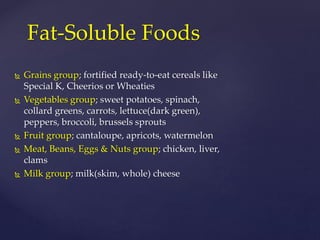
 Grains group; fortified ready-to-eat cereals like 
Special K, Cheerios or Wheaties 
 Vegetables group; sweet potatoes, spinach, 
collard greens, carrots, lettuce(dark green), 
peppers, broccoli, brussels sprouts 
 Fruit group; cantaloupe, apricots, watermelon 
 Meat, Beans, Eggs & Nuts group; chicken, liver, 
clams 
 Milk group; milk(skim, whole) cheese
Water-Soluble Foods 
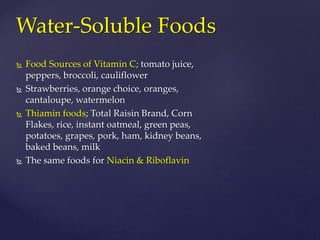
 Food Sources of Vitamin C; tomato juice, 
peppers, broccoli, cauliflower 
 Strawberries, orange choice, oranges, 
cantaloupe, watermelon 
 Thiamin foods; Total Raisin Brand, Corn 
Flakes, rice, instant oatmeal, green peas, 
potatoes, grapes, pork, ham, kidney beans, 
baked beans, milk 
 The same foods for Niacin & Riboflavin
Benefits of Fat-Soluble 
Vitamins 
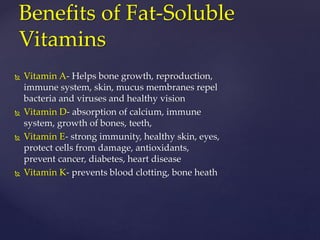
 Vitamin A- Helps bone growth, reproduction, 
immune system, skin, mucus membranes repel 
bacteria and viruses and healthy vision 
 Vitamin D- absorption of calcium, immune 
system, growth of bones, teeth, 
 Vitamin E- strong immunity, healthy skin, eyes, 
protect cells from damage, antioxidants, 
prevent cancer, diabetes, heart disease 
 Vitamin K- prevents blood clotting, bone heath
Benefits of Water-Soluble 
Vitamins 
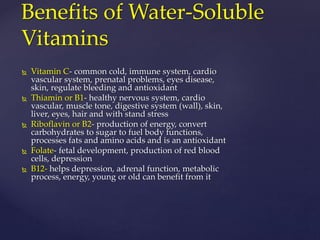
 Vitamin C- common cold, immune system, cardio 
vascular system, prenatal problems, eyes disease, 
skin, regulate bleeding and antioxidant 
 Thiamin or B1- healthy nervous system, cardio 
vascular, muscle tone, digestive system (wall), skin, 
liver, eyes, hair and with stand stress 
 Riboflavin or B2- production of energy, convert 
carbohydrates to sugar to fuel body functions, 
processes fats and amino acids and is an antioxidant 
 Folate- fetal development, production of red blood 
cells, depression 
 B12- helps depression, adrenal function, metabolic 
process, energy, young or old can benefit from it
References 
 1. Andrea Cespedes, (September 24, 2014) Why are 
vitamins important to your body. Retrieved from: 
www.livestrong.com 
 2. Anastasia Stephens, (2014) Vitamin supplements : 
good or bad? Retrieved from: www.netdoctor.co.uk 
 3. Eleanor D. Schkenker, Sara Long Roth, (20110 
Williams’ Essentials of Nutrition and Diet Therapy 
Tenth Edition. Elsevier Mosby 
 Picture #1. Top 5 best anti-aging & beauty vitamins. 
www.livingprettynaturally.com 
 Picture #2. Multi-Vitamins and Supplements. 
www.rebuildingyou.com 
 Picture #3. The importance of vitamins in our body. 
www.artides.com 
 Picture#4. Organic food, vitamins & supplements. 
www.thecrunchygrocer.com 
 Picture #5. Vitamins. www.kidhealth.org 
 Picture #6. Protein: The most important macronutrient. 
www.brecontreras.com 
 Picture #7 02-Food-hydrates-body-021211.jpg. 
www.boldsky.com

Essential vitamins

  • 1.
    Vitamins: Essential Nutrients { By: Javier Ponce Jr HW499-01
  • 2.
    The Basic Principlesof Vitamins  They have multiple roles and actions in the body  Vitamins work together in carrying out body functions  Individual vitamins are multifunctional  Vitamins function best when all are present in the appropriate proportions
  • 3.
    Why Are Vitamins Important to the body  They are essentials compounds that help the body grow and function properly (1)  Vitamins help boost your immunity  Strengthen bones, heal wounds  Improve eye sight
  • 4.
    The Harms ThatVitamins Supplements Can Have  According to the Organic Consumers Association in the USA, man-made vitamins cannot be used by the body in the same way as natural versions (2)  Synthetic vitamins are isolated and are not recognized by the body, they are often excreted in urine or stored in fat. (2)  In addition, synthetic vitamins may produce harmful side-effects. The synthetic version of vitamin A, retinol palmitate, for example, is significantly more toxic than the natural form.(2)  In a study in the American Journal of Clinical Nutrition in 2008, adults taking 1000mg of synthetic vitamin C (ascorbic acid) each day developed problems with energy metabolism. (2)
  • 5.
    Benefits of Getting Vitamins From Food  Eating fruits, vegetables or foods that have vitamins offer the best natural sources and are not synthetic  Foods offer the right amount of vitamins your body needs, unless you’re an unhealthy individual with specific deficiency  Eating healthy food, builds good eating habit to you and your family  Supplements and synthetic vitamins can not be replace with food, as food is the best source to get the daily vitamins you need everyday
  • 6.
    Fat-Soluble Vitamins & Water-Soluble Vitamins  The fat-soluble vitamins are A, D, E and K  They are closely associated with body lipids and are easily stored.  Their functions are usually related to structural activities with proteins  The water-soluble sources are Vitamins C, Thiamin, Riboflavin, Niacin, Folate, B6, B12, Biotin  These vitamins are more easily absorbed and transported, but they can not be stored like fat-soluble vitamins.
  • 7.
    Fat-Soluble Foods Grains group; fortified ready-to-eat cereals like Special K, Cheerios or Wheaties  Vegetables group; sweet potatoes, spinach, collard greens, carrots, lettuce(dark green), peppers, broccoli, brussels sprouts  Fruit group; cantaloupe, apricots, watermelon  Meat, Beans, Eggs & Nuts group; chicken, liver, clams  Milk group; milk(skim, whole) cheese
  • 8.
    Water-Soluble Foods Food Sources of Vitamin C; tomato juice, peppers, broccoli, cauliflower  Strawberries, orange choice, oranges, cantaloupe, watermelon  Thiamin foods; Total Raisin Brand, Corn Flakes, rice, instant oatmeal, green peas, potatoes, grapes, pork, ham, kidney beans, baked beans, milk  The same foods for Niacin & Riboflavin
  • 9.
    Benefits of Fat-Soluble Vitamins  Vitamin A- Helps bone growth, reproduction, immune system, skin, mucus membranes repel bacteria and viruses and healthy vision  Vitamin D- absorption of calcium, immune system, growth of bones, teeth,  Vitamin E- strong immunity, healthy skin, eyes, protect cells from damage, antioxidants, prevent cancer, diabetes, heart disease  Vitamin K- prevents blood clotting, bone heath
  • 10.
    Benefits of Water-Soluble Vitamins  Vitamin C- common cold, immune system, cardio vascular system, prenatal problems, eyes disease, skin, regulate bleeding and antioxidant  Thiamin or B1- healthy nervous system, cardio vascular, muscle tone, digestive system (wall), skin, liver, eyes, hair and with stand stress  Riboflavin or B2- production of energy, convert carbohydrates to sugar to fuel body functions, processes fats and amino acids and is an antioxidant  Folate- fetal development, production of red blood cells, depression  B12- helps depression, adrenal function, metabolic process, energy, young or old can benefit from it
  • 11.
    References  1.Andrea Cespedes, (September 24, 2014) Why are vitamins important to your body. Retrieved from: www.livestrong.com  2. Anastasia Stephens, (2014) Vitamin supplements : good or bad? Retrieved from: www.netdoctor.co.uk  3. Eleanor D. Schkenker, Sara Long Roth, (20110 Williams’ Essentials of Nutrition and Diet Therapy Tenth Edition. Elsevier Mosby  Picture #1. Top 5 best anti-aging & beauty vitamins. www.livingprettynaturally.com  Picture #2. Multi-Vitamins and Supplements. www.rebuildingyou.com  Picture #3. The importance of vitamins in our body. www.artides.com  Picture#4. Organic food, vitamins & supplements. www.thecrunchygrocer.com  Picture #5. Vitamins. www.kidhealth.org  Picture #6. Protein: The most important macronutrient. www.brecontreras.com  Picture #7 02-Food-hydrates-body-021211.jpg. www.boldsky.com