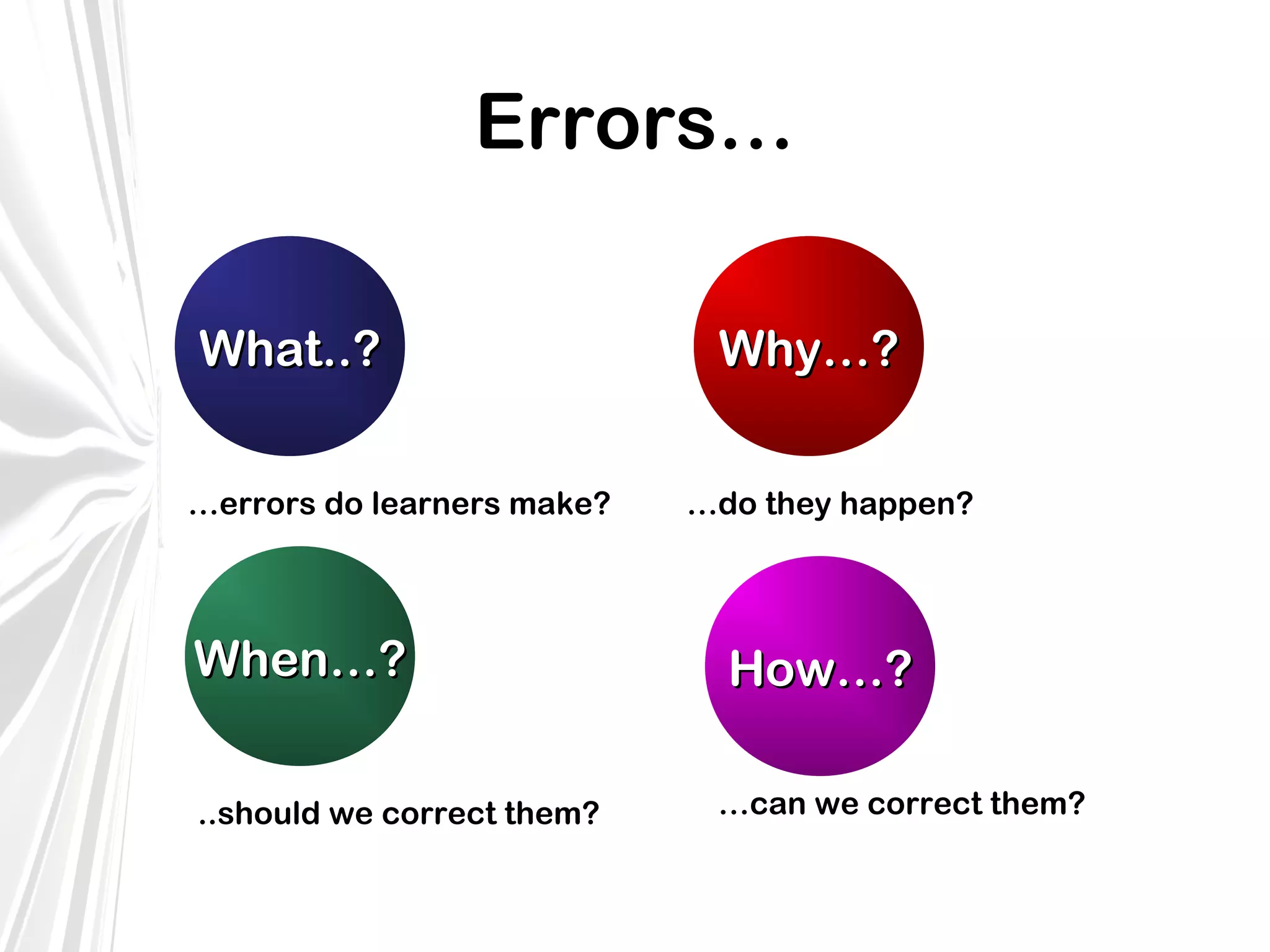
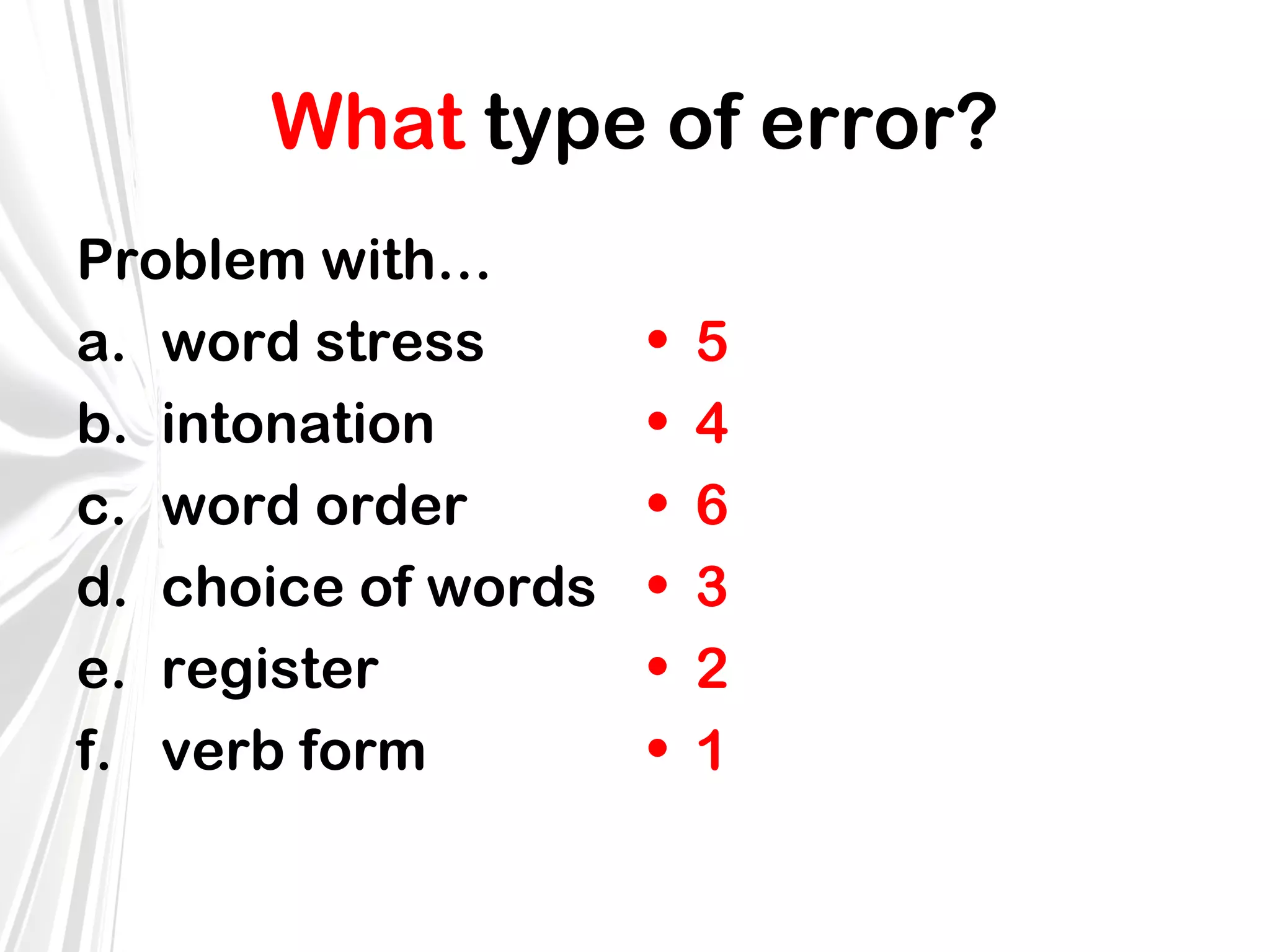
This document discusses error correction in language learning. It addresses what types of errors learners make, when teachers should correct errors, why errors occur, and how teachers can correct errors. The types of errors include problems with word stress, intonation, word order, choice of words, register, and verb form. Learners make errors due to transferring their first language rules, overgeneralizing language rules, fossilizing incorrect forms, not knowing rules, and slips caused by factors like hurry or tiredness. Teachers should consider whether correction will help or hinder learning, the learner's language level, and how the learner may take the correction. Methods of correcting discussed are prompting, questioning, repetition, reformulation, finger correction
Why do learnersmake errors?
• Transfer of systems from L1
• Overgeneralise in making hypotheses
about application of rules
• Fossilisation: learners get stuck and
continue to use incorrect forms
• Learners don’t know rules but try
anyway
• Slips due to hurry, tiredness, etc.
6.
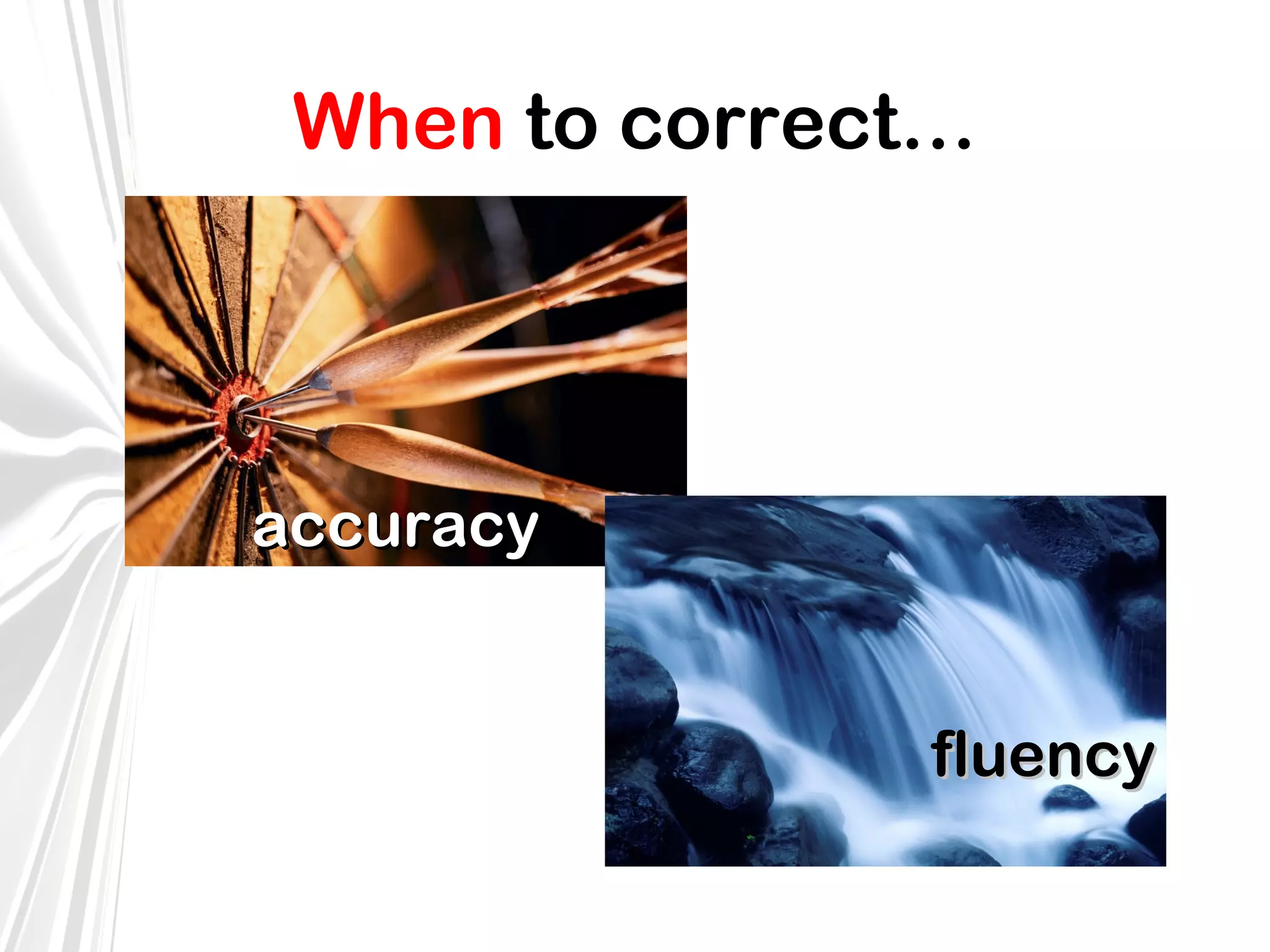
When to correct…
•Will it help or hinder learning?
• Am I correcting something that they
haven’t learnt yet?
• How will the student take the
correction?
• What is my intention in correcting?
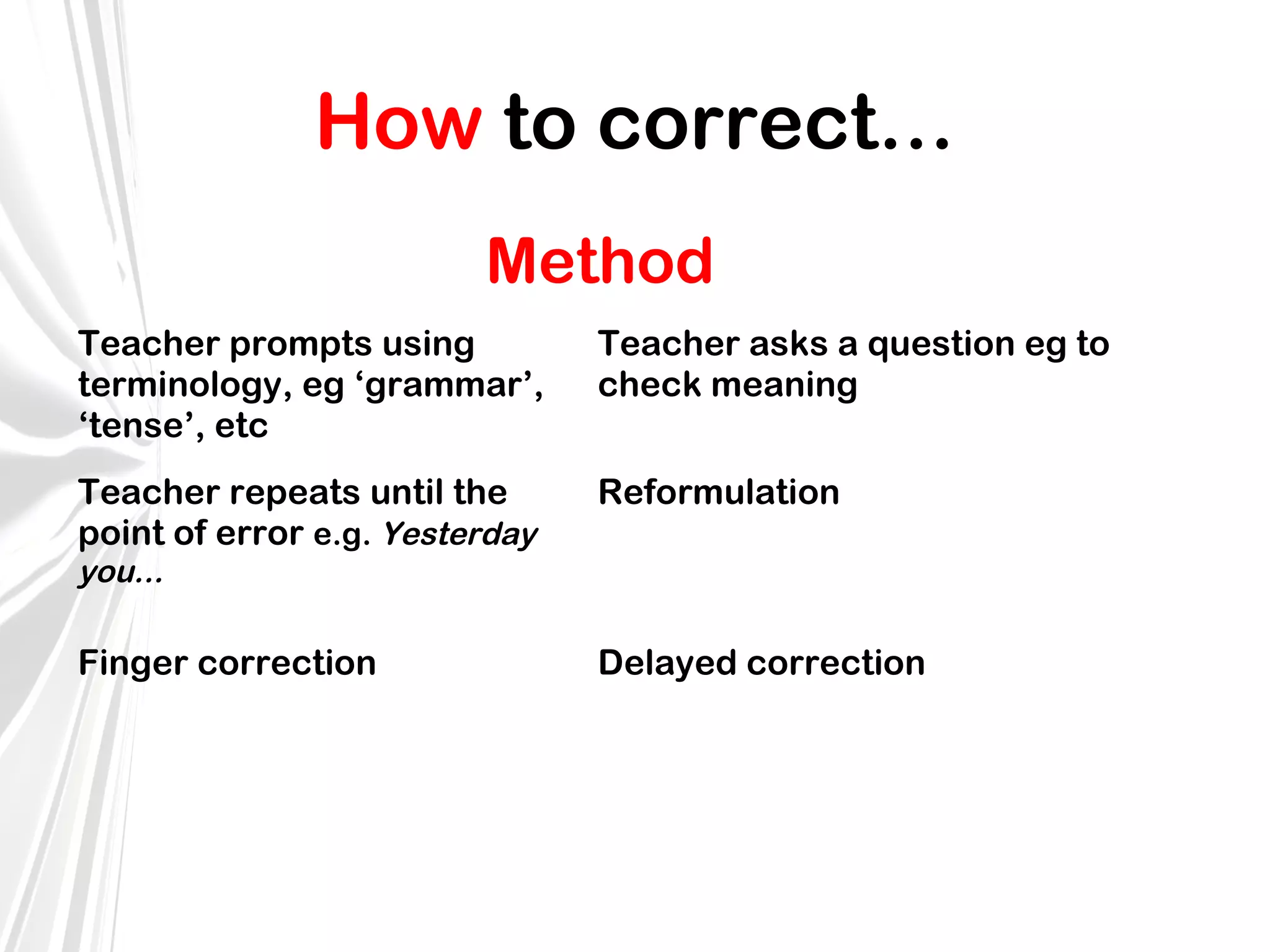
How to correct…
Method
Teacherprompts using
terminology, eg ‘grammar’,
‘tense’, etc
Teacher asks a question eg to
check meaning
Teacher repeats until the
point of error e.g. Yesterday
Reformulation
Finger correction
Delayed correction
you...
9.
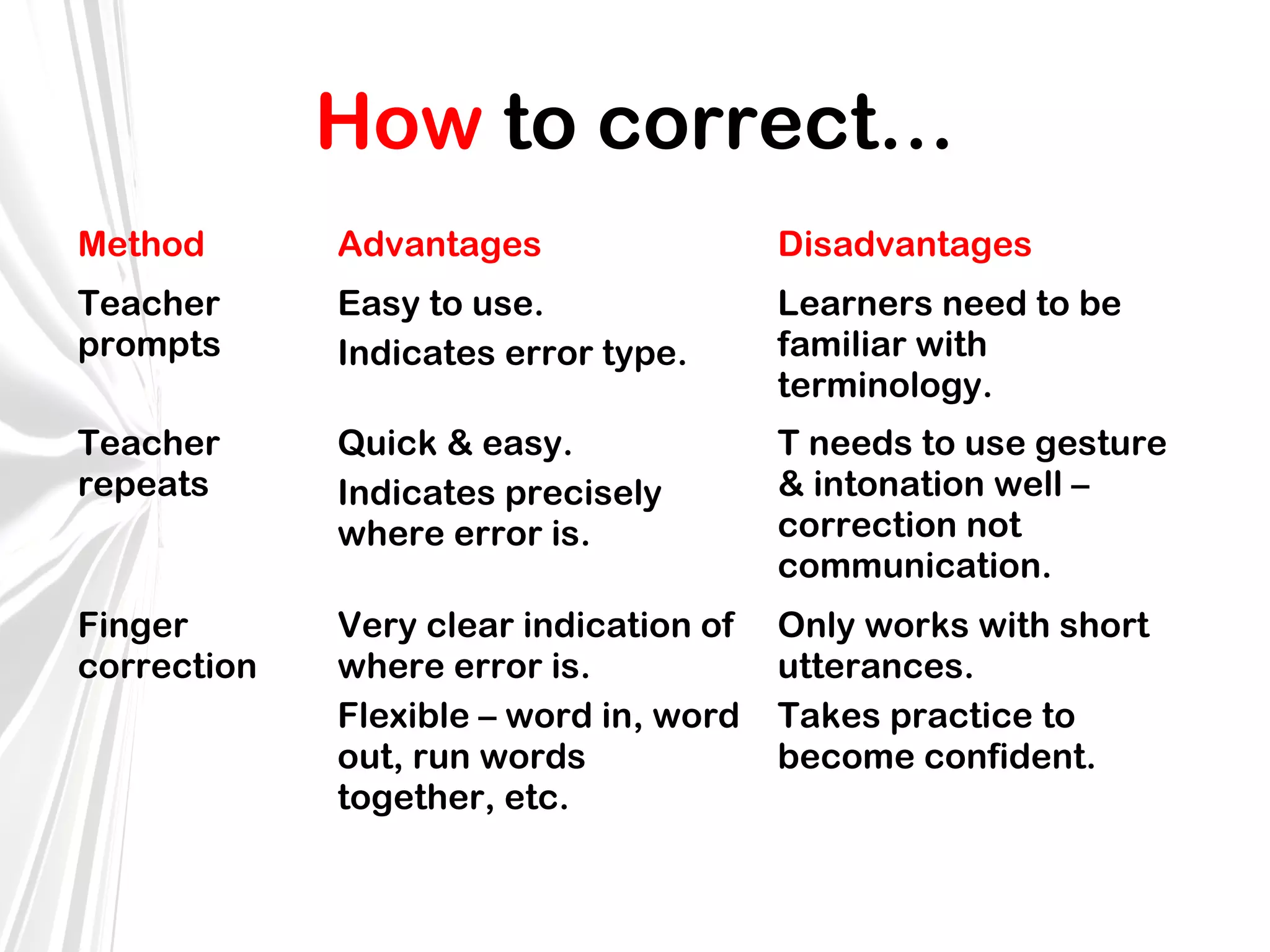
How to correct…
Method
Advantages
Disadvantages
Teacher
prompts
Easyto use.
Indicates error type.
Learners need to be
familiar with
terminology.
Teacher
repeats
Quick & easy.
Indicates precisely
where error is.
T needs to use gesture
& intonation well –
correction not
communication.
Finger
correction
Very clear indication of
where error is.
Flexible – word in, word
out, run words
together, etc.
Only works with short
utterances.
Takes practice to
become confident.
10.
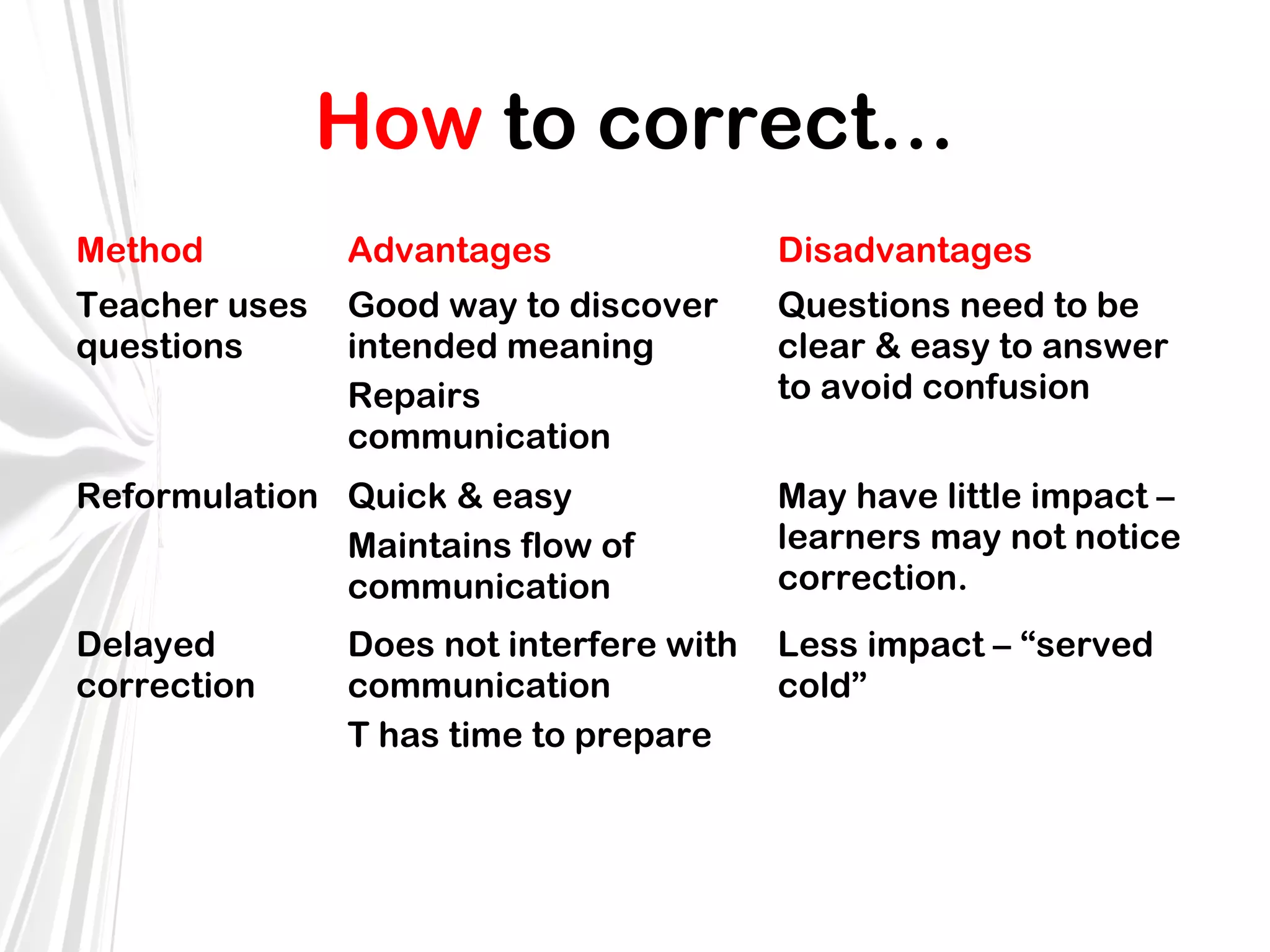
How to correct…
Method
Advantages
Disadvantages
Teacheruses
questions
Good way to discover
intended meaning
Repairs
communication
Questions need to be
clear & easy to answer
to avoid confusion
Reformulation Quick & easy
Maintains flow of
communication
May have little impact –
learners may not notice
correction.
Delayed
correction
Less impact – “served
cold”
Does not interfere with
communication
T has time to prepare
11.
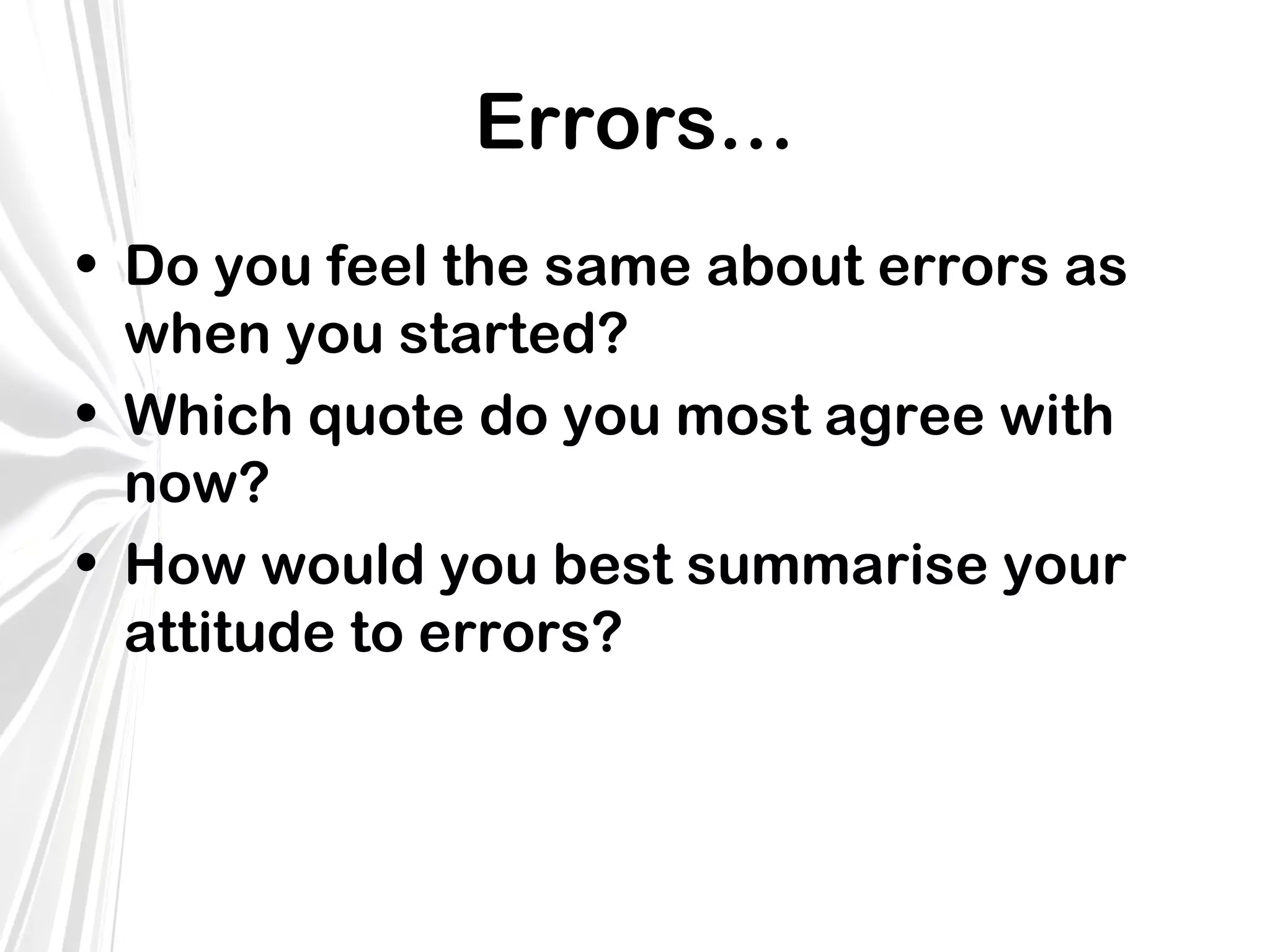
Errors…
• Do youfeel the same about errors as
when you started?
• Which quote do you most agree with
now?
• How would you best summarise your
attitude to errors?


![H eforum pdpupdate[1]](https://cdn.slidesharecdn.com/ss_thumbnails/heforumpdpupdate1-120123125501-phpapp01-thumbnail.jpg?width=640&height=640&fit=bounds)


