Tips and Techniques
Types of errors
   Slips – Wrong language caused by
    tiredness, nerves, lack of concentration.
    All native speakers make slips.

   Example – “I didn’t do nothing. I mean
    anything.”
Mistakes
 L2 speakers use incorrect grammar,
  vocabulary and pronunciation.
 They might be able to correct “wrong”
  language themselves
 If they can, the mistake is not serious
Errors
 Sometimes students cannot correct
  “wrong” language.
 They may not know the correct form.
 They may have learned an incorrect
  form
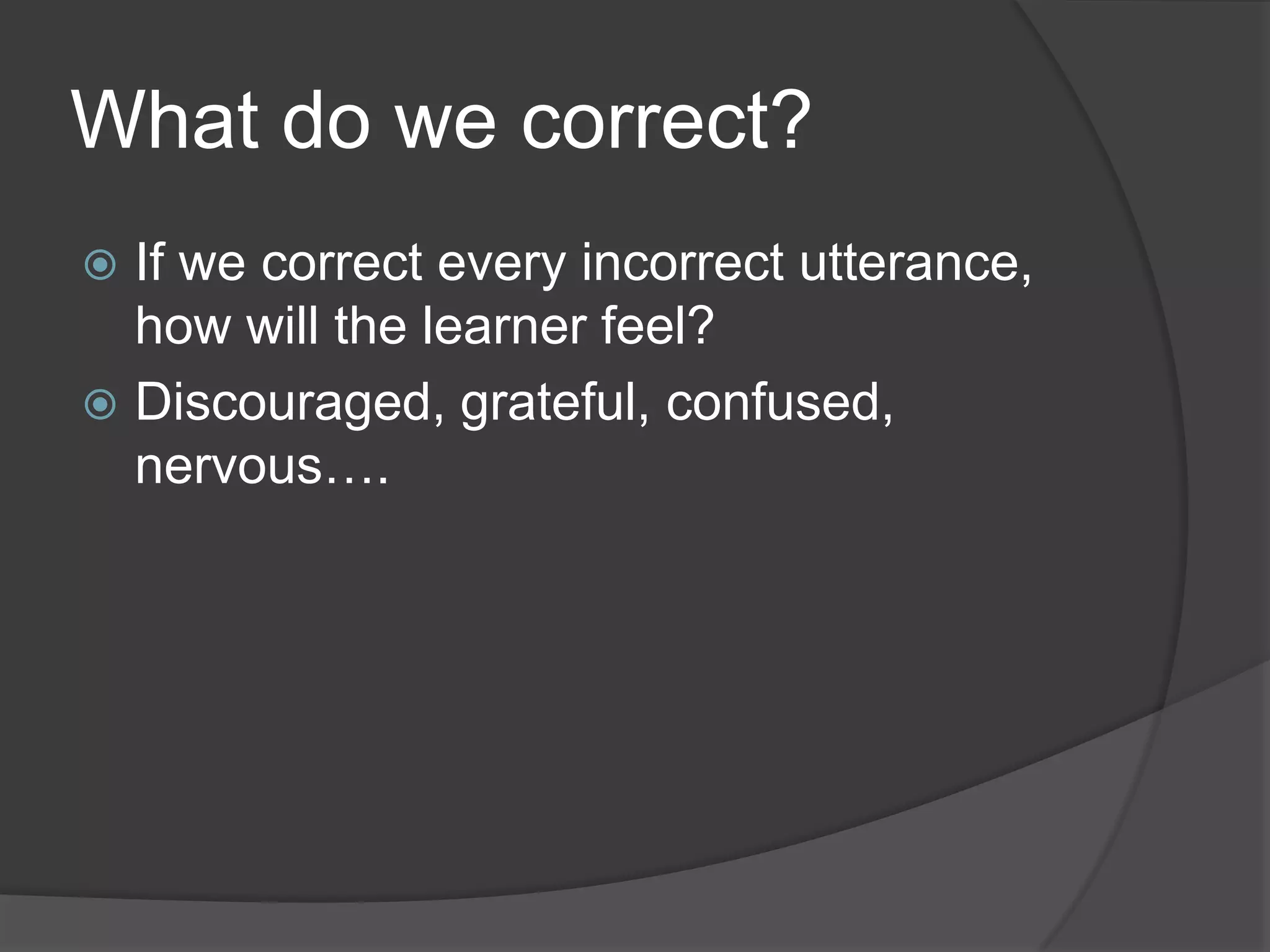
What do we correct?
 If we correct every incorrect utterance,
  how will the learner feel?
 Discouraged, grateful, confused,
  nervous….
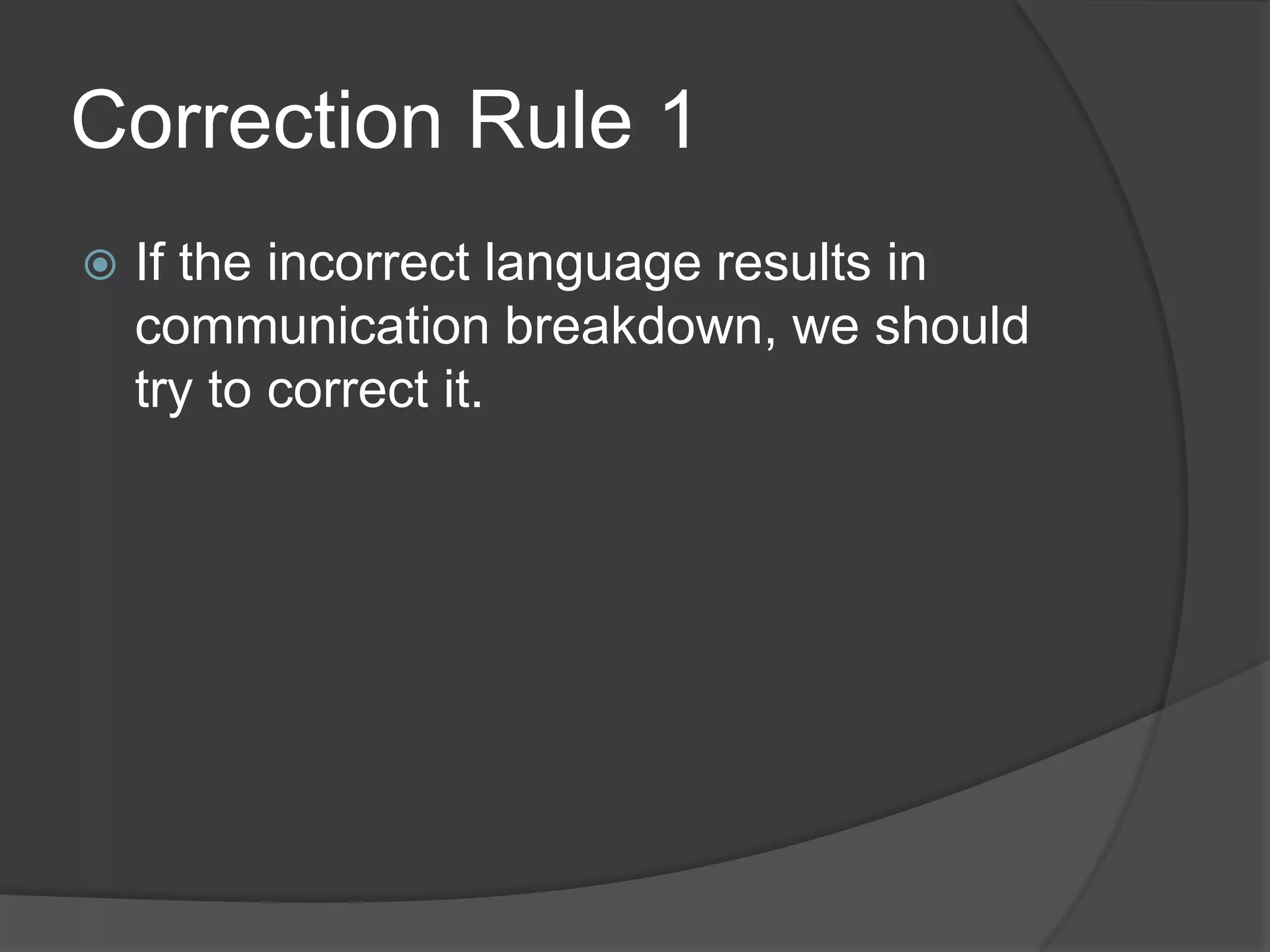
Correction Rule 1
   If the incorrect language results in
    communication breakdown, we should
    try to correct it.
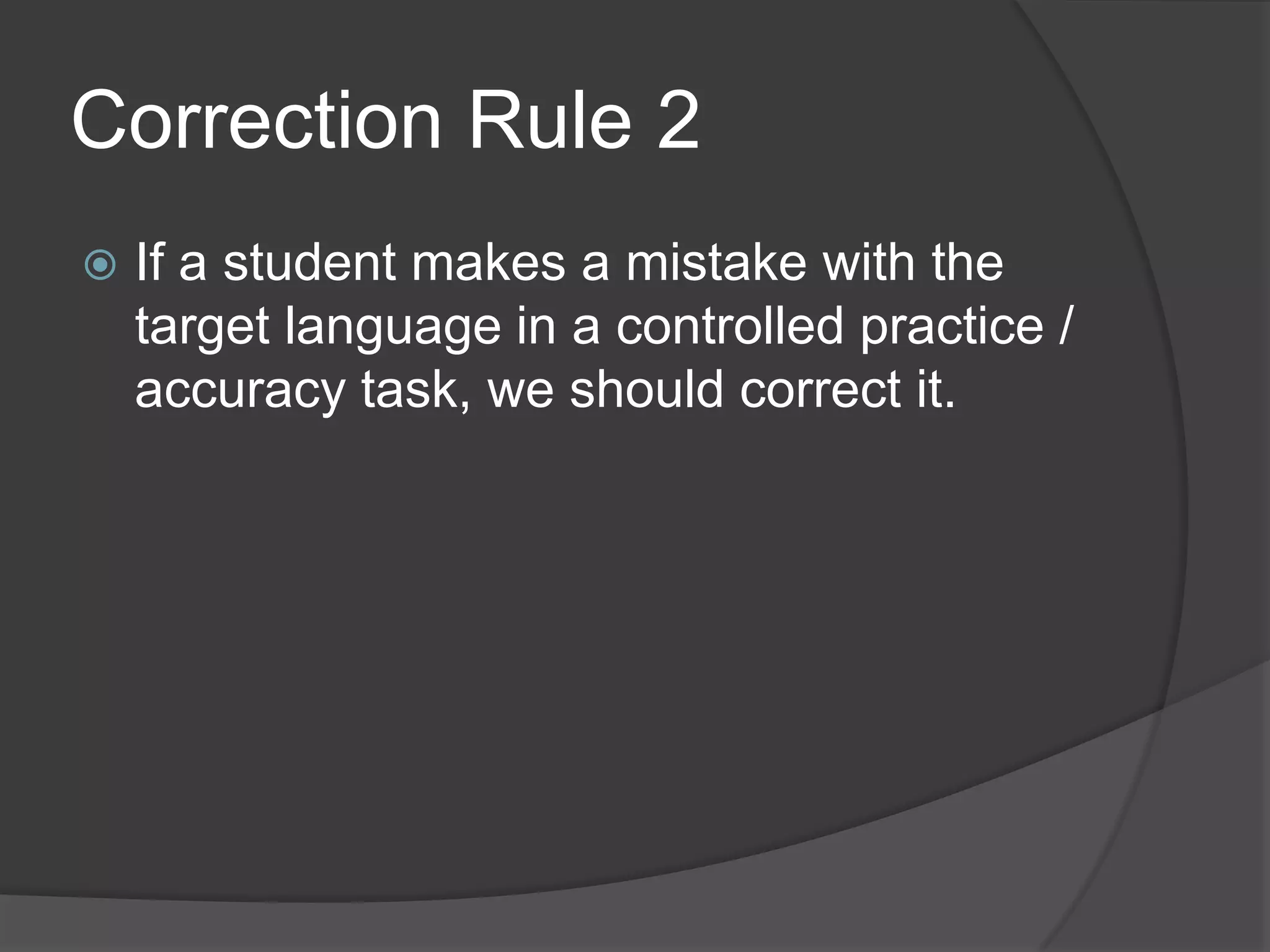
Correction Rule 2
   If a student makes a mistake with the
    target language in a controlled practice /
    accuracy task, we should correct it.
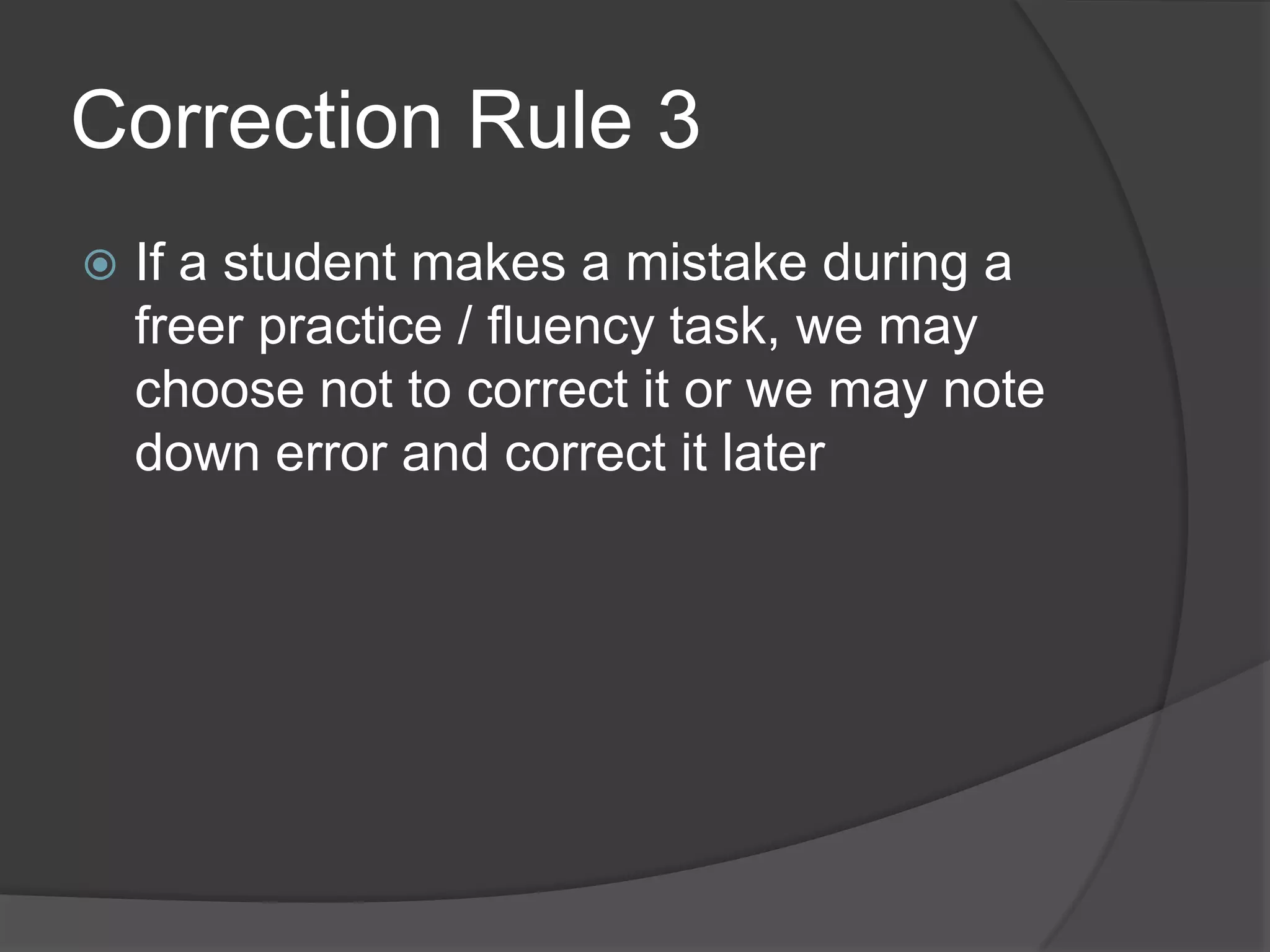
Correction Rule 3
   If a student makes a mistake during a
    freer practice / fluency task, we may
    choose not to correct it or we may note
    down error and correct it later
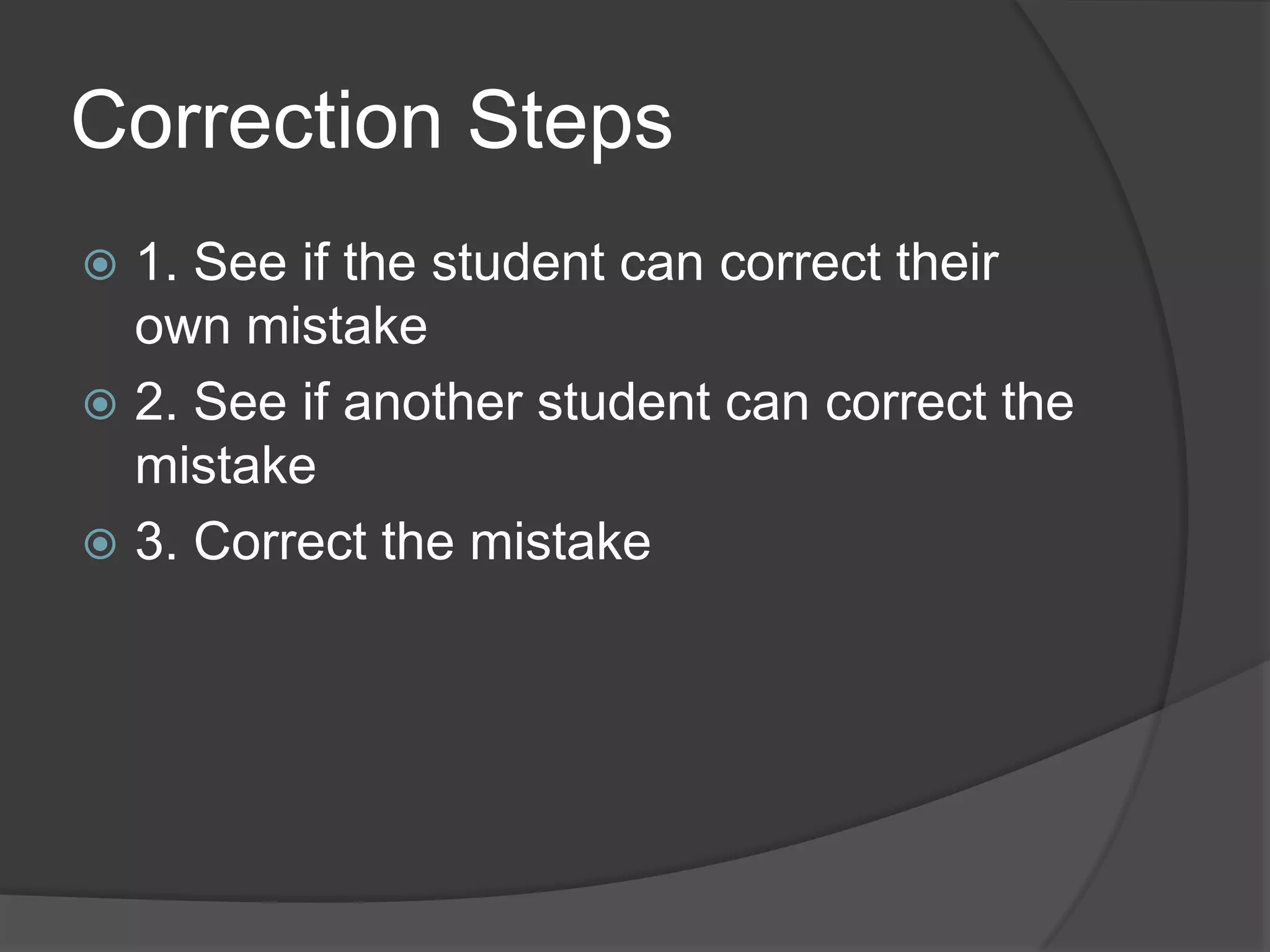
Correction Steps
 1. See if the student can correct their
  own mistake
 2. See if another student can correct the
  mistake
 3. Correct the mistake
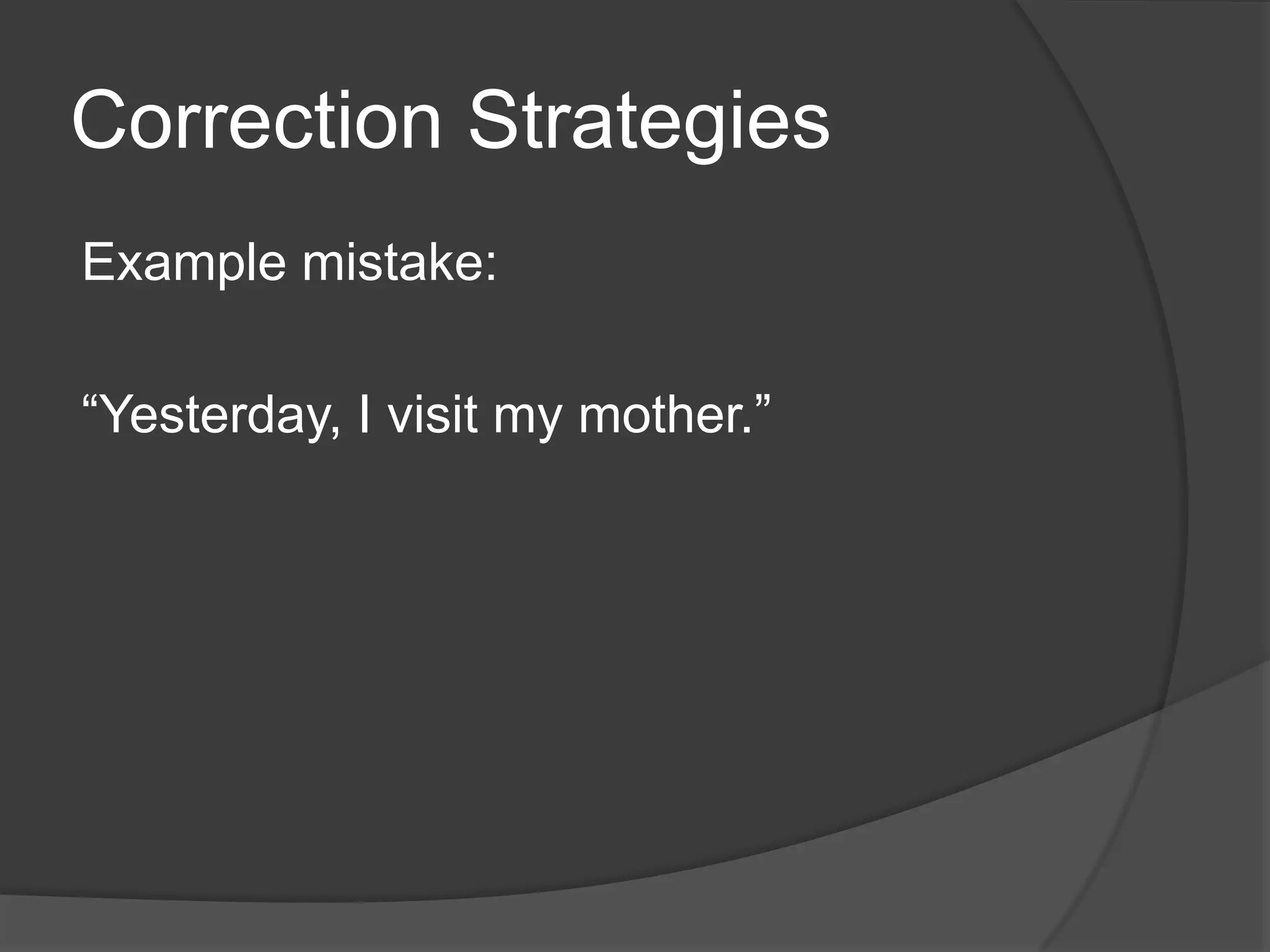
Correction Strategies
Example mistake:

“Yesterday, I visit my mother.”
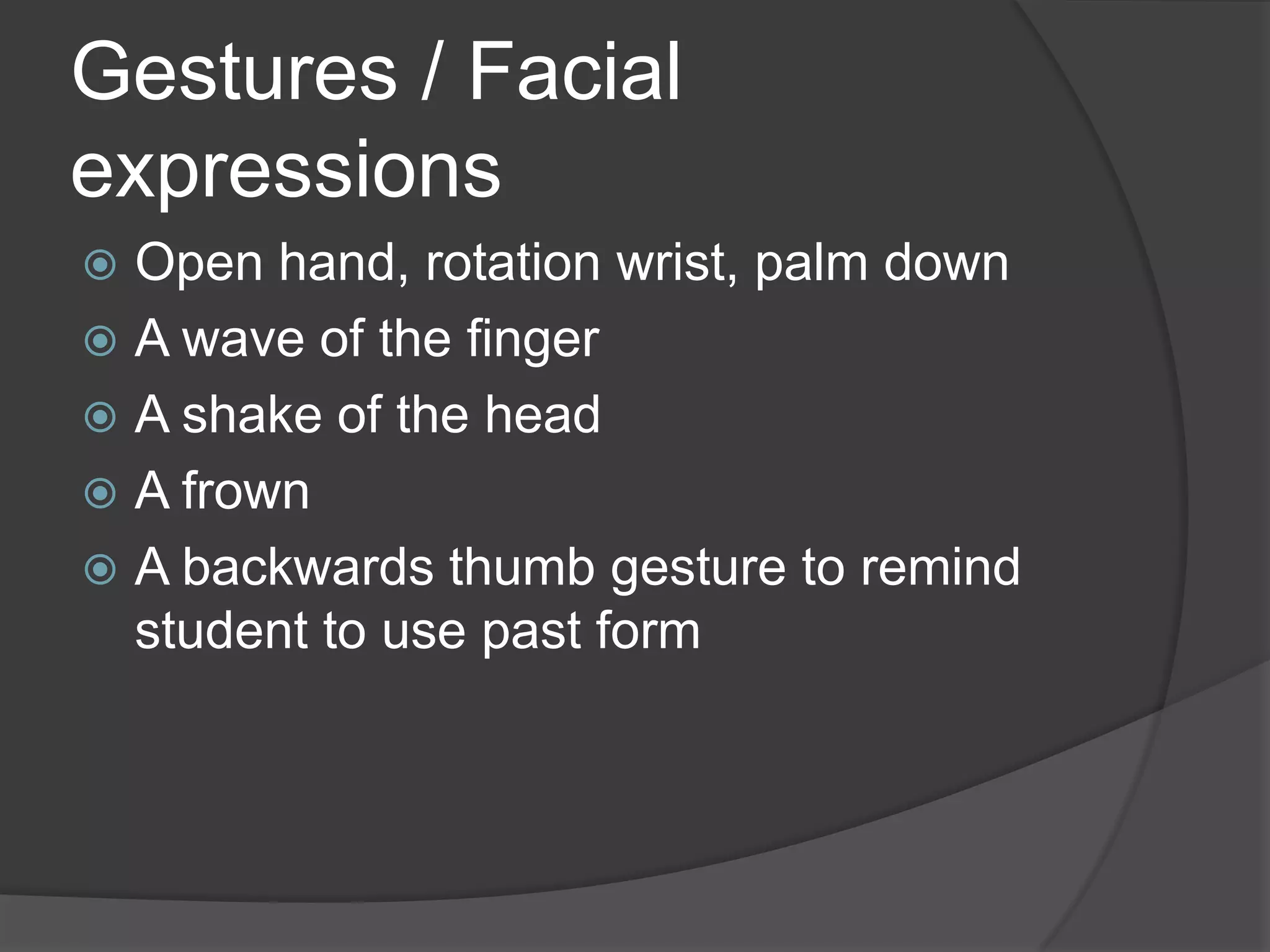
Gestures / Facial
expressions
 Open hand, rotation wrist, palm down
 A wave of the finger
 A shake of the head
 A frown
 A backwards thumb gesture to remind
  student to use past form
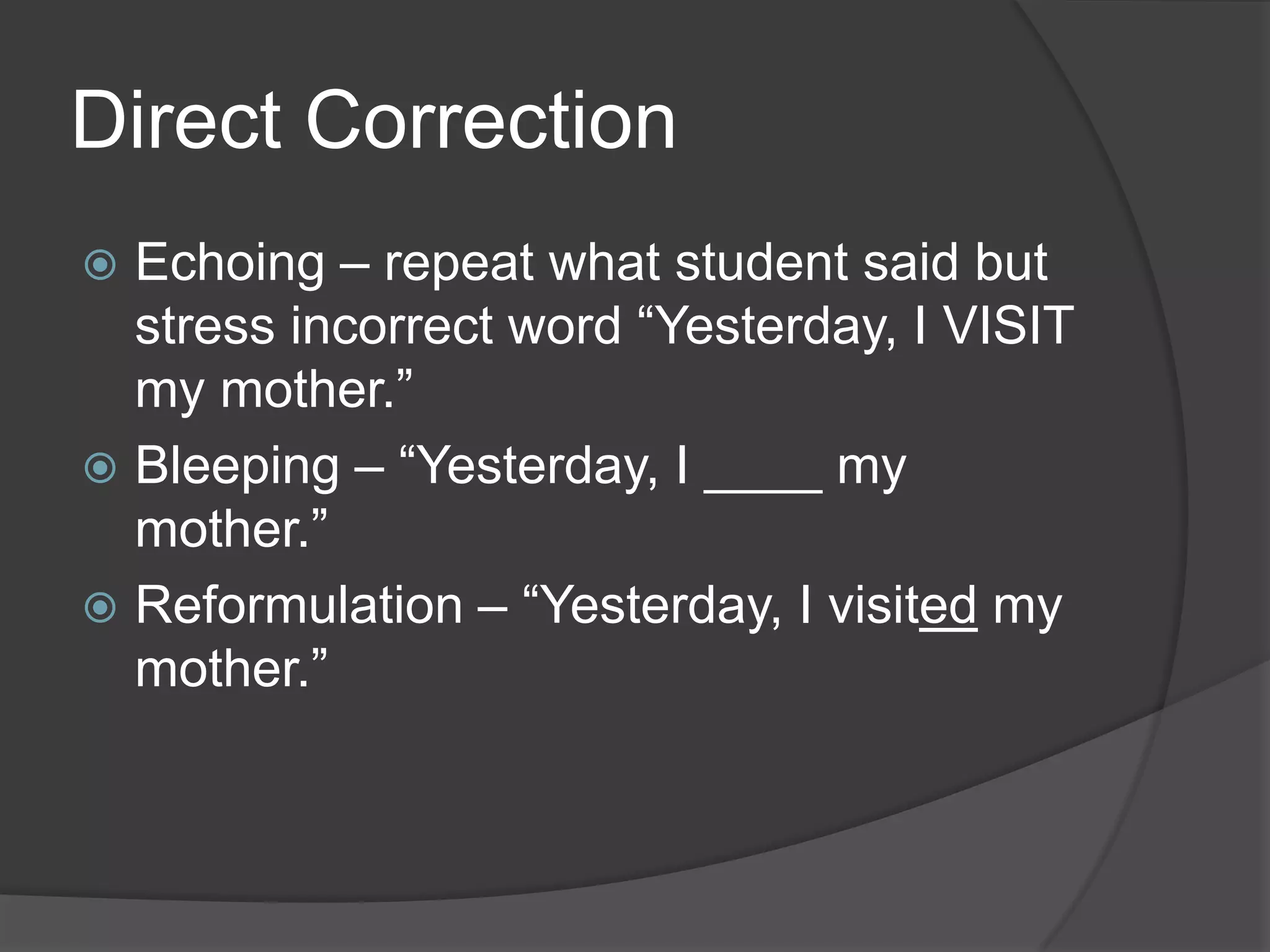
Direct Correction
 Echoing – repeat what student said but
  stress incorrect word “Yesterday, I VISIT
  my mother.”
 Bleeping – “Yesterday, I ____ my
  mother.”
 Reformulation – “Yesterday, I visited my
  mother.”
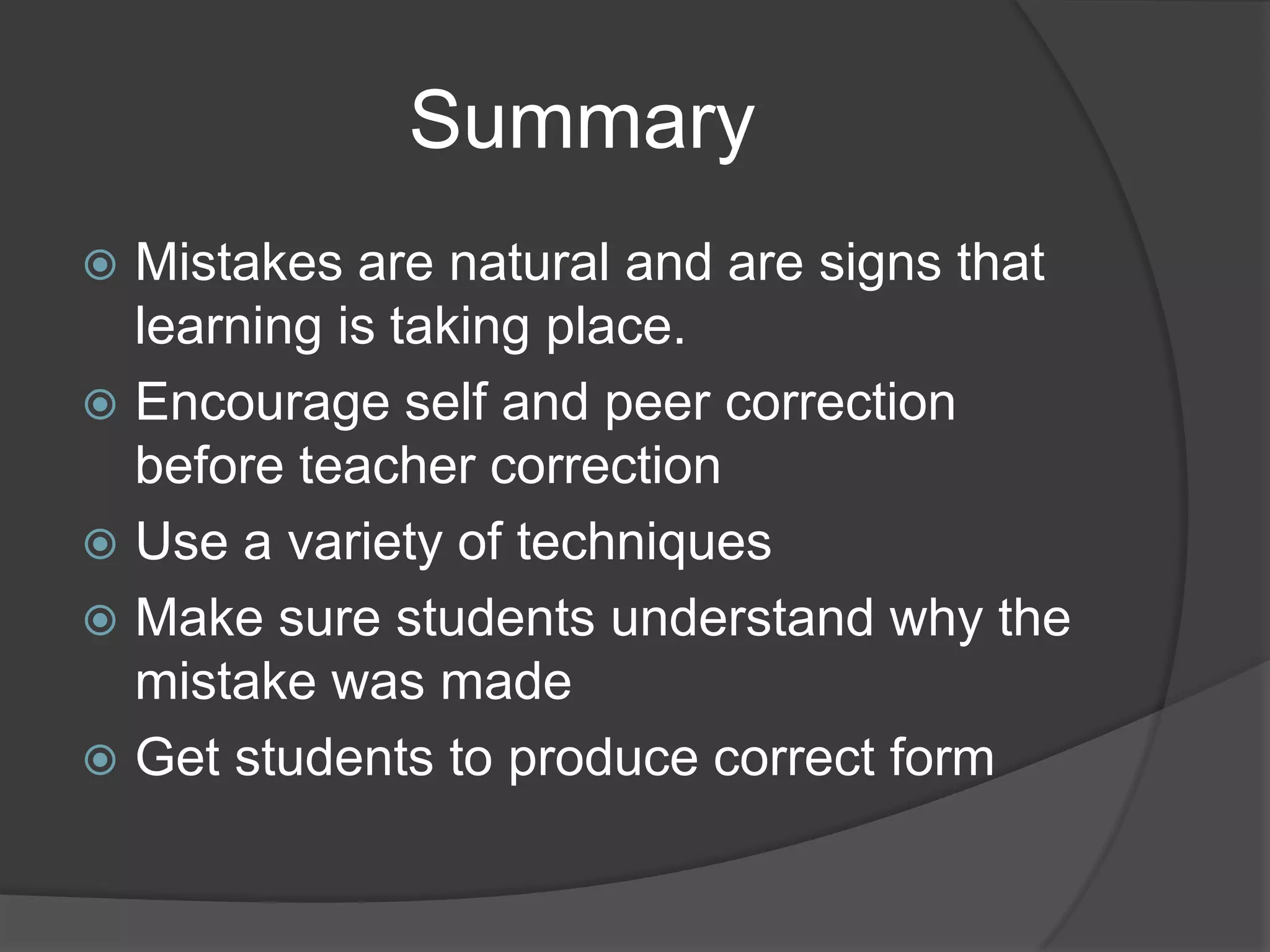
Summary
 Mistakes are natural and are signs that
  learning is taking place.
 Encourage self and peer correction
  before teacher correction
 Use a variety of techniques
 Make sure students understand why the
  mistake was made
 Get students to produce correct form

Correcting errors in elt

  • 1.
  • 2.
    Types of errors  Slips – Wrong language caused by tiredness, nerves, lack of concentration. All native speakers make slips.  Example – “I didn’t do nothing. I mean anything.”
  • 3.
    Mistakes  L2 speakersuse incorrect grammar, vocabulary and pronunciation.  They might be able to correct “wrong” language themselves  If they can, the mistake is not serious
  • 4.
    Errors  Sometimes studentscannot correct “wrong” language.  They may not know the correct form.  They may have learned an incorrect form
  • 5.
    What do wecorrect?  If we correct every incorrect utterance, how will the learner feel?  Discouraged, grateful, confused, nervous….
  • 6.
    Correction Rule 1  If the incorrect language results in communication breakdown, we should try to correct it.
  • 7.
    Correction Rule 2  If a student makes a mistake with the target language in a controlled practice / accuracy task, we should correct it.
  • 8.
    Correction Rule 3  If a student makes a mistake during a freer practice / fluency task, we may choose not to correct it or we may note down error and correct it later
  • 9.
    Correction Steps  1.See if the student can correct their own mistake  2. See if another student can correct the mistake  3. Correct the mistake
  • 10.
  • 11.
    Gestures / Facial expressions Open hand, rotation wrist, palm down  A wave of the finger  A shake of the head  A frown  A backwards thumb gesture to remind student to use past form
  • 12.
    Direct Correction  Echoing– repeat what student said but stress incorrect word “Yesterday, I VISIT my mother.”  Bleeping – “Yesterday, I ____ my mother.”  Reformulation – “Yesterday, I visited my mother.”
  • 13.
    Summary  Mistakes arenatural and are signs that learning is taking place.  Encourage self and peer correction before teacher correction  Use a variety of techniques  Make sure students understand why the mistake was made  Get students to produce correct form