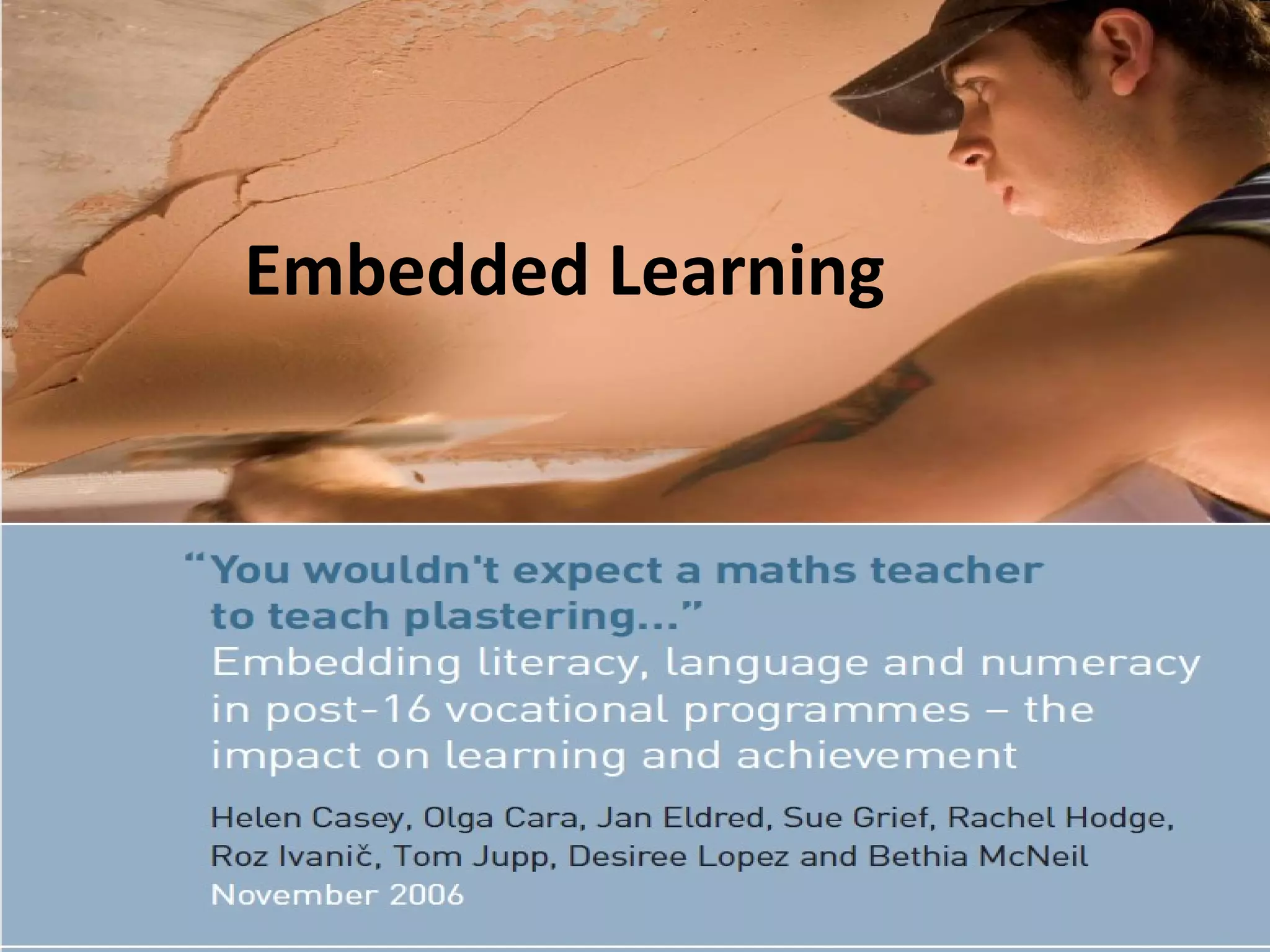
Embedded Learning
Unit 5 Assignment 5.2 (ADTE(E)LLS Assignment 5) – Supporting ESOL & Literacy learning across the Curriculum   This assignment focuses on embedding ESOL in other subject learning. You should: choose one  substantial  piece or 3 short pieces of teaching material that a colleague will or could use in the different subject area design two or three tasks that could be used in the subject lesson to support language and/or literacy development; these may relate to one or more of the texts selected. write accompanying guidelines for a subject teacher explaining how the material can be effectively used to embed language development in their teaching. Your notes should explain  how  the teacher should use the materials and  for what purpose .  questions
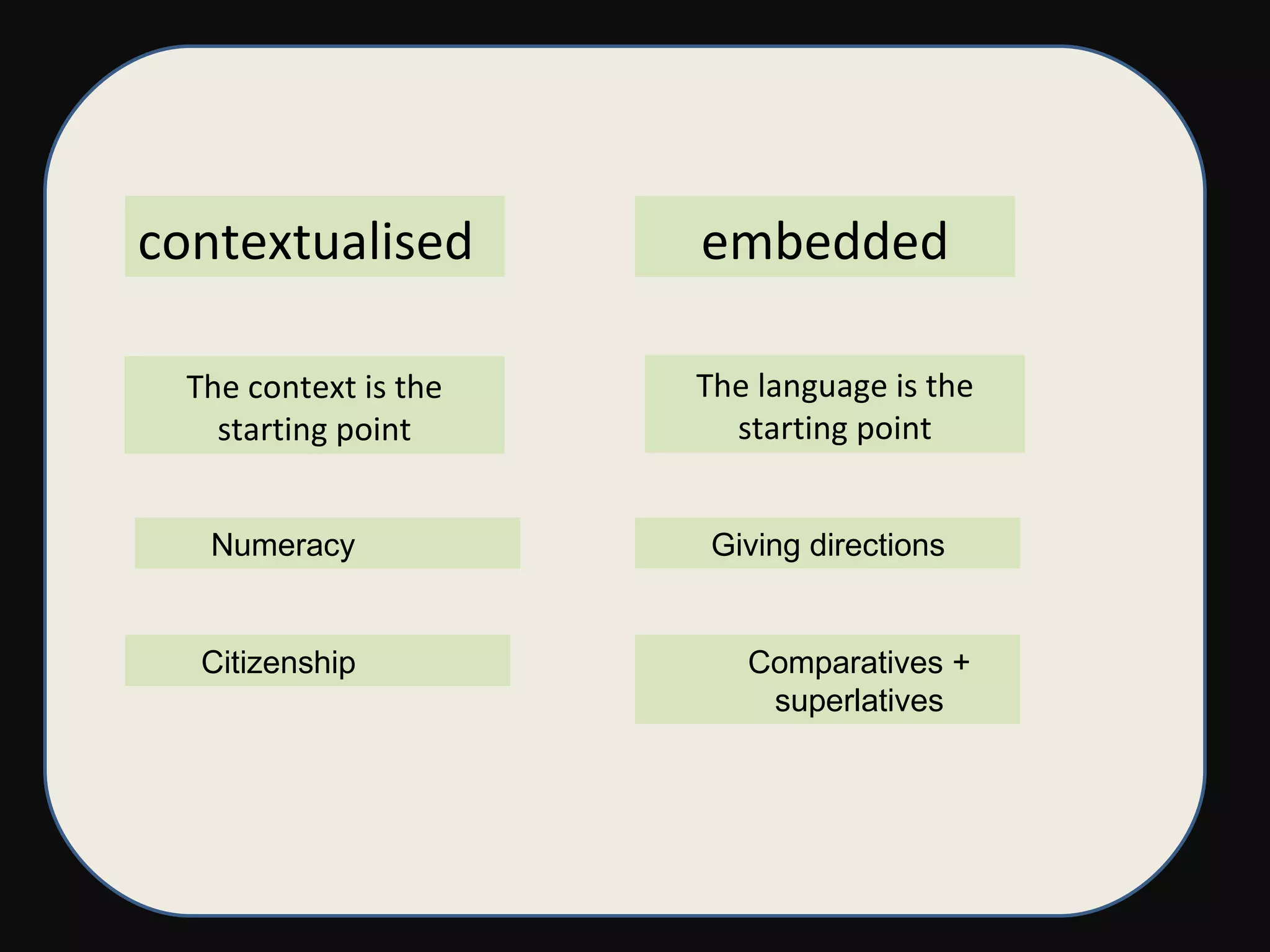
contextualised embedded The context is the starting point The language is the starting point Giving directions Comparatives + superlatives Citizenship Numeracy
Embedded teaching and learning combines the development of literacy, language (ESOL), and numeracy with vocational and other skills. The skills acquired provide learners with the confidence, competence and motivation necessary for them to succeed in qualifications, in life and at work.  The DfES  Skills for Life  Strategy Unit defines embedded teaching and learning as follows:
 
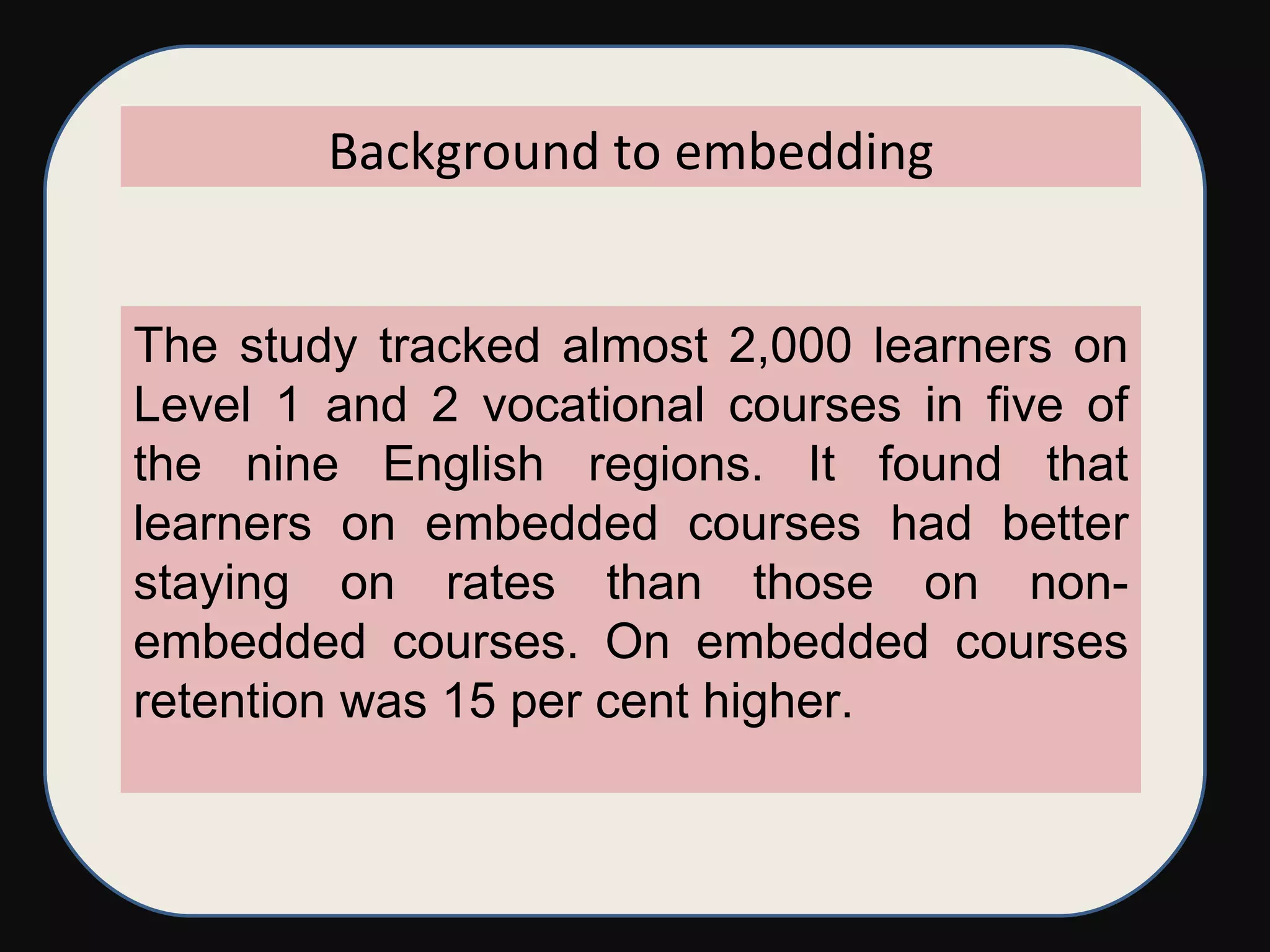
The study tracked almost 2,000 learners on Level 1 and 2 vocational courses in five of the nine English regions. It found that learners on embedded courses had better staying on rates than those on non-embedded courses. On embedded courses retention was 15 per cent higher.  Background to embedding
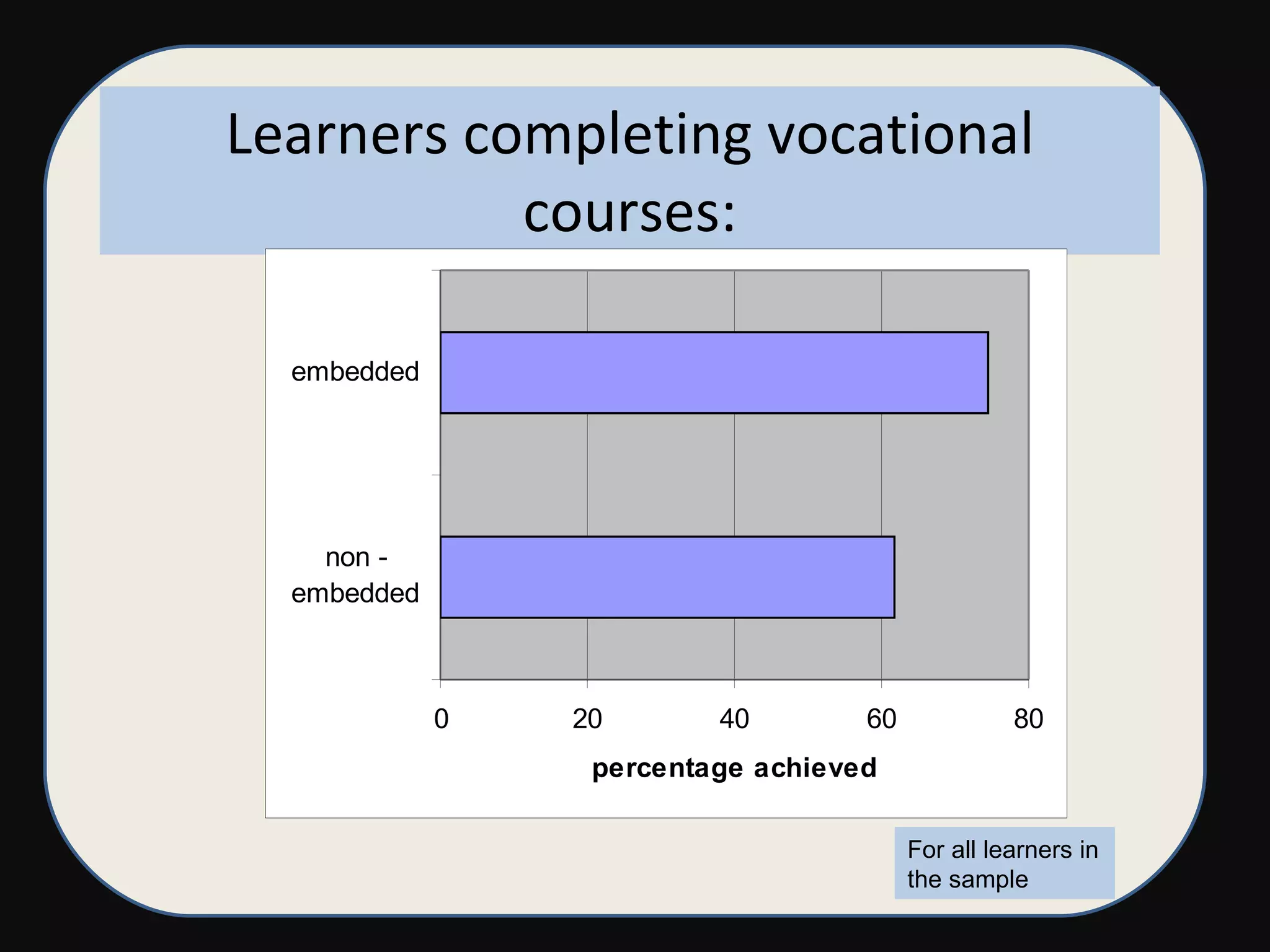
Learners completing vocational courses: For all learners in the sample
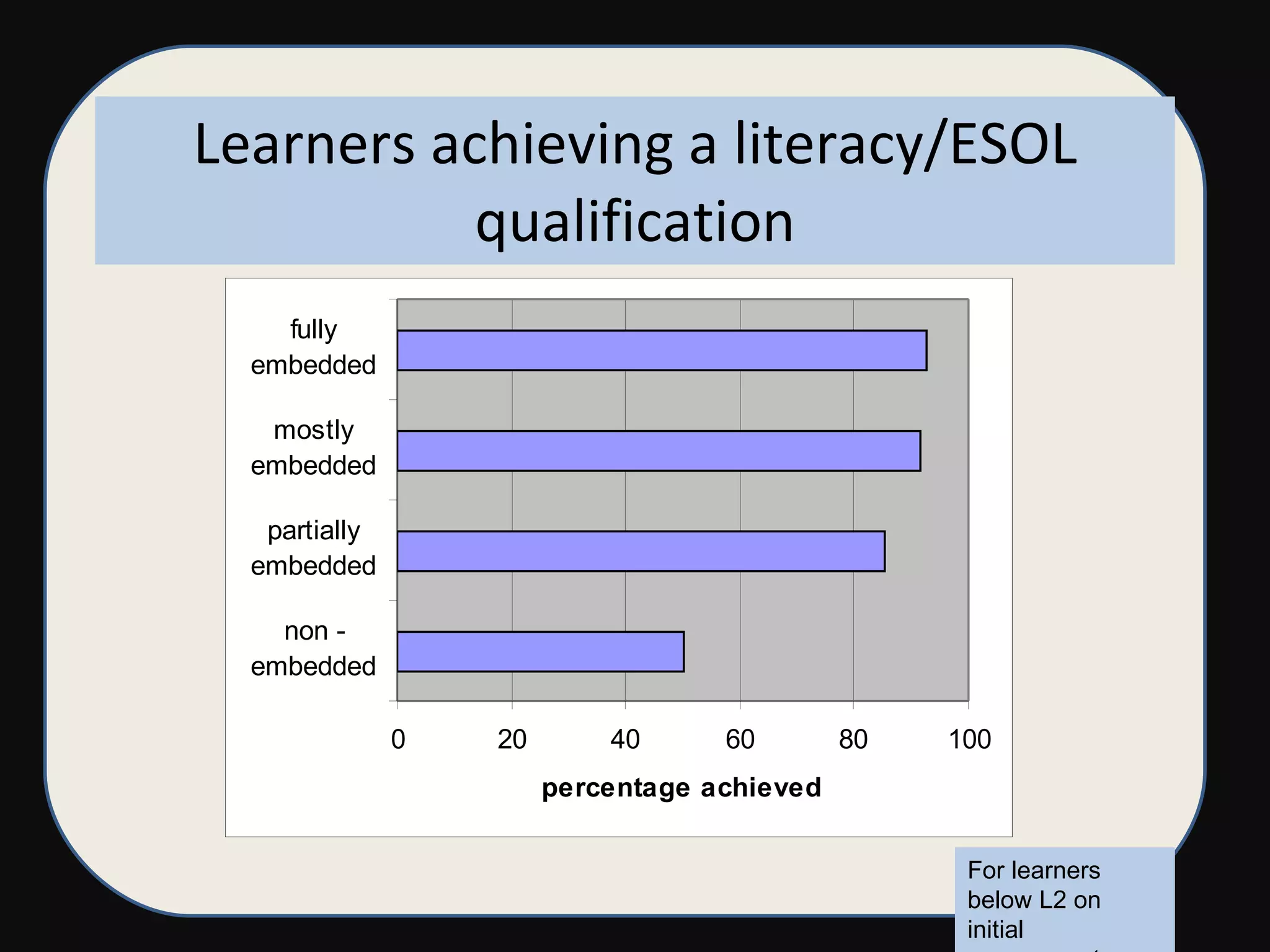
Learners achieving a literacy/ESOL qualification For learners below L2 on initial assessment
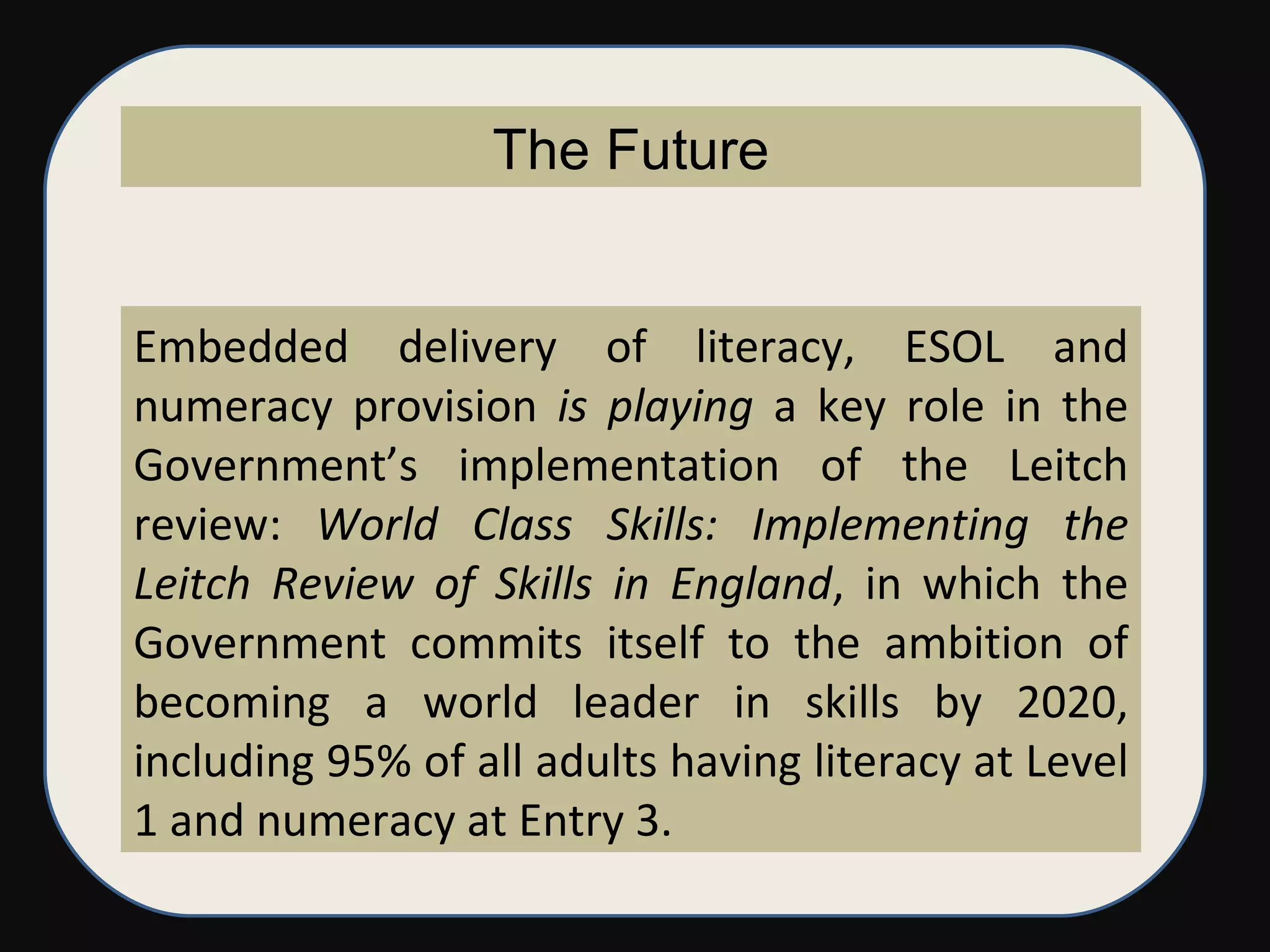
Embedded delivery of literacy, ESOL and numeracy provision  is playing  a key role in the Government’s implementation of the Leitch review:  World Class Skills: Implementing the Leitch Review of Skills in England , in which the Government commits itself to the ambition of becoming a world leader in skills by 2020, including 95% of all adults having literacy at Level 1 and numeracy at Entry 3. The Future
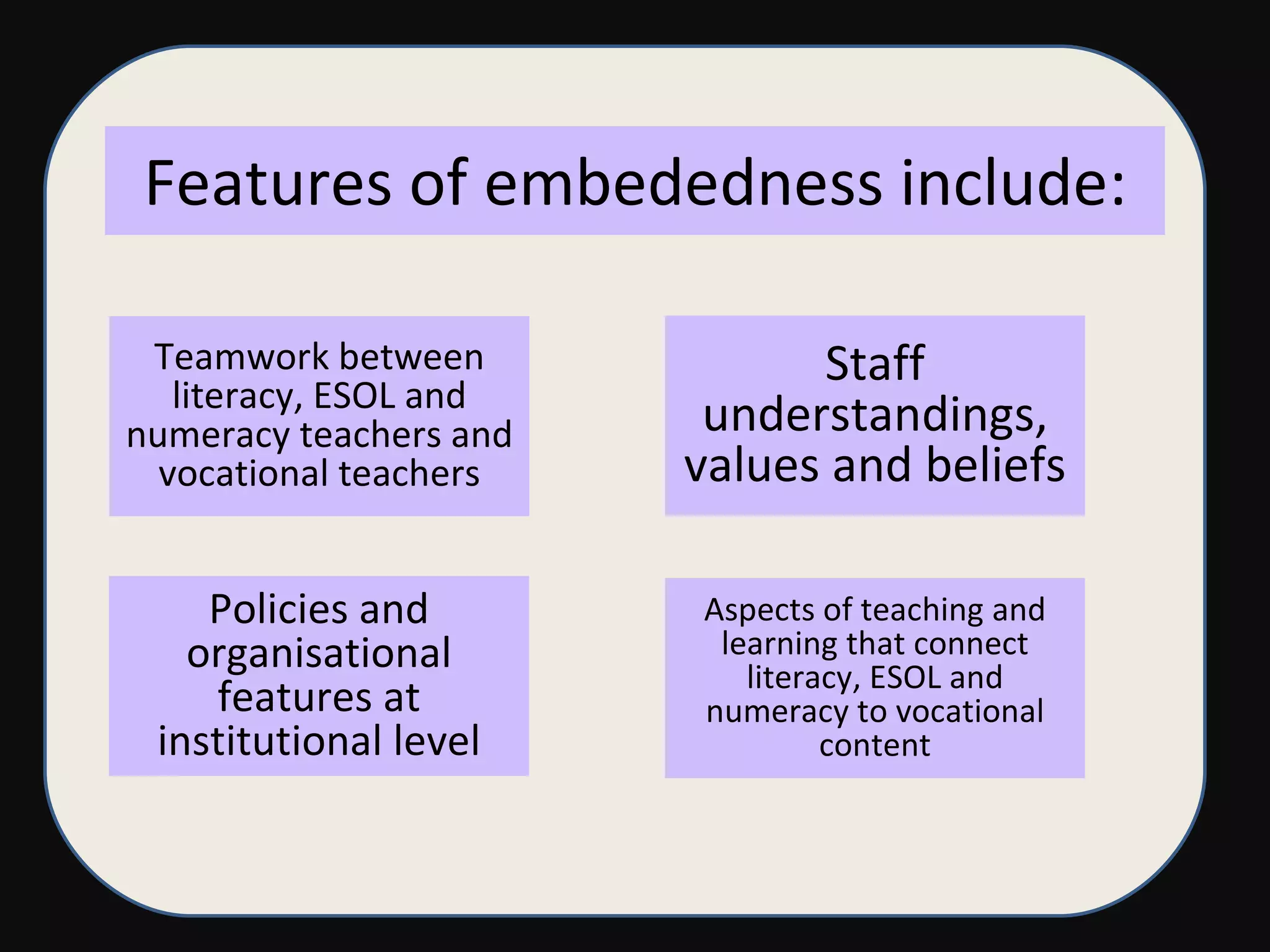
Features of embededness include: Teamwork between literacy, ESOL and numeracy teachers and vocational teachers Staff understandings, values and beliefs Policies and organisational features at institutional level Aspects of teaching and learning that connect literacy, ESOL and numeracy to vocational content
Task What would your ideal model  of embedding be?
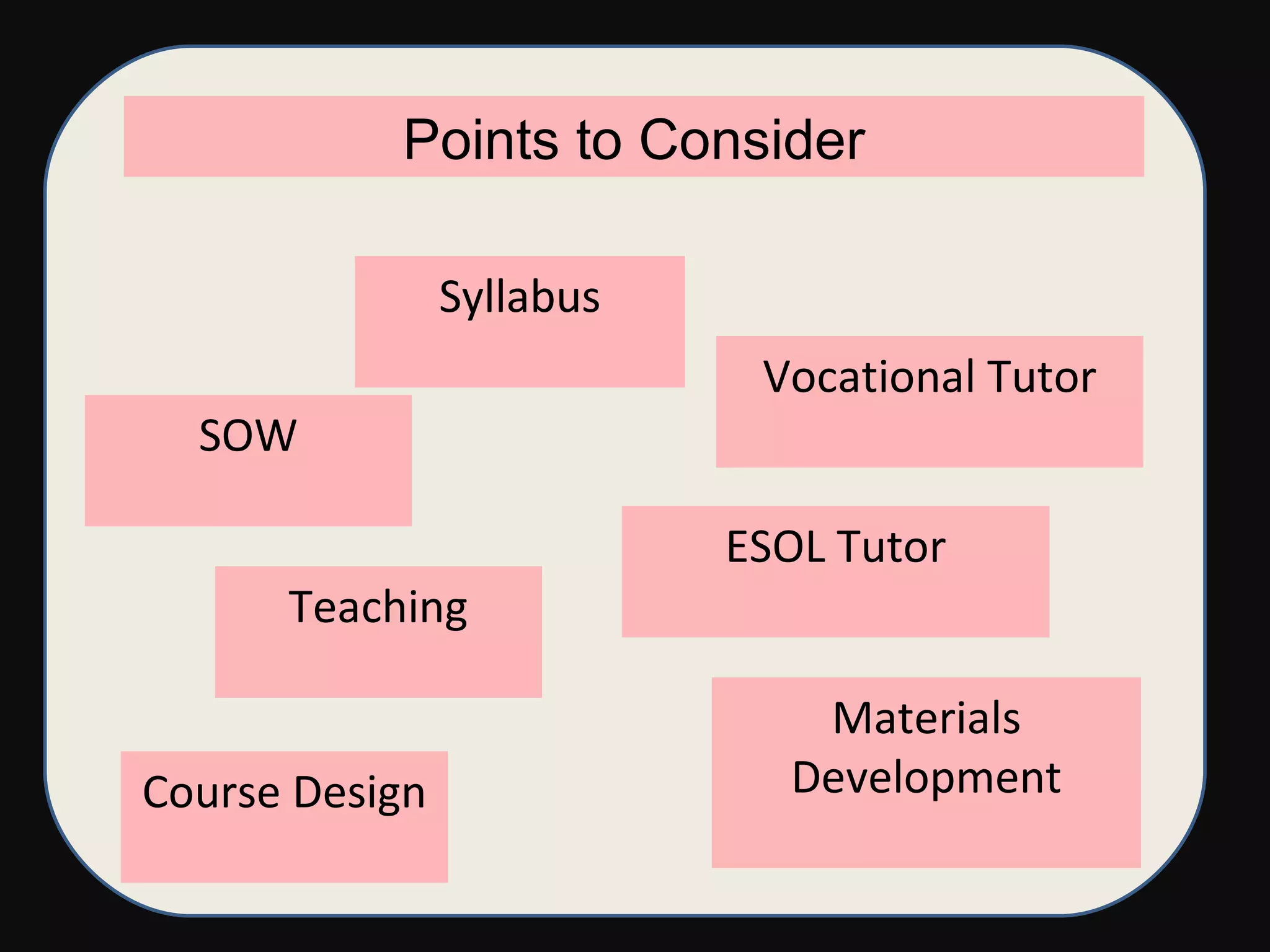
Syllabus SOW Vocational Tutor ESOL Tutor Teaching Course Design Materials Development Points to Consider
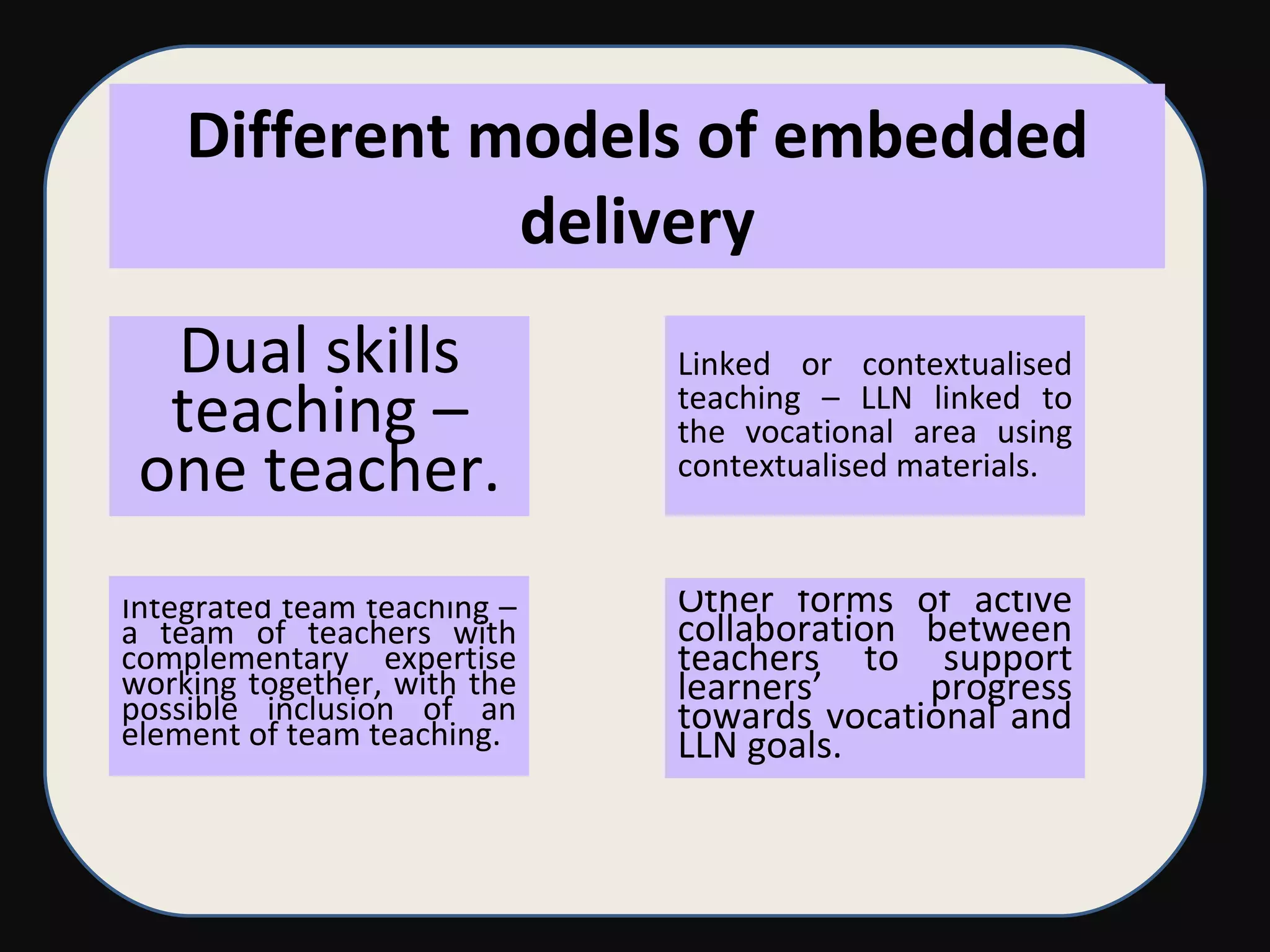
Different models of embedded delivery Dual skills teaching – one teacher. Linked or contextualised teaching – LLN linked to the vocational area using contextualised materials. Integrated team teaching – a team of teachers with complementary expertise working together, with the possible inclusion of an element of team teaching. Other forms of active collaboration between teachers to support learners’ progress towards vocational and LLN goals.
1. Which model of embedding do I describe? 2. What advantages do you see to embedding?
Pre-session task Think of a subject area beyond ESOL with which you have some familiarity. Discuss any issues a learner would have when undertaking a course of study in that area.
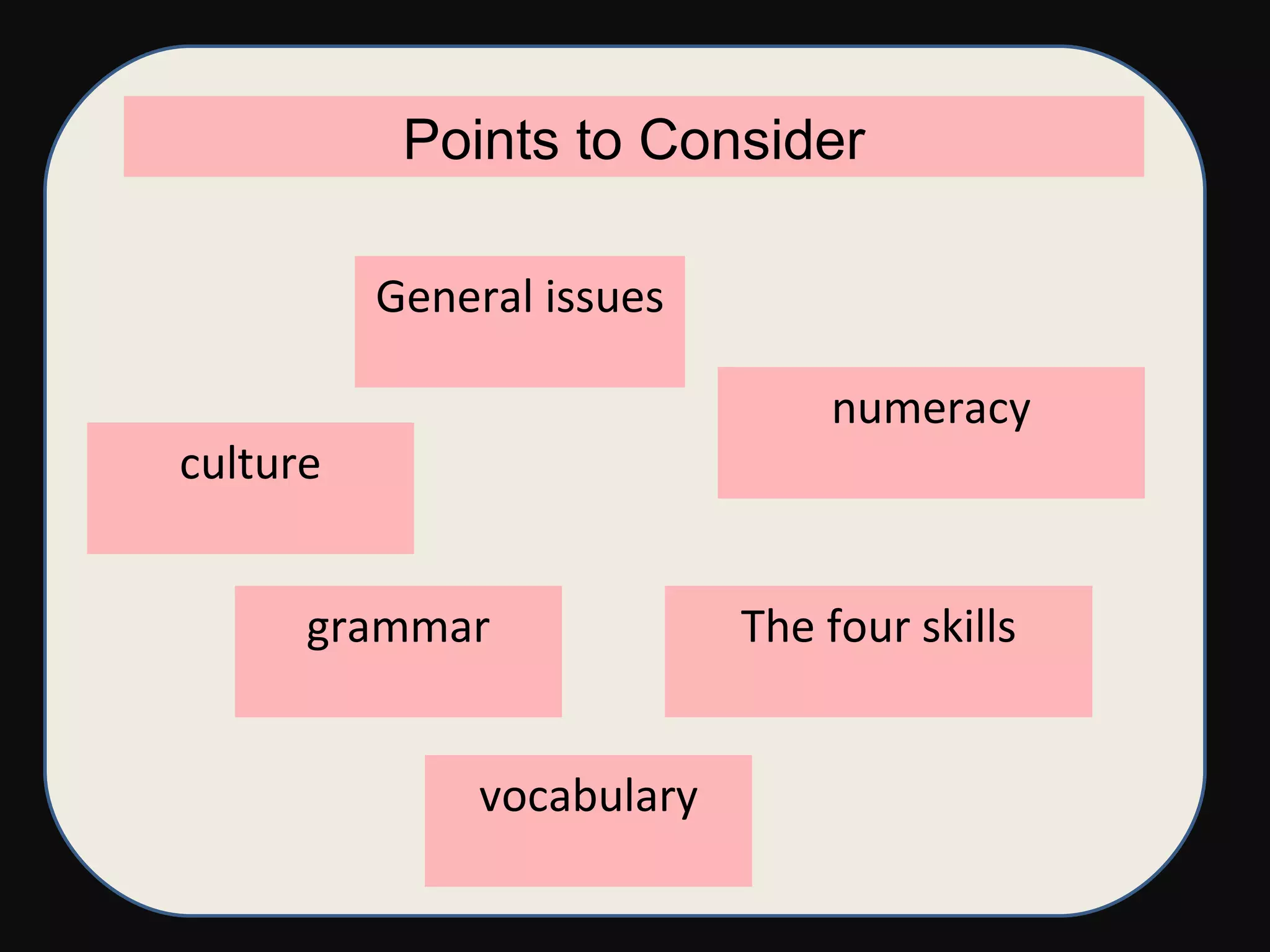
General issues culture numeracy The four skills grammar vocabulary Points to Consider
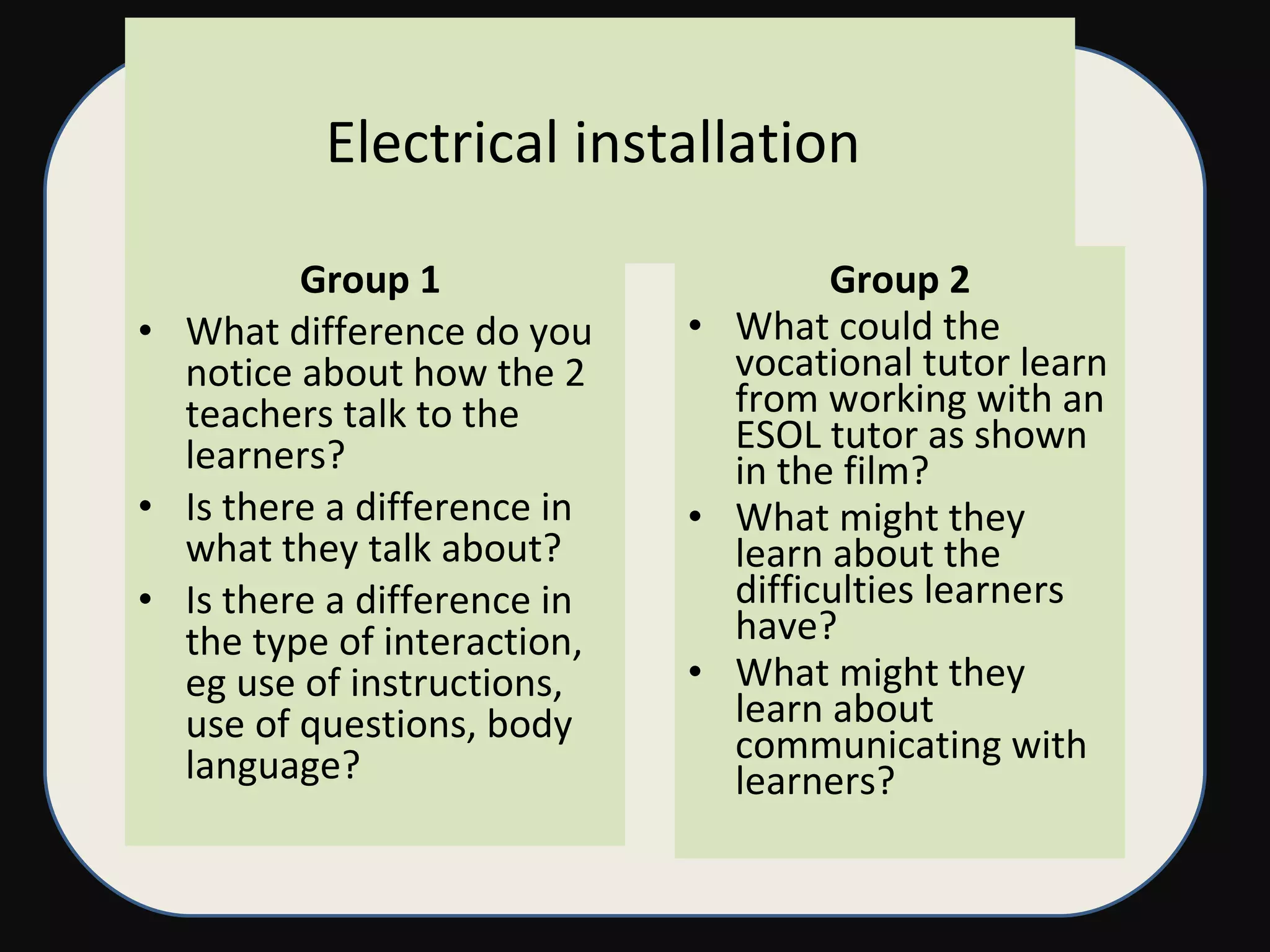
Electrical installation  Group 1  What difference do you notice about how the 2 teachers talk to the learners? Is there a difference in what they talk about? Is there a difference in the type of interaction, eg use of instructions, use of questions, body language? Group 2 What could the vocational tutor learn from working with an ESOL tutor as shown in the film? What might they learn about the difficulties learners have? What might they learn about communicating with learners?
ESOL lesson Choose which aspect of the lesson you would like to focus on Follow the lesson plan
Post video discussion Can the ESOL teacher do this without knowing anything about construction? How much do you think an ESOL teacher should know about the vocational area and how can they best learn it?
Explore the Embedding Materials 1. Each group will have 1 skill to focus on 2. Find material that will practice this skill 3. Assess the material for difficulties ESOL learners might have and the consequent language learning needs 4. Move to another set of materials a. Make notes on the skill you are focussing on b. Read what the previous group wrote about their skill
Unit 5 Assignment 5.2 (ADTE(E)LLS Assignment 5) – Supporting ESOL & Literacy learning across the Curriculum   This assignment focuses on embedding ESOL in other subject learning. You should: choose one  substantial  piece or 3 short pieces of teaching material that a colleague will or could use in the different subject area design two or three tasks that could be used in the subject lesson to support language and/or literacy development; these may relate to one or more of the texts selected. write accompanying guidelines for a subject teacher explaining how the material can be effectively used to embed language development in their teaching. Your notes should explain  how  the teacher should use the materials and  for what purpose .  questions

Embedding ESOL into Vocational Subjects

  • 1.
  • 2.
    Unit 5 Assignment5.2 (ADTE(E)LLS Assignment 5) – Supporting ESOL & Literacy learning across the Curriculum   This assignment focuses on embedding ESOL in other subject learning. You should: choose one substantial piece or 3 short pieces of teaching material that a colleague will or could use in the different subject area design two or three tasks that could be used in the subject lesson to support language and/or literacy development; these may relate to one or more of the texts selected. write accompanying guidelines for a subject teacher explaining how the material can be effectively used to embed language development in their teaching. Your notes should explain how the teacher should use the materials and for what purpose . questions
  • 3.
    contextualised embedded Thecontext is the starting point The language is the starting point Giving directions Comparatives + superlatives Citizenship Numeracy
  • 4.
    Embedded teaching andlearning combines the development of literacy, language (ESOL), and numeracy with vocational and other skills. The skills acquired provide learners with the confidence, competence and motivation necessary for them to succeed in qualifications, in life and at work. The DfES Skills for Life Strategy Unit defines embedded teaching and learning as follows:
  • 5.
  • 6.
    The study trackedalmost 2,000 learners on Level 1 and 2 vocational courses in five of the nine English regions. It found that learners on embedded courses had better staying on rates than those on non-embedded courses. On embedded courses retention was 15 per cent higher. Background to embedding
  • 7.
    Learners completing vocationalcourses: For all learners in the sample
  • 8.
    Learners achieving aliteracy/ESOL qualification For learners below L2 on initial assessment
  • 9.
    Embedded delivery ofliteracy, ESOL and numeracy provision is playing a key role in the Government’s implementation of the Leitch review: World Class Skills: Implementing the Leitch Review of Skills in England , in which the Government commits itself to the ambition of becoming a world leader in skills by 2020, including 95% of all adults having literacy at Level 1 and numeracy at Entry 3. The Future
  • 10.
    Features of embedednessinclude: Teamwork between literacy, ESOL and numeracy teachers and vocational teachers Staff understandings, values and beliefs Policies and organisational features at institutional level Aspects of teaching and learning that connect literacy, ESOL and numeracy to vocational content
  • 11.
    Task What wouldyour ideal model of embedding be?
  • 12.
    Syllabus SOW VocationalTutor ESOL Tutor Teaching Course Design Materials Development Points to Consider
  • 13.
    Different models ofembedded delivery Dual skills teaching – one teacher. Linked or contextualised teaching – LLN linked to the vocational area using contextualised materials. Integrated team teaching – a team of teachers with complementary expertise working together, with the possible inclusion of an element of team teaching. Other forms of active collaboration between teachers to support learners’ progress towards vocational and LLN goals.
  • 14.
    1. Which modelof embedding do I describe? 2. What advantages do you see to embedding?
  • 15.
    Pre-session task Thinkof a subject area beyond ESOL with which you have some familiarity. Discuss any issues a learner would have when undertaking a course of study in that area.
  • 16.
    General issues culturenumeracy The four skills grammar vocabulary Points to Consider
  • 17.
    Electrical installation Group 1 What difference do you notice about how the 2 teachers talk to the learners? Is there a difference in what they talk about? Is there a difference in the type of interaction, eg use of instructions, use of questions, body language? Group 2 What could the vocational tutor learn from working with an ESOL tutor as shown in the film? What might they learn about the difficulties learners have? What might they learn about communicating with learners?
  • 18.
    ESOL lesson Choosewhich aspect of the lesson you would like to focus on Follow the lesson plan
  • 19.
    Post video discussionCan the ESOL teacher do this without knowing anything about construction? How much do you think an ESOL teacher should know about the vocational area and how can they best learn it?
  • 20.
    Explore the EmbeddingMaterials 1. Each group will have 1 skill to focus on 2. Find material that will practice this skill 3. Assess the material for difficulties ESOL learners might have and the consequent language learning needs 4. Move to another set of materials a. Make notes on the skill you are focussing on b. Read what the previous group wrote about their skill
  • 21.
    Unit 5 Assignment5.2 (ADTE(E)LLS Assignment 5) – Supporting ESOL & Literacy learning across the Curriculum   This assignment focuses on embedding ESOL in other subject learning. You should: choose one substantial piece or 3 short pieces of teaching material that a colleague will or could use in the different subject area design two or three tasks that could be used in the subject lesson to support language and/or literacy development; these may relate to one or more of the texts selected. write accompanying guidelines for a subject teacher explaining how the material can be effectively used to embed language development in their teaching. Your notes should explain how the teacher should use the materials and for what purpose . questions