Epigenetics
Epigenetics:
• The study of changes in organism caused by
modification of gene expression rather than
alteration of genetic code
• In other words : a change in phenotype
without a change in genotype
• Concept of epigenetics work:
– It's not just genes that make us.
In its modern sense, epigenetics is the term
used to describe inheritance by mechanisms other
than through the DNA sequence of genes. It can
apply to characteristics passed from a cell to its
daughter cells in cell division.
Epigenetics at molecular level :
• Epigenetics refers to the addition or
deletion of a methyl group to a DNA base,
turning the gene ON or OFF ,or to
packaging of the chromatin structure by
silencing or opening regions of the
genome by winding or unwinding the DNA
around histones
Changes in epigenetics :
• Interactions we have with our environment
can cause epigenetic changes that affect how
our genes work. These interactions include
behaviors like smoking, eating, drinking,
exercise, and exposure to natural and
manufactured chemicals in air, water, and
food.
Example
• Body A
• Colour : brown
• Shape : straight
• Length: 10cm
• Growth : 0.5mm/day
• Body B
• Colour : black
• Shape : curly
• Length : 15cm
• Growth: 1mm/day
MECHANISM
DNA
METHYLATION
HISTONE
MODIFICATION
RNA INTERFERENCE
DNA METHYLATION
It is the introduction of methyl(CH3) group to the DNA
molecule covalently.
 eukaryotic DNA methylation occur through an enzyme
called DNA METHYLTRANSFERASE
It actually inhibit the process of gene transcription
DNA methylation also play important role in silencing of
tissue specific gene
Mostly methyl group are attach to the cytosine at position no 5
These CpG islands are commonly 1000 to 2000 bp in length
and contain a high number of CpG sites
In case of house keeping gene-gene that encode proteins
required in most cells of multicellular organism-the cytosine
base pair is unmethylated
Methylation can affect transcription in two general ways
1. Actually the methylation at the promoter region prevent the
attachment of transcription-factor
2. We inhibit transcription via protein known as methyl-CpG-
binding-protein, which bind methylated sequences
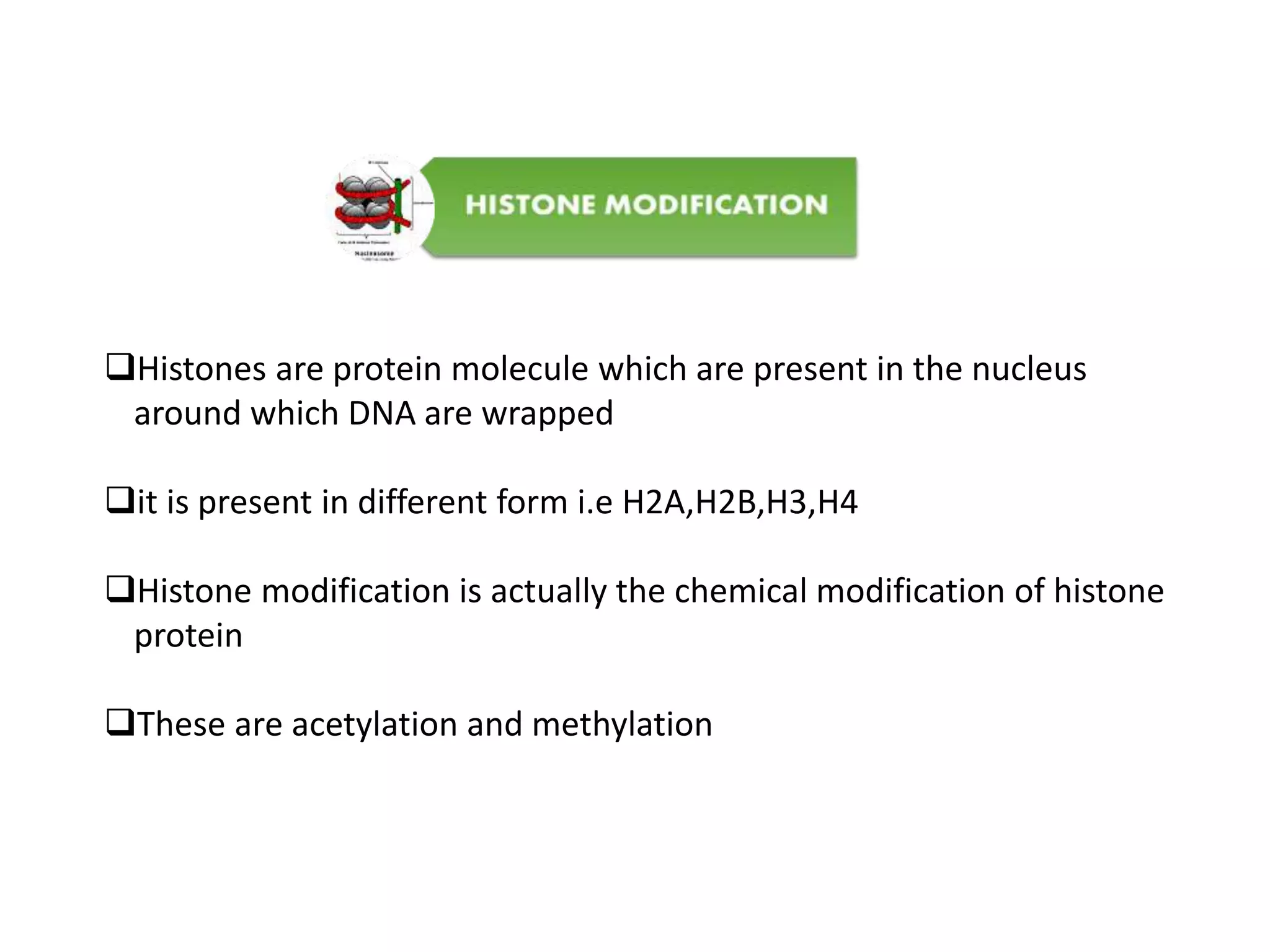
Histones are protein molecule which are present in the nucleus
around which DNA are wrapped
it is present in different form i.e H2A,H2B,H3,H4
Histone modification is actually the chemical modification of histone
protein
These are acetylation and methylation
In case of acetylation there are two
way of regulation of gene
-Acetylation
-Deacetylation
 In case of acetylation of histone protein the DNA is
unwrapped from the histone protein
-Histone acetyl transferase
In case of deacetylation the DNA wrapped around the histone
protein
-Histone deacetyltransferase
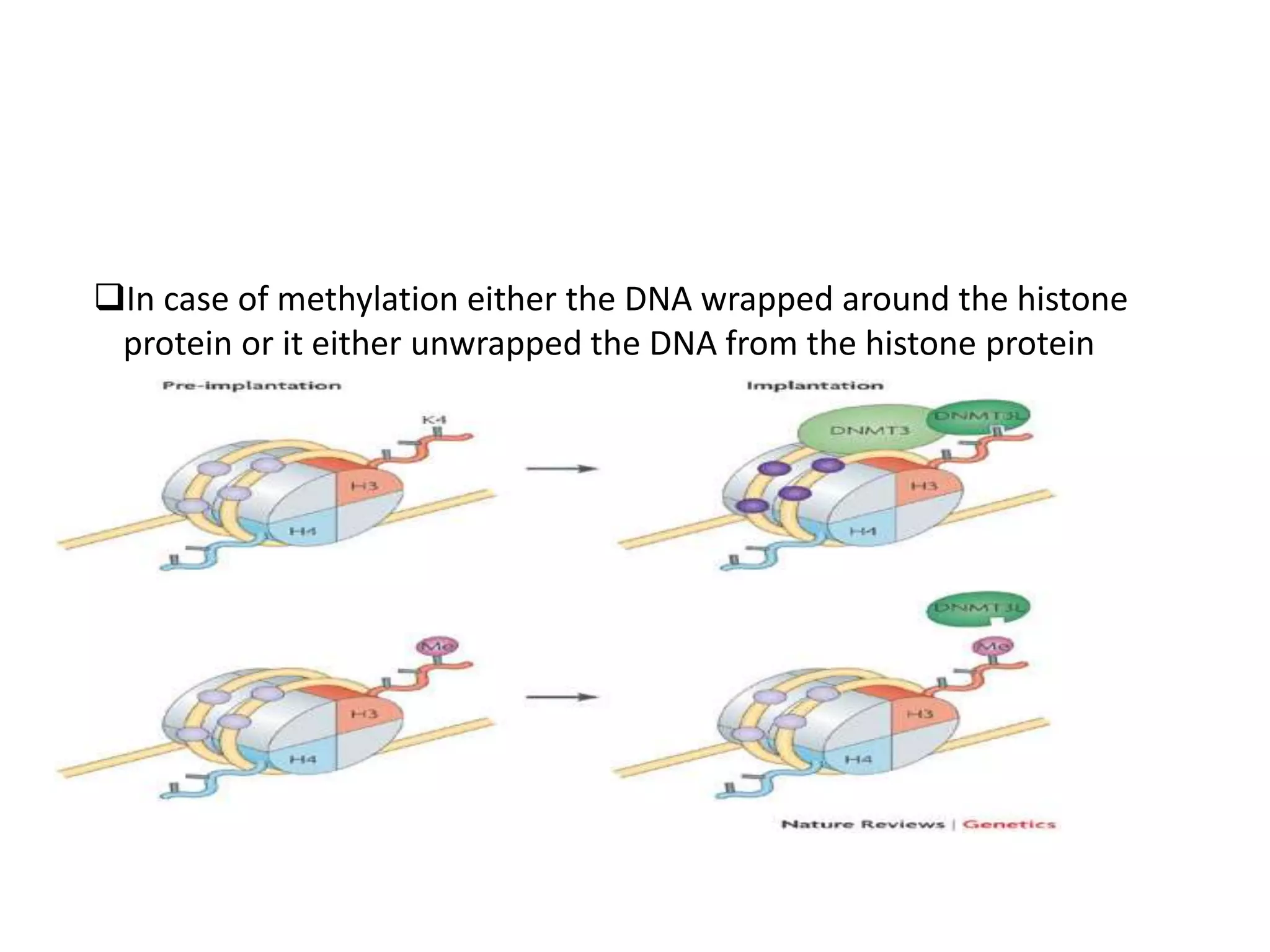
In case of methylation either the DNA wrapped around the histone
protein or it either unwrapped the DNA from the histone protein
RNA INTERFERENCE
This is also a regulatory mechanism of the expression of gene
In this process the double stranded RNA are produce by the cell and that
double stranded RNA is responsible for the suppression pf gene expression
DICER is an enzyme which divided the Ds RNA into fragment (miRNA,SiRNA)
The siRNA is responsible for silencing of gene expression
Epigenetics and Diseases
• While epigenetics changes are required for
normal development and health they can also
be responsible for many disease states .
Disrupting any of the system that contribute
to epigenetics alteration can cause abnormal
activation or silencing of genes
Epigenetics and Cancer
• First human disease to be linked to
epigenetics was cancer 1983
• An epigenetic change silence a tumor
suppressor gene
• Due to high methylation of CPG sites
Epigenetics and Mental Retardation
• Fragile X syndrome is the most frequently
inherited mental disability
• People with this syndrome have severe
intellectual disabilities , delay verbal
development and autistic like behaviour
• The syndrome is caused by an abnormility in
the FMR1
• Caused by methylation of CPG island on the
promoter region of FMR1 gene
Cardiovascular diseases and
epigenetics
• Atherosclerosis is a major factor in
cardiovascular diseases and the function of
smooth muscle cell and endothelial cells are
central to the development of atherosclerosis
• Evidence has indicated that epigenetics
process such as methylation and histone
acetylation has critical function in modulating
smooth muscle cells and endothelial cells
homeostasis
Epigenetics and The Molecular Mechanisms

Epigenetics and The Molecular Mechanisms

  • 2.
  • 3.
    Epigenetics: • The studyof changes in organism caused by modification of gene expression rather than alteration of genetic code • In other words : a change in phenotype without a change in genotype
  • 4.
    • Concept ofepigenetics work: – It's not just genes that make us. In its modern sense, epigenetics is the term used to describe inheritance by mechanisms other than through the DNA sequence of genes. It can apply to characteristics passed from a cell to its daughter cells in cell division.
  • 5.
    Epigenetics at molecularlevel : • Epigenetics refers to the addition or deletion of a methyl group to a DNA base, turning the gene ON or OFF ,or to packaging of the chromatin structure by silencing or opening regions of the genome by winding or unwinding the DNA around histones
  • 6.
    Changes in epigenetics: • Interactions we have with our environment can cause epigenetic changes that affect how our genes work. These interactions include behaviors like smoking, eating, drinking, exercise, and exposure to natural and manufactured chemicals in air, water, and food.
  • 8.
    Example • Body A •Colour : brown • Shape : straight • Length: 10cm • Growth : 0.5mm/day • Body B • Colour : black • Shape : curly • Length : 15cm • Growth: 1mm/day
  • 10.
  • 11.
    DNA METHYLATION It isthe introduction of methyl(CH3) group to the DNA molecule covalently.  eukaryotic DNA methylation occur through an enzyme called DNA METHYLTRANSFERASE It actually inhibit the process of gene transcription DNA methylation also play important role in silencing of tissue specific gene
  • 12.
    Mostly methyl groupare attach to the cytosine at position no 5 These CpG islands are commonly 1000 to 2000 bp in length and contain a high number of CpG sites In case of house keeping gene-gene that encode proteins required in most cells of multicellular organism-the cytosine base pair is unmethylated
  • 13.
    Methylation can affecttranscription in two general ways 1. Actually the methylation at the promoter region prevent the attachment of transcription-factor 2. We inhibit transcription via protein known as methyl-CpG- binding-protein, which bind methylated sequences
  • 15.
    Histones are proteinmolecule which are present in the nucleus around which DNA are wrapped it is present in different form i.e H2A,H2B,H3,H4 Histone modification is actually the chemical modification of histone protein These are acetylation and methylation
  • 16.
    In case ofacetylation there are two way of regulation of gene -Acetylation -Deacetylation  In case of acetylation of histone protein the DNA is unwrapped from the histone protein -Histone acetyl transferase In case of deacetylation the DNA wrapped around the histone protein -Histone deacetyltransferase
  • 17.
    In case ofmethylation either the DNA wrapped around the histone protein or it either unwrapped the DNA from the histone protein
  • 18.
    RNA INTERFERENCE This isalso a regulatory mechanism of the expression of gene In this process the double stranded RNA are produce by the cell and that double stranded RNA is responsible for the suppression pf gene expression DICER is an enzyme which divided the Ds RNA into fragment (miRNA,SiRNA) The siRNA is responsible for silencing of gene expression
  • 20.
    Epigenetics and Diseases •While epigenetics changes are required for normal development and health they can also be responsible for many disease states . Disrupting any of the system that contribute to epigenetics alteration can cause abnormal activation or silencing of genes
  • 21.
    Epigenetics and Cancer •First human disease to be linked to epigenetics was cancer 1983 • An epigenetic change silence a tumor suppressor gene • Due to high methylation of CPG sites
  • 23.
    Epigenetics and MentalRetardation • Fragile X syndrome is the most frequently inherited mental disability • People with this syndrome have severe intellectual disabilities , delay verbal development and autistic like behaviour • The syndrome is caused by an abnormility in the FMR1 • Caused by methylation of CPG island on the promoter region of FMR1 gene
  • 24.
    Cardiovascular diseases and epigenetics •Atherosclerosis is a major factor in cardiovascular diseases and the function of smooth muscle cell and endothelial cells are central to the development of atherosclerosis • Evidence has indicated that epigenetics process such as methylation and histone acetylation has critical function in modulating smooth muscle cells and endothelial cells homeostasis