THE CODES AND CONVENTIONS OF 
HORROR
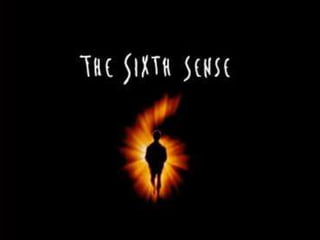
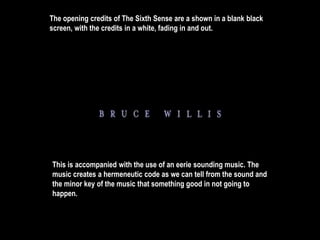
The opening credits of The Sixth Sense are a shown in a blank black 
screen, with the credits in a white, fading in and out. 
This is accompanied with the use of an eerie sounding music. The 
music creates a hermeneutic code as we can tell from the sound and 
the minor key of the music that something good in not going to 
happen.
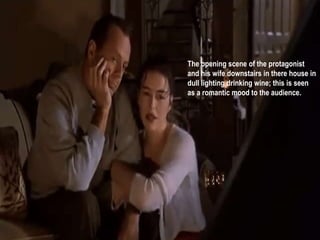
The opening scene of the protagonist 
and his wife downstairs in there house in 
dull lighting drinking wine; this is seen 
as a romantic mood to the audience.
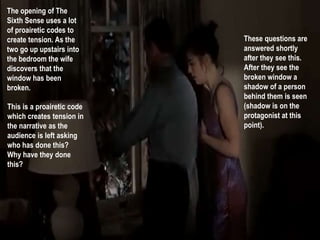
The opening of The 
Sixth Sense uses a lot 
of proairetic codes to 
create tension. As the 
two go up upstairs into 
the bedroom the wife 
discovers that the 
window has been 
broken. 
This is a proairetic code 
which creates tension in 
the narrative as the 
audience is left asking 
who has done this? 
Why have they done 
this? 
These questions are 
answered shortly 
after they see this. 
After they see the 
broken window a 
shadow of a person 
behind them is seen 
(shadow is on the 
protagonist at this 
point).
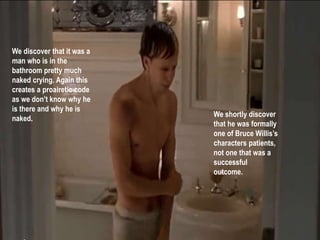
We discover that it was a 
man who is in the 
bathroom pretty much 
naked crying. Again this 
creates a proairetic code 
as we don’t know why he 
is there and why he is 
naked. 
We shortly discover 
that he was formally 
one of Bruce Willis’s 
characters patients, 
not one that was a 
successful 
outcome.
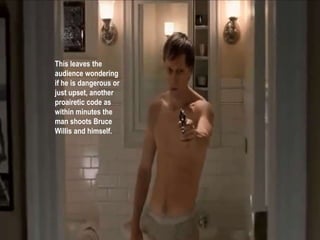
This leaves the 
audience wondering 
if he is dangerous or 
just upset, another 
proairetic code as 
within minutes the 
man shoots Bruce 
Willis and himself.
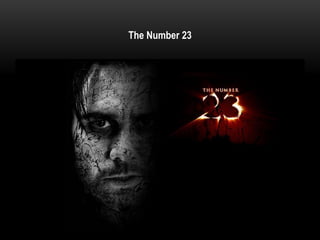
The Number 23
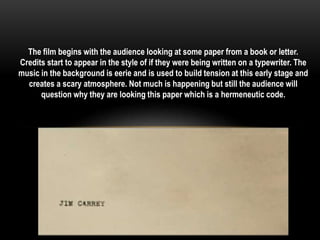
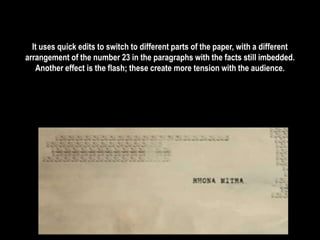
The film begins with the audience looking at some paper from a book or letter. 
Credits start to appear in the style of if they were being written on a typewriter. The 
music in the background is eerie and is used to build tension at this early stage and 
creates a scary atmosphere. Not much is happening but still the audience will 
question why they are looking this paper which is a hermeneutic code.
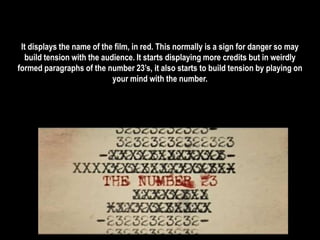
It displays the name of the film, in red. This normally is a sign for danger so may 
build tension with the audience. It starts displaying more credits but in weirdly 
formed paragraphs of the number 23’s, it also starts to build tension by playing on 
your mind with the number.
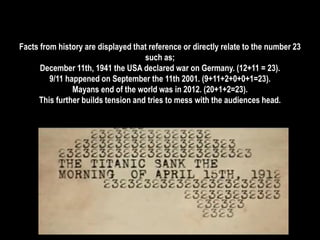
Facts from history are displayed that reference or directly relate to the number 23 
such as; 
December 11th, 1941 the USA declared war on Germany. (12+11 = 23). 
9/11 happened on September the 11th 2001. (9+11+2+0+0+1=23). 
Mayans end of the world was in 2012. (20+1+2=23). 
This further builds tension and tries to mess with the audiences head.
It uses quick edits to switch to different parts of the paper, with a different 
arrangement of the number 23 in the paragraphs with the facts still imbedded. 
Another effect is the flash; these create more tension with the audience.
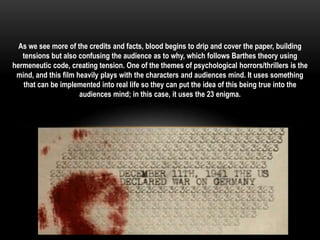
As we see more of the credits and facts, blood begins to drip and cover the paper, building 
tensions but also confusing the audience as to why, which follows Barthes theory using 
hermeneutic code, creating tension. One of the themes of psychological horrors/thrillers is the 
mind, and this film heavily plays with the characters and audiences mind. It uses something 
that can be implemented into real life so they can put the idea of this being true into the 
audiences mind; in this case, it uses the 23 enigma.
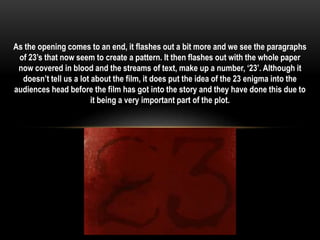
As the opening comes to an end, it flashes out a bit more and we see the paragraphs 
of 23’s that now seem to create a pattern. It then flashes out with the whole paper 
now covered in blood and the streams of text, make up a number, ‘23’. Although it 
doesn’t tell us a lot about the film, it does put the idea of the 23 enigma into the 
audiences head before the film has got into the story and they have done this due to 
it being a very important part of the plot.
The Others
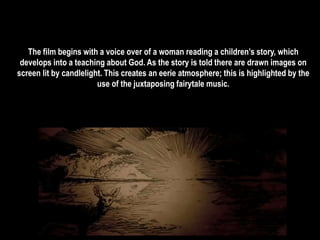
The film begins with a voice over of a woman reading a children’s story, which 
develops into a teaching about God. As the story is told there are drawn images on 
screen lit by candlelight. This creates an eerie atmosphere; this is highlighted by the 
use of the juxtaposing fairytale music.
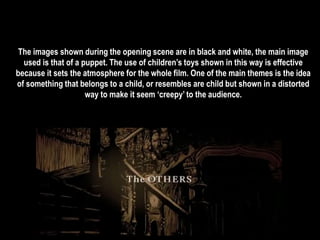
The images shown during the opening scene are in black and white, the main image 
used is that of a puppet. The use of children’s toys shown in this way is effective 
because it sets the atmosphere for the whole film. One of the main themes is the idea 
of something that belongs to a child, or resembles are child but shown in a distorted 
way to make it seem ‘creepy’ to the audience.
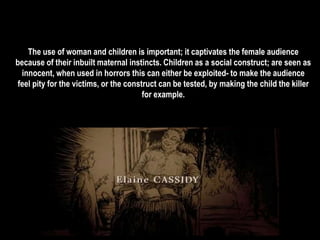
The use of woman and children is important; it captivates the female audience 
because of their inbuilt maternal instincts. Children as a social construct; are seen as 
innocent, when used in horrors this can either be exploited- to make the audience 
feel pity for the victims, or the construct can be tested, by making the child the killer 
for example.
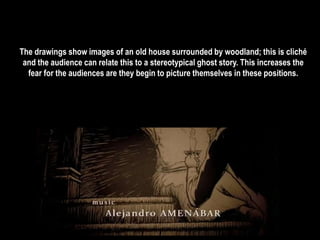
The drawings show images of an old house surrounded by woodland; this is cliché 
and the audience can relate this to a stereotypical ghost story. This increases the 
fear for the audiences are they begin to picture themselves in these positions.
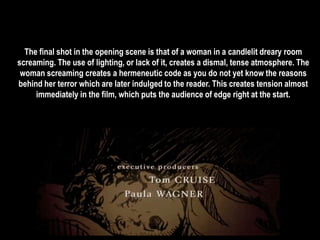
The final shot in the opening scene is that of a woman in a candlelit dreary room 
screaming. The use of lighting, or lack of it, creates a dismal, tense atmosphere. The 
woman screaming creates a hermeneutic code as you do not yet know the reasons 
behind her terror which are later indulged to the reader. This creates tension almost 
immediately in the film, which puts the audience of edge right at the start.
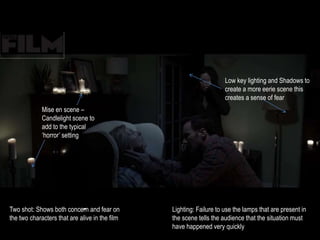
Low key lighting and Shadows to 
create a more eerie scene this 
creates a sense of fear 
Mise en scene – 
Candlelight scene to 
add to the typical 
‘horror’ setting 
Two shot: Shows both concern and fear on 
the two characters that are alive in the film 
Lighting: Failure to use the lamps that are present in 
the scene tells the audience that the situation must 
have happened very quickly
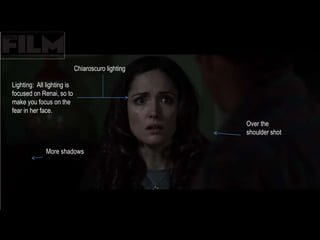
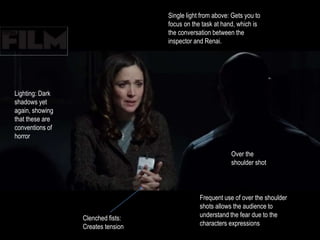
Lighting: All lighting is 
focused on Renai, so to 
make you focus on the 
fear in her face. 
Chiaroscuro lighting 
Over the 
shoulder shot 
More shadows
Over the 
shoulder shot 
Frequent use of over the shoulder 
shots allows the audience to 
understand the fear due to the 
characters expressions 
Clenched fists: 
Creates tension 
Single light from above: Gets you to 
focus on the task at hand, which is 
the conversation between the 
inspector and Renai. 
Lighting: Dark 
shadows yet 
again, showing 
that these are 
conventions of 
horror
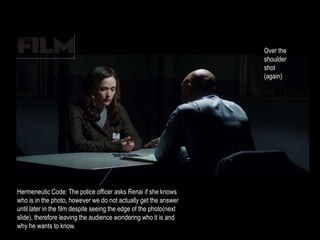
Hermeneutic Code: The police officer asks Renai if she knows 
who is in the photo, however we do not actually get the answer 
until later in the film despite seeing the edge of the photo(next 
slide), therefore leaving the audience wondering who it is and 
why he wants to know. 
Over the 
shoulder 
shot 
(again)
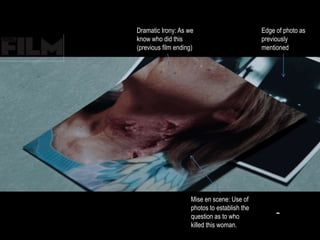
Mise en scene: Use of 
photos to establish the 
question as to who 
killed this woman. 
Edge of photo as 
previously 
mentioned 
Dramatic Irony: As we 
know who did this 
(previous film ending)
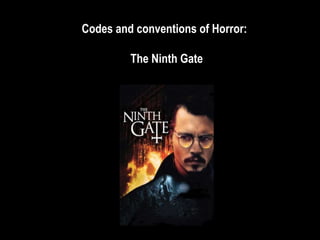
Codes aCnodd ceosn avnednt icoonnsv oefn htoiorrnosr: oTfh Heo Nrrinotrh: Gate 
The Ninth Gate
The opening begins with a black screen with white title credits with a scribbling sound 
which after a few seconds is revealed to be diagetic as the first initial shot focuses on a 
character sitting down at a desk writing a note.
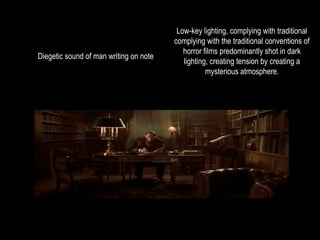
Low-key lighting, complying with traditional 
complying with the traditional conventions of 
horror films predominantly shot in dark 
lighting, creating tension by creating a 
mysterious atmosphere. 
Diegetic sound of man writing on note
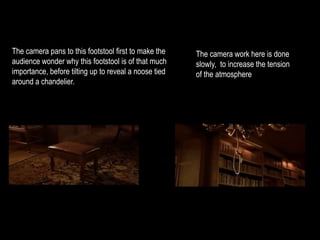
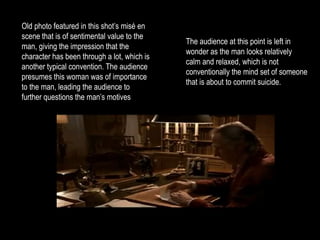
The camera pans to this footstool first to make the 
audience wonder why this footstool is of that much 
importance, before tilting up to reveal a noose tied 
around a chandelier. 
The camera work here is done 
slowly, to increase the tension 
of the atmosphere
The audience at this point is left in 
wonder as the man looks relatively 
calm and relaxed, which is not 
conventionally the mind set of someone 
that is about to commit suicide. 
Old photo featured in this shot’s misé en 
scene that is of sentimental value to the 
man, giving the impression that the 
character has been through a lot, which is 
another typical convention. The audience 
presumes this woman was of importance 
to the man, leading the audience to 
further questions the man’s motives
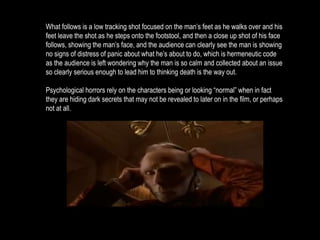
What follows is a low tracking shot focused on the man’s feet as he walks over and his 
feet leave the shot as he steps onto the footstool, and then a close up shot of his face 
follows, showing the man’s face, and the audience can clearly see the man is showing 
no signs of distress of panic about what he’s about to do, which is hermeneutic code 
as the audience is left wondering why the man is so calm and collected about an issue 
so clearly serious enough to lead him to thinking death is the way out. 
Psychological horrors rely on the characters being or looking “normal” when in fact 
they are hiding dark secrets that may not be revealed to later on in the film, or perhaps 
not at all.
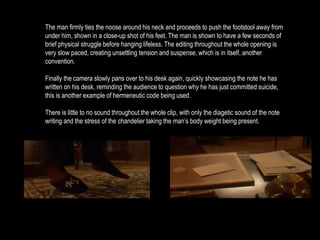
The man firmly ties the noose around his neck and proceeds to push the footstool away from 
under him, shown in a close-up shot of his feet. The man is shown to have a few seconds of 
brief physical struggle before hanging lifeless. The editing throughout the whole opening is 
very slow paced, creating unsettling tension and suspense, which is in itself, another 
convention. 
Finally the camera slowly pans over to his desk again, quickly showcasing the note he has 
written on his desk, reminding the audience to question why he has just committed suicide, 
this is another example of hermeneutic code being used. 
There is little to no sound throughout the whole clip, with only the diagetic sound of the note 
writing and the stress of the chandelier taking the man’s body weight being present.

Codes and Conventions

  • 1.
    THE CODES ANDCONVENTIONS OF HORROR
  • 3.
    The opening creditsof The Sixth Sense are a shown in a blank black screen, with the credits in a white, fading in and out. This is accompanied with the use of an eerie sounding music. The music creates a hermeneutic code as we can tell from the sound and the minor key of the music that something good in not going to happen.
  • 4.
    The opening sceneof the protagonist and his wife downstairs in there house in dull lighting drinking wine; this is seen as a romantic mood to the audience.
  • 5.
    The opening ofThe Sixth Sense uses a lot of proairetic codes to create tension. As the two go up upstairs into the bedroom the wife discovers that the window has been broken. This is a proairetic code which creates tension in the narrative as the audience is left asking who has done this? Why have they done this? These questions are answered shortly after they see this. After they see the broken window a shadow of a person behind them is seen (shadow is on the protagonist at this point).
  • 6.
    We discover thatit was a man who is in the bathroom pretty much naked crying. Again this creates a proairetic code as we don’t know why he is there and why he is naked. We shortly discover that he was formally one of Bruce Willis’s characters patients, not one that was a successful outcome.
  • 7.
    This leaves the audience wondering if he is dangerous or just upset, another proairetic code as within minutes the man shoots Bruce Willis and himself.
  • 8.
  • 9.
    The film beginswith the audience looking at some paper from a book or letter. Credits start to appear in the style of if they were being written on a typewriter. The music in the background is eerie and is used to build tension at this early stage and creates a scary atmosphere. Not much is happening but still the audience will question why they are looking this paper which is a hermeneutic code.
  • 10.
    It displays thename of the film, in red. This normally is a sign for danger so may build tension with the audience. It starts displaying more credits but in weirdly formed paragraphs of the number 23’s, it also starts to build tension by playing on your mind with the number.
  • 11.
    Facts from historyare displayed that reference or directly relate to the number 23 such as; December 11th, 1941 the USA declared war on Germany. (12+11 = 23). 9/11 happened on September the 11th 2001. (9+11+2+0+0+1=23). Mayans end of the world was in 2012. (20+1+2=23). This further builds tension and tries to mess with the audiences head.
  • 12.
    It uses quickedits to switch to different parts of the paper, with a different arrangement of the number 23 in the paragraphs with the facts still imbedded. Another effect is the flash; these create more tension with the audience.
  • 13.
    As we seemore of the credits and facts, blood begins to drip and cover the paper, building tensions but also confusing the audience as to why, which follows Barthes theory using hermeneutic code, creating tension. One of the themes of psychological horrors/thrillers is the mind, and this film heavily plays with the characters and audiences mind. It uses something that can be implemented into real life so they can put the idea of this being true into the audiences mind; in this case, it uses the 23 enigma.
  • 14.
    As the openingcomes to an end, it flashes out a bit more and we see the paragraphs of 23’s that now seem to create a pattern. It then flashes out with the whole paper now covered in blood and the streams of text, make up a number, ‘23’. Although it doesn’t tell us a lot about the film, it does put the idea of the 23 enigma into the audiences head before the film has got into the story and they have done this due to it being a very important part of the plot.
  • 15.
  • 16.
    The film beginswith a voice over of a woman reading a children’s story, which develops into a teaching about God. As the story is told there are drawn images on screen lit by candlelight. This creates an eerie atmosphere; this is highlighted by the use of the juxtaposing fairytale music.
  • 17.
    The images shownduring the opening scene are in black and white, the main image used is that of a puppet. The use of children’s toys shown in this way is effective because it sets the atmosphere for the whole film. One of the main themes is the idea of something that belongs to a child, or resembles are child but shown in a distorted way to make it seem ‘creepy’ to the audience.
  • 18.
    The use ofwoman and children is important; it captivates the female audience because of their inbuilt maternal instincts. Children as a social construct; are seen as innocent, when used in horrors this can either be exploited- to make the audience feel pity for the victims, or the construct can be tested, by making the child the killer for example.
  • 19.
    The drawings showimages of an old house surrounded by woodland; this is cliché and the audience can relate this to a stereotypical ghost story. This increases the fear for the audiences are they begin to picture themselves in these positions.
  • 20.
    The final shotin the opening scene is that of a woman in a candlelit dreary room screaming. The use of lighting, or lack of it, creates a dismal, tense atmosphere. The woman screaming creates a hermeneutic code as you do not yet know the reasons behind her terror which are later indulged to the reader. This creates tension almost immediately in the film, which puts the audience of edge right at the start.
  • 22.
    Low key lightingand Shadows to create a more eerie scene this creates a sense of fear Mise en scene – Candlelight scene to add to the typical ‘horror’ setting Two shot: Shows both concern and fear on the two characters that are alive in the film Lighting: Failure to use the lamps that are present in the scene tells the audience that the situation must have happened very quickly
  • 23.
    Lighting: All lightingis focused on Renai, so to make you focus on the fear in her face. Chiaroscuro lighting Over the shoulder shot More shadows
  • 24.
    Over the shouldershot Frequent use of over the shoulder shots allows the audience to understand the fear due to the characters expressions Clenched fists: Creates tension Single light from above: Gets you to focus on the task at hand, which is the conversation between the inspector and Renai. Lighting: Dark shadows yet again, showing that these are conventions of horror
  • 25.
    Hermeneutic Code: Thepolice officer asks Renai if she knows who is in the photo, however we do not actually get the answer until later in the film despite seeing the edge of the photo(next slide), therefore leaving the audience wondering who it is and why he wants to know. Over the shoulder shot (again)
  • 26.
    Mise en scene:Use of photos to establish the question as to who killed this woman. Edge of photo as previously mentioned Dramatic Irony: As we know who did this (previous film ending)
  • 27.
    Codes aCnodd ceosnavnednt icoonnsv oefn htoiorrnosr: oTfh Heo Nrrinotrh: Gate The Ninth Gate
  • 28.
    The opening beginswith a black screen with white title credits with a scribbling sound which after a few seconds is revealed to be diagetic as the first initial shot focuses on a character sitting down at a desk writing a note.
  • 29.
    Low-key lighting, complyingwith traditional complying with the traditional conventions of horror films predominantly shot in dark lighting, creating tension by creating a mysterious atmosphere. Diegetic sound of man writing on note
  • 30.
    The camera pansto this footstool first to make the audience wonder why this footstool is of that much importance, before tilting up to reveal a noose tied around a chandelier. The camera work here is done slowly, to increase the tension of the atmosphere
  • 31.
    The audience atthis point is left in wonder as the man looks relatively calm and relaxed, which is not conventionally the mind set of someone that is about to commit suicide. Old photo featured in this shot’s misé en scene that is of sentimental value to the man, giving the impression that the character has been through a lot, which is another typical convention. The audience presumes this woman was of importance to the man, leading the audience to further questions the man’s motives
  • 32.
    What follows isa low tracking shot focused on the man’s feet as he walks over and his feet leave the shot as he steps onto the footstool, and then a close up shot of his face follows, showing the man’s face, and the audience can clearly see the man is showing no signs of distress of panic about what he’s about to do, which is hermeneutic code as the audience is left wondering why the man is so calm and collected about an issue so clearly serious enough to lead him to thinking death is the way out. Psychological horrors rely on the characters being or looking “normal” when in fact they are hiding dark secrets that may not be revealed to later on in the film, or perhaps not at all.
  • 33.
    The man firmlyties the noose around his neck and proceeds to push the footstool away from under him, shown in a close-up shot of his feet. The man is shown to have a few seconds of brief physical struggle before hanging lifeless. The editing throughout the whole opening is very slow paced, creating unsettling tension and suspense, which is in itself, another convention. Finally the camera slowly pans over to his desk again, quickly showcasing the note he has written on his desk, reminding the audience to question why he has just committed suicide, this is another example of hermeneutic code being used. There is little to no sound throughout the whole clip, with only the diagetic sound of the note writing and the stress of the chandelier taking the man’s body weight being present.