EPIDEMIOLOGY & INFECTION
PREVENTION- CDC GUIDELINES
 Infection prevention and control is required
to prevent the transmission of
communicable diseases in all health care
settings.
 Infection prevention and control demands a
basic understanding of the epidemiology of
diseases; risk factors that increase patient
susceptibility to infection; and the practices,
procedures and treatments that may result
in infections.
 The risk of acquiring a healthcare-
associated infection is related to the
mode of transmission of the infectious
agent , the type of patient-care activity
or procedure being performed and the
underlying patient's host defenses.
 Healthcare workers should be
vaccinated against preventable
diseases such as hepatitis B.
 Personnel at risk for exposure to
tuberculosis should be screened per
recommendations.
PERSONAL PROTECTIVE
EQUIPMENT
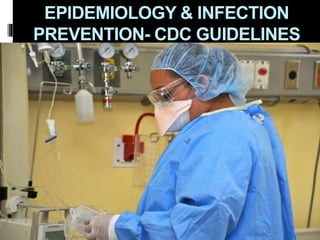
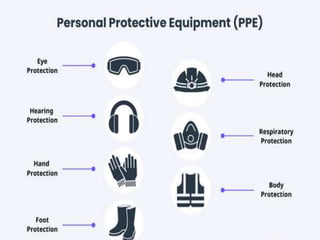
 Personal protective equipment (PPE) refers to
a variety of barriers used either alone or in
combination to protect health care workers from
contact with transmissible pathogens.
 These include single-use disposable gloves,
aprons and long-sleeved gowns as well as
facial protection for eyes, nose and mouth.
 Facial protection, footwear and hair cover or
cap.For PPE to be protective and considered
appropriate, blood and body fluids must not be
able to penetrate the PPE material.
 The equipment must be accessible to the
employee and must be worn whenever there is
the potential for exposure to infectious material;
it must be removed before leaving the work
 Ensure sufficient supplies of appropriate PPE.
HCWs should be trained on the use of PPE as
part of the infection prevention and control
(IPC) training.
 PPE should be removed prior to leaving the
isolation room and discarded into appropriate
health care waste stream.
 PPE should be put on and taken off in correct
sequence and disposed in accordance with the
Biomedical Waste Management and Handing
Rules 2016, and 2018.
 Hand hygiene should always be the final step
following removal and disposal of PPE.
 All respirators should be fit-tested for each
individual so that each person is assured that
his or hers is working properly. Males must
Uses
 Healthcare workers (HCWs) who provide direct
care to patients and who may come in contact with
blood, body fluids, excretions, and secretions.
 Support staff including cleaners, and laundry staff
in situations where they may have contact with
blood, body fluids, secretions, and excretions.
 Laboratory staff, who handle patient specimens
 Family members who provide care to patients and
are in a situation where they may have contact
with blood, body fluids, secretions and excretions.
 Healthcare workers (HCWs) in a hemodialysis unit,
because of the high risk of transmission of blood-
borne infections during the various activities
associated with hemodialysis and handling of
 Patients in a hemodialysis unit, in the form
of a barrier over clothing during
cannulation and decannulation, central
line connection, disconnection/dressing
change.
1. Gloves:
 In addition to wearing gloves as outlined
in standard precautions, gloves should
be worn on entering an isolation room or
cohort area and for all interactions that
involve contact with the patient or items
in close proximity to the patient (such as
medical equipment, bed rails, etc.)
 Again, hands must be washed after the
 Gloves should be removed in the following
circum- stances: After body fluid exposure
risk, Before leaving the patient's
environment (room or cohort bed space).
 Gloves must be discarded between patients
and must never be washed for reuse, as
microorganisms cannot be reliably removed
from glove surfaces and glove integrity may
be compromised.
 It may be necessary to change gloves and
perform hand hygiene during the care of a
single patient in order to prevent cross-
contamination of different body sites or
before touching noncontaminated areas in
the patient's environment.
2. Aprons and gowns:
 A disposable plastic apron and gloves
should be donned before entering the
room/cohort bed space of a patient infected
or colonized with a multidrug resistant
organisms (MDRO).
 PPE should be changed between each
patient in a cohort area and should be
removed and discarded into appropriate
health care waste stream prior to leaving the
patient's room/bed space, in order to prevent
contamination of noncontaminated areas.
3. Aprons versus long-sleeved gowns:
 Aprons/long-sleeved gowns should be worn
when contact with the patient and environment
is anticipated.
 Healthcare workers should consider selecting
longsleeved gowns in preference to aprons if
the level of anticipated environmental
exposure may result in contamination of
unprotected sleeves or arms when wearing an
apron; or in situations where close physical
contact with the patient is anticipated (e.g.,
pediatric setting, assistance with body care).
 Where extensive exposure to blood and body
 4. Facial protection: Usual facial
protection includes a medical/surgical mask
(triple-layer surgical mask) and eye protection
(face shield or goggles), to protect the
conjunctivae and the mucous membranes of the
nose, eyes and mouth during activities that are
likely to generate splashes or sprays of blood,
body fluids, secretions or excretions.
 Eye protection should also be used while
providing care to patients with respiratory
symptoms, such as coughing and sneezing, since
sprays s of secretions may occur.
5. Footwear
 A closed footwear, which can be easily
cleaned and disinfected, must be used
whenever work processes or
environments could cause foot injuries or
spillage of blood or body fluids.
 Personal footwear should be changed
when entering clean areas, such as OTS,
labor rooms, ICU.
 Shoe covers may be used over street
shoes to protect clean areas from soil and dirt
6. Hair covers
 Long hair must be secured with a rubber
band and hair cover worn to protect the hair
and to protect the patient from falling hair.

Epidemiology & infection control.pptx

  • 1.
  • 2.
     Infection preventionand control is required to prevent the transmission of communicable diseases in all health care settings.  Infection prevention and control demands a basic understanding of the epidemiology of diseases; risk factors that increase patient susceptibility to infection; and the practices, procedures and treatments that may result in infections.
  • 3.
     The riskof acquiring a healthcare- associated infection is related to the mode of transmission of the infectious agent , the type of patient-care activity or procedure being performed and the underlying patient's host defenses.  Healthcare workers should be vaccinated against preventable diseases such as hepatitis B.  Personnel at risk for exposure to tuberculosis should be screened per recommendations.
  • 5.
    PERSONAL PROTECTIVE EQUIPMENT  Personalprotective equipment (PPE) refers to a variety of barriers used either alone or in combination to protect health care workers from contact with transmissible pathogens.  These include single-use disposable gloves, aprons and long-sleeved gowns as well as facial protection for eyes, nose and mouth.  Facial protection, footwear and hair cover or cap.For PPE to be protective and considered appropriate, blood and body fluids must not be able to penetrate the PPE material.  The equipment must be accessible to the employee and must be worn whenever there is the potential for exposure to infectious material; it must be removed before leaving the work
  • 6.
     Ensure sufficientsupplies of appropriate PPE. HCWs should be trained on the use of PPE as part of the infection prevention and control (IPC) training.  PPE should be removed prior to leaving the isolation room and discarded into appropriate health care waste stream.  PPE should be put on and taken off in correct sequence and disposed in accordance with the Biomedical Waste Management and Handing Rules 2016, and 2018.  Hand hygiene should always be the final step following removal and disposal of PPE.  All respirators should be fit-tested for each individual so that each person is assured that his or hers is working properly. Males must
  • 7.
    Uses  Healthcare workers(HCWs) who provide direct care to patients and who may come in contact with blood, body fluids, excretions, and secretions.  Support staff including cleaners, and laundry staff in situations where they may have contact with blood, body fluids, secretions, and excretions.  Laboratory staff, who handle patient specimens  Family members who provide care to patients and are in a situation where they may have contact with blood, body fluids, secretions and excretions.  Healthcare workers (HCWs) in a hemodialysis unit, because of the high risk of transmission of blood- borne infections during the various activities associated with hemodialysis and handling of
  • 8.
     Patients ina hemodialysis unit, in the form of a barrier over clothing during cannulation and decannulation, central line connection, disconnection/dressing change. 1. Gloves:  In addition to wearing gloves as outlined in standard precautions, gloves should be worn on entering an isolation room or cohort area and for all interactions that involve contact with the patient or items in close proximity to the patient (such as medical equipment, bed rails, etc.)  Again, hands must be washed after the
  • 9.
     Gloves shouldbe removed in the following circum- stances: After body fluid exposure risk, Before leaving the patient's environment (room or cohort bed space).  Gloves must be discarded between patients and must never be washed for reuse, as microorganisms cannot be reliably removed from glove surfaces and glove integrity may be compromised.  It may be necessary to change gloves and perform hand hygiene during the care of a single patient in order to prevent cross- contamination of different body sites or before touching noncontaminated areas in the patient's environment.
  • 10.
    2. Aprons andgowns:  A disposable plastic apron and gloves should be donned before entering the room/cohort bed space of a patient infected or colonized with a multidrug resistant organisms (MDRO).  PPE should be changed between each patient in a cohort area and should be removed and discarded into appropriate health care waste stream prior to leaving the patient's room/bed space, in order to prevent contamination of noncontaminated areas.
  • 11.
    3. Aprons versuslong-sleeved gowns:  Aprons/long-sleeved gowns should be worn when contact with the patient and environment is anticipated.  Healthcare workers should consider selecting longsleeved gowns in preference to aprons if the level of anticipated environmental exposure may result in contamination of unprotected sleeves or arms when wearing an apron; or in situations where close physical contact with the patient is anticipated (e.g., pediatric setting, assistance with body care).  Where extensive exposure to blood and body
  • 12.
     4. Facialprotection: Usual facial protection includes a medical/surgical mask (triple-layer surgical mask) and eye protection (face shield or goggles), to protect the conjunctivae and the mucous membranes of the nose, eyes and mouth during activities that are likely to generate splashes or sprays of blood, body fluids, secretions or excretions.  Eye protection should also be used while providing care to patients with respiratory symptoms, such as coughing and sneezing, since sprays s of secretions may occur.
  • 13.
    5. Footwear  Aclosed footwear, which can be easily cleaned and disinfected, must be used whenever work processes or environments could cause foot injuries or spillage of blood or body fluids.  Personal footwear should be changed when entering clean areas, such as OTS, labor rooms, ICU.  Shoe covers may be used over street shoes to protect clean areas from soil and dirt
  • 14.
    6. Hair covers Long hair must be secured with a rubber band and hair cover worn to protect the hair and to protect the patient from falling hair.