Download to read offline
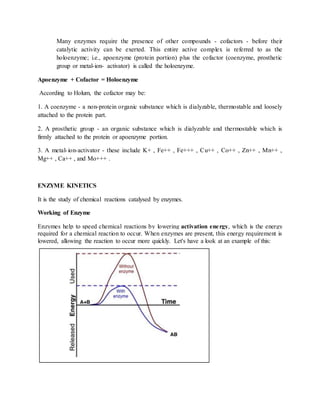
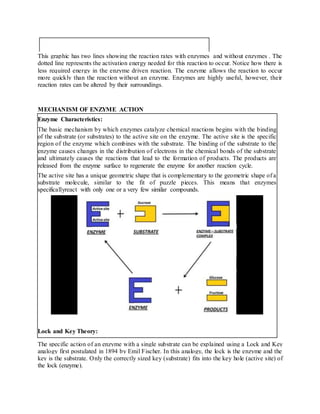
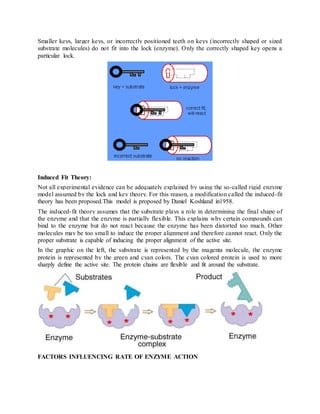


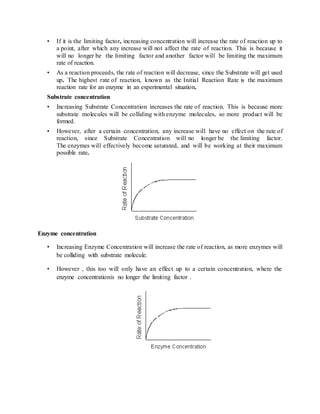

Enzymes are proteins that catalyze biochemical reactions and lower their activation energy. Three factors affect the rate of enzyme reactions: temperature, pH, and substrate concentration. Temperature affects reaction rates because higher temperatures increase molecular collisions and velocities. Each enzyme works optimally within a certain temperature range, as extremes can denature the protein. pH also influences structure and activity, as enzymes have an optimal pH range where ionization of amino acids is not altered. Increasing substrate concentration increases reaction rates until the enzymes become saturated, while increasing enzyme concentration also boosts rates until another factor limits the reaction.


![Human Reproduction [ Reproductive System ] Notes @irfanullah_mehar Irfanullah...](https://cdn.slidesharecdn.com/ss_thumbnails/humanreproductionreproductivesystemnotesirfanullahmeharirfanullahmeharjanantantra-260111172350-56e85778-thumbnail.jpg?width=640&height=640&fit=bounds)


