Have you ever heard anyone say, "His
actions spoke so loudly I couldn't hear
           what he said?"
INTRODUCTION :-
Body language is a kind of non-verbal communication.
It includes facial expressions, eye contact, tone of voice,
body posture and motions, and positioning within
groups.
John Borg attests that human communication consists of
93 percent body language and paralinguistic cues, while
only 7% of communication consists of words themselves.
Why is Body Language important?

• Body language plays a big role in intuition as it
  gives us messages about the other person, that
  we can interpret at an intuitive level.
55%                              7%


                          38%
Components of Body Language
Facial Expressions
 There are some universal facial expressions; a smile,
  a frown, etc.

 Eye contact is direct and powerful.

 The use of eye contact varies significantly from
  culture to culture
Gestures
 Fidgeting shows boredom and restlessness.
 Pressing fingers together to form a steeple
 shows interests, assertiveness and
 determination.
 Touching the nose or rubbing eyes indicates
  discomfort.
 A hand to the back of the neck may indicate
  withdrawal from a conversation.
Open Stance
 Interested people always have an erect posture, pay
  attention and lean forward
 A firm handshake will give the impression of
  assertiveness or honesty
 People showing open hands, both feet planted on the
  ground are accepting
 A head tilted to the side indicates interest
Closed Stance
 Leaning backwards demonstrates aloofness or rejection
 Folding arms across ones chest or body is protective
  and gives the impression of a closed, guarded and
  defensive character.
 People with arms folded, legs crossed and bodies
  turned away are signalling that they are rejecting
  messages.
 A head down is negative and judgmental.
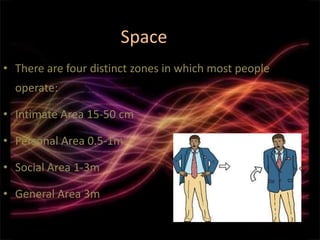
Space
• There are four distinct zones in which most people
  operate:

• Intimate Area 15-50 cm

• Personal Area 0.5-1m

• Social Area 1-3m

• General Area 3m
Do’s and the Don'ts
How do I know as to what I am doing is right or
               not ……..????
                     OR
    What is My Body Language like !!!!!
              Let us find out.
Don’t cross your
                 arms or legs


Have eye contact,
 but don’t stare
Relax your shoulders


Nod when they
  are talking
Don’t slouch, sit up
                   straight


Smile and laugh
Keep your head up


Don’t fidget
Keep a good attitude
THANK YOU..
SUBMITTED BY-

MONIKA
NISHTHA
NITIKA
PRERNA &
SMRITI

Eng

  • 1.
    Have you everheard anyone say, "His actions spoke so loudly I couldn't hear what he said?"
  • 2.
    INTRODUCTION :- Body languageis a kind of non-verbal communication. It includes facial expressions, eye contact, tone of voice, body posture and motions, and positioning within groups. John Borg attests that human communication consists of 93 percent body language and paralinguistic cues, while only 7% of communication consists of words themselves.
  • 3.
    Why is BodyLanguage important? • Body language plays a big role in intuition as it gives us messages about the other person, that we can interpret at an intuitive level. 55% 7% 38%
  • 4.
  • 5.
    Facial Expressions  Thereare some universal facial expressions; a smile, a frown, etc.  Eye contact is direct and powerful.  The use of eye contact varies significantly from culture to culture
  • 6.
    Gestures  Fidgeting showsboredom and restlessness.  Pressing fingers together to form a steeple shows interests, assertiveness and determination.  Touching the nose or rubbing eyes indicates discomfort.  A hand to the back of the neck may indicate withdrawal from a conversation.
  • 7.
    Open Stance  Interestedpeople always have an erect posture, pay attention and lean forward  A firm handshake will give the impression of assertiveness or honesty  People showing open hands, both feet planted on the ground are accepting  A head tilted to the side indicates interest
  • 8.
    Closed Stance  Leaningbackwards demonstrates aloofness or rejection  Folding arms across ones chest or body is protective and gives the impression of a closed, guarded and defensive character.  People with arms folded, legs crossed and bodies turned away are signalling that they are rejecting messages.  A head down is negative and judgmental.
  • 9.
    Space • There arefour distinct zones in which most people operate: • Intimate Area 15-50 cm • Personal Area 0.5-1m • Social Area 1-3m • General Area 3m
  • 10.
    Do’s and theDon'ts How do I know as to what I am doing is right or not ……..???? OR What is My Body Language like !!!!! Let us find out.
  • 11.
    Don’t cross your arms or legs Have eye contact, but don’t stare
  • 12.
    Relax your shoulders Nodwhen they are talking
  • 13.
    Don’t slouch, situp straight Smile and laugh
  • 14.
    Keep your headup Don’t fidget
  • 15.
    Keep a goodattitude
  • 16.