Body Language
Non-verbal communication
A series of conscious or subconscious signals to others
Signals are sent by—
Facial expressions
Eyes
Hand movements
Gestures of arms and hands
Leg movements
Posture
Zonal distance and orientation
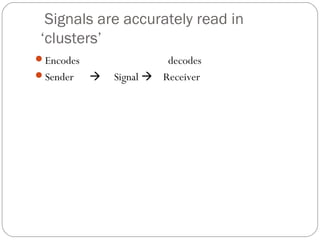
Signals are accurately read in
‘clusters’
Encodes decodes
Sender  Signal  Receiver
 
Selecting positive behaviours
Facial Expressions:
Seven main expressions-
Anger
Disgust
Fear
Happiness
Interest
Sadness
Surprise
Most of the information is carried by eyes, eyebrows, and mouth.
Gaze:
Maintain eye contact when talking and when listening
Level of contact depends upon relative status of other person
Area of gaze varies in line with ‘status’
Gestures
Head nodding
Beckoning / welcoming
Body posture:
Stand with hands held loosely behind the back
Lean slightly towards the other person
Sit still, with no sudden movements
Bodily contact:
A controlled way of moving from initiating to building a
relationship
Appearances:
First impressions are geared to looks, not actions
Give a strong signal of social status, place in hierarchy and
ability
Body talk
Dominant:
Finger –pointing
Eyes steady / fixing / narrowed
Lounging back with hands behind head
Feet on desk
Steep ling
Stands with feet apart
Loud voice, harsh commanding tone
Protects own space, strongly territorial
Invades others space
Dominant
Seldom smiles
First thumping
Shakes head more often than he nods
Eyebrow raised in disbelief
Chin thrust forward
Exploding
Strides around impatiently
Supportive:
Leans forward, eyes sparkling
Touching
Smiles readily
Jaw relaxed
Nods appropriately
Moderate voice, empathetic tone
Respects others space
Hand gestures frequent
Palms/wrists usually visible
Negative:
Legs / arms crossed
Frown lines
Constipated gestures
Closed smile
Frequent pauses
No eye contact
Hunched shoulders
Hand covers mouth
Tortoise neck
Compliant:
Nods often
Brief eye contact
Moderate voice
Few gestures
Leans forward to listen
Helpful Behaviours
Lean forward, arms uncrossed
Look at the other person for 60% of the time
Make listening signals and noises
Smile
Use other person’s name early in transaction
Ask open questions
Summarize what you think they said
Factors that affect the message are...
Attitude
Verbal message
Non-verbal message
Appearance
Background of the communicators
Expectations of the communicators
Setting
Your words and body language must not contradict each
other
Non verbal messages
Actions speak louder than words
Tone of voice
Gestures
Facial expressions
Posture
Eye contact
Body movements

Body language

  • 1.
  • 2.
    Non-verbal communication A seriesof conscious or subconscious signals to others Signals are sent by— Facial expressions Eyes Hand movements Gestures of arms and hands Leg movements Posture Zonal distance and orientation
  • 3.
    Signals are accuratelyread in ‘clusters’ Encodes decodes Sender  Signal  Receiver  
  • 4.
    Selecting positive behaviours FacialExpressions: Seven main expressions- Anger Disgust Fear Happiness Interest Sadness Surprise Most of the information is carried by eyes, eyebrows, and mouth.
  • 5.
    Gaze: Maintain eye contactwhen talking and when listening Level of contact depends upon relative status of other person Area of gaze varies in line with ‘status’
  • 6.
  • 7.
    Body posture: Stand withhands held loosely behind the back Lean slightly towards the other person Sit still, with no sudden movements
  • 8.
    Bodily contact: A controlledway of moving from initiating to building a relationship Appearances: First impressions are geared to looks, not actions Give a strong signal of social status, place in hierarchy and ability
  • 9.
  • 10.
    Dominant: Finger –pointing Eyes steady/ fixing / narrowed Lounging back with hands behind head Feet on desk Steep ling Stands with feet apart Loud voice, harsh commanding tone Protects own space, strongly territorial Invades others space
  • 11.
    Dominant Seldom smiles First thumping Shakeshead more often than he nods Eyebrow raised in disbelief Chin thrust forward Exploding Strides around impatiently
  • 12.
    Supportive: Leans forward, eyessparkling Touching Smiles readily Jaw relaxed Nods appropriately Moderate voice, empathetic tone Respects others space Hand gestures frequent Palms/wrists usually visible
  • 13.
    Negative: Legs / armscrossed Frown lines Constipated gestures Closed smile Frequent pauses No eye contact Hunched shoulders Hand covers mouth Tortoise neck
  • 14.
    Compliant: Nods often Brief eyecontact Moderate voice Few gestures Leans forward to listen
  • 15.
    Helpful Behaviours Lean forward,arms uncrossed Look at the other person for 60% of the time Make listening signals and noises Smile Use other person’s name early in transaction Ask open questions Summarize what you think they said
  • 16.
    Factors that affectthe message are... Attitude Verbal message Non-verbal message Appearance Background of the communicators Expectations of the communicators Setting Your words and body language must not contradict each other
  • 17.
    Non verbal messages Actionsspeak louder than words Tone of voice Gestures Facial expressions Posture Eye contact Body movements