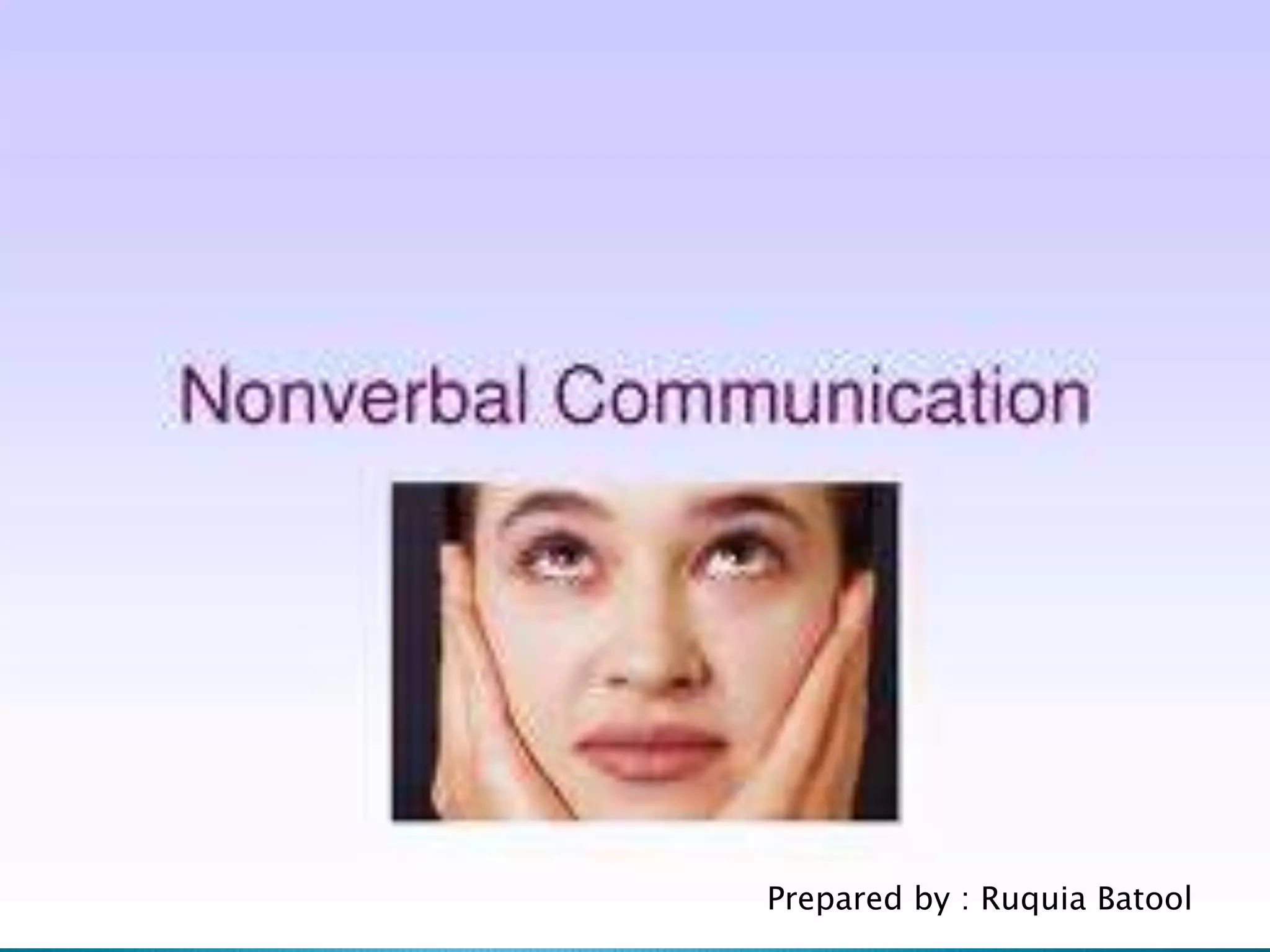
Prepared by : Ruquia Batool





Definition of nonverbal communication
Types
Characteristics
Classificaton
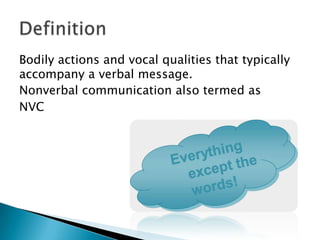
Bodily actions and vocal qualities that typically
accompany a verbal message.
Nonverbal communication also termed as
NVC




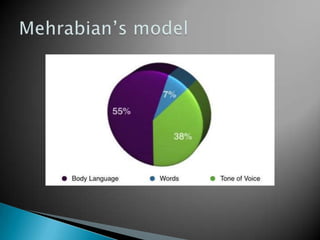
♦ only 7% of a message’s effect is carried by
words ; listeners receive the other 93%
through non -verbal means, according to
Communication researcher Mehrabian.
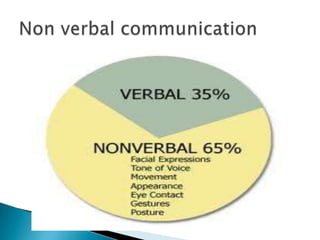
♦Over 65 percent of the social meaning of
the messages we send to others are
communicated non-verbally.




Meta communication
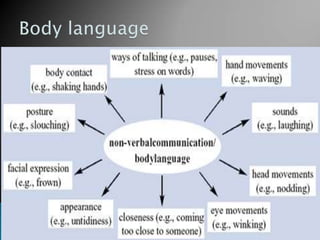
Kinesic Communication
Leakage
Meta communication is an implied meaning
conveyed by the
 Choice of words
 Tone of voice
 Fumbling
 Silence or
 Omission
It is not through words but along words .Meta
communication can be intentional or
unintentional
For example
At least try to reach in examination hall on
time
Kinesic communication is a message conveyed
through non verbal acts, Kinesic include
 Eye contact
 Facial Expression
 Emotions
 Gesture
 Posture
 Touch


Kinesic communication is also known as body
language or body talk. It include the entire
non verbal behavior of the communicator
unconsciously. It transmits the unstated
feelings, attitude and hidden intentions of the
speaker.
A non verbal message conveyed through bodily
movements is known as Leakage.
messages ‘slipping out’ in spite of our attempts
to control them – ensures that high credibility is
given to non-verbal cues in the area of feeling,
emotion and attitude puts a lot of power in the
hands of a skilled communicator






It include Instrumental body movements
Can be Intentional & unintentional
Continuous and never ending
More convincing
Indicator of reality
According to Ekman’s classification is
 Emblems
 Illustrators
 Body manipulators
 Facial expressions
 Regulators – Eye movements
 Emblems

Gestures that can substitute for words

 Illustrators

Illustrators are movements of hands and
arms for representing size, shape,
frequency and speed of something

 Body

manipulators

Acts of touching without reason one’s
own body or an object also known as
unintentional acts using manipulators is
often a sign of discomfort not always
 Facial

expressions

The arrangements of facial muscles to
communicate emotional states or
reaction to message

 Regulators-Eye

movements

Eye movements shows interest,
involvement, rejection and annoyance
etc








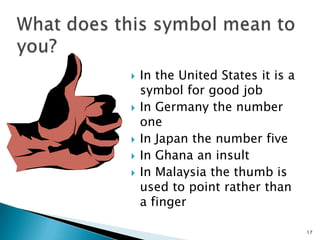
In the United States it is a
symbol for good job
In Germany the number
one
In Japan the number five
In Ghana an insult
In Malaysia the thumb is
used to point rather than
a finger
17





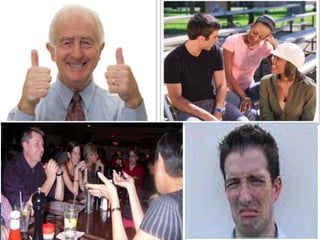
Symbols of body language
Face facts
Gesture
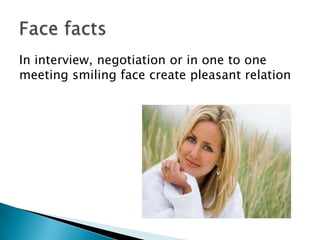
In interview, negotiation or in one to one
meeting smiling face create pleasant relation
Include
 Positive gesture
 Negative
 Sign of Nervousness
 Gesture showing aggressiveness
 Gesture showing rudeness
 Gesture showing self importance
 Gesture showing lack of good sense
 Gesture showing superiority
Creating a climate that
facilitates learning and
retention demands
good nonverbal skills.

Nonverbal communication

  • 1.
    Prepared by :Ruquia Batool
  • 2.
        Definition of nonverbalcommunication Types Characteristics Classificaton
  • 3.
    Bodily actions andvocal qualities that typically accompany a verbal message. Nonverbal communication also termed as NVC
  • 4.
      ♦ only 7%of a message’s effect is carried by words ; listeners receive the other 93% through non -verbal means, according to Communication researcher Mehrabian. ♦Over 65 percent of the social meaning of the messages we send to others are communicated non-verbally.
  • 7.
  • 8.
    Meta communication isan implied meaning conveyed by the  Choice of words  Tone of voice  Fumbling  Silence or  Omission
  • 9.
    It is notthrough words but along words .Meta communication can be intentional or unintentional For example At least try to reach in examination hall on time
  • 10.
    Kinesic communication isa message conveyed through non verbal acts, Kinesic include  Eye contact  Facial Expression  Emotions  Gesture  Posture  Touch
  • 11.
     Kinesic communication isalso known as body language or body talk. It include the entire non verbal behavior of the communicator unconsciously. It transmits the unstated feelings, attitude and hidden intentions of the speaker.
  • 12.
    A non verbalmessage conveyed through bodily movements is known as Leakage. messages ‘slipping out’ in spite of our attempts to control them – ensures that high credibility is given to non-verbal cues in the area of feeling, emotion and attitude puts a lot of power in the hands of a skilled communicator
  • 13.
         It include Instrumentalbody movements Can be Intentional & unintentional Continuous and never ending More convincing Indicator of reality
  • 14.
    According to Ekman’sclassification is  Emblems  Illustrators  Body manipulators  Facial expressions  Regulators – Eye movements
  • 15.
     Emblems Gestures thatcan substitute for words  Illustrators Illustrators are movements of hands and arms for representing size, shape, frequency and speed of something  Body manipulators Acts of touching without reason one’s own body or an object also known as unintentional acts using manipulators is often a sign of discomfort not always
  • 16.
     Facial expressions The arrangementsof facial muscles to communicate emotional states or reaction to message  Regulators-Eye movements Eye movements shows interest, involvement, rejection and annoyance etc
  • 17.
         In the UnitedStates it is a symbol for good job In Germany the number one In Japan the number five In Ghana an insult In Malaysia the thumb is used to point rather than a finger 17
  • 18.
       Symbols of bodylanguage Face facts Gesture
  • 20.
    In interview, negotiationor in one to one meeting smiling face create pleasant relation
  • 21.
    Include  Positive gesture Negative  Sign of Nervousness  Gesture showing aggressiveness  Gesture showing rudeness  Gesture showing self importance  Gesture showing lack of good sense  Gesture showing superiority
  • 23.
    Creating a climatethat facilitates learning and retention demands good nonverbal skills.