A N I N T R O D U C T I O N
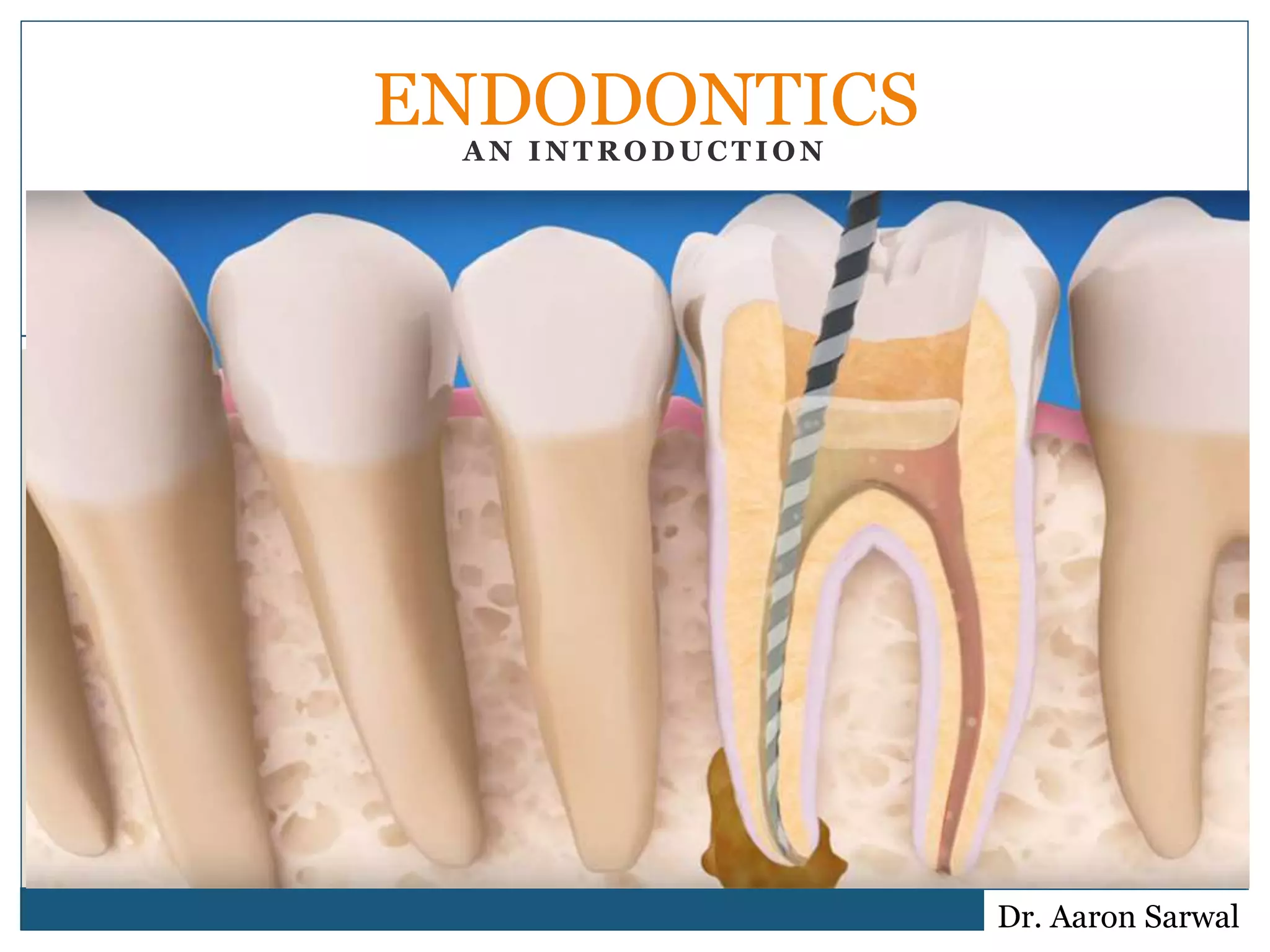
ENDODONTICS
Dr. Aaron Sarwal
DEFINITION
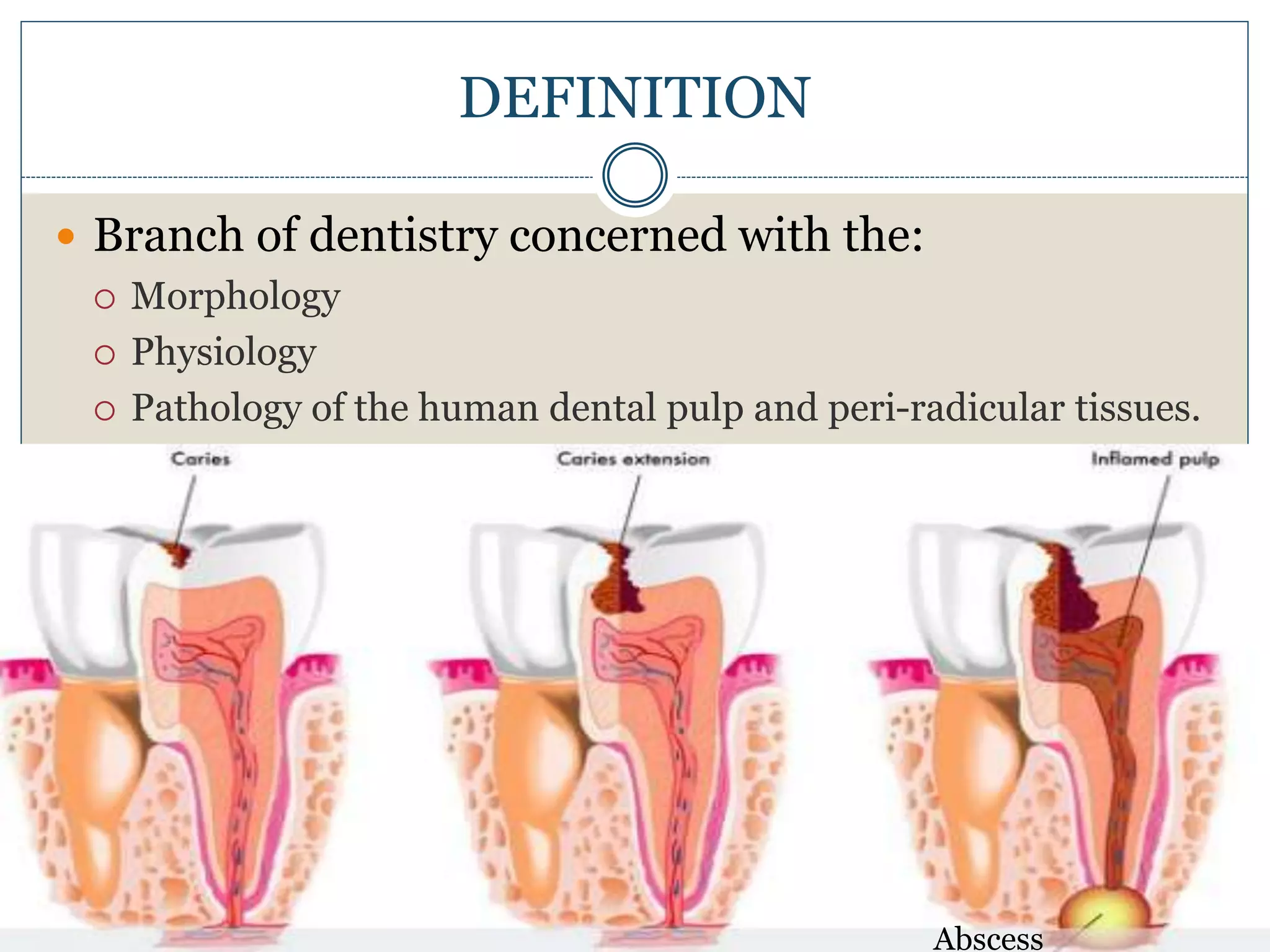
 Branch of dentistry concerned with the:
 Morphology
 Physiology
 Pathology of the human dental pulp and peri-radicular tissues.
Abscess
SCOPE OF ENDODONTICS
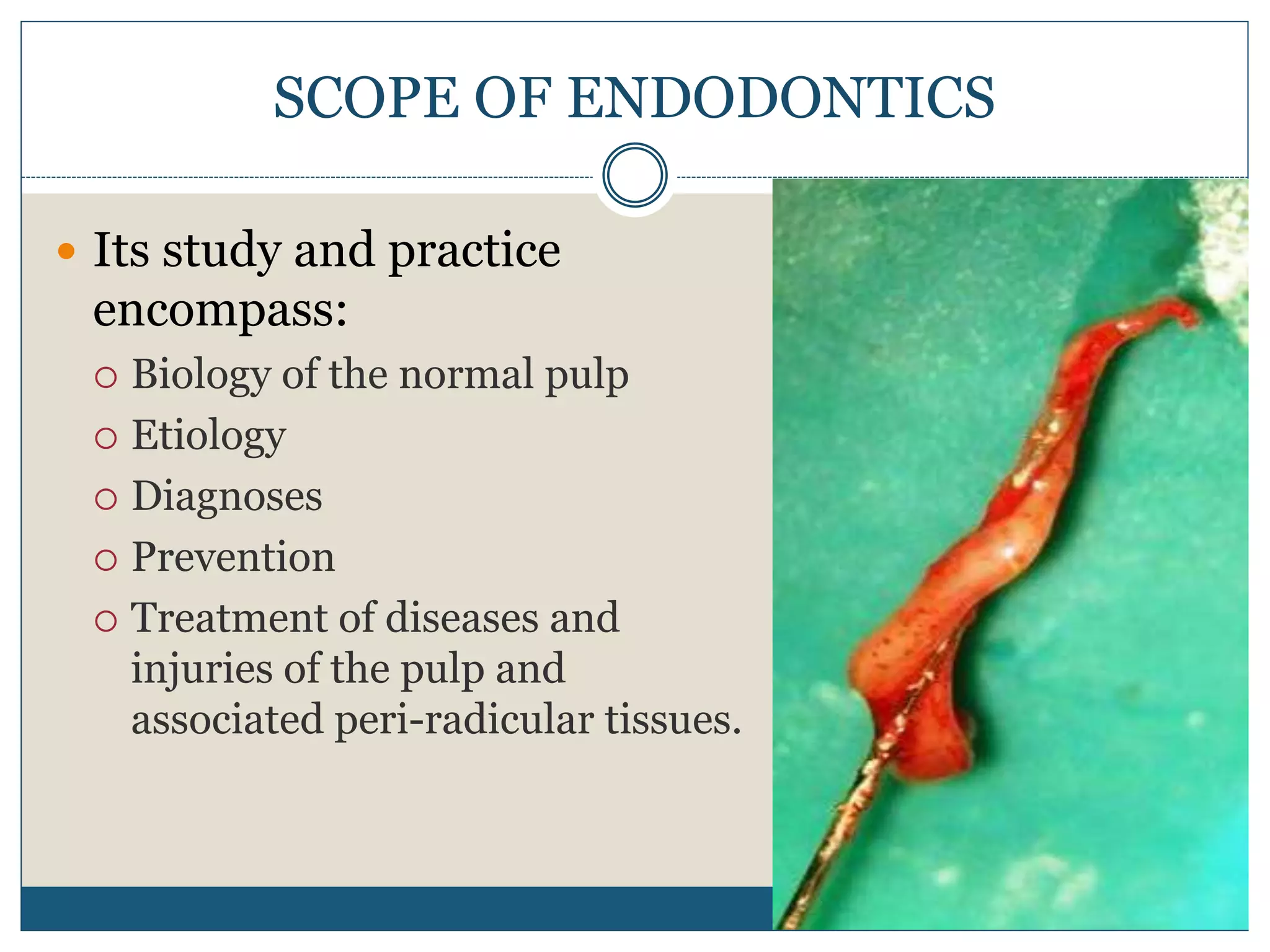
 Its study and practice
encompass:
 Biology of the normal pulp
 Etiology
 Diagnoses
 Prevention
 Treatment of diseases and
injuries of the pulp and
associated peri-radicular tissues.
PRINCIPLES OF ENDODONTIC THERAPY
 Diagnosis
 Patient education
 Local anaesthesia
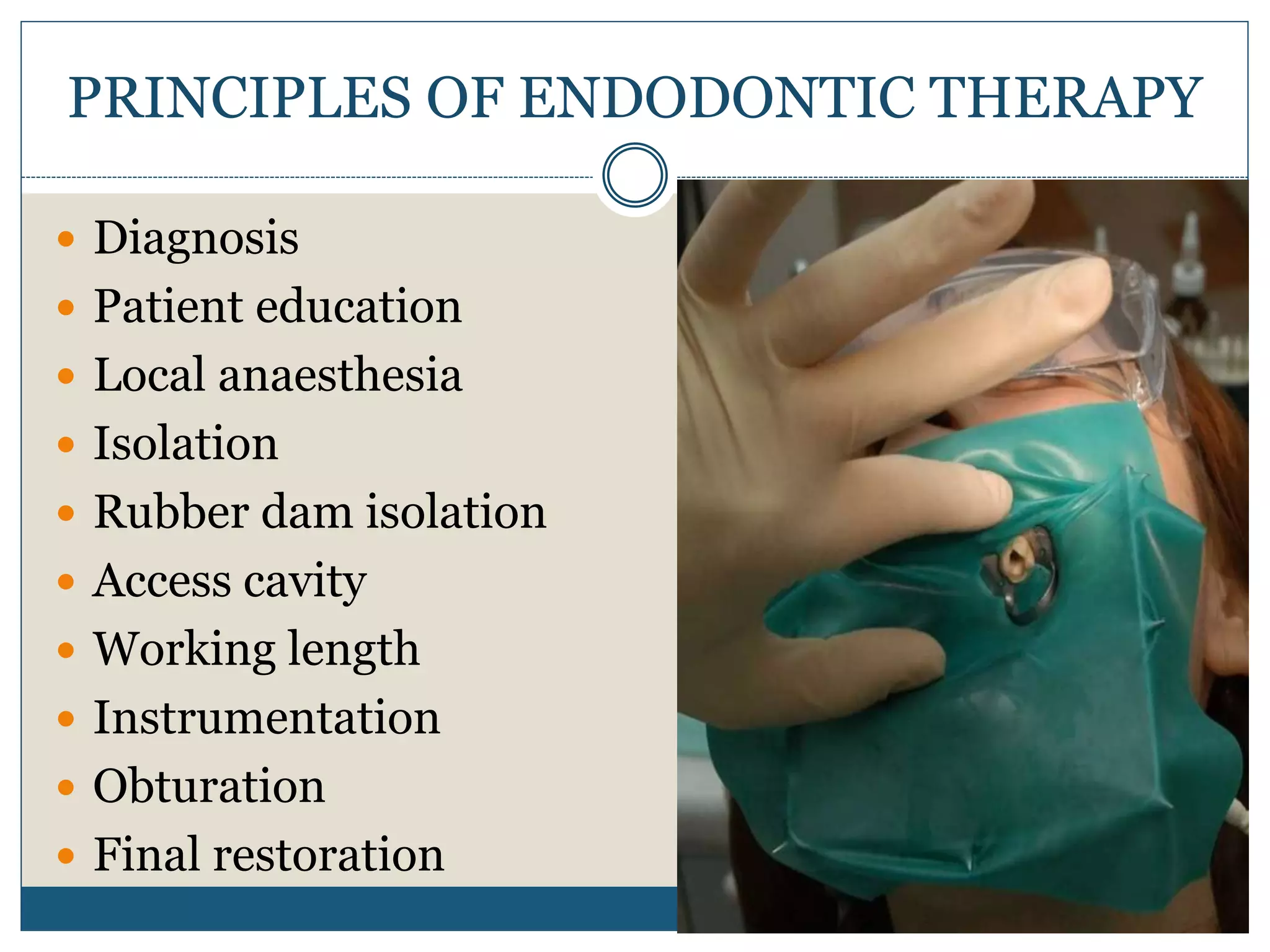
 Isolation
 Rubber dam isolation
 Access cavity
 Working length
 Instrumentation
 Obturation
 Final restoration
DIAGNOSIS
 According to Ingle, diagnosis is
the procedure of
 Accepting a patient
 Recognizing that he has a problem
 Determining the cause of the
problem and
 Developing a treatment plan that will
solve or alleviate the problem
DIAGNOSIS
Chief Complaint
History
[Medical/Dental]
Objective
Examination
Subjective
Examination
Radiographs
PATIENT EDUCATION
 Patient should be informed
about the condition of his
teeth and the treatment
options available.
 Instructions to the patient
about improvement of the
oral hygiene.
LOCAL ANAESTHESIA
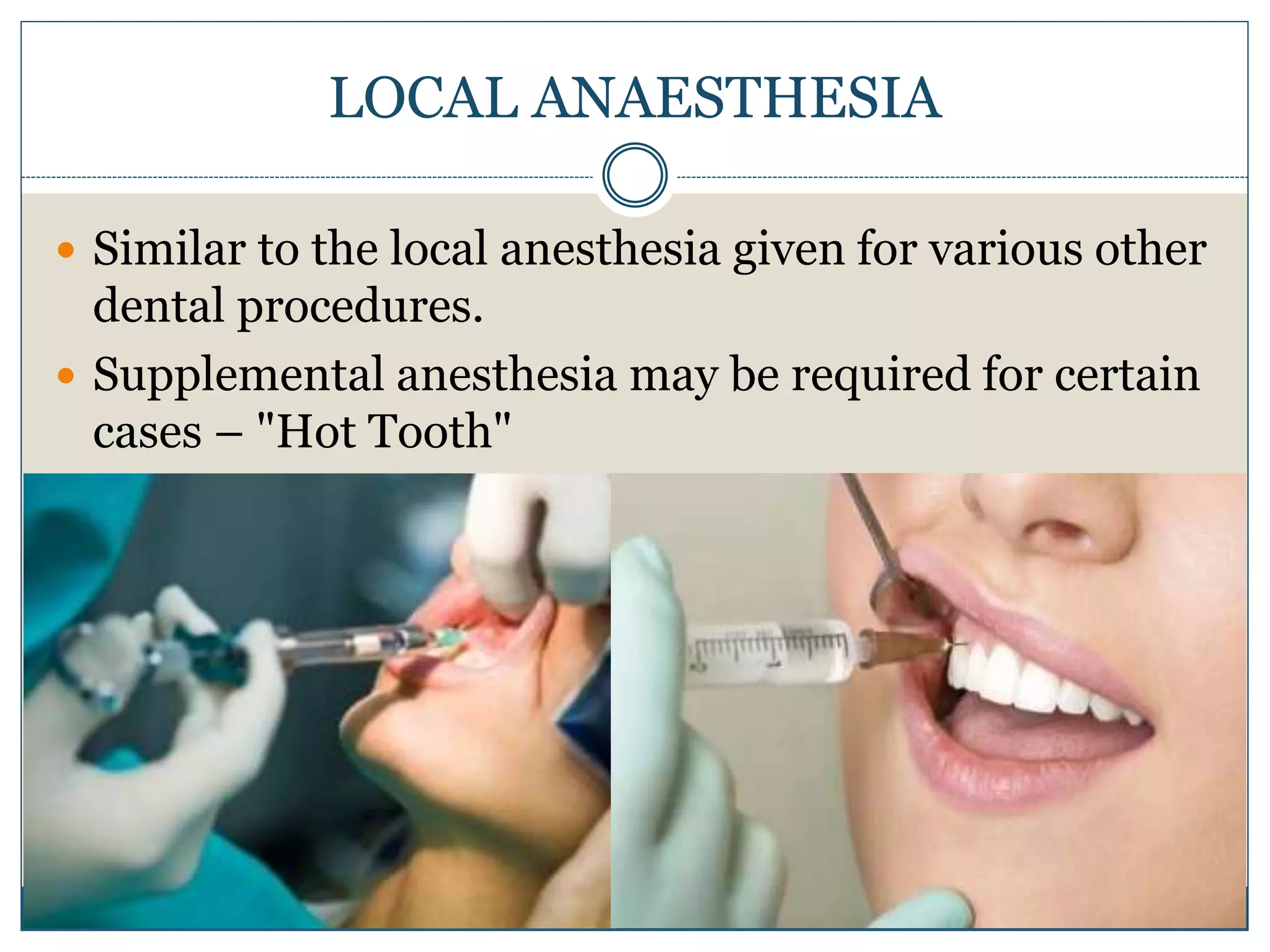
 Similar to the local anesthesia given for various other
dental procedures.
 Supplemental anesthesia may be required for certain
cases – "Hot Tooth"
ISOLATION
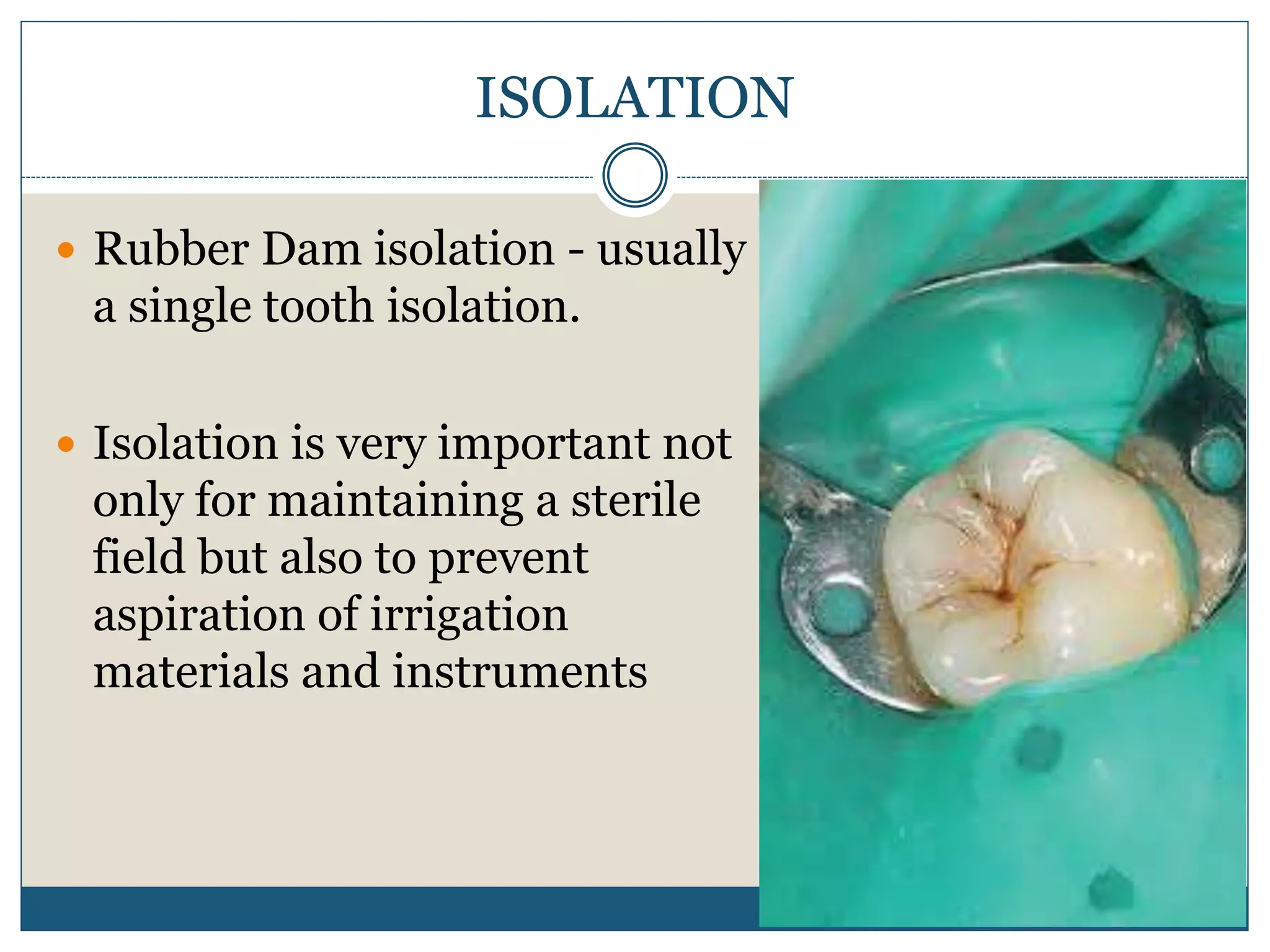
 Rubber Dam isolation - usually
a single tooth isolation.
 Isolation is very important not
only for maintaining a sterile
field but also to prevent
aspiration of irrigation
materials and instruments
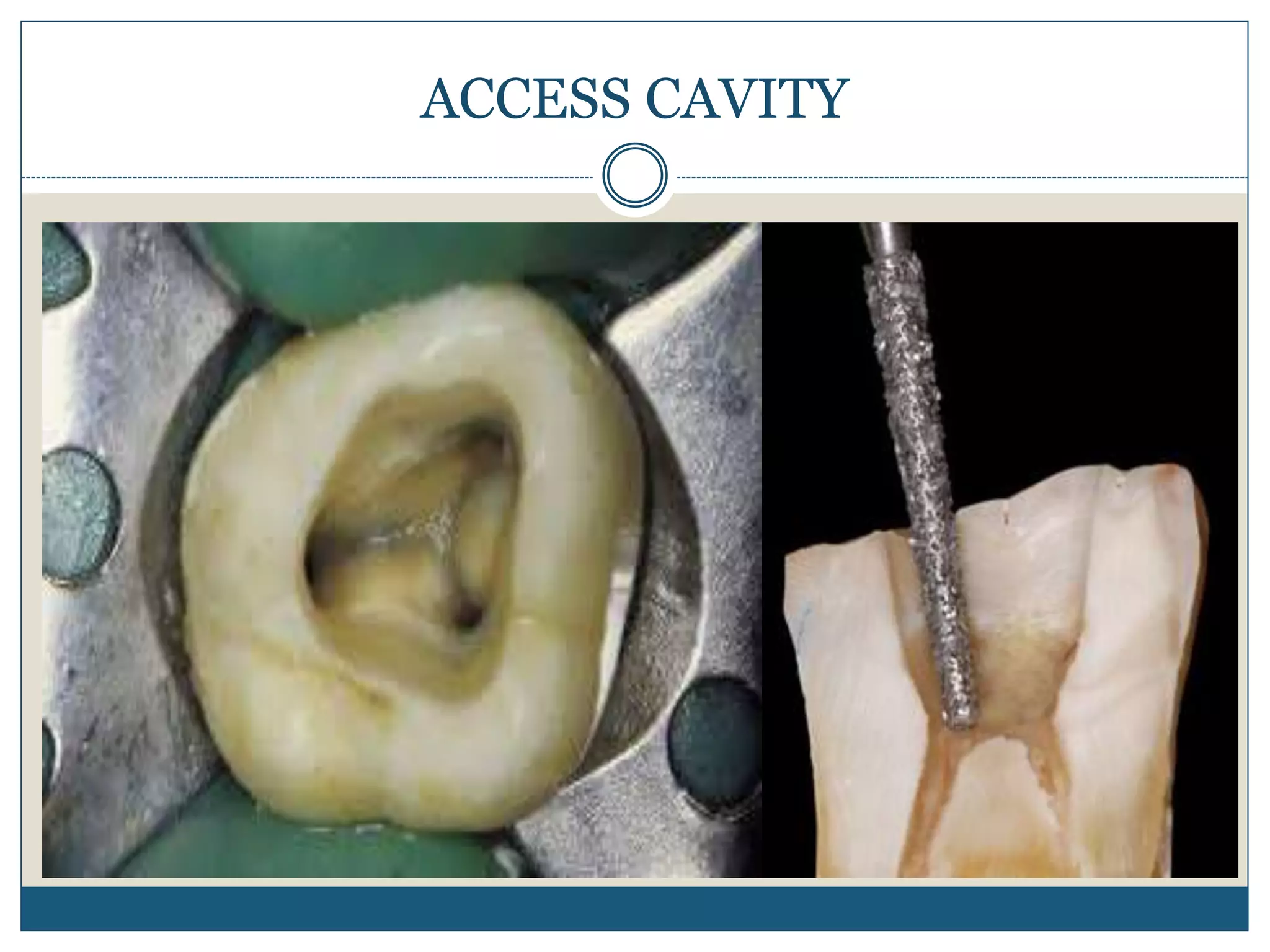
ACCESS CAVITY
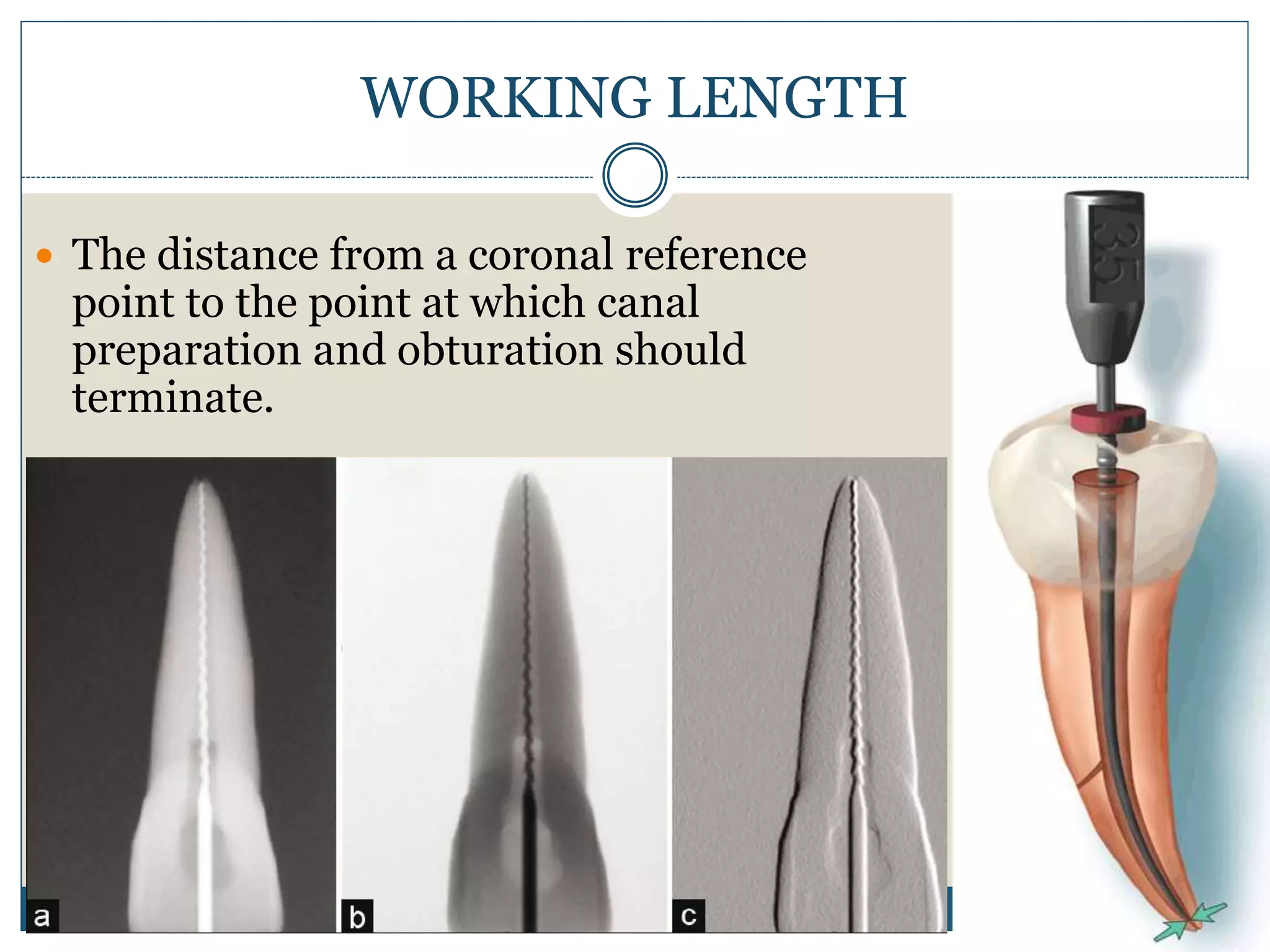
WORKING LENGTH
 The distance from a coronal reference
point to the point at which canal
preparation and obturation should
terminate.
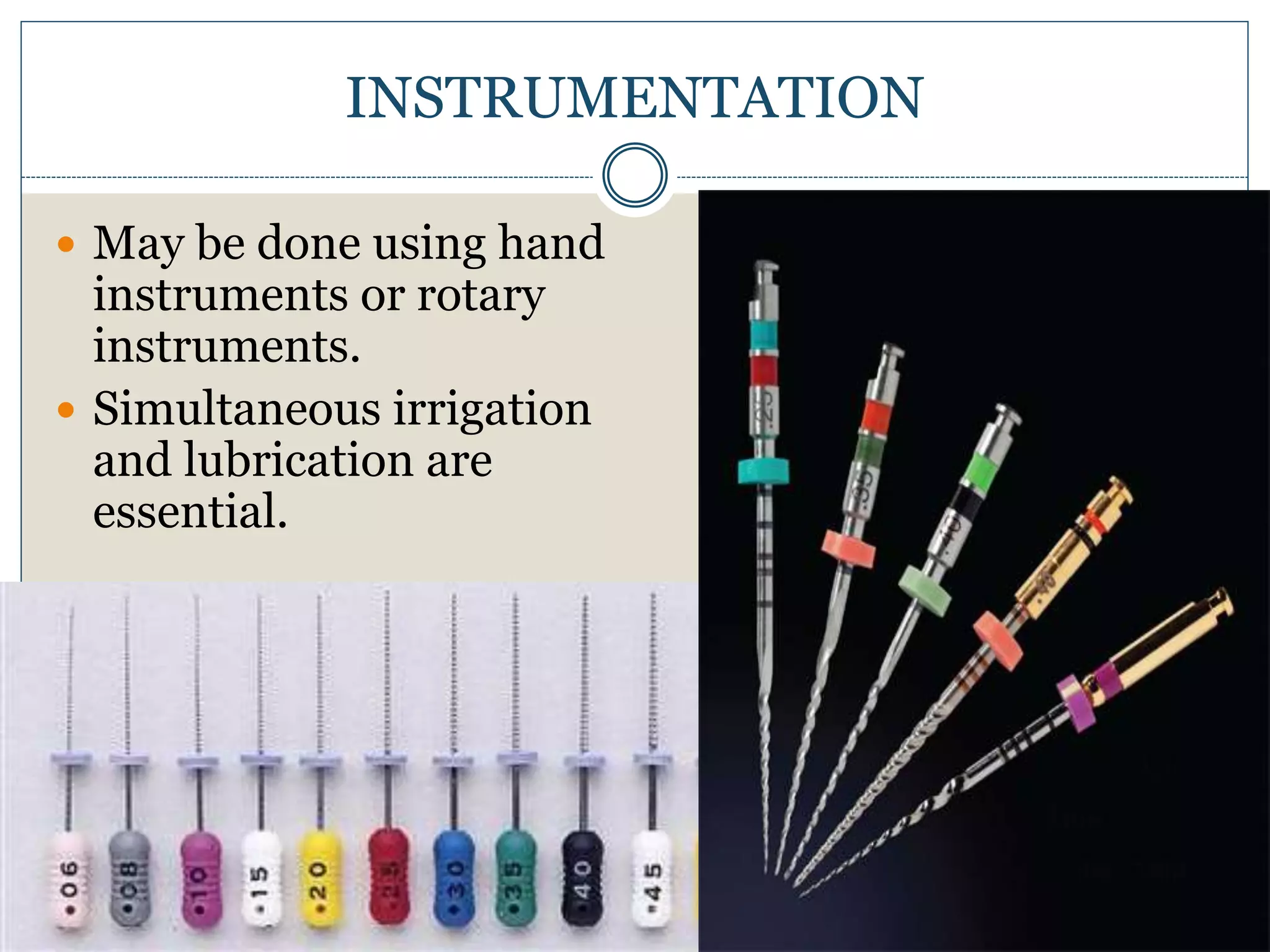
INSTRUMENTATION
 May be done using hand
instruments or rotary
instruments.
 Simultaneous irrigation
and lubrication are
essential.
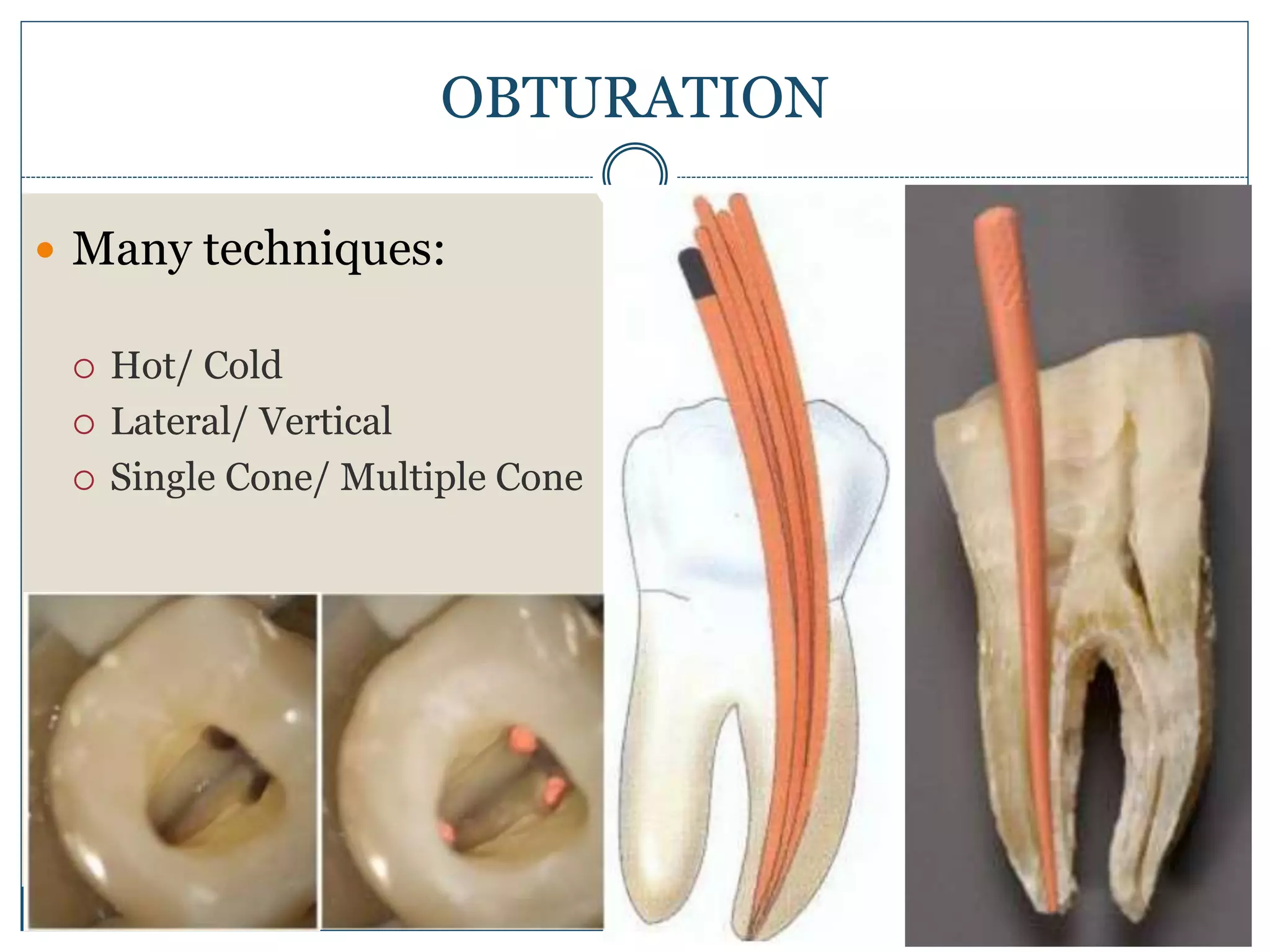
OBTURATION
 Many techniques:
 Hot/ Cold
 Lateral/ Vertical
 Single Cone/ Multiple Cone
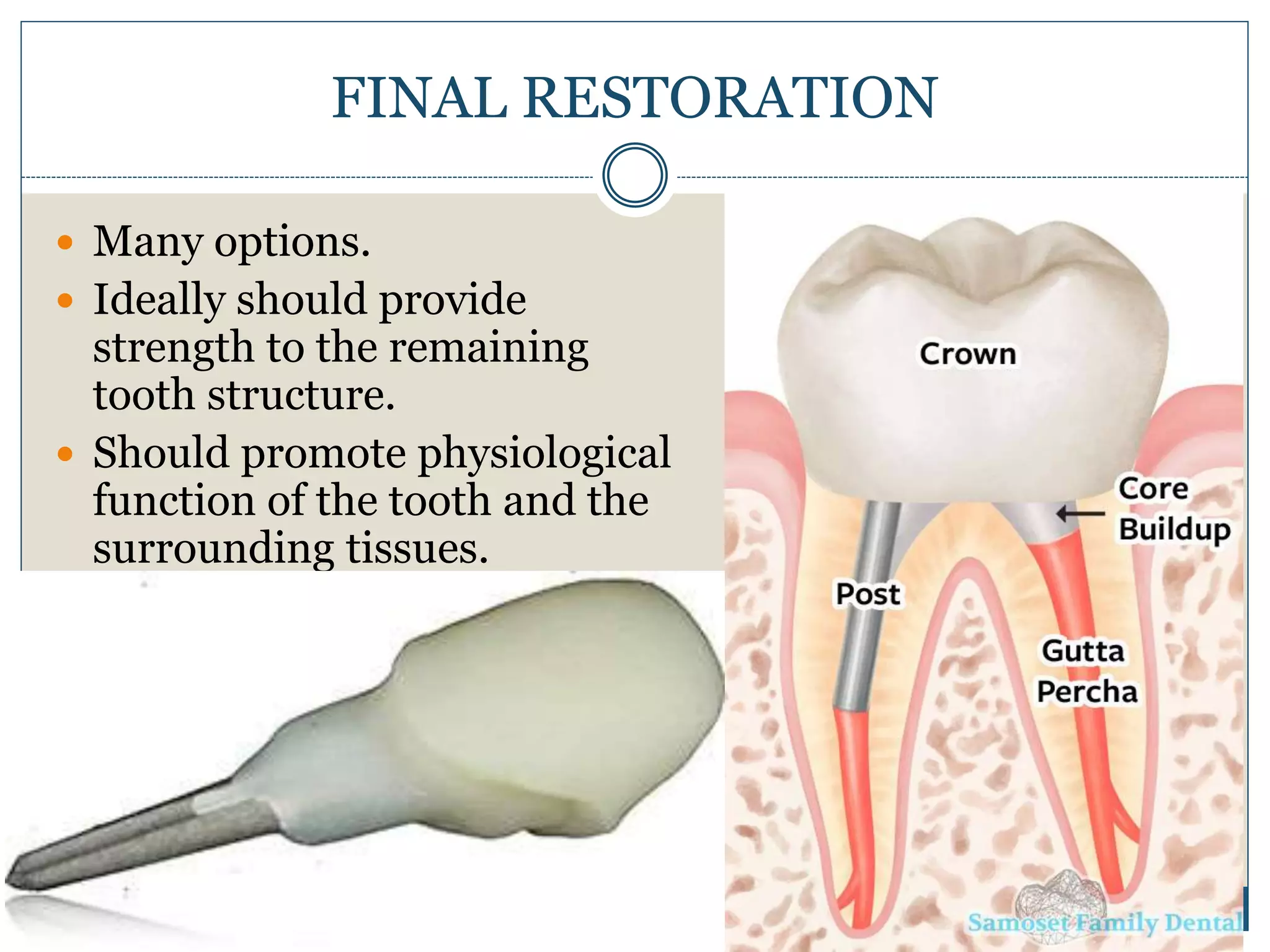
FINAL RESTORATION
 Many options.
 Ideally should provide
strength to the remaining
tooth structure.
 Should promote physiological
function of the tooth and the
surrounding tissues.
INDICATIONS
 Carious teeth [caries involving
pulp]
 Teeth with irreversible pulpitis
 Necrotic pulps
 Treatable periodontal conditions
[endo-perio lesions]
 Salvageable resorptive defects
 Supra-erupted teeth with good
bone support
 Fractured teeth involving pulp
 Intentional endodontics for FPD's
or over-dentures
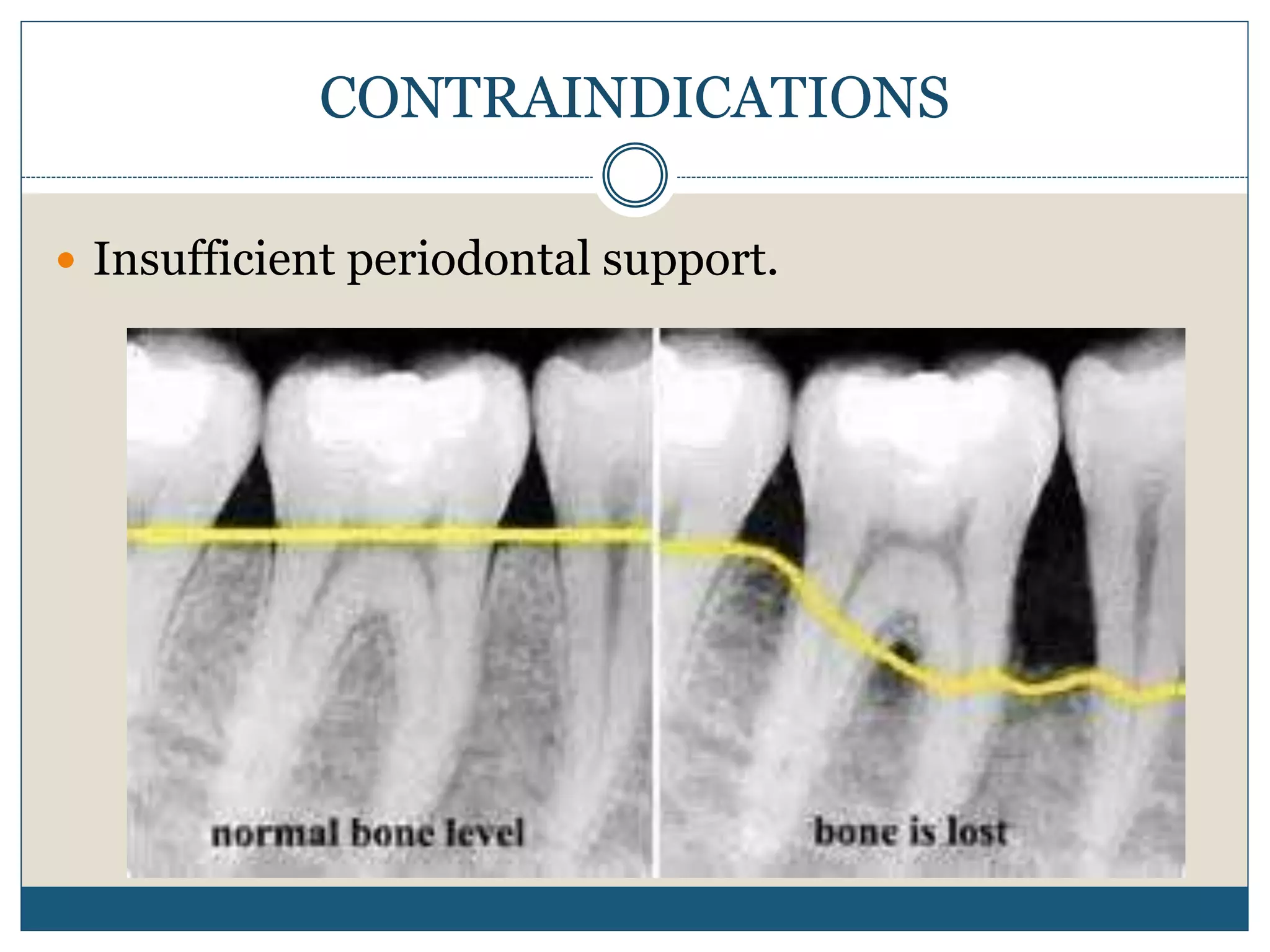
 Insufficient periodontal support.
CONTRAINDICATIONS
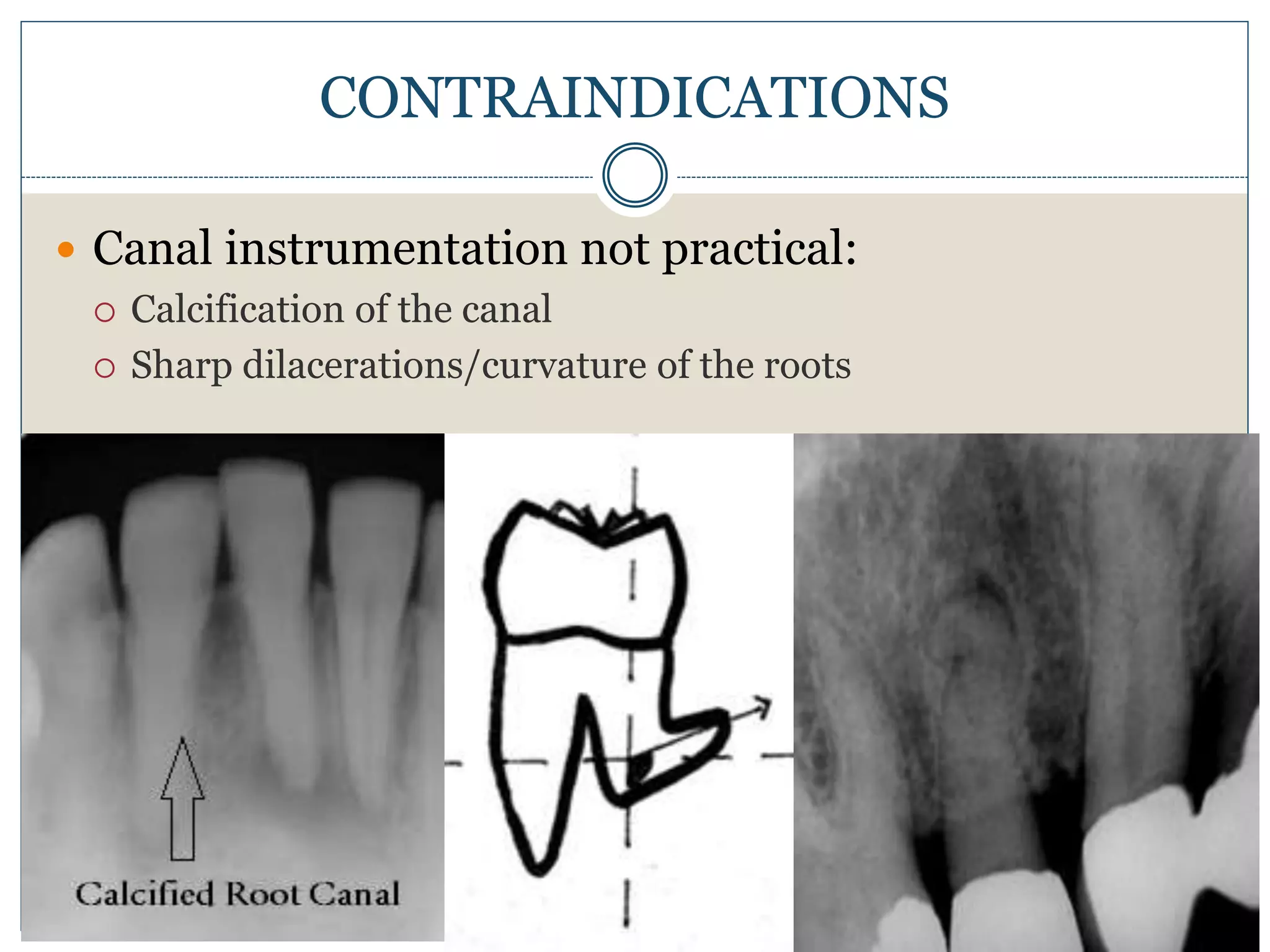
 Canal instrumentation not practical:
 Calcification of the canal
 Sharp dilacerations/curvature of the roots
CONTRAINDICATIONS
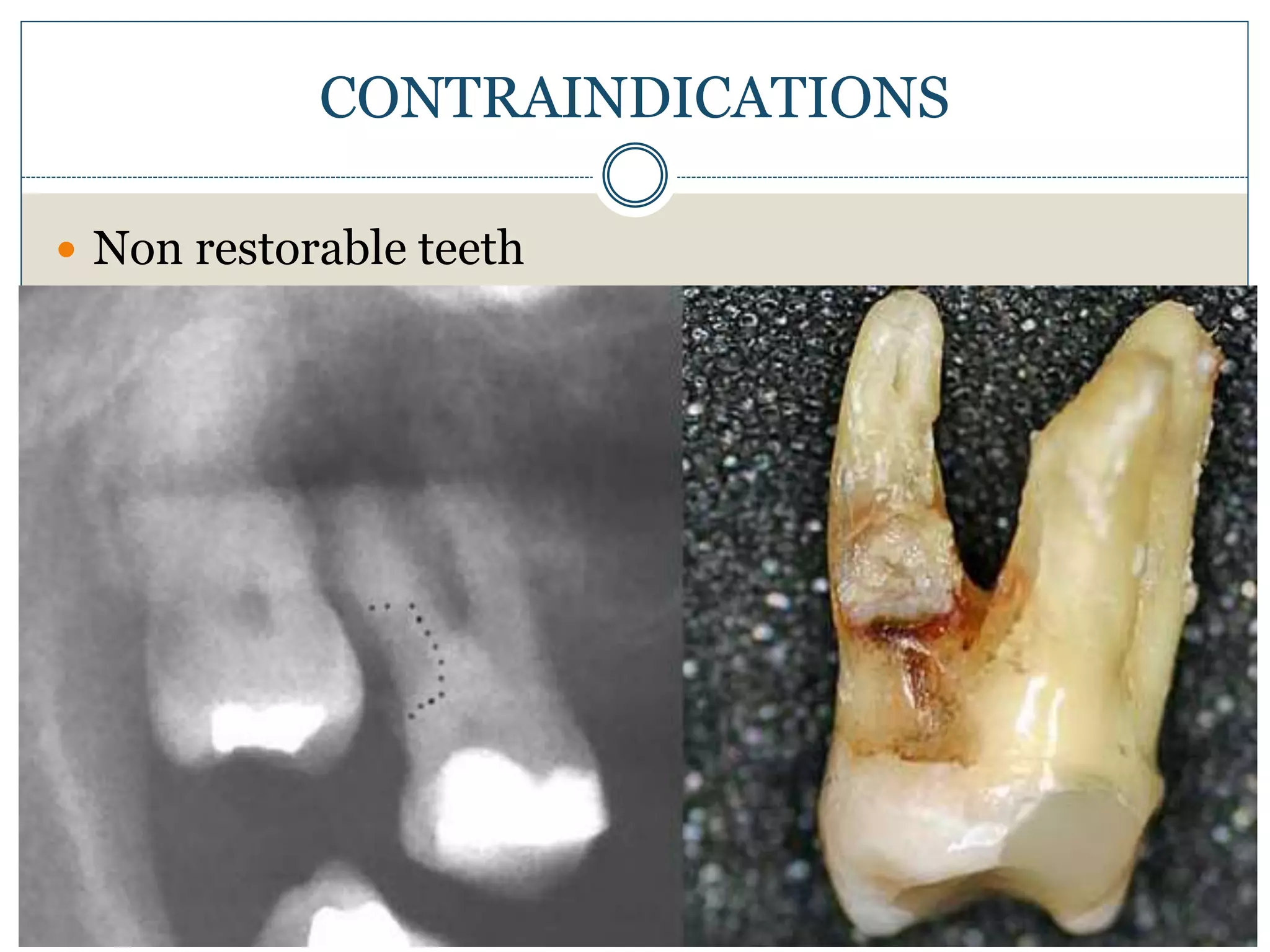
 Non restorable teeth
CONTRAINDICATIONS
CONTRAINDICATIONS
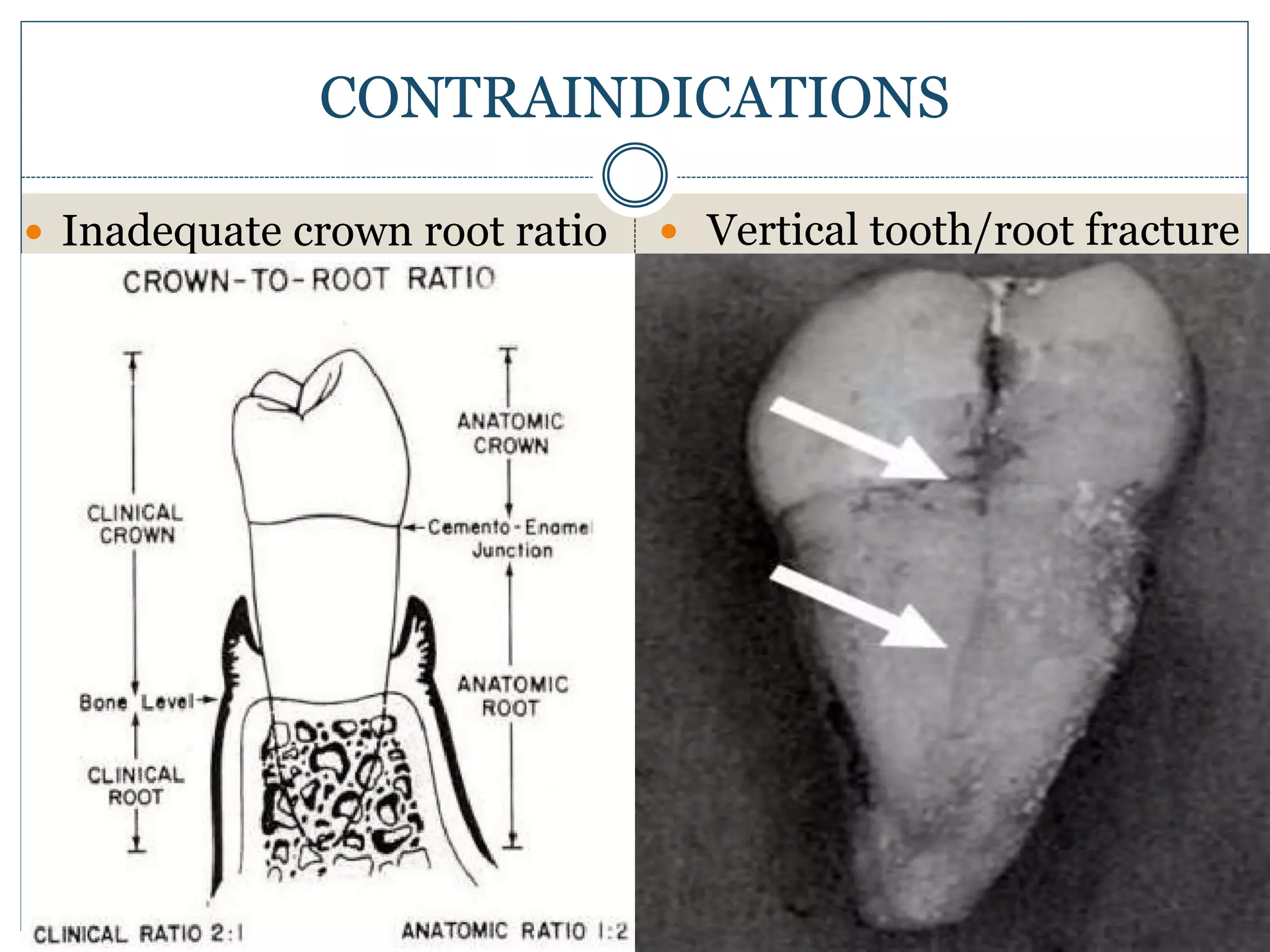
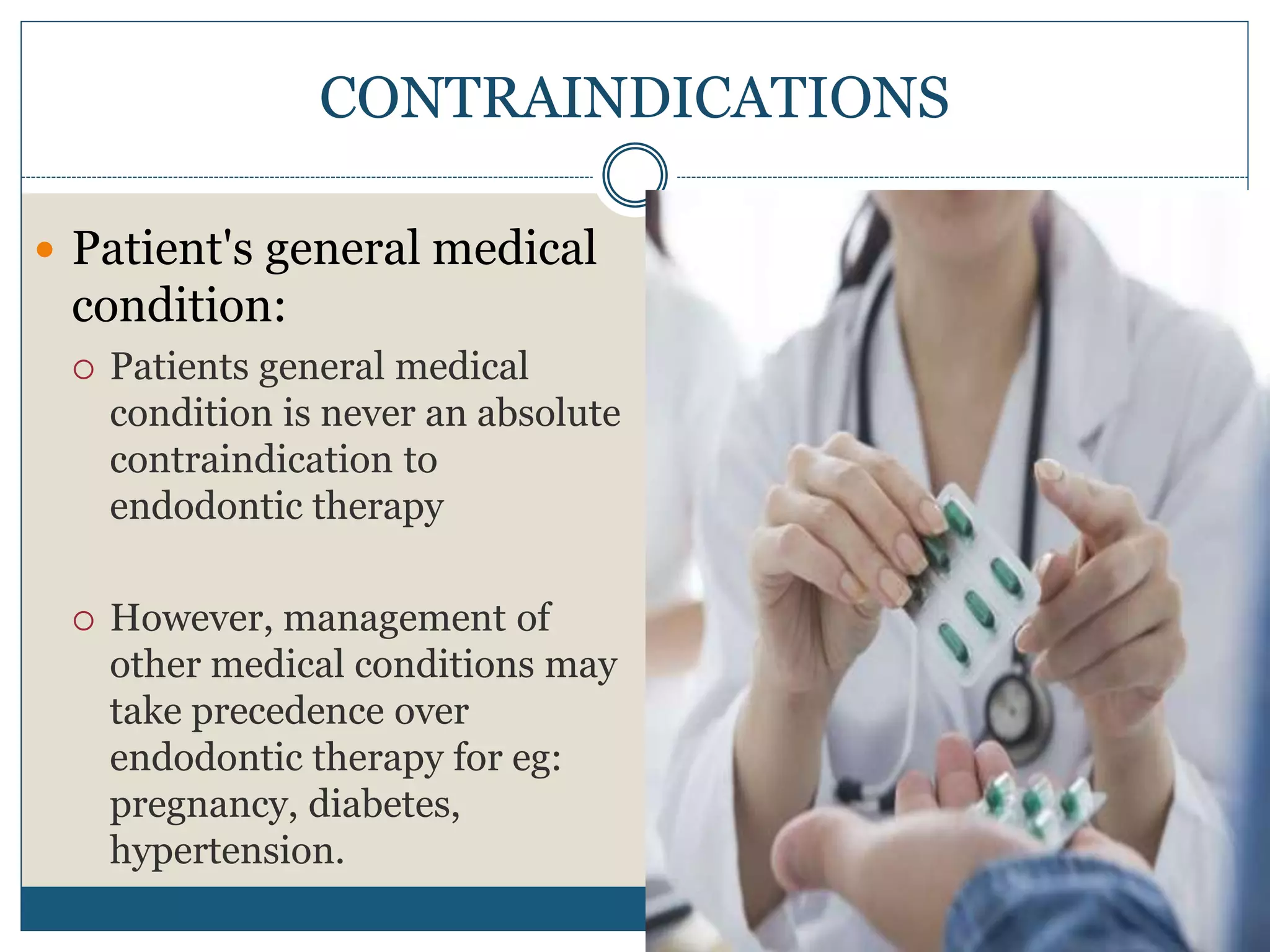
 Inadequate crown root ratio  Vertical tooth/root fracture
 Patient's general medical
condition:
 Patients general medical
condition is never an absolute
contraindication to
endodontic therapy
 However, management of
other medical conditions may
take precedence over
endodontic therapy for eg:
pregnancy, diabetes,
hypertension.
CONTRAINDICATIONS
BEFORE UNDERTAKING ENDODONTICS
 Relating to the tooth in question:
 Is the tooth needed or important?
 Does it have an opponent?
 Could it some day serve as an abutment for prosthesis?
 Is the tooth salvageable, or is it so badly destroyed that it
cannot be restored?
BEFORE UNDERTAKING ENDODONTICS
 Relating to the patient’s general dentition:
 Is the tooth serving esthetically, or would the patient be better
served by its extraction and a more cosmetic replacement?
 Is the tooth so severely involved periodontally that it would be
lost soon for this reason?
 The future of endodontics is very
bright, indeed!
 Techniques and material
advancements make the future of
endodontics exciting and profitable
for all dentists.
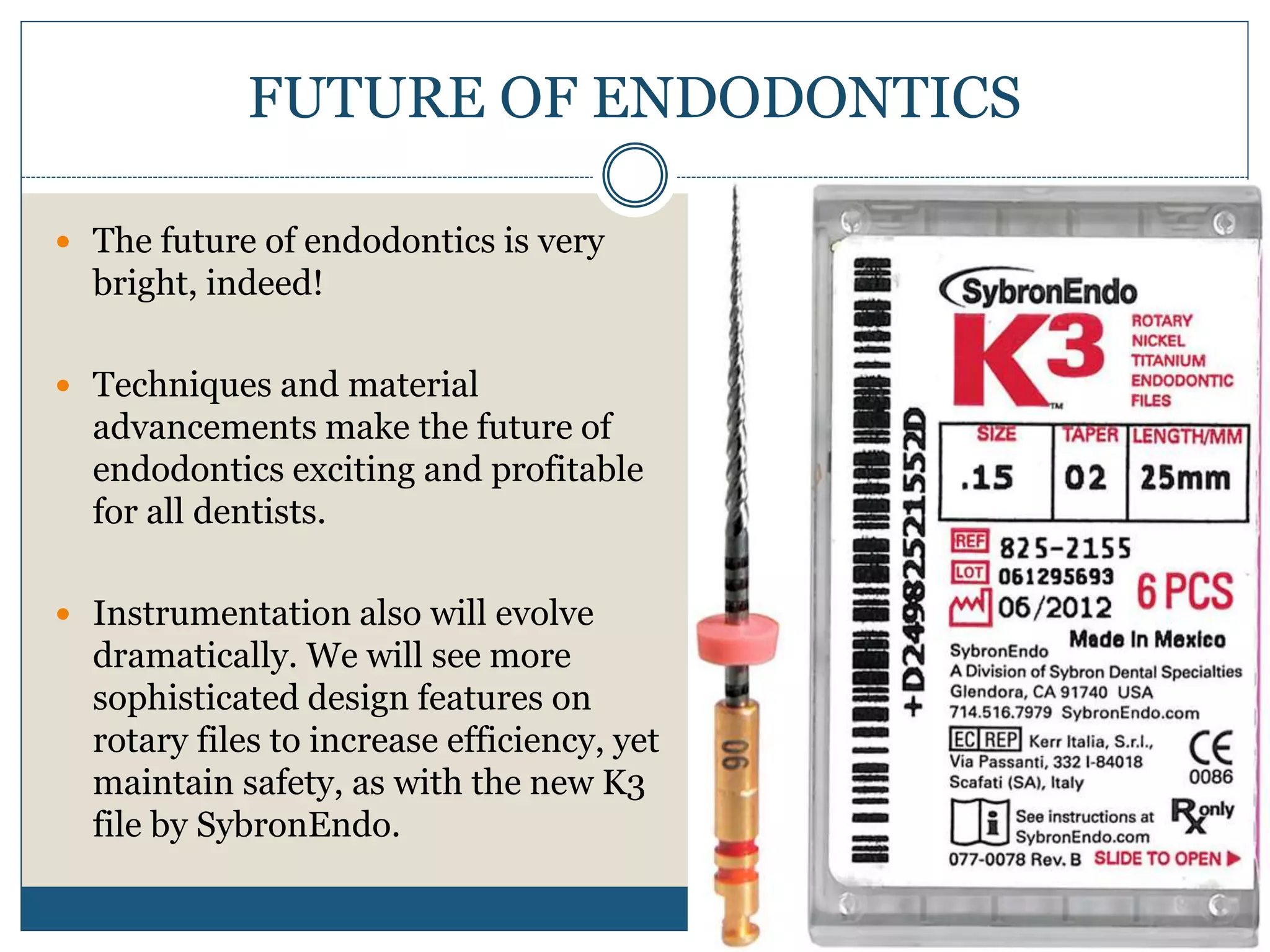
 Instrumentation also will evolve
dramatically. We will see more
sophisticated design features on
rotary files to increase efficiency, yet
maintain safety, as with the new K3
file by SybronEndo.
FUTURE OF ENDODONTICS
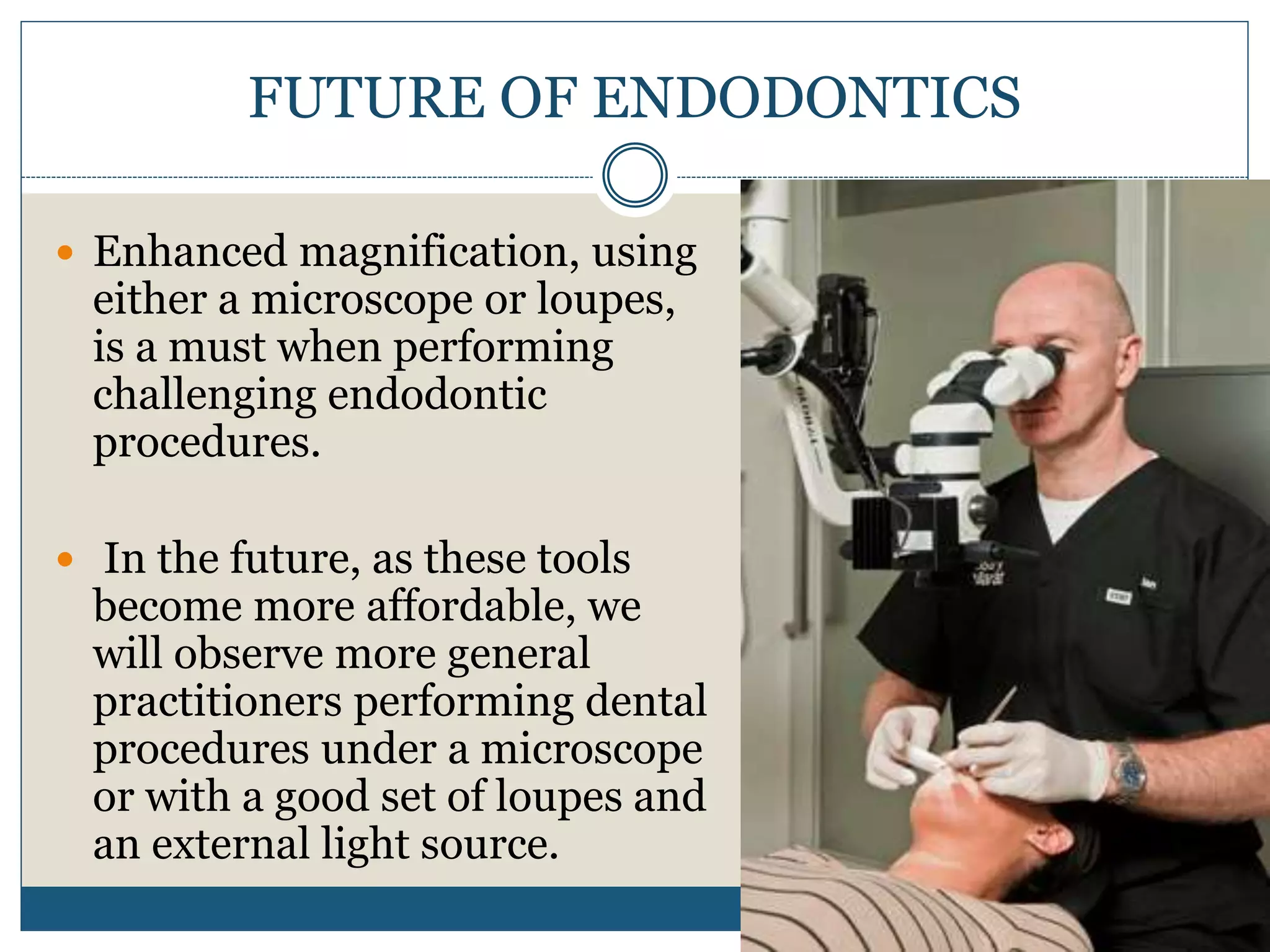
 Enhanced magnification, using
either a microscope or loupes,
is a must when performing
challenging endodontic
procedures.
 In the future, as these tools
become more affordable, we
will observe more general
practitioners performing dental
procedures under a microscope
or with a good set of loupes and
an external light source.
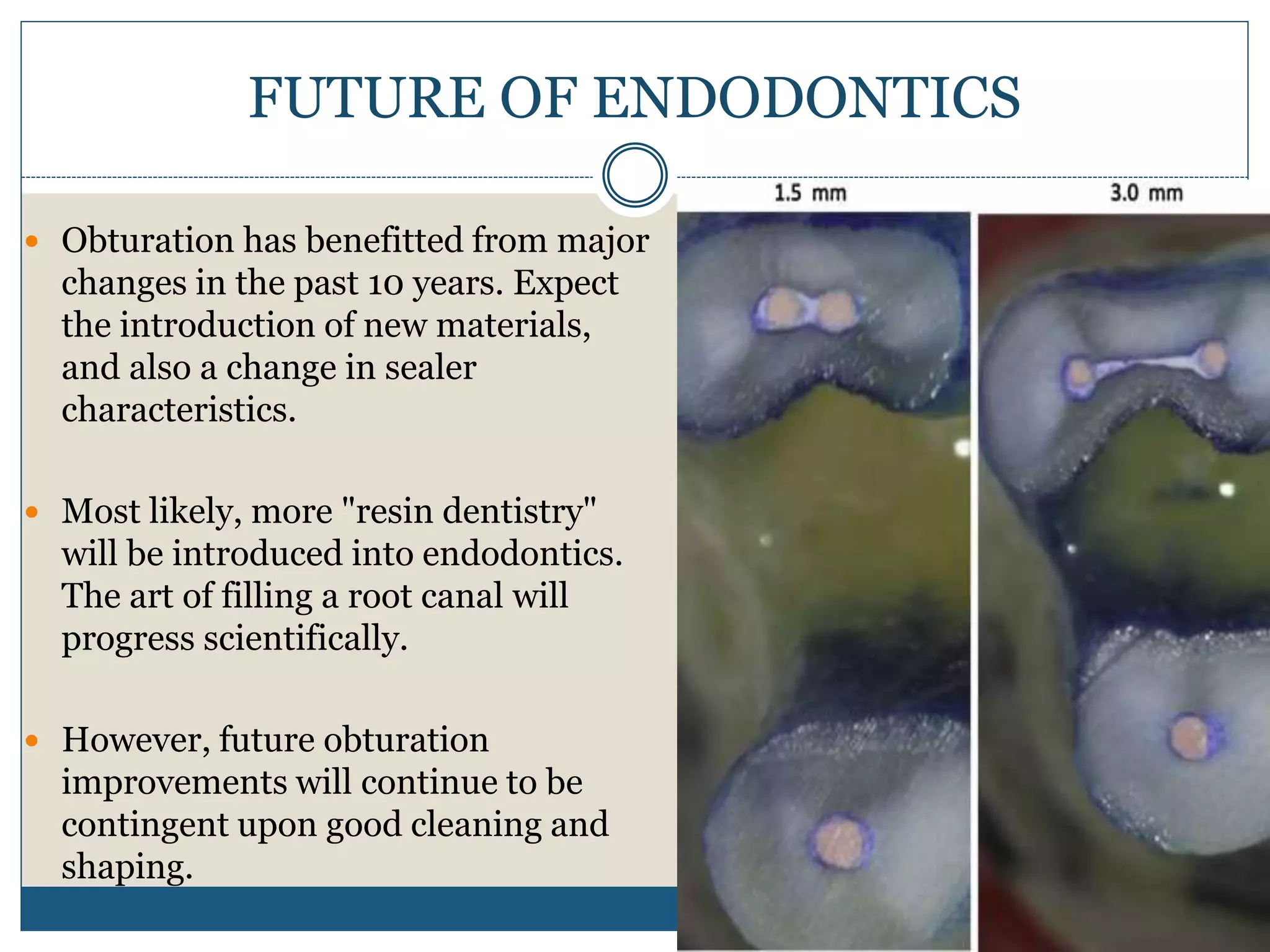
 Obturation has benefitted from major
changes in the past 10 years. Expect
the introduction of new materials,
and also a change in sealer
characteristics.
 Most likely, more "resin dentistry"
will be introduced into endodontics.
The art of filling a root canal will
progress scientifically.
 However, future obturation
improvements will continue to be
contingent upon good cleaning and
shaping.
FUTURE OF ENDODONTICS
Endodontics - An Introduction

Endodontics - An Introduction

  • 1.
    A N IN T R O D U C T I O N ENDODONTICS Dr. Aaron Sarwal
  • 2.
    DEFINITION  Branch ofdentistry concerned with the:  Morphology  Physiology  Pathology of the human dental pulp and peri-radicular tissues. Abscess
  • 3.
    SCOPE OF ENDODONTICS Its study and practice encompass:  Biology of the normal pulp  Etiology  Diagnoses  Prevention  Treatment of diseases and injuries of the pulp and associated peri-radicular tissues.
  • 4.
    PRINCIPLES OF ENDODONTICTHERAPY  Diagnosis  Patient education  Local anaesthesia  Isolation  Rubber dam isolation  Access cavity  Working length  Instrumentation  Obturation  Final restoration
  • 5.
    DIAGNOSIS  According toIngle, diagnosis is the procedure of  Accepting a patient  Recognizing that he has a problem  Determining the cause of the problem and  Developing a treatment plan that will solve or alleviate the problem
  • 6.
  • 7.
    PATIENT EDUCATION  Patientshould be informed about the condition of his teeth and the treatment options available.  Instructions to the patient about improvement of the oral hygiene.
  • 8.
    LOCAL ANAESTHESIA  Similarto the local anesthesia given for various other dental procedures.  Supplemental anesthesia may be required for certain cases – "Hot Tooth"
  • 9.
    ISOLATION  Rubber Damisolation - usually a single tooth isolation.  Isolation is very important not only for maintaining a sterile field but also to prevent aspiration of irrigation materials and instruments
  • 10.
  • 11.
    WORKING LENGTH  Thedistance from a coronal reference point to the point at which canal preparation and obturation should terminate.
  • 12.
    INSTRUMENTATION  May bedone using hand instruments or rotary instruments.  Simultaneous irrigation and lubrication are essential.
  • 13.
    OBTURATION  Many techniques: Hot/ Cold  Lateral/ Vertical  Single Cone/ Multiple Cone
  • 14.
    FINAL RESTORATION  Manyoptions.  Ideally should provide strength to the remaining tooth structure.  Should promote physiological function of the tooth and the surrounding tissues.
  • 15.
    INDICATIONS  Carious teeth[caries involving pulp]  Teeth with irreversible pulpitis  Necrotic pulps  Treatable periodontal conditions [endo-perio lesions]  Salvageable resorptive defects  Supra-erupted teeth with good bone support  Fractured teeth involving pulp  Intentional endodontics for FPD's or over-dentures
  • 16.
     Insufficient periodontalsupport. CONTRAINDICATIONS
  • 17.
     Canal instrumentationnot practical:  Calcification of the canal  Sharp dilacerations/curvature of the roots CONTRAINDICATIONS
  • 18.
     Non restorableteeth CONTRAINDICATIONS
  • 19.
    CONTRAINDICATIONS  Inadequate crownroot ratio  Vertical tooth/root fracture
  • 20.
     Patient's generalmedical condition:  Patients general medical condition is never an absolute contraindication to endodontic therapy  However, management of other medical conditions may take precedence over endodontic therapy for eg: pregnancy, diabetes, hypertension. CONTRAINDICATIONS
  • 21.
    BEFORE UNDERTAKING ENDODONTICS Relating to the tooth in question:  Is the tooth needed or important?  Does it have an opponent?  Could it some day serve as an abutment for prosthesis?  Is the tooth salvageable, or is it so badly destroyed that it cannot be restored?
  • 22.
    BEFORE UNDERTAKING ENDODONTICS Relating to the patient’s general dentition:  Is the tooth serving esthetically, or would the patient be better served by its extraction and a more cosmetic replacement?  Is the tooth so severely involved periodontally that it would be lost soon for this reason?
  • 23.
     The futureof endodontics is very bright, indeed!  Techniques and material advancements make the future of endodontics exciting and profitable for all dentists.  Instrumentation also will evolve dramatically. We will see more sophisticated design features on rotary files to increase efficiency, yet maintain safety, as with the new K3 file by SybronEndo. FUTURE OF ENDODONTICS
  • 24.
    FUTURE OF ENDODONTICS Enhanced magnification, using either a microscope or loupes, is a must when performing challenging endodontic procedures.  In the future, as these tools become more affordable, we will observe more general practitioners performing dental procedures under a microscope or with a good set of loupes and an external light source.
  • 25.
     Obturation hasbenefitted from major changes in the past 10 years. Expect the introduction of new materials, and also a change in sealer characteristics.  Most likely, more "resin dentistry" will be introduced into endodontics. The art of filling a root canal will progress scientifically.  However, future obturation improvements will continue to be contingent upon good cleaning and shaping. FUTURE OF ENDODONTICS