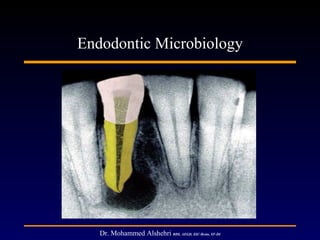
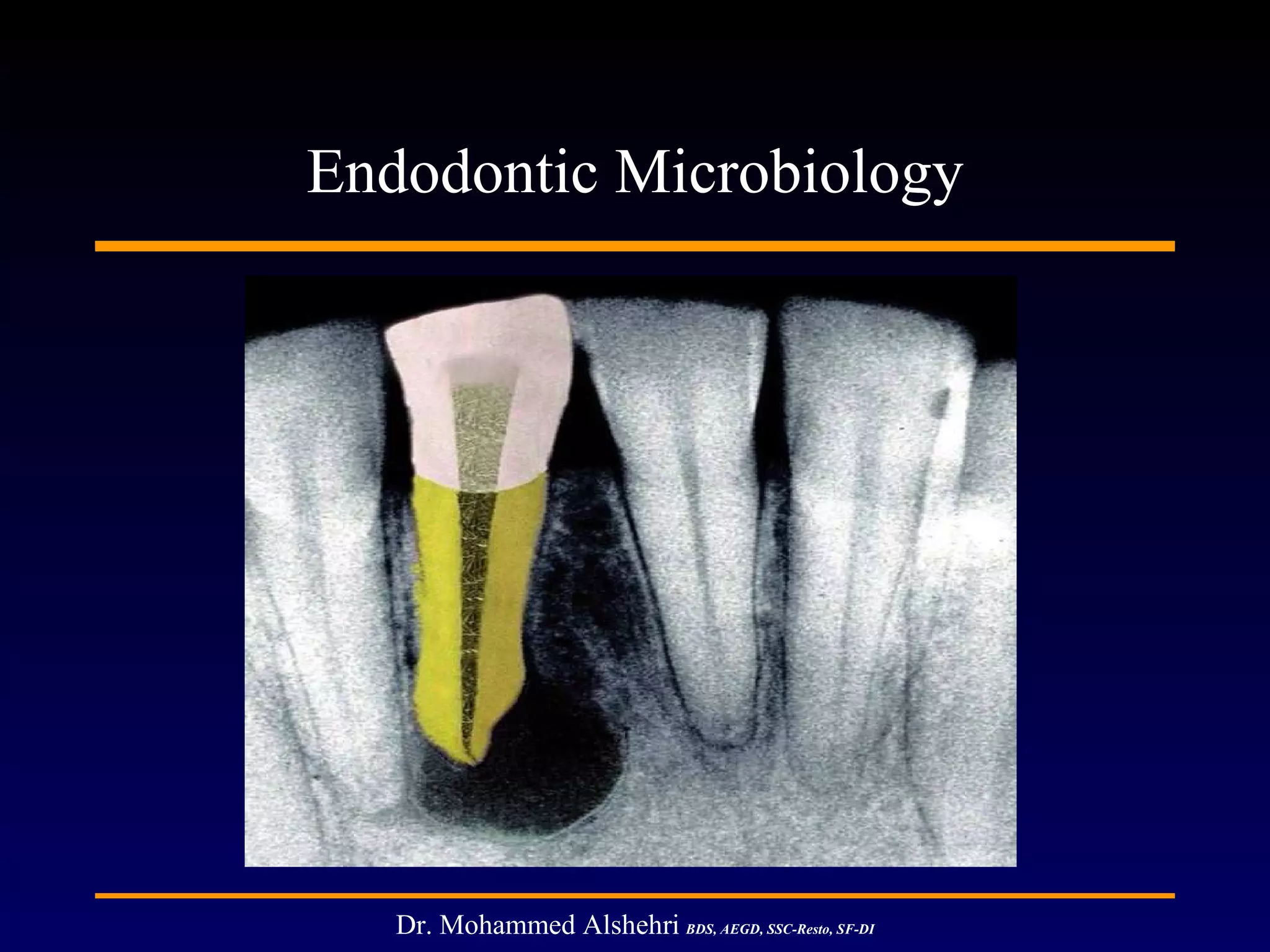
Endodontic Microbiology


   Dr. Mohammed Alshehri BDS, AEGD, SSC-Resto, SF-DI
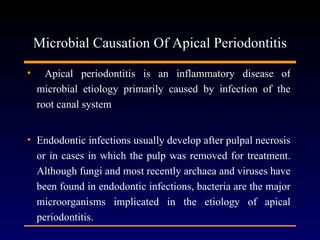
Microbial Causation Of Apical Periodontitis

•     Apical periodontitis is an inflammatory disease of
    microbial etiology primarily caused by infection of the
    root canal system


• Endodontic infections usually develop after pulpal necrosis
  or in cases in which the pulp was removed for treatment.
  Although fungi and most recently archaea and viruses have
  been found in endodontic infections, bacteria are the major
  microorganisms implicated in the etiology of apical
  periodontitis.
The ultimate goal of the endodontic treatment is either to
  prevent the development of apical periodontitis or to
  create adequate conditions for periradicular tissue
  healing.
Portals of Entry to the Pulp
•   Caries
•   Trauma-induced fractures
•   Cracks
•   Restorative procedures
•   Scaling and root planing
•   Attrition
•   Abrasion
•   Gaps in the cementoenamel junction at the cervical root surface
•   Dentinal tubules
•   Direct pulp exposure
•   Periodontal disease
•   Anachoresis
Dentinal Tubules

• Permeability of normal dentin dictated by its tubular structure.


• Dentin permeability is increased near the pulp because of the larger
  diameter and higher density of tubules.


• Dentinal tubules traverse the entire width of the dentin and have a
  conformation of inverted cones, with the smallest diameter in the
  periphery, near to enamel or cementum (mean of 0.9 μm).


• The smallest tubule diameter is entirely compatible with the cell
  diameter of most oral bacterial species, which usually ranges from 0.2
  to 0.7 μm.
Dentinal Tubules

• Bacterial movement is restricted by

       • Outflow of dentinal fluid
       • Odontoblastic processes
       • Mineralized crystals
       • Immunoglobulin's in the tubules.
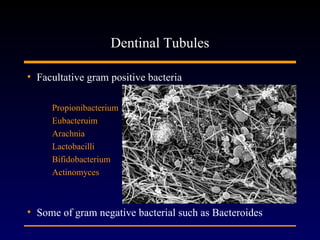
Dentinal Tubules

• Facultative gram positive bacteria

     Propionibacterium
     Eubacteruim
     Arachnia
     Lactobacilli
     Bifidobacterium
     Actinomyces


• Some of gram negative bacterial such as Bacteroides
Direct Pulp Exposure
• Direct exposure of the dental pulp to the oral cavity is the
  most obvious route of endodontic infection.

• Caries is the most common cause of pulpal exposure

• Exposed pulps will undergo inflammation and necrosis
  and become infected.

• The time elapsed between pulp exposure and infection of
  the entire canal is unpredictable, but it is usually a slow
  process.
Periodontal Disease

• Microorganisms in subgingival biofilms associated with
  periodontal disease could reach the pulp by the same
  pathways that intracanal microorganisms reach the
  periodontium and thereby could exert harmful effects on
  the pulp.

• Pulpal necrosis as a consequence of periodontal disease
  only develops if the periodontal pocket reaches the apical
  foramen, leading to irreversible damage to the main blood
  vessels that penetrate through this foramen.
Anachoresis

• Anachoresis is a process by which microorganisms are
  transported in the blood or lymph to an area of tissue
  damage, where they leave the vessel, enter the damaged
  tissue, and establish an infection.


• There is no clear evidence showing that this process can
  represent a route for root canal infection.
Anachoresis

• Bacteria could not be recovered from unfilled root canals
  when the bloodstream was experimentally infected, unless
  the root canals were overinstrumented during the period of
  bacteremia, with resulting injury to periodontal blood
  vessels and blood seepage into the canal.

• Although anachoresis has been suggested to be the
  mechanism through which traumatized teeth with
  seemingly intact crowns become infected, current evidence
  indicates that the main pathway of pulpal infection in these
  cases is dentinal exposure as a result of enamel cracks.
Types of endodontic infections

•   Intraradicular infection
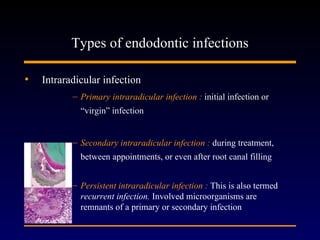
           – Primary intraradicular infection : initial infection or
             “virgin” infection


           – Secondary intraradicular infection : during treatment,
             between appointments, or even after root canal filling


           – Persistent intraradicular infection : This is also termed
             recurrent infection. Involved microorganisms are
             remnants of a primary or secondary infection
Types of endodontic infections

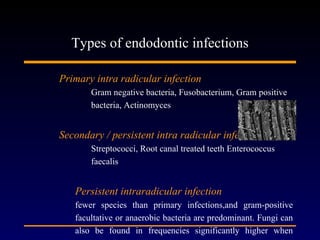
Primary intra radicular infection
       Gram negative bacteria, Fusobacterium, Gram positive
       bacteria, Actinomyces


Secondary / persistent intra radicular infection
       Streptococci, Root canal treated teeth Enterococcus
       faecalis


   Persistent intraradicular infection
   fewer species than primary infections,and gram-positive
   facultative or anaerobic bacteria are predominant. Fungi can
   also be found in frequencies significantly higher when
Types of endodontic infections

• Persistent and secondary infections are for the most part
  clinically indistinguishable and can be responsible for
  several clinical problems, including persistent exudation,
  persistent symptoms, interappointment flare-ups, and
  failure of the endodontic treatment characterized by a
  posttreatment apical periodontitis lesion.
Types of endodontic infections

• Extraradicular infection
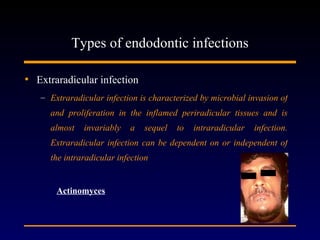
   – Extraradicular infection is characterized by microbial invasion of
     and proliferation in the inflamed periradicular tissues and is
     almost   invariably   a   sequel   to   intraradicular   infection.
     Extraradicular infection can be dependent on or independent of
     the intraradicular infection


       Actinomyces
Endodontic Microbiota

• Gram negative bacteria

          – Treponema
          – Fusobacterium

• Gram positive bacteria

          – Streptococcus
          – Actinomyces
Available nutrients for bacteria

•   Necrotic pulp tissue

•   Proteins and glycoprotein's from tissue fluids
•   Components of saliva
•   Products of other bacteria
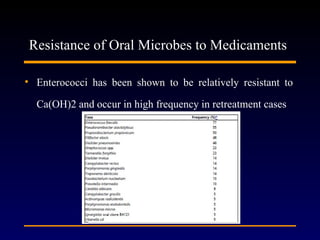
Resistance of Oral Microbes to Medicaments

• Enterococci has been shown to be relatively resistant to
  Ca(OH)2 and occur in high frequency in retreatment cases
Treatment of Endodontic Infections
•   The key to successful treatment of endodontic infections is
    removal of the reservoir of infection (necrotic tissue,
    bacteria, and bacterial by-products) by the following
    procedures:

    Debridement of the root canal system by mechanical instrumentation
    Root canal irrigation
    Intracanal medication Ca(OH)2
    Drainage

Endodontic microbiology

  • 1.
    Endodontic Microbiology Dr. Mohammed Alshehri BDS, AEGD, SSC-Resto, SF-DI
  • 2.
    Microbial Causation OfApical Periodontitis • Apical periodontitis is an inflammatory disease of microbial etiology primarily caused by infection of the root canal system • Endodontic infections usually develop after pulpal necrosis or in cases in which the pulp was removed for treatment. Although fungi and most recently archaea and viruses have been found in endodontic infections, bacteria are the major microorganisms implicated in the etiology of apical periodontitis.
  • 3.
    The ultimate goalof the endodontic treatment is either to prevent the development of apical periodontitis or to create adequate conditions for periradicular tissue healing.
  • 4.
    Portals of Entryto the Pulp • Caries • Trauma-induced fractures • Cracks • Restorative procedures • Scaling and root planing • Attrition • Abrasion • Gaps in the cementoenamel junction at the cervical root surface • Dentinal tubules • Direct pulp exposure • Periodontal disease • Anachoresis
  • 5.
    Dentinal Tubules • Permeabilityof normal dentin dictated by its tubular structure. • Dentin permeability is increased near the pulp because of the larger diameter and higher density of tubules. • Dentinal tubules traverse the entire width of the dentin and have a conformation of inverted cones, with the smallest diameter in the periphery, near to enamel or cementum (mean of 0.9 μm). • The smallest tubule diameter is entirely compatible with the cell diameter of most oral bacterial species, which usually ranges from 0.2 to 0.7 μm.
  • 6.
    Dentinal Tubules • Bacterialmovement is restricted by • Outflow of dentinal fluid • Odontoblastic processes • Mineralized crystals • Immunoglobulin's in the tubules.
  • 7.
    Dentinal Tubules • Facultativegram positive bacteria Propionibacterium Eubacteruim Arachnia Lactobacilli Bifidobacterium Actinomyces • Some of gram negative bacterial such as Bacteroides
  • 8.
    Direct Pulp Exposure •Direct exposure of the dental pulp to the oral cavity is the most obvious route of endodontic infection. • Caries is the most common cause of pulpal exposure • Exposed pulps will undergo inflammation and necrosis and become infected. • The time elapsed between pulp exposure and infection of the entire canal is unpredictable, but it is usually a slow process.
  • 9.
    Periodontal Disease • Microorganismsin subgingival biofilms associated with periodontal disease could reach the pulp by the same pathways that intracanal microorganisms reach the periodontium and thereby could exert harmful effects on the pulp. • Pulpal necrosis as a consequence of periodontal disease only develops if the periodontal pocket reaches the apical foramen, leading to irreversible damage to the main blood vessels that penetrate through this foramen.
  • 10.
    Anachoresis • Anachoresis isa process by which microorganisms are transported in the blood or lymph to an area of tissue damage, where they leave the vessel, enter the damaged tissue, and establish an infection. • There is no clear evidence showing that this process can represent a route for root canal infection.
  • 11.
    Anachoresis • Bacteria couldnot be recovered from unfilled root canals when the bloodstream was experimentally infected, unless the root canals were overinstrumented during the period of bacteremia, with resulting injury to periodontal blood vessels and blood seepage into the canal. • Although anachoresis has been suggested to be the mechanism through which traumatized teeth with seemingly intact crowns become infected, current evidence indicates that the main pathway of pulpal infection in these cases is dentinal exposure as a result of enamel cracks.
  • 12.
    Types of endodonticinfections • Intraradicular infection – Primary intraradicular infection : initial infection or “virgin” infection – Secondary intraradicular infection : during treatment, between appointments, or even after root canal filling – Persistent intraradicular infection : This is also termed recurrent infection. Involved microorganisms are remnants of a primary or secondary infection
  • 13.
    Types of endodonticinfections Primary intra radicular infection Gram negative bacteria, Fusobacterium, Gram positive bacteria, Actinomyces Secondary / persistent intra radicular infection Streptococci, Root canal treated teeth Enterococcus faecalis Persistent intraradicular infection fewer species than primary infections,and gram-positive facultative or anaerobic bacteria are predominant. Fungi can also be found in frequencies significantly higher when
  • 14.
    Types of endodonticinfections • Persistent and secondary infections are for the most part clinically indistinguishable and can be responsible for several clinical problems, including persistent exudation, persistent symptoms, interappointment flare-ups, and failure of the endodontic treatment characterized by a posttreatment apical periodontitis lesion.
  • 15.
    Types of endodonticinfections • Extraradicular infection – Extraradicular infection is characterized by microbial invasion of and proliferation in the inflamed periradicular tissues and is almost invariably a sequel to intraradicular infection. Extraradicular infection can be dependent on or independent of the intraradicular infection Actinomyces
  • 16.
    Endodontic Microbiota • Gramnegative bacteria – Treponema – Fusobacterium • Gram positive bacteria – Streptococcus – Actinomyces
  • 17.
    Available nutrients forbacteria • Necrotic pulp tissue • Proteins and glycoprotein's from tissue fluids • Components of saliva • Products of other bacteria
  • 18.
    Resistance of OralMicrobes to Medicaments • Enterococci has been shown to be relatively resistant to Ca(OH)2 and occur in high frequency in retreatment cases
  • 19.
    Treatment of EndodonticInfections • The key to successful treatment of endodontic infections is removal of the reservoir of infection (necrotic tissue, bacteria, and bacterial by-products) by the following procedures: Debridement of the root canal system by mechanical instrumentation Root canal irrigation Intracanal medication Ca(OH)2 Drainage