1
CALCIUM
HYDROXIDE Dr Urvashi Sodvadiya
2
CONTENT
Endodontics
As an intracanal medicament
 Definition
 Clinical application
 Mechanism of action
 Vehicles
 Placement of Calcium hydroxide paste
 Dentin and Calcium hydroxide
 Effect of Calcium hydroxide on clinical
outcome
 Calcium hydroxide and Chlorhexidine
 Calcium hydroxide and Sodium Hypochlorite
 Removal of Calcium hydroxide from the
canal
 When to replace Calcium hydroxide
dressing?
 Calcium hydroxide and CO2
 Toxicity
3
CONTENT
Endodontics
As a Root canal Sealer
 Clinical significance
 Classification
 Composition
 Properties
Leakage
Solubility
- In tissue fluids
- In chemical solvent
Biocompatibility
Antimicrobial
Toxicity
Conclusion
References
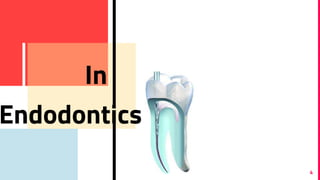
Endodontics
In
4
5
Intracanal
medicament
Definition
6
“A medicament is an antimicrobial agent that is placed inside the root canal
between treatment appointments in an attempt to destroy remaining
microorganisms and prevent reinfection (Weine 2004).”
7
Clinical Application
8
Hard tissue
formation in
immature teeth
with
pulp necrosis
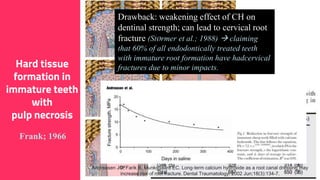
Frank; 1966
Drawback: weakening effect of CH on
dentinal strength; can lead to cervical root
fracture (StØrmer et al.; 1988)  claiming
that 60% of all endodontically treated teeth
with immature root formation have hadcervical
fractures due to minor impacts.
Andreasen JO, Farik B, Munksgaard EC. Long‐term calcium hydroxide as a root canal dressing may
increase risk of root fracture. Dental Traumatology. 2002 Jun;18(3):134-7.
9
Hard tissue
formation in
root fracture
with coronal
pulp necrosis
Introduced by Cvek M in 1974
A large clinical study: 68 root fractures with calcium
hydroxide (Cvek et al; 2004)
Drawback: takes 6 months to induce a hard tissue
barrier at fracture site
Cvek M, Me`jare I, Andreasen JO. Conservative endodontic treatment of teeth fractured in the
middle or apical part of the root. Dent Traumatol 2004;20:261–9.
10
External surface
related- root
resorption
First described by Andreasen JO in 1971
Arrest 98% of infection-related resorptions in luxated
teeth and 90% in avulsed and later replanted teeth
(Cvek M; 1973)
Drawback: weakening effect of CH on dentinal
strength; can lead to cervical root fracture
Andreasen JO. Treatment of fractured and avulsed teeth. ASDC J Dent Child 1971;38:29–35
Cvek M. Treatment on non-vital permanents incisors with calcium hydroxide. II. Effect on external root resorption in
luxated teeth compared with effect of root filling with gutta percha. Odontol Revy 1973;24:343–54.
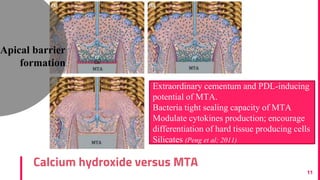
Calcium hydroxide versus MTA
11
Apical barrier
formation
Extraordinary cementum and PDL-inducing
potential of MTA.
Bacteria tight sealing capacity of MTA
Modulate cytokines production; encourage
differentiation of hard tissue producing cells
Silicates (Peng et al; 2011)
12
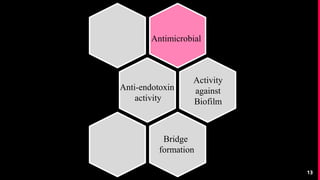
Mechanism of action
13
Antimicrobial
Anti-endotoxin
activity
Bridge
formation
Activity
against
Biofilm
14
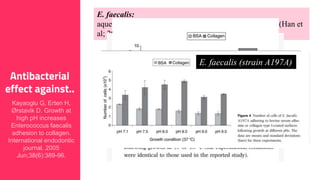
Antibacterial
effect against..
E. faecalis:
aqueous Ca(OH)2 paste and silicone oil-based Ca(OH)2 (Han et
al; 2001).
E. faecalis: Portenier et al. (2005)
Exponential growth phase: most sensitive to Ca(OH)2,
can be killed within 3 s to 10 min.
Stationary phase: more resistant,
(living cells being recovered at 10 min)
Starvation phase: most resistant
E. faecalis (strain A197A)
Kayaoglu G, Erten H,
Ørstavik D. Growth at
high pH increases
Enterococcus faecalis
adhesion to collagen.
International endodontic
journal. 2005
Jun;38(6):389-96.
15
Antibacterial
effect against..
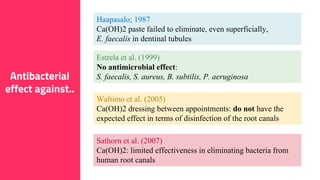
Haapasalo; 1987
Ca(OH)2 paste failed to eliminate, even superficially,
E. faecalis in dentinal tubules
Estrela et al. (1999)
No antimicrobial effect:
S. faecalis, S. aureus, B. subtilis, P. aeruginosa
Waltimo et al. (2005)
Ca(OH)2 dressing between appointments: do not have the
expected effect in terms of disinfection of the root canals
Sathorn et al. (2007)
Ca(OH)2: limited effectiveness in eliminating bacteria from
human root canals
16
Time required
to act as an
antimicrobial
agent
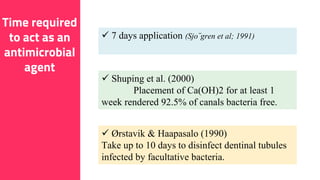
 Ørstavik & Haapasalo (1990)
Take up to 10 days to disinfect dentinal tubules
infected by facultative bacteria.
 7 days application (Sjo¨gren et al; 1991)
 Shuping et al. (2000)
Placement of Ca(OH)2 for at least 1
week rendered 92.5% of canals bacteria free.
17
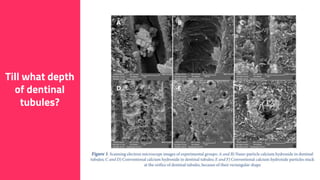
Electrophoretically activated Ca(OH)2 Lin et al. (2005)
 Significantly more effective up to depths of 200–500 µm
no viable bacteria in dentinal tubules to a depth of 500 µm
from the root canal space within 7 days.
Till what depth
of dentinal
tubules?
Zand V, Mokhtari H, Hasani A, Jabbari G. Comparison of the penetration
depth of conventional and nano-particle calcium hydroxide into dentinal
tubules. Iranian endodontic journal. 2017;12(3):366.
18
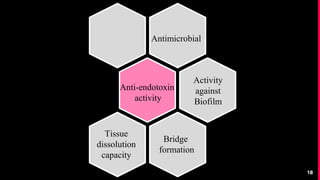
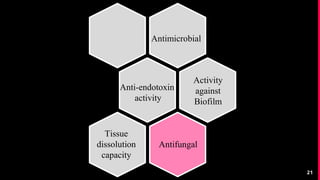
Antimicrobial
Anti-endotoxin
activity
Bridge
formation
Activity
against
Biofilm
Tissue
dissolution
capacity
19
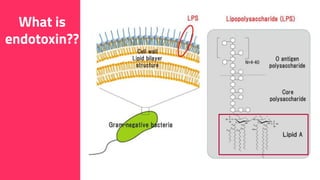
What is
endotoxin??
20
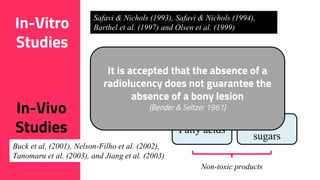
In-Vitro
Studies
In-Vivo
Studies
Safavi & Nichols (1993), Safavi & Nichols (1994),
Barthel et al. (1997) and Olsen et al. (1999)
CH
Lipid A
molecule
Fatty acids
Amino
sugars
Non-toxic products
Buck et al. (2001), Nelson-Filho et al. (2002),
Tanomaru et al. (2003), and Jiang et al. (2003)
It is accepted that the absence of a
radiolucency does not guarantee the
absence of a bony lesion
(Bender & Seltzer 1961)
21
Antimicrobial
Anti-endotoxin
activity
Antifungal
Activity
against
Biofilm
Tissue
dissolution
capacity
22
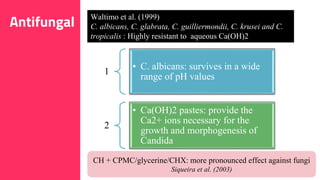
Waltimo et al. (1999)
C. albicans, C. glabrata, C. guilliermondii, C. krusei and C.
tropicalis : Highly resistant to aqueous Ca(OH)2
1
• C. albicans: survives in a wide
range of pH values
2
• Ca(OH)2 pastes: provide the
Ca2+ ions necessary for the
growth and morphogenesis of
Candida
Antifungal
CH + CPMC/glycerine/CHX: more pronounced effect against fungi
Siqueira et al. (2003)
23
Antimicrobial
Anti-endotoxin
activity
Antifungal
Activity
against
Biofilm
Tissue
dissolution
capacity
24
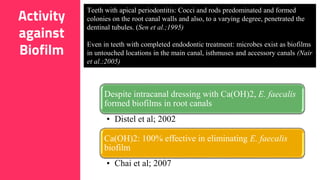
Teeth with apical periodontitis: Cocci and rods predominated and formed
colonies on the root canal walls and also, to a varying degree, penetrated the
dentinal tubules. (Sen et al.;1995)
Even in teeth with completed endodontic treatment: microbes exist as biofilms
in untouched locations in the main canal, isthmuses and accessory canals (Nair
et al.;2005)
Despite intracanal dressing with Ca(OH)2, E. faecalis
formed biofilms in root canals
• Distel et al; 2002
Ca(OH)2: 100% effective in eliminating E. faecalis
biofilm
• Chai et al; 2007
Activity
against
Biofilm
25
Antimicrobial
Anti-endotoxin
activity
Antifungal
Activity
against
Biofilm
Tissue
dissolution
capacity
26
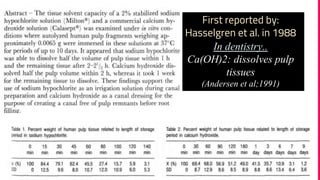
First reported by:
Hasselgren et al. in 1988
In dentistry..
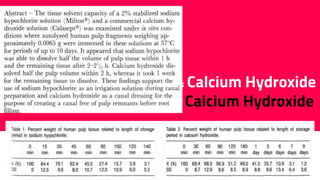
Ca(OH)2: dissolves pulp
tissues
(Andersen et al;1991)
27
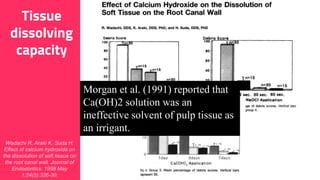
Tissue
dissolving
capacity
Wadachi R, Araki K, Suda H.
Effect of calcium hydroxide on
the dissolution of soft tissue on
the root canal wall. Journal of
Endodontics. 1998 May
1;24(5):326-30.
Morgan et al. (1991) reported that
Ca(OH)2 solution was an
ineffective solvent of pulp tissue as
an irrigant.
28
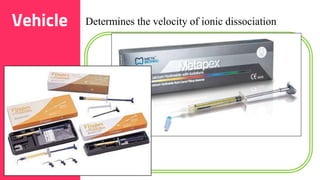
Vehicle Determines the velocity of ionic dissociation
Types of vehicles (Fava & Saunders; 1999)
1. Water-soluble substances such as water, saline,
anaesthetic solutions, carboxymethylcellulose,
methylcellulose and Ringers solution.
2. Viscous vehicles such as glycerine,
polyethyleneglycol (PEG) and propylene glycol.
3. Oil-based vehicles such as olive oil, silicone oil,
camphor (the oil of camphorated parachlorophenol),
some fatty acids (including oleic, linoleic, and
isostearic acids), eugenol and metacresylacetate
29
Determines the velocity of ionic dissociation
Types of vehicles (Fava & Saunders; 1999)
1. Water-soluble substances such as water, saline,
anaesthetic solutions, carboxymethylcellulose,
methylcellulose and Ringers solution.
- Sterile water and saline: most commonly used
- Anaesthetic solution: Adequate vehicle (Athanassiadis et
al. 2007)
Vehicle
30
Vehicle Determines the velocity of ionic dissociation
Types of vehicles (Fava & Saunders; 1999)
1. Viscous vehicles such as glycerine,
polyethyleneglycol (PEG) and propylene glycol.
 10–30% for a glycerine/water mixture and 10–40% for a
propylene glycol/water
- Higher concentration: may decrease effectiveness
(Safavi & Nakayama 2000).
 Ca and OH ions: release slowly and for longer time (Gomes et
al; 2002), requires less number of appointment (Fava & Saunders
1999)
Viscosity of the paste: (Behnen et al; 2001)
Thick mixtures of Ca(OH)2 and water
(1 g mL-1 H2O): significantly improved
antimicrobial property than to a thin mix
and Pulpdent
31
Vehicle Determines the velocity of ionic dissociation
Types of vehicles (Fava & Saunders; 1999)
1. Oil-based vehicles such as olive oil, silicone oil,
camphor (the oil of camphorated parachlorophenol),
some fatty acids (including oleic, linoleic, and
isostearic acids), eugenol and metacresylacetate
Most commonly used vehicle?? 32
Polyethylene glycol
(PEG)
Own substantial antibacterial activity
(Chirife et al. 1983)
 Klebsiella pneumoniae,
 Pseudomonas aeruginosa,
 Eschericha coli and
 Staphylococcus aureus,
Estrela et al. (2001)
33
(i) Ca(OH)2 in saline
(ii) Ca(OH)2 in polyethylene glycol
(iii) Ca(OH)2 in CMCP
“Complete antimicrobial effect was
observed after 48 h in both tests,
irrespective of the Ca(OH)2 paste vehicle”
Behnen et al. (2001)
Ca(OH)2 decreased the numbers of
E. faecalis at all depths within dentinal
tubules up to 24 h
“less viscous preparations of Ca(OH)2
were more effective in removal of bacteria
than more viscous”
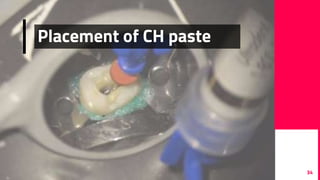
34
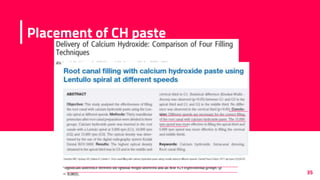
Placement of CH paste
35
Placement of CH paste
36
37
Dentin and Calcium hydroxide
38
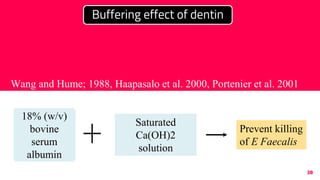
Wang and Hume; 1988, Haapasalo et al. 2000, Portenier et al. 2001
Dentine
powder
(18% w/v-
1.8% w/v )
Saturated
Ca(OH)2
solution
Prevent killing
of E Faecalis
18% (w/v)
bovine
serum
albumin
Buffering effect of dentin
39
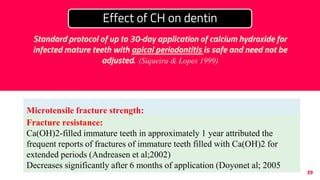
Microtensile fracture strength:
Reduces by almost 50% following 7-84 days of application (Rosenberg et
al;2007)
CH: increases elastic modulus of dentin (Kawamoto et al; 2008)
Effect of CH on dentin
Ca(OH)2 for an extended period (6 months to 1 year) results in
reduced flexural strength and lower fracture resistance.
Fracture resistance:
Ca(OH)2-filled immature teeth in approximately 1 year attributed the
frequent reports of fractures of immature teeth filled with Ca(OH)2 for
extended periods (Andreasen et al;2002)
Decreases significantly after 6 months of application (Doyonet al; 2005
Standard protocol of up to 30-day application of calcium hydroxide for
infected mature teeth with apical periodontitis is safe and need not be
adjusted. (Siqueira & Lopes 1999)
40
Based on time duration
1 month application:
pH gradient with high values around the canal dressing towards the
peripheral (Tronstad et al; 1981)
4 months application:
Inner root dentin: within few hours
Outer root dentin: 1-7 days
To reach peak levels: 2-3 weeks (Nerwich et al; 1993)
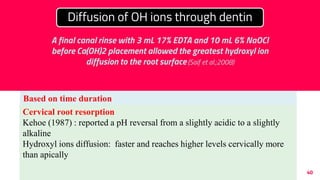
Diffusion of OH ions through dentin
A final canal rinse with 3 mL 17% EDTA and 10 mL 6% NaOCl
before Ca(OH)2 placement allowed the greatest hydroxyl ion
diffusion to the root surface (Saif et al.;2008)
Cervical root resorption
Kehoe (1987) : reported a pH reversal from a slightly acidic to a slightly
alkaline
Hydroxyl ions diffusion: faster and reaches higher levels cervically more
than apically
Effects of Calcium hydroxide on
Clinical outcome
41
Post operative pain
42
Long term outcome
of treatment
No difference in the incidence of postoperative pain between one- and
multiple-visit root canal treatment (with calcium hydroxide inter-
appointment dressing)
Prevalence of postoperative pain ranges from 3% to 58%
O’Keefe 1976, Mulhern et al. 1982, Mohammadi et al. 2006 and, Sathorn et al.2008
43
Long term outcome of treatment
Trope et al. (1999):
1-year follow-up: 10% increase in
healing rates in group with CH dressing
for at least 1 week.
Katebzadeh et al. (1999, 2000)
Better results: Ca(OH)2 was used as an
intracanal disinfecting medicament for 1
week.
Weiger et al.2000, Molander et al.2007
Influence of Ca(OH)2 as an
interappointment dressing on the healing
of periapical lesion: No statistical
significant difference
Peters & Wesselink;2002
found no significant differences in
healing of periapical radiolucency
between teeth that were treated in one
visit (without) and two visits with
inclusion of Ca(OH)2 for 4 weeks.
CHX versus Calcium Hydroxide
CHX + Calcium Hydroxide
44
E. Faecalis and c.albicans
2% CHX gel >> CHX/Ca(OH)2 >> Ca(OH)2 alone
Waltimo et al; 1999, Gomes et al. (2006), Scha¨fer & Bossmann (2005)
Removal of CHX + CH medicament: 7% maleic acid and 10% citric acid
for 1 minute were superior to 17% EDTA in the removal of calcium
hydroxide mixed with 2% chlorhexidine (Arslan H et al; 2014)
Sodium hypochlorite v/s Calcium Hydroxide
Sodium Hypochlorite + Calcium Hydroxide
45
7 days pretreatment with Pulpdent paste a non-setting Ca(OH)2 paste,
followed by sodium hypochlorite irrigation: cleaned canal isthmuses
effectively (Metzler & Montgomery;1989)
Reduction in amount of debris: NaOCl for >30 s or Ca(OH)2 for 7 days.
Combination of Ca(OH)2 and NaOCl: more effective (Wadachi et al; 1998)
46
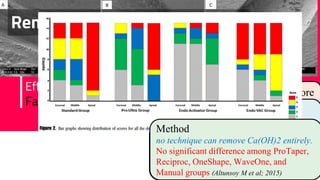
Removal of CH from the canals
Effects of remnants on sealer adaptation and penetration
Factors affecting removal of CH
Vehicle used to prepare paste is more
important (Nandini et al; 2006)
Oil based: difficult to remove
Type of irrigant used
10% citric acid, 10% maleic acid >> 17%
EDTA >> 5.25% NaOCl
(Nandini et al; 2006)
Method
no technique can remove Ca(OH)2 entirely.
Endoactivator >> Ultrasonic >> EndoVac
>> irrigants alone
(Alturaiki S et al; 2015)
Method
no technique can remove Ca(OH)2 entirely.
No significant difference among ProTaper,
Reciproc, OneShape, WaveOne, and
Manual groups (Altunsoy M et al; 2015)
47
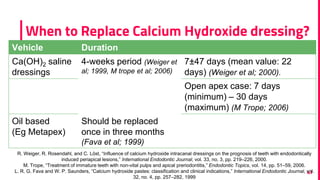
When to Replace Calcium Hydroxide dressing?
R. Weiger, R. Rosendahl, and C. Löst, “Influence of calcium hydroxide intracanal dressings on the prognosis of teeth with endodontically
induced periapical lesions,” International Endodontic Journal, vol. 33, no. 3, pp. 219–226, 2000.
M. Trope, “Treatment of immature teeth with non-vital pulps and apical preriodontitis,” Endodontic Topics, vol. 14, pp. 51–59, 2006.
L. R. G. Fava and W. P. Saunders, “Calcium hydroxide pastes: classification and clinical indications,” International Endodontic Journal, vol.
32, no. 4, pp. 257–282, 1999
Vehicle Duration
Ca(OH)2 saline
dressings
4-weeks period (Weiger et
al; 1999, M trope et al; 2006)
7±47 days (mean value: 22
days) (Weiger et al; 2000).
Open apex case: 7 days
(minimum) – 30 days
(maximum) (M Trope; 2006)
Oil based
(Eg Metapex)
Should be replaced
once in three months
(Fava et al; 1999)
48
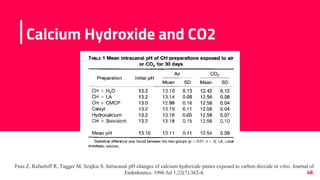
Calcium Hydroxide and CO2
Fuss Z, Rafaeloff R, Tagger M, Szajkis S. Intracanal pH changes of calcium hydroxide pastes exposed to carbon dioxide in vitro. Journal of
Endodontics. 1996 Jul 1;22(7):362-4.
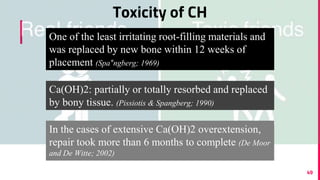
Toxicity of CH
49
In the cases of extensive Ca(OH)2 overextension,
repair took more than 6 months to complete (De Moor
and De Witte; 2002)
One of the least irritating root-filling materials and
was replaced by new bone within 12 weeks of
placement (Spa°ngberg; 1969)
Ca(OH)2: partially or totally resorbed and replaced
by bony tissue. (Pissiotis & Spangberg; 1990)
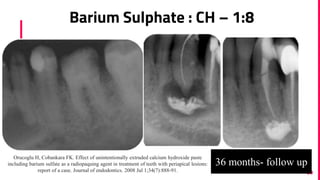
Barium Sulphate : CH – 1:8
50
36 months- follow up
Orucoglu H, Cobankara FK. Effect of unintentionally extruded calcium hydroxide paste
including barium sulfate as a radiopaquing agent in treatment of teeth with periapical lesions:
report of a case. Journal of endodontics. 2008 Jul 1;34(7):888-91.
51
Root canal
Sealer
Clinical significance
52
Sealers are responsible for the principal functions of a root filling,
namely, sealing the root canal system, entombment of remaining
bacteria and the filling of irregularities in the canal system (Ørstavik 2005).
53
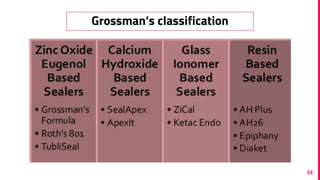
Grossman’s classification
54
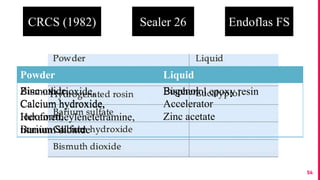
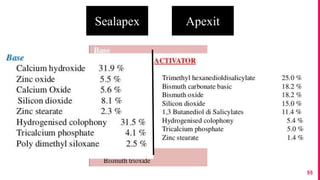
CRCS (1982) Sealer 26 Endoflas FS
Powder Paste
Bismuth trioxide,
Calcium hydroxide,
Hexametheylenetetramine,
titanium dioxide
Bisphenol epoxy resin
Powder Liquid
Zinc oxide,
Calcium hydroxide,
Iodoform,
Barium Sulfate
Eugenol
Accelerator
Zinc acetate
55
Sealapex Apexit
56
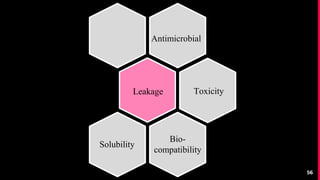
Antimicrobial
Leakage
Bio-
compatibility
Solubility
Toxicity
57
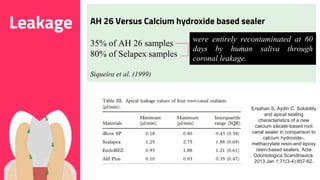
AH 26 Versus Calcium hydroxide based sealer
35% of AH 26 samples
80% of Selapex samples
Siqueira et al. (1999)
were entirely recontaminated at 60
days by human saliva through
coronal leakage.
Leakage
Ersahan S, Aydin C. Solubility
and apical sealing
characteristics of a new
calcium silicate-based root
canal sealer in comparison to
calcium hydroxide-,
methacrylate resin-and epoxy
resin-based sealers. Acta
Odontologica Scandinavica.
2013 Jan 1;71(3-4):857-62.
58
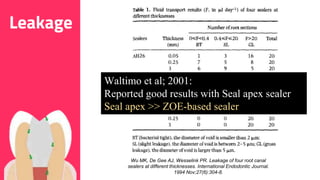
Leakage
Wu MK, De Gee AJ, Wesselink PR. Leakage of four root canal
sealers at different thicknesses. International Endodontic Journal.
1994 Nov;27(6):304-8.
Waltimo et al; 2001:
Reported good results with Seal apex sealer
Seal apex >> ZOE-based sealer
59
Antimicrobial
Leakage
Bio-
compatibility
Solubility
Toxicity
60
Solubility
in tissue
fluid
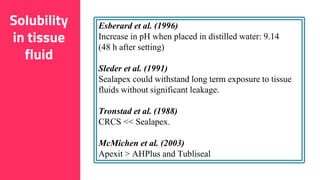
Esberard et al. (1996)
Increase in pH when placed in distilled water: 9.14
(48 h after setting)
Sleder et al. (1991)
Sealapex could withstand long term exposure to tissue
fluids without significant leakage.
Tronstad et al. (1988)
CRCS << Sealapex.
McMichen et al. (2003)
Apexit > AHPlus and Tubliseal
61
Solubility
in
solvent
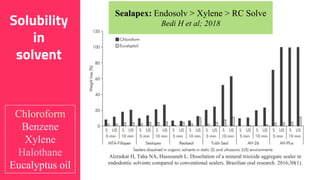
Whitworth & Boursin (2000)
Chloroform
Benzene
Xylene
Halothane
Eucalyptus oil
Solubility Chloroform Halothane
Apexit 11.6% 14.19%
AHPlus 96% 68%
Alzraikat H, Taha NA, Hassouneh L. Dissolution of a mineral trioxide aggregate sealer in
endodontic solvents compared to conventional sealers. Brazilian oral research. 2016;30(1).
Sealapex: Endosolv > Xylene > RC Solve
Bedi H et al; 2018
62
Antimicrobial
Leakage
Bio-
compatibility
Solubility
Toxicity
63
Cytotoxicity
Genotoxicity
Subcutaneous
implant
Intraosseous
implants
Usage study
Human studies
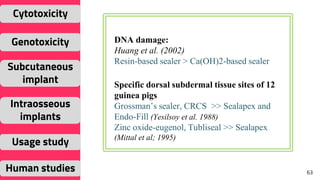
Brisenˇo & Willershausen (1992)
Endoflas FS > CRCS > Apexit > Sealapex
Eldeniz et al. (2007): 8 types of sealers
Resin-based (Epiphany and Endo-
REZ) and calcium hydroxide-based (Apexit
and Acroseal) sealers >> Silicone based
DNA damage:
Huang et al. (2002)
Resin-based sealer > Ca(OH)2-based sealer
Specific dorsal subdermal tissue sites of 12
guinea pigs
Grossman’s sealer, CRCS >> Sealapex and
Endo-Fill (Yesilsoy et al. 1988)
Zinc oxide-eugenol, Tubliseal >> Sealapex
(Mittal et al; 1995)
64
Cytotoxicity
Genotoxicity
Subcutaneous
implant
Intraosseous
implants
Usage study
Human studies
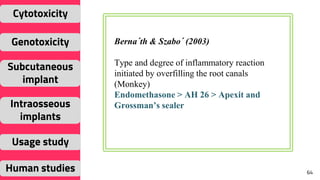
Berna´th & Szabo´ (2003)
Type and degree of inflammatory reaction
initiated by overfilling the root canals
(Monkey)
Endomethasone > AH 26 > Apexit and
Grossman’s sealer
65
Antimicrobial
Leakage
Bio-
compatibility
Solubility
Toxicity
66
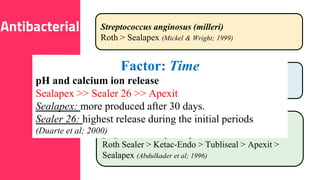
Streptococcus anginosus (milleri)
Roth > Sealapex (Mickel & Wright; 1999)
E. faecalis
Roth 811 (1.1 mm) > Sealapex (0.8 mm) > AH-Plus
(no antimicrobial activity) (Mickel et al; 2003)
Capnocytophaga ochracea, Porphyromonas
gingivalis and Peptostreptococcus
Roth Sealer > Ketac-Endo > Tubliseal > Apexit >
Sealapex (Abdulkader et al; 1996)
Antibacterial
Factor: Time
pH and calcium ion release
Sealapex >> Sealer 26 >> Apexit
Sealapex: more produced after 30 days.
Sealer 26: highest release during the initial periods
(Duarte et al; 2000)
67
Antimicrobial
Leakage
Bio-
compatibility
Solubility
Toxicity
68
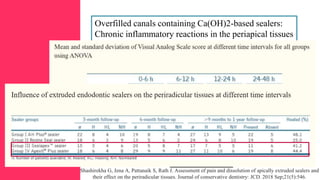
Overfilled canals containing Ca(OH)2-based sealers:
Chronic inflammatory reactions in the periapical tissues
of dog’s teeth. (Soares et al; 1990)
3 months 6 months 9 months
Shashirekha G, Jena A, Pattanaik S, Rath J. Assessment of pain and dissolution of apically extruded sealers and
their effect on the periradicular tissues. Journal of conservative dentistry: JCD. 2018 Sep;21(5):546.
69
Conclusion
References
70
▪ Arslan H, Gok T, Saygili G, Altintop H, Akçay M, Çapar İD. Evaluation of effectiveness of
various irrigating solutions on removal of calcium hydroxide mixed with 2% chlorhexidine gel
and detection of orange-brown precipitate after removal. Journal of endodontics. 2014 Nov
1;40(11):1820-3.
▪ Alturaiki S, Lamphon H, Edrees H, Ahlquist M. Efficacy of 3 different irrigation systems on
removal of calcium hydroxide from the root canal: a scanning electron microscopic study.
Journal of endodontics. 2015 Jan 1;41(1):97-101.
▪ Altunsoy M, Ok E, Tanrıver M, Capar ID. Effects of different instrumentation techniques on
calcium hydroxide removal from simulated immature teeth. Scanning. 2015 Jul;37(4):265-9.
▪ Orucoglu H, Cobankara FK. Effect of unintentionally extruded calcium hydroxide paste
including barium sulfate as a radiopaquing agent in treatment of teeth with periapical lesions:
report of a case. Journal of endodontics. 2008 Jul 1;34(7):888-91.
▪ ASLAN T, DÜZGÜN S, ÜSTÜN Y. EFFECT OF LENTULO SPIRAL USAGE AT
DIFFERENT SPEEDS ON APICAL EXTRUSION OF CALCIUM HYDROXIDE. Atatürk
Üniversitesi Diş Hekimliği Fakültesi Dergisi.;28(2):133-7.
References
71
 Andersen M, Lund A, Andreasen JO, Andreasen FM. In vitro solubility of human pulp tissue
in calcium hydroxide and sodium hypochlorite. Dental Traumatology. 1992 Jun;8(3):104-8.
 Wadachi R, Araki K, Suda H. Effect of calcium hydroxide on the dissolution of soft tissue on
the root canal wall. Journal of Endodontics. 1998 May 1;24(5):326-30.
 Yang SF, Rivera EM, Baumgardner KR, Walton RE, Stanford C. Anaerobic tissue-dissolving
abilities of calcium hydroxide and sodium hypochlorite. Journal of endodontics. 1995 Dec
1;21(12):613-6.
 Wu MK, De Gee AJ, Wesselink PR. Leakage of four root canal sealers at different thicknesses.
International Endodontic Journal. 1994 Nov;27(6):304-8.
 Ersahan S, Aydin C. Solubility and apical sealing characteristics of a new calcium silicate-
based root canal sealer in comparison to calcium hydroxide-, methacrylate resin-and epoxy
resin-based sealers. Acta Odontologica Scandinavica. 2013 Jan 1;71(3-4):857-62.
 Bedi H, Bhullar KK, Malhotra S, Khanna R, Nain R. A COMPARISON OF
EFFECTIVENESS OF DIFFERENT SOLVENTS IN DISSOLVING ROOT CANAL
SEALERS-AN IN-VITRO STUDY. Indian Journal of Comprehensive Dental Care (IJCDC).
2018 Jul 1;8(2).
 Alzraikat H, Taha NA, Hassouneh L. Dissolution of a mineral trioxide aggregate sealer in
endodontic solvents compared to conventional sealers. Brazilian oral research. 2016;30(1).
References
72
Shashirekha G, Jena A, Pattanaik S, Rath J. Assessment of pain and dissolution of apically
extruded sealers and their effect on the periradicular tissues. Journal of conservative
dentistry: JCD. 2018 Sep;21(5):546.
Fuss Z, Rafaeloff R, Tagger M, Szajkis S. Intracanal pH changes of calcium hydroxide pastes
exposed to carbon dioxide in vitro. Journal of Endodontics. 1996 Jul 1;22(7):362-4.
Thank you!
73

CALCIUM HYDROXIDE IN ENDODONTICS

  • 1.
  • 2.
    2 CONTENT Endodontics As an intracanalmedicament  Definition  Clinical application  Mechanism of action  Vehicles  Placement of Calcium hydroxide paste  Dentin and Calcium hydroxide  Effect of Calcium hydroxide on clinical outcome  Calcium hydroxide and Chlorhexidine  Calcium hydroxide and Sodium Hypochlorite  Removal of Calcium hydroxide from the canal  When to replace Calcium hydroxide dressing?  Calcium hydroxide and CO2  Toxicity
  • 3.
    3 CONTENT Endodontics As a Rootcanal Sealer  Clinical significance  Classification  Composition  Properties Leakage Solubility - In tissue fluids - In chemical solvent Biocompatibility Antimicrobial Toxicity Conclusion References
  • 4.
  • 5.
  • 6.
    Definition 6 “A medicament isan antimicrobial agent that is placed inside the root canal between treatment appointments in an attempt to destroy remaining microorganisms and prevent reinfection (Weine 2004).”
  • 7.
  • 8.
    8 Hard tissue formation in immatureteeth with pulp necrosis Frank; 1966 Drawback: weakening effect of CH on dentinal strength; can lead to cervical root fracture (StØrmer et al.; 1988)  claiming that 60% of all endodontically treated teeth with immature root formation have hadcervical fractures due to minor impacts. Andreasen JO, Farik B, Munksgaard EC. Long‐term calcium hydroxide as a root canal dressing may increase risk of root fracture. Dental Traumatology. 2002 Jun;18(3):134-7.
  • 9.
    9 Hard tissue formation in rootfracture with coronal pulp necrosis Introduced by Cvek M in 1974 A large clinical study: 68 root fractures with calcium hydroxide (Cvek et al; 2004) Drawback: takes 6 months to induce a hard tissue barrier at fracture site Cvek M, Me`jare I, Andreasen JO. Conservative endodontic treatment of teeth fractured in the middle or apical part of the root. Dent Traumatol 2004;20:261–9.
  • 10.
    10 External surface related- root resorption Firstdescribed by Andreasen JO in 1971 Arrest 98% of infection-related resorptions in luxated teeth and 90% in avulsed and later replanted teeth (Cvek M; 1973) Drawback: weakening effect of CH on dentinal strength; can lead to cervical root fracture Andreasen JO. Treatment of fractured and avulsed teeth. ASDC J Dent Child 1971;38:29–35 Cvek M. Treatment on non-vital permanents incisors with calcium hydroxide. II. Effect on external root resorption in luxated teeth compared with effect of root filling with gutta percha. Odontol Revy 1973;24:343–54.
  • 11.
    Calcium hydroxide versusMTA 11 Apical barrier formation Extraordinary cementum and PDL-inducing potential of MTA. Bacteria tight sealing capacity of MTA Modulate cytokines production; encourage differentiation of hard tissue producing cells Silicates (Peng et al; 2011)
  • 12.
  • 13.
  • 14.
    14 Antibacterial effect against.. E. faecalis: aqueousCa(OH)2 paste and silicone oil-based Ca(OH)2 (Han et al; 2001). E. faecalis: Portenier et al. (2005) Exponential growth phase: most sensitive to Ca(OH)2, can be killed within 3 s to 10 min. Stationary phase: more resistant, (living cells being recovered at 10 min) Starvation phase: most resistant E. faecalis (strain A197A) Kayaoglu G, Erten H, Ørstavik D. Growth at high pH increases Enterococcus faecalis adhesion to collagen. International endodontic journal. 2005 Jun;38(6):389-96.
  • 15.
    15 Antibacterial effect against.. Haapasalo; 1987 Ca(OH)2paste failed to eliminate, even superficially, E. faecalis in dentinal tubules Estrela et al. (1999) No antimicrobial effect: S. faecalis, S. aureus, B. subtilis, P. aeruginosa Waltimo et al. (2005) Ca(OH)2 dressing between appointments: do not have the expected effect in terms of disinfection of the root canals Sathorn et al. (2007) Ca(OH)2: limited effectiveness in eliminating bacteria from human root canals
  • 16.
    16 Time required to actas an antimicrobial agent  Ørstavik & Haapasalo (1990) Take up to 10 days to disinfect dentinal tubules infected by facultative bacteria.  7 days application (Sjo¨gren et al; 1991)  Shuping et al. (2000) Placement of Ca(OH)2 for at least 1 week rendered 92.5% of canals bacteria free.
  • 17.
    17 Electrophoretically activated Ca(OH)2Lin et al. (2005)  Significantly more effective up to depths of 200–500 µm no viable bacteria in dentinal tubules to a depth of 500 µm from the root canal space within 7 days. Till what depth of dentinal tubules? Zand V, Mokhtari H, Hasani A, Jabbari G. Comparison of the penetration depth of conventional and nano-particle calcium hydroxide into dentinal tubules. Iranian endodontic journal. 2017;12(3):366.
  • 18.
  • 19.
  • 20.
    20 In-Vitro Studies In-Vivo Studies Safavi & Nichols(1993), Safavi & Nichols (1994), Barthel et al. (1997) and Olsen et al. (1999) CH Lipid A molecule Fatty acids Amino sugars Non-toxic products Buck et al. (2001), Nelson-Filho et al. (2002), Tanomaru et al. (2003), and Jiang et al. (2003) It is accepted that the absence of a radiolucency does not guarantee the absence of a bony lesion (Bender & Seltzer 1961)
  • 21.
  • 22.
    22 Waltimo et al.(1999) C. albicans, C. glabrata, C. guilliermondii, C. krusei and C. tropicalis : Highly resistant to aqueous Ca(OH)2 1 • C. albicans: survives in a wide range of pH values 2 • Ca(OH)2 pastes: provide the Ca2+ ions necessary for the growth and morphogenesis of Candida Antifungal CH + CPMC/glycerine/CHX: more pronounced effect against fungi Siqueira et al. (2003)
  • 23.
  • 24.
    24 Teeth with apicalperiodontitis: Cocci and rods predominated and formed colonies on the root canal walls and also, to a varying degree, penetrated the dentinal tubules. (Sen et al.;1995) Even in teeth with completed endodontic treatment: microbes exist as biofilms in untouched locations in the main canal, isthmuses and accessory canals (Nair et al.;2005) Despite intracanal dressing with Ca(OH)2, E. faecalis formed biofilms in root canals • Distel et al; 2002 Ca(OH)2: 100% effective in eliminating E. faecalis biofilm • Chai et al; 2007 Activity against Biofilm
  • 25.
  • 26.
    26 First reported by: Hasselgrenet al. in 1988 In dentistry.. Ca(OH)2: dissolves pulp tissues (Andersen et al;1991)
  • 27.
    27 Tissue dissolving capacity Wadachi R, ArakiK, Suda H. Effect of calcium hydroxide on the dissolution of soft tissue on the root canal wall. Journal of Endodontics. 1998 May 1;24(5):326-30. Morgan et al. (1991) reported that Ca(OH)2 solution was an ineffective solvent of pulp tissue as an irrigant.
  • 28.
    28 Vehicle Determines thevelocity of ionic dissociation Types of vehicles (Fava & Saunders; 1999) 1. Water-soluble substances such as water, saline, anaesthetic solutions, carboxymethylcellulose, methylcellulose and Ringers solution. 2. Viscous vehicles such as glycerine, polyethyleneglycol (PEG) and propylene glycol. 3. Oil-based vehicles such as olive oil, silicone oil, camphor (the oil of camphorated parachlorophenol), some fatty acids (including oleic, linoleic, and isostearic acids), eugenol and metacresylacetate
  • 29.
    29 Determines the velocityof ionic dissociation Types of vehicles (Fava & Saunders; 1999) 1. Water-soluble substances such as water, saline, anaesthetic solutions, carboxymethylcellulose, methylcellulose and Ringers solution. - Sterile water and saline: most commonly used - Anaesthetic solution: Adequate vehicle (Athanassiadis et al. 2007) Vehicle
  • 30.
    30 Vehicle Determines thevelocity of ionic dissociation Types of vehicles (Fava & Saunders; 1999) 1. Viscous vehicles such as glycerine, polyethyleneglycol (PEG) and propylene glycol.  10–30% for a glycerine/water mixture and 10–40% for a propylene glycol/water - Higher concentration: may decrease effectiveness (Safavi & Nakayama 2000).  Ca and OH ions: release slowly and for longer time (Gomes et al; 2002), requires less number of appointment (Fava & Saunders 1999) Viscosity of the paste: (Behnen et al; 2001) Thick mixtures of Ca(OH)2 and water (1 g mL-1 H2O): significantly improved antimicrobial property than to a thin mix and Pulpdent
  • 31.
    31 Vehicle Determines thevelocity of ionic dissociation Types of vehicles (Fava & Saunders; 1999) 1. Oil-based vehicles such as olive oil, silicone oil, camphor (the oil of camphorated parachlorophenol), some fatty acids (including oleic, linoleic, and isostearic acids), eugenol and metacresylacetate
  • 32.
    Most commonly usedvehicle?? 32 Polyethylene glycol (PEG) Own substantial antibacterial activity (Chirife et al. 1983)  Klebsiella pneumoniae,  Pseudomonas aeruginosa,  Eschericha coli and  Staphylococcus aureus,
  • 33.
    Estrela et al.(2001) 33 (i) Ca(OH)2 in saline (ii) Ca(OH)2 in polyethylene glycol (iii) Ca(OH)2 in CMCP “Complete antimicrobial effect was observed after 48 h in both tests, irrespective of the Ca(OH)2 paste vehicle” Behnen et al. (2001) Ca(OH)2 decreased the numbers of E. faecalis at all depths within dentinal tubules up to 24 h “less viscous preparations of Ca(OH)2 were more effective in removal of bacteria than more viscous”
  • 34.
  • 35.
  • 36.
  • 37.
  • 38.
    38 Wang and Hume;1988, Haapasalo et al. 2000, Portenier et al. 2001 Dentine powder (18% w/v- 1.8% w/v ) Saturated Ca(OH)2 solution Prevent killing of E Faecalis 18% (w/v) bovine serum albumin Buffering effect of dentin
  • 39.
    39 Microtensile fracture strength: Reducesby almost 50% following 7-84 days of application (Rosenberg et al;2007) CH: increases elastic modulus of dentin (Kawamoto et al; 2008) Effect of CH on dentin Ca(OH)2 for an extended period (6 months to 1 year) results in reduced flexural strength and lower fracture resistance. Fracture resistance: Ca(OH)2-filled immature teeth in approximately 1 year attributed the frequent reports of fractures of immature teeth filled with Ca(OH)2 for extended periods (Andreasen et al;2002) Decreases significantly after 6 months of application (Doyonet al; 2005 Standard protocol of up to 30-day application of calcium hydroxide for infected mature teeth with apical periodontitis is safe and need not be adjusted. (Siqueira & Lopes 1999)
  • 40.
    40 Based on timeduration 1 month application: pH gradient with high values around the canal dressing towards the peripheral (Tronstad et al; 1981) 4 months application: Inner root dentin: within few hours Outer root dentin: 1-7 days To reach peak levels: 2-3 weeks (Nerwich et al; 1993) Diffusion of OH ions through dentin A final canal rinse with 3 mL 17% EDTA and 10 mL 6% NaOCl before Ca(OH)2 placement allowed the greatest hydroxyl ion diffusion to the root surface (Saif et al.;2008) Cervical root resorption Kehoe (1987) : reported a pH reversal from a slightly acidic to a slightly alkaline Hydroxyl ions diffusion: faster and reaches higher levels cervically more than apically
  • 41.
    Effects of Calciumhydroxide on Clinical outcome 41
  • 42.
    Post operative pain 42 Longterm outcome of treatment No difference in the incidence of postoperative pain between one- and multiple-visit root canal treatment (with calcium hydroxide inter- appointment dressing) Prevalence of postoperative pain ranges from 3% to 58% O’Keefe 1976, Mulhern et al. 1982, Mohammadi et al. 2006 and, Sathorn et al.2008
  • 43.
    43 Long term outcomeof treatment Trope et al. (1999): 1-year follow-up: 10% increase in healing rates in group with CH dressing for at least 1 week. Katebzadeh et al. (1999, 2000) Better results: Ca(OH)2 was used as an intracanal disinfecting medicament for 1 week. Weiger et al.2000, Molander et al.2007 Influence of Ca(OH)2 as an interappointment dressing on the healing of periapical lesion: No statistical significant difference Peters & Wesselink;2002 found no significant differences in healing of periapical radiolucency between teeth that were treated in one visit (without) and two visits with inclusion of Ca(OH)2 for 4 weeks.
  • 44.
    CHX versus CalciumHydroxide CHX + Calcium Hydroxide 44 E. Faecalis and c.albicans 2% CHX gel >> CHX/Ca(OH)2 >> Ca(OH)2 alone Waltimo et al; 1999, Gomes et al. (2006), Scha¨fer & Bossmann (2005) Removal of CHX + CH medicament: 7% maleic acid and 10% citric acid for 1 minute were superior to 17% EDTA in the removal of calcium hydroxide mixed with 2% chlorhexidine (Arslan H et al; 2014)
  • 45.
    Sodium hypochlorite v/sCalcium Hydroxide Sodium Hypochlorite + Calcium Hydroxide 45 7 days pretreatment with Pulpdent paste a non-setting Ca(OH)2 paste, followed by sodium hypochlorite irrigation: cleaned canal isthmuses effectively (Metzler & Montgomery;1989) Reduction in amount of debris: NaOCl for >30 s or Ca(OH)2 for 7 days. Combination of Ca(OH)2 and NaOCl: more effective (Wadachi et al; 1998)
  • 46.
    46 Removal of CHfrom the canals Effects of remnants on sealer adaptation and penetration Factors affecting removal of CH Vehicle used to prepare paste is more important (Nandini et al; 2006) Oil based: difficult to remove Type of irrigant used 10% citric acid, 10% maleic acid >> 17% EDTA >> 5.25% NaOCl (Nandini et al; 2006) Method no technique can remove Ca(OH)2 entirely. Endoactivator >> Ultrasonic >> EndoVac >> irrigants alone (Alturaiki S et al; 2015) Method no technique can remove Ca(OH)2 entirely. No significant difference among ProTaper, Reciproc, OneShape, WaveOne, and Manual groups (Altunsoy M et al; 2015)
  • 47.
    47 When to ReplaceCalcium Hydroxide dressing? R. Weiger, R. Rosendahl, and C. Löst, “Influence of calcium hydroxide intracanal dressings on the prognosis of teeth with endodontically induced periapical lesions,” International Endodontic Journal, vol. 33, no. 3, pp. 219–226, 2000. M. Trope, “Treatment of immature teeth with non-vital pulps and apical preriodontitis,” Endodontic Topics, vol. 14, pp. 51–59, 2006. L. R. G. Fava and W. P. Saunders, “Calcium hydroxide pastes: classification and clinical indications,” International Endodontic Journal, vol. 32, no. 4, pp. 257–282, 1999 Vehicle Duration Ca(OH)2 saline dressings 4-weeks period (Weiger et al; 1999, M trope et al; 2006) 7±47 days (mean value: 22 days) (Weiger et al; 2000). Open apex case: 7 days (minimum) – 30 days (maximum) (M Trope; 2006) Oil based (Eg Metapex) Should be replaced once in three months (Fava et al; 1999)
  • 48.
    48 Calcium Hydroxide andCO2 Fuss Z, Rafaeloff R, Tagger M, Szajkis S. Intracanal pH changes of calcium hydroxide pastes exposed to carbon dioxide in vitro. Journal of Endodontics. 1996 Jul 1;22(7):362-4.
  • 49.
    Toxicity of CH 49 Inthe cases of extensive Ca(OH)2 overextension, repair took more than 6 months to complete (De Moor and De Witte; 2002) One of the least irritating root-filling materials and was replaced by new bone within 12 weeks of placement (Spa°ngberg; 1969) Ca(OH)2: partially or totally resorbed and replaced by bony tissue. (Pissiotis & Spangberg; 1990)
  • 50.
    Barium Sulphate :CH – 1:8 50 36 months- follow up Orucoglu H, Cobankara FK. Effect of unintentionally extruded calcium hydroxide paste including barium sulfate as a radiopaquing agent in treatment of teeth with periapical lesions: report of a case. Journal of endodontics. 2008 Jul 1;34(7):888-91.
  • 51.
  • 52.
    Clinical significance 52 Sealers areresponsible for the principal functions of a root filling, namely, sealing the root canal system, entombment of remaining bacteria and the filling of irregularities in the canal system (Ørstavik 2005).
  • 53.
  • 54.
    54 CRCS (1982) Sealer26 Endoflas FS Powder Paste Bismuth trioxide, Calcium hydroxide, Hexametheylenetetramine, titanium dioxide Bisphenol epoxy resin Powder Liquid Zinc oxide, Calcium hydroxide, Iodoform, Barium Sulfate Eugenol Accelerator Zinc acetate
  • 55.
  • 56.
  • 57.
    57 AH 26 VersusCalcium hydroxide based sealer 35% of AH 26 samples 80% of Selapex samples Siqueira et al. (1999) were entirely recontaminated at 60 days by human saliva through coronal leakage. Leakage Ersahan S, Aydin C. Solubility and apical sealing characteristics of a new calcium silicate-based root canal sealer in comparison to calcium hydroxide-, methacrylate resin-and epoxy resin-based sealers. Acta Odontologica Scandinavica. 2013 Jan 1;71(3-4):857-62.
  • 58.
    58 Leakage Wu MK, DeGee AJ, Wesselink PR. Leakage of four root canal sealers at different thicknesses. International Endodontic Journal. 1994 Nov;27(6):304-8. Waltimo et al; 2001: Reported good results with Seal apex sealer Seal apex >> ZOE-based sealer
  • 59.
  • 60.
    60 Solubility in tissue fluid Esberard etal. (1996) Increase in pH when placed in distilled water: 9.14 (48 h after setting) Sleder et al. (1991) Sealapex could withstand long term exposure to tissue fluids without significant leakage. Tronstad et al. (1988) CRCS << Sealapex. McMichen et al. (2003) Apexit > AHPlus and Tubliseal
  • 61.
    61 Solubility in solvent Whitworth & Boursin(2000) Chloroform Benzene Xylene Halothane Eucalyptus oil Solubility Chloroform Halothane Apexit 11.6% 14.19% AHPlus 96% 68% Alzraikat H, Taha NA, Hassouneh L. Dissolution of a mineral trioxide aggregate sealer in endodontic solvents compared to conventional sealers. Brazilian oral research. 2016;30(1). Sealapex: Endosolv > Xylene > RC Solve Bedi H et al; 2018
  • 62.
  • 63.
    63 Cytotoxicity Genotoxicity Subcutaneous implant Intraosseous implants Usage study Human studies Brisenˇo& Willershausen (1992) Endoflas FS > CRCS > Apexit > Sealapex Eldeniz et al. (2007): 8 types of sealers Resin-based (Epiphany and Endo- REZ) and calcium hydroxide-based (Apexit and Acroseal) sealers >> Silicone based DNA damage: Huang et al. (2002) Resin-based sealer > Ca(OH)2-based sealer Specific dorsal subdermal tissue sites of 12 guinea pigs Grossman’s sealer, CRCS >> Sealapex and Endo-Fill (Yesilsoy et al. 1988) Zinc oxide-eugenol, Tubliseal >> Sealapex (Mittal et al; 1995)
  • 64.
    64 Cytotoxicity Genotoxicity Subcutaneous implant Intraosseous implants Usage study Human studies Berna´th& Szabo´ (2003) Type and degree of inflammatory reaction initiated by overfilling the root canals (Monkey) Endomethasone > AH 26 > Apexit and Grossman’s sealer
  • 65.
  • 66.
    66 Streptococcus anginosus (milleri) Roth> Sealapex (Mickel & Wright; 1999) E. faecalis Roth 811 (1.1 mm) > Sealapex (0.8 mm) > AH-Plus (no antimicrobial activity) (Mickel et al; 2003) Capnocytophaga ochracea, Porphyromonas gingivalis and Peptostreptococcus Roth Sealer > Ketac-Endo > Tubliseal > Apexit > Sealapex (Abdulkader et al; 1996) Antibacterial Factor: Time pH and calcium ion release Sealapex >> Sealer 26 >> Apexit Sealapex: more produced after 30 days. Sealer 26: highest release during the initial periods (Duarte et al; 2000)
  • 67.
  • 68.
    68 Overfilled canals containingCa(OH)2-based sealers: Chronic inflammatory reactions in the periapical tissues of dog’s teeth. (Soares et al; 1990) 3 months 6 months 9 months Shashirekha G, Jena A, Pattanaik S, Rath J. Assessment of pain and dissolution of apically extruded sealers and their effect on the periradicular tissues. Journal of conservative dentistry: JCD. 2018 Sep;21(5):546.
  • 69.
  • 70.
    References 70 ▪ Arslan H,Gok T, Saygili G, Altintop H, Akçay M, Çapar İD. Evaluation of effectiveness of various irrigating solutions on removal of calcium hydroxide mixed with 2% chlorhexidine gel and detection of orange-brown precipitate after removal. Journal of endodontics. 2014 Nov 1;40(11):1820-3. ▪ Alturaiki S, Lamphon H, Edrees H, Ahlquist M. Efficacy of 3 different irrigation systems on removal of calcium hydroxide from the root canal: a scanning electron microscopic study. Journal of endodontics. 2015 Jan 1;41(1):97-101. ▪ Altunsoy M, Ok E, Tanrıver M, Capar ID. Effects of different instrumentation techniques on calcium hydroxide removal from simulated immature teeth. Scanning. 2015 Jul;37(4):265-9. ▪ Orucoglu H, Cobankara FK. Effect of unintentionally extruded calcium hydroxide paste including barium sulfate as a radiopaquing agent in treatment of teeth with periapical lesions: report of a case. Journal of endodontics. 2008 Jul 1;34(7):888-91. ▪ ASLAN T, DÜZGÜN S, ÜSTÜN Y. EFFECT OF LENTULO SPIRAL USAGE AT DIFFERENT SPEEDS ON APICAL EXTRUSION OF CALCIUM HYDROXIDE. Atatürk Üniversitesi Diş Hekimliği Fakültesi Dergisi.;28(2):133-7.
  • 71.
    References 71  Andersen M,Lund A, Andreasen JO, Andreasen FM. In vitro solubility of human pulp tissue in calcium hydroxide and sodium hypochlorite. Dental Traumatology. 1992 Jun;8(3):104-8.  Wadachi R, Araki K, Suda H. Effect of calcium hydroxide on the dissolution of soft tissue on the root canal wall. Journal of Endodontics. 1998 May 1;24(5):326-30.  Yang SF, Rivera EM, Baumgardner KR, Walton RE, Stanford C. Anaerobic tissue-dissolving abilities of calcium hydroxide and sodium hypochlorite. Journal of endodontics. 1995 Dec 1;21(12):613-6.  Wu MK, De Gee AJ, Wesselink PR. Leakage of four root canal sealers at different thicknesses. International Endodontic Journal. 1994 Nov;27(6):304-8.  Ersahan S, Aydin C. Solubility and apical sealing characteristics of a new calcium silicate- based root canal sealer in comparison to calcium hydroxide-, methacrylate resin-and epoxy resin-based sealers. Acta Odontologica Scandinavica. 2013 Jan 1;71(3-4):857-62.  Bedi H, Bhullar KK, Malhotra S, Khanna R, Nain R. A COMPARISON OF EFFECTIVENESS OF DIFFERENT SOLVENTS IN DISSOLVING ROOT CANAL SEALERS-AN IN-VITRO STUDY. Indian Journal of Comprehensive Dental Care (IJCDC). 2018 Jul 1;8(2).  Alzraikat H, Taha NA, Hassouneh L. Dissolution of a mineral trioxide aggregate sealer in endodontic solvents compared to conventional sealers. Brazilian oral research. 2016;30(1).
  • 72.
    References 72 Shashirekha G, JenaA, Pattanaik S, Rath J. Assessment of pain and dissolution of apically extruded sealers and their effect on the periradicular tissues. Journal of conservative dentistry: JCD. 2018 Sep;21(5):546. Fuss Z, Rafaeloff R, Tagger M, Szajkis S. Intracanal pH changes of calcium hydroxide pastes exposed to carbon dioxide in vitro. Journal of Endodontics. 1996 Jul 1;22(7):362-4.
  • 73.