BY
MOHAMMAD AMIN
(M.Sc Clinical Biochemistry)
UNIVERSITY OF KASHMIR ..
ameendelina@gmail.com
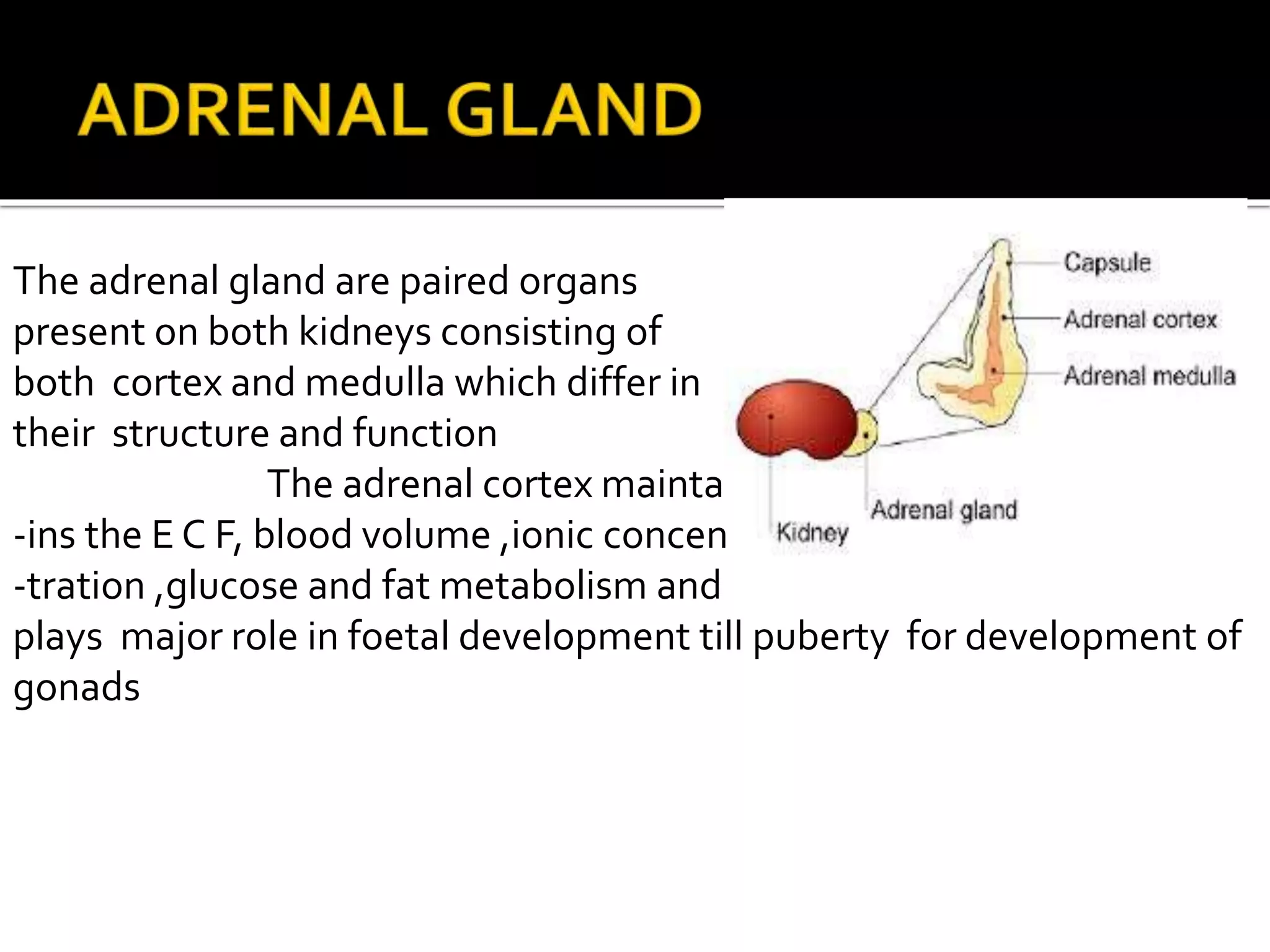
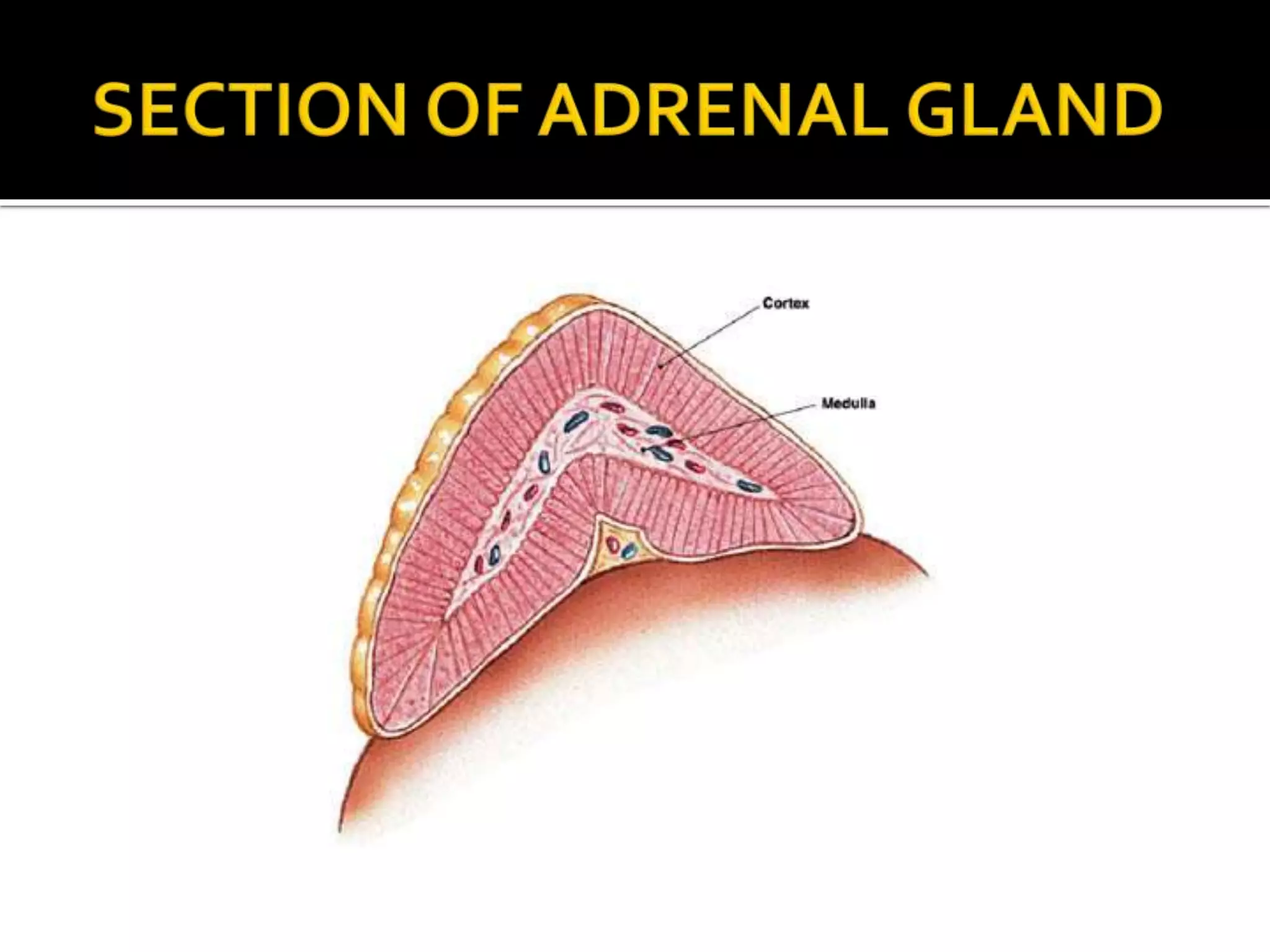
The adrenal gland are paired organs
present on both kidneys consisting of
both cortex and medulla which differ in
their structure and function
The adrenal cortex mainta
-ins the E C F, blood volume ,ionic concen
-tration ,glucose and fat metabolism and
plays major role in foetal development till puberty for development of
gonads
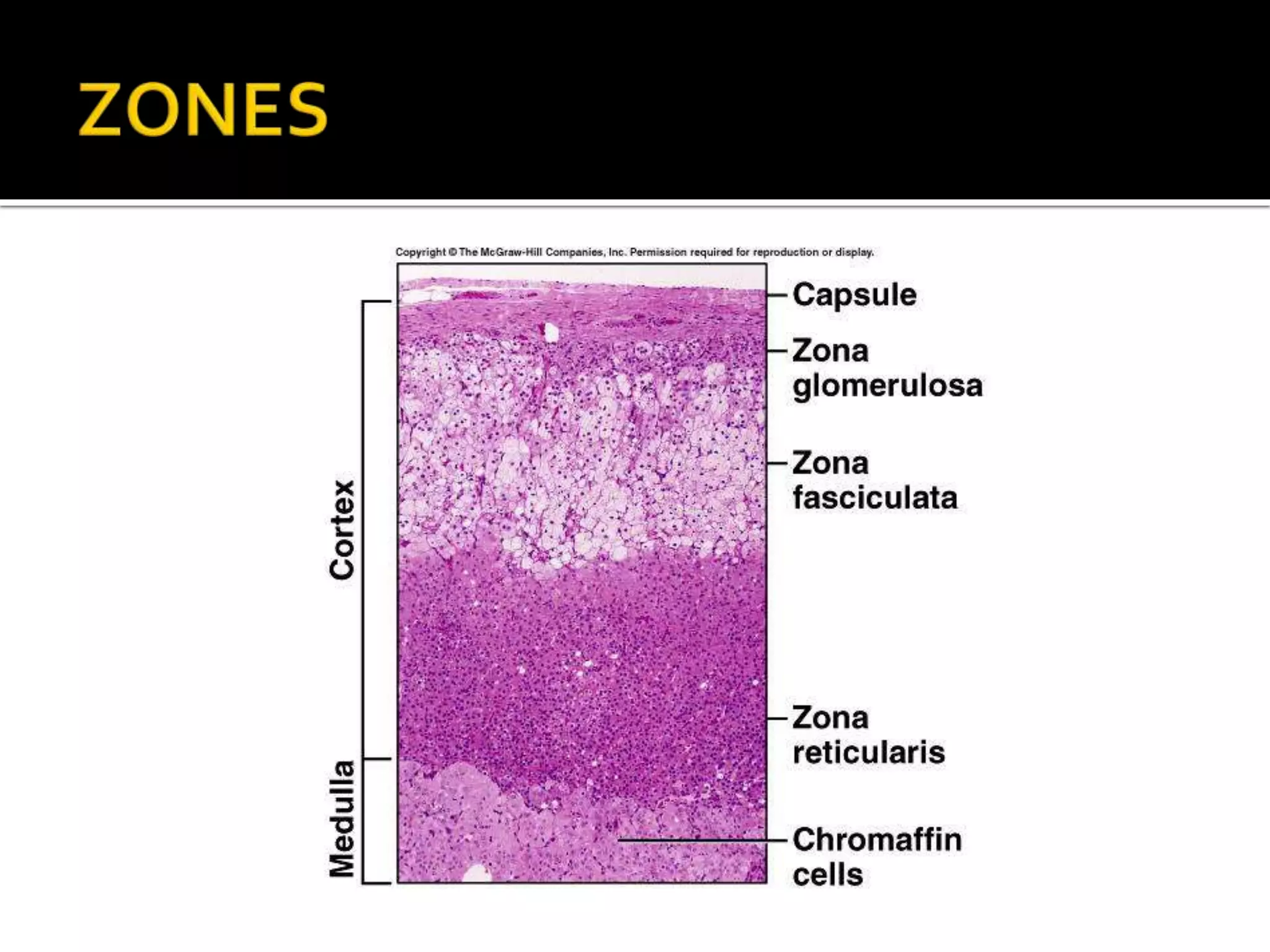
 Zone of glomerulosa... Secretes
minerocorticoids
 zone of fasciculata..... Secretes
glucocorticoids
 Zone of reticularis....secretes
androgens
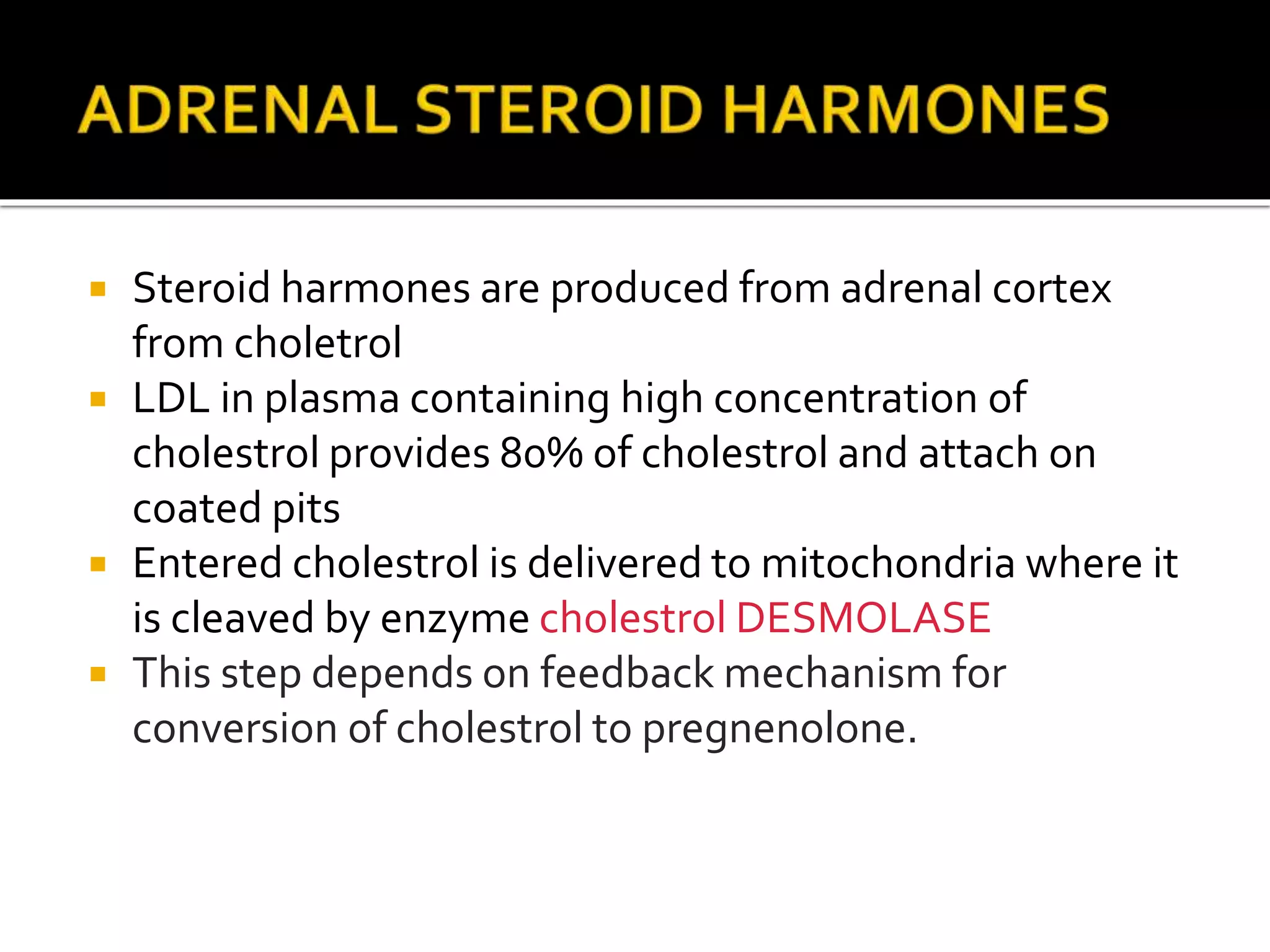
 Steroid harmones are produced from adrenal cortex
from choletrol
 LDL in plasma containing high concentration of
cholestrol provides 80% of cholestrol and attach on
coated pits
 Entered cholestrol is delivered to mitochondria where it
is cleaved by enzyme cholestrol DESMOLASE
 This step depends on feedback mechanism for
conversion of cholestrol to pregnenolone.
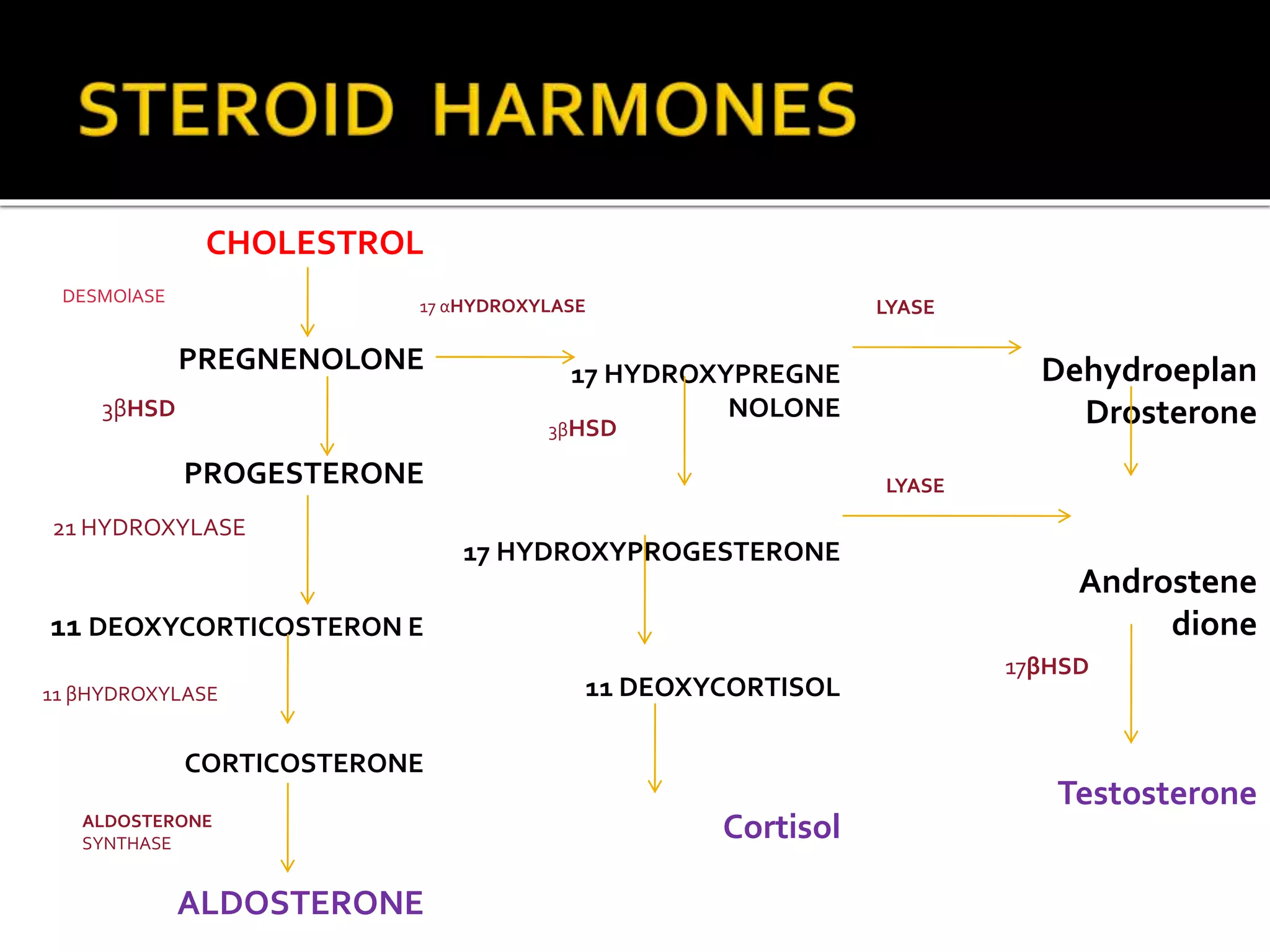
CHOLESTROL
PREGNENOLONE
PROGESTERONE
11 DEOXYCORTICOSTERON E
CORTICOSTERONE
ALDOSTERONE
17 HYDROXYPREGNE
NOLONE
17 HYDROXYPROGESTERONE
11 DEOXYCORTISOL
Cortisol
Dehydroeplan
Drosterone
Androstene
dione
Testosterone
DESMOlASE
3βHSD
21 HYDROXYLASE
11 βHYDROXYLASE
ALDOSTERONE
SYNTHASE
17 αHYDROXYLASE LYASE
LYASE
3βHSD
17βHSD
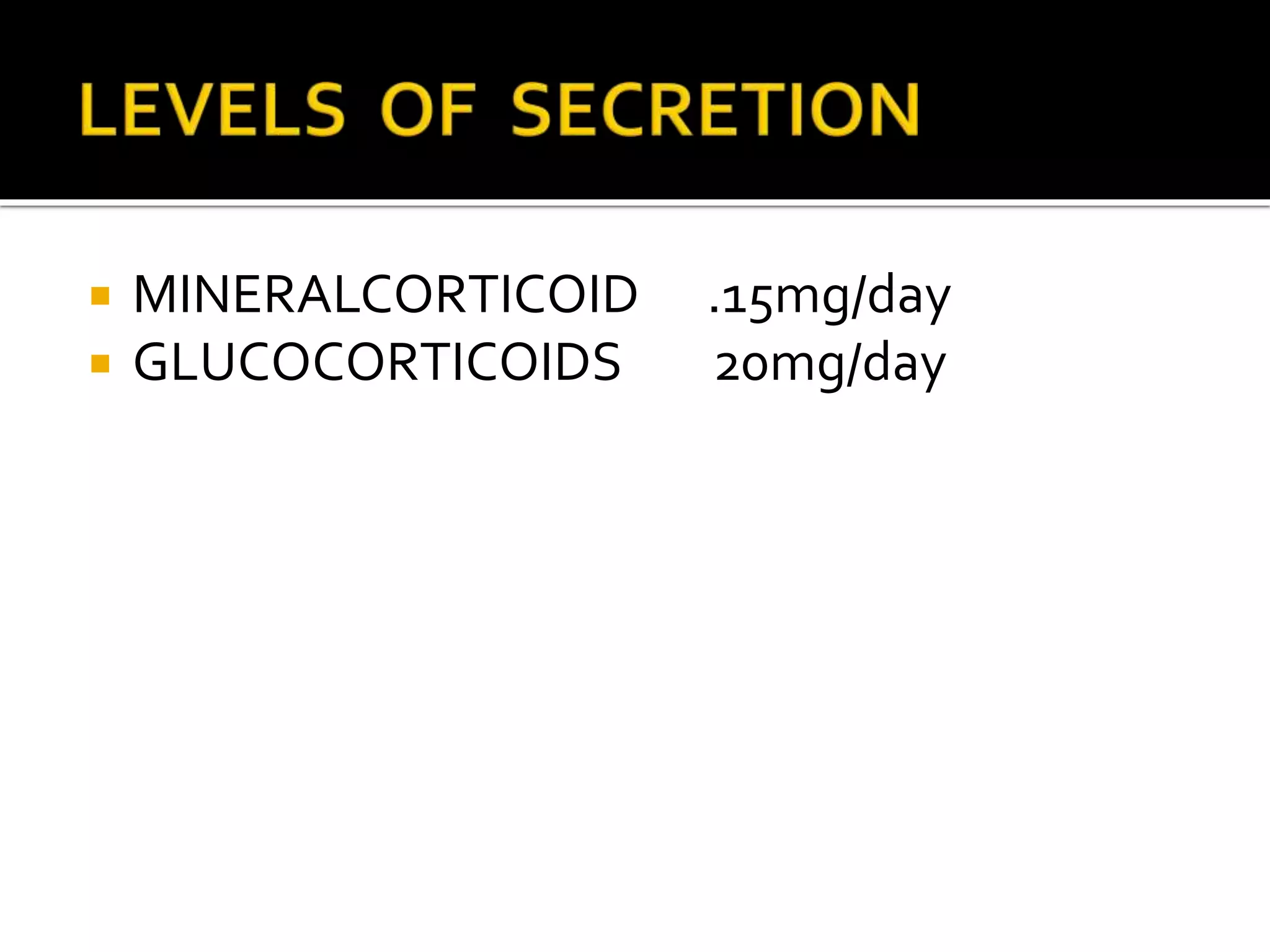
 MINERALCORTICOID .15mg/day
 GLUCOCORTICOIDS 20mg/day
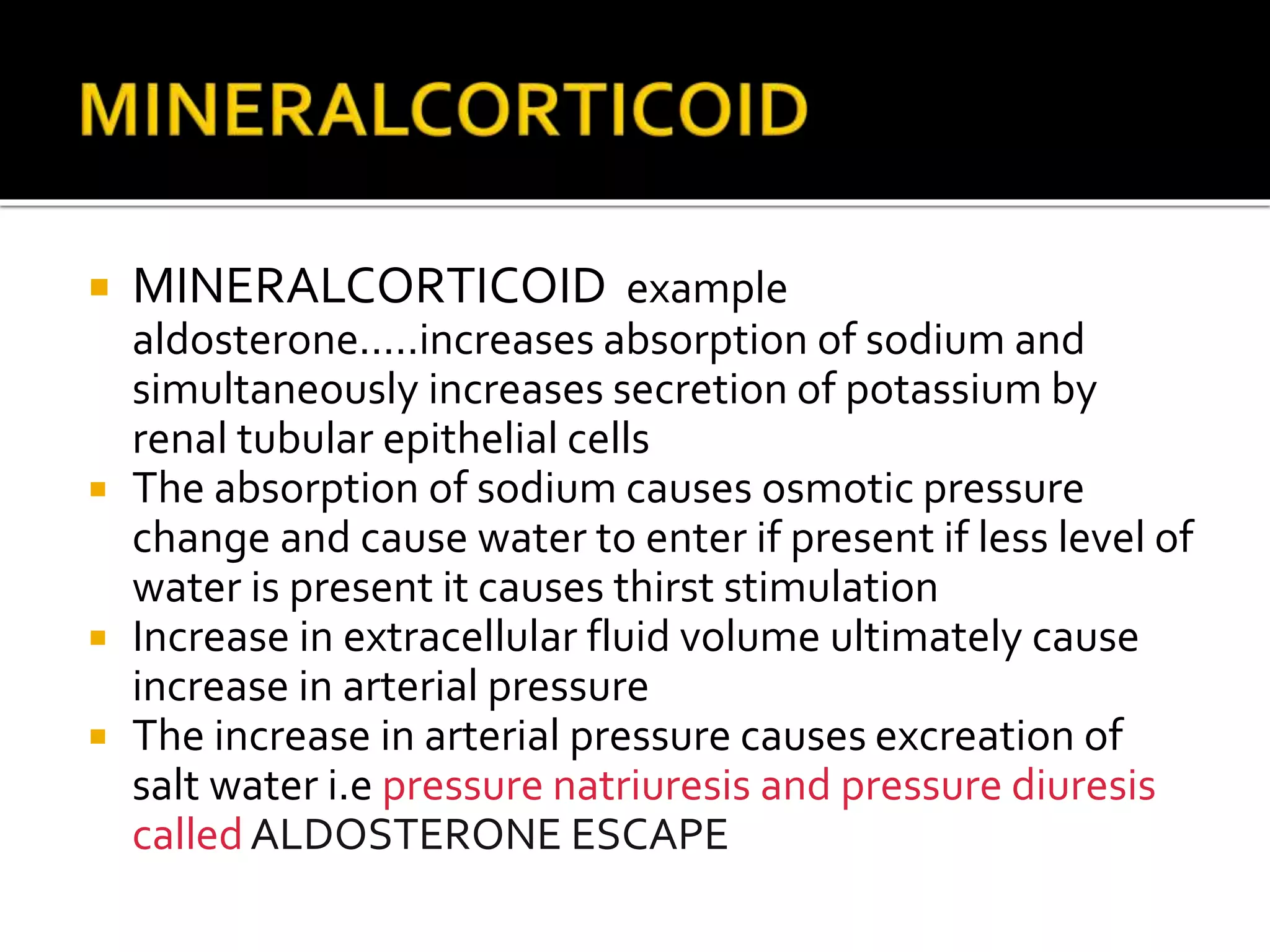
 MINERALCORTICOID example
aldosterone.....increases absorption of sodium and
simultaneously increases secretion of potassium by
renal tubular epithelial cells
 The absorption of sodium causes osmotic pressure
change and cause water to enter if present if less level of
water is present it causes thirst stimulation
 Increase in extracellular fluid volume ultimately cause
increase in arterial pressure
 The increase in arterial pressure causes excreation of
salt water i.e pressure natriuresis and pressure diuresis
calledALDOSTERONE ESCAPE
 The aldosterone when enters in cell
cytoplasm combines with highly receptor
protein that will ultimately form m RNA to
the process of sodium and potassium
transport.
 The diffusion of RNA into cytoplasm cause
formation of membrane transport protein for
exchange of sodium potassium and hydrogen
through cell in renal tubules.
 Increased potassium ion concentration in the
extracellular fluid increases aldosterone
secretion
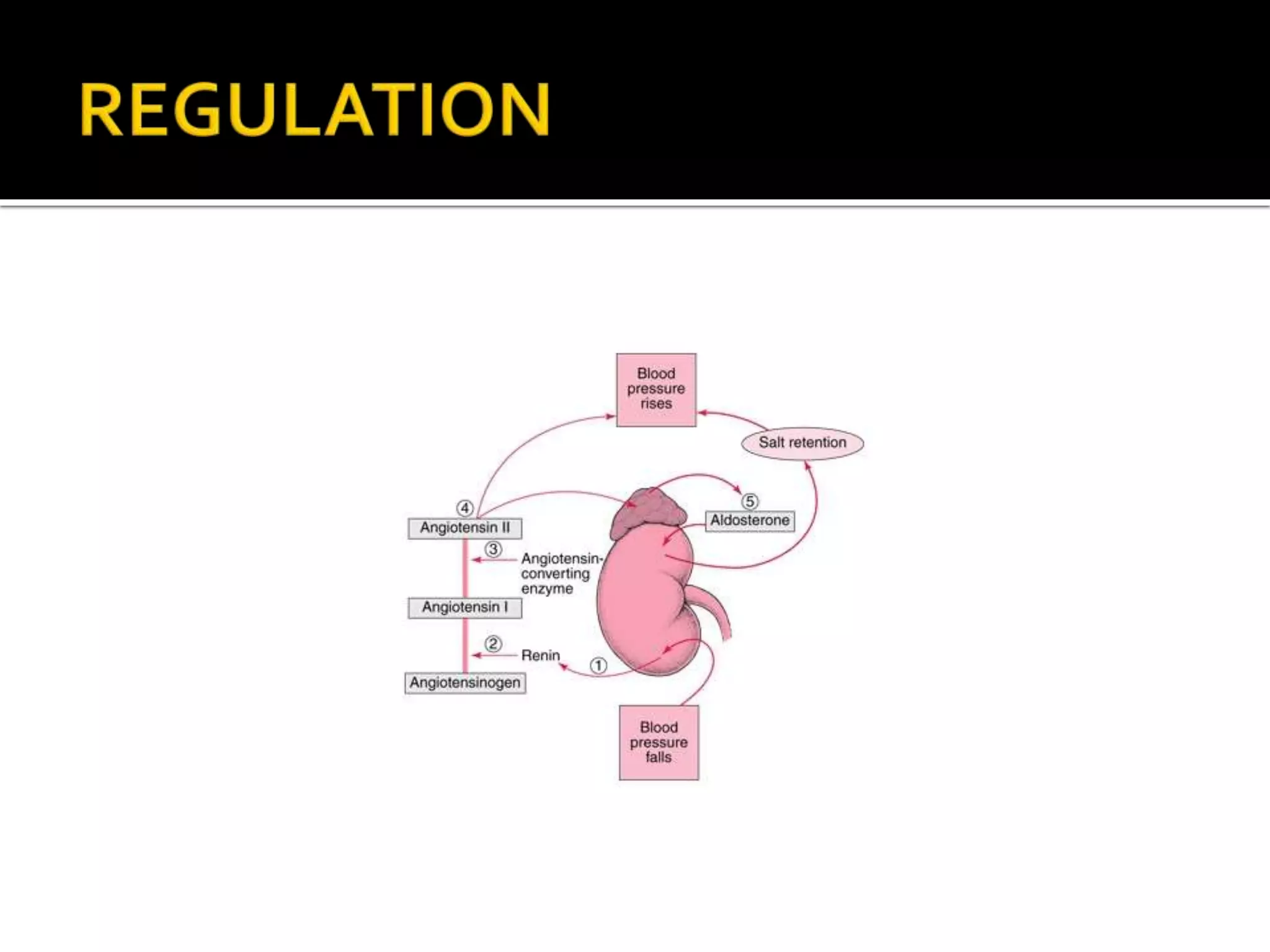
 Increased activity of renin angiotensin system
also increases aldosterone secretion
 Increased sodium level in E.C.F
 ACTH has low effcet to release aldosterone
 Glucocorticoids released from zone of fasciculata which
helps in carbohydrate ,protein and fat metabolism.
 Carbohydrate metabolism
 Glucocorticoids cause stimulation of gluconeogenesis i.e
formation of carbohydrate from protein and some other
substances by liver
 Mobilization of amino acids from muscles to cause more
gluconeogenesis
 Protein metabolism
 Reduction of protein stores in all parts of body except liver
which is caused by cortisol [increased catabolism of
protein]
 The increased amino acid from muscle cells cause increase
in synthesis of plasma protein from hepatic cells in liver.
 Fat metabolism
 Cortisol enhances the oxidation of fatty acids in the cell hence
cause fat mobilization which helps in shift the metabolic system
of cells utilization of glucose for energy to utilize fats in times of
starvation or other stresses
 RESULTS UNKNOWN FOR INCREASE IN RED CELLS AND
DECREASE IN IMMUNE CELLS
 The excess cortisol secretion by adrenal gland cause
polycythemia and also when adrenal gland secrets no cortisol
cause anemia
 TheT cells and antibodies release from lymphoid tissue is
decreased due to cortisol secretion from adrenal gland hence
decrease in immunity but ability of cortisol to suppress immunity
which acts as a drug in preventing immunological rejection of
transplanted hearts ,kidney etc
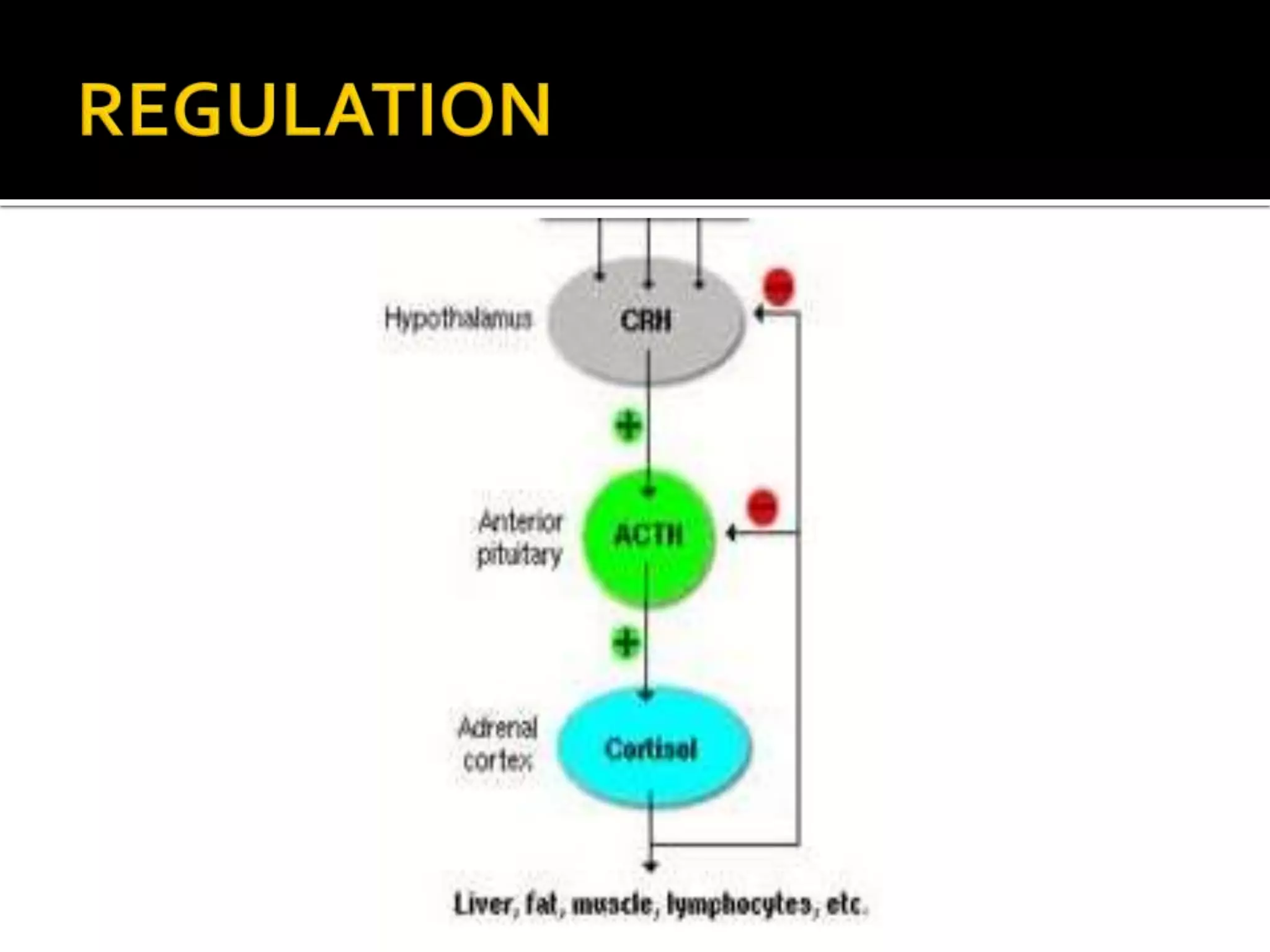
ACTH also called corticotropin or
adrenocorticotropin harmone secreted by
anterior pituatry which is controlled by releasing
factor of hypothalamus [corticotropin releasing
factor CRF].The ACTH cause activation of adenyl
cyclase in adrenal cells which cause formation of
CAMP
Which cause activation of protein kinase which
causes conversion of cholestrol to pregnenolone
which regulates synthesis of adrenocorticoid
harmones
 Androgens are sex harmones which are secreted from
zone of reticularis like dehydroepiandrosterone,
progesterone and estrogen etc
 Secretes during fetal development, sexual organ
development and secondary sexual characteristics
 Testosterone cause descent of testis in scrotum
 Hypertrophy of laryngeal mucosa and develops
masculine voice
 Testosterone cause protein formation and there
deposition in the skin which causes muscle
development
 Estrogen is released in females and progestrone cause
mantainance of pregnancy in females
Adrenal cortex ppt

Adrenal cortex ppt

  • 1.
    BY MOHAMMAD AMIN (M.Sc ClinicalBiochemistry) UNIVERSITY OF KASHMIR .. ameendelina@gmail.com
  • 2.
    The adrenal glandare paired organs present on both kidneys consisting of both cortex and medulla which differ in their structure and function The adrenal cortex mainta -ins the E C F, blood volume ,ionic concen -tration ,glucose and fat metabolism and plays major role in foetal development till puberty for development of gonads
  • 5.
     Zone ofglomerulosa... Secretes minerocorticoids  zone of fasciculata..... Secretes glucocorticoids  Zone of reticularis....secretes androgens
  • 6.
     Steroid harmonesare produced from adrenal cortex from choletrol  LDL in plasma containing high concentration of cholestrol provides 80% of cholestrol and attach on coated pits  Entered cholestrol is delivered to mitochondria where it is cleaved by enzyme cholestrol DESMOLASE  This step depends on feedback mechanism for conversion of cholestrol to pregnenolone.
  • 7.
    CHOLESTROL PREGNENOLONE PROGESTERONE 11 DEOXYCORTICOSTERON E CORTICOSTERONE ALDOSTERONE 17HYDROXYPREGNE NOLONE 17 HYDROXYPROGESTERONE 11 DEOXYCORTISOL Cortisol Dehydroeplan Drosterone Androstene dione Testosterone DESMOlASE 3βHSD 21 HYDROXYLASE 11 βHYDROXYLASE ALDOSTERONE SYNTHASE 17 αHYDROXYLASE LYASE LYASE 3βHSD 17βHSD
  • 8.
     MINERALCORTICOID .15mg/day GLUCOCORTICOIDS 20mg/day
  • 9.
     MINERALCORTICOID example aldosterone.....increasesabsorption of sodium and simultaneously increases secretion of potassium by renal tubular epithelial cells  The absorption of sodium causes osmotic pressure change and cause water to enter if present if less level of water is present it causes thirst stimulation  Increase in extracellular fluid volume ultimately cause increase in arterial pressure  The increase in arterial pressure causes excreation of salt water i.e pressure natriuresis and pressure diuresis calledALDOSTERONE ESCAPE
  • 10.
     The aldosteronewhen enters in cell cytoplasm combines with highly receptor protein that will ultimately form m RNA to the process of sodium and potassium transport.  The diffusion of RNA into cytoplasm cause formation of membrane transport protein for exchange of sodium potassium and hydrogen through cell in renal tubules.
  • 11.
     Increased potassiumion concentration in the extracellular fluid increases aldosterone secretion  Increased activity of renin angiotensin system also increases aldosterone secretion  Increased sodium level in E.C.F  ACTH has low effcet to release aldosterone
  • 13.
     Glucocorticoids releasedfrom zone of fasciculata which helps in carbohydrate ,protein and fat metabolism.  Carbohydrate metabolism  Glucocorticoids cause stimulation of gluconeogenesis i.e formation of carbohydrate from protein and some other substances by liver  Mobilization of amino acids from muscles to cause more gluconeogenesis  Protein metabolism  Reduction of protein stores in all parts of body except liver which is caused by cortisol [increased catabolism of protein]  The increased amino acid from muscle cells cause increase in synthesis of plasma protein from hepatic cells in liver.
  • 14.
     Fat metabolism Cortisol enhances the oxidation of fatty acids in the cell hence cause fat mobilization which helps in shift the metabolic system of cells utilization of glucose for energy to utilize fats in times of starvation or other stresses  RESULTS UNKNOWN FOR INCREASE IN RED CELLS AND DECREASE IN IMMUNE CELLS  The excess cortisol secretion by adrenal gland cause polycythemia and also when adrenal gland secrets no cortisol cause anemia  TheT cells and antibodies release from lymphoid tissue is decreased due to cortisol secretion from adrenal gland hence decrease in immunity but ability of cortisol to suppress immunity which acts as a drug in preventing immunological rejection of transplanted hearts ,kidney etc
  • 15.
    ACTH also calledcorticotropin or adrenocorticotropin harmone secreted by anterior pituatry which is controlled by releasing factor of hypothalamus [corticotropin releasing factor CRF].The ACTH cause activation of adenyl cyclase in adrenal cells which cause formation of CAMP Which cause activation of protein kinase which causes conversion of cholestrol to pregnenolone which regulates synthesis of adrenocorticoid harmones
  • 17.
     Androgens aresex harmones which are secreted from zone of reticularis like dehydroepiandrosterone, progesterone and estrogen etc  Secretes during fetal development, sexual organ development and secondary sexual characteristics  Testosterone cause descent of testis in scrotum  Hypertrophy of laryngeal mucosa and develops masculine voice  Testosterone cause protein formation and there deposition in the skin which causes muscle development  Estrogen is released in females and progestrone cause mantainance of pregnancy in females