Treatology
By-
Dr. Dinesh C. Sharma,
Head, Zoology
K.M. Govt. Girls P. G. College,
Badalpur, G.B. Nagar
dr_dineshsharma@hotmail.com
Teratology-
• Causes of abnormal development,
• Therapeutic drugs as teratogens,
• Drug testing,
• Experimental teratology.
The scientific study of congenital abnormalities
and abnormal formations.
Teratology is the study of abnormalities
of physiological development. It is often thought
of as the study of human congenital
abnormalities, but it is broader than that, taking
into account other non-birth developmental
stages, including puberty; and other organisms,
including plants. The related term developmental
toxicity includes all manifestations of abnormal
development that are caused by environmental
insult. These may include growth retardation,
delayed mental development or
other congenital disorders without any
structural malformations.
Teratogens are substances
that may cause birth
defects via a toxic effect on
an embryo or fetus
Teratogenesis- Study and
understanding of teratogenic agents
and their effects on developing
organisms:
The Six Principles of Teratology were
put forth by Jim Wilson in 1959 and in
his monograph Environment and Birth
Defects.
1. Susceptibility to teratogenesis depends on
the genotype of the conceptus (The conceptus
includes all structures that develop from the zygote,
both embryonic and extraembryonic. It includes the
embryo as well as the embryonic part of the placenta
and its associated membranes - amnion, chorion, and
yolk sac) and the manner in which this interacts with
adverse environmental factors.
2. Susceptibility to teratogenesis varies with the
developmental stage at the time of exposure to an
adverse influence. There are critical periods of
susceptibility to agents and organ systems affected by
these agents.
3. Teratogenic agents act in specific ways on developing
cells and tissues to initiate sequences of abnormal
developmental events.
4. The access of adverse influences to developing tissues
depends on the nature of the influence. Several factors
affect the ability of a teratogen to contact a developing
conceptus, such as the nature of the agent itself, route
and degree of maternal exposure, rate of placental
transfer and systemic absorption, and composition of
the maternal and embryonic/fetal genotypes.
5. There are four manifestations of deviant development
(Death, Malformation, Growth Retardation and
Functional Defect).
6. Manifestations of deviant development increase in
frequency and degree as dosage increases from the No
Observable Adverse Effect Level (NOAEL) to a dose
producing 100% Lethality (LD100).
Drug testing
Studies designed to test the
teratogenic potential of
environmental agents use animal
model systems (e.g., rat, mouse,
rabbit, dog, and monkey).
Genetically modified mice are commonly used for
this purpose. In addition, pregnancy registries are
large, prospective studies that monitor exposures
women receive during their pregnancies and
record the outcome of their births. These studies
provide information about possible risks of
medications or other exposures in human
pregnancies.
Understanding how a teratogen causes its effect
is not only important in preventing congenital
abnormalities but also has the potential for
developing new therapeutic drugs safe for use with
pregnant women.
Genetically modified mice are commonly used for
this purpose. In addition, pregnancy registries are
large, prospective studies that monitor exposures
women receive during their pregnancies and
record the outcome of their births. These studies
provide information about possible risks of
medications or other exposures in human
pregnancies.
Understanding how a teratogen causes its effect
is not only important in preventing congenital
abnormalities but also has the potential for
developing new therapeutic drugs safe for use with
pregnant women.
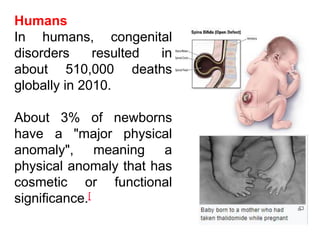
Humans
In humans, congenital
disorders resulted in
about 510,000 deaths
globally in 2010.
About 3% of newborns
have a "major physical
anomaly", meaning a
physical anomaly that has
cosmetic or functional
significance.[
Causes
of
abnormal
development
Causes of teratogenesis can broadly be classified
as:
1. Toxic substances, such as, for
humans, drugs in
pregnancy and environmental toxins in
pregnancy.
1. Potassium iodide is a possible teratogen.
Chronic overexposure of KI can have
adverse effects on the thyroid.
2. Vertically transmitted infection- an infection
caused by pathogens that uses mother-to-
child transmission, that is, transmission
directly from the mother to an embryo, fetus, or
baby during pregnancy or childbirth.
4. Lack of nutrients. For example, lack of
folate acid in the nutrition in pregnancy for
humans can result in spina bifida. Folic is
added to processed food products, such as
flour and breakfast cereals. High levels of
un-metabolized folic acid have been
associated with several health problems.
5. Physical restraint. An example is Potter
syndrome due to oligohydramnios
(deficiency of amniotic fluid) in humans.
6. Genetic disorders
7. Alcohol consumption during pregnancy.
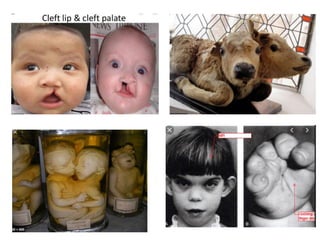
Phocomelia
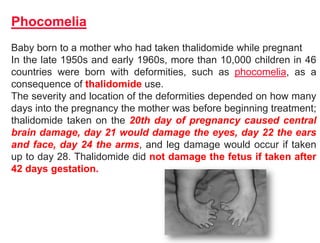
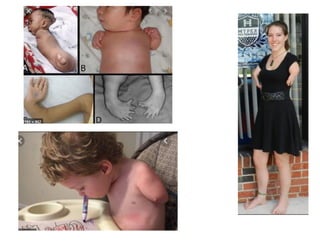
Baby born to a mother who had taken thalidomide while pregnant
In the late 1950s and early 1960s, more than 10,000 children in 46
countries were born with deformities, such as phocomelia, as a
consequence of thalidomide use.
The severity and location of the deformities depended on how many
days into the pregnancy the mother was before beginning treatment;
thalidomide taken on the 20th day of pregnancy caused central
brain damage, day 21 would damage the eyes, day 22 the ears
and face, day 24 the arms, and leg damage would occur if taken
up to day 28. Thalidomide did not damage the fetus if taken after
42 days gestation.
Therapeutic drugs
as
teratogens
Therapeutic drugs as teratogens
Teratogenic drugs: A teratogen is an agent
that can disturb the development of the
embryo or fetus. Teratogens halt
the pregnancy or produce a congenital
malformation (a birth defect).
Classes of teratogens include radiation,
maternal infections, chemicals, and drugs.
• ACE (angiotensin converting enzyme-
treating high blood pressure)
Acne medication isotretinoin (Accuta, Retin-A).
• Alcohol ingested chronically or in binges.
• Androgens (male hormones).
• Antibiotics tetracycline (Achromycin),
and doxycycline (Vibramycin), and
streptomycin.
• Anticoagulant (blood-
thinner) warfarin (Coumadin)
• Anticonvulsants (seizure medications)
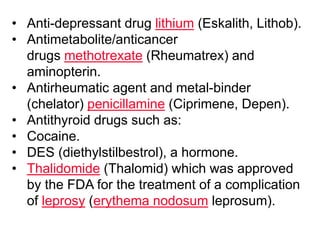
• Anti-depressant drug lithium (Eskalith, Lithob).
• Antimetabolite/anticancer
drugs methotrexate (Rheumatrex) and
aminopterin.
• Antirheumatic agent and metal-binder
(chelator) penicillamine (Ciprimene, Depen).
• Antithyroid drugs such as:
• Cocaine.
• DES (diethylstilbestrol), a hormone.
• Thalidomide (Thalomid) which was approved
by the FDA for the treatment of a complication
of leprosy (erythema nodosum leprosum).
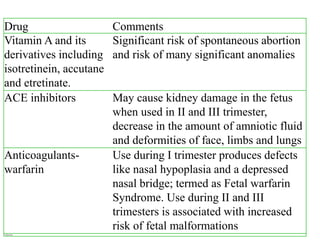
Drug Comments
Vitamin A and its
derivatives including
isotretinein, accutane
and etretinate.
Significant risk of spontaneous abortion
and risk of many significant anomalies
ACE inhibitors May cause kidney damage in the fetus
when used in II and III trimester,
decrease in the amount of amniotic fluid
and deformities of face, limbs and lungs
Anticoagulants-
warfarin
Use during I trimester produces defects
like nasal hypoplasia and a depressed
nasal bridge; termed as Fetal warfarin
Syndrome. Use during II and III
trimesters is associated with increased
risk of fetal malformations
Tolbutamide
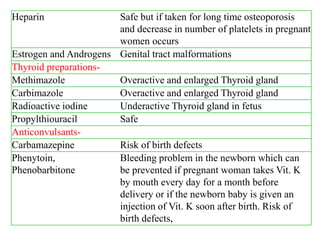
Heparin Safe but if taken for long time osteoporosis
and decrease in number of platelets in pregnant
women occurs
Estrogen and Androgens Genital tract malformations
Thyroid preparations-
Methimazole Overactive and enlarged Thyroid gland
Carbimazole Overactive and enlarged Thyroid gland
Radioactive iodine Underactive Thyroid gland in fetus
Propylthiouracil Safe
Anticonvulsants-
Carbamazepine Risk of birth defects
Phenytoin,
Phenobarbitone
Bleeding problem in the newborn which can
be prevented if pregnant woman takes Vit. K
by mouth every day for a month before
delivery or if the newborn baby is given an
injection of Vit. K soon after birth. Risk of
birth defects,
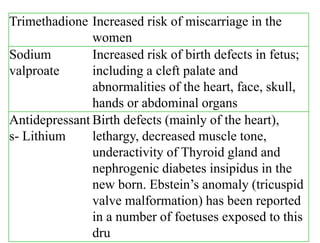
Trimethadione Increased risk of miscarriage in the
women
Sodium
valproate
Increased risk of birth defects in fetus;
including a cleft palate and
abnormalities of the heart, face, skull,
hands or abdominal organs
Antidepressant
s- Lithium
Birth defects (mainly of the heart),
lethargy, decreased muscle tone,
underactivity of Thyroid gland and
nephrogenic diabetes insipidus in the
new born. Ebstein’s anomaly (tricuspid
valve malformation) has been reported
in a number of foetuses exposed to this
dru
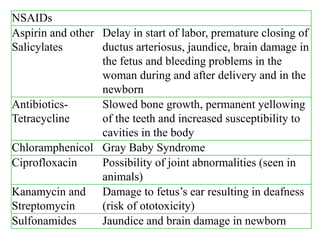
NSAIDs
Aspirin and other
Salicylates
Delay in start of labor, premature closing of
ductus arteriosus, jaundice, brain damage in
the fetus and bleeding problems in the
woman during and after delivery and in the
newborn
Antibiotics-
Tetracycline
Slowed bone growth, permanent yellowing
of the teeth and increased susceptibility to
cavities in the body
Chloramphenicol Gray Baby Syndrome
Ciprofloxacin Possibility of joint abnormalities (seen in
animals)
Kanamycin and
Streptomycin
Damage to fetus’s ear resulting in deafness
(risk of ototoxicity)
Sulfonamides Jaundice and brain damage in newborn
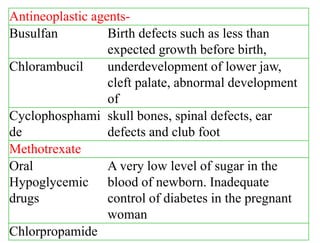
Antineoplastic agents-
Busulfan Birth defects such as less than
expected growth before birth,
Chlorambucil underdevelopment of lower jaw,
cleft palate, abnormal development
of
Cyclophosphami
de
skull bones, spinal defects, ear
defects and club foot
Methotrexate
Oral
Hypoglycemic
drugs
A very low level of sugar in the
blood of newborn. Inadequate
control of diabetes in the pregnant
woman
Chlorpropamide
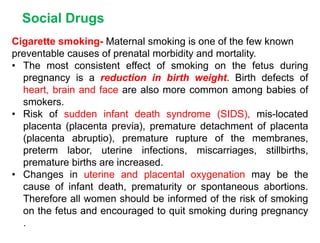
Social Drugs
Cigarette smoking- Maternal smoking is one of the few known
preventable causes of prenatal morbidity and mortality.
• The most consistent effect of smoking on the fetus during
pregnancy is a reduction in birth weight. Birth defects of
heart, brain and face are also more common among babies of
smokers.
• Risk of sudden infant death syndrome (SIDS), mis-located
placenta (placenta previa), premature detachment of placenta
(placenta abruptio), premature rupture of the membranes,
preterm labor, uterine infections, miscarriages, stillbirths,
premature births are increased.
• Changes in uterine and placental oxygenation may be the
cause of infant death, prematurity or spontaneous abortions.
Therefore all women should be informed of the risk of smoking
on the fetus and encouraged to quit smoking during pregnancy
.
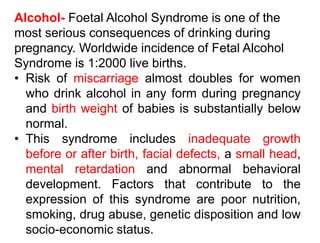
Alcohol- Foetal Alcohol Syndrome is one of the
most serious consequences of drinking during
pregnancy. Worldwide incidence of Fetal Alcohol
Syndrome is 1:2000 live births.
• Risk of miscarriage almost doubles for women
who drink alcohol in any form during pregnancy
and birth weight of babies is substantially below
normal.
• This syndrome includes inadequate growth
before or after birth, facial defects, a small head,
mental retardation and abnormal behavioral
development. Factors that contribute to the
expression of this syndrome are poor nutrition,
smoking, drug abuse, genetic disposition and low
socio-economic status.
Caffeine- Caffeine is found in various quantities in
many beverages, analgesics, diet aids and stimulants,
Hence it is the most commonly ingested drug during
pregnancy.
• Evidence suggests that consuming caffeine during
pregnancy poses little or no risk to the fetus. Caffeine
contained in coffee, tea, some sodas, chocolates and
some drugs is a stimulant that readily crosses the
placenta to the fetus.
• If taken in high dose it may stimulate the fetus
increasing heart and breathing rate .
• Caffeine also may decrease blood flow across
placenta and decrease the absorption of iron;
increasing risk of anemia.
ILLICT drugs- Use of illicit drugs like cocaine and
opioids during pregnancy can cause complications and
serious problems in the developing fetus and the
newborn.
• Growth of fetus is likely to be inadequate and
premature birth defects are more common.
• Cocaine crosses the placenta, constricts the blood
vessels reducing blood flow to the fetus. The reduced
blood and oxygen supply to the fetus slows the growth
of bones and intestine.
• Use of cocaine can also cause complications during
pregnancy. Among women who use cocaine
throughout pregnancy, 31% have preterm delivery and
15% have premature detachment of placenta. The
chances of miscarriage also increase
Experimental
teratology
Experimental teratology in the modern sense can
be said to have begun in the 1940s when Warkany et
al. (Warkany and Nelson, 1940; Warkany and
Schraffenberger, 1947; and others) first forcefully
called attention to the fact that environmental
factors such as maternal dietary deficiencies and
X-irradiation could adversely affect intrauterine
development in mammals.
Earlier studies in which amphibian, fish, and chick
embryos had been subjected to altered environments
had shown these forms also to be quite susceptible
to unfavorable influences during development, but
experiments of this type were not generally
accepted as purporting similar vulnerability for higher
animals.
It was widely assumed in biology and in medicine that
the mammalian embryo developed within the
virtually impervious shelter of the uterus and the
maternal body where it was protected from extrinsic
factors. This view was consistent with the generally held
opinion that most aspects of normal as well as abnormal
development were genetically determined, after the
rediscovery of the Mendelian principles of inheritance at
the beginning of the twentieth century.
Although there were published accounts that terata had
been observed after exposure of pregnant women and
animals to ionizing radiations (Goldstein and Murphy,
1929), the fundamental implication that mammalian
embryos were susceptible to environmental factors was
not immediately grasped.
Despite its cost in human suffering, the thalidomide catastrophe
can be regarded as having long-range benefits for mankind. It
called attention to the fact, as had no other prior event, that
human and other mammalian embryos can be highly
vulnerable to certain environmental agents even though
these have negligible or no toxic effects in postnatal
individuals. This realization has, of course, given great impetus
to the science of teratology; but it has also spread wavelike
through other scientific disciplines, through the chemical and
pharmaceutical industries, and into many governmental
regulatory agencies. It has resulted in the formulation of safety
evaluation procedures to estimate risks to the unborn where none
existed previously. It has raised questions about possible adverse
effects on intrauterine development from new environmental
changes, as well as from conditions in man's surroundings that
have long been accepted without concern. It has even introduced
caution into what at times has surely been indiscriminate use of
medication during human pregnancy.

Teratology

  • 1.
    Treatology By- Dr. Dinesh C.Sharma, Head, Zoology K.M. Govt. Girls P. G. College, Badalpur, G.B. Nagar dr_dineshsharma@hotmail.com
  • 2.
    Teratology- • Causes ofabnormal development, • Therapeutic drugs as teratogens, • Drug testing, • Experimental teratology. The scientific study of congenital abnormalities and abnormal formations.
  • 3.
    Teratology is thestudy of abnormalities of physiological development. It is often thought of as the study of human congenital abnormalities, but it is broader than that, taking into account other non-birth developmental stages, including puberty; and other organisms, including plants. The related term developmental toxicity includes all manifestations of abnormal development that are caused by environmental insult. These may include growth retardation, delayed mental development or other congenital disorders without any structural malformations.
  • 4.
    Teratogens are substances thatmay cause birth defects via a toxic effect on an embryo or fetus
  • 5.
    Teratogenesis- Study and understandingof teratogenic agents and their effects on developing organisms: The Six Principles of Teratology were put forth by Jim Wilson in 1959 and in his monograph Environment and Birth Defects.
  • 6.
    1. Susceptibility toteratogenesis depends on the genotype of the conceptus (The conceptus includes all structures that develop from the zygote, both embryonic and extraembryonic. It includes the embryo as well as the embryonic part of the placenta and its associated membranes - amnion, chorion, and yolk sac) and the manner in which this interacts with adverse environmental factors. 2. Susceptibility to teratogenesis varies with the developmental stage at the time of exposure to an adverse influence. There are critical periods of susceptibility to agents and organ systems affected by these agents. 3. Teratogenic agents act in specific ways on developing cells and tissues to initiate sequences of abnormal developmental events.
  • 7.
    4. The accessof adverse influences to developing tissues depends on the nature of the influence. Several factors affect the ability of a teratogen to contact a developing conceptus, such as the nature of the agent itself, route and degree of maternal exposure, rate of placental transfer and systemic absorption, and composition of the maternal and embryonic/fetal genotypes. 5. There are four manifestations of deviant development (Death, Malformation, Growth Retardation and Functional Defect). 6. Manifestations of deviant development increase in frequency and degree as dosage increases from the No Observable Adverse Effect Level (NOAEL) to a dose producing 100% Lethality (LD100).
  • 8.
    Drug testing Studies designedto test the teratogenic potential of environmental agents use animal model systems (e.g., rat, mouse, rabbit, dog, and monkey).
  • 9.
    Genetically modified miceare commonly used for this purpose. In addition, pregnancy registries are large, prospective studies that monitor exposures women receive during their pregnancies and record the outcome of their births. These studies provide information about possible risks of medications or other exposures in human pregnancies. Understanding how a teratogen causes its effect is not only important in preventing congenital abnormalities but also has the potential for developing new therapeutic drugs safe for use with pregnant women.
  • 10.
    Genetically modified miceare commonly used for this purpose. In addition, pregnancy registries are large, prospective studies that monitor exposures women receive during their pregnancies and record the outcome of their births. These studies provide information about possible risks of medications or other exposures in human pregnancies. Understanding how a teratogen causes its effect is not only important in preventing congenital abnormalities but also has the potential for developing new therapeutic drugs safe for use with pregnant women.
  • 11.
    Humans In humans, congenital disordersresulted in about 510,000 deaths globally in 2010. About 3% of newborns have a "major physical anomaly", meaning a physical anomaly that has cosmetic or functional significance.[
  • 12.
  • 13.
    Causes of teratogenesiscan broadly be classified as: 1. Toxic substances, such as, for humans, drugs in pregnancy and environmental toxins in pregnancy. 1. Potassium iodide is a possible teratogen. Chronic overexposure of KI can have adverse effects on the thyroid. 2. Vertically transmitted infection- an infection caused by pathogens that uses mother-to- child transmission, that is, transmission directly from the mother to an embryo, fetus, or baby during pregnancy or childbirth.
  • 14.
    4. Lack ofnutrients. For example, lack of folate acid in the nutrition in pregnancy for humans can result in spina bifida. Folic is added to processed food products, such as flour and breakfast cereals. High levels of un-metabolized folic acid have been associated with several health problems. 5. Physical restraint. An example is Potter syndrome due to oligohydramnios (deficiency of amniotic fluid) in humans. 6. Genetic disorders 7. Alcohol consumption during pregnancy.
  • 15.
    Phocomelia Baby born toa mother who had taken thalidomide while pregnant In the late 1950s and early 1960s, more than 10,000 children in 46 countries were born with deformities, such as phocomelia, as a consequence of thalidomide use. The severity and location of the deformities depended on how many days into the pregnancy the mother was before beginning treatment; thalidomide taken on the 20th day of pregnancy caused central brain damage, day 21 would damage the eyes, day 22 the ears and face, day 24 the arms, and leg damage would occur if taken up to day 28. Thalidomide did not damage the fetus if taken after 42 days gestation.
  • 17.
  • 18.
    Therapeutic drugs asteratogens Teratogenic drugs: A teratogen is an agent that can disturb the development of the embryo or fetus. Teratogens halt the pregnancy or produce a congenital malformation (a birth defect). Classes of teratogens include radiation, maternal infections, chemicals, and drugs.
  • 20.
    • ACE (angiotensinconverting enzyme- treating high blood pressure) Acne medication isotretinoin (Accuta, Retin-A). • Alcohol ingested chronically or in binges. • Androgens (male hormones). • Antibiotics tetracycline (Achromycin), and doxycycline (Vibramycin), and streptomycin. • Anticoagulant (blood- thinner) warfarin (Coumadin) • Anticonvulsants (seizure medications)
  • 21.
    • Anti-depressant druglithium (Eskalith, Lithob). • Antimetabolite/anticancer drugs methotrexate (Rheumatrex) and aminopterin. • Antirheumatic agent and metal-binder (chelator) penicillamine (Ciprimene, Depen). • Antithyroid drugs such as: • Cocaine. • DES (diethylstilbestrol), a hormone. • Thalidomide (Thalomid) which was approved by the FDA for the treatment of a complication of leprosy (erythema nodosum leprosum).
  • 22.
    Drug Comments Vitamin Aand its derivatives including isotretinein, accutane and etretinate. Significant risk of spontaneous abortion and risk of many significant anomalies ACE inhibitors May cause kidney damage in the fetus when used in II and III trimester, decrease in the amount of amniotic fluid and deformities of face, limbs and lungs Anticoagulants- warfarin Use during I trimester produces defects like nasal hypoplasia and a depressed nasal bridge; termed as Fetal warfarin Syndrome. Use during II and III trimesters is associated with increased risk of fetal malformations Tolbutamide
  • 23.
    Heparin Safe butif taken for long time osteoporosis and decrease in number of platelets in pregnant women occurs Estrogen and Androgens Genital tract malformations Thyroid preparations- Methimazole Overactive and enlarged Thyroid gland Carbimazole Overactive and enlarged Thyroid gland Radioactive iodine Underactive Thyroid gland in fetus Propylthiouracil Safe Anticonvulsants- Carbamazepine Risk of birth defects Phenytoin, Phenobarbitone Bleeding problem in the newborn which can be prevented if pregnant woman takes Vit. K by mouth every day for a month before delivery or if the newborn baby is given an injection of Vit. K soon after birth. Risk of birth defects,
  • 24.
    Trimethadione Increased riskof miscarriage in the women Sodium valproate Increased risk of birth defects in fetus; including a cleft palate and abnormalities of the heart, face, skull, hands or abdominal organs Antidepressant s- Lithium Birth defects (mainly of the heart), lethargy, decreased muscle tone, underactivity of Thyroid gland and nephrogenic diabetes insipidus in the new born. Ebstein’s anomaly (tricuspid valve malformation) has been reported in a number of foetuses exposed to this dru
  • 25.
    NSAIDs Aspirin and other Salicylates Delayin start of labor, premature closing of ductus arteriosus, jaundice, brain damage in the fetus and bleeding problems in the woman during and after delivery and in the newborn Antibiotics- Tetracycline Slowed bone growth, permanent yellowing of the teeth and increased susceptibility to cavities in the body Chloramphenicol Gray Baby Syndrome Ciprofloxacin Possibility of joint abnormalities (seen in animals) Kanamycin and Streptomycin Damage to fetus’s ear resulting in deafness (risk of ototoxicity) Sulfonamides Jaundice and brain damage in newborn
  • 26.
    Antineoplastic agents- Busulfan Birthdefects such as less than expected growth before birth, Chlorambucil underdevelopment of lower jaw, cleft palate, abnormal development of Cyclophosphami de skull bones, spinal defects, ear defects and club foot Methotrexate Oral Hypoglycemic drugs A very low level of sugar in the blood of newborn. Inadequate control of diabetes in the pregnant woman Chlorpropamide
  • 27.
    Social Drugs Cigarette smoking-Maternal smoking is one of the few known preventable causes of prenatal morbidity and mortality. • The most consistent effect of smoking on the fetus during pregnancy is a reduction in birth weight. Birth defects of heart, brain and face are also more common among babies of smokers. • Risk of sudden infant death syndrome (SIDS), mis-located placenta (placenta previa), premature detachment of placenta (placenta abruptio), premature rupture of the membranes, preterm labor, uterine infections, miscarriages, stillbirths, premature births are increased. • Changes in uterine and placental oxygenation may be the cause of infant death, prematurity or spontaneous abortions. Therefore all women should be informed of the risk of smoking on the fetus and encouraged to quit smoking during pregnancy .
  • 28.
    Alcohol- Foetal AlcoholSyndrome is one of the most serious consequences of drinking during pregnancy. Worldwide incidence of Fetal Alcohol Syndrome is 1:2000 live births. • Risk of miscarriage almost doubles for women who drink alcohol in any form during pregnancy and birth weight of babies is substantially below normal. • This syndrome includes inadequate growth before or after birth, facial defects, a small head, mental retardation and abnormal behavioral development. Factors that contribute to the expression of this syndrome are poor nutrition, smoking, drug abuse, genetic disposition and low socio-economic status.
  • 29.
    Caffeine- Caffeine isfound in various quantities in many beverages, analgesics, diet aids and stimulants, Hence it is the most commonly ingested drug during pregnancy. • Evidence suggests that consuming caffeine during pregnancy poses little or no risk to the fetus. Caffeine contained in coffee, tea, some sodas, chocolates and some drugs is a stimulant that readily crosses the placenta to the fetus. • If taken in high dose it may stimulate the fetus increasing heart and breathing rate . • Caffeine also may decrease blood flow across placenta and decrease the absorption of iron; increasing risk of anemia.
  • 30.
    ILLICT drugs- Useof illicit drugs like cocaine and opioids during pregnancy can cause complications and serious problems in the developing fetus and the newborn. • Growth of fetus is likely to be inadequate and premature birth defects are more common. • Cocaine crosses the placenta, constricts the blood vessels reducing blood flow to the fetus. The reduced blood and oxygen supply to the fetus slows the growth of bones and intestine. • Use of cocaine can also cause complications during pregnancy. Among women who use cocaine throughout pregnancy, 31% have preterm delivery and 15% have premature detachment of placenta. The chances of miscarriage also increase
  • 31.
  • 32.
    Experimental teratology inthe modern sense can be said to have begun in the 1940s when Warkany et al. (Warkany and Nelson, 1940; Warkany and Schraffenberger, 1947; and others) first forcefully called attention to the fact that environmental factors such as maternal dietary deficiencies and X-irradiation could adversely affect intrauterine development in mammals. Earlier studies in which amphibian, fish, and chick embryos had been subjected to altered environments had shown these forms also to be quite susceptible to unfavorable influences during development, but experiments of this type were not generally accepted as purporting similar vulnerability for higher animals.
  • 33.
    It was widelyassumed in biology and in medicine that the mammalian embryo developed within the virtually impervious shelter of the uterus and the maternal body where it was protected from extrinsic factors. This view was consistent with the generally held opinion that most aspects of normal as well as abnormal development were genetically determined, after the rediscovery of the Mendelian principles of inheritance at the beginning of the twentieth century. Although there were published accounts that terata had been observed after exposure of pregnant women and animals to ionizing radiations (Goldstein and Murphy, 1929), the fundamental implication that mammalian embryos were susceptible to environmental factors was not immediately grasped.
  • 34.
    Despite its costin human suffering, the thalidomide catastrophe can be regarded as having long-range benefits for mankind. It called attention to the fact, as had no other prior event, that human and other mammalian embryos can be highly vulnerable to certain environmental agents even though these have negligible or no toxic effects in postnatal individuals. This realization has, of course, given great impetus to the science of teratology; but it has also spread wavelike through other scientific disciplines, through the chemical and pharmaceutical industries, and into many governmental regulatory agencies. It has resulted in the formulation of safety evaluation procedures to estimate risks to the unborn where none existed previously. It has raised questions about possible adverse effects on intrauterine development from new environmental changes, as well as from conditions in man's surroundings that have long been accepted without concern. It has even introduced caution into what at times has surely been indiscriminate use of medication during human pregnancy.