KARAGANDA STATE MEDICAL
UNIVERSITY
Department of Histology
SIW
Submitted to :- Aigerim Seiilkhanova
Submitted by :- manoj kumar
Group no. 3009
Topic:-
The Endocrine
System
3
Overview of the Endocrine System
 System of ductless glands that secrete hormones
 Hormones are “messenger molecules”
 Circulate in the blood
 Act on distant target cells
 Target cells respond to the hormones for which they have
receptors
 The effects are dependent on the programmed response of
the target cells
 Hormones are just molecular triggers
 Basic categories of hormones
 Amino acid based: modified amino acids (or amines),
peptides (short chains of amino acids), and proteins (long
chains of amino acids)
 Steroids: lipid molecules derived from cholesterol
4
Endocrine Organs
 Purely endocrine organs
 Pituitary gland
 Pineal gland
 Thyroid gland
 Parathyroid glands
 Adrenal: 2 glands
 Cortex
 Medulla
 Endocrine cells in other organs
 Pancreas
 Thymus
 Gonads
 Hypothalamus
5
Mechanisms of
hormone
release
(a) Humoral: in response to changing levels
of ions or nutrients in the blood
(b) Neural: stimulation by nerves
(c) Hormonal: stimulation received from
other hormones
6
Pituitary__________
(hypophysis)
Hypothalamus___________
Hypothalamus__
Anterior pituitary__
(adenohypophysis)
_____________Posterior pituitary
(neurohypophysis)
Learn the 3 endocrine organs on this slide:
Hypothalamus
Pituitary (hyophysis)
Pineal
7
Two divisions:
 Anterior pituitary
(adenohypophysis)
 Posterior pituitary
(neurohypophysis)
Sits in hypophyseal fossa: depression in sella turcica of
sphenoid bone
Pituitary secretes 9 hormones
The Pituitary
1. TSH
2. ACTH
3. FSH
4. LH
5. GH
6. PRL
7. MSH
8. ADH (antidiuretic hormone), or vasopressin
9. Oxytocin
_________________________________________________________________
The first four are “tropic” hormones,
they regulate the function of other
hormones
________
8
What the letters stand for…
 TSH: thyroid-stimulating hormone
 ACTH: adrenocorticotropic hormone
 FSH: follicle-stimulating hormone
 LH: luteinizing hormone
 GH: growth hormone
 PRL: prolactin
 MSH: melanocyte-stimulating hormone
 ADH: antidiuretic hormone
 Oxytocin
9
Hypothalamus controls anterior pituitary
hormone release
 Releasing hormones (releasing factors)
Secreted like neurotransmitters from neuronal axons into
capillaries and veins to anterior pituitary
(adenohypophysis)
TRH-----turns on TSH
CRH-----turns on ACTH
GnRH (=LHRH)---turns on FSH and LH
PRF-----turns on PRL
GHRH----turns on GH
 Inhibiting hormones
PIF-----turns off PRL
GH inhibiting hormone ---turns off GH
10
What the letters mean…
 Releasing hormones (releasing factors) of hypothalamus
Secreted like neurotransmitters from neuronal axons into capillaries and veins to
anterior pituitary (adenohypophysis)
TRH (thyroid releasing hormone) -----turns on* TSH
CRH (corticotropin releasing hormone) -----turns on ACTH
GnRH (gonadotropin releasing hormone) ---turns on FSH and LH
PRF (prolactin releasing hormone) -----turns on PRL
GHRH (growth hormone releasing hormone) ----turns on GH
 Inhibiting hormones of hypothalmus
PIF (prolactin inhibiting factor) -----turns off PRL
GH (growth hormone) inhibiting hormone ---turns off GH
The hypothalamus controls secretion of hormones which in their turn
control the secretion of hormones by the thyroid gland, the adrenal
cortex and gonads: in this way the brain controls these endocrine
glands
*Note: “turns on” means causes to be released
11
So what do the pituitary hormones do?
 TSH stimulates the thyroid to produce thyroid
hormone
 ACTH stimulates the adrenal cortex to produce
corticosteroids: aldosterone and cortisol
 FSH stimulates follicle growth and ovarian estrogen
production; stimulates sperm production and
androgen-binding protein
 LH has a role in ovulation and the growth of the
corpus luteum; stimulates androgen secretion by
interstitial cells in testes
The four tropic ones regulate the function of other hormones:
12
The others from the anterior pituitary…
 GH (aka somatrotropic hormone) stimulates
growth of skeletal epiphyseal plates and body
to synthesize protein
 PRL stimulates mammary glands in breast to
make milk
 MSH stimulates melanocytes; may increase
mental alertness
13
From the posterior pituitary (neurohypophysis)
structurally part of the brain
 ADH (antidiuretic hormone AKA vasopressin)
stimulates the kidneys to reclaim more water from
the urine, raises blood pressure
 Oxytocin prompts contraction of smooth muscle
in reproductive tracts, in females initiating labor
and ejection of milk from breasts
14
TSH: thyroid-stimulating hormone
ACTH: adrenocorticotropic hormone
FSH: follicle-stimulating hormone
LH: luteinizing hormone
GH: growth hormone
PRL: prolactin
MSH: melanocyte-stimulating hormone
ADH: antidiuretic hormone
Oxytocin
TRH (thyroid releasing hormone)
turns on TSH
CRH (corticotropin releasing hormone)
turns on ACTH
GnRH (gonadotropin releasing hormone)
turns on FSH and LH
PRF (prolactin releasing hormone)
turns on PRL
GHRH (growth hormone releasing hm)
turns on GH
TSH stimulates the thyroid to produce thyroid
hormone
ACTH stimulates the adrenal cortex to produce
corticosteroids: aldosterone and cortisol
FSH stimulates follicle growth and ovarian
estrogen production; stimulates sperm
production and androgen-binding protein
LH has a role in ovulation and the growth of
the corpus luteum; stimulates androgen
secretion by interstitial cells in testes
GH (aka somatrotropic hormone) stimulates
growth of skeletal epiphyseal plates and body
to synthesize protein
PRL stimulates mammary glands in breast to
make milk
MSH stimulates melanocytes; may increase
mental alertness
ADH (antidiuretic hormone or vasopressin)
stimulates the kidneys to reclaim more water
from the urine, raises blood pressure
Oxytocin prompts contraction of smooth
muscle in reproductive tracts, in females
initiating labor and ejection of milk from
Can we put it all together?
Blue is from hypothalamus
Black is from pituitary
15
Pituitary__________
(hypophysis)
Hypothalamus___________
Now try and remember the anatomy
16
The Thyroid Gland
 Anterior neck on trachea
just inferior to larynx
 Two lateral lobes and an
isthmus
 Produces two hormones
 Thyroid hormone: tyrosine
based with 3 or 4 iodine
molecules
 T4 (thyroxine) and T3
 Calcitonin involved with
calcium and phosphorus
metabolism
17
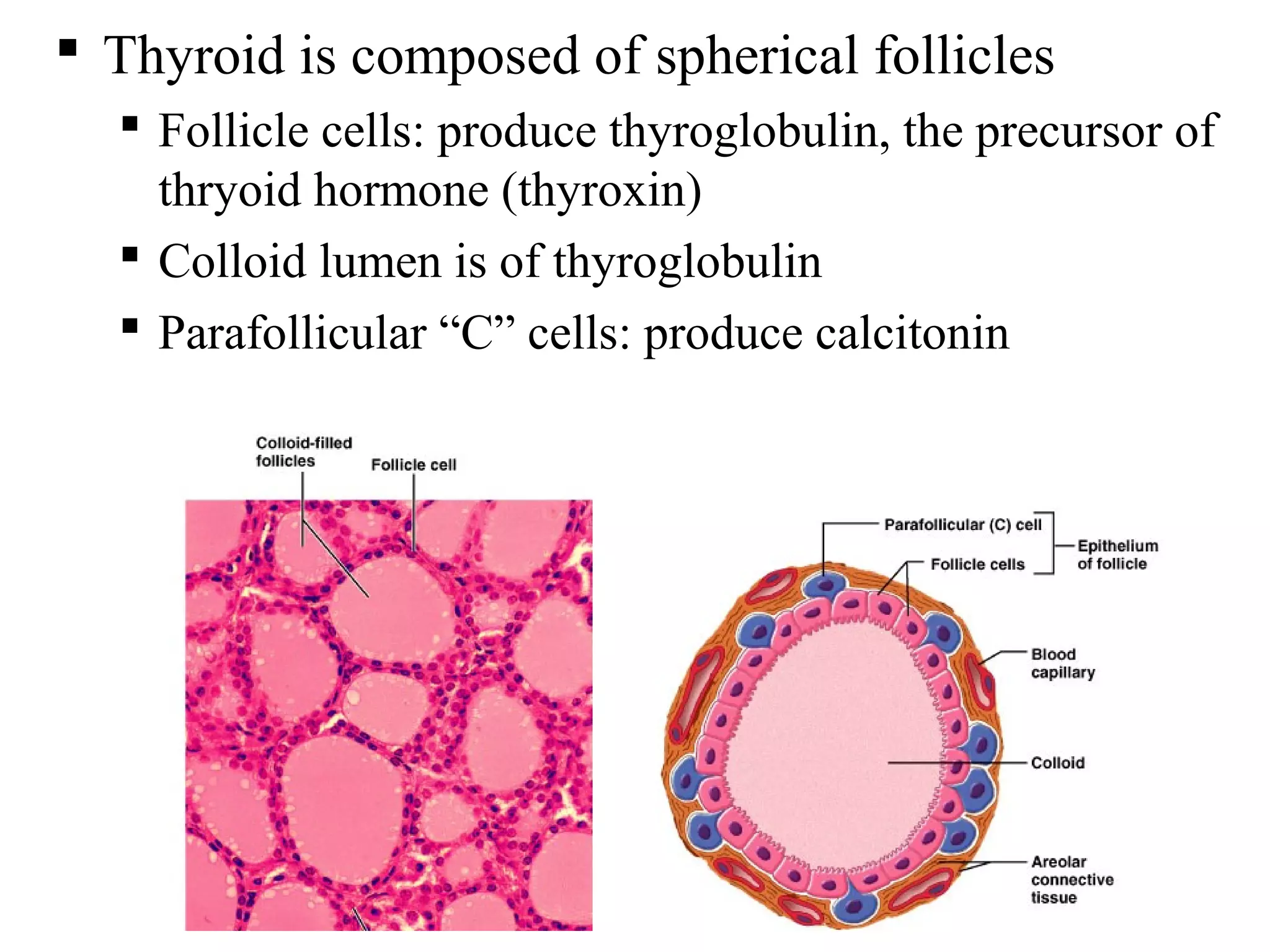
 Thyroid is composed of spherical follicles
 Follicle cells: produce thyroglobulin, the precursor of
thryoid hormone (thyroxin)
 Colloid lumen is of thyroglobulin
 Parafollicular “C” cells: produce calcitonin
18
An example of a feedback loop
 A certain item in the blood
decreases
 A certain area of the brain
senses this decrease
 A certain hormone is
released
 This hormone stimulates the
release of another hormone
 This other hormone
stimulates the release of the
hormone which was sensed
to be decreased in the first
place, causing it to be
increased to desired level
 Thyroxine (thyroid hormone)
 Hypothalamus
 TRF from the hypothalamus
 TSH from anterior pituitary
 Thyroxine from the thyroid
(TSH has caused cleavage of
thryroglobulin into thyroxine)
generic particular example: thyroid hormone
19
Some Effects of Thyroid Hormone
(Thyroxine)
 Increases the basal metabolic rate
 The rate at which the body uses oxygen to transform
nutrients (carbohydrates, fats and proteins) into energy
 Affects many target cells throughout the body; some
effects are
 Protein synthesis
 Bone growth
 Neuronal maturation
 Cell differentiation
20
The Effects of Calcitonin
 Secreted from thyroid parafollicular (C) cells
when blood calcium levels are high
 Calcitonin lowers Ca++ by slowing the
calcium-releasing activity of osteoclasts in
bone and increasing calcium secretion by the
kidney
 Acts mostly during childhood
21
The Parathyroid Glands
 Most people have four
 On posterior surface of
thyroid gland
(sometimes embedded)
22
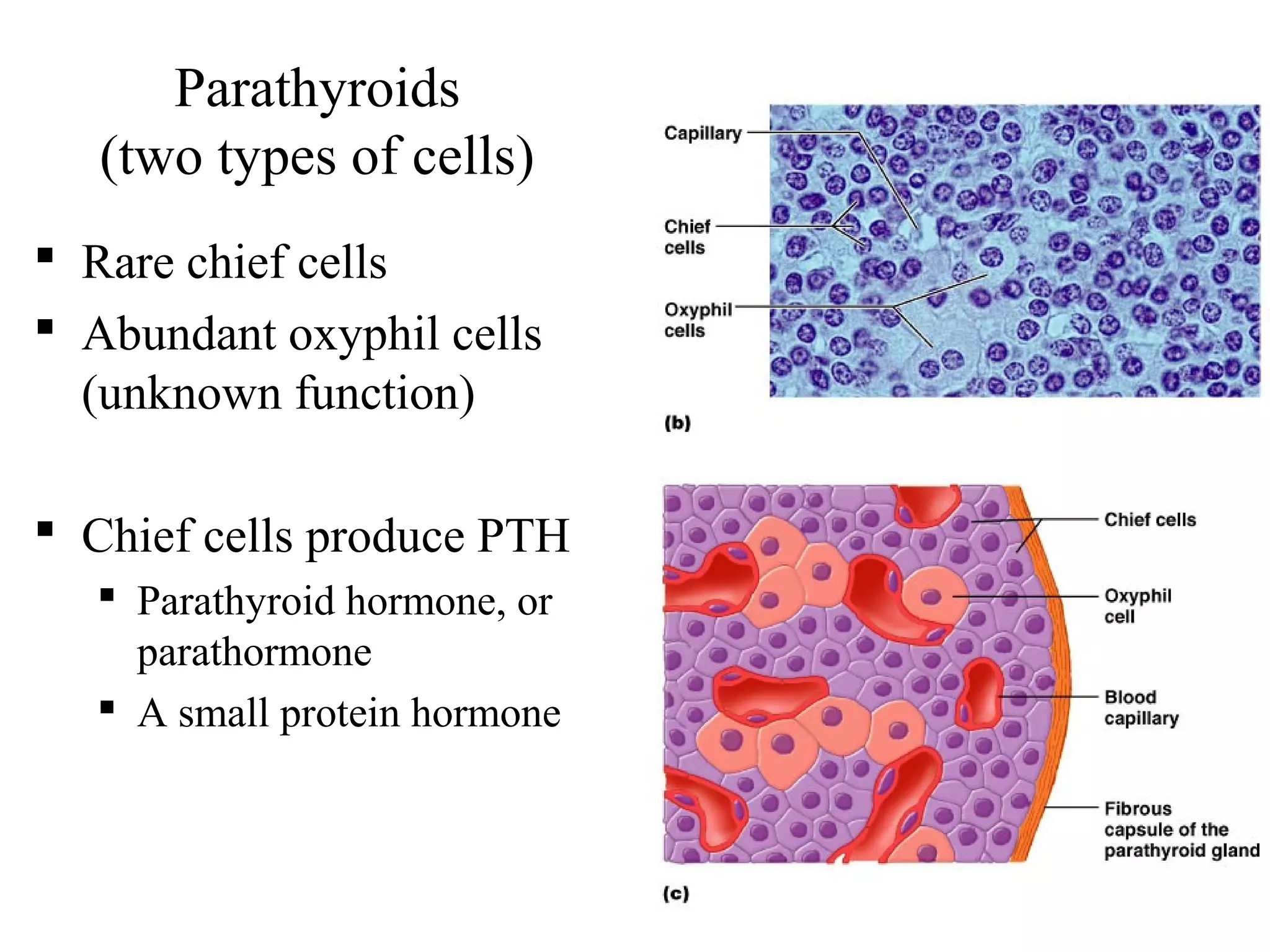
Parathyroids
(two types of cells)
 Rare chief cells
 Abundant oxyphil cells
(unknown function)
 Chief cells produce PTH
 Parathyroid hormone, or
parathormone
 A small protein hormone
23
Function of PTH
(parathyroid hormone or “parathormone”)
 Increases blood Ca++ (calcium) concentration
when it gets too low
 Mechanism of raising blood calcium
1. Stimulates osteoclasts to release more Ca++ from bone
2. Decreases secretion of Ca++ by kidney
3. Activates Vitamin D, which stimulates the uptake of Ca+
+ from the intestine
 Unwitting removal during thyroidectomy was lethal
 Has opposite effect on calcium as calcitonin
(which lowers Ca++ levels)
24
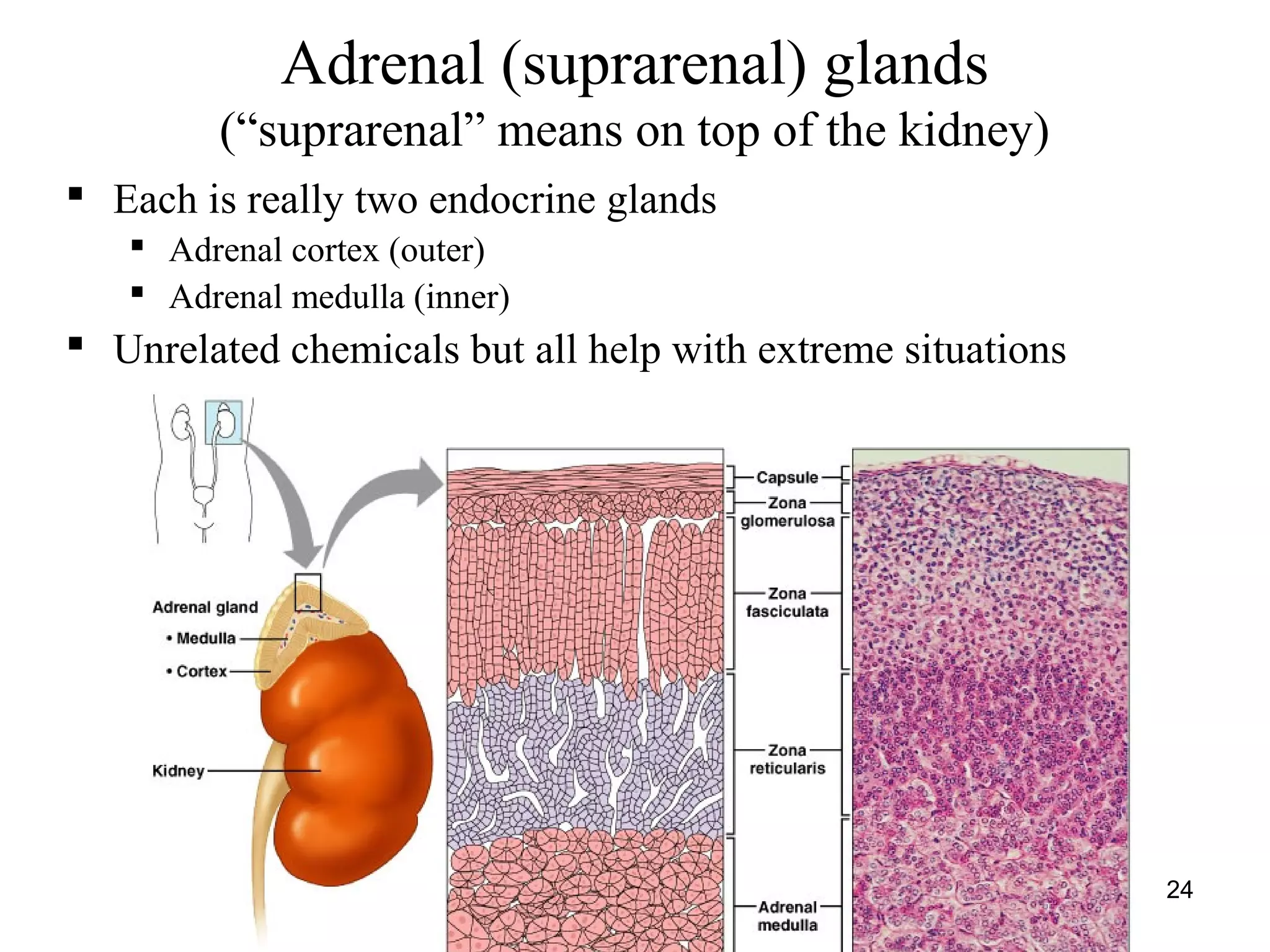
Adrenal (suprarenal) glands
(“suprarenal” means on top of the kidney)
 Each is really two endocrine glands
 Adrenal cortex (outer)
 Adrenal medulla (inner)
 Unrelated chemicals but all help with extreme situations
25
Adrenal Gland
 Adrenal cortex
 Secretes lipid-based steroid hormones, called
“corticosteroids” – “cortico” as in “cortex”
 MINERALOCORTICOIDS
– Aldosterone is the main one
 GLUCOCORTICOIDS
– Cortisol (hydrocortisone) is the main one
 Adrenal medulla
 Secretes epinephrine and norepinephrine
26
Aldosterone, the main mineralocorticoid
 Secreted by adrenal cortex in response to a
decline in either blood volume or blood
pressure (e.g. severe hemorrhage)
 Is terminal hormone in renin-angiotensin
mechanism
 Prompts distal and collecting tubules in kidney
to reabsorb more sodium
 Water passively follows
 Blood volume thus increases
27
Cortisol, the most important glucocorticoid
(Glucocorticoid receptors are found in the cells of most vertebrate tissues)
 It is essential for life
 Helps the body deal with stressful situations within
minutes
 Physical: trauma, surgery, exercise
 Psychological: anxiety, depression, crowding
 Physiological: fasting, hypoglycemia, fever, infection
 Regulates or supports a variety of important
cardiovascular, metabolic, immunologic, and
homeostatic functions including water balance
People with adrenal insufficiency: these stresses can cause hypotension, shock and death:
must give glucocorticoids, eg for surgery or if have infection, etc.
28
Cortisol, continued
 Keeps blood glucose levels high enough to support
brain’s activity
 Forces other body cells to switch to fats and amino acids as
energy sources
 Catabolic: break down protein
 Redirects circulating lymphocytes to lymphoid and
peripheral tissues where pathogens usually are
 In large quantities, depresses immune and inflammatory
response
 Used therapeutically
 Responsible for some of its side effects
29
Hormonal stimulation of glucocorticoids
HPA axis (hypothalamic/pituitary/adrenal axis)
 With stress, hypothalamus sends CRH to anterior
pituitary (adenohypophysis)
 Pituitary secretes ACTH
 ACTH goes to adrenal cortex where stimulates
glucocorticoid secretion
 Sympathetic nervous system can also stimulate it
 Adrenal cortex also secretes DHEA
(dehydroepiandrosterone)
 Converted in peripheral tissues to testosterone and estrogen
(also steroid hormones)
 Unclear function in relation to stress
30
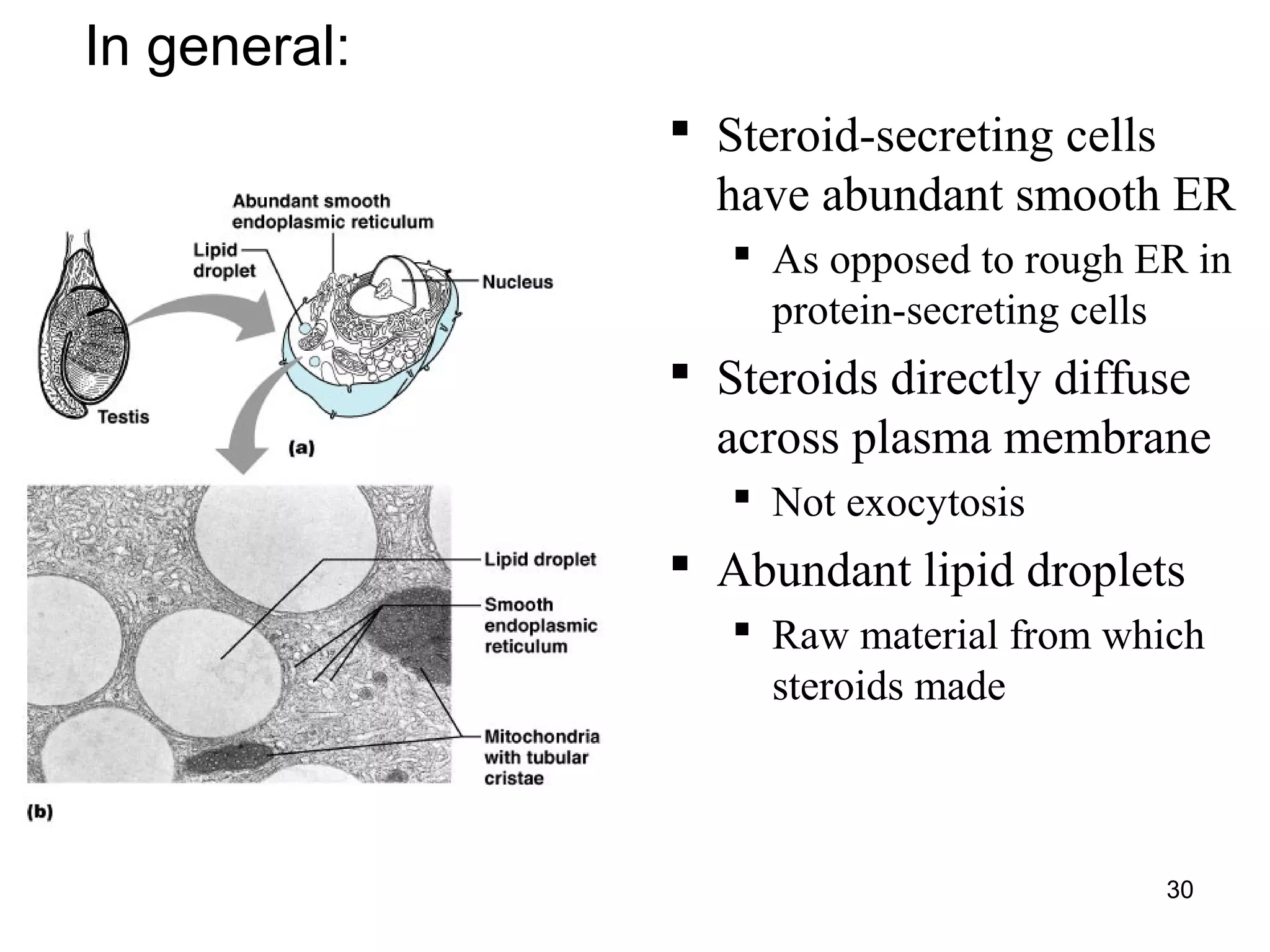
 Steroid-secreting cells
have abundant smooth ER
 As opposed to rough ER in
protein-secreting cells
 Steroids directly diffuse
across plasma membrane
 Not exocytosis
 Abundant lipid droplets
 Raw material from which
steroids made
In general:
31
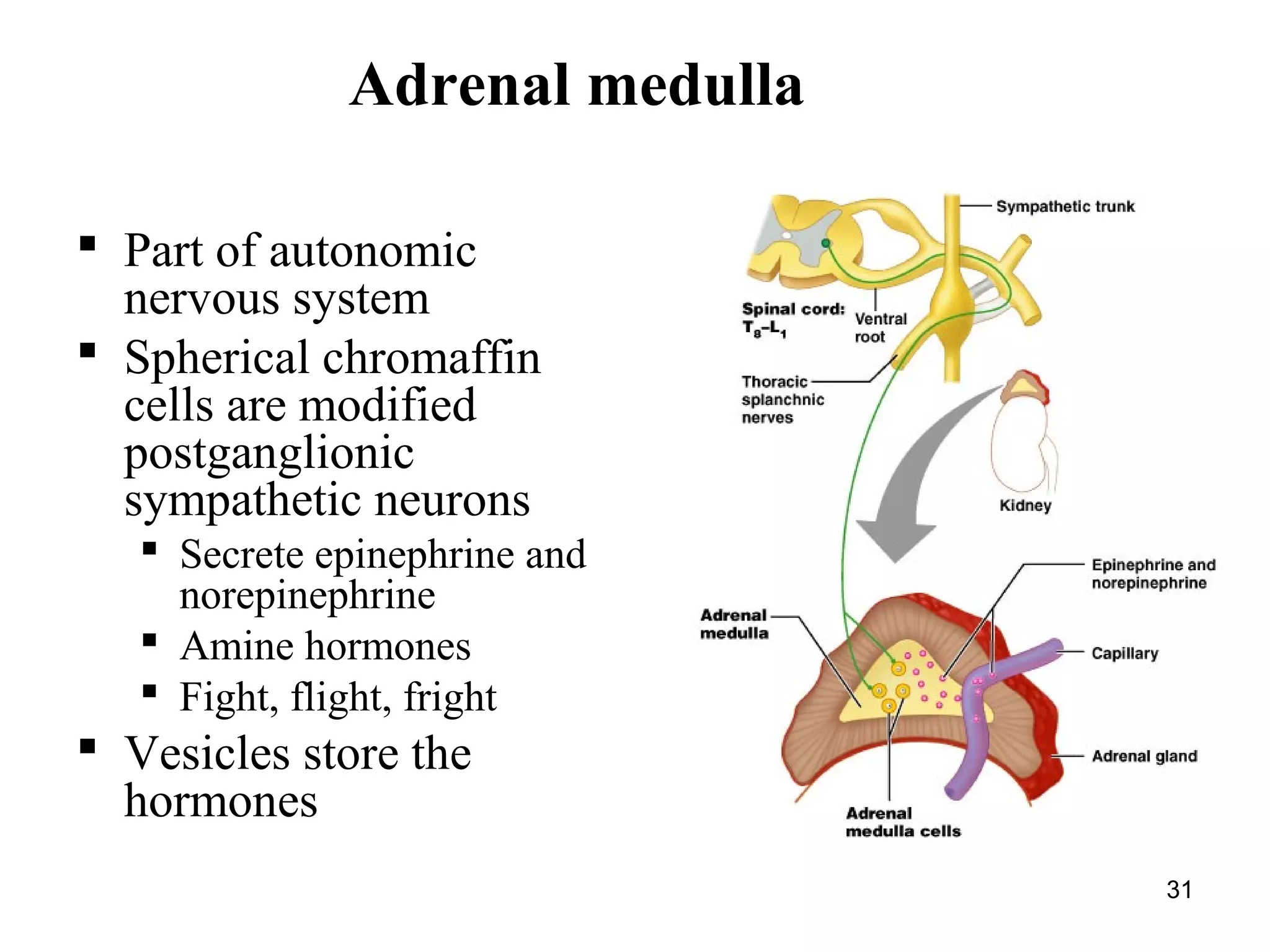
Adrenal medulla
 Part of autonomic
nervous system
 Spherical chromaffin
cells are modified
postganglionic
sympathetic neurons
 Secrete epinephrine and
norepinephrine
 Amine hormones
 Fight, flight, fright
 Vesicles store the
hormones
32
The Pineal Gland
 At the end of a short stalk on the roof of the
diencephalon
 Pinealocytes with dense calcium particles
 Can be seen on x-ray (because of Ca++)
 Melatonin helps regulate the circadium rhythm
 The biological clock of the diurnal (night/day)
rhythm
 Complicated feedback via retina’s visual input
33
The Pancreas
Exocrine and endocrine cells
 Acinar cells (forming most of the pancreas)
 Exocrine function
 Secrete digestive enzymes
 Islet cells (of Langerhans)
 Endocrine function
34
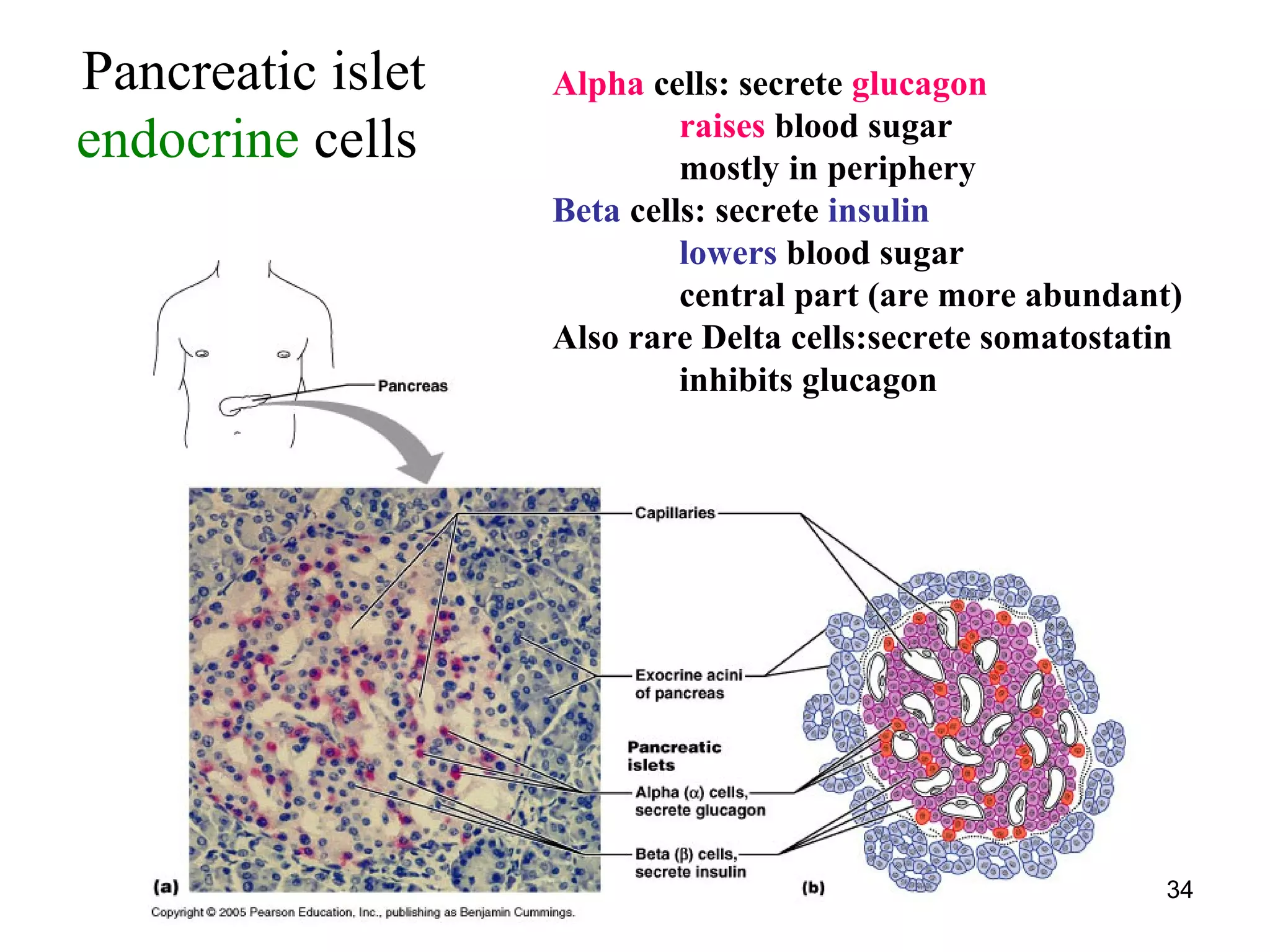
Pancreatic islet
endocrine cells
Alpha cells: secrete glucagon
raises blood sugar
mostly in periphery
Beta cells: secrete insulin
lowers blood sugar
central part (are more abundant)
Also rare Delta cells:secrete somatostatin
inhibits glucagon
35
The Gonads (testes and ovaries)
main source of the steroid sex hormones
 Testes
 Interstitial cells secrete androgens
 Primary androgen is testosterone
 Maintains secondary sex characteristics
 Helps promote sperm formation
 Ovaries
 Androgens secreted by thecal folliculi
 Directly converted to estrogens by follicular granulosa cells
 Granulosa cells also produce progesterone
 Corpus luteum also secretes estrogen and progesterone
36
Endocrine cells in various organs
 The heart: atrial natriuretic peptide (ANP)
 Stimulates kidney to secrete more salt
 Thereby decreases excess blood volume, high BP and
high blood sodium concentration
 GI tract & derivatives: Diffuse neuroendocrine
system (DNES)
37
Endocrine cells in various organs continued
 The heart: atrial natriuretic peptide (ANP)
 Stimulates kidney to secrete more salt
 Thereby decreases excess blood volume, high BP and high blood sodium
concentration
 GI tract & derivatives: Diffuse neuroendocrine system (DNES)
 The placenta secretes steroid and protein hormones
 Estrogens, progesterone
 CRH
 HCG
 The kidneys
 Juxtaglomerular cells secrete renin
 Renin indirectly signals adrenal cortex to secrete aldosterone
 Erythropoietin: signals bone marrow to increase RBC production
 The skin
 Modified cholesterol with uv exposure becomes Vitamin D precursor
 Vitamin D necessary for calcium metabolism: signals intestine to absorb CA++
38
Pathology
 Pituitary
 Gigantism –too much GH in childhood
 Acromegaly – too much GH in adulthood
 Pituitary dwarfs – too little GH in childhood
 Diabetes insipidus - too much ADH
 Pancreas
 Diabetes mellitus – one type of insulin (not enough)
 Thyroid
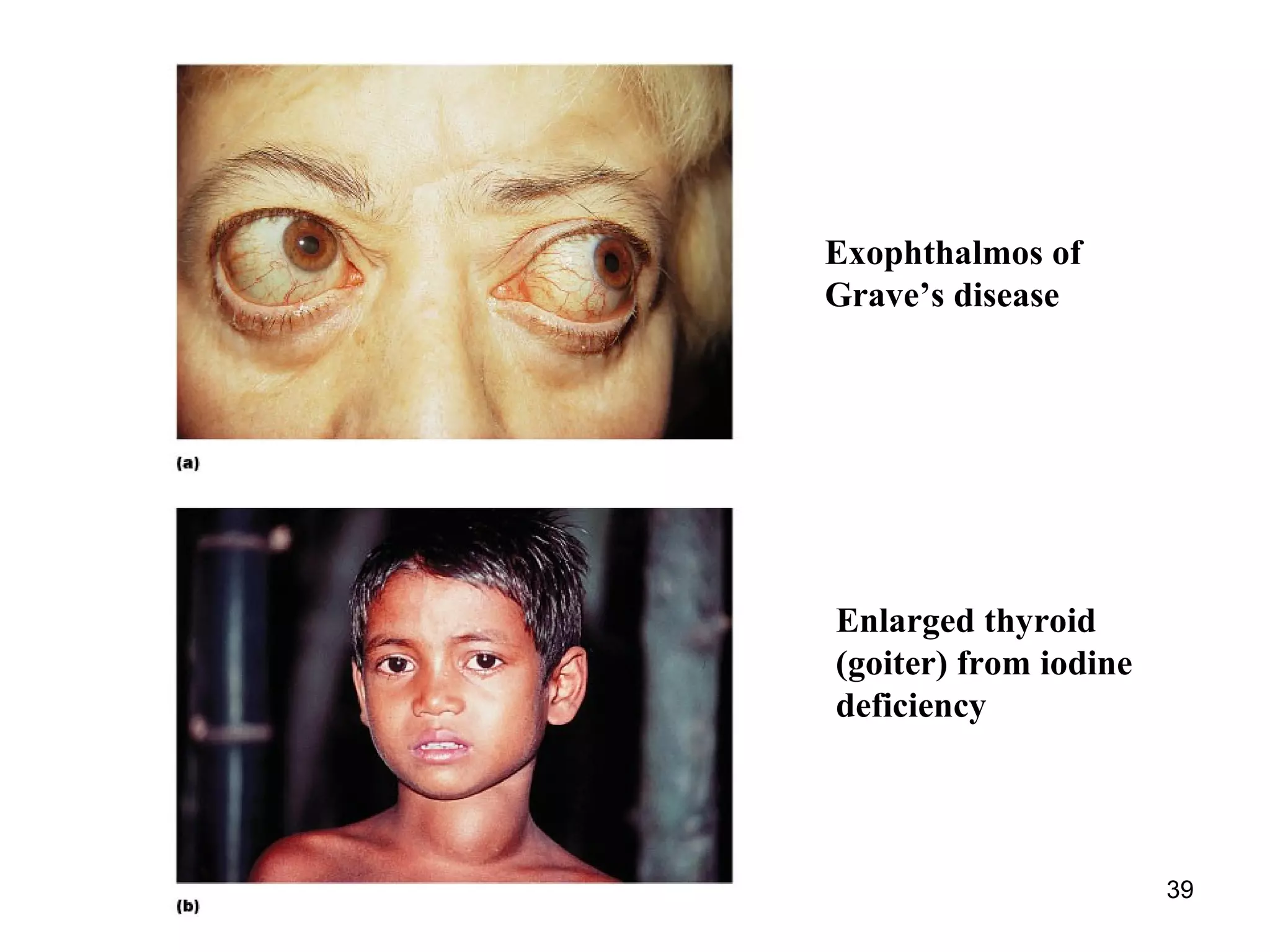
 Hyperthyroidism, commonest is Grave’s disease
(autoimmune)
 Hypothyroidism
 In childhood leads to cretinism
 Endemic goiter from insufficient iodine in diet
 Adult hypothyroidism (myxedema): autoimmune
39
Exophthalmos of
Grave’s disease
Enlarged thyroid
(goiter) from iodine
deficiency
40
Pathology, continued
 Adrenal gland
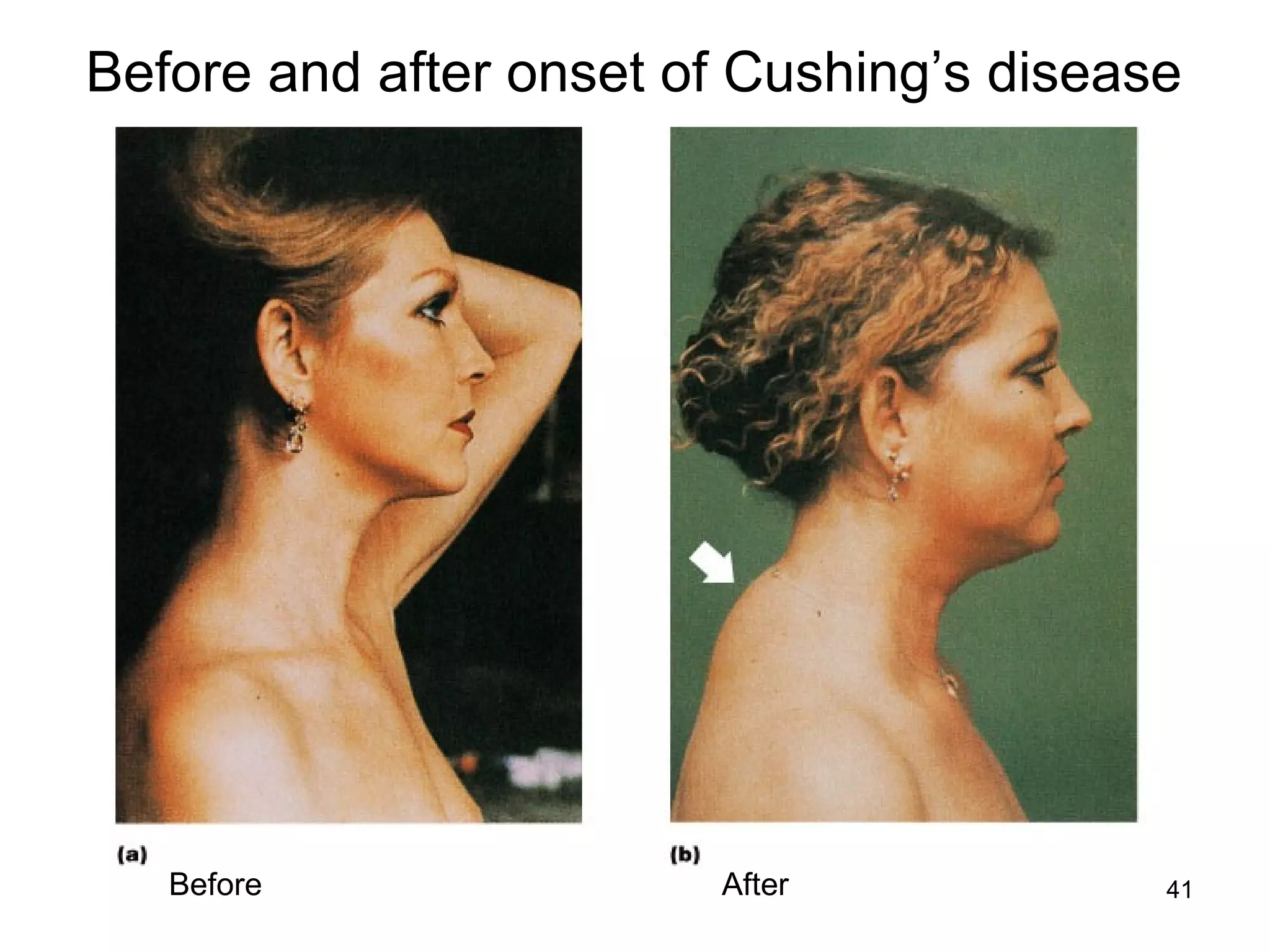
 Cushing’s syndrome (see next pic)
 Usually caused by an ACTH-secreting pituitary tumor
 Rarely by tumor of adrenal cortex
 Iatrogenic
 Addison’s disease
 Hyposecretion (under secretion) of adrenal cortex
 Usually involves cortisol and aldosterone: low blood
glucose and sodium, severe dehydration, fatigue, loss of
appetetie, abdominal pain
(Jane Austin)
41
Before and after onset of Cushing’s disease
AfterBefore

Endocrine system

  • 1.
    KARAGANDA STATE MEDICAL UNIVERSITY Departmentof Histology SIW Submitted to :- Aigerim Seiilkhanova Submitted by :- manoj kumar Group no. 3009
  • 2.
  • 3.
    3 Overview of theEndocrine System  System of ductless glands that secrete hormones  Hormones are “messenger molecules”  Circulate in the blood  Act on distant target cells  Target cells respond to the hormones for which they have receptors  The effects are dependent on the programmed response of the target cells  Hormones are just molecular triggers  Basic categories of hormones  Amino acid based: modified amino acids (or amines), peptides (short chains of amino acids), and proteins (long chains of amino acids)  Steroids: lipid molecules derived from cholesterol
  • 4.
    4 Endocrine Organs  Purelyendocrine organs  Pituitary gland  Pineal gland  Thyroid gland  Parathyroid glands  Adrenal: 2 glands  Cortex  Medulla  Endocrine cells in other organs  Pancreas  Thymus  Gonads  Hypothalamus
  • 5.
    5 Mechanisms of hormone release (a) Humoral:in response to changing levels of ions or nutrients in the blood (b) Neural: stimulation by nerves (c) Hormonal: stimulation received from other hormones
  • 6.
  • 7.
    7 Two divisions:  Anteriorpituitary (adenohypophysis)  Posterior pituitary (neurohypophysis) Sits in hypophyseal fossa: depression in sella turcica of sphenoid bone Pituitary secretes 9 hormones The Pituitary 1. TSH 2. ACTH 3. FSH 4. LH 5. GH 6. PRL 7. MSH 8. ADH (antidiuretic hormone), or vasopressin 9. Oxytocin _________________________________________________________________ The first four are “tropic” hormones, they regulate the function of other hormones ________
  • 8.
    8 What the lettersstand for…  TSH: thyroid-stimulating hormone  ACTH: adrenocorticotropic hormone  FSH: follicle-stimulating hormone  LH: luteinizing hormone  GH: growth hormone  PRL: prolactin  MSH: melanocyte-stimulating hormone  ADH: antidiuretic hormone  Oxytocin
  • 9.
    9 Hypothalamus controls anteriorpituitary hormone release  Releasing hormones (releasing factors) Secreted like neurotransmitters from neuronal axons into capillaries and veins to anterior pituitary (adenohypophysis) TRH-----turns on TSH CRH-----turns on ACTH GnRH (=LHRH)---turns on FSH and LH PRF-----turns on PRL GHRH----turns on GH  Inhibiting hormones PIF-----turns off PRL GH inhibiting hormone ---turns off GH
  • 10.
    10 What the lettersmean…  Releasing hormones (releasing factors) of hypothalamus Secreted like neurotransmitters from neuronal axons into capillaries and veins to anterior pituitary (adenohypophysis) TRH (thyroid releasing hormone) -----turns on* TSH CRH (corticotropin releasing hormone) -----turns on ACTH GnRH (gonadotropin releasing hormone) ---turns on FSH and LH PRF (prolactin releasing hormone) -----turns on PRL GHRH (growth hormone releasing hormone) ----turns on GH  Inhibiting hormones of hypothalmus PIF (prolactin inhibiting factor) -----turns off PRL GH (growth hormone) inhibiting hormone ---turns off GH The hypothalamus controls secretion of hormones which in their turn control the secretion of hormones by the thyroid gland, the adrenal cortex and gonads: in this way the brain controls these endocrine glands *Note: “turns on” means causes to be released
  • 11.
    11 So what dothe pituitary hormones do?  TSH stimulates the thyroid to produce thyroid hormone  ACTH stimulates the adrenal cortex to produce corticosteroids: aldosterone and cortisol  FSH stimulates follicle growth and ovarian estrogen production; stimulates sperm production and androgen-binding protein  LH has a role in ovulation and the growth of the corpus luteum; stimulates androgen secretion by interstitial cells in testes The four tropic ones regulate the function of other hormones:
  • 12.
    12 The others fromthe anterior pituitary…  GH (aka somatrotropic hormone) stimulates growth of skeletal epiphyseal plates and body to synthesize protein  PRL stimulates mammary glands in breast to make milk  MSH stimulates melanocytes; may increase mental alertness
  • 13.
    13 From the posteriorpituitary (neurohypophysis) structurally part of the brain  ADH (antidiuretic hormone AKA vasopressin) stimulates the kidneys to reclaim more water from the urine, raises blood pressure  Oxytocin prompts contraction of smooth muscle in reproductive tracts, in females initiating labor and ejection of milk from breasts
  • 14.
    14 TSH: thyroid-stimulating hormone ACTH:adrenocorticotropic hormone FSH: follicle-stimulating hormone LH: luteinizing hormone GH: growth hormone PRL: prolactin MSH: melanocyte-stimulating hormone ADH: antidiuretic hormone Oxytocin TRH (thyroid releasing hormone) turns on TSH CRH (corticotropin releasing hormone) turns on ACTH GnRH (gonadotropin releasing hormone) turns on FSH and LH PRF (prolactin releasing hormone) turns on PRL GHRH (growth hormone releasing hm) turns on GH TSH stimulates the thyroid to produce thyroid hormone ACTH stimulates the adrenal cortex to produce corticosteroids: aldosterone and cortisol FSH stimulates follicle growth and ovarian estrogen production; stimulates sperm production and androgen-binding protein LH has a role in ovulation and the growth of the corpus luteum; stimulates androgen secretion by interstitial cells in testes GH (aka somatrotropic hormone) stimulates growth of skeletal epiphyseal plates and body to synthesize protein PRL stimulates mammary glands in breast to make milk MSH stimulates melanocytes; may increase mental alertness ADH (antidiuretic hormone or vasopressin) stimulates the kidneys to reclaim more water from the urine, raises blood pressure Oxytocin prompts contraction of smooth muscle in reproductive tracts, in females initiating labor and ejection of milk from Can we put it all together? Blue is from hypothalamus Black is from pituitary
  • 15.
  • 16.
    16 The Thyroid Gland Anterior neck on trachea just inferior to larynx  Two lateral lobes and an isthmus  Produces two hormones  Thyroid hormone: tyrosine based with 3 or 4 iodine molecules  T4 (thyroxine) and T3  Calcitonin involved with calcium and phosphorus metabolism
  • 17.
    17  Thyroid iscomposed of spherical follicles  Follicle cells: produce thyroglobulin, the precursor of thryoid hormone (thyroxin)  Colloid lumen is of thyroglobulin  Parafollicular “C” cells: produce calcitonin
  • 18.
    18 An example ofa feedback loop  A certain item in the blood decreases  A certain area of the brain senses this decrease  A certain hormone is released  This hormone stimulates the release of another hormone  This other hormone stimulates the release of the hormone which was sensed to be decreased in the first place, causing it to be increased to desired level  Thyroxine (thyroid hormone)  Hypothalamus  TRF from the hypothalamus  TSH from anterior pituitary  Thyroxine from the thyroid (TSH has caused cleavage of thryroglobulin into thyroxine) generic particular example: thyroid hormone
  • 19.
    19 Some Effects ofThyroid Hormone (Thyroxine)  Increases the basal metabolic rate  The rate at which the body uses oxygen to transform nutrients (carbohydrates, fats and proteins) into energy  Affects many target cells throughout the body; some effects are  Protein synthesis  Bone growth  Neuronal maturation  Cell differentiation
  • 20.
    20 The Effects ofCalcitonin  Secreted from thyroid parafollicular (C) cells when blood calcium levels are high  Calcitonin lowers Ca++ by slowing the calcium-releasing activity of osteoclasts in bone and increasing calcium secretion by the kidney  Acts mostly during childhood
  • 21.
    21 The Parathyroid Glands Most people have four  On posterior surface of thyroid gland (sometimes embedded)
  • 22.
    22 Parathyroids (two types ofcells)  Rare chief cells  Abundant oxyphil cells (unknown function)  Chief cells produce PTH  Parathyroid hormone, or parathormone  A small protein hormone
  • 23.
    23 Function of PTH (parathyroidhormone or “parathormone”)  Increases blood Ca++ (calcium) concentration when it gets too low  Mechanism of raising blood calcium 1. Stimulates osteoclasts to release more Ca++ from bone 2. Decreases secretion of Ca++ by kidney 3. Activates Vitamin D, which stimulates the uptake of Ca+ + from the intestine  Unwitting removal during thyroidectomy was lethal  Has opposite effect on calcium as calcitonin (which lowers Ca++ levels)
  • 24.
    24 Adrenal (suprarenal) glands (“suprarenal”means on top of the kidney)  Each is really two endocrine glands  Adrenal cortex (outer)  Adrenal medulla (inner)  Unrelated chemicals but all help with extreme situations
  • 25.
    25 Adrenal Gland  Adrenalcortex  Secretes lipid-based steroid hormones, called “corticosteroids” – “cortico” as in “cortex”  MINERALOCORTICOIDS – Aldosterone is the main one  GLUCOCORTICOIDS – Cortisol (hydrocortisone) is the main one  Adrenal medulla  Secretes epinephrine and norepinephrine
  • 26.
    26 Aldosterone, the mainmineralocorticoid  Secreted by adrenal cortex in response to a decline in either blood volume or blood pressure (e.g. severe hemorrhage)  Is terminal hormone in renin-angiotensin mechanism  Prompts distal and collecting tubules in kidney to reabsorb more sodium  Water passively follows  Blood volume thus increases
  • 27.
    27 Cortisol, the mostimportant glucocorticoid (Glucocorticoid receptors are found in the cells of most vertebrate tissues)  It is essential for life  Helps the body deal with stressful situations within minutes  Physical: trauma, surgery, exercise  Psychological: anxiety, depression, crowding  Physiological: fasting, hypoglycemia, fever, infection  Regulates or supports a variety of important cardiovascular, metabolic, immunologic, and homeostatic functions including water balance People with adrenal insufficiency: these stresses can cause hypotension, shock and death: must give glucocorticoids, eg for surgery or if have infection, etc.
  • 28.
    28 Cortisol, continued  Keepsblood glucose levels high enough to support brain’s activity  Forces other body cells to switch to fats and amino acids as energy sources  Catabolic: break down protein  Redirects circulating lymphocytes to lymphoid and peripheral tissues where pathogens usually are  In large quantities, depresses immune and inflammatory response  Used therapeutically  Responsible for some of its side effects
  • 29.
    29 Hormonal stimulation ofglucocorticoids HPA axis (hypothalamic/pituitary/adrenal axis)  With stress, hypothalamus sends CRH to anterior pituitary (adenohypophysis)  Pituitary secretes ACTH  ACTH goes to adrenal cortex where stimulates glucocorticoid secretion  Sympathetic nervous system can also stimulate it  Adrenal cortex also secretes DHEA (dehydroepiandrosterone)  Converted in peripheral tissues to testosterone and estrogen (also steroid hormones)  Unclear function in relation to stress
  • 30.
    30  Steroid-secreting cells haveabundant smooth ER  As opposed to rough ER in protein-secreting cells  Steroids directly diffuse across plasma membrane  Not exocytosis  Abundant lipid droplets  Raw material from which steroids made In general:
  • 31.
    31 Adrenal medulla  Partof autonomic nervous system  Spherical chromaffin cells are modified postganglionic sympathetic neurons  Secrete epinephrine and norepinephrine  Amine hormones  Fight, flight, fright  Vesicles store the hormones
  • 32.
    32 The Pineal Gland At the end of a short stalk on the roof of the diencephalon  Pinealocytes with dense calcium particles  Can be seen on x-ray (because of Ca++)  Melatonin helps regulate the circadium rhythm  The biological clock of the diurnal (night/day) rhythm  Complicated feedback via retina’s visual input
  • 33.
    33 The Pancreas Exocrine andendocrine cells  Acinar cells (forming most of the pancreas)  Exocrine function  Secrete digestive enzymes  Islet cells (of Langerhans)  Endocrine function
  • 34.
    34 Pancreatic islet endocrine cells Alphacells: secrete glucagon raises blood sugar mostly in periphery Beta cells: secrete insulin lowers blood sugar central part (are more abundant) Also rare Delta cells:secrete somatostatin inhibits glucagon
  • 35.
    35 The Gonads (testesand ovaries) main source of the steroid sex hormones  Testes  Interstitial cells secrete androgens  Primary androgen is testosterone  Maintains secondary sex characteristics  Helps promote sperm formation  Ovaries  Androgens secreted by thecal folliculi  Directly converted to estrogens by follicular granulosa cells  Granulosa cells also produce progesterone  Corpus luteum also secretes estrogen and progesterone
  • 36.
    36 Endocrine cells invarious organs  The heart: atrial natriuretic peptide (ANP)  Stimulates kidney to secrete more salt  Thereby decreases excess blood volume, high BP and high blood sodium concentration  GI tract & derivatives: Diffuse neuroendocrine system (DNES)
  • 37.
    37 Endocrine cells invarious organs continued  The heart: atrial natriuretic peptide (ANP)  Stimulates kidney to secrete more salt  Thereby decreases excess blood volume, high BP and high blood sodium concentration  GI tract & derivatives: Diffuse neuroendocrine system (DNES)  The placenta secretes steroid and protein hormones  Estrogens, progesterone  CRH  HCG  The kidneys  Juxtaglomerular cells secrete renin  Renin indirectly signals adrenal cortex to secrete aldosterone  Erythropoietin: signals bone marrow to increase RBC production  The skin  Modified cholesterol with uv exposure becomes Vitamin D precursor  Vitamin D necessary for calcium metabolism: signals intestine to absorb CA++
  • 38.
    38 Pathology  Pituitary  Gigantism–too much GH in childhood  Acromegaly – too much GH in adulthood  Pituitary dwarfs – too little GH in childhood  Diabetes insipidus - too much ADH  Pancreas  Diabetes mellitus – one type of insulin (not enough)  Thyroid  Hyperthyroidism, commonest is Grave’s disease (autoimmune)  Hypothyroidism  In childhood leads to cretinism  Endemic goiter from insufficient iodine in diet  Adult hypothyroidism (myxedema): autoimmune
  • 39.
    39 Exophthalmos of Grave’s disease Enlargedthyroid (goiter) from iodine deficiency
  • 40.
    40 Pathology, continued  Adrenalgland  Cushing’s syndrome (see next pic)  Usually caused by an ACTH-secreting pituitary tumor  Rarely by tumor of adrenal cortex  Iatrogenic  Addison’s disease  Hyposecretion (under secretion) of adrenal cortex  Usually involves cortisol and aldosterone: low blood glucose and sodium, severe dehydration, fatigue, loss of appetetie, abdominal pain (Jane Austin)
  • 41.
    41 Before and afteronset of Cushing’s disease AfterBefore