ENDOCRINE SYSTEM
González Cisneros Wendy Lucero
Esparza Barrena Brenda Margarita
Santos Romero Fernanda
Giordano Arrevillaga Vanessa
Valencia Gutiérrez Rodrigo
Endocrine System
 System of glands.
 Regulates and coordinates several body
organs.
 Directs a metabolic steady state.
(Homeostasis)
Endocrine Gland
 Secrete their products (hormones) directly
into the bloodstream.
 Make their function in distant organs of the
body.
 Exert their effects on target cells.
Hormones
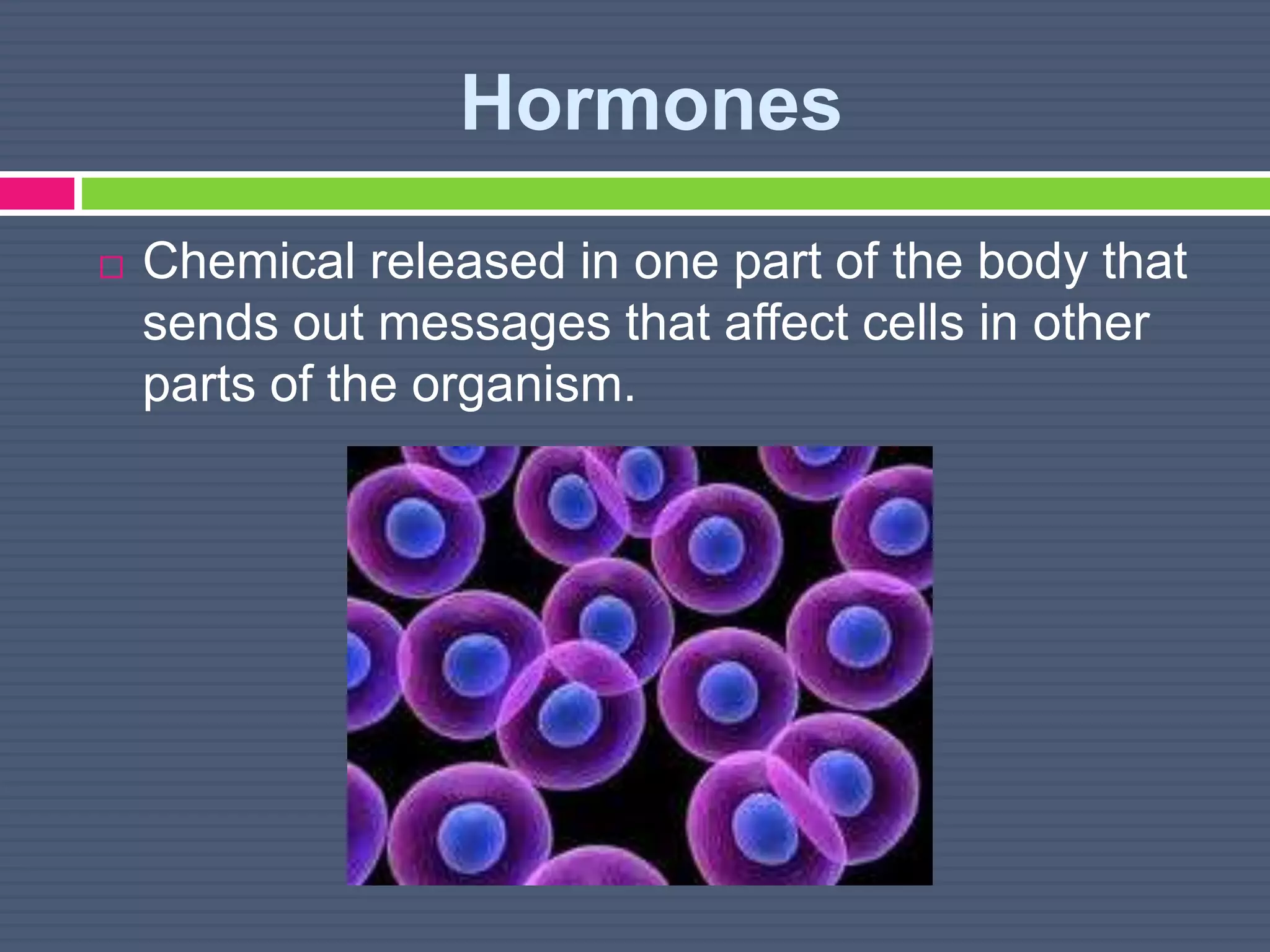
 Chemical released in one part of the body that
sends out messages that affect cells in other
parts of the organism.
Feedback mechanisms
 Positive Feedback – Stimulates.
 Negative Feedback – Inhibits.
 As the number of glands involved, glandular
circuits can be classified as long, short and
ultrashort.
Hypothalamus
Division
It is divided in two parts:
 Medial Hypothalamus: recorded the
greatest number of cores. This area has
the largest amount of soma and less of
fibers.
 Lateral Hypothalamus: is poor in soma
neuronal and rich in fibers.
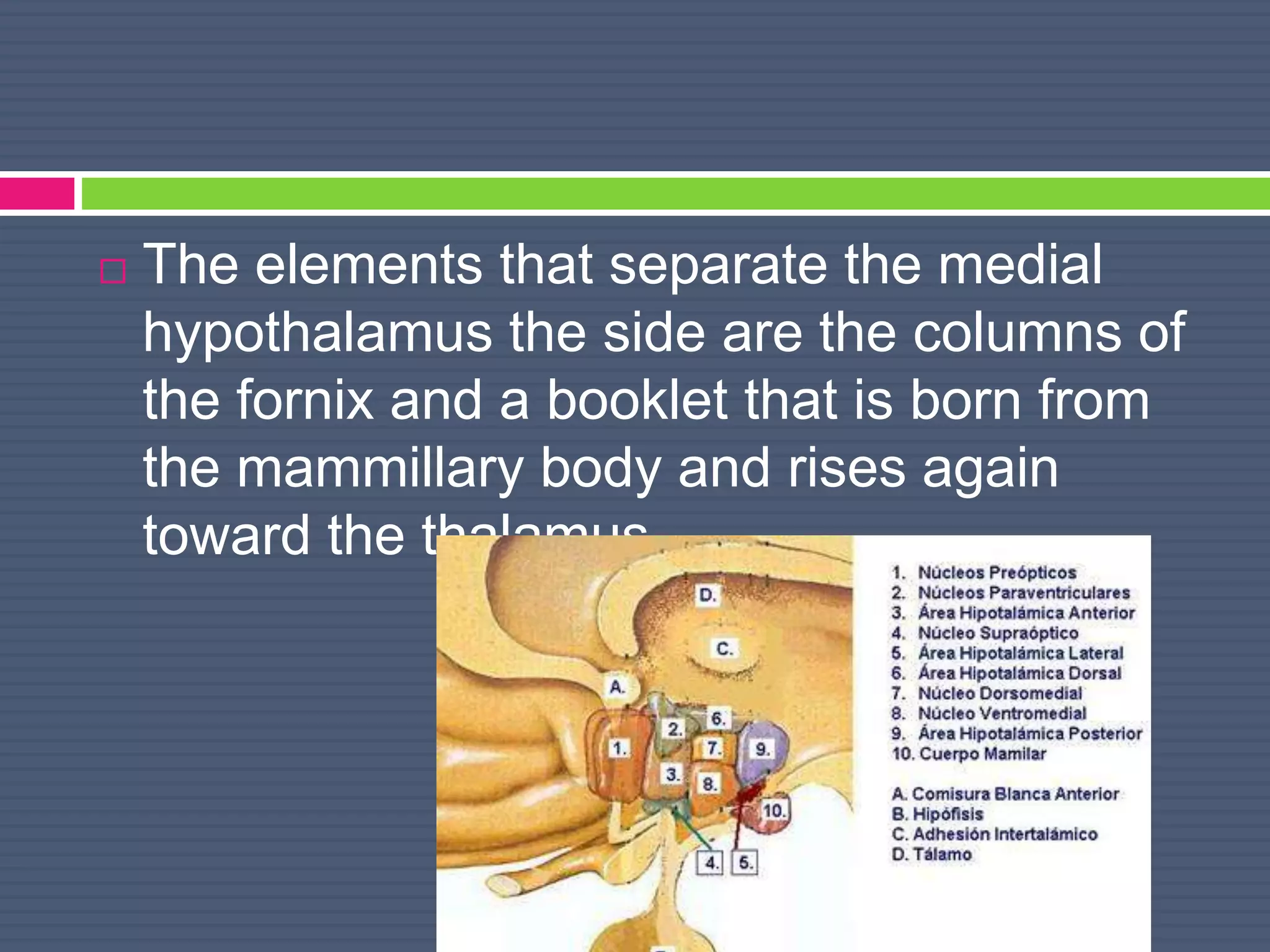
 The elements that separate the medial
hypothalamus the side are the columns of
the fornix and a booklet that is born from
the mammillary body and rises again
toward the thalamus.
Functions of the
hypothalamus
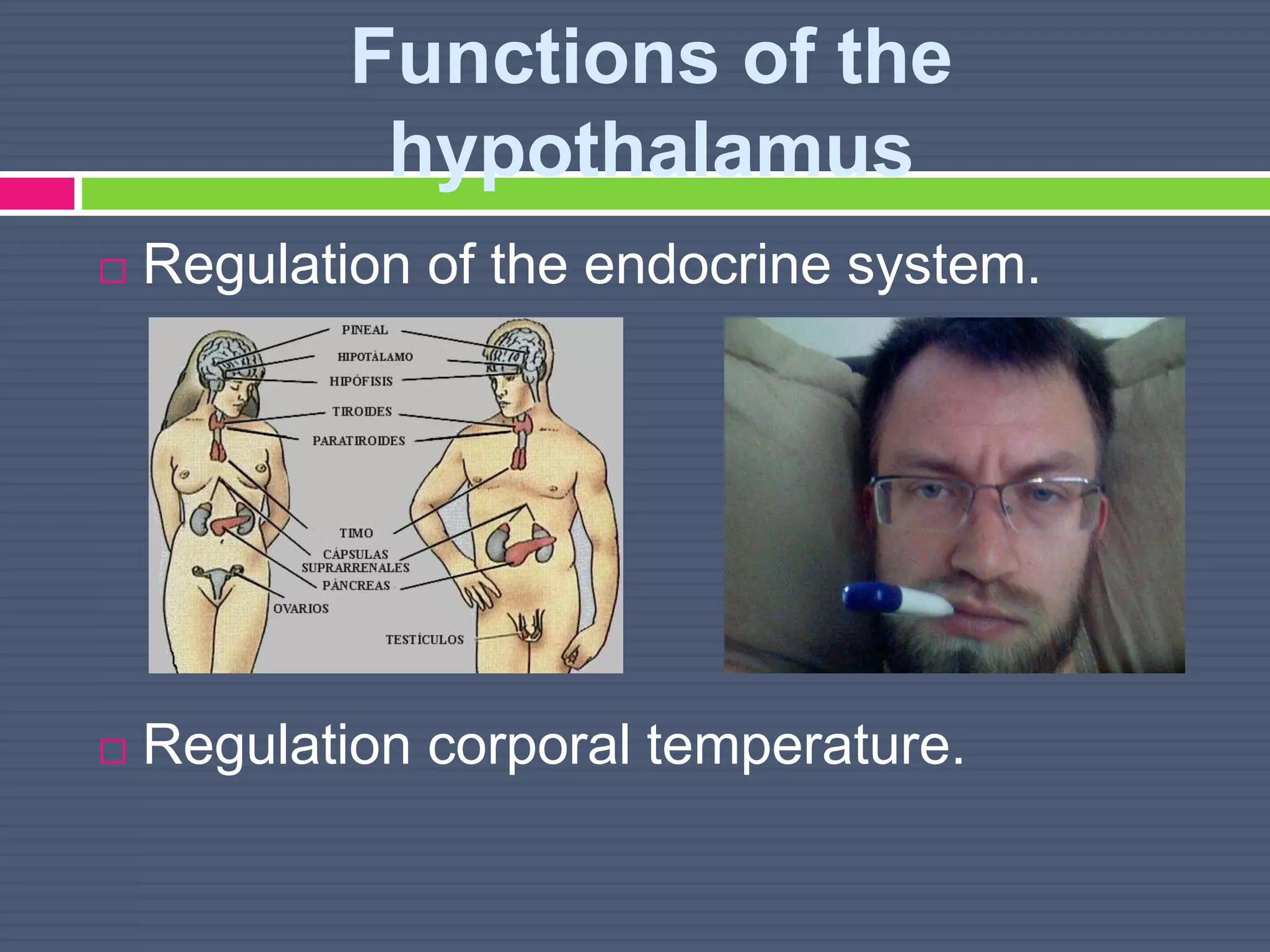
 Regulation of the endocrine system.
 Regulation corporal temperature.
 Regulation of emotional behavior
 Regulation of sleep and wakefulness
 Regulation of food intake
Hormones of the
Hypothalamus
 Is highly involved in pituitary gland
function.
 When it receives a signal from the
nervous system, secretes substances
known as neurohormones that start and
stop the secretion of pituitary hormones.
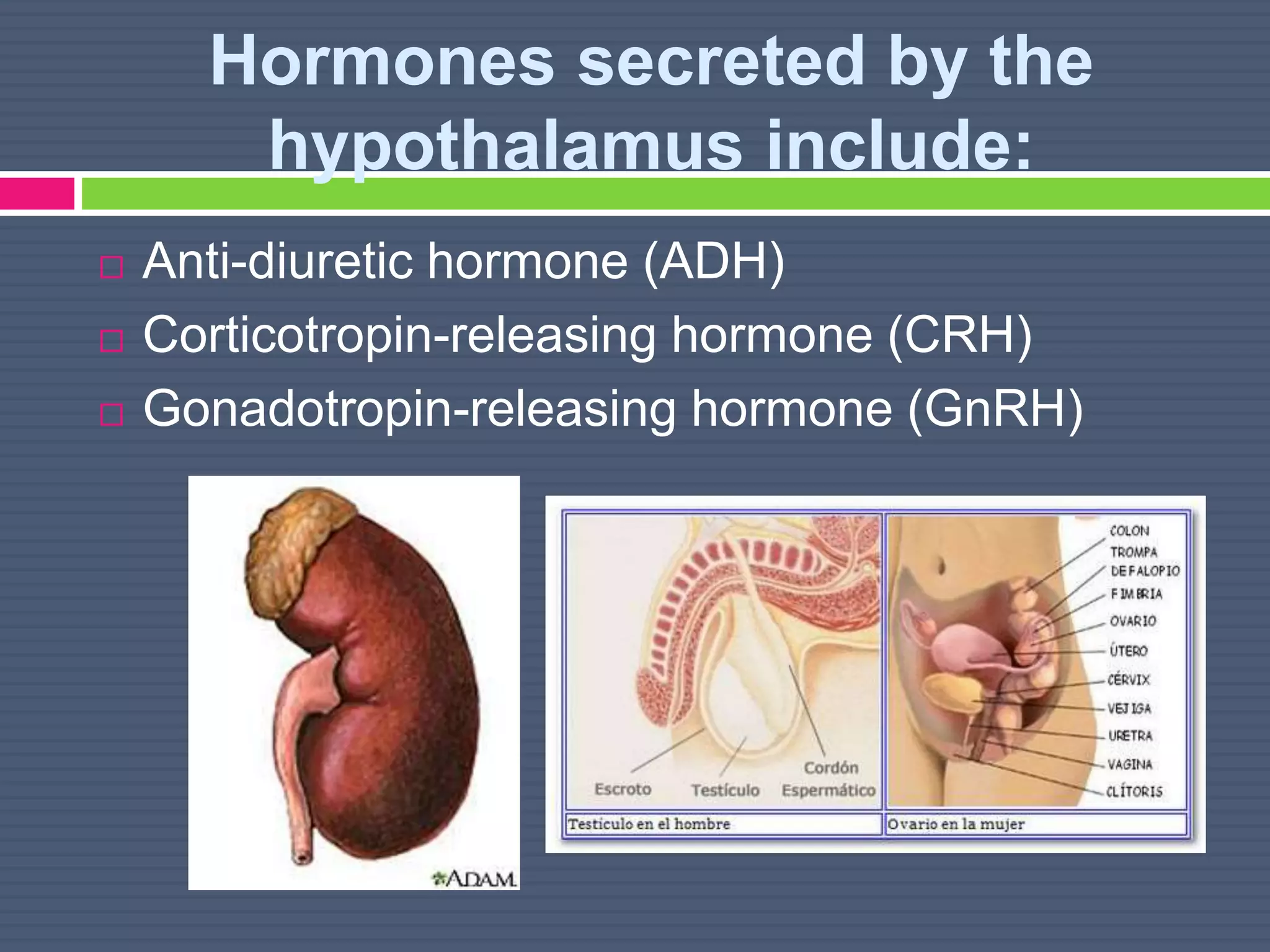
Hormones secreted by the
hypothalamus include:
 Anti-diuretic hormone (ADH)
 Corticotropin-releasing hormone (CRH)
 Gonadotropin-releasing hormone (GnRH)
 Growth hormone-releasing hormone (GHRH) or
growth hormone-inhibiting hormone (GHIH), (also
known as somatocrinin)
 Oxytocin
 Prolactin-releasing hormone (PRH) or prolactin-
inhibiting hormone (PIH)
 Thyrotropin releasing hormone (TRH)
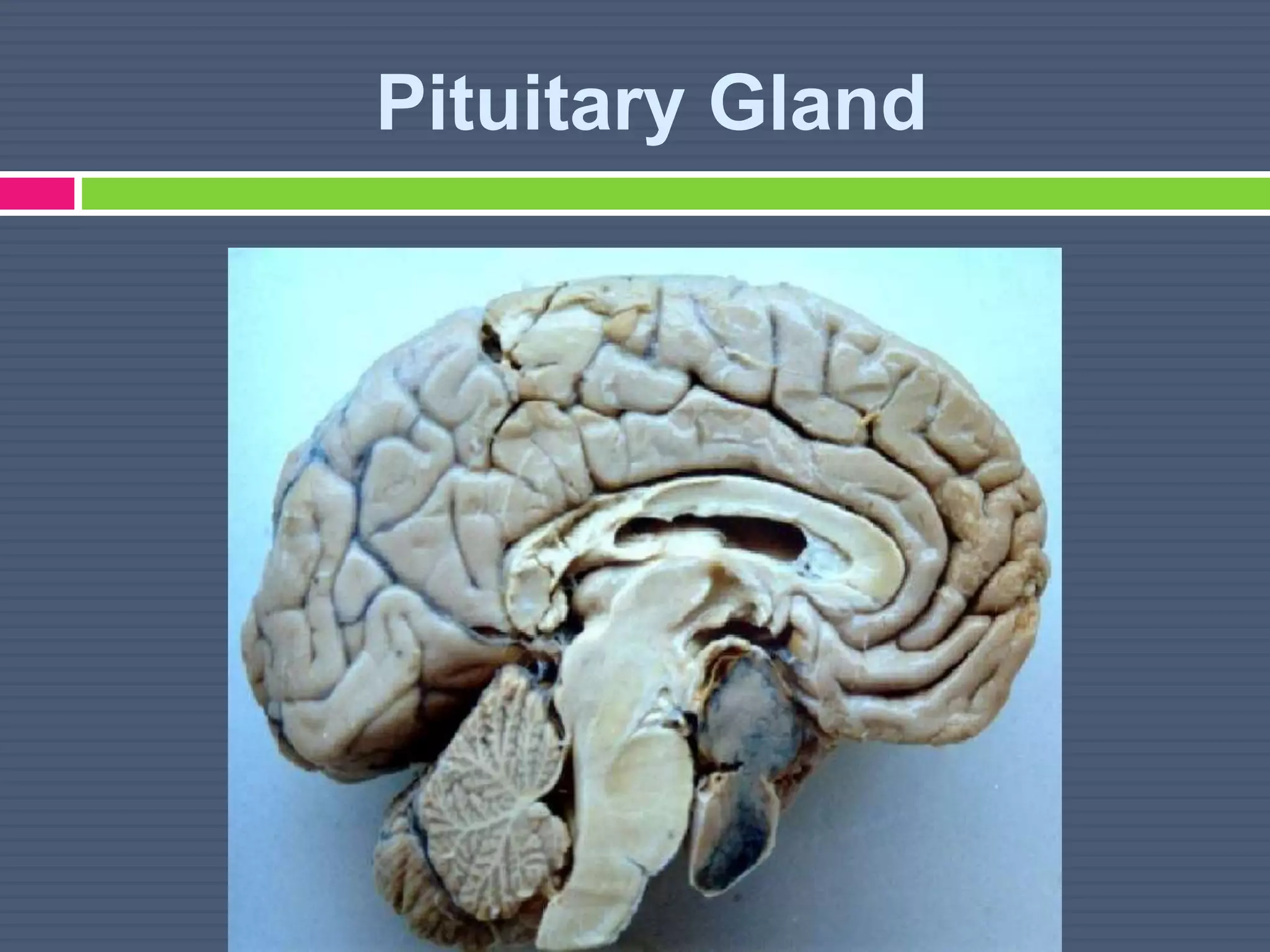
Pituitary Gland
 Oval shape with a diameter of 8 x12 mm
and 6 mm in the vertical direction (normal
conditions).
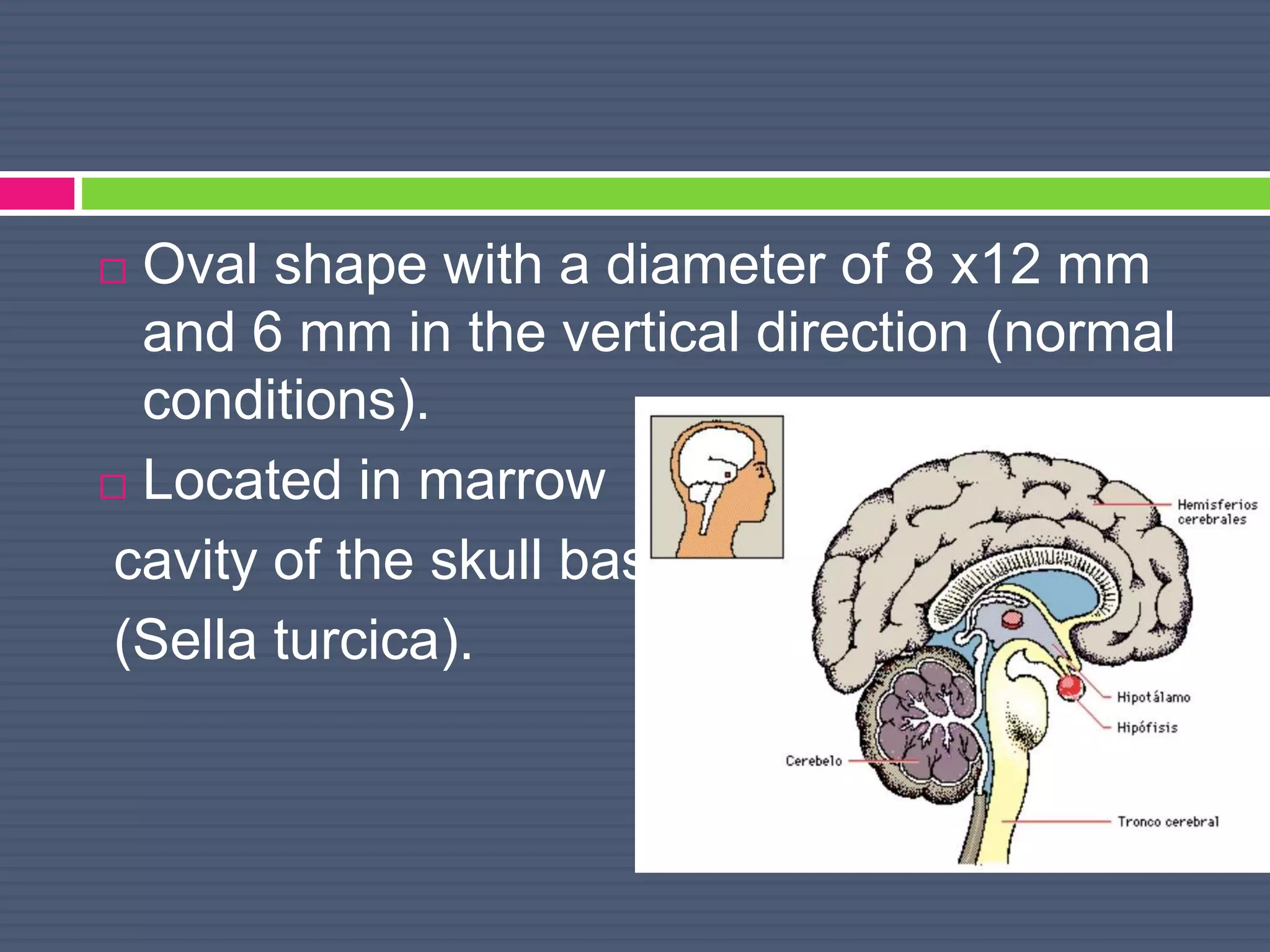
 Located in marrow
cavity of the skull base
(Sella turcica).
 Control most of the biological processes of
the organism (metabolism).
 The gland is 20% larger in women than in
men.
 Separated into 2 parts: the anterior lobe
and posterior lobe or adenohypophysis or
neurohypophysis.
PITUITAR
Y
Posterior
pituitary or
neurohypophy
sis.
Stores and releases
hormones synthesized
by the hypothalamus
(oxytocin and
vasopressin).
Anterior pituitary or
adenohypophysis.
(Secretion of
numerous
hormones).Hipófisis
intermedia.
Produce
melanotropin
s.
Intermediate
pituitary.
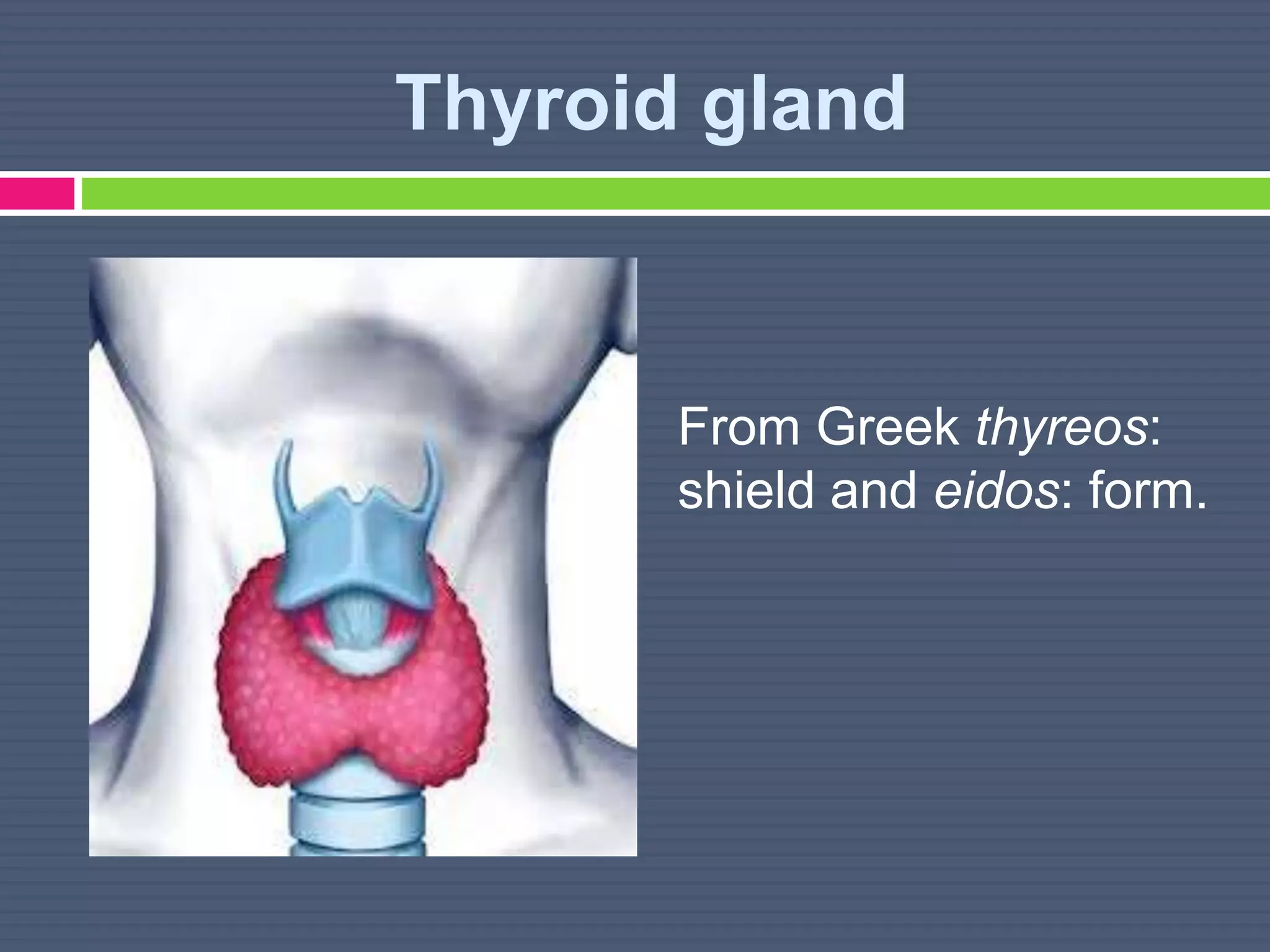
Thyroid gland
From Greek thyreos:
shield and eidos: form.
 Butterfly-shaped gland located in the neck,
before the trachea, between the cricoid
cartilage and rests over the jugular of the
breastbone.
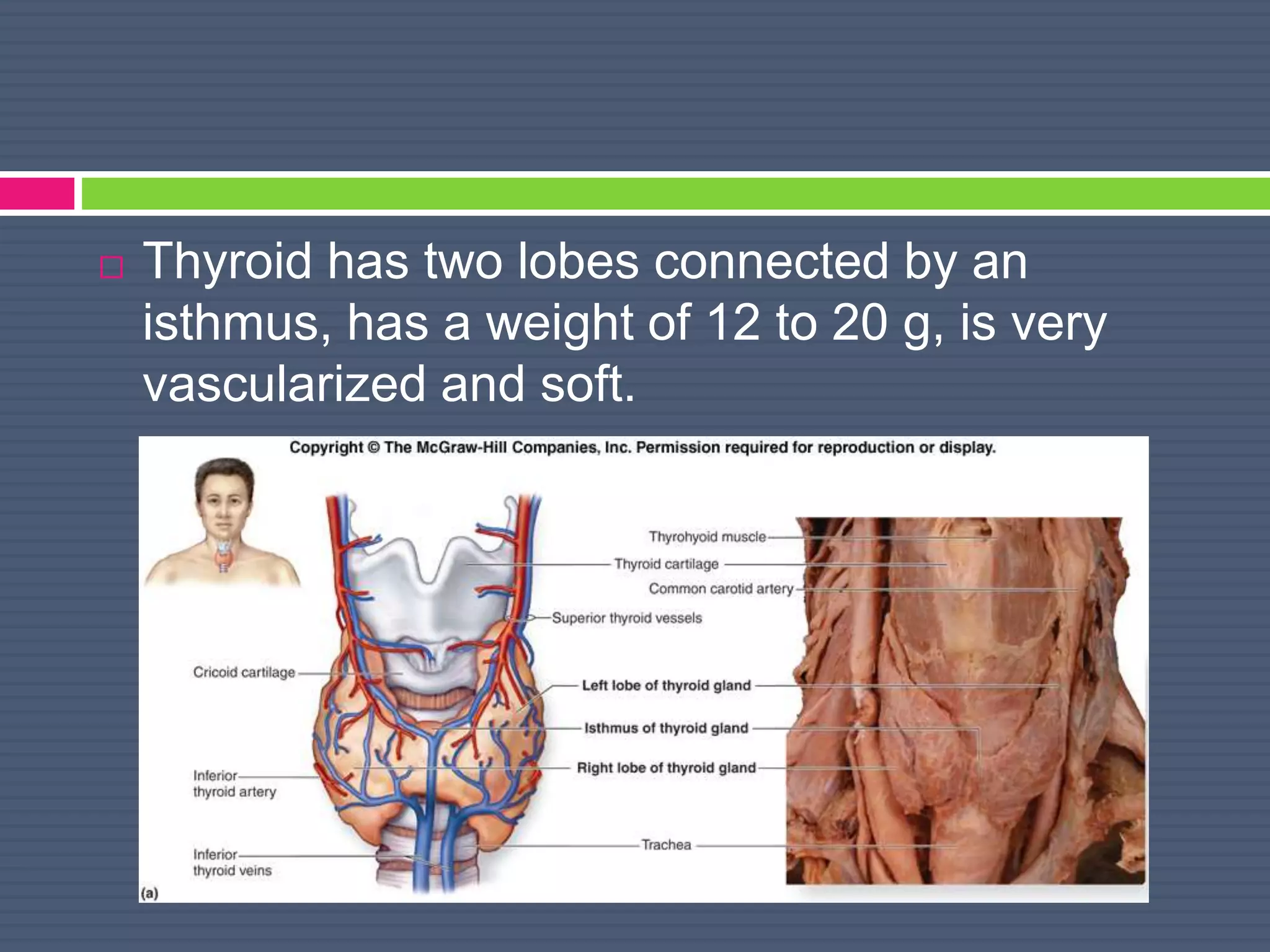
 Thyroid has two lobes connected by an
isthmus, has a weight of 12 to 20 g, is very
vascularized and soft.
Hormones of the Thyroides
 Thyroid is the endocrine gland which has the
highest hormones storage capacity.
 Hormones need for their synthesis, the
presence of iodine in the diet.
 The iodine ingested binds to serum proteins,
especially to albumin it and which remains free
is eliminated in the urine. The thyroid gland
extracts the circulating iodine very effectively.
Hormones secreted by the
Thyroides include:
 Thyroxine (T4)
 Triiodothyronine (T3)
Which play a role during the
development and help
maintain homeostasis
thermogenic and metabolic
in adults.
Parathyroid Gland
 Located in the neck, related to the thyroid
gland with a distinct physiological function.
 Its shape is circular and flattened as lentils.
 Are four parathyroid glands, two upper (are
larger while the lower are more oval) and two
lower (are more oval).
 Each gland has an arterial branch itself and
are innervated
Hormones of the
Parathyroides
 Hormones secreted maintain calcium and
phosphate metabolism in the blood and within
the bones.
Hormones secreted by the
Parathyroides include:
Parathyroid hormone/ parathormone (PTH):
 Increases blood calcium levels so nervous and
muscles can function properly.
 Stimulating osteoclasts to break down bone
and release calcium.
 Promotes calcium conservation
(reabsorption) by the kidneys.
 PTH can be associated with feeling of fatigue
and anxiety.
 Increases gastrointestinal
calcium absorption by
activating vitamin D.
Endocrine diseases
Can generally be classified as:
 Low production diseases or hormonal
overproduction.
 Diseases related to the development of space-
occupying lesions.
Hypothalamic-pituitary Disease
 The hypothalamus and pituitary gland are
so tightly connected these are known as
hypothalamic-pituitary disorders
Acromegaly overproduction growth hormone
Giantism. Overproduction. Growth hormone.
Deficiency in growth
hormone.
Low production. Growth hormone.
Syndrome of
inappropriate
secretion of
antidiuretic hormone.
Overproduction. Vasopressin.
Sheehan Syndrome. Low production. Any pituitary
hormone.
Pituitary adenoma. Overproduction. Any pituitary
hormone.
Disorders of the Thyroid
Gland
Hyperthyroidism
 Excessive secretion of TSH.
 There are three types of treatment: radioiodine
and antithyroid medication surgery.
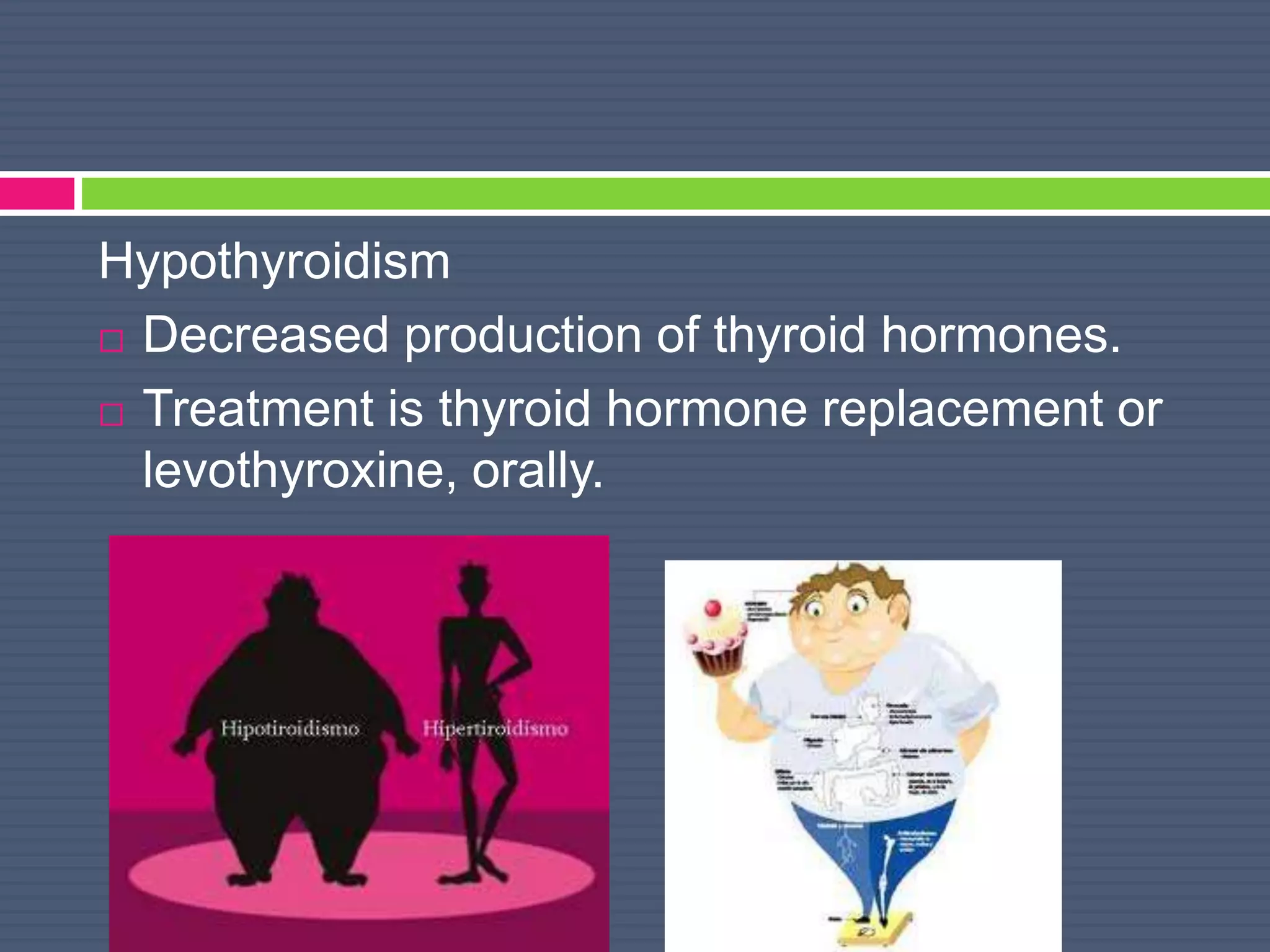
Hypothyroidism
 Decreased production of thyroid hormones.
 Treatment is thyroid hormone replacement or
levothyroxine, orally.

Endocrine system

  • 1.
    ENDOCRINE SYSTEM González CisnerosWendy Lucero Esparza Barrena Brenda Margarita Santos Romero Fernanda Giordano Arrevillaga Vanessa Valencia Gutiérrez Rodrigo
  • 2.
    Endocrine System  Systemof glands.  Regulates and coordinates several body organs.  Directs a metabolic steady state. (Homeostasis)
  • 3.
    Endocrine Gland  Secretetheir products (hormones) directly into the bloodstream.  Make their function in distant organs of the body.  Exert their effects on target cells.
  • 4.
    Hormones  Chemical releasedin one part of the body that sends out messages that affect cells in other parts of the organism.
  • 5.
    Feedback mechanisms  PositiveFeedback – Stimulates.  Negative Feedback – Inhibits.  As the number of glands involved, glandular circuits can be classified as long, short and ultrashort.
  • 6.
  • 7.
    Division It is dividedin two parts:  Medial Hypothalamus: recorded the greatest number of cores. This area has the largest amount of soma and less of fibers.  Lateral Hypothalamus: is poor in soma neuronal and rich in fibers.
  • 8.
     The elementsthat separate the medial hypothalamus the side are the columns of the fornix and a booklet that is born from the mammillary body and rises again toward the thalamus.
  • 9.
    Functions of the hypothalamus Regulation of the endocrine system.  Regulation corporal temperature.
  • 10.
     Regulation ofemotional behavior  Regulation of sleep and wakefulness
  • 11.
     Regulation offood intake
  • 12.
    Hormones of the Hypothalamus Is highly involved in pituitary gland function.  When it receives a signal from the nervous system, secretes substances known as neurohormones that start and stop the secretion of pituitary hormones.
  • 13.
    Hormones secreted bythe hypothalamus include:  Anti-diuretic hormone (ADH)  Corticotropin-releasing hormone (CRH)  Gonadotropin-releasing hormone (GnRH)
  • 14.
     Growth hormone-releasinghormone (GHRH) or growth hormone-inhibiting hormone (GHIH), (also known as somatocrinin)  Oxytocin  Prolactin-releasing hormone (PRH) or prolactin- inhibiting hormone (PIH)  Thyrotropin releasing hormone (TRH)
  • 15.
  • 16.
     Oval shapewith a diameter of 8 x12 mm and 6 mm in the vertical direction (normal conditions).  Located in marrow cavity of the skull base (Sella turcica).
  • 17.
     Control mostof the biological processes of the organism (metabolism).  The gland is 20% larger in women than in men.
  • 18.
     Separated into2 parts: the anterior lobe and posterior lobe or adenohypophysis or neurohypophysis.
  • 19.
    PITUITAR Y Posterior pituitary or neurohypophy sis. Stores andreleases hormones synthesized by the hypothalamus (oxytocin and vasopressin). Anterior pituitary or adenohypophysis. (Secretion of numerous hormones).Hipófisis intermedia. Produce melanotropin s. Intermediate pituitary.
  • 20.
    Thyroid gland From Greekthyreos: shield and eidos: form.
  • 21.
     Butterfly-shaped glandlocated in the neck, before the trachea, between the cricoid cartilage and rests over the jugular of the breastbone.
  • 22.
     Thyroid hastwo lobes connected by an isthmus, has a weight of 12 to 20 g, is very vascularized and soft.
  • 23.
    Hormones of theThyroides  Thyroid is the endocrine gland which has the highest hormones storage capacity.  Hormones need for their synthesis, the presence of iodine in the diet.
  • 24.
     The iodineingested binds to serum proteins, especially to albumin it and which remains free is eliminated in the urine. The thyroid gland extracts the circulating iodine very effectively.
  • 25.
    Hormones secreted bythe Thyroides include:  Thyroxine (T4)  Triiodothyronine (T3) Which play a role during the development and help maintain homeostasis thermogenic and metabolic in adults.
  • 26.
  • 27.
     Located inthe neck, related to the thyroid gland with a distinct physiological function.  Its shape is circular and flattened as lentils.
  • 28.
     Are fourparathyroid glands, two upper (are larger while the lower are more oval) and two lower (are more oval).  Each gland has an arterial branch itself and are innervated
  • 29.
    Hormones of the Parathyroides Hormones secreted maintain calcium and phosphate metabolism in the blood and within the bones.
  • 30.
    Hormones secreted bythe Parathyroides include: Parathyroid hormone/ parathormone (PTH):  Increases blood calcium levels so nervous and muscles can function properly.  Stimulating osteoclasts to break down bone and release calcium.
  • 31.
     Promotes calciumconservation (reabsorption) by the kidneys.  PTH can be associated with feeling of fatigue and anxiety.  Increases gastrointestinal calcium absorption by activating vitamin D.
  • 32.
    Endocrine diseases Can generallybe classified as:  Low production diseases or hormonal overproduction.  Diseases related to the development of space- occupying lesions.
  • 33.
    Hypothalamic-pituitary Disease  Thehypothalamus and pituitary gland are so tightly connected these are known as hypothalamic-pituitary disorders
  • 34.
    Acromegaly overproduction growthhormone Giantism. Overproduction. Growth hormone. Deficiency in growth hormone. Low production. Growth hormone. Syndrome of inappropriate secretion of antidiuretic hormone. Overproduction. Vasopressin. Sheehan Syndrome. Low production. Any pituitary hormone. Pituitary adenoma. Overproduction. Any pituitary hormone.
  • 35.
    Disorders of theThyroid Gland Hyperthyroidism  Excessive secretion of TSH.  There are three types of treatment: radioiodine and antithyroid medication surgery.
  • 36.
    Hypothyroidism  Decreased productionof thyroid hormones.  Treatment is thyroid hormone replacement or levothyroxine, orally.