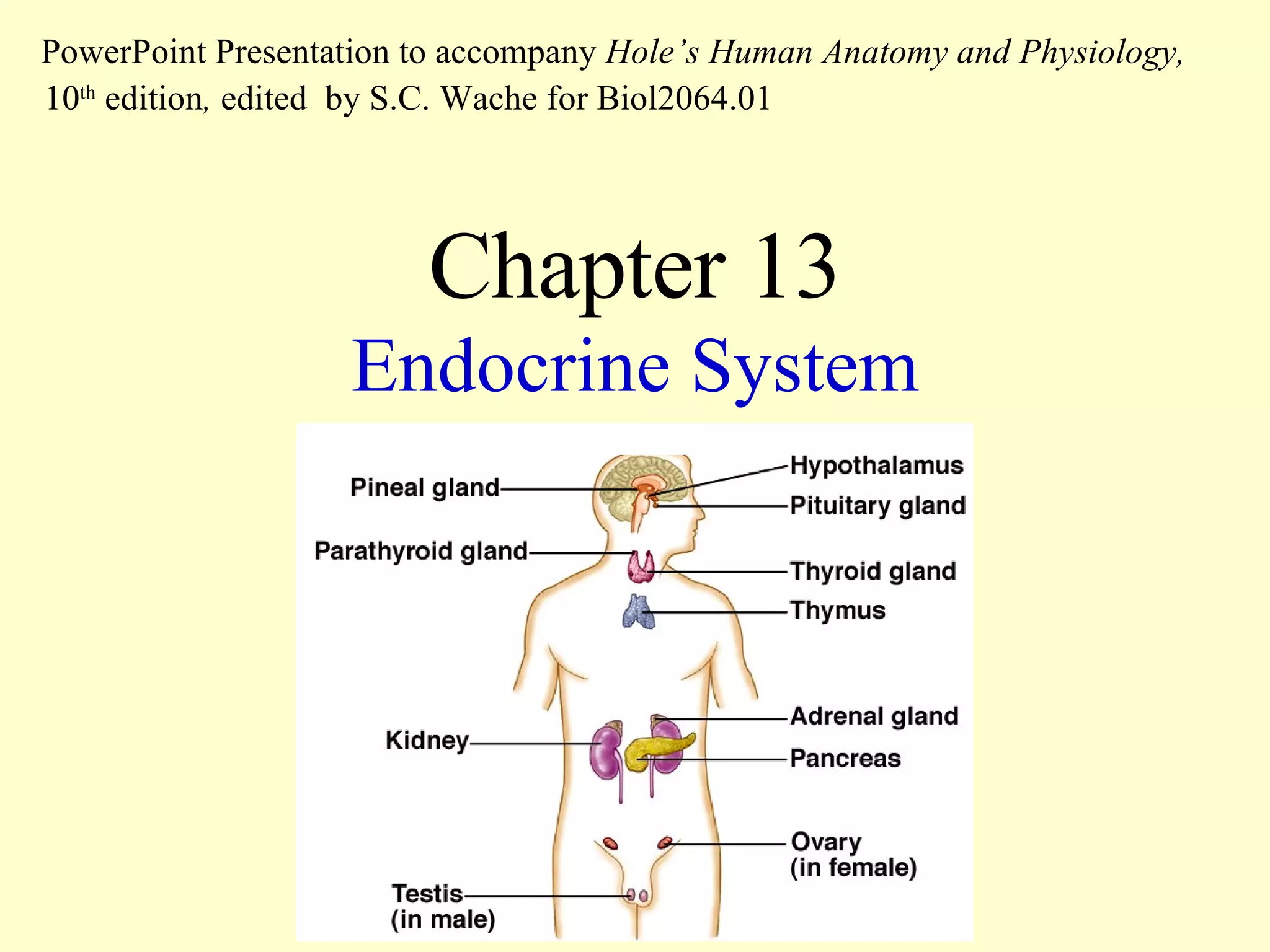
Chapter 13 Endocrine System PowerPoint Presentation to accompany  Hole’s Human Anatomy and Physiology,  10 th  edition ,  edited   by S.C. Wache for Biol2064.01
You are responsible for the  following figures and topics:   Fig. 13.3 - Location of major endocrine glands. Fig. 13.9, 13.12, 13.13 – hypothalamus; pituitary gland. Fig. 13.4 - What are hormones ?  Fig. 13.5, 13.7 - chemical structure predicts their mechanism of action. Fig. 13.11 - function of hormones is to keep balance / homeostasis. Read TB, p. 477. [see also: Fig. 13.16] Fig. 13.15 - Stimulation of anterior pituitary hormones by the releasing hormones of the hypothalamus.  Read TB, p. 485, on thyroid gland. Fig. 13.18 - describe the location of the thyroid gland. Fig. 13.20 - describe 2 of the three thyroid hormones, T3 and T4.  Tab. 13.7 - all 3 thyroid hormones: T3, T4, Calcitonin. Fig. 13.27 - PTH-parathyroid hormone  Refer back to Ch.7 where we discussed osteoblasts and osteoclasts. Fig. 13.24 - Describe the structure, location and number of parathyroid glands.  Figs. 13.21, 13.22, 13.23 - Define ' cretinism', 'hyperthyroidism' , 'goiter'  Fig. 13.28 - Adrenal gland.  Tab. 13.11 - Name the hormones and their function !!! Fig. 13.30 - Hormones released by the adrenal medulla. TB, p.492. Fig. 13.31 - Control of aldosterone, a mineralo-corticoid. Fig. 13.33 - Control of cortisol, a gluco-corticoid. Read TB, p.496, on the pancreas. Fig. 13.34 - Describe the location of the pancreas. Tab. 13.12 - Describe the function of glucagon.  Clinical Application 13.4 - IDDM  Read TB, p.498, pineal gland.  TB, p.500 - other hormones of interest.
Hormones and Endocrine Secretion Hormones  are proteins or lipids which can stimulate target  cells even at very low concentrations.  They help regulate metabolic processes and homeostasis. Definition endocrine secretion of hormones:   A  hormone  is a molecule such as a protein or a  lipid that a cell secretes into interstitial fluid that  travels in the blood and acts on target cells. Exocrine secretion  releases substances into ducts  or a tube that is connected to the outside environment.
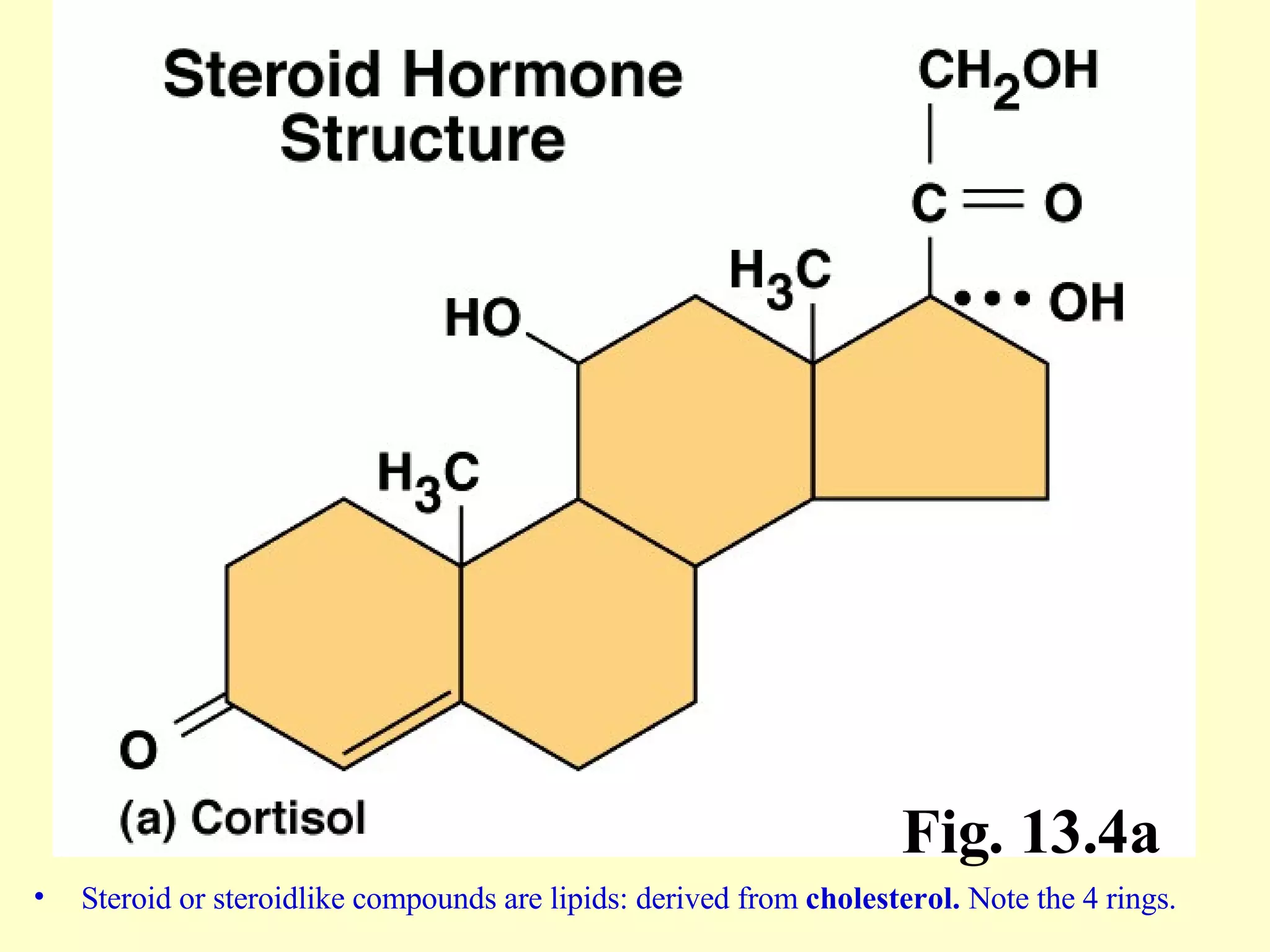
Steroid or steroidlike compounds are lipids: derived from  cholesterol.  Note the 4 rings. Fig. 13.4a
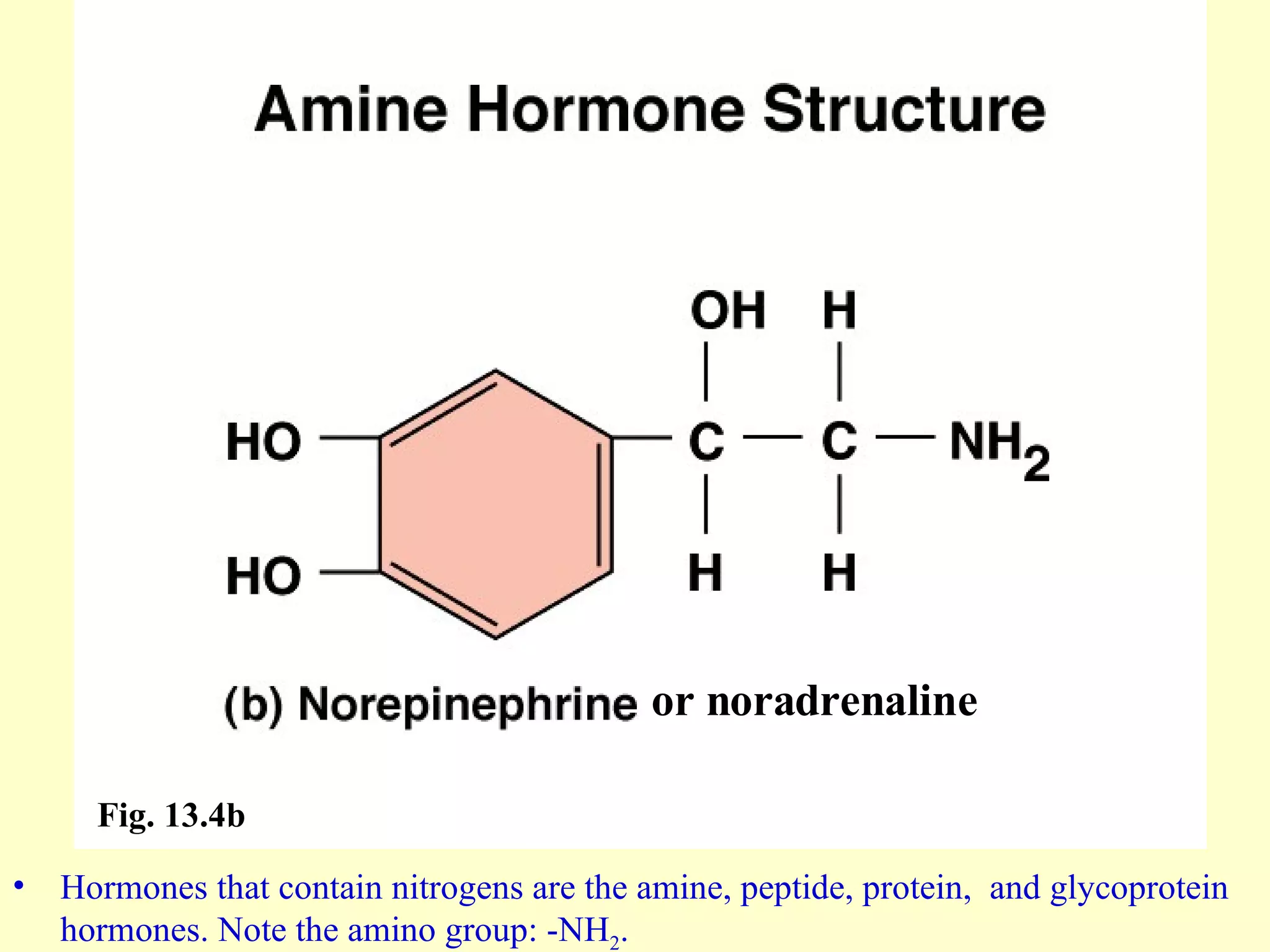
Hormones that contain nitrogens are the amine, peptide, protein,  and glycoprotein hormones. Note the amino group: -NH 2 . Fig. 13.4b or noradrenaline
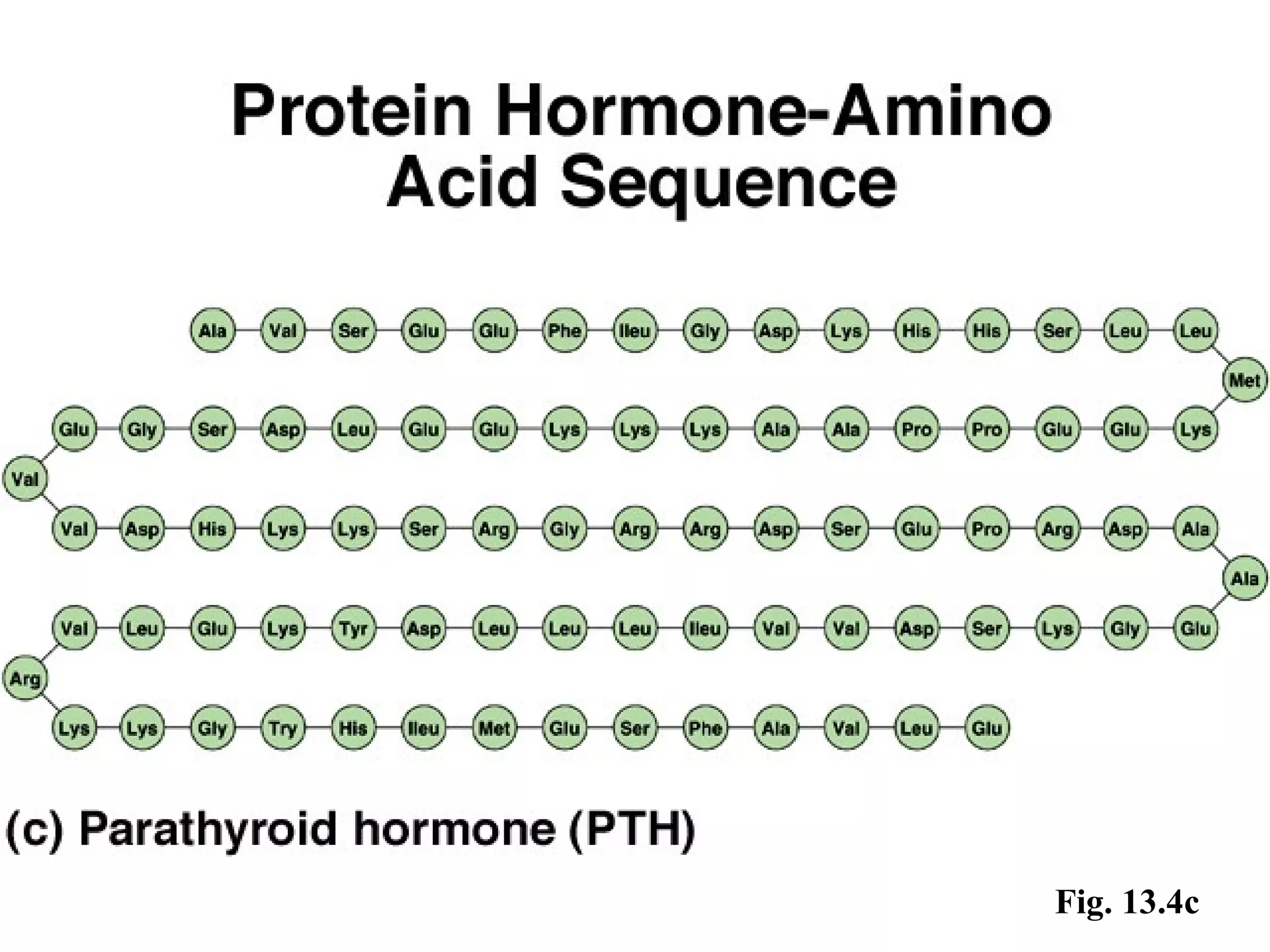
Fig. 13.4c
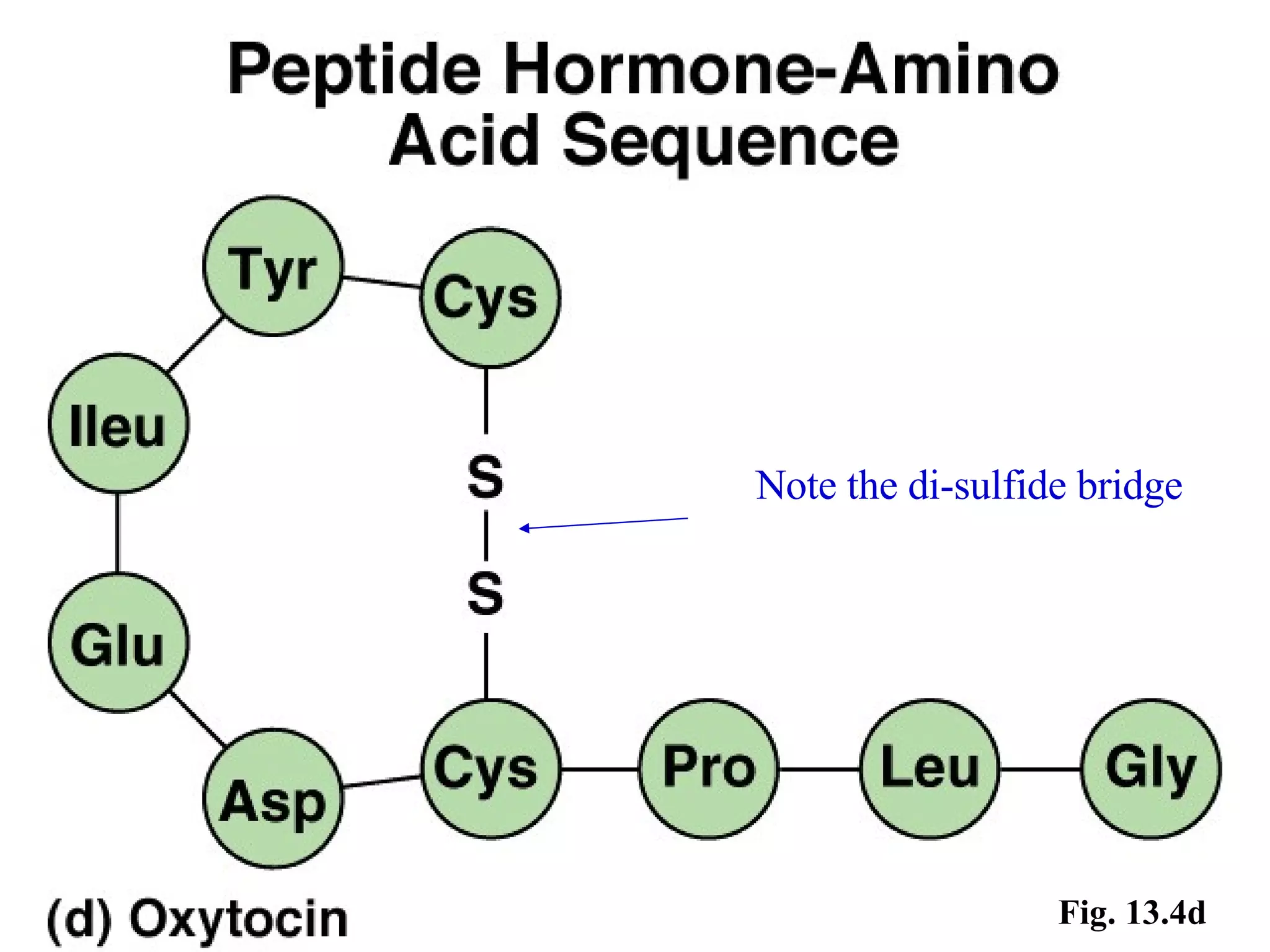
Fig. 13.4d Note the di-sulfide bridge
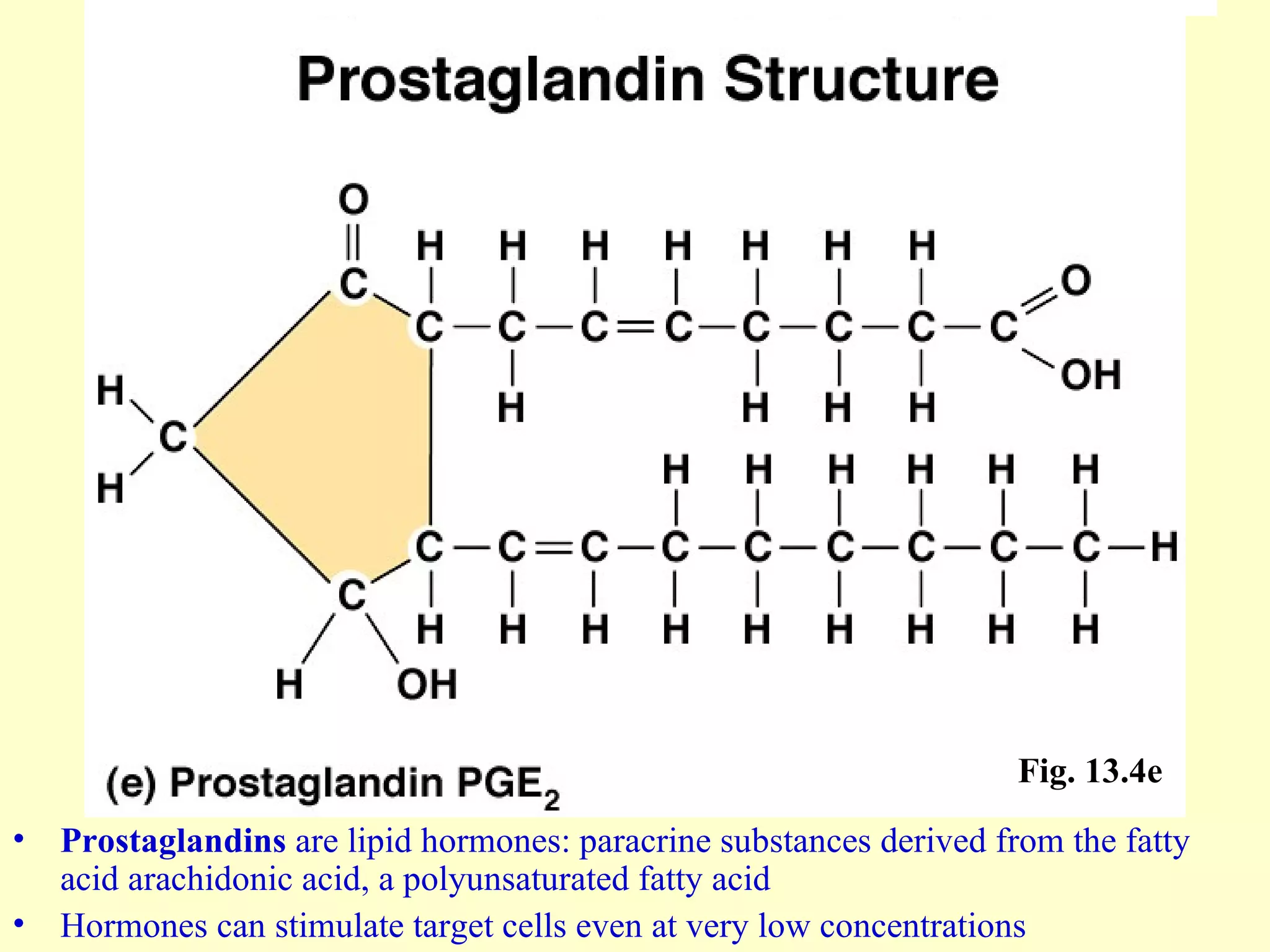
Prostaglandins  are lipid hormones: paracrine substances derived from the fatty acid arachidonic acid, a polyunsaturated fatty acid Hormones can stimulate target cells even at very low concentrations Fig. 13.4e
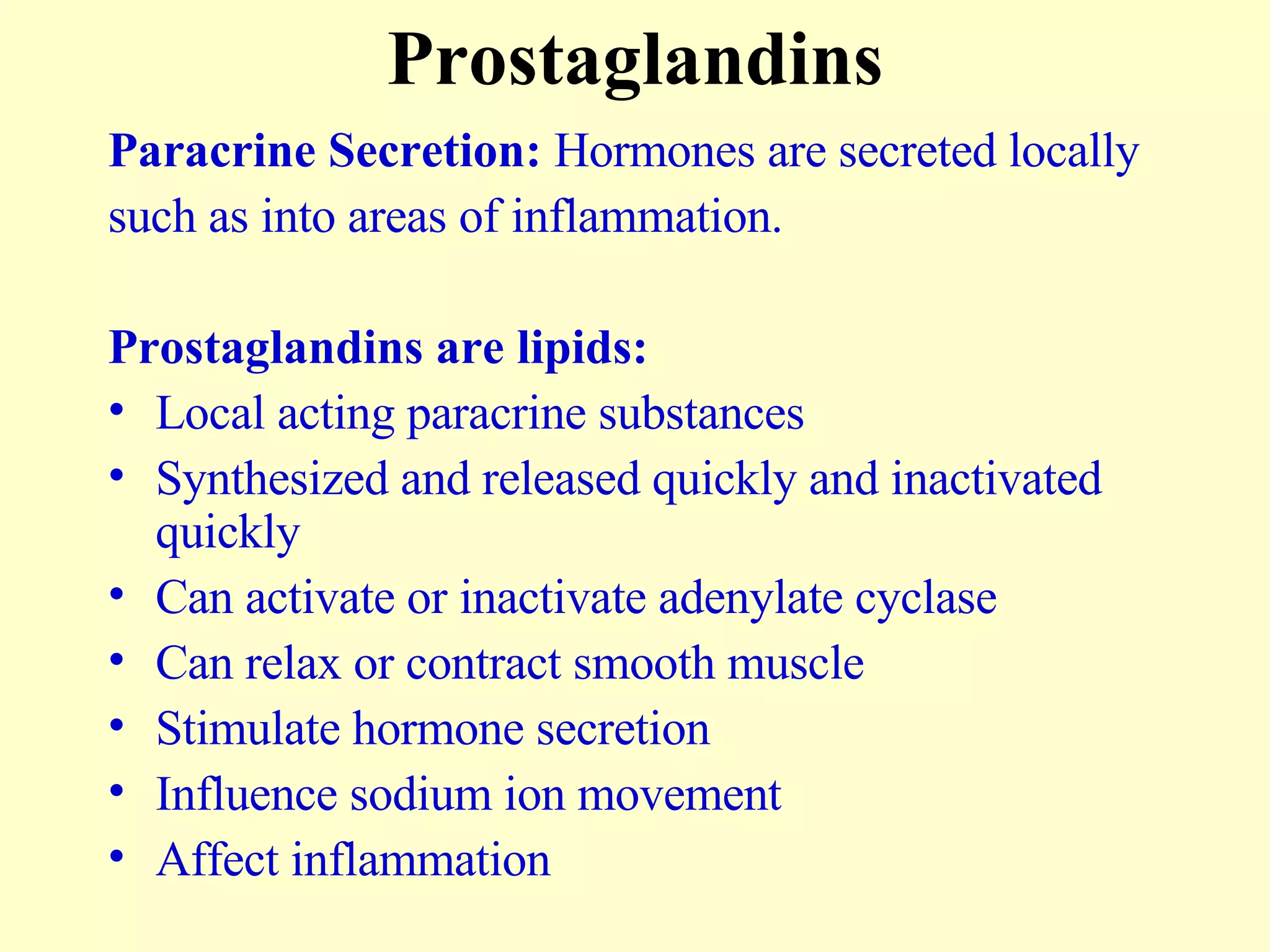
Prostaglandins Paracrine Secretion:  Hormones are secreted locally  such as into areas of inflammation.  Prostaglandins are lipids: Local acting paracrine substances Synthesized and released quickly and inactivated quickly Can activate or inactivate adenylate cyclase Can relax or contract smooth muscle Stimulate hormone secretion Influence sodium ion movement Affect inflammation
Hormone Action Hormones  reach all cells but bind only those that have specific receptors. Hormone receptors  are a group of proteins or glycoproteins that have a specific hormone binding site. A hormone then binds to its specific  receptor forming a  hormone-receptor complex . The more specific receptors the corresponding hormone binds, the greater the response.
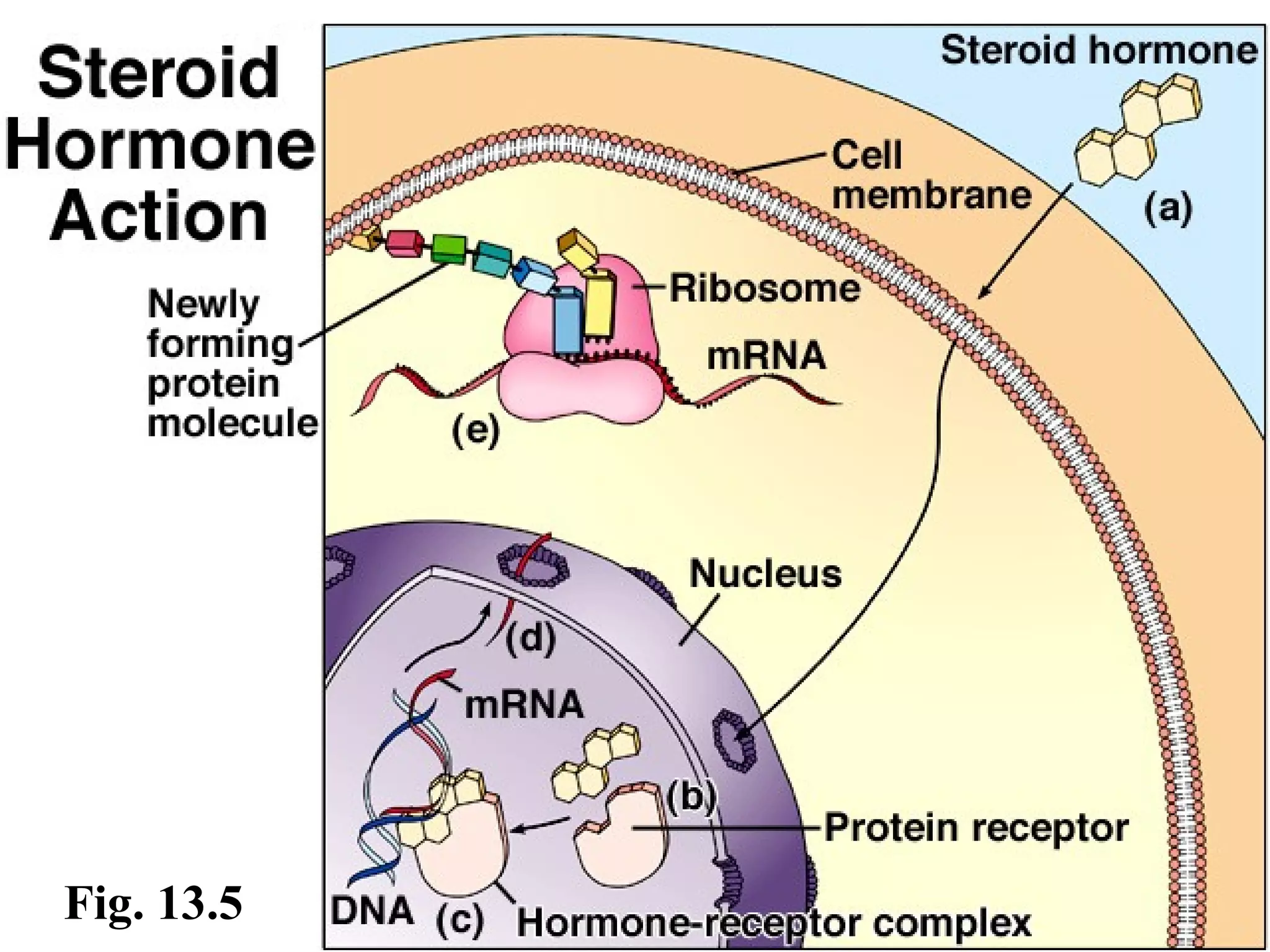
Steroid Hormones Soluble in lipid environments  such as in a cell membrane which is a phospholipid bilayer. Easily diffuse into a cell . Combine with specific protein  receptors . In the nucleus, the  hormone-receptor complex  binds to a specific region of DNA and  activates genes  which are then  transcribed into mRNA . The mRNA directs synthesis of a particular protein on the ribosome ( translation of mRNA into a protein ) which is located in the cytoplasm. These proteins often are  regulatory proteins  which control metabolism and bring about cellular changes.
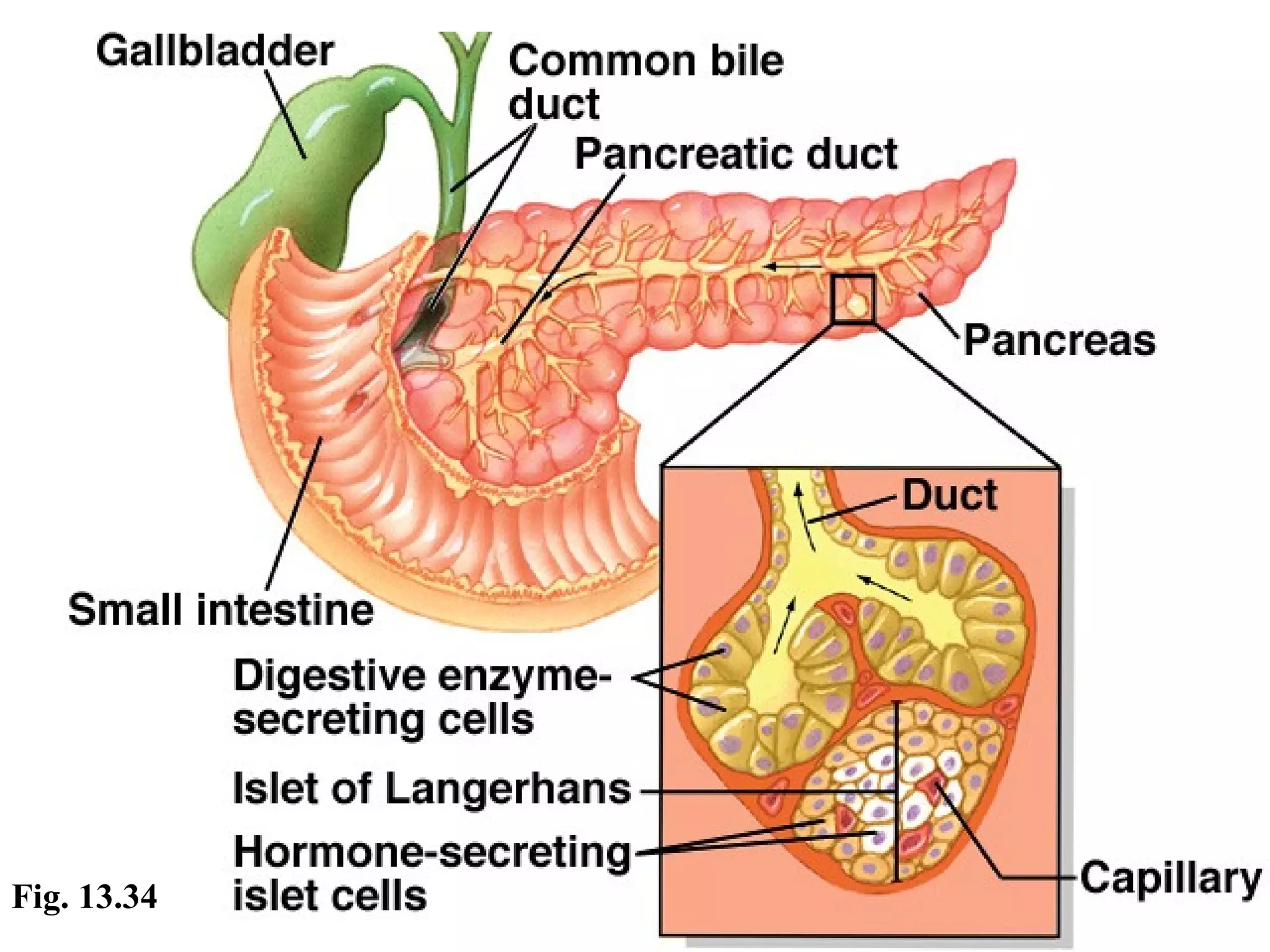
Fig. 13.5
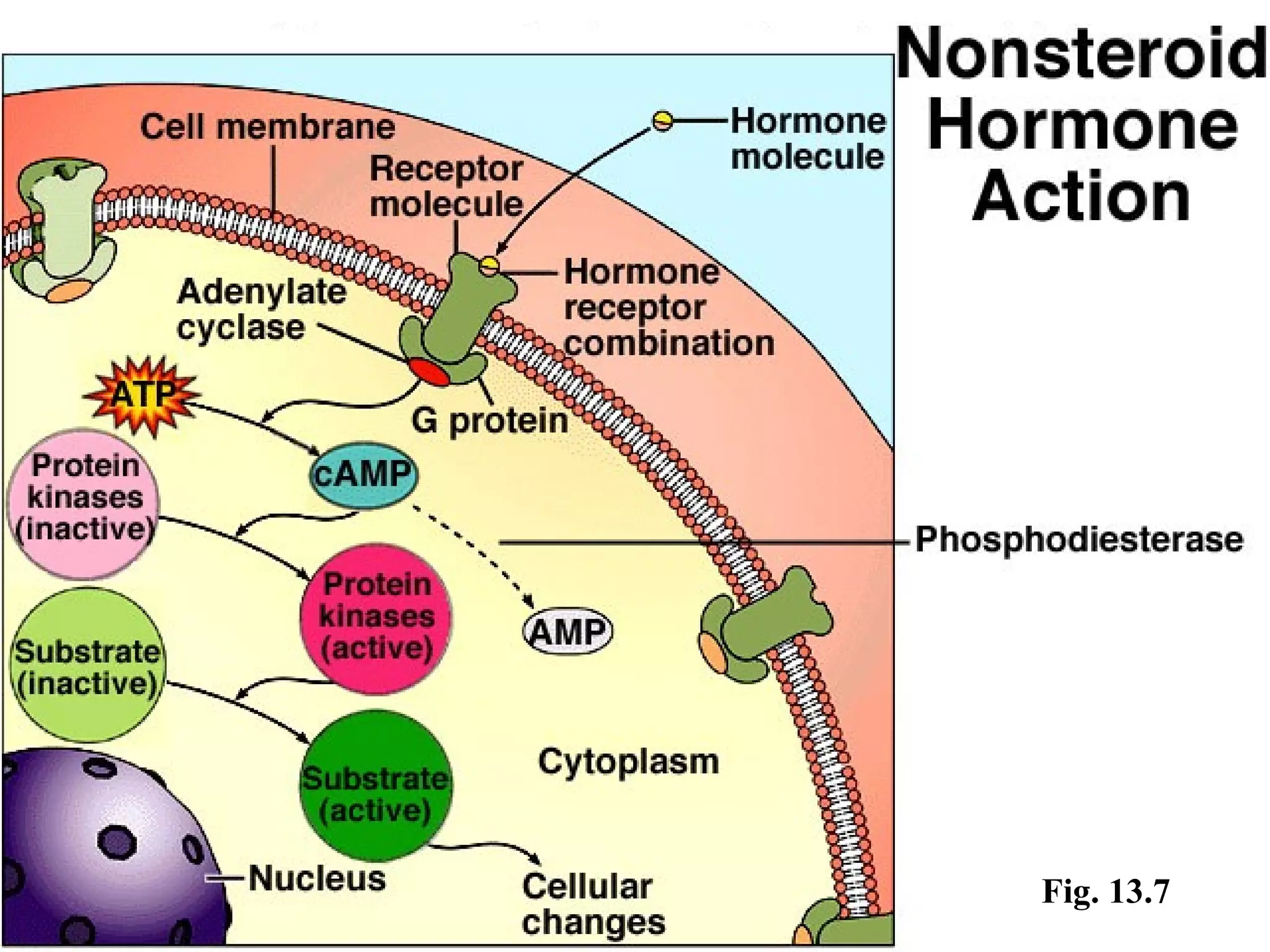
Nonsteroid Hormones Amine, peptide, and protein hormones combine with receptors that are located on the surface of the on the target cell membrane . They bind at specific receptor binding sites which  activates the receptor . The activity site of the receptor  interacts with other membrane proteins  that reach across the phospholipid bilayer. Receptor binding can trigger a cascade of biochemical reactions leading to the synthesis of a  second messenger  such as cyclic AMP.
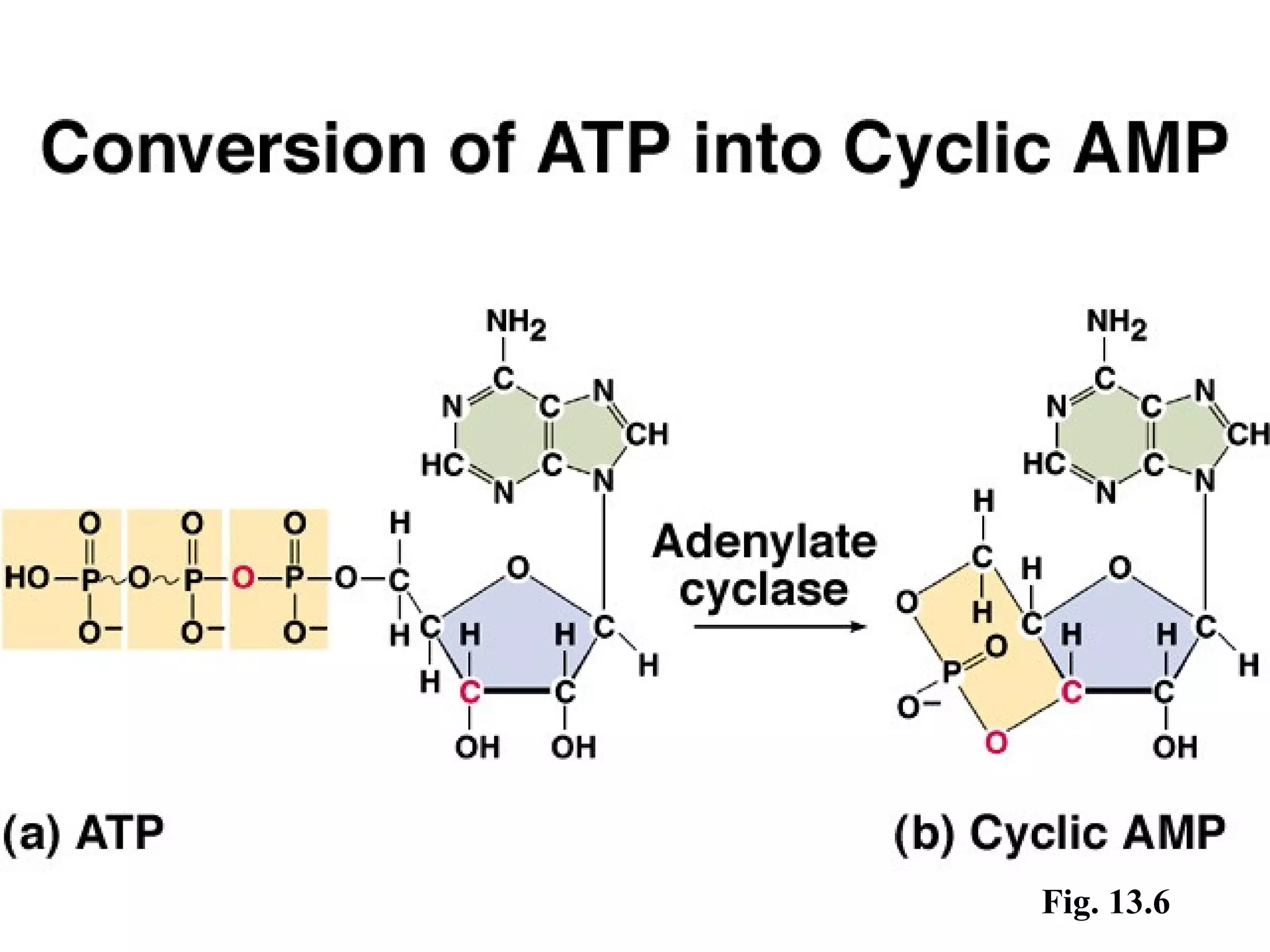
Fig. 13.6
Second Messengers The hormone is the  first messenger . Cyclic AMP is a  second messenger . Hormone-receptor complex activates a G protein which activates  adenylate cyclase  which converts ATP to cAMP. cAMP activates protein kinases Protein kinases are enzymes  that transfer phosphate groups from ATP to proteins and thereby activates them. These proteins often are  regulatory proteins  which control metabolism and bring about cellular changes. Phosphodiesterase  deactivates cAMP
Second Messengers Hormones whose actions  depend upon cAMP   include: TSH, ACTH, FSH, LH, ADH, PTH, epinephrine, norepinephrine, calcitonin, and glucagon and insulin. Other second messengers: cGMP, diacylglycerol, and inositol phosphate (releases calcium ions which combine with calmodulin).
Fig. 13.7
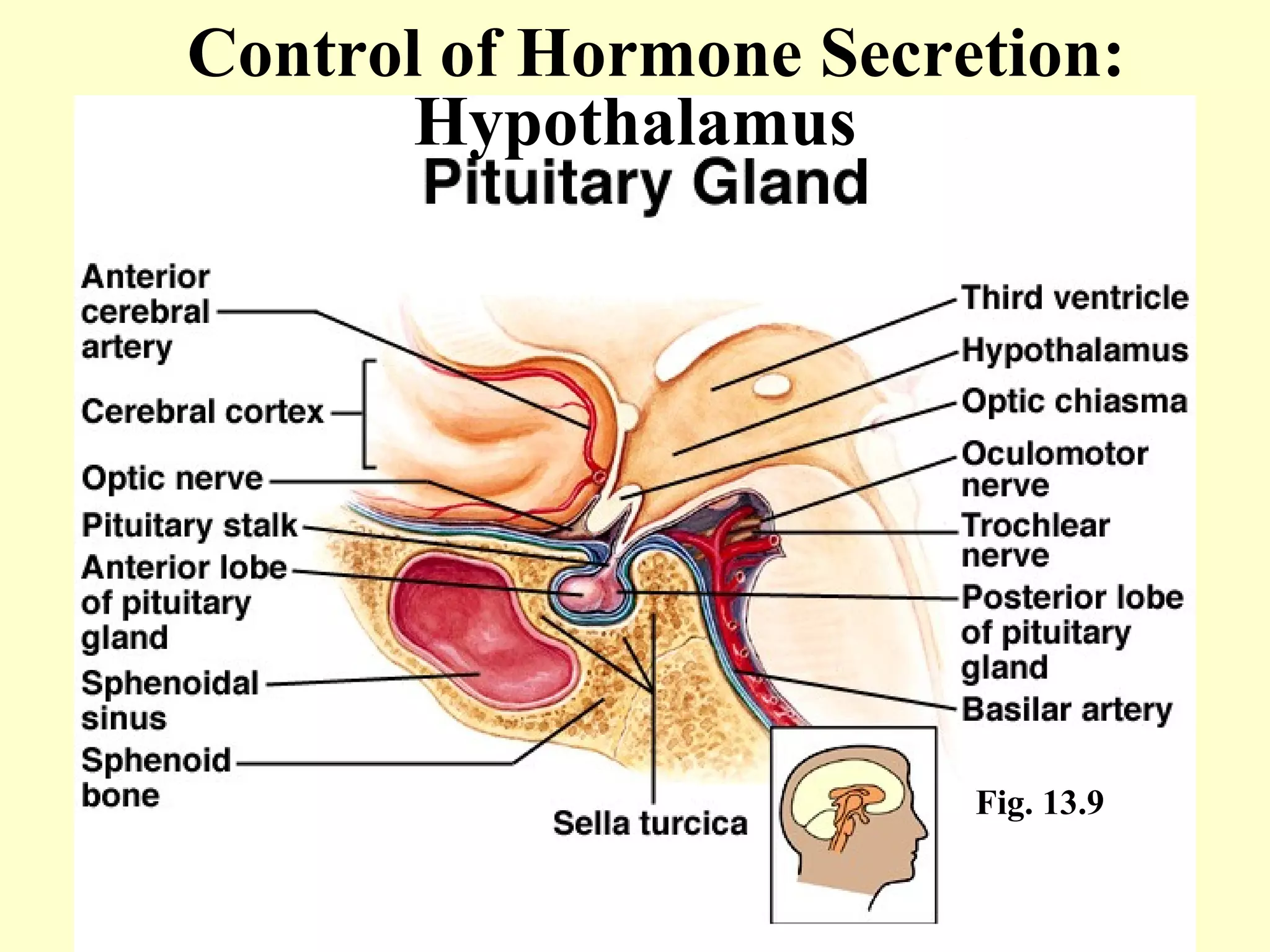
Control of Hormone Secretion: Fig. 13.9 Hypothalamus
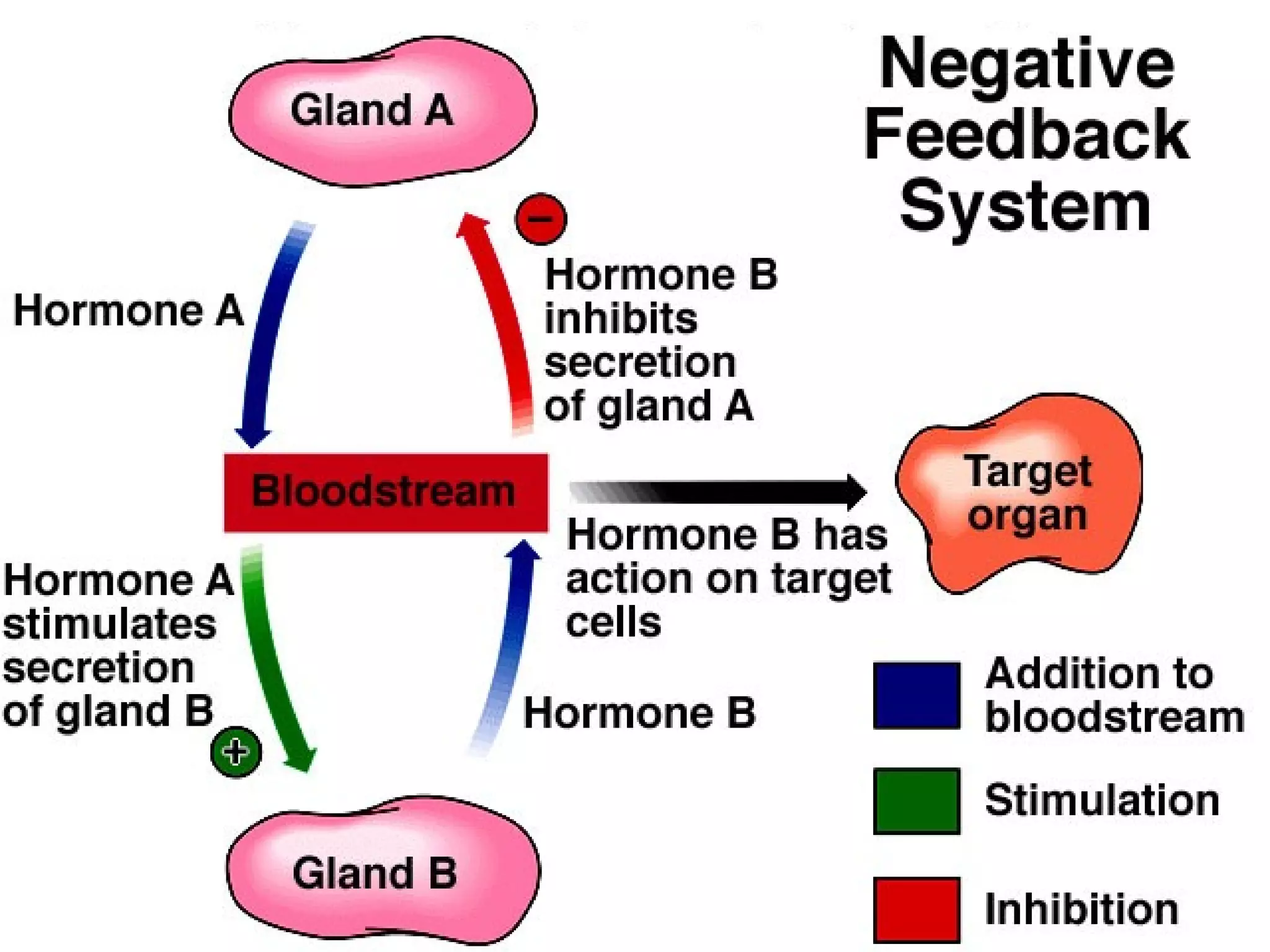
Hypothalamus and Pituitary Gland Initially, the  nervous system  can stimulate glands. However, glands can also be stimulated or inhibited by the action of  other hormones . The  hypothalamus controls the anterior pituitary  through release of tropic hormones. Hypophyseal portal veins carry the hormones of the hypothalamus from the hypothalamus to the pituitary. Two portions: -  anterior lobe  (adenohypophysis): releases   TSH, GH, ACTH, FSH, LH, PRL; Their    secretion is affected by hypothalamic releasing    hormones -  posterior lobe  (neurohypophysis):   does not produce hormones , but secretes    hormones synthesized in neurosecretory cell    bodies in the hypothalamus
 
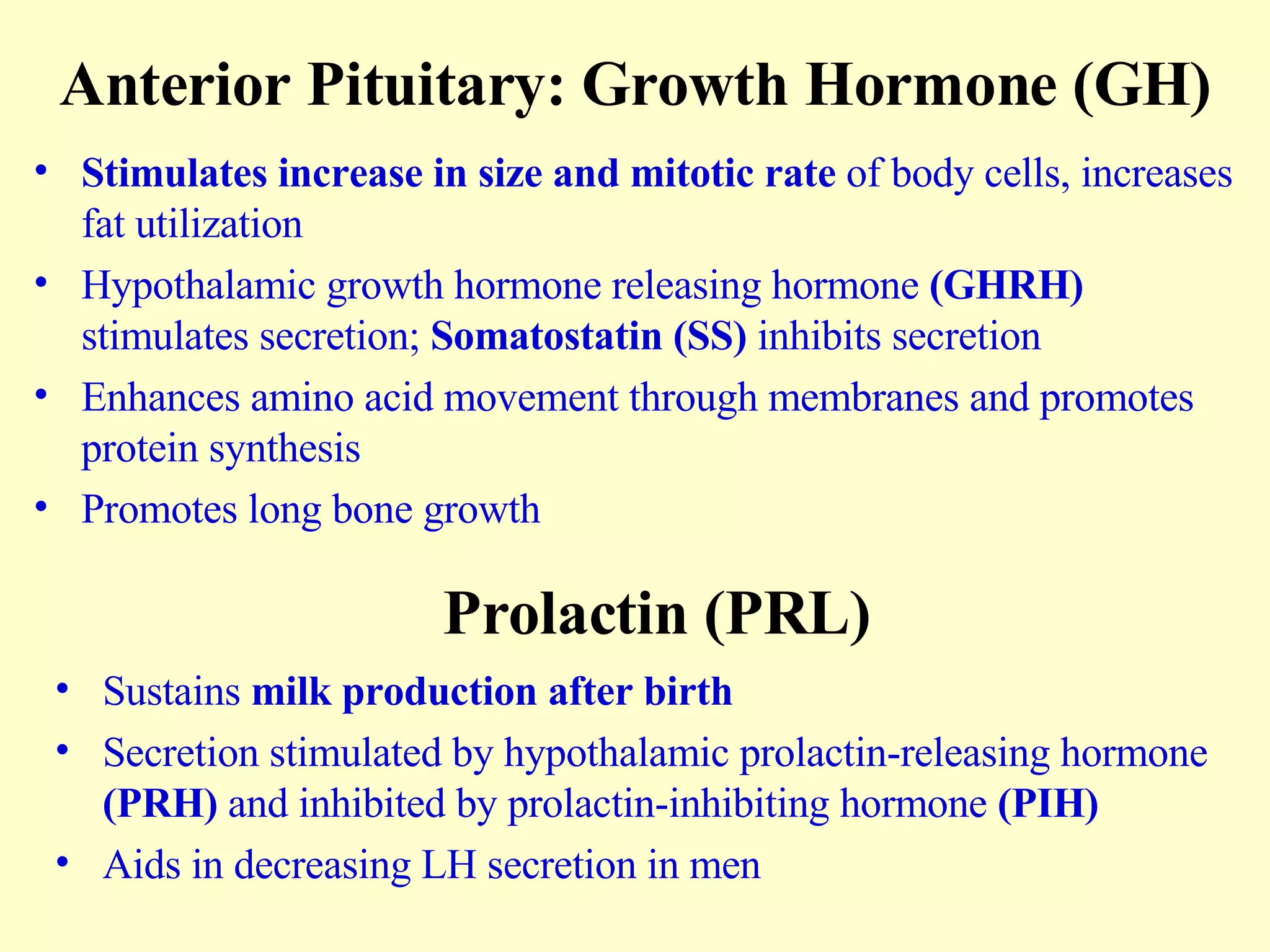
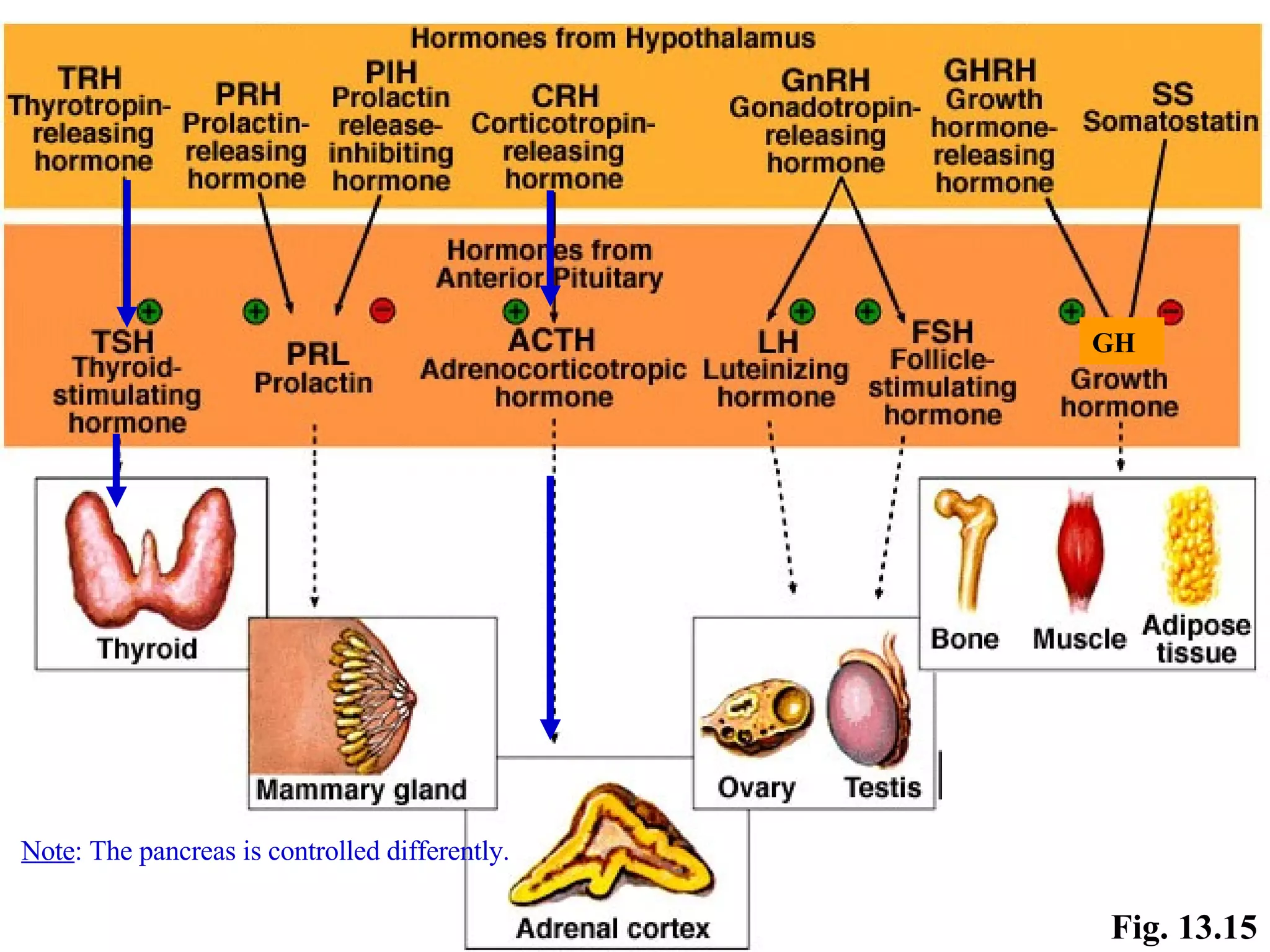
Anterior Pituitary: Growth Hormone (GH) Stimulates increase in size and mitotic rate  of body cells, increases fat utilization Hypothalamic growth hormone releasing hormone  (GHRH)  stimulates secretion;  Somatostatin (SS)  inhibits secretion Enhances amino acid movement through membranes and promotes protein synthesis Promotes long bone growth Prolactin (PRL) Sustains  milk production after birth Secretion stimulated by hypothalamic prolactin-releasing hormone  (PRH)  and inhibited by prolactin-inhibiting hormone  (PIH) Aids in decreasing LH secretion in men
Thyroid-Stimulating  Hormone (TSH) = Thyrotropin Controls secretion of hormones from the thyroid gland Thyrotropin-releasing hormone (TRH) from the hypothalamus stimulates secretion High levels lead to goiter Adrenocorticotropic Hormone (ACTH) Controls secretion of hormones from the adrenal cortex Corticotropin-releasing hormone (CRH) from the hypothalamus stimulates secretion Stress can stimulate CRH secretion
Follicle-stimulating Hormone (FSH) A glycoprotein caled also a  gonadotropin Gonadotropin-releasing hormone ( GnRH ) from the hypothalamus stimulates its secretion In women , it stimulates the development of  ovarian follicles, stimulates follicular cells to secrete  estrogen In men , this gonadotropin stimulates growth of the seminiferous tubules and sperm production Luteinizing Hormone (LH) Female  gonadotropin LH  or male gonadotropin  LH = ICSH Hypothalamic gonadotropin-releasing hormone ( GnRH ) stimulates its secretion Promotes secretion of sex hormones ( testosterone ) In women, it promotes egg release =  ovulation
Posterior Pituitary:  Antidiuretic Hormone (ADH) Causes kidneys to retain water = concentrates urine In high concentration, it raises blood pressure Hypothalamus produces and posterior pituitary neurosecretory cells release ADH in response to changes in blood volume and changing blood concentration Oxytocin (OT) Contracts muscles in uterine wall and those associated with milk-secreting glands Produced by the hypothalamus and secreted by neurosecretory cells in the posterior pituitary in response to uterine and vaginal wall stretching and stimulation of breasts
Fig. 13.15 GH Note : The pancreas is controlled differently.
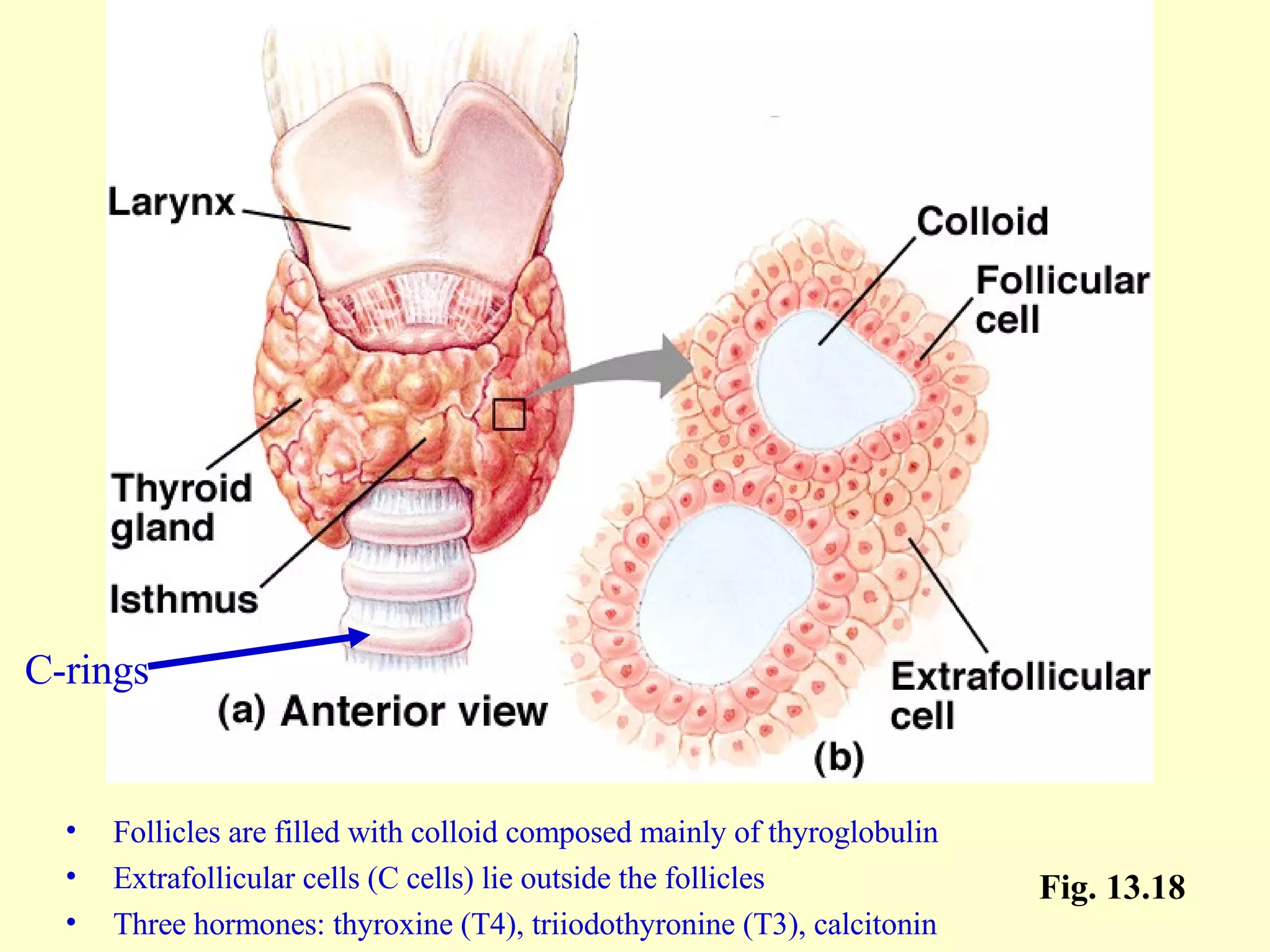
Follicles are filled with colloid composed mainly of thyroglobulin Extrafollicular cells (C cells) lie outside the follicles Three hormones: thyroxine (T4), triiodothyronine (T3), calcitonin Fig. 13.18 C-rings
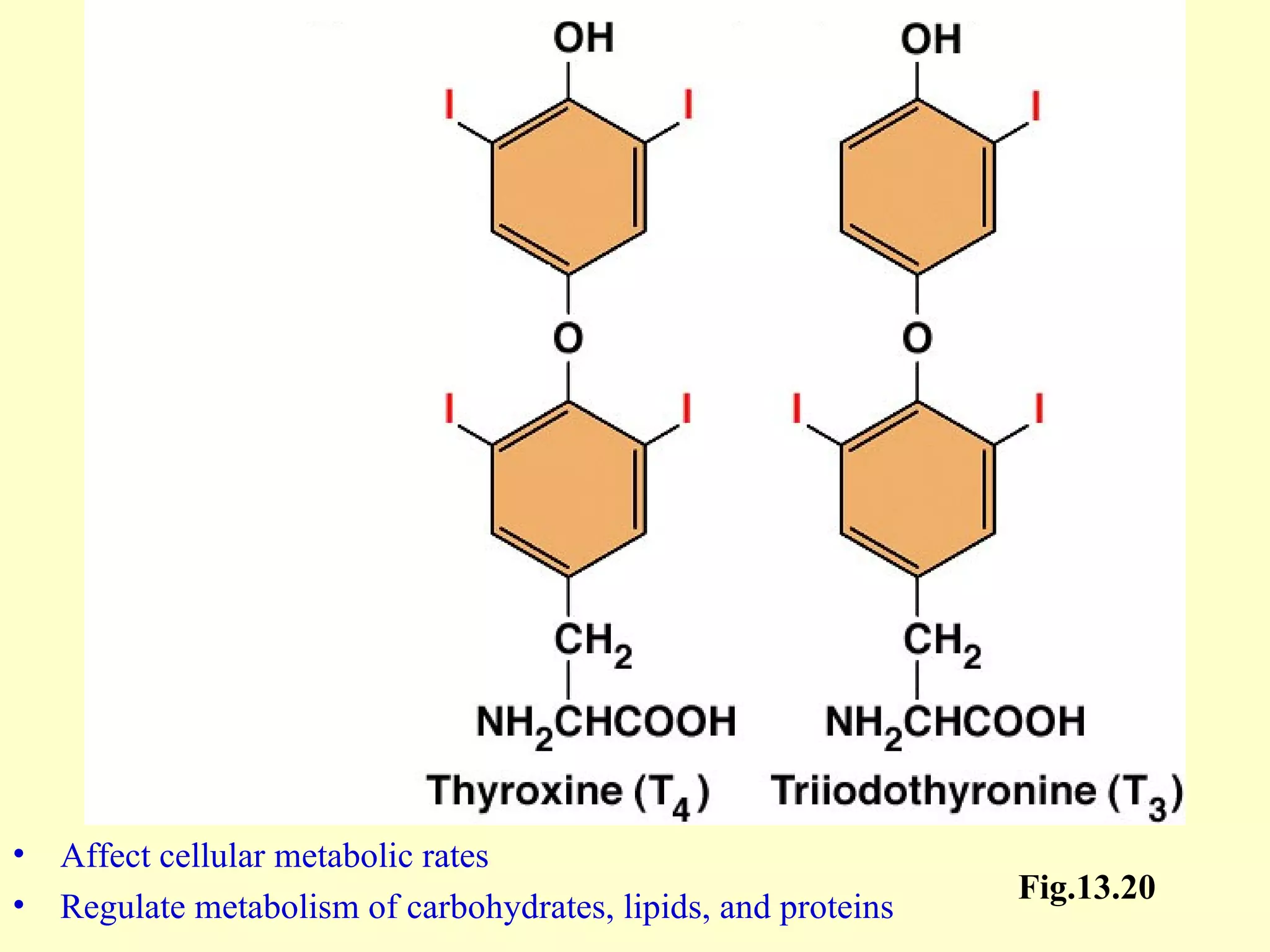
Affect cellular metabolic rates Regulate metabolism of carbohydrates, lipids, and proteins Fig.13.20
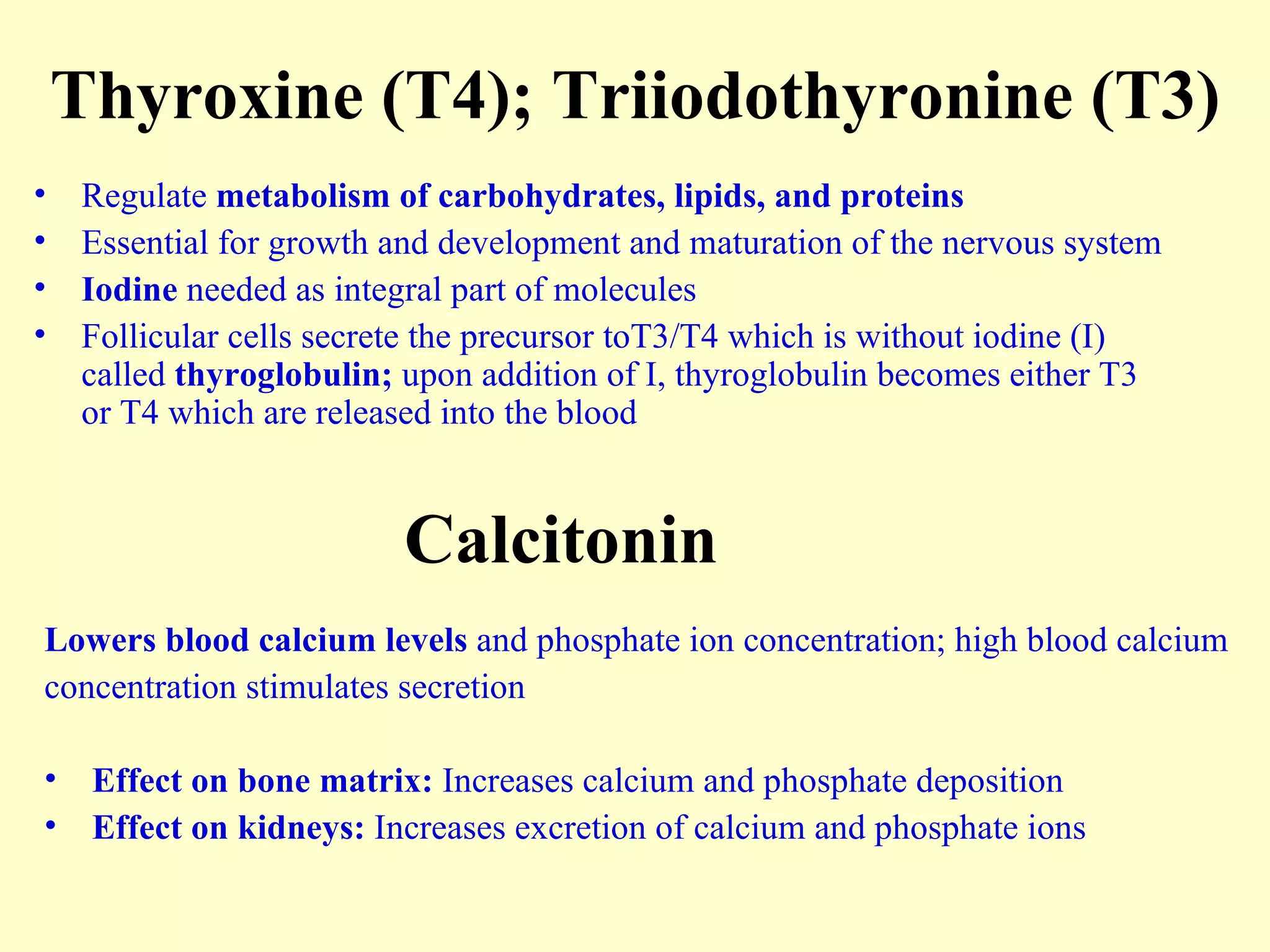
Thyroxine (T4); Triiodothyronine (T3) Regulate  metabolism of carbohydrates, lipids, and proteins Essential for growth and development and maturation of the nervous system Iodine  needed as integral part of molecules Follicular cells secrete the precursor toT3/T4 which is without iodine (I) called  thyroglobulin;  upon addition of I, thyroglobulin becomes either T3 or T4 which are released into the blood Calcitonin Lowers blood calcium levels  and phosphate ion concentration; high blood calcium  concentration stimulates secretion Effect on bone matrix:  Increases calcium and phosphate deposition  Effect on kidneys:  Increases excretion of calcium and phosphate ions
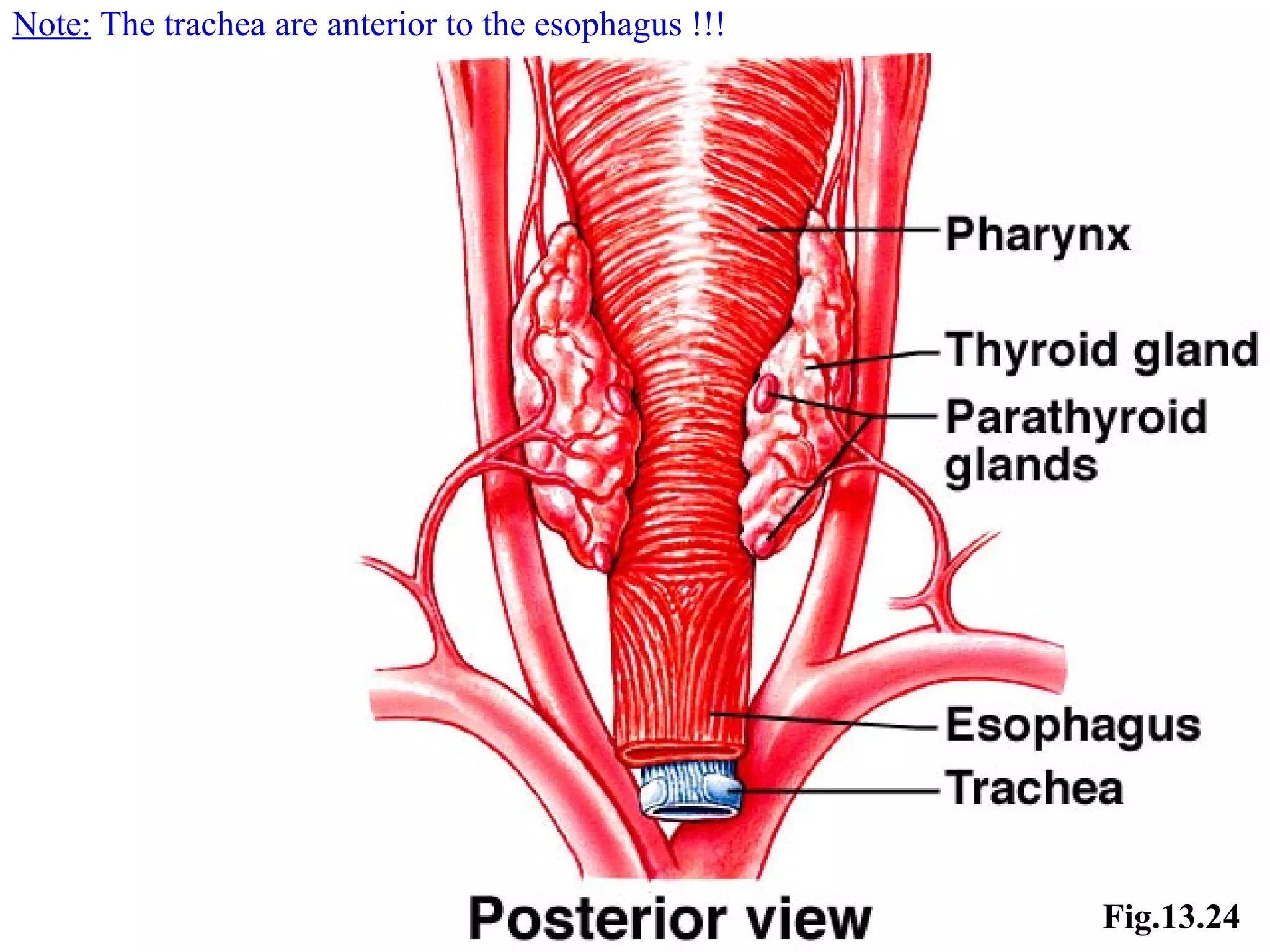
Note:  The trachea are anterior to the esophagus !!! Fig.13.24
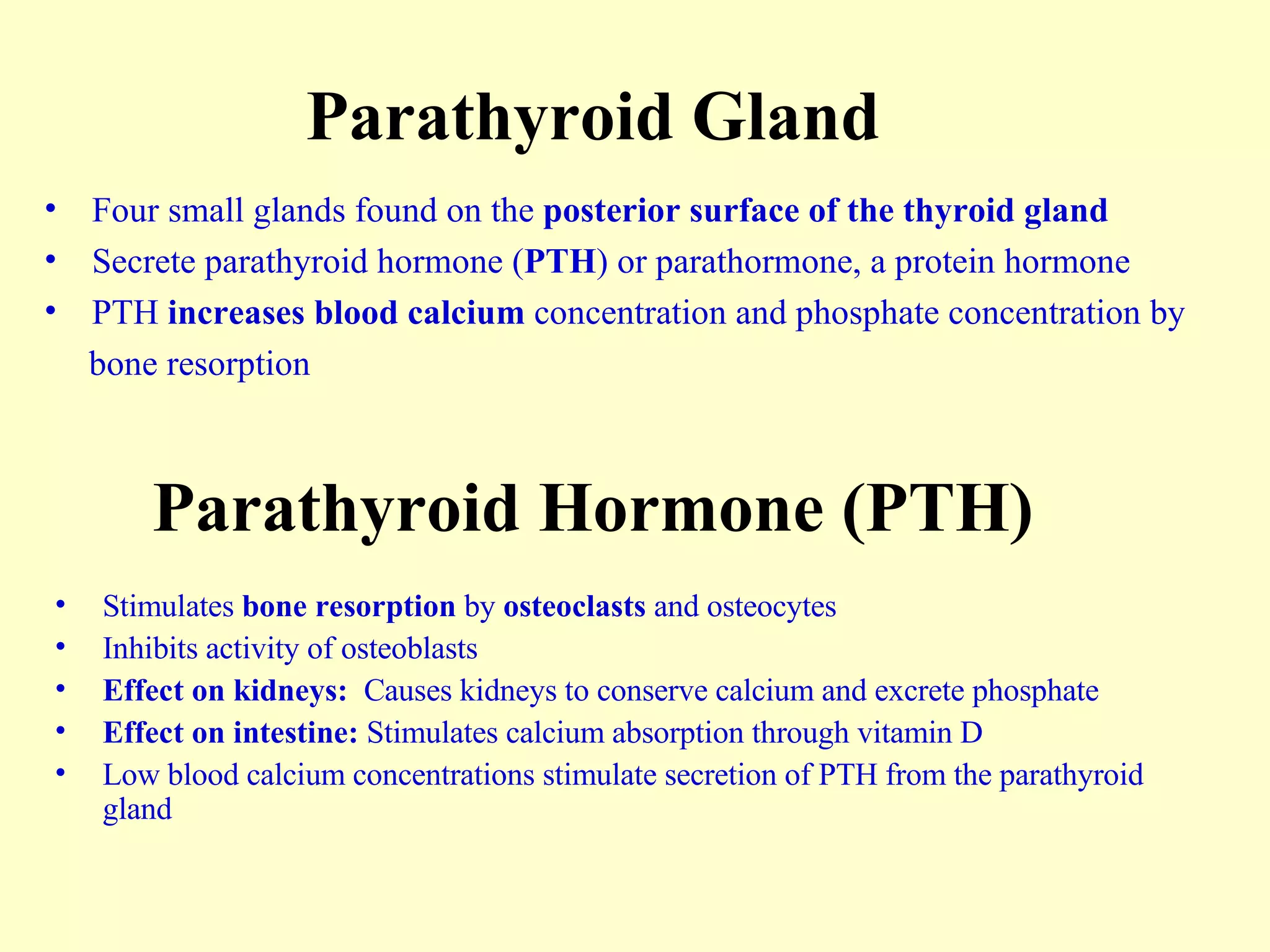
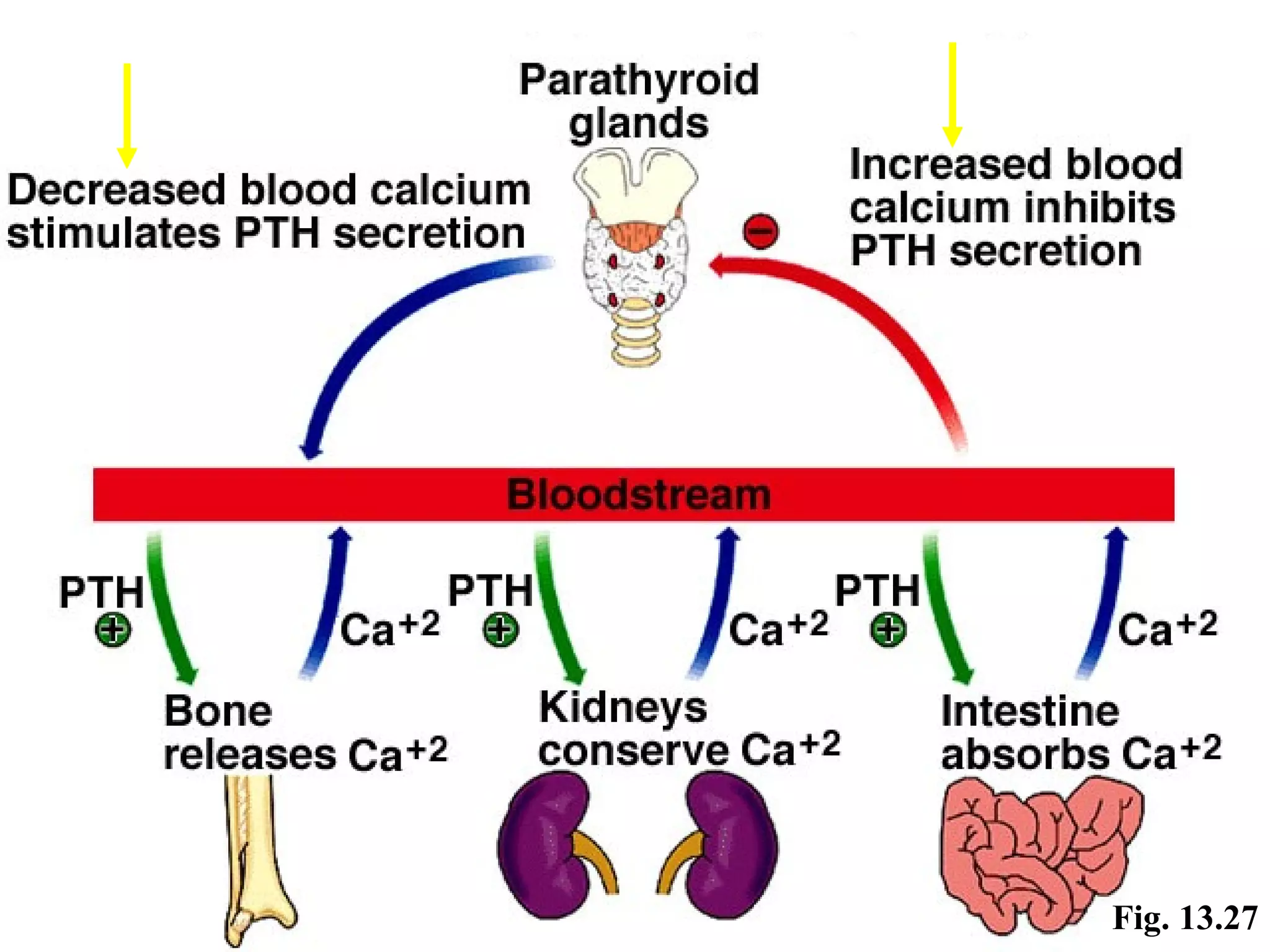
Parathyroid Hormone (PTH) Stimulates  bone resorption  by  osteoclasts  and osteocytes Inhibits activity of osteoblasts Effect on kidneys:  Causes kidneys to conserve calcium and excrete phosphate Effect on intestine:  Stimulates calcium absorption through vitamin D Low blood calcium concentrations stimulate secretion of PTH from the parathyroid gland Four small glands found on the  posterior surface of the thyroid gland Secrete parathyroid hormone ( PTH ) or parathormone, a protein hormone PTH  increases blood calcium  concentration and phosphate concentration by  bone resorption Parathyroid Gland
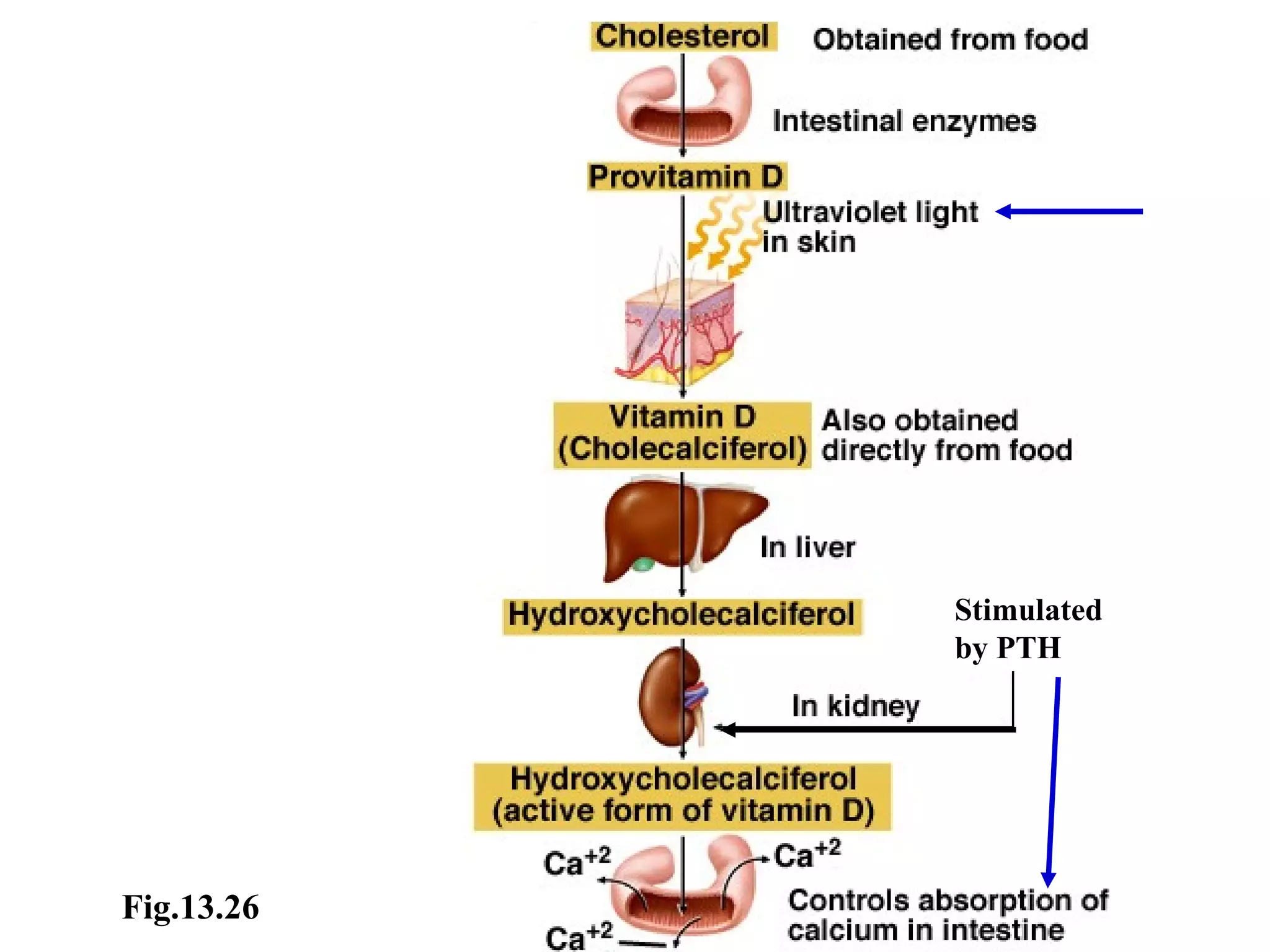
Fig.13.26 Stimulated  by PTH
Fig. 13.27
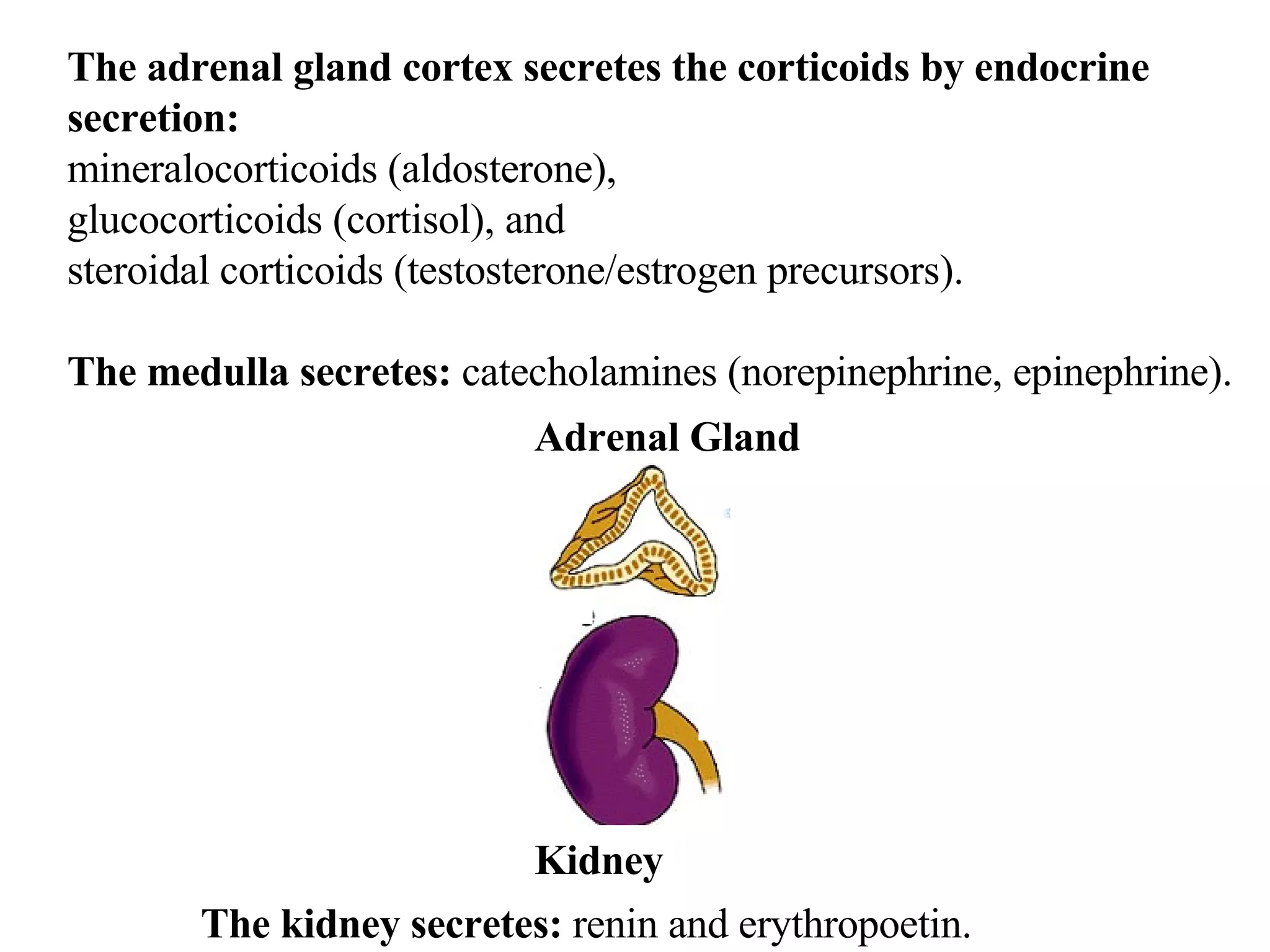
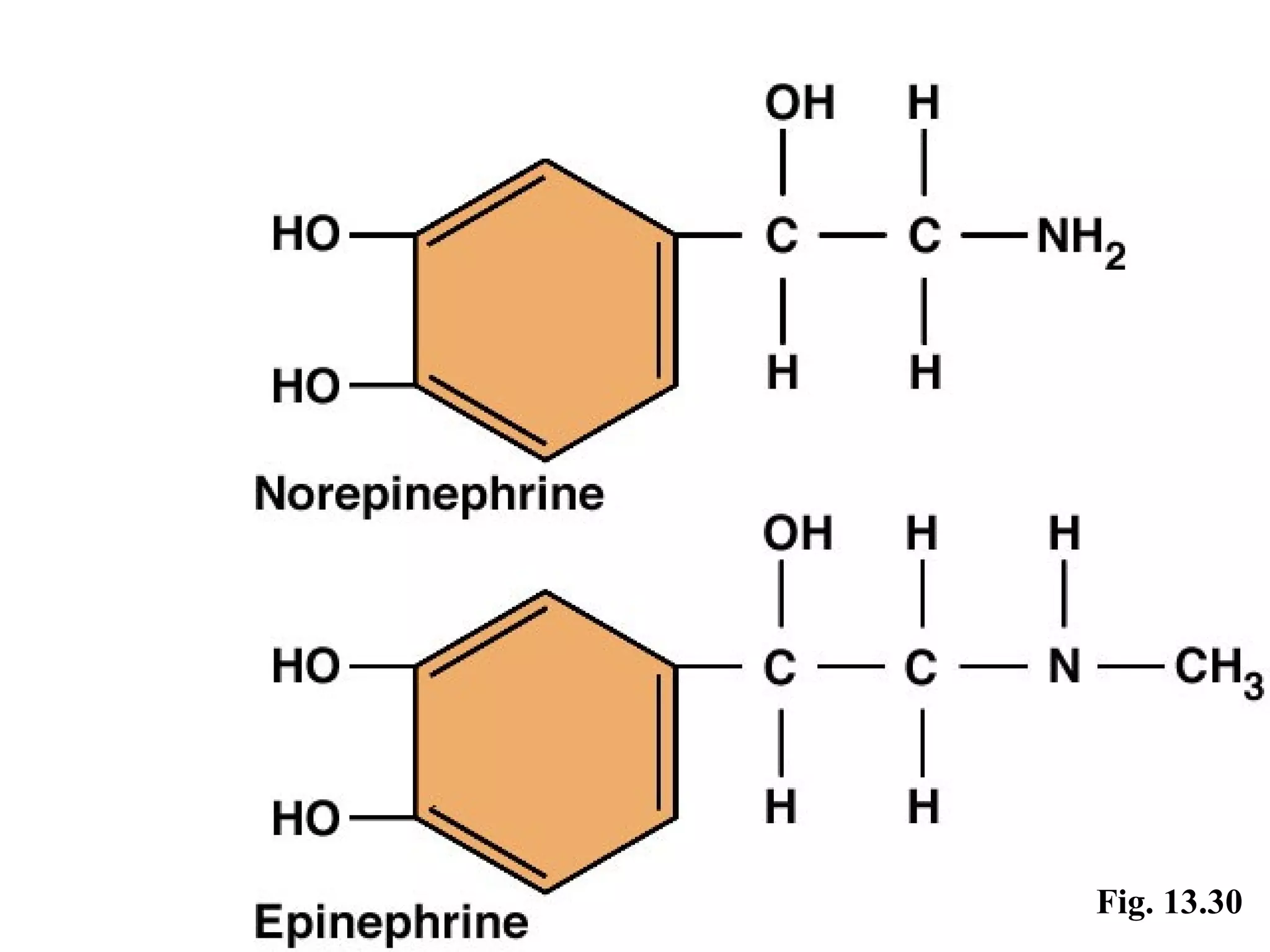
Adrenal Gland Kidney The adrenal gland cortex secretes the corticoids by endocrine  secretion:  mineralocorticoids (aldosterone),  glucocorticoids (cortisol), and  steroidal corticoids (testosterone/estrogen precursors). The medulla secretes:  catecholamines (norepinephrine, epinephrine). The kidney secretes:  renin and erythropoetin.
Adrenal Gland It is an endocrine gland that is located in the abdomen superior to the kidney. Under conditions of fear or stress, a surge of the hormone adrenaline mobilizes the body for peak physical response. Flooding the bloodstream at up to 300 times the normal concentration, the  adrenaline  interacts with receptors on cells in various organs, increasing the  heart rate and blood pressure  and prompting the release from the liver of extra sugar to fuel muscular work. Taken together, these reactions constitute a  "fight or flight" response . In the medulla, specialized cells known as chromaffin cells manufacture, store, and secrete a complex mixture of hormones, the most important of which is  adrenaline . The adrenal medulla can also be thought of, however, as  part of the sympathetic nervous system , which helps to regulate such involuntary functions as heart rate, intestinal movements and the dilation of the pupil.  The adrenal medulla is controlled by nerves originating in the spinal cord; its primary hormone,  adrenaline , is closely related to  noradrenaline, the characteristic neurotransmitter of the sympathetic nerves . Moreover, the adrenal medulla itself secretes  noradrenaline  and neurologically active substances known as neuropeptides.
Fig. 13.30
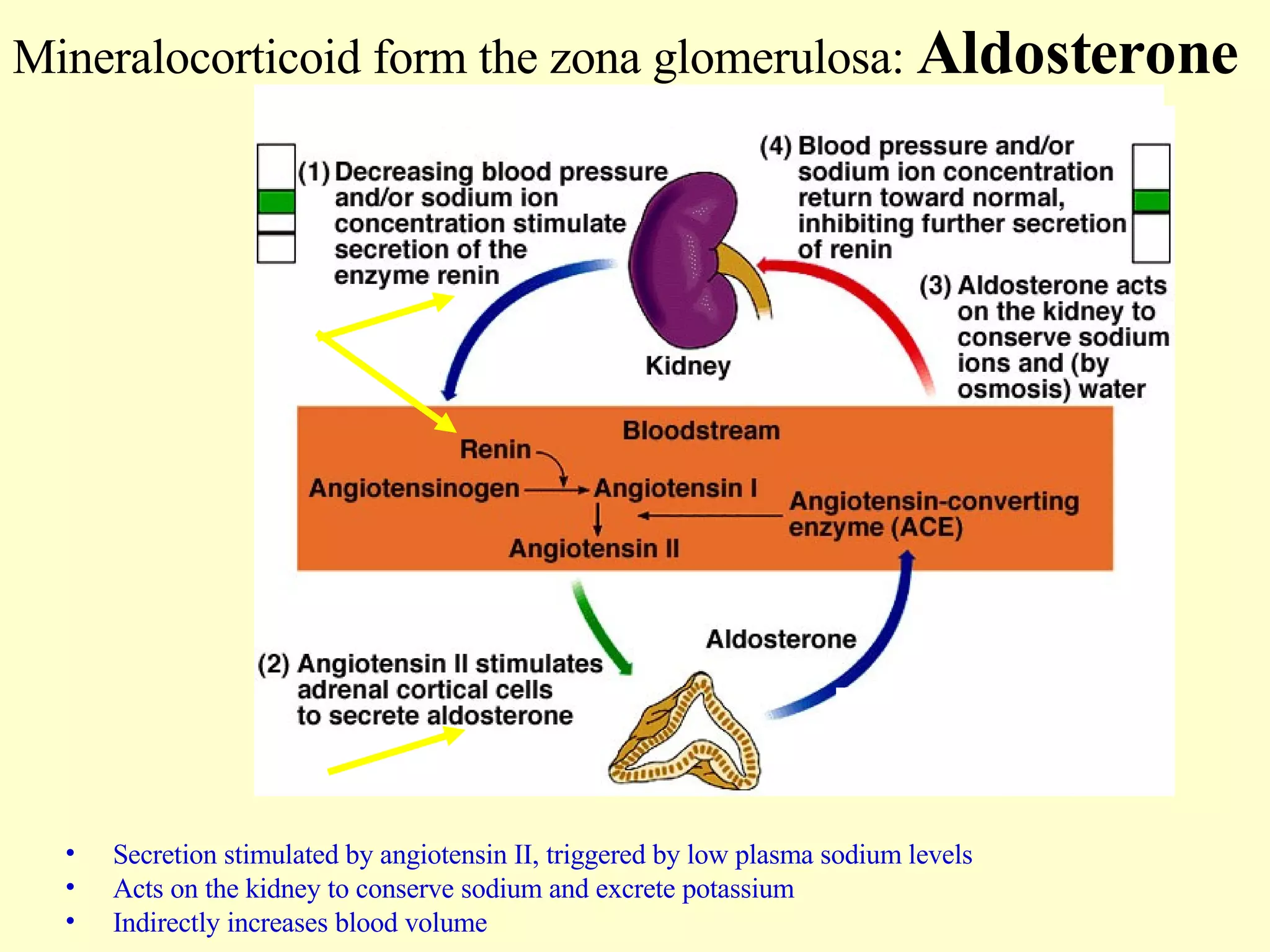
Mineralocorticoid form the zona glomerulosa:  Aldosterone Secretion stimulated by angiotensin II, triggered by low plasma sodium levels Acts on the kidney to conserve sodium and excrete potassium Indirectly increases blood volume
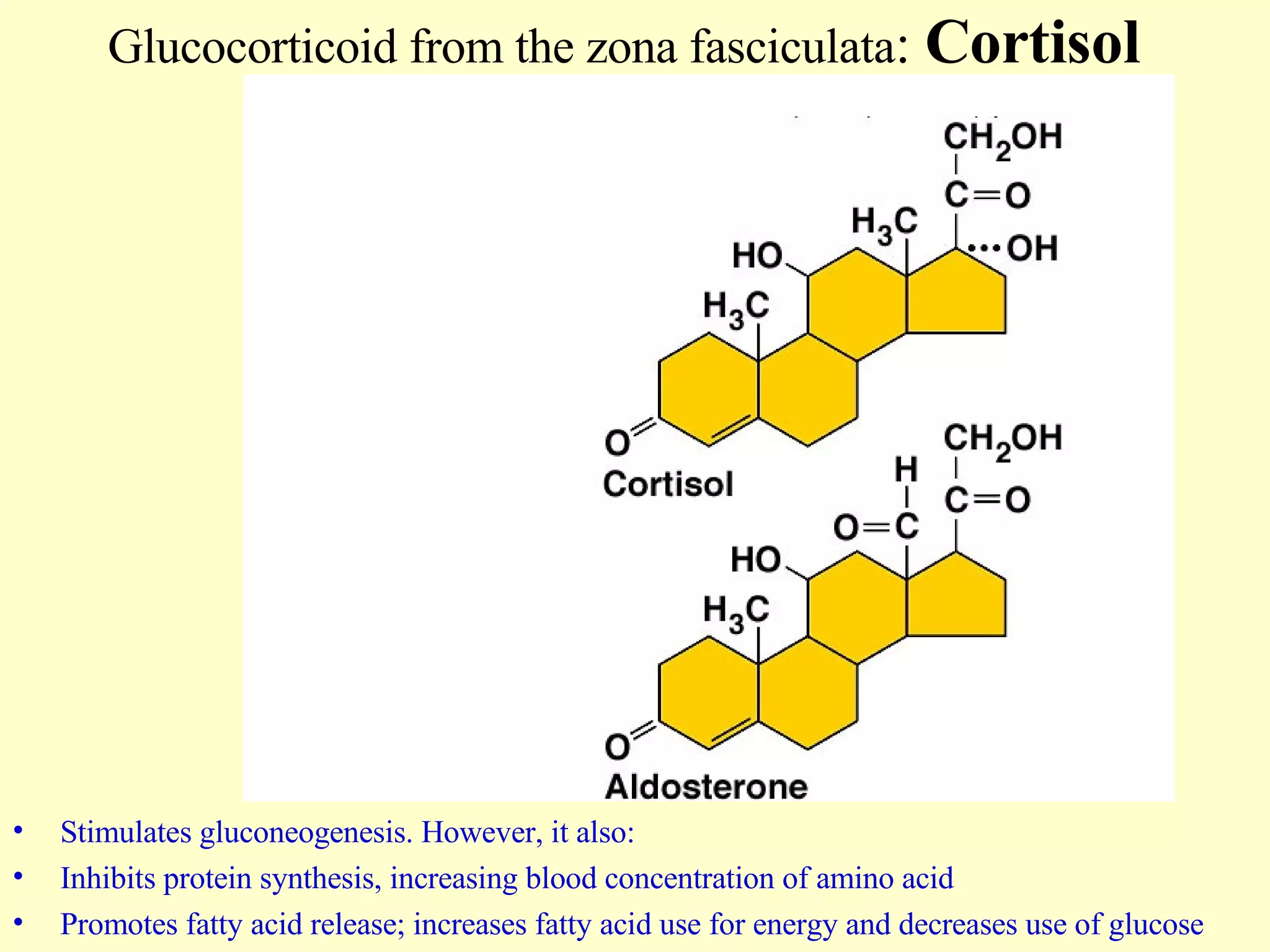
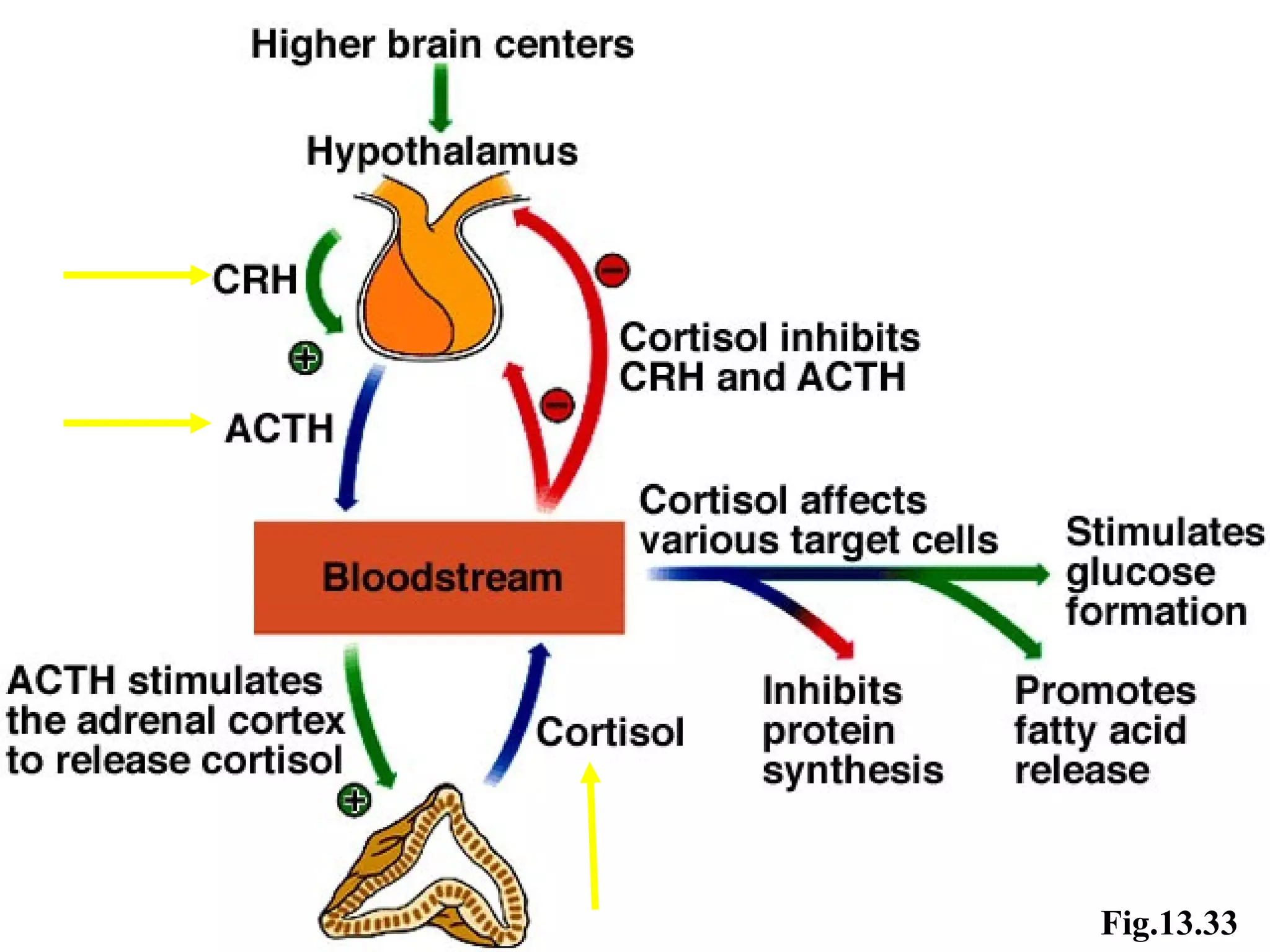
Glucocorticoid from the zona fasciculata :  Cortisol Stimulates gluconeogenesis. However, it also: Inhibits protein synthesis, increasing blood concentration of amino acid Promotes fatty acid release; increases fatty acid use for energy and decreases use of glucose
Fig.13.33
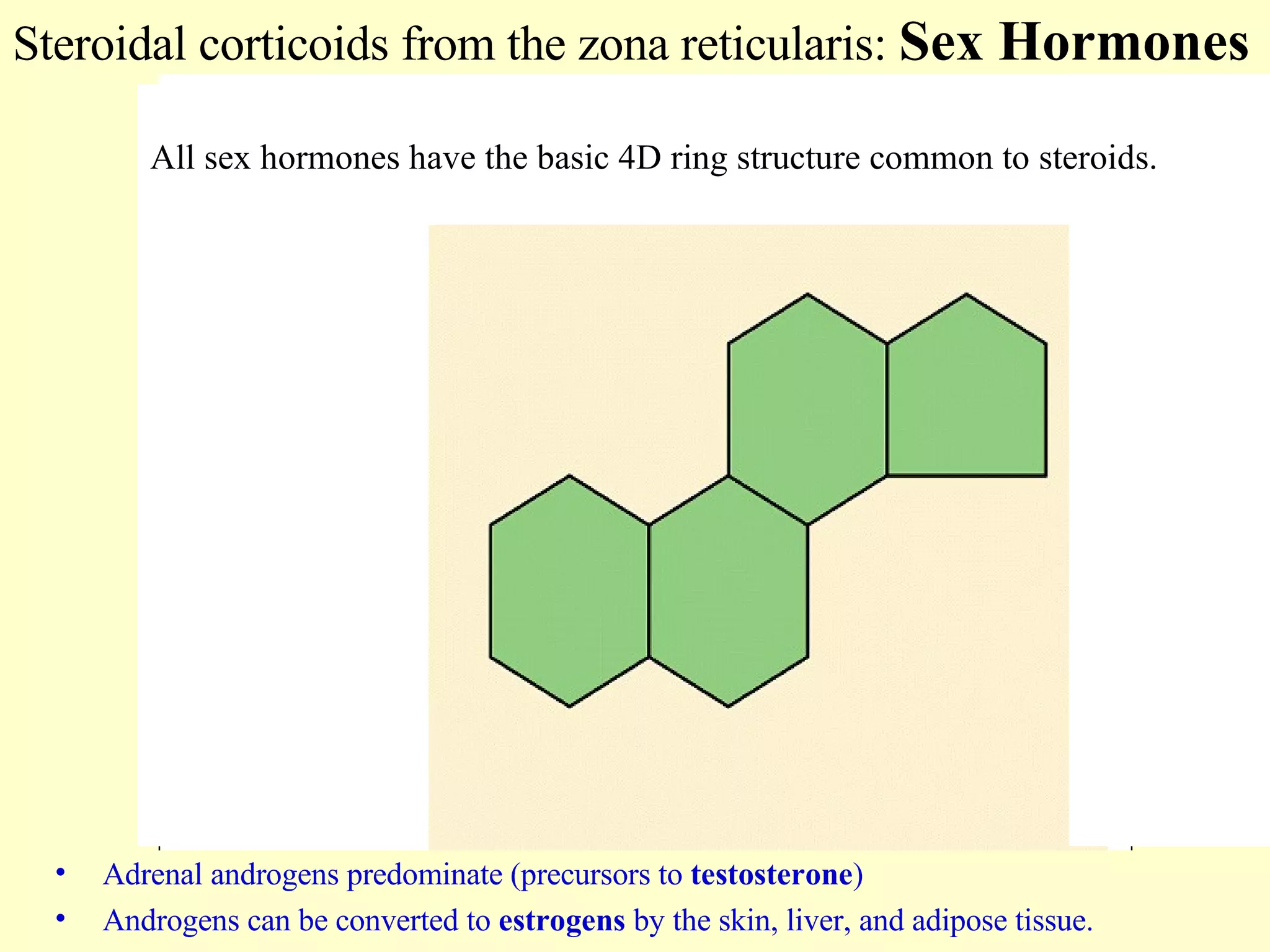
Steroidal corticoids from the zona reticularis:  Sex Hormones Adrenal androgens predominate (precursors to  testosterone ) Androgens can be converted to  estrogens  by the skin, liver, and adipose tissue. All sex hormones have the basic 4D ring structure common to steroids.
Pancreas Glucagon secreted by  α   cells  (alpha cells) in the islets of Langerhans stimulates liver to  break down glycogen  and convert noncarbohydrate into glucose stimulates fat breakdown into fatty acids and glycerol increases blood glucose levels; secreted in response to low blood glucose Insulin secreted by  β  cells  (beta cells) of the Langerhans islets promotes facilitated diffusion of glucose into cells with insulin receptors (adipose, muscle) for the  synthesis of glycogen stimulates adipose cells to store fat decreases blood glucose levels; secreted in response to high blood glucose Somatostatin secreted by  δ  cells  ( delta cells) of the islets of Langerhans similar to hypothalamic hormone inhibits secretion of glucagon and insulin
Fig. 13.34
Pineal Gland Attached to upper part of the  thalamus   near the third ventricle Consists of pineal cells and neuroglial cells Secretes  Melatonin synthesized from serotonin released in the dark controls  circadian rhythms inhibits gonadotropin release, helps regulate the menstrual cycle, may control onset of puberty Thymus Gland Lies in the  mediastinum Thymosins group of hormones that affect production and differentiation of T lymphocytes
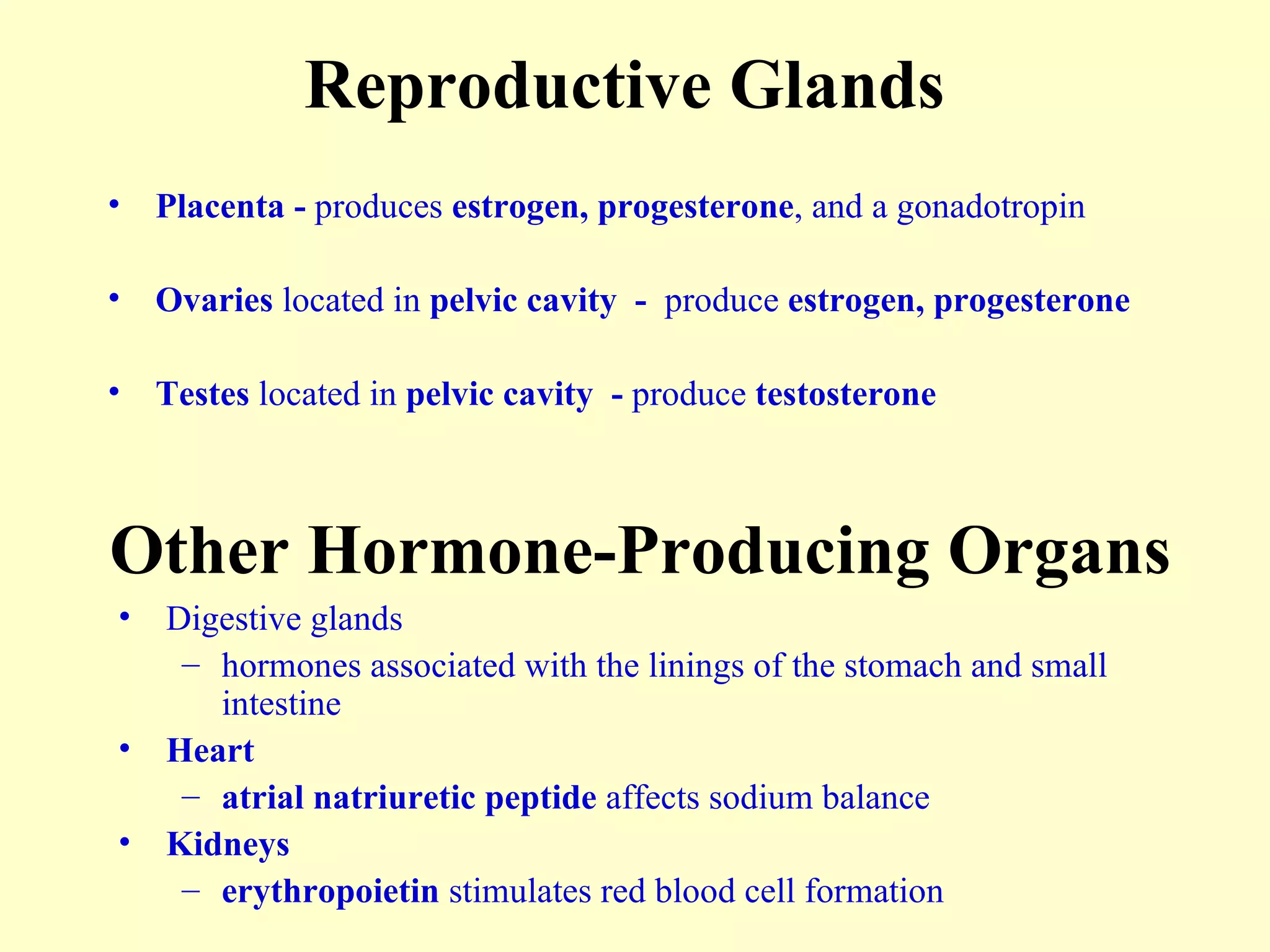
Reproductive Glands Placenta -  produces  estrogen, progesterone , and a gonadotropin Ovaries  located in  pelvic cavity  -  produce  estrogen, progesterone Testes  located in  pelvic cavity  -  produce  testosterone Other Hormone-Producing Organs Digestive glands hormones associated with the linings of the stomach and small intestine Heart atrial natriuretic peptide  affects sodium balance Kidneys erythropoietin  stimulates red blood cell formation
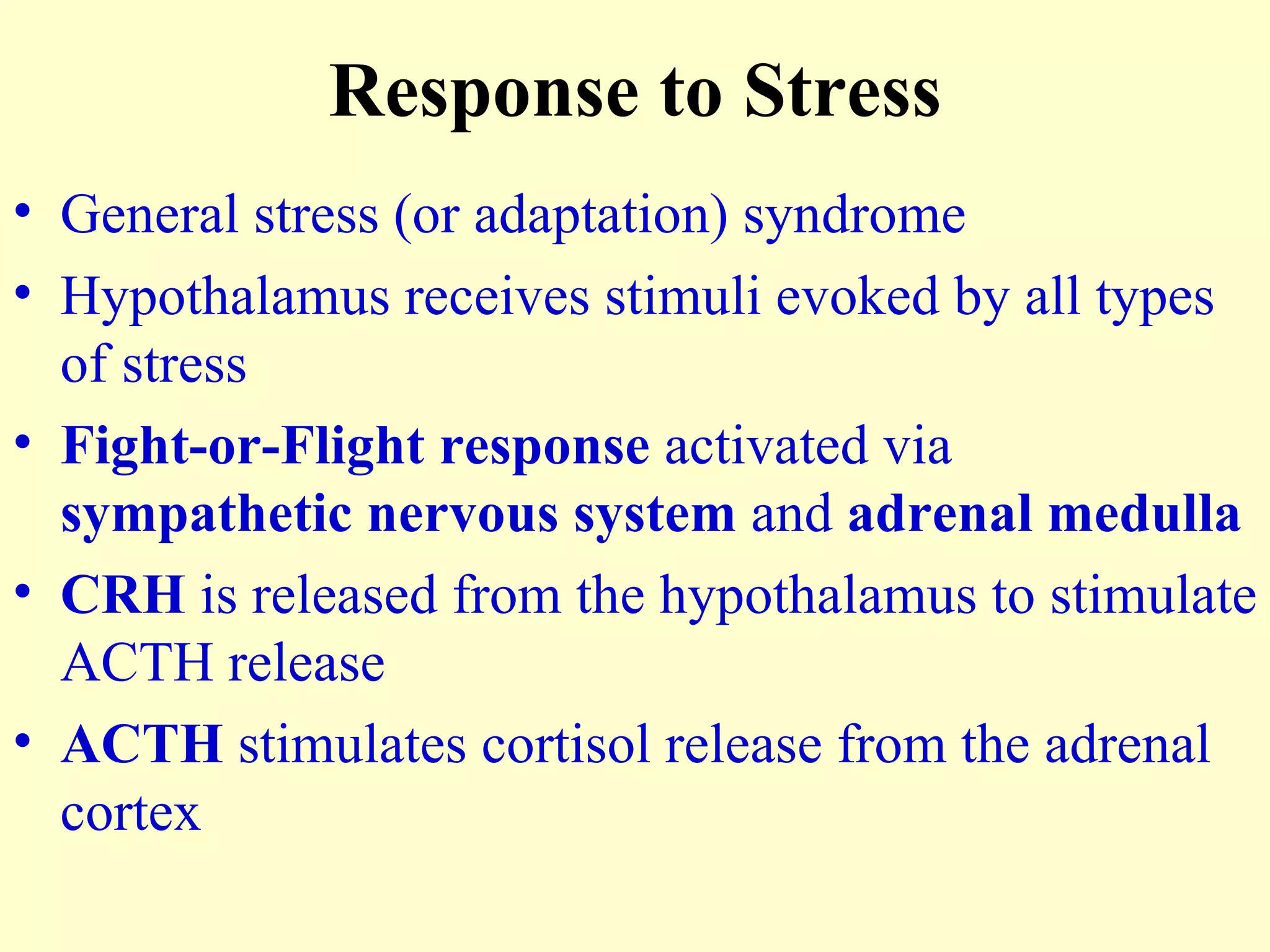
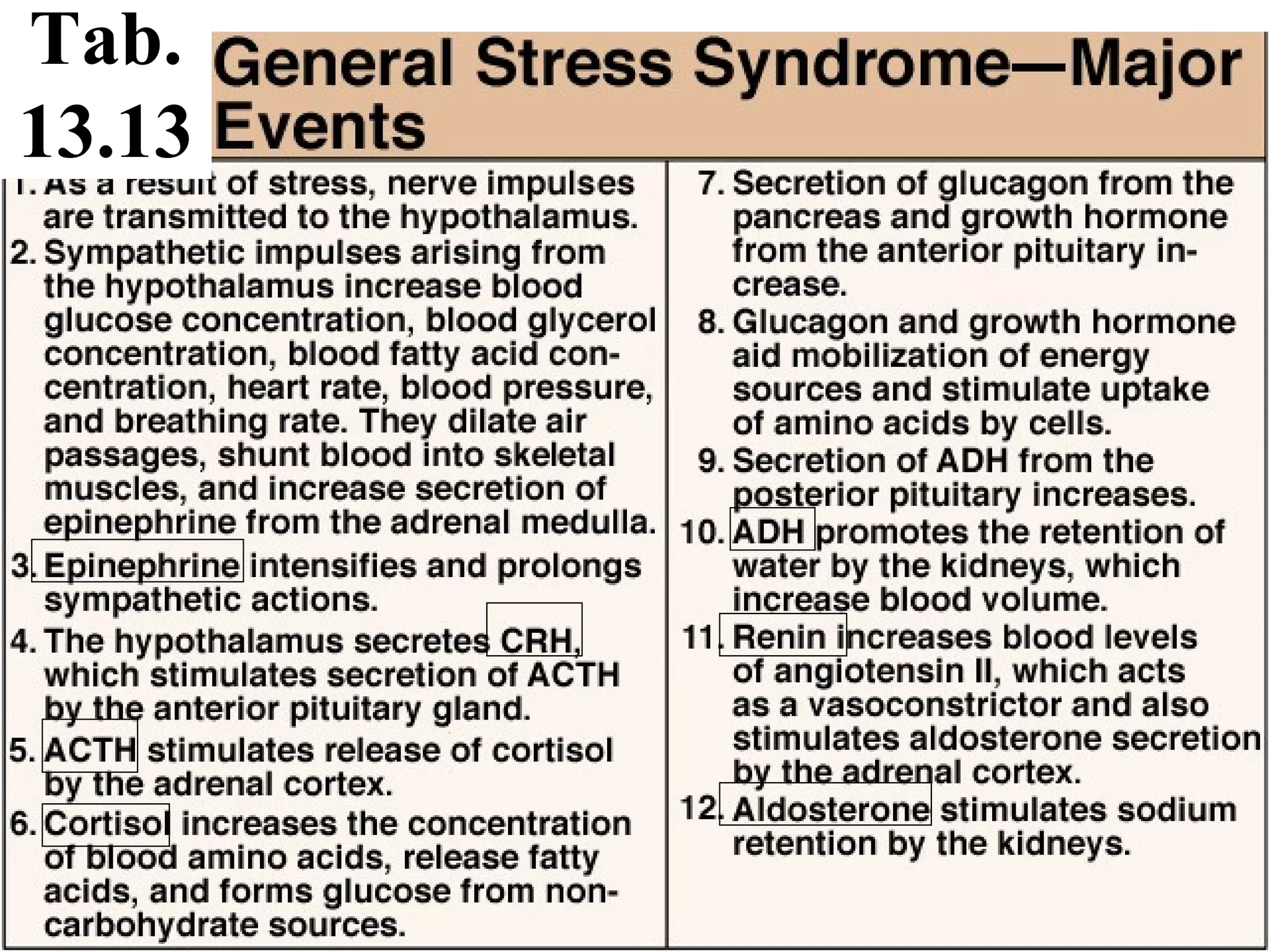
Response to Stress General stress (or adaptation) syndrome Hypothalamus receives stimuli evoked by all types of stress Fight-or-Flight response  activated via  sympathetic nervous system  and  adrenal medulla CRH  is released from the hypothalamus to stimulate ACTH release ACTH  stimulates cortisol release from the adrenal cortex
Tab. 13.13
HOMEOSTATIC IMBALANCES  (i.e. abnormal hormonal levels) A. Diabetes Mellitus  [introduction, p.468; Clin. Appl. 13.4, p.499] Symptoms (3 poly's):  polyuria, polydypsia, polyphagia . Type I  /IDDM (10%) – insulin-deficiency: autoimmune disorder where β-cells are destroyed; absolute insulin deficiency, with insulin administration. Patients < 20 years; - results in Hyperglycemia Cells can't use glucose=fat is broken down, releasing ketone bodies, causing ketoacidosis, lowering blood pH, causing death. Complications include Atherosclerosis, CV disease, IHD, PVD, gangrene, blindness due to cataracts (lens) and retinal vascular disease; renal failure. Treatments: artificial pancreas that detects fall in glucose levels and automatically releases insulin; transplant of pancreas or Beta cells. b. Type II /NIDDM (90%) – non-insulin-deficient, but receptor deficient: patients > 40 years, overweight, hypertension,  hyperglycemia Problem is usually with the loss of  receptors on target cells;  Controlled by diet, exercise, and weight loss;  Treatment:  Drug Diabeta (glyburide): to help stimulate insulin secretion of β-cells in cases of low levels of insulin .
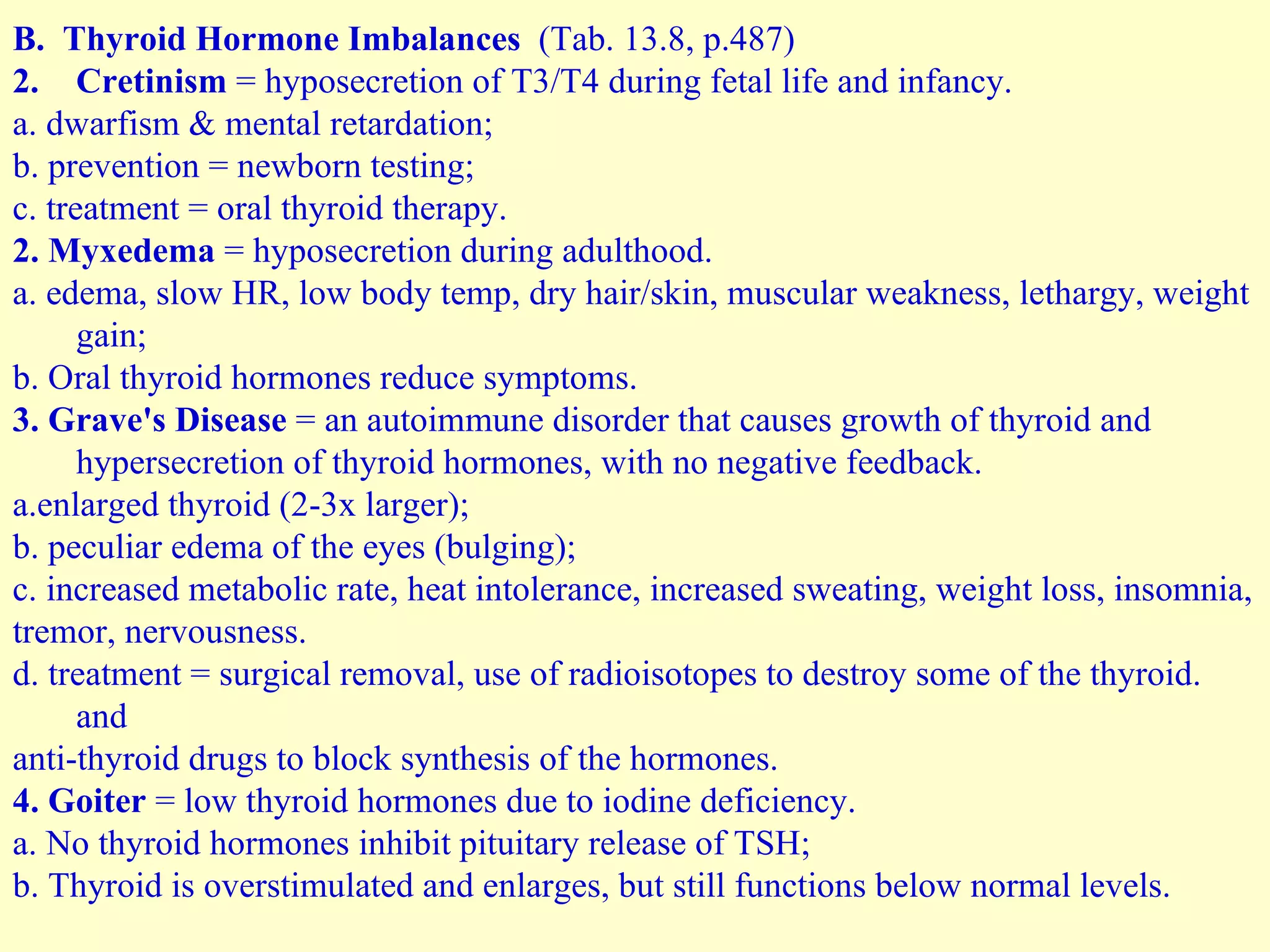
B.  Thyroid Hormone Imbalances  (Tab. 13.8, p.487) Cretinism  = hyposecretion of T3/T4 during fetal life and infancy.  a. dwarfism & mental retardation; b. prevention = newborn testing; c. treatment = oral thyroid therapy. 2. Myxedema  = hyposecretion during adulthood. a. edema, slow HR, low body temp, dry hair/skin, muscular weakness, lethargy, weight gain; b. Oral thyroid hormones reduce symptoms. 3. Grave's Disease  = an autoimmune disorder that causes growth of thyroid and  hypersecretion of thyroid hormones, with no negative feedback. a.enlarged thyroid (2-3x larger); b. peculiar edema of the eyes (bulging); c. increased metabolic rate, heat intolerance, increased sweating, weight loss, insomnia,  tremor, nervousness. d. treatment = surgical removal, use of radioisotopes to destroy some of the thyroid. and  anti-thyroid drugs to block synthesis of the hormones. 4. Goiter  = low thyroid hormones due to iodine deficiency. a. No thyroid hormones inhibit pituitary release of TSH; b. Thyroid is overstimulated and enlarges, but still functions below normal levels.
C.   Parathyroid Hormone  Imbalances:   Table 13.9, p.490. D. Growth Hormone  Imbalances : Clinical Application 13.2, p.482. 1. Pituitary   Dwarfism  = hyposecretion of GH during growth years. a.  slow bone growth & closing of epiphyseal plates before normal height is reached; b. Treatment = oral GH therapy. 2.   Pituitary   giantism  = hypersecretion of GH during growth years. a. abnormal increase in the length of long bones. 3. Acromegaly  = hypersecretion of GH during adulthood. a. Bones of hands, feet, cheeks, and jaw thicken; b. Soft tissues also grow. E.   ADH Imbalances: Green box, p.484. 1.  Diabetes insipidus  = hyposecretion of ADH. a. diuresis, dehydration, thirst; b. Treatment: ADH in nasal spray.
F.   Adrenal Cortical Hormone  Imbalances:  C linical Application 13.3,p 496. 1.  Addison's Disease  = hyposecretion of AC hormones due to autoimmunity  or disease  Symptoms: mental lethargy, anorexia, nausea, vomiting, weight loss,  hypoglycemia, muscle weakness, K+, Na+, BP, dehydration, arrhythmias,  cardiac arrest, skin pigmentation.  2. Cushing's Syndrome =  hypersecretion of AC hormones due to pituitary tumor or steroid administration. Symptoms:  redistribution of fat, thin limbs due to wasting of muscles (i.e. protein catabolism), &quot;moon face&quot;, &quot;buffalo hump&quot;, &quot;beer belly&quot;, stretch marks, bruises, poor wound healing, hyperglycemia, osteoporosis, weakness, hypertension,  susceptibility to infection, resistance to stress, mood swings. Usual cause:  administration of steroids (i.e. prednisone) for transplant patients, asthma, and chronic inflammatory disorders. G.   Pineal  Gland/ Melatonin  Imbalances:  TB, p. 498.

The Endocrine System - Chapter 13

  • 1.
    Chapter 13 EndocrineSystem PowerPoint Presentation to accompany Hole’s Human Anatomy and Physiology, 10 th edition , edited by S.C. Wache for Biol2064.01
  • 2.
    You are responsiblefor the following figures and topics: Fig. 13.3 - Location of major endocrine glands. Fig. 13.9, 13.12, 13.13 – hypothalamus; pituitary gland. Fig. 13.4 - What are hormones ? Fig. 13.5, 13.7 - chemical structure predicts their mechanism of action. Fig. 13.11 - function of hormones is to keep balance / homeostasis. Read TB, p. 477. [see also: Fig. 13.16] Fig. 13.15 - Stimulation of anterior pituitary hormones by the releasing hormones of the hypothalamus. Read TB, p. 485, on thyroid gland. Fig. 13.18 - describe the location of the thyroid gland. Fig. 13.20 - describe 2 of the three thyroid hormones, T3 and T4. Tab. 13.7 - all 3 thyroid hormones: T3, T4, Calcitonin. Fig. 13.27 - PTH-parathyroid hormone Refer back to Ch.7 where we discussed osteoblasts and osteoclasts. Fig. 13.24 - Describe the structure, location and number of parathyroid glands. Figs. 13.21, 13.22, 13.23 - Define ' cretinism', 'hyperthyroidism' , 'goiter' Fig. 13.28 - Adrenal gland. Tab. 13.11 - Name the hormones and their function !!! Fig. 13.30 - Hormones released by the adrenal medulla. TB, p.492. Fig. 13.31 - Control of aldosterone, a mineralo-corticoid. Fig. 13.33 - Control of cortisol, a gluco-corticoid. Read TB, p.496, on the pancreas. Fig. 13.34 - Describe the location of the pancreas. Tab. 13.12 - Describe the function of glucagon. Clinical Application 13.4 - IDDM Read TB, p.498, pineal gland. TB, p.500 - other hormones of interest.
  • 3.
    Hormones and EndocrineSecretion Hormones are proteins or lipids which can stimulate target cells even at very low concentrations. They help regulate metabolic processes and homeostasis. Definition endocrine secretion of hormones: A hormone is a molecule such as a protein or a lipid that a cell secretes into interstitial fluid that travels in the blood and acts on target cells. Exocrine secretion releases substances into ducts or a tube that is connected to the outside environment.
  • 4.
    Steroid or steroidlikecompounds are lipids: derived from cholesterol. Note the 4 rings. Fig. 13.4a
  • 5.
    Hormones that containnitrogens are the amine, peptide, protein, and glycoprotein hormones. Note the amino group: -NH 2 . Fig. 13.4b or noradrenaline
  • 6.
  • 7.
    Fig. 13.4d Notethe di-sulfide bridge
  • 8.
    Prostaglandins arelipid hormones: paracrine substances derived from the fatty acid arachidonic acid, a polyunsaturated fatty acid Hormones can stimulate target cells even at very low concentrations Fig. 13.4e
  • 9.
    Prostaglandins Paracrine Secretion: Hormones are secreted locally such as into areas of inflammation. Prostaglandins are lipids: Local acting paracrine substances Synthesized and released quickly and inactivated quickly Can activate or inactivate adenylate cyclase Can relax or contract smooth muscle Stimulate hormone secretion Influence sodium ion movement Affect inflammation
  • 10.
    Hormone Action Hormones reach all cells but bind only those that have specific receptors. Hormone receptors are a group of proteins or glycoproteins that have a specific hormone binding site. A hormone then binds to its specific receptor forming a hormone-receptor complex . The more specific receptors the corresponding hormone binds, the greater the response.
  • 11.
    Steroid Hormones Solublein lipid environments such as in a cell membrane which is a phospholipid bilayer. Easily diffuse into a cell . Combine with specific protein receptors . In the nucleus, the hormone-receptor complex binds to a specific region of DNA and activates genes which are then transcribed into mRNA . The mRNA directs synthesis of a particular protein on the ribosome ( translation of mRNA into a protein ) which is located in the cytoplasm. These proteins often are regulatory proteins which control metabolism and bring about cellular changes.
  • 12.
  • 13.
    Nonsteroid Hormones Amine,peptide, and protein hormones combine with receptors that are located on the surface of the on the target cell membrane . They bind at specific receptor binding sites which activates the receptor . The activity site of the receptor interacts with other membrane proteins that reach across the phospholipid bilayer. Receptor binding can trigger a cascade of biochemical reactions leading to the synthesis of a second messenger such as cyclic AMP.
  • 14.
  • 15.
    Second Messengers Thehormone is the first messenger . Cyclic AMP is a second messenger . Hormone-receptor complex activates a G protein which activates adenylate cyclase which converts ATP to cAMP. cAMP activates protein kinases Protein kinases are enzymes that transfer phosphate groups from ATP to proteins and thereby activates them. These proteins often are regulatory proteins which control metabolism and bring about cellular changes. Phosphodiesterase deactivates cAMP
  • 16.
    Second Messengers Hormoneswhose actions depend upon cAMP include: TSH, ACTH, FSH, LH, ADH, PTH, epinephrine, norepinephrine, calcitonin, and glucagon and insulin. Other second messengers: cGMP, diacylglycerol, and inositol phosphate (releases calcium ions which combine with calmodulin).
  • 17.
  • 18.
    Control of HormoneSecretion: Fig. 13.9 Hypothalamus
  • 19.
    Hypothalamus and PituitaryGland Initially, the nervous system can stimulate glands. However, glands can also be stimulated or inhibited by the action of other hormones . The hypothalamus controls the anterior pituitary through release of tropic hormones. Hypophyseal portal veins carry the hormones of the hypothalamus from the hypothalamus to the pituitary. Two portions: - anterior lobe (adenohypophysis): releases TSH, GH, ACTH, FSH, LH, PRL; Their secretion is affected by hypothalamic releasing hormones - posterior lobe (neurohypophysis): does not produce hormones , but secretes hormones synthesized in neurosecretory cell bodies in the hypothalamus
  • 20.
  • 21.
    Anterior Pituitary: GrowthHormone (GH) Stimulates increase in size and mitotic rate of body cells, increases fat utilization Hypothalamic growth hormone releasing hormone (GHRH) stimulates secretion; Somatostatin (SS) inhibits secretion Enhances amino acid movement through membranes and promotes protein synthesis Promotes long bone growth Prolactin (PRL) Sustains milk production after birth Secretion stimulated by hypothalamic prolactin-releasing hormone (PRH) and inhibited by prolactin-inhibiting hormone (PIH) Aids in decreasing LH secretion in men
  • 22.
    Thyroid-Stimulating Hormone(TSH) = Thyrotropin Controls secretion of hormones from the thyroid gland Thyrotropin-releasing hormone (TRH) from the hypothalamus stimulates secretion High levels lead to goiter Adrenocorticotropic Hormone (ACTH) Controls secretion of hormones from the adrenal cortex Corticotropin-releasing hormone (CRH) from the hypothalamus stimulates secretion Stress can stimulate CRH secretion
  • 23.
    Follicle-stimulating Hormone (FSH)A glycoprotein caled also a gonadotropin Gonadotropin-releasing hormone ( GnRH ) from the hypothalamus stimulates its secretion In women , it stimulates the development of ovarian follicles, stimulates follicular cells to secrete estrogen In men , this gonadotropin stimulates growth of the seminiferous tubules and sperm production Luteinizing Hormone (LH) Female gonadotropin LH or male gonadotropin LH = ICSH Hypothalamic gonadotropin-releasing hormone ( GnRH ) stimulates its secretion Promotes secretion of sex hormones ( testosterone ) In women, it promotes egg release = ovulation
  • 24.
    Posterior Pituitary: Antidiuretic Hormone (ADH) Causes kidneys to retain water = concentrates urine In high concentration, it raises blood pressure Hypothalamus produces and posterior pituitary neurosecretory cells release ADH in response to changes in blood volume and changing blood concentration Oxytocin (OT) Contracts muscles in uterine wall and those associated with milk-secreting glands Produced by the hypothalamus and secreted by neurosecretory cells in the posterior pituitary in response to uterine and vaginal wall stretching and stimulation of breasts
  • 25.
    Fig. 13.15 GHNote : The pancreas is controlled differently.
  • 26.
    Follicles are filledwith colloid composed mainly of thyroglobulin Extrafollicular cells (C cells) lie outside the follicles Three hormones: thyroxine (T4), triiodothyronine (T3), calcitonin Fig. 13.18 C-rings
  • 27.
    Affect cellular metabolicrates Regulate metabolism of carbohydrates, lipids, and proteins Fig.13.20
  • 28.
    Thyroxine (T4); Triiodothyronine(T3) Regulate metabolism of carbohydrates, lipids, and proteins Essential for growth and development and maturation of the nervous system Iodine needed as integral part of molecules Follicular cells secrete the precursor toT3/T4 which is without iodine (I) called thyroglobulin; upon addition of I, thyroglobulin becomes either T3 or T4 which are released into the blood Calcitonin Lowers blood calcium levels and phosphate ion concentration; high blood calcium concentration stimulates secretion Effect on bone matrix: Increases calcium and phosphate deposition Effect on kidneys: Increases excretion of calcium and phosphate ions
  • 29.
    Note: Thetrachea are anterior to the esophagus !!! Fig.13.24
  • 30.
    Parathyroid Hormone (PTH)Stimulates bone resorption by osteoclasts and osteocytes Inhibits activity of osteoblasts Effect on kidneys: Causes kidneys to conserve calcium and excrete phosphate Effect on intestine: Stimulates calcium absorption through vitamin D Low blood calcium concentrations stimulate secretion of PTH from the parathyroid gland Four small glands found on the posterior surface of the thyroid gland Secrete parathyroid hormone ( PTH ) or parathormone, a protein hormone PTH increases blood calcium concentration and phosphate concentration by bone resorption Parathyroid Gland
  • 31.
  • 32.
  • 33.
    Adrenal Gland KidneyThe adrenal gland cortex secretes the corticoids by endocrine secretion: mineralocorticoids (aldosterone), glucocorticoids (cortisol), and steroidal corticoids (testosterone/estrogen precursors). The medulla secretes: catecholamines (norepinephrine, epinephrine). The kidney secretes: renin and erythropoetin.
  • 34.
    Adrenal Gland Itis an endocrine gland that is located in the abdomen superior to the kidney. Under conditions of fear or stress, a surge of the hormone adrenaline mobilizes the body for peak physical response. Flooding the bloodstream at up to 300 times the normal concentration, the adrenaline interacts with receptors on cells in various organs, increasing the heart rate and blood pressure and prompting the release from the liver of extra sugar to fuel muscular work. Taken together, these reactions constitute a &quot;fight or flight&quot; response . In the medulla, specialized cells known as chromaffin cells manufacture, store, and secrete a complex mixture of hormones, the most important of which is adrenaline . The adrenal medulla can also be thought of, however, as part of the sympathetic nervous system , which helps to regulate such involuntary functions as heart rate, intestinal movements and the dilation of the pupil. The adrenal medulla is controlled by nerves originating in the spinal cord; its primary hormone, adrenaline , is closely related to noradrenaline, the characteristic neurotransmitter of the sympathetic nerves . Moreover, the adrenal medulla itself secretes noradrenaline and neurologically active substances known as neuropeptides.
  • 35.
  • 36.
    Mineralocorticoid form thezona glomerulosa: Aldosterone Secretion stimulated by angiotensin II, triggered by low plasma sodium levels Acts on the kidney to conserve sodium and excrete potassium Indirectly increases blood volume
  • 37.
    Glucocorticoid from thezona fasciculata : Cortisol Stimulates gluconeogenesis. However, it also: Inhibits protein synthesis, increasing blood concentration of amino acid Promotes fatty acid release; increases fatty acid use for energy and decreases use of glucose
  • 38.
  • 39.
    Steroidal corticoids fromthe zona reticularis: Sex Hormones Adrenal androgens predominate (precursors to testosterone ) Androgens can be converted to estrogens by the skin, liver, and adipose tissue. All sex hormones have the basic 4D ring structure common to steroids.
  • 40.
    Pancreas Glucagon secretedby α cells (alpha cells) in the islets of Langerhans stimulates liver to break down glycogen and convert noncarbohydrate into glucose stimulates fat breakdown into fatty acids and glycerol increases blood glucose levels; secreted in response to low blood glucose Insulin secreted by β cells (beta cells) of the Langerhans islets promotes facilitated diffusion of glucose into cells with insulin receptors (adipose, muscle) for the synthesis of glycogen stimulates adipose cells to store fat decreases blood glucose levels; secreted in response to high blood glucose Somatostatin secreted by δ cells ( delta cells) of the islets of Langerhans similar to hypothalamic hormone inhibits secretion of glucagon and insulin
  • 41.
  • 42.
    Pineal Gland Attachedto upper part of the thalamus near the third ventricle Consists of pineal cells and neuroglial cells Secretes Melatonin synthesized from serotonin released in the dark controls circadian rhythms inhibits gonadotropin release, helps regulate the menstrual cycle, may control onset of puberty Thymus Gland Lies in the mediastinum Thymosins group of hormones that affect production and differentiation of T lymphocytes
  • 43.
    Reproductive Glands Placenta- produces estrogen, progesterone , and a gonadotropin Ovaries located in pelvic cavity - produce estrogen, progesterone Testes located in pelvic cavity - produce testosterone Other Hormone-Producing Organs Digestive glands hormones associated with the linings of the stomach and small intestine Heart atrial natriuretic peptide affects sodium balance Kidneys erythropoietin stimulates red blood cell formation
  • 44.
    Response to StressGeneral stress (or adaptation) syndrome Hypothalamus receives stimuli evoked by all types of stress Fight-or-Flight response activated via sympathetic nervous system and adrenal medulla CRH is released from the hypothalamus to stimulate ACTH release ACTH stimulates cortisol release from the adrenal cortex
  • 45.
  • 46.
    HOMEOSTATIC IMBALANCES (i.e. abnormal hormonal levels) A. Diabetes Mellitus [introduction, p.468; Clin. Appl. 13.4, p.499] Symptoms (3 poly's): polyuria, polydypsia, polyphagia . Type I /IDDM (10%) – insulin-deficiency: autoimmune disorder where β-cells are destroyed; absolute insulin deficiency, with insulin administration. Patients < 20 years; - results in Hyperglycemia Cells can't use glucose=fat is broken down, releasing ketone bodies, causing ketoacidosis, lowering blood pH, causing death. Complications include Atherosclerosis, CV disease, IHD, PVD, gangrene, blindness due to cataracts (lens) and retinal vascular disease; renal failure. Treatments: artificial pancreas that detects fall in glucose levels and automatically releases insulin; transplant of pancreas or Beta cells. b. Type II /NIDDM (90%) – non-insulin-deficient, but receptor deficient: patients > 40 years, overweight, hypertension, hyperglycemia Problem is usually with the loss of receptors on target cells; Controlled by diet, exercise, and weight loss; Treatment: Drug Diabeta (glyburide): to help stimulate insulin secretion of β-cells in cases of low levels of insulin .
  • 47.
    B. ThyroidHormone Imbalances (Tab. 13.8, p.487) Cretinism = hyposecretion of T3/T4 during fetal life and infancy. a. dwarfism & mental retardation; b. prevention = newborn testing; c. treatment = oral thyroid therapy. 2. Myxedema = hyposecretion during adulthood. a. edema, slow HR, low body temp, dry hair/skin, muscular weakness, lethargy, weight gain; b. Oral thyroid hormones reduce symptoms. 3. Grave's Disease = an autoimmune disorder that causes growth of thyroid and hypersecretion of thyroid hormones, with no negative feedback. a.enlarged thyroid (2-3x larger); b. peculiar edema of the eyes (bulging); c. increased metabolic rate, heat intolerance, increased sweating, weight loss, insomnia, tremor, nervousness. d. treatment = surgical removal, use of radioisotopes to destroy some of the thyroid. and anti-thyroid drugs to block synthesis of the hormones. 4. Goiter = low thyroid hormones due to iodine deficiency. a. No thyroid hormones inhibit pituitary release of TSH; b. Thyroid is overstimulated and enlarges, but still functions below normal levels.
  • 48.
    C. Parathyroid Hormone Imbalances: Table 13.9, p.490. D. Growth Hormone Imbalances : Clinical Application 13.2, p.482. 1. Pituitary Dwarfism = hyposecretion of GH during growth years. a. slow bone growth & closing of epiphyseal plates before normal height is reached; b. Treatment = oral GH therapy. 2. Pituitary giantism = hypersecretion of GH during growth years. a. abnormal increase in the length of long bones. 3. Acromegaly = hypersecretion of GH during adulthood. a. Bones of hands, feet, cheeks, and jaw thicken; b. Soft tissues also grow. E. ADH Imbalances: Green box, p.484. 1. Diabetes insipidus = hyposecretion of ADH. a. diuresis, dehydration, thirst; b. Treatment: ADH in nasal spray.
  • 49.
    F. Adrenal Cortical Hormone Imbalances: C linical Application 13.3,p 496. 1. Addison's Disease = hyposecretion of AC hormones due to autoimmunity or disease Symptoms: mental lethargy, anorexia, nausea, vomiting, weight loss, hypoglycemia, muscle weakness, K+, Na+, BP, dehydration, arrhythmias, cardiac arrest, skin pigmentation. 2. Cushing's Syndrome = hypersecretion of AC hormones due to pituitary tumor or steroid administration. Symptoms: redistribution of fat, thin limbs due to wasting of muscles (i.e. protein catabolism), &quot;moon face&quot;, &quot;buffalo hump&quot;, &quot;beer belly&quot;, stretch marks, bruises, poor wound healing, hyperglycemia, osteoporosis, weakness, hypertension, susceptibility to infection, resistance to stress, mood swings. Usual cause: administration of steroids (i.e. prednisone) for transplant patients, asthma, and chronic inflammatory disorders. G. Pineal Gland/ Melatonin Imbalances: TB, p. 498.