ENDOCRINE DISORDERS
INTRODUCTION
The endocrine system consists of a series of endocrine
glands and special cells which manufacture hormones
and pass them directly in to the blood stream.
Hormones are chemical messengers .When released into
the blood, exert important regulatory effects on the
metabolism and function on the cells of the body
The Endocrine Glands
 Include-
 1 pituitary gland -1 thymus gland
 1 thyroid gland -2 ovaries
 4 parathyroid glands 2-testes
 2 adrenal glands
 I islets of langerhans
 1 pineal gland
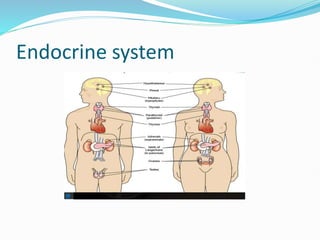
Endocrine system
The pituitary gland
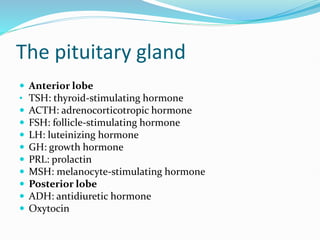
 Anterior lobe
• TSH: thyroid-stimulating hormone
 ACTH: adrenocorticotropic hormone
 FSH: follicle-stimulating hormone
 LH: luteinizing hormone
 GH: growth hormone
 PRL: prolactin
 MSH: melanocyte-stimulating hormone
 Posterior lobe
 ADH: antidiuretic hormone
 Oxytocin
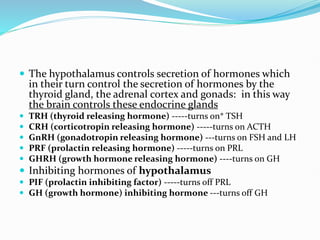
 The hypothalamus controls secretion of hormones which
in their turn control the secretion of hormones by the
thyroid gland, the adrenal cortex and gonads: in this way
the brain controls these endocrine glands
 TRH (thyroid releasing hormone) -----turns on* TSH
 CRH (corticotropin releasing hormone) -----turns on ACTH
 GnRH (gonadotropin releasing hormone) ---turns on FSH and LH
 PRF (prolactin releasing hormone) -----turns on PRL
 GHRH (growth hormone releasing hormone) ----turns on GH
 Inhibiting hormones of hypothalamus
 PIF (prolactin inhibiting factor) -----turns off PRL
 GH (growth hormone) inhibiting hormone ---turns off GH
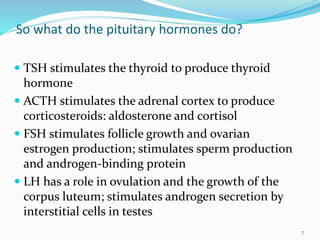
So what do the pituitary hormones do?
 TSH stimulates the thyroid to produce thyroid
hormone
 ACTH stimulates the adrenal cortex to produce
corticosteroids: aldosterone and cortisol
 FSH stimulates follicle growth and ovarian
estrogen production; stimulates sperm production
and androgen-binding protein
 LH has a role in ovulation and the growth of the
corpus luteum; stimulates androgen secretion by
interstitial cells in testes
7
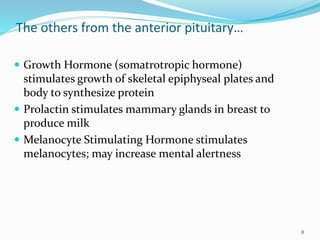
The others from the anterior pituitary…
 Growth Hormone (somatrotropic hormone)
stimulates growth of skeletal epiphyseal plates and
body to synthesize protein
 Prolactin stimulates mammary glands in breast to
produce milk
 Melanocyte Stimulating Hormone stimulates
melanocytes; may increase mental alertness
8
From the posterior pituitary (neurohypophysis)
 ADH (antidiuretic hormone or vasopressin) stimulates the
kidneys to reclaim more water from the urine, raises blood
pressure
 Oxytocin prompts contraction of smooth muscle in
reproductive tracts, in females initiating labor and
ejection of milk from breasts
9
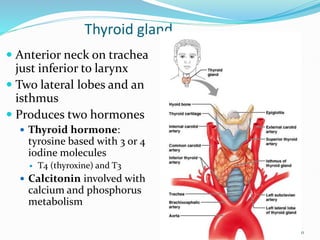
Thyroid gland
 Anterior neck on trachea
just inferior to larynx
 Two lateral lobes and an
isthmus
 Produces two hormones
 Thyroid hormone:
tyrosine based with 3 or 4
iodine molecules
 T4 (thyroxine) and T3
 Calcitonin involved with
calcium and phosphorus
metabolism
10
Some Effects of Thyroid Hormone
(Thyroxine)
 Increases the basal metabolic rate
 The rate at which the body uses oxygen to transform
nutrients (carbohydrates, fats and proteins) into energy
 Affects many target cells throughout the body;
some effects are
 Protein synthesis
 Bone growth
 Neuronal maturation
 Cell differentiation
11
The Effects of Calcitonin
 Secreted from thyroid parafollicular (C) cells when
blood calcium levels are high
 Calcitonin lowers Ca++ by slowing the calcium-
releasing activity of osteoclasts in bone and increasing
calcium secretion by the kidney
 Acts mostly during childhood
12
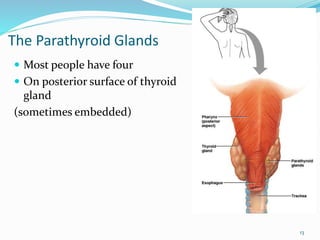
The Parathyroid Glands
 Most people have four
 On posterior surface of thyroid
gland
(sometimes embedded)
13
Parathyroid gland
 Chief cells produce PTH
 Parathyroid hormone, or parathormone
 A small protein hormone
Function of PTH
(parathyroid hormone or “parathormone”)
 Increases blood Ca++ (calcium)
concentration when it gets too low
 Mechanism of raising blood calcium
1. Stimulates osteoclasts to release more Ca++ from
bone
2. Decreases secretion of Ca++ by kidney
3. Activates Vitamin D, which stimulates the uptake of
Ca++ from the intestine
 Unwitting removal during thyroidectomy was
lethal
 Has opposite effect on calcium as calcitonin
(which lowers Ca++ levels)
15
Adrenal (suprarenal) glands
 (“suprarenal” means on top of the kidney)
Adrenal Gland
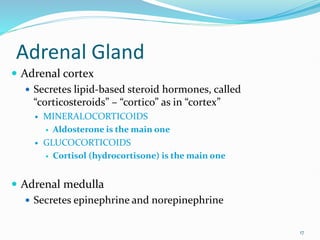
 Adrenal cortex
 Secretes lipid-based steroid hormones, called
“corticosteroids” – “cortico” as in “cortex”
 MINERALOCORTICOIDS
 Aldosterone is the main one
 GLUCOCORTICOIDS
 Cortisol (hydrocortisone) is the main one
 Adrenal medulla
 Secretes epinephrine and norepinephrine
17
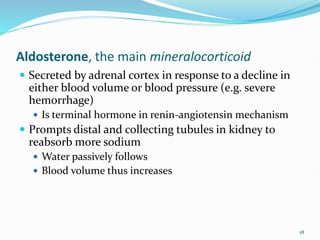
Aldosterone, the main mineralocorticoid
 Secreted by adrenal cortex in response to a decline in
either blood volume or blood pressure (e.g. severe
hemorrhage)
 Is terminal hormone in renin-angiotensin mechanism
 Prompts distal and collecting tubules in kidney to
reabsorb more sodium
 Water passively follows
 Blood volume thus increases
18
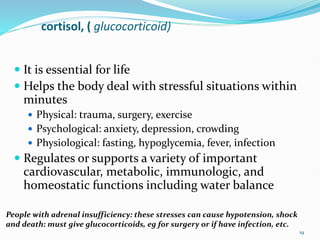
cortisol, ( glucocorticoid)
 It is essential for life
 Helps the body deal with stressful situations within
minutes
 Physical: trauma, surgery, exercise
 Psychological: anxiety, depression, crowding
 Physiological: fasting, hypoglycemia, fever, infection
 Regulates or supports a variety of important
cardiovascular, metabolic, immunologic, and
homeostatic functions including water balance
19
People with adrenal insufficiency: these stresses can cause hypotension, shock
and death: must give glucocorticoids, eg for surgery or if have infection, etc.
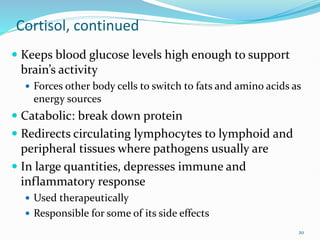
Cortisol, continued
 Keeps blood glucose levels high enough to support
brain’s activity
 Forces other body cells to switch to fats and amino acids as
energy sources
 Catabolic: break down protein
 Redirects circulating lymphocytes to lymphoid and
peripheral tissues where pathogens usually are
 In large quantities, depresses immune and
inflammatory response
 Used therapeutically
 Responsible for some of its side effects
20
Hormonal stimulation of glucocorticoids
HPA axis (hypothalamic/pituitary/adrenal axis)
 With stress, hypothalamus sends CRH to anterior
pituitary (adenohypophysis)
 Pituitary secretes ACTH
 ACTH goes to adrenal cortex where stimulates
glucocorticoid secretion
 Sympathetic nervous system can also stimulate it
 Adrenal cortex also secretes DHEA
(dehydroepiandrosterone)
 Converted in peripheral tissues to testosterone and
estrogen (also steroid hormones)
 Unclear function in relation to stress
21
The Pineal Gland
 At the end of a short stalk on the roof of the
diencephalon
 Pinealocytes with dense calcium particles
 Can be seen on x-ray (because of Ca++)
 Melatonin helps regulate the circadium rhythm
 The biological clock of the diurnal (night/day) rhythm
 Complicated feedback via retina’s visual input
22
The Pancreas
Exocrine and endocrine cells
 Acinar cells (forming most of the pancreas)
 Exocrine function
 Secrete digestive enzymes
 Islet cells (of Langerhans)
 Endocrine function
23
The Pancreas
Exocrine and endocrine cells
 Acinar cells (forming most of the pancreas)
 Exocrine function
 Secrete digestive enzymes
 Islet cells (of Langerhans)
 Endocrine function
24
pancrease
 Alpha cells: secrete glucagon
 raises blood sugar
 mostly in periphery
 Beta cells: secrete insulin
 lowers blood sugar
 central part (are more abundant)
 Also rare Delta cells:secrete somatostatin
 inhibits glucagon
26
The Gonads (testes and ovaries)
main source of the steroid sex hormones
 Testes
 Interstitial cells secrete androgens
 Primary androgen is testosterone
 Maintains secondary sex characteristics
 Helps promote sperm formation
 Ovaries
 Androgens secreted by thecal folliculi
 Directly converted to estrogens by follicular granulosa cells
 Granulosa cells also produce progesterone
 Corpus luteum also secretes estrogen and progesterone
27
Pathology
 Pituitary
 Gigantism –too much GH in childhood
 Acromegaly – too much GH in adulthood
 Pituitary dwarfs – too little GH in childhood
 Diabetes insipidus - too much ADH
 Pancreas
 Diabetes mellitus – one type of insulin (not enough)
 Thyroid
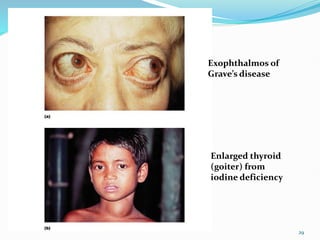
 Hyperthyroidism, commonest is Grave’s disease
(autoimmune)
 Hypothyroidism
 In childhood leads to cretinism
 Endemic goiter from insufficient iodine in diet
 Adult hypothyroidism (myxedema): autoimmune
28
Pathology, continued
 Adrenal gland
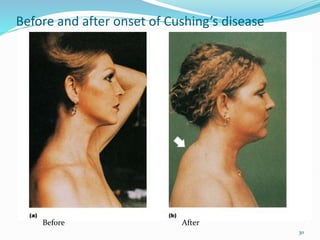
 Cushing’s syndrome .
 Usually caused by an ACTH-secreting pituitary tumor
 Rarely by tumor of adrenal cortex
 Iatrogenic
 Addison’s disease
 Hyposecretion (under secretion) of adrenal cortex
 Usually involves cortisol and aldosterone: low blood glucose and
sodium, severe dehydration, fatigue, loss of appetetie, abdominal
pain.
29
Exophthalmos of
Grave’s disease
Enlarged thyroid
(goiter) from
iodine deficiency
30
Before and after onset of Cushing’s disease
After
Before
Pituitary
 conditions include
 Gigantism –too much GH
in childhood
 Acromegaly – too much
GH in adulthood
 Pituitary dwarfs – too little
GH in childhood
 Diabetes insipidus - too
much ADH
 Hypopituitarism
 Hyper prolactinaemia
 hypopituitarism
HYPERPITURISM
 This is a condition in which there is over secretion of
hormones of the pituitary gland.
 This presents with various conditions and syndromes
in other hormones
 This may include;
 Acromegaly due to excess GH
 Cushing’s syndrome due excess ACTH
 Secondary hyperthyroidism due to excess TSH
 Precocious puberty due to excess FSH and LH
Conti…
 The clinical features and management are discussed
under each condition or syndrome later in the text
GIGANTISM
 This is a condition in which there is hypersecretion of
growth hormone in childhood.
 Before closure of epiphyses of long bones i.e.
before ossification of bones is complete.
 Occurs mainly in childhood and adolescents.
 Usually caused by tumors especially adenomas of the
pituitary gland. Diagnosis is made when the blood
growth hormone level is high

pathophysiology
 There is excessive production of growth hormone
leading to delayed epiphyseal closure with extended
growth period.
 There is tremendous increase in size of bones that lead
to formation of giants whose height is 8 feet or more
 These giants tend to have short lifespan, die early life
 They develop signs of increased intracranial pressure
from the tumor and are also subjected to infection
pathophysiology
 There is excessive production of growth hormone
leading to protein synthesis in many tissues ,increase the
breakdown of fatty acids in adipose tissue ,increase in
glucose level and delayed epiphyseal closure with
extended growth period.
 There is tremendous increase in size of bones that lead
to formation of giants whose height is 8 feet or more
 These giants tend to have short lifespan, die in early life
 They develop signs of increased intracranial pressure
from the tumor and are also subjected to infection
diagnosis
 Exams and tests
 CT scan or MRI scan of the head showing pituitary
tumor
 High prolactin levels
 Damage of pituitary may lead to low levels of other
hormones e.g.
 Cortisol, estradiol(girls),testorone (boys) ,thyroid
hormone
Medical management
 Medications to reduce growth hormone release ,block the
effects of growth hormone or prevent growth in stature e .g
 Dopamine agonist like bromocriptine mesylate,
carbagoline(dostinex)
 They reduce growth hormone release
 GH antagonist ,pegvisomant (somavet) –blocks effect of
GH
 Sex hormones therapy e.g. estrogen and testosterone may
inhibit growth of long bones
 Somatostatin analogs e.g. octreotide ,somatuline which
reduce GH release
management
 Prepare and assist in investigations e.g. blood for GH ,
scan of the skull.
 Administer drugs as prescribed e.g. dopamine
antagonists e.g. Bromocryptine inhibit the release of
GH
 Closely monitor vital signs
 Reassure the patient and relatives
 Surgical management involves resection or removal of
pituitary gland and is indicated if;
 There is no improvement in medical treatment
 Intracranial pressure is causing blindness
Conti…
 Prepare the patient for theatre
 Provide post- operative care to include;
 When receiving the patient from theatre , check pulse
respiratory, level of consciousness and bleeding from the
operated site.
 Put the patient in bed and observe ¼ hourly till fully awake
 Maintain IV fluids and keep accurate input output charts
 If BP is low, give the patient hydrocortisone IV
 Observe the limbs and pupils for movement
 Observe for any fits and report to the doctor
 Provide care of pressure areas
 Encourage early ambulation
 Start the patient on oral feeding once able to swallow
Conti…
 Give medication as prescribed
 Remove alternate sutures and all by 7th day
 If the patient is in a radiotherapy, observe for side effects
 Provide adequate diet , fluids and rest
 Provide health education to include compliance with
treatment since it is for lifetime.
 other treatment include radiation of the pituitary gland-
less recommended due to side effects e.g. obesity,
emotional impairment, and learning disabilities
complications
 Delayed puberty
 Difficulty functioning in every day due to large size
and un usual features
 Diminished vision or blindness
 Embarassment,isolation,difficulties with relationship
and other social problem
 Hypothyroidism
 Severe chronic headache
 Sleep apnea
ACROMEGALLY
 This is a condition in which there is overproduction of
growth hormone which starts in adulthood after
complete ossification of the bone (30-40 years).
 It may be due to growth hormone secreting tumors in
the pituitary gland or over secretion of growth
hormone releasing factor from the hypothalamus.
 There is marked overgrowth of soft tissue and bone.
Predisposing factors/ causes
 Growth hormone secreting tumors of pituitary gland
 Over secretion of growth hormone release factor
(GHRF)
pathophysiology
 existence of a secreting pituitary tumor causes over
secretion of GH arising after bones have ossified causing
widening or enlargement of bones, over growth of many
tissues e.g. face, hands, feet, and enlargement of viscera
but there is no increase in height of bones.
Signs and symptoms
 Enlargement of lower jaw (pragmatism) causing teeth
gapping.
 Progressive enlargement of feet and hands and become
spade-like
 paresthesia
Conti…
 Hypertrophied tongue
 Joint and back pains
 Face enlarges with thick lips, nose ears and supraorbital
ridges causing prominent forehead
 Bow legs due to thickening of muscles
 Osteoporosis and degenerative, arthritis, headache ,
nausea and vomiting due to increase in ICP caused by
the tumor
 Visual disturbances due to pituitary tumor involving the
optic nerve leading to blindness.
 Lowered libido importence in men and amenorrhea in
women
Conti…
 Hoarseness of voice due to thickening of vocal cords
 Raised BP
 Muscle weakness
 Reduced carbohydrate tolerance leading to diabetes
 Thick course skin
 Enlarged liver, heart ,glands
investigations
 Visual field test
 Assessment of other pituitary hormones- prolactin,
adrenal, thyroid and gonadal hormones.
 MRI scan of pituitary and hypothalamus
 cardiac assessment-ECG
management
 Admit the patient and ensure comfort
 Take the vital signs of the patient and monitor closely
 Reassure the patient and relatives to allay anxiety
 Prepare and assist in investigations e.g. pain skull, x-
ray CT scan of the skull.
 Give medication as prescribed e.g. dopamine
antagonists e.g. L-dopa, bromocriptine 5-30mg;
somatostatin to suppress GH
 Radioactive seeds may be planted in pituitary fossa to
destroy the tumor
Conti…
 Surgical management involving resection or selective
removal of pituitary gland tumor.
 It is indicated if ;
 There is no improvement on medical treatment
 There is involvement of optic nerve leading to blindness
 Provide the general preoperative care to the patient
 After the operation, the preoperative care is like for
gigantism
 Provide health education to the family for continued
care
 Discharge the patient home through MOPC or SOPC for
follow up
complications
 Cardiac failure
 Diabetes mellitus
 Blindness
 osteoporosis and pathological fractures
 Hoarseness of voice
 Degenerative arthritis
 Impotence in men
 Amenorrhea in women
prognosis
 Patients often have DM but often die of cardiac failure.
The disease causes changes in body growth which are
irreversible even if the disease is arrested
DWARFISM
 This is a condition that result from decreased secretion
of growth hormone in childhood causing short
stature.
Predisposing factors
 Metabolic factors
 Disease of bones
 Inability of hypothalamus to produce GH
 Congenital heart disease
 Genetic and familial factors
HYPOPITUITARISM
 This is a condition in which there is decreased
secretion of pituitary gland hormones which are
atrophic, i.e. they target other cells. It therefore results
in failure of thyroid, adrenal, gonads gland to produce
hormones.
 This will therefore present with features of diminished
functions of these glands
 It is rare but affects females more than males.
causes
 Atrophy of anterior lobe of pituitary gland
 Tumors from the brain pressing on pituitary glands
 Infections of the brain e.g. meningitis, syphilis, TB etc.
 Vascular incision of pituitary gland
 Radiotherapy
 Congenital lesions of the hypothalamus
 Idiopathic
 Congenital
 Growth hormone deficiency
Clinical features
Depends on the region of lesion presenting differently
Deficiency of gonadotrophins will lead to:
 Decreased libido
 Impotence
 Extreme weight loss
 Failure to establish lactation in females
 Reduced menstrual flow ( oligomenorrhoea)
 Atrophy of genital organs with sparse pubic hair
 Hair loss
 Reduced metabolic rate
 Amenorrhea
 hypoglycemia
Conti…
Deficiency of adrenal hormone will lead to;
 Patient can not withstand stress
 Reduced electrolyte Na+, K+ and Ca+
 Reduced secretion of thyroid stimulating hormone
 Bradycardia
 Slurred speech
 Dry brittle hair
 Reduced body metabolic rate
 Weakness and apathy
 Extreme weight loss and due to hypothyroidism
diagnosis
 Thyroid function test
 Adrenal function test
 Gonadotrophin levels in blood
management
 Give the patient the lacking hormone
 Start the patient on cortisol therapy e.g. hydrocortisone
50mg and adjust according to patient needs.
 Observe the patient for weight gain whether he is
lethargic
 Give ADH (vasopressin) to regulate water loss in renal
tubules
 Thyroxine given 0.1 – 0.15mg od to replace thyroid
hormones. Never give thyroxine to patient with adrenal
insufficiency until they are protected by cortisone ,
(Addison crisis)
 Deficiency of sex hormone can be given testosterone oral
or injectable at the dose of 250-500mg.
Conti…
 You can also put implants discharging the hormones but
the body should be monitored on its concentration.
 Women are given hormonal drugs e.g. Ethyl-estradiol
20-30ug od*3/52.
 Give progesterone preparations at the dose of 5mg daily
 If there is tumor, the patient is treated with radiotherapy
or the tumor is removed surgically.
 Do reversed barrier nursing to these patients
 Observe the patients closely for side effects of these
drugs
HYPERPROLACTINAEMIA
 This is a condition in which there is excessive
secretion of prolactin commonly associated with
pituitary adenomas.
Clinical features
 Amenorrhea
 Infertility
 Galactorrhea
 Loss of libido and fertility in men
causes
 Pituitary adenomas
 Destructive lesions of the hypothalamus
 Pressure on the pituitary stalk interfering with
transport of dopamine to the anterior pituitary.
 Treatment with drugs that alter endogenous dopamine
turnover or with dopamine receptor antagonist e.g.
methyldopa ,metoclopramide, reserpine.
 Pregnancy leads to physiological hyperprolactinaemia
Management
 This can be controlled by administering dopamine
agonists e.g. Bromocryptine, L-dopa.
DIABETES INSPIDUS
 This is a disorder in which the posterior lobe of
pituitary gland produces insufficient or no ADH.
There is excessive amount of dilute urine with low
specific gravity.
Types of diabetes insipidus
Cranial diabetes insipidus- there is disorder in the
hypothalamus leading into inadequate production of
ADH.
Nephrogenic diabetes insipidus- the ADH is
produced but the renal tubules are not responsive to it.
causes
Cranial diabetes insipidus
 Pituitary tumor
 Chronic infection e.g. meningitis
 Surgery (hypophysectomy)
 Genetic defects
 Cranial defects
 Cranial phariangioma
 Idiopathic factors
Causes
Nephrogenic diabetes insipidus
 Genetic defects
 Metabolic disorders e.g. hypokalemia
 Drug therapy e.g.. Athium salts
 Poisoning with heavy metals e.g. mercury and lead
Clinical features
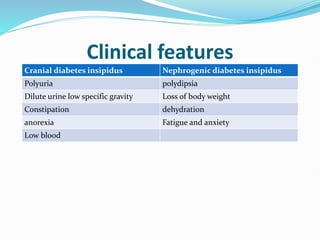
Cranial diabetes insipidus Nephrogenic diabetes insipidus
Polyuria polydipsia
Dilute urine low specific gravity Loss of body weight
Constipation dehydration
anorexia Fatigue and anxiety
Low blood
management
 Carry out investigation to identify cause and correct it.
e.g. ultrasound, MRI, CT scan
 Give drugs to increase water reabsorption at the renal
tubules e.g. desmopressin 10-100ug bd
 In severe cases, give desmopressin at intervals of 36-40
hours usually evening to ensure maximum reabsorption.
 Other drugs include desmopressin renal spray short
acting
 Chloral opromide (diabenese) PO125-250mg daily to
enhance renal responsiveness to ADH
Conti…
 Observe for signs of hypoglycemia since treatment is
given when there is hyperglycemia.
 If there is tumor, prepare and take the patient for
surgery
 Encourage the patient by giving health education.
SYNDROME OF INNAPROPRIATE ADH SECRETION
 This is a syndrome in which there is excessive
secretion of ADH. It leads to water retention with
resultant hyponatremia and hypoosmolarity.
Causes
 Ectopic secretion of ADH by oat cell carcinoma of
the lungs
 Meningitis
 Subarachnoid hemorrhage following head injury
 Pneumonia
 Patients on mechanical ventilation
management
 Bed rest
 Position to promote good venous return
 2 hourly turn to prevent bed sores
 Restrict fluids intakes
 Anti seizure
 Assist with ambulating and provision of hygiene
THE THYROID GLAND
 THE THYROID GLAND
HYPERTHYROIDISM
 This refers to excess exposure of the body to amount
of thyroid hormones.
Causes
 Graves disease
 Multinodular goiter
 Solitary active nodule (toxic adenoma)
 Sub acute thyroiditis/ post partum thyroiditis
 Excess stimulation of thyroid gland by TSH
 Hydatiform mole choriocarcinoma –HCG from the
placenta stimulates thyroid gland.
 Metastasis/ cancer of thyroid tissue
GRAVES DISEASE
 This is diffuse enlargement of thyroid gland mainly
due to TSH receptor antibody.
 There is overproduction of thyroid hormone due to
production of antibodies which will act as TSH
binding with thyroid gland and make the gland
enlarged with increase of T3 and T4 production.
Clinical features
 Diffuse goiter
 GIT – anorexia, vomiting, diarrhea, stearrtorrhoea
 Cardiac- palpitations, tachycardia, angina, cardiac
failure.
 Respiratory – dyspnea on exertion, exacerbation of
asthma
 Skin- purititis, alopecia , pretibial myoedema .
 Eyes- diplopia, retraction of eyelids, excessive
lacrimation, exophthalmos.
 Neuromuscular- emotional irritability, psychosis,
aggitiation muscle weakness, increase tender reflex
Conti…
 Reproductive- impotence, libido, spontaneous
abortion, oligo- menorrhea, amenorrhea, infertility.
 Heat intolerance
 Osteoporosis
 Weight loss
GOITRE
 This is a condition in which there is enlargement of
the thyroid gland. It is more common in women than
in men.
 There are 3 main types namely;
 non- toxic goiter (simple)
 Toxic goiter
 Malignant goiter
Causes
 Deficiency of iodine in the diet
 Lack of TSH in pituitary gland
 Over production of T4 caused by toxic /malignant
goitre
Predisposing factors
 Hereditary factors
 Tumors of thyroid gland
 Goitrogens .(substances that disrupt production of
thyroid hormones by interfering with iodine uptake
triggering release of TSH ) e.g cassava , soya beans
salicylates, sulfonamides
 Emotional stress
 Trauma of thyroid gland
SIMPLE /NON-TOXIC GOITRE
 In this type of goiter, the thyroid gland enlarges
without symptoms of thyroid dysfunction.
Causes
 Deficiency of iodine in the diet
 Inability of the thyroid gland to use iodine
 Increased demand for iodine e.g. during pregnancy ,
stress
 Goitrogens e.g. carrots, sulfonamides, salicylates
Signs and symptoms
 Painless swelling on the neck that moves up and
down when swallowing.
 Dysphagia
 Dyspnea and stridor
 Cough
 Hoarseness of voice
 Engorged neck veins
 anxiety
Treatment and management
 In most cases, this type needs little treatment since
the goitre subsides on its own
 Give foods rich in iodine to correct iodine deficiency
 Add iodine to table salt
 If due to goitregen foods, exclude them from diet
 If due to drugs, avoid them if possible
 Do thyroidectomy if the gland is grossly enlarged
MALIGNANT GOITRE
 This may develop from toxic goiter
Signs and symptoms
 Enlarged thyroid gland
 Dyspnea
 Dysphagia
 Stridor
 Firm and hard painful gland
treatment
 Surgical removal of the whole gland (thyroidectomy)
 Radioactive iodine treatment may follow surgery
TOXIC GOITRE
This type of goitre is common in young women. There
are two forms of toxic goitre
 Toxic multinodular goitre
 Diffuse/Exophthalmic goitre
a) TOXIC MULTINODULAR GOITRE
 This type of goiter is usually accompanied by tumor
formation which may be single tumor or multiple
tumors which are likely to become malignant goitre
 Occurs in people who have a previous history of
longstanding non-toxic goitre.
 The patient usually has pronounced cardiovascular
symptoms
Conti…
b) DIFFUSE/ EXOPHTHALMIC GOITRE
This is an autoimmune or genetic components of the
disease or related to severe emotional stress.
pathophysiology
 The thyroid gland overactive resulting in excess
amount of thyroid hormone released to the tissues
and this accelerates metabolic activity in the body.
 There is more oxygen and energy use leading to high
heart output
Signs and symptoms
 Enlarged thyroid gland
 Excessive appetite
 Alert and irritable
 Nervousness
Conti…
 Anxiety and restlessness
 Diarrhea and vomiting
 Hoarseness of voice
 Rapid irregular pulse
 Protruding of eye balls (exophthalmos)
 Diastolic pressure but systolic remains normal
 Body weakness
 Fluctuating emotional moods
 Weight loss
 Fine tremors of the fingers
 Heat intolerance
Conti…
 Breathlessness
 Moist skin
 Excessive sweating
 Dysphagia
 Palpitations with dyspnea
 Raised basal metabolic rate (BMR)
 Atrial fibrillation
diagnosis
 From clinical features
 Raised blood thyroxine levels
 Raised BMR
management
 Admit and nurse the patient in a quiet room to
ensure rest
 Sedate the patient with phenobarbital 30mg tds and
restrict visitors into the room.
 Take vital signs 4 hourly and report any abnormality.
In case of tachycardia, administer digoxin.
 Prepare and assist in investigations e.g. CXR , blood
for circulating T4, blood for BMR, biopsy if
malignancy is suspected.
Conti….
 Administer drugs as prescribed
 Non-toxic goiter give thyroxine 50-150mg od*6/12
 Toxic –carbimazole 150 mg 24/52 then reduce the dose
late to maintain … state
-propranolol – 60-40mg in 3 divided doses daily
 Lactating mothers are not given ant- thyroid drugs while
pregnant women are given with caution it affects intra uterine
growth of the foetus
 Encourage intake of a lot of sugar and oral fluids
 Provide comfort by changing linen at right timedue to
excessive sweating
 Give diet rich in proteins, vitamins, minerals and calories to
compensate energy being used by the increased metabolism.
Conti…
 For patients contraindicated for surgery and medical
treatment is not suitable, give radioactive iodine treatment
 Maintain good personal hygiene by giving daily bath to
prevent infection.
 If the condition improves, discharge the patient through
MOPC
 Prepare the patient for surgery
 Indications for thyrodectomy.
 Increase in size of the gland
 Substantial malignancy
 Increase pressure symptoms
 Thyrotoxicosis patients not responding to medical treatment
 Operation done may be partial or total thyroidectomy
pre –op management of
thyrodectomy
 Before surgery, patients need a period of treatment to
return their thyroid hormones to normal to prevent
risk of thyroid storm and hemorrhage after surgery.
 Carbimazole is given for several weeks and stopped 10
days before surgery
 Administer the following pre-operatively
Glucose iodine 0.3-0.9ml p.o tab*10 14/7
Propranolol 120-160mg od
Valium 5mg note to quieten patient and ensure sleep
Digoxin 0.25mg if there are trial fibrillations
Conti…
 Carry out investigations to include X-Ray of trachea
and thoracic inlet, blood for serum thyroxine, blood
for GXM
 post operative care after thyrodectomy.
Checking respiratory pulse, level of consciousness ,
bleeding from the operation site
Nurse the patient with the head deviated and
supported with pillows neck slightly flexed to avoid
strain on suture line.
 if there is blood transfusion, observe ¼ hourly.
Maintain IV fluids running well
Nurse that patient in sitting up position
Cont` thyrodectomy
Take care of drainage tubes and observe for any
blockage , internal bleeding and formation of
hematoma indicated by(cyanosis) tachycardia,
dyspnea, restlessness). If any noted, inform the doctor
for insertion of endotracheal tube (ETT) or
tracheostomy
Report any changes in voice hoarseness , inability to
speak because they may be due laryngeal nerve injury,
or vocal voice paralysis. Patient should minimize
talking.
Check for tremors, numbness, tingling sensation in
extremities which may be due to removal of
parathyroid gland leading to tertiary tetany
Conti…
 Watch for repeated clearing of the throat or for complaint
of smothering or difficulty swallowing, which may be early
signs of hemorrhage
 Remove drainage tubes 2nd post operative day
 Remove alternate stitches on 3rd day and the rest on 4th ad
5th day
Conti…
 If observation e.g. pulse rate are normal, no heart
problem, and would has healed well, discharge the
patient through SOPC
 Patients who have undergone total thyroidectomy are
put on thyroid drugs for life so encourage on drug
compliance at home.
Complications of thyroidectomy
 Hemorrhage
 Laryngeal paralysis
 Voice coarseness
 Myxedema
 Thyroid storm or crisis
Conti…
 Teary due to removal of thyroid gland
 Infection
 Keloids
Complications of goiter (toxic)
 Susceptible to infections
 Metastasis to other parts of the body
 Malignancy
 Congestive cardiac failure (CCF)
 Protruding eye balls (exophthalmos)
GRAVES DISEASE
 This is diffuse enlargement of thyroid gland mainly
due to TSH receptor antibody.
 There is overproduction of thyroid hormone due to
production of antibodies which will act as TSH
binding with thyroid gland and make the gland
enlarged with increase of T3 and T4.
Clinical features
 Diffuse goiter
 GIT – anorexia, vomiting, diarrhea, stearrtorrhoea
 Cardiac- palpitations, tachycardia, angina, cardiac
failure.
 Respiratory – dyspnea on exertion, exacerbation of
asthma
 Skin- purititis, alopecia , pretibial myoedema .
 Eyes- diplopia, retraction of eyelids, excessive
lacrimation, exophthalmos.
 Neuromuscular- emotional irritability, psychosis,
aggitiation muscle weakness, increase tender reflex
Conti…
 Reproductive- impotence, libido, spontaneous
abortion, oligo- menorrhea, amenorrhea, infertility.
 Heat intolerance
 Osteoporosis
 Weight loss
 Mangement
 Similar to that of goitre in addition to:
 Give antithyroid drugs eg
carbimazole,methimazole,propylthiouracil to make
patient euthyroid
Management of graves disease
 Sub total thyrodectomy can be done
 Withdraw antithyroid drugs 10-14 days before surgery
and put patient on potassium iodide 170mg daily to
make the gland less vascular and firm for operation
 Radio active iodide used to destroy cells in the thyroid
gland
 Dress any wounds with corticosteroids
 In case there is excessive lacrimation use tinted glasses
THYROIDSTORM
 It is a life threatening complication of hyperthyroidism
that results from a sudden increase in thyroid hormone
levels in blood following thyroidectomy. It occurs after
surgery in patients who were poorly prepared.
Signs and symptoms
 High temperature (fever)
 Increased metabolic rate
 Vomiting
 Low BP
 Confusion
 Atrial fibrillation
 Profuse sweating
Conti…
 Rapid pulse
 Anxiety
 Dehydration
 Tachycardia
 Patient may collapse and die
management
 Administer oxygen by mask
 Give antipyretics to lower the body temperature
 Start the patient on IV fluids to correct dehydration
 Give hydrocortisone and narcotic drugs
 Give sodium iodopodate to prevent release of
thyroid hormone from the gland
 After 2/52 withdraw sodium iodopodate and
continue with carbimazole
HYPOTHYROIDISM
 This is a condition in which there is low or depressed
levels of thyroid hormone. It presents as cretinism in
children and myxedema in adults.
Causes
 Spontaneous atrophy
 Following treatment with radio iodide
 Congenital hypothyroidism
 Sub acute thyroiditis
 Drug- induced e.g. lithium
 Dyshormonogenesis due to lack of enzyme necessary for
form action of hormones
 Following surgery
Conti…
Clinical features
 Constipation
 Anemia
 Bradycardia
 Depression
 Tendon reflexes decrease
 Weight gain
 Angina
 Hypertension
 Cardiac failure
 Decreased libido
Conti…
 Dry skin
 Impotence
 Infertility
 Amenorrhea
 Alopecia
 Non pitting oedema (myxedema)
Conti…
investigations
 Measure T4 and levels (T4 and T5H). T3 not
measured
Management
 Do hormonal replacement of T4 ( thyroxine tabs
150mg od for life
Complications
 Myxedema coma
CRETINISM
This is a condition in which there is lack of thyroid activity
from childhood resulting into lack of physical growth and
mental development.
Clinical features
 May present with congenital absence of thyroid gland
 Retarded physical growth and mental development
 Disproportionally short limbs
 Large protruding tongue
 Coarse dry skin
 Poor abdominal muscle tone
 Umbilical hernia
 Early RX can lead to complete cure
MYXOEDEMA
 This is a condition resulting from insufficient thyroid activities in
adults due to the loss or destruction of thyroid gland tissues
 It is a complication of hypothyroidism.
Causes
 Surgical removal of thyroid gland in thyrotoxic and malignant goitre
 Primary atrophy of thyroid gland ( autoimmune process)
 Radioactive iodine in therapy of exophthalmic goitre
 Severe and prolonged iodine deficiency
 Chronic thyroiditis
 Anti thyroid drugs and those containing iodine, e.g. lithium
carbonate
 Failure of primary pituitary glands to secrete TSH
 Hypothermic effect of production of TSHRF
Conti…
Pathophysiology
 Deficiency in thyroid hormone leads to decrease in
basal metabolic rate. Fat mobilization from the
tissues is impaired and cholesterol level is high.
 Vasodilation of peripheral vessels occurs and this
lowers cardiac output leading to cardiomegaly.
 Metabolism of carbohydrates, fat and proteins are
affected.
Conti…
Signs and symptoms
 Anemia
 Constipation
 Chronic headache
 Hypersomnia
 Decreased libido
 Wrinkled scalp
 Deep hoarse voice
 Swelling of the face puffy eyelids and thick nostrils
 Dull and sluggish mentally
Conti…
 Slurred speech
 Bradycardia
 Slow movement
 Cardiomegaly
 Slow relaxation of tendon reflexes
 Increased sensitivity to cold
 Amenorrhea or menorrhagia
 Weight gain with low appetite
 Muscle pain
 Dry coarse thickened skin
Conti…
 Non-pitting oedema
 Dry coarse hair that tends to fall
 Irritability
 Low temperature
 Loss of memory (confusion)
 Numbness and tingling of arms and legs
Conti…
Investigations
 Protein bound iodine is low
 Blood analysis- low thyroxine level, high cholesterol,
low BMR
 LCG- enlarged heart with bradycardia
Conti…
Management
 Give thyroid hormones e.g. sodium levothyroxine
0.05mg p.o then increase gradually to reach
maintenance dose of 0.2-0.3mg daily after 2 weeks
 Give triiodothyronine (Cytomol) 0.05mg p.o then
increase gradually to 0.2mg
 Observe for side effects of drugs such as tachycardia,
dyspnea, sweating, skin rash, palpitations, dizziness,
weight loss , pericardial pain, diarrhea
 Nurse the patient in a warm room and add him live
because he has poor tolerance to cold.
Conti…
 Take vital signs and report any abnormality e.g. low
temperature
 Patient to massage the skin with lotion or cream that
will prevent it from being dry and course
 Give diet low in cholesterol
 To prevent constipation, give diet rich in roughage and
have adequate fluid intake.
 Give antibiotics to treat any infection.
 Advise the patient to avoid factors that make the
condition worse e.g. cold, stress, trauma, infection
 Give health education to the patient about the
condition.
 Discharge home through MOPC
Conti…
Complications
 Hypothermia
 Anemia
 Myxedema coma
 Arteriosclerosis
 cardiomegaly
MYXEDEMA COMA
This is a medical emergency due to profound
hypothyroidism. It is precipitated by hypothermia, stress,
coma or infection.
Management
 Ensure the patient is warm
 Give the patient thyroxine 2hourly and IV
hydrocortisone 100mg
 Clear IV fluids and maintain fluid balance charts closely
monitor vital signs and report any abnormality.
Prognosis
 50% of patients die while the others take drugs the rest
of their life
Differences between hyperthyroidism and hypothyroidism
hyperthyroidism hypothyroidism
1.Increased basal metabolic rate 1.Decreased basal metabolic rate
2.anxiety, restlessness, excitability 2.Depression, mental slowness
3.tachycardia, palpitations 3. Bradycardia
4.diarrhea 4. constipation
5. Weight loss , good appetite 5. Weight gain , anorexia
6.Hair loss 6. Dry skin with brittle hair
7. Warm sweaty skin, intolerance to
heat
7. Dry cold skin prone to hypothermic
8.Oxphthalmos in graves disease 8. Dropping eyelids
9.Treated by ant thyroid drugs e.g.
propylthiouracil, B- blockers or
thyroidectomy
9. Treated by thyroid hormone
replacement
10.Causes are grave disease, thyroid
neoplasm
10. Caused by thyroiditis, surgical
destruction, iodine deficiency ,
cretinism or reduced TSH/TRH
11.Goitre occurs 11. Myxedema occurs
Parathyroid gland.
Functions of calcium in the body include;
 Stability of nervous excitability
 Regulation of permeability of cell membranes thus
control intracellular metabolism
 Helps in the formation of bones and teeth
 It is a factor of clotting in blood
HYPERPARATHYROIDISM
 This refers to a condition in which there is excessive
production of parathyroid hormone.
 This leads to increase in calcium level in blood by;
 Increasing osteoclastic activity (bone resorption) thus
increase Ca+
 Increasing absorption of calcium in renal tubules
 Increasing absorption of calcium in small intestines
Excess of this hormone leads to hypercalcemia
types
 Primary parathyroidism- occurs when there is
parathyroid adenoma or tumor leading to excess
production of PTH
 Secondary hyperparathyroidism – occurs due to
excessive stimulation of parathyroid glands when there
is low Ca+ levels in the blood.
 Tertiary hyperthyroidism- occurs due to 2o
hyperparathyroidism which causes parathyroid gland
to increase in size
 Malignancies
 Thiazide diuretics
Signs and symptoms
Presents with signs of hypercalcemia
 Polyuria
 Polydipsia
 Anorexia
 Constipation
 Dyspepsia
 general Fatigue
 Bone pain and tenderness
 Calcification of soft tissue
 Renal calculi
 Drowsiness
 Peptic ulceration
Conti…
 Fractures
 Muscle weakness
 Hypertension
Investigations
 Urinary levels of Ca2+
 Plasma level of Ca2+
 Parathyroid levels in blood
 Phosphate levels in blood
Causes
 Obstruction of blood supply to parathyroid gland
during thyroid surgery
 Pseudo hypoparathyroidism; the parathyroid gland
secretes normal levels of PTH but still there is
hypocalcemia due to defect in receptor mechanism.
 Ionizing radiation e.g. iodine in Rx of hyperthyroidism
 Development auto antibodies to PTH gland
 Idiopathic
 Congenital abnormality of the gland
management
 For primary hyperparathyroidism, do surgery to
remove all parathyroid tissue. If the tumor can be
located, it is only removed
 For secondary hyperparathyroidism, the patients are
dehydrated so require rehydration
 Administer Bisphosphonates drugs e.g. palmidronate,
chodronate and sodium etidronate . They will bind to
free Ca 2+ and also inhibit osteoclastic activity.
 Administer IV fluids together with Lasix to cause
forced diuresis which will remove Ca2+ from the blood
Conti…
 In severe cases do hemodialysis
 Glucocorticoids such as prednisone are given to reduce
serum Ca2+ levels.
HYPOPARATHYROIDISM
 This is a condition in which there is deficiency of
parathyroid hormone leading to absorption of Ca2+ in
the small intestines reduced absorption of Ca2+ in the
renal tubules and decreased bone resorption . These
leads to hypocalcemia.
Signs and symptoms
Hyperparathyroidism presents with symptoms of
hypocalcemia
 Tetany (muscle spasms
 Gradual epilepsy
 Psychiatric disturbances
 Brittle nails
 Bone weakness
 Paresthesia
 Development of cataracts
investigations
 Serum PTH will be decreased
 Serum Ca2+ will be decreased
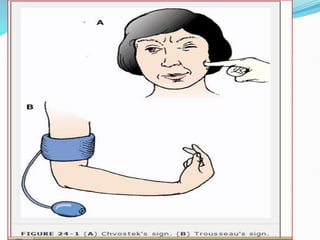
 Trousseau's signs – if you tie BP cuff on the upper arm
and inflate it above systolic BP, 3 minutes later there
will be carpal spasms.
 Chrostek’s sign- when you press the facial nerve as it
emerges on the face, just in the front of the ears there
will be facial spasms.
Management
 In acute phase when the patient presents with tetany
i.e. generated muscle spasm, give calcium gluconate
20mls IV followed by calcium gluconate 1m
 If the patient has no tetany, treat hypocalcemia by
giving drugs which will increase levels of vitamin D
e.g. alfacalcidol, calcitriol, to promote Ca2+ absorption
in the small intestines.
 Protect the patient from injury during convulsions.
TETANY
 This is a condition characterized by high
neuromuscular excitation and a great irritability due to
reduced serum Ca2+ levels (hypocalcaemia). There are
very strong painful spasms of skeletal causing
characteristic bending inwards of the hands, fore arm
and feet.
 In children it may present as laryngeal spasms and
convulsions.
Predisposing factors
 Hyperparathyroidism
 Inadequate dietary calcium intake
 Chronic renal failure with excessive secretion of Ca2+
 Removal or injury of parathyroid gland
 Lack of vitamin D necessary for absorption of Ca2+ in
the gut
 Alkalosis- e.g. metabolic due to vomiting , ingestion of
excess alkalis or respiratory alkalosis due to
hyperventilation alter calcium.
 Lack of Na+ absorption like malabsorption syndrome
 Idiopathic autoimmune response by antibodies against
PTH
Pathophysiology
 Deficiency of PTH causes a fall in serum Ca2+ with a
great irritability of nerves which is manifested by spasms
and twitching of muscles.
Signs and symptoms
 Dysphagia
 Nausea and vomiting
 Photophobia due to cataracts
 Stiffness of hands and feet
 Numbness and tingling sensation in extremities or around
the lips ( paresthesia)
 Trousseau's sign – when blood supply in the arms if
secluded for 3 minutes, there will be carpal pedal spasm
which may cause inward bending of arms and feet
Conti…
 Chrostek’s sign- quick touch of facial nerve near the ear
produces twitching of facial muscles.
 Anxiety and irritability
 Convulsions
 Bronchospasms with dyspnea
 Laryngeal spasms leading to stridor and cyanosis
 Patchy alopecia and loss of eyebrows
 Nails become brittle and break easily
 Rickets and osteomalicia
 Cardiac arrhythmias
Conti…
 Psychosis due to deposition of calcium basal ganglia
depression and delirium
 Coarse dry skin with brown pigment
 Anxiety and irritability
Diagnosis
 Clinical features
 Low serum calcium
 Raised serum potassium
 Positive chrostek’s sign
 Low PTH levels
management
 Admit and nurse the patient in a warm room quiet with dim
light and with limited movement to minimize neuromuscular
excitation and photophobia.
 Prepare and assist in investigations e.g. blood for Ca2+, BP
level X ray to rule out rickets and osteomalicia, administer
medication as prescribed e.g. IV calcium gluconate , vitamin
D e.g. calciferol 1-5mg daily, parenteral parathormone is given
in acute hypoparathyroidism
 Give sedative e.g. valium to control convulsions / spasm
 If the patient develops respiratory distress , do tracheostomy
or give mechanical ventilation in addition to bronchodilators
Conti…
 Give diet high in calcium and low potassium
 Closely observe the patient’s vital signs and for
convulsions ¼ hourly and report any abnormality.
 Reassure the patient and relatives to allay anxiety
 Give health education once the patient stabilizes and
discharge him home.
 Take medication as prescribed and complete the dose
 How to recognize the side effects of drugs
 Importance of taking diet with high calcium and low
potassium
THE PANCREASE
DIABETES MELLITUS
 This is a metabolic disorder affecting glucohydrate
metabolism characterized by chronic elevation of
glucose concentration in the blood (hyperglycemia)
due to inability of the body to produce or utilize
insulin hormone.
Classification
Type 1; Insulin Dependent Diabetes Mellitus (IDDM)
 It occurs as a result of absence or deficiency in insulin
production by beta cells of islets of Langerhans.
 Usually occurs in the non-obese young adults (less than
40 years) and is associated with ketoacidosis.
 The patients are insulinogenic and acquire insulin to
sustain life. Their urine has sugar and acetone.
Type 2 Non-insulin Dependent Diabetes Mellitus
(NIDDM)
 The beta cells produce insulin but there is resistance to
action of insulin which may be due to;
Conti…
 Abnormality in insulin receptors
 Abnormal insulin molecule
 Excess antagonists of insulin in circulation
 The age of onset is usually 50 years and occurs mostly
in obese people.
 These patients do not need insulin except when there
is hyperglycemia like in the following cases;
 Ineffective oral hyperglycemia drugs (
persisted polyuria and hyperglycemia)
Conti…
 Ketonuria
 During distress e.g. when there is infection
 Other infections e.g. renal failure
 Type 3 secondary diabetes mellitus
Develops as a complication of;
 Acute and chronic pancreatitis
 Some drugs e.g. corticosteroids, phenytoin, thiazide
diuretics
 Secondary to other hormonal disturbances involving
hypersecretion e.g. GH
 Pregnancy (gestational diabetes mellitus)
Causes of diabetes mellitus
 Genetic predisposing – insufficient or complete lack of
insulin.
 Infection e.g. chronic pancreatitis, mumps rubella
 Presence of antibodies that interfere with insulin action i.e.
autoimmune reaction that may be triggered by EBV, CMV
 Trauma in the pancreas
 Reduced tissue sensitivity to insulin action e.g. in Cushing’s
syndrome
 Conditions that lead to excess production of hormones
that antagonize e.g. GH (acromegaly), cortisol ( Cushing’s
syndrome) phacochromocytoma.
Conti…
 Drugs e.g. corticosteroids, thiazide diuretics,
phenytoin
 Exposure to cow’s milk at early age. The milk has BSA
(Bovine Serum Albumin) structure that is similar to
that of B cells that antibodies form against BSA may
also destroy B -cells
Predisposing factors
 Obesity – cause impaired ability in tissues to utilize
glucose
 Stress- adrenaline and cortisol produced in stress
antagonize insulin
 Lack of exercises (become obese)
 Vitamin C deficiency
 Strain of pregnancy ( insulin demand is increased)
 Pancreatic diseases e.g. pancreatitis, ca pancreas or
pancreatectomy
pathophysiology
 Pancreatic secretion of insulin is stimulated by increase
in blood sugar and inhibited by low blood sugar level.
Insulin increases utilization of glucose by body cells. It ;
Increase glycogenesis in muscles and liver
Moves glucose from blood to cellular
compartment where it is converted to glycogen
and stored (glycogenesis) or used for energy
production.
 When insulin is insufficient, there is impaired glucose
metabolism leading to change in homeostasis
(hyperglycemia) i.e. increased blood sugar.
Conti…
 Blood sugar rises leading to increase in osmotic pressure of body
fluids and when renal threshold is reached, glucose is excreted in
urine,(glycosuria) carrying large amount of H2O / polyuria
 Cells fail to metabolize and there is gluconeogenesis from amino
acids and body proteins causing wasting and weight loss.
 As the body metabolizes fats and proteins to provide energy, there is
production of ketones and increased demand for proteins.
 Due to reduced glucose metabolism, the amount of oxaloacetic acid
is reduced and this leads to accumulation of acetyl coenzyme A
excess of which is converted to ketones which are acidic leading to
ketoacidosis. There is hyperventilation and acidification of urine.
Signs and symptoms
 Polyuria
 Polydipsia
 Polyphagia
 Glycosuria
 Hyper glycaemia
 Tachycardia
 Dyspnea
 Ace tonic breath
 Recurrent infections e.g. boils
Conti…
 Pruritis (itching of vulva and glans penis)
 Oral or vaginal thrush
 Low blood pressure
 Temporary blurred vision
 Weight gain or weight loss
 Muscle wastage
 Nocturia
 Irritability and coma (mental changes)
 Paranesthesia( tingling sensation in fingers and feet)
 Lassitude and loss of energy
diagnosis
 Clinical features
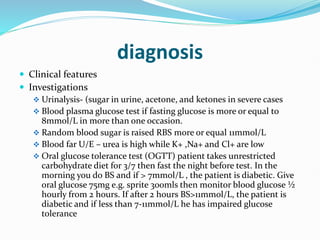
 Investigations
 Urinalysis- (sugar in urine, acetone, and ketones in severe cases
 Blood plasma glucose test if fasting glucose is more or equal to
8mmol/L in more than one occasion.
 Random blood sugar is raised RBS more or equal 11mmol/L
 Blood far U/E – urea is high while K+ ,Na+ and Cl+ are low
 Oral glucose tolerance test (OGTT) patient takes unrestricted
carbohydrate diet for 3/7 then fast the night before test. In the
morning you do BS and if > 7mmol/L , the patient is diabetic. Give
oral glucose 75mg e.g. sprite 300mls then monitor blood glucose ½
hourly from 2 hours. If after 2 hours BS>11mmol/L, the patient is
diabetic and if less than 7-11mmol/L he has impaired glucose
tolerance
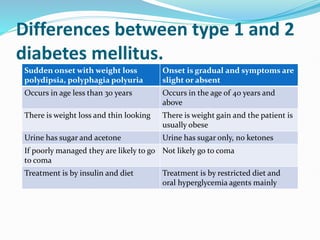
Differences between type 1 and 2
diabetes mellitus.
Sudden onset with weight loss
polydipsia, polyphagia polyuria
Onset is gradual and symptoms are
slight or absent
Occurs in age less than 30 years Occurs in the age of 40 years and
above
There is weight loss and thin looking There is weight gain and the patient is
usually obese
Urine has sugar and acetone Urine has sugar only, no ketones
If poorly managed they are likely to go
to coma
Not likely go to coma
Treatment is by insulin and diet Treatment is by restricted diet and
oral hyperglycemia agents mainly
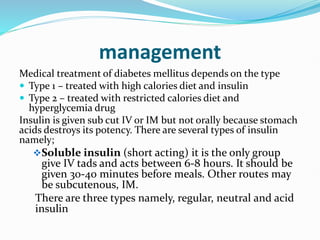
management
Medical treatment of diabetes mellitus depends on the type
 Type 1 – treated with high calories diet and insulin
 Type 2 – treated with restricted calories diet and
hyperglycemia drug
Insulin is given sub cut IV or IM but not orally because stomach
acids destroys its potency. There are several types of insulin
namely;
Soluble insulin (short acting) it is the only group
give IV tads and acts between 6-8 hours. It should be
given 30-40 minutes before meals. Other routes may
be subcutenous, IM.
There are three types namely, regular, neutral and acid
insulin
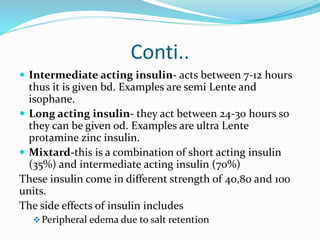
Conti..
 Intermediate acting insulin- acts between 7-12 hours
thus it is given bd. Examples are semi Lente and
isophane.
 Long acting insulin- they act between 24-30 hours so
they can be given od. Examples are ultra Lente
protamine zinc insulin.
 Mixtard-this is a combination of short acting insulin
(35%) and intermediate acting insulin (70%)
These insulin come in different strength of 40,80 and 100
units.
The side effects of insulin includes
Peripheral edema due to salt retention
Conti…
Hyperglycemia/ insulin coma
Weight gain
Hypokalemia
Allergy hypersensitivity
Atrophy of muscles due to repeated injections
 For type II diabetes mellitus oral hyperglycemic agents
used include;
Chrlorpropamide ( long acting so given od)
Tolbutamide and tolazomide (short acting )
Glipizide
Met formin ( used in obese patient to reduce weight
Acarbose
Triglitazone (increase peripheral action of insulin
Conti…
Diet
 Patients with normal weight are given normal diet
 Obese patients are given diet with les calories i.e.
carbohydrates 50% fats 30-35% proteins 10-15%
 Put the patient on low salt diet
 Can take alcohol in moderation for it induces
hypoglycemia
 N/B good of diabetes can be achieved by insulin , oral
hypoglycemia agents and diet
Nursing management
 Admit the patient in the ward and give bed rest
 Start the patient on IV fluids to which NaHCO3 is added
to alkalinize blood and prevent acidosis.
 Administer drugs to the patient as prescribed i.e. insulin
or oral hypoglycemia agents
 Prepare and assist in carrying out the investigations
 Take urine 6 hourly for urinalysis and record accurately
 Closely observe the vital signs TPR, BP, to detect any
determination and onset of complications. Given
antibiotics e.g. X –pen prophylactically to prevent
infections.
Conti..
 Observation for side effects of insulin or hypoglycemic
drugs
 give the patient the appropriate diabetic diet with
adequate nutrition quantity of sugar, fats and
proteins.
 Ensure the patient is served with meals to prevent
hyperglycemia following insulin administration.
 For type 1 meals should be regular and some amount
at the same time every day to avoid hyperglycemia.
 If there are any wounds, dress using aseptic technique
because the patient have less resistance to infection.
 Treat any concurrent infection promptly.
 Give health education to the patient to include;
Should take the drugs at the right time and right dose
Should have supplies at all times
Patient on insulin, teach them on injection technique, site
i.e. thigh, abdomen , deltoid muscles.
Strengths of insulin and to keep away from heat and light.
Sterilize injection apparatus after use and disposal
Never substitute one type of insulin for the other
How to recognize signs and symptoms of hypoglycemia
and hyperglycemic coma and should have sips of glucose to
take whenever they note signs of hyperglycemia
Conti…
 never take insulin and miss meals (prevents
hypoglycemia)
Teach them collection of urine for testing
Carry diabetic cards with them and encourage them to
join the diabetic associations for support.
To come for a follow-up in diabetic (MOPC ) clinic.
complications
 Hyperglycemia
 Hypoglycemic coma
 Diabetic Keto- acidosis (DKA)
 Atherosclerosis leading to M.I
 Hypertension
 Dehydration
 Infertility in women
 Large babies leading to difficulty in delivery
 Nephropathy
Conti…
 Peripheral neuropathy
 Retinopathy
 Cataracts
 Gangrene of feet and toes
 Sexual impotence in men
 Infection e.g. UTI . Vulvitis, carbuncle
HYPOGLYCAEMIC COMA
This is a condition in which there is low blood sugar
level leading to loss of consciousness (coma)
causes
 Overdose of insulin or oral hypoglycemia agents
 Increased amount of exercises
 Nutritional imbalances e.g. when a patient misses a
meal or is vomiting.
Signs and symptoms
 Weakness and anxiety
 Feeling of hunger
 Sweating a lot
 Lethargy
 Pale, cool, charming skin
Conti….
 Blood sugar is very low
 Dilated pupils
 Double vision
 Headache
 Slow pulse rate
 Palpitation
 Confusion and coma
 Tremors of fingers
 confusion and coma
Conti…
 Rapid respiration
 Normal blood pressure
management
 Admit the patient in the ward and provide bed rest the
inform the doctor
 If a patient can swallow, give a sweetened drink to raise
blood glucose
 If unconscious give IV dextrose immediately.
 Test urine and check for BS
 Closely observe the patients vital signs and the level of
unconsciousness.
 Stabilize the conduction and then give health
education before discharging the patient home.
HYPERGLYCAEMIA/ DIABETIC
COMA
 This is a condition that occurs as a result of low or lack
of insulin. Common in IDDN patients. Lack of insulin
production leads to hyperglycemia, glycosuria and
progressive metabolic acid.
Signs and symptoms
 Severe thirst and polyuria
 Abdominal pain
 Deep sighing breath due to acidosis
 Raised weak pause
 Low blood pressure
Conti…
 Smell of acetone in breath
 Loss of consciousness leading to coma
 Ketones +++
 Constipation
 Muscle cramps
 Dry red tongue
 Weakness and drowsiness
 High levels of BS
 Warm and dry skin
 Glucosuria +++
management
 Aims –reduces the elevated blood sugar
- correction of fluid and electrolyte imbalance
- clear ketonic bodies from the blood and urine
 This is a medical emergency thus admit the patient
 Take vital signs and note any abnormality
 If the patient is unconscious, nurse in semi-prone
position to ensure patient airway.
 Give the IV fluids to correct the fluid- electrolyte
imbalance as follows
-1litre of normal saline in the first 30min
-1litre of normal saline in the next 1 hour
Conti…
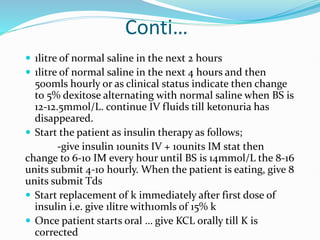
 1litre of normal saline in the next 2 hours
 1litre of normal saline in the next 4 hours and then
500mls hourly or as clinical status indicate then change
to 5% dexitose alternating with normal saline when BS is
12-12.5mmol/L. continue IV fluids till ketonuria has
disappeared.
 Start the patient as insulin therapy as follows;
-give insulin 10units IV + 10units IM stat then
change to 6-10 IM every hour until BS is 14mmol/L the 8-16
units submit 4-10 hourly. When the patient is eating, give 8
units submit Tds
 Start replacement of k immediately after first dose of
insulin i.e. give 1litre with10mls of 15% k
 Once patient starts oral … give KCL orally till K is
corrected
Conti…
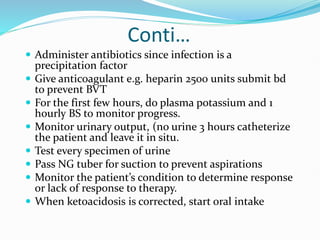
 Administer antibiotics since infection is a
precipitation factor
 Give anticoagulant e.g. heparin 2500 units submit bd
to prevent BVT
 For the first few hours, do plasma potassium and 1
hourly BS to monitor progress.
 Monitor urinary output, (no urine 3 hours catheterize
the patient and leave it in situ.
 Test every specimen of urine
 Pass NG tuber for suction to prevent aspirations
 Monitor the patient’s condition to determine response
or lack of response to therapy.
 When ketoacidosis is corrected, start oral intake
Conti…
 Provide general nursing care to cater for physical and
psychological needs.
 Give health education to patient and relatives before
discharging home.
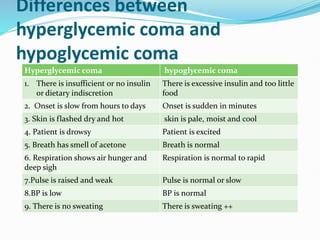
Differences between
hyperglycemic coma and
hypoglycemic coma
Hyperglycemic coma hypoglycemic coma
1. There is insufficient or no insulin
or dietary indiscretion
There is excessive insulin and too little
food
2. Onset is slow from hours to days Onset is sudden in minutes
3. Skin is flashed dry and hot skin is pale, moist and cool
4. Patient is drowsy Patient is excited
5. Breath has smell of acetone Breath is normal
6. Respiration shows air hunger and
deep sigh
Respiration is normal to rapid
7.Pulse is raised and weak Pulse is normal or slow
8.BP is low BP is normal
9. There is no sweating There is sweating ++
Conti…
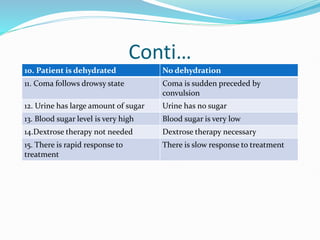
10. Patient is dehydrated No dehydration
11. Coma follows drowsy state Coma is sudden preceded by
convulsion
12. Urine has large amount of sugar Urine has no sugar
13. Blood sugar level is very high Blood sugar is very low
14.Dextrose therapy not needed Dextrose therapy necessary
15. There is rapid response to
treatment
There is slow response to treatment
Conti…
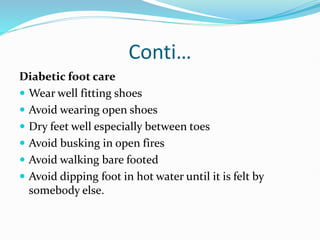
Diabetic foot care
 Wear well fitting shoes
 Avoid wearing open shoes
 Dry feet well especially between toes
 Avoid busking in open fires
 Avoid walking bare footed
 Avoid dipping foot in hot water until it is felt by
somebody else.
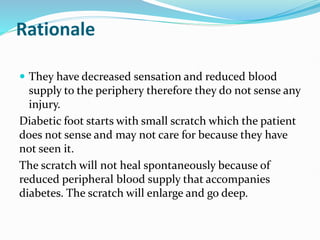
Rationale
 They have decreased sensation and reduced blood
supply to the periphery therefore they do not sense any
injury.
Diabetic foot starts with small scratch which the patient
does not sense and may not care for because they have
not seen it.
The scratch will not heal spontaneously because of
reduced peripheral blood supply that accompanies
diabetes. The scratch will enlarge and go deep.
ADRENAL GLAND
ADDISON’S DISEASE
 This is a disease characterized by decreased secretion
of adrenal cortex hormones (mineralocorticoids and
glucocorticoids) but mainly cortical. It can be acute
which is unrecognized and potentially fatal or chronic
that is simple to treat.
Causes
 Bilateral adrenolectomy ( all adrenal glands removed)
 Destruction of adrenal cortex by infections e.g. TB,
histoplasmosis.
 Autoimmune disease leading to (ant adrenal cortical
cells)
 Metastatic carcinomas
 Atrophy of zona glomerulosa and zona recticularis
Conti…
 Sudden withdrawal of adrenocortical hormone
therapy.
 Inadequate secretion of ACTH
Pathophysiology
 Decrease in secretion of these hormone result in
decreased vascular sufficiency, circulatory failure ,
hypoglycemia , decreased aldosterone secretion
which impairs Na+ and H2O reabsorption,
decreased physiological response to stress.
 There may be also deficiency of adrenal androgens
 Adrenal crisis may arise.
diagnosis
 Low level of adrenal cortical hormones in the blood or
urine
 Random cortisol will be decreased
 Random blood sugar will be decreased
 Electrolytes- Na+ will be decreased due to lack of
aldosterone
Clinical features
 Muscular weakness and fatigue
 Anorexia leading to weight loss
 Dark pigment of the skin ( reduced effect of cortisol
on melanocytes stimulating hormone)
 Nausea and vomiting
Conti…
 Abdominal pain
 Hypotension
 Hypoglycemia
 Chronic dehydration
 Menstrual disturbance
 Headache
 Addisonian crisis
 Low temperature and metabolic rate
 Hyponatremia and hyperkalemia
 Sparse hair and loss of hair from some parts
management
 Combat shock by administering hydrocortisone /
dextrose alternating with normal saline.
 Administer antibiotics as prescribed
 Give IV fluids e.g. Normal saline and when
vomiting subsides, give orally
 Radiotherapy may be done following surgery
 If adrenolectomy was done, patient should be on
cortisone drugs for life.
 Take daily body weights to assess the progress
Conti…
 Upon discharge, give the patient health education
 to comply to medication as per prescription
To have drugs at all times
Should avoid infection and if any should be
treated early
Advise on signs and symptoms of
hyperglycemic and hypoglycemic coma.
Importance of coming follow up in the
MOPC.
ADDISONIAN CRISIS
 This is a medical emergency marked by very low level
of adrenal cortex hormones.
Features of addisonian crisis
 Cyanosis
 Fever
 Rapid respiration
 Severe dehydration
 Headache
 Confusion
 Diarrhea
 Abdominal pain
 Circulatory collapse
diagnosis
 Blood for electrolytes :reduced sodium, increased
potassium
 Adrenalcorticol hormone levels
 Reduced blood glucose levels
 Increased WBC levels.
management
The basic management is as highlighted in Addison’s
disease plus the following;
 Patient is put in recumbent position with legs elevated
to increase venous return
 Administer 02 by mask or nasal catheter to correct
cyanosis
 Keep the patient warm
 Put hydrocortisone and dopamine 250-300mg in 50%
dextrose to constrict blood vessels to raise BP
 Administer noradrenaline or isopropanol in infusion of
5% dextrose to revive the vascular space.
 Encourage intake of plenty of oral fluids, soup juices to
correct fluid ,glucose electrolyte imbalance
 Give high salt diet and check BP 4 hourly
Conti…
 Administer corticosteroids e.g. prednisolone
 Encourage and reassure the patient to reduce stress
 Treat the patient of any other infection appropriately
 Give health education on how to prevent addisonian’s
crisis
 Monitor vital signs to counter hypotension
Complications
 Pathological fractures
 Hypoglycemic coma
 Renal failure
 Psychotic depression
 Hypotension
CUSHINGS SYNDROME
 Excess glucocorticoids or excess ACTH due to
--Pituitary tumor
--Pituitary hyperplasia
--adrenal tumor
--on going glucocorticoid therapy
 Excess ACTH stimulates the release of cortisol
Signs and sysmptom
Amenorrhea
Changes in mental status
Striae on abdomen ,breast and thighs
Skin changes e.g. acne ,infections ,easy bruising
Muscle weakness
Hirsutism on face ,neck ,chest (women)
Impotence, decreased fertility, and sex drive
---Signs and Symptoms
 moon face
Buffalo hump
osteoporosis
Tests Done
 Dexamethasone suppression test
 Increased cortisol in 24 hrs urine
 CT scan—pituitary, adrenal
 Blood glucose
 Increased sodium
 Decreased potassium
Treatment
 Surgical removal of tumors
 Radiation RX for pituitary tumors
 Cortisol replacement during recovery
Nursing Diagnosis
 Disturbed body image related to illness
 Excess fluid volume due to excess water and sodium
reabsorption
Risk for infection owing to immunosuppression
and inadequate primary defence
care of the patient undergoing
adrenalectomy
 Adrenalectomy may be unilateral or bilateral to treat
adrenal tumours, Cushing's syndrome, or
hyperaldosteronism
 Preoperative MBP and fluid volume are
optimizedanagement
Cont`
 Surgery and nursing care are explained to patient.
Patient is shown where adrenal glands lie on top of
kidneys and where incision may be on abdomen or
loin area.
 BP will be checked frequently before and after surgery
and glucocorticoids will be given to cover period of
stress (surgery) because at least one adrenal gland will
be removed.
 Patient is prepared as for major abdominal surgery
(see page 637).
Postoperative Management
 postoperative care for abdominal surgery includes
frequent check of vital signs; assessment for
haemorrhage; turning, coughing, and deep breathing;
early ambulation; slow progression of diet when bowel
sounds return; and control of pain with scheduled
opioid administration or patient-controlled analgesia .
 I.V. hydrocortisone (Solu-Cortef) is given as directed
to prevent adrenal crisis
Post op
 Non stressful environment is maintained, rest is
promoted, and meticulous care is given to protect the
patient from infection and from other complications that
could cause adrenal crisis.
 Serum sodium, potassium, and glucose are monitored for
abnormality Sodium and potassium may normalize, or
potassium may become elevated (because of transient
adrenal insufficiency after surgery).
 Electrolyte imbalances may persist for 4 to 18 months after
surgery.
 Hypertension may persist for 3 to 6 months after surgery
Post op`
 Hydrocortisone treatment causes glucose to rise and
worsens control in patients with diabetes; may require
additional treatment
 Nursing Diagnoses
 Risk for Injury related to nature of surgery
 Readiness for Enhanced Knowledge about
corticosteroid replacement
PHAEOCHROMOCYTOMA
This is a benign tumor originating from chromatin cells
of adrenal medulla 80-90% extra adrenal chromatin
cells. It causes excessive secretion of adrenaline and
noradrenaline. It can occur in tissues like ovary, spleen
and aorta. Is more common in ages 50-80 years. A few of
them become malignant.
Pathophysiology
 There is increased production of catecholamine
leading to increase in blood pressure and increased
cardiac output.
 There is glycolysis ( breakdown of glycogen thus there
is a lot of glucose in blood ( hyperglycemia)
Conti…
Clinical features
 High BP of about 350/210mmhg that complicate to
stroke, acute renal failure, cardiac arrhythmias.
 Anxiety
 Blurred vision
 Hyperglycemia
 Tachycardia
 Vomiting
 Flushing
 Tremors
 polyuria
Conti…
 Palpitations
 Perspiration
 Tinnitus
 Diarrhea
Management
 Admit the patient for total bed rest
 Take blood to determine catecholamine levels
 Take 24 hours urine to determine catecholamine
levels
 Determine the urine level of vanillil mandelic acid
(end product catecholamine)
Conti…
 Assess the activity of sympathetic nervous system e.g.
is he salivating or not.
 Nurse the patient in a sitting up position to enhance
reduction of BP by gravity.
 If the BP is very high, nurse the patient in ICU to
monitor cardiac function
 Administer the following drugs
Adrenergic blockers to control cardiac function
Smooth muscle relaxants
In case a tumor has been identified, patient is taken for
surgery, so prepare for pre and post operational care.
Conti…
 Postoperatively administer corticosteroids
depending on catecholamine levels
 Give health education to the patient on the disease
process before discharge
Conti…
 Cardiac failure
 Athesclerosis
 Obesity
 NURSING DIAGNOSIS
 Impaired physical mobility
 Risk for activity intolerance
 Risk for imbalanced fluid volume
HYPERALDOSTERONISM
This is a condition in which there is excess aldosterone.
It is associated with adrenocortical adenoma. If it is
independent of the rennin- angiotensin –aldosterone
system it is referred to as Conn’s syndrome.
Clinical features
 Polydipsia
 Polyuria
 Tetany due to K+ depletion
 Hypertension due to high Na+ levels
 Arrhythmias due to hypokalemia
 paresthesia
Conti…
 myxedema resulted atrophy of thyroid gland in
adult in which the patient becomes sluggish both
mentally and physically.
 Overactive thyroid gland leads to thyrotoxicosis

Nursing diagnosis for anaemia

  • 1.
  • 2.
    INTRODUCTION The endocrine systemconsists of a series of endocrine glands and special cells which manufacture hormones and pass them directly in to the blood stream. Hormones are chemical messengers .When released into the blood, exert important regulatory effects on the metabolism and function on the cells of the body
  • 3.
    The Endocrine Glands Include-  1 pituitary gland -1 thymus gland  1 thyroid gland -2 ovaries  4 parathyroid glands 2-testes  2 adrenal glands  I islets of langerhans  1 pineal gland
  • 4.
  • 5.
    The pituitary gland Anterior lobe • TSH: thyroid-stimulating hormone  ACTH: adrenocorticotropic hormone  FSH: follicle-stimulating hormone  LH: luteinizing hormone  GH: growth hormone  PRL: prolactin  MSH: melanocyte-stimulating hormone  Posterior lobe  ADH: antidiuretic hormone  Oxytocin
  • 6.
     The hypothalamuscontrols secretion of hormones which in their turn control the secretion of hormones by the thyroid gland, the adrenal cortex and gonads: in this way the brain controls these endocrine glands  TRH (thyroid releasing hormone) -----turns on* TSH  CRH (corticotropin releasing hormone) -----turns on ACTH  GnRH (gonadotropin releasing hormone) ---turns on FSH and LH  PRF (prolactin releasing hormone) -----turns on PRL  GHRH (growth hormone releasing hormone) ----turns on GH  Inhibiting hormones of hypothalamus  PIF (prolactin inhibiting factor) -----turns off PRL  GH (growth hormone) inhibiting hormone ---turns off GH
  • 7.
    So what dothe pituitary hormones do?  TSH stimulates the thyroid to produce thyroid hormone  ACTH stimulates the adrenal cortex to produce corticosteroids: aldosterone and cortisol  FSH stimulates follicle growth and ovarian estrogen production; stimulates sperm production and androgen-binding protein  LH has a role in ovulation and the growth of the corpus luteum; stimulates androgen secretion by interstitial cells in testes 7
  • 8.
    The others fromthe anterior pituitary…  Growth Hormone (somatrotropic hormone) stimulates growth of skeletal epiphyseal plates and body to synthesize protein  Prolactin stimulates mammary glands in breast to produce milk  Melanocyte Stimulating Hormone stimulates melanocytes; may increase mental alertness 8
  • 9.
    From the posteriorpituitary (neurohypophysis)  ADH (antidiuretic hormone or vasopressin) stimulates the kidneys to reclaim more water from the urine, raises blood pressure  Oxytocin prompts contraction of smooth muscle in reproductive tracts, in females initiating labor and ejection of milk from breasts 9
  • 10.
    Thyroid gland  Anteriorneck on trachea just inferior to larynx  Two lateral lobes and an isthmus  Produces two hormones  Thyroid hormone: tyrosine based with 3 or 4 iodine molecules  T4 (thyroxine) and T3  Calcitonin involved with calcium and phosphorus metabolism 10
  • 11.
    Some Effects ofThyroid Hormone (Thyroxine)  Increases the basal metabolic rate  The rate at which the body uses oxygen to transform nutrients (carbohydrates, fats and proteins) into energy  Affects many target cells throughout the body; some effects are  Protein synthesis  Bone growth  Neuronal maturation  Cell differentiation 11
  • 12.
    The Effects ofCalcitonin  Secreted from thyroid parafollicular (C) cells when blood calcium levels are high  Calcitonin lowers Ca++ by slowing the calcium- releasing activity of osteoclasts in bone and increasing calcium secretion by the kidney  Acts mostly during childhood 12
  • 13.
    The Parathyroid Glands Most people have four  On posterior surface of thyroid gland (sometimes embedded) 13
  • 14.
    Parathyroid gland  Chiefcells produce PTH  Parathyroid hormone, or parathormone  A small protein hormone
  • 15.
    Function of PTH (parathyroidhormone or “parathormone”)  Increases blood Ca++ (calcium) concentration when it gets too low  Mechanism of raising blood calcium 1. Stimulates osteoclasts to release more Ca++ from bone 2. Decreases secretion of Ca++ by kidney 3. Activates Vitamin D, which stimulates the uptake of Ca++ from the intestine  Unwitting removal during thyroidectomy was lethal  Has opposite effect on calcium as calcitonin (which lowers Ca++ levels) 15
  • 16.
    Adrenal (suprarenal) glands (“suprarenal” means on top of the kidney)
  • 17.
    Adrenal Gland  Adrenalcortex  Secretes lipid-based steroid hormones, called “corticosteroids” – “cortico” as in “cortex”  MINERALOCORTICOIDS  Aldosterone is the main one  GLUCOCORTICOIDS  Cortisol (hydrocortisone) is the main one  Adrenal medulla  Secretes epinephrine and norepinephrine 17
  • 18.
    Aldosterone, the mainmineralocorticoid  Secreted by adrenal cortex in response to a decline in either blood volume or blood pressure (e.g. severe hemorrhage)  Is terminal hormone in renin-angiotensin mechanism  Prompts distal and collecting tubules in kidney to reabsorb more sodium  Water passively follows  Blood volume thus increases 18
  • 19.
    cortisol, ( glucocorticoid) It is essential for life  Helps the body deal with stressful situations within minutes  Physical: trauma, surgery, exercise  Psychological: anxiety, depression, crowding  Physiological: fasting, hypoglycemia, fever, infection  Regulates or supports a variety of important cardiovascular, metabolic, immunologic, and homeostatic functions including water balance 19 People with adrenal insufficiency: these stresses can cause hypotension, shock and death: must give glucocorticoids, eg for surgery or if have infection, etc.
  • 20.
    Cortisol, continued  Keepsblood glucose levels high enough to support brain’s activity  Forces other body cells to switch to fats and amino acids as energy sources  Catabolic: break down protein  Redirects circulating lymphocytes to lymphoid and peripheral tissues where pathogens usually are  In large quantities, depresses immune and inflammatory response  Used therapeutically  Responsible for some of its side effects 20
  • 21.
    Hormonal stimulation ofglucocorticoids HPA axis (hypothalamic/pituitary/adrenal axis)  With stress, hypothalamus sends CRH to anterior pituitary (adenohypophysis)  Pituitary secretes ACTH  ACTH goes to adrenal cortex where stimulates glucocorticoid secretion  Sympathetic nervous system can also stimulate it  Adrenal cortex also secretes DHEA (dehydroepiandrosterone)  Converted in peripheral tissues to testosterone and estrogen (also steroid hormones)  Unclear function in relation to stress 21
  • 22.
    The Pineal Gland At the end of a short stalk on the roof of the diencephalon  Pinealocytes with dense calcium particles  Can be seen on x-ray (because of Ca++)  Melatonin helps regulate the circadium rhythm  The biological clock of the diurnal (night/day) rhythm  Complicated feedback via retina’s visual input 22
  • 23.
    The Pancreas Exocrine andendocrine cells  Acinar cells (forming most of the pancreas)  Exocrine function  Secrete digestive enzymes  Islet cells (of Langerhans)  Endocrine function 23
  • 24.
    The Pancreas Exocrine andendocrine cells  Acinar cells (forming most of the pancreas)  Exocrine function  Secrete digestive enzymes  Islet cells (of Langerhans)  Endocrine function 24
  • 25.
    pancrease  Alpha cells:secrete glucagon  raises blood sugar  mostly in periphery  Beta cells: secrete insulin  lowers blood sugar  central part (are more abundant)  Also rare Delta cells:secrete somatostatin  inhibits glucagon
  • 26.
    26 The Gonads (testesand ovaries) main source of the steroid sex hormones  Testes  Interstitial cells secrete androgens  Primary androgen is testosterone  Maintains secondary sex characteristics  Helps promote sperm formation  Ovaries  Androgens secreted by thecal folliculi  Directly converted to estrogens by follicular granulosa cells  Granulosa cells also produce progesterone  Corpus luteum also secretes estrogen and progesterone
  • 27.
    27 Pathology  Pituitary  Gigantism–too much GH in childhood  Acromegaly – too much GH in adulthood  Pituitary dwarfs – too little GH in childhood  Diabetes insipidus - too much ADH  Pancreas  Diabetes mellitus – one type of insulin (not enough)  Thyroid  Hyperthyroidism, commonest is Grave’s disease (autoimmune)  Hypothyroidism  In childhood leads to cretinism  Endemic goiter from insufficient iodine in diet  Adult hypothyroidism (myxedema): autoimmune
  • 28.
    28 Pathology, continued  Adrenalgland  Cushing’s syndrome .  Usually caused by an ACTH-secreting pituitary tumor  Rarely by tumor of adrenal cortex  Iatrogenic  Addison’s disease  Hyposecretion (under secretion) of adrenal cortex  Usually involves cortisol and aldosterone: low blood glucose and sodium, severe dehydration, fatigue, loss of appetetie, abdominal pain.
  • 29.
    29 Exophthalmos of Grave’s disease Enlargedthyroid (goiter) from iodine deficiency
  • 30.
    30 Before and afteronset of Cushing’s disease After Before
  • 31.
    Pituitary  conditions include Gigantism –too much GH in childhood  Acromegaly – too much GH in adulthood  Pituitary dwarfs – too little GH in childhood  Diabetes insipidus - too much ADH  Hypopituitarism  Hyper prolactinaemia  hypopituitarism
  • 32.
    HYPERPITURISM  This isa condition in which there is over secretion of hormones of the pituitary gland.  This presents with various conditions and syndromes in other hormones  This may include;  Acromegaly due to excess GH  Cushing’s syndrome due excess ACTH  Secondary hyperthyroidism due to excess TSH  Precocious puberty due to excess FSH and LH
  • 33.
    Conti…  The clinicalfeatures and management are discussed under each condition or syndrome later in the text
  • 34.
    GIGANTISM  This isa condition in which there is hypersecretion of growth hormone in childhood.  Before closure of epiphyses of long bones i.e. before ossification of bones is complete.  Occurs mainly in childhood and adolescents.  Usually caused by tumors especially adenomas of the pituitary gland. Diagnosis is made when the blood growth hormone level is high 
  • 35.
    pathophysiology  There isexcessive production of growth hormone leading to delayed epiphyseal closure with extended growth period.  There is tremendous increase in size of bones that lead to formation of giants whose height is 8 feet or more  These giants tend to have short lifespan, die early life  They develop signs of increased intracranial pressure from the tumor and are also subjected to infection
  • 36.
    pathophysiology  There isexcessive production of growth hormone leading to protein synthesis in many tissues ,increase the breakdown of fatty acids in adipose tissue ,increase in glucose level and delayed epiphyseal closure with extended growth period.  There is tremendous increase in size of bones that lead to formation of giants whose height is 8 feet or more  These giants tend to have short lifespan, die in early life  They develop signs of increased intracranial pressure from the tumor and are also subjected to infection
  • 37.
    diagnosis  Exams andtests  CT scan or MRI scan of the head showing pituitary tumor  High prolactin levels  Damage of pituitary may lead to low levels of other hormones e.g.  Cortisol, estradiol(girls),testorone (boys) ,thyroid hormone
  • 38.
    Medical management  Medicationsto reduce growth hormone release ,block the effects of growth hormone or prevent growth in stature e .g  Dopamine agonist like bromocriptine mesylate, carbagoline(dostinex)  They reduce growth hormone release  GH antagonist ,pegvisomant (somavet) –blocks effect of GH  Sex hormones therapy e.g. estrogen and testosterone may inhibit growth of long bones  Somatostatin analogs e.g. octreotide ,somatuline which reduce GH release
  • 39.
    management  Prepare andassist in investigations e.g. blood for GH , scan of the skull.  Administer drugs as prescribed e.g. dopamine antagonists e.g. Bromocryptine inhibit the release of GH  Closely monitor vital signs  Reassure the patient and relatives  Surgical management involves resection or removal of pituitary gland and is indicated if;  There is no improvement in medical treatment  Intracranial pressure is causing blindness
  • 40.
    Conti…  Prepare thepatient for theatre  Provide post- operative care to include;  When receiving the patient from theatre , check pulse respiratory, level of consciousness and bleeding from the operated site.  Put the patient in bed and observe ¼ hourly till fully awake  Maintain IV fluids and keep accurate input output charts  If BP is low, give the patient hydrocortisone IV  Observe the limbs and pupils for movement  Observe for any fits and report to the doctor  Provide care of pressure areas  Encourage early ambulation  Start the patient on oral feeding once able to swallow
  • 41.
    Conti…  Give medicationas prescribed  Remove alternate sutures and all by 7th day  If the patient is in a radiotherapy, observe for side effects  Provide adequate diet , fluids and rest  Provide health education to include compliance with treatment since it is for lifetime.  other treatment include radiation of the pituitary gland- less recommended due to side effects e.g. obesity, emotional impairment, and learning disabilities
  • 42.
    complications  Delayed puberty Difficulty functioning in every day due to large size and un usual features  Diminished vision or blindness  Embarassment,isolation,difficulties with relationship and other social problem  Hypothyroidism  Severe chronic headache  Sleep apnea
  • 43.
    ACROMEGALLY  This isa condition in which there is overproduction of growth hormone which starts in adulthood after complete ossification of the bone (30-40 years).  It may be due to growth hormone secreting tumors in the pituitary gland or over secretion of growth hormone releasing factor from the hypothalamus.  There is marked overgrowth of soft tissue and bone.
  • 44.
    Predisposing factors/ causes Growth hormone secreting tumors of pituitary gland  Over secretion of growth hormone release factor (GHRF)
  • 45.
    pathophysiology  existence ofa secreting pituitary tumor causes over secretion of GH arising after bones have ossified causing widening or enlargement of bones, over growth of many tissues e.g. face, hands, feet, and enlargement of viscera but there is no increase in height of bones. Signs and symptoms  Enlargement of lower jaw (pragmatism) causing teeth gapping.  Progressive enlargement of feet and hands and become spade-like  paresthesia
  • 46.
    Conti…  Hypertrophied tongue Joint and back pains  Face enlarges with thick lips, nose ears and supraorbital ridges causing prominent forehead  Bow legs due to thickening of muscles  Osteoporosis and degenerative, arthritis, headache , nausea and vomiting due to increase in ICP caused by the tumor  Visual disturbances due to pituitary tumor involving the optic nerve leading to blindness.  Lowered libido importence in men and amenorrhea in women
  • 47.
    Conti…  Hoarseness ofvoice due to thickening of vocal cords  Raised BP  Muscle weakness  Reduced carbohydrate tolerance leading to diabetes  Thick course skin  Enlarged liver, heart ,glands
  • 48.
    investigations  Visual fieldtest  Assessment of other pituitary hormones- prolactin, adrenal, thyroid and gonadal hormones.  MRI scan of pituitary and hypothalamus  cardiac assessment-ECG
  • 49.
    management  Admit thepatient and ensure comfort  Take the vital signs of the patient and monitor closely  Reassure the patient and relatives to allay anxiety  Prepare and assist in investigations e.g. pain skull, x- ray CT scan of the skull.  Give medication as prescribed e.g. dopamine antagonists e.g. L-dopa, bromocriptine 5-30mg; somatostatin to suppress GH  Radioactive seeds may be planted in pituitary fossa to destroy the tumor
  • 50.
    Conti…  Surgical managementinvolving resection or selective removal of pituitary gland tumor.  It is indicated if ;  There is no improvement on medical treatment  There is involvement of optic nerve leading to blindness  Provide the general preoperative care to the patient  After the operation, the preoperative care is like for gigantism  Provide health education to the family for continued care  Discharge the patient home through MOPC or SOPC for follow up
  • 51.
    complications  Cardiac failure Diabetes mellitus  Blindness  osteoporosis and pathological fractures  Hoarseness of voice  Degenerative arthritis  Impotence in men  Amenorrhea in women
  • 52.
    prognosis  Patients oftenhave DM but often die of cardiac failure. The disease causes changes in body growth which are irreversible even if the disease is arrested
  • 53.
    DWARFISM  This isa condition that result from decreased secretion of growth hormone in childhood causing short stature. Predisposing factors  Metabolic factors  Disease of bones  Inability of hypothalamus to produce GH  Congenital heart disease  Genetic and familial factors
  • 54.
    HYPOPITUITARISM  This isa condition in which there is decreased secretion of pituitary gland hormones which are atrophic, i.e. they target other cells. It therefore results in failure of thyroid, adrenal, gonads gland to produce hormones.  This will therefore present with features of diminished functions of these glands  It is rare but affects females more than males.
  • 55.
    causes  Atrophy ofanterior lobe of pituitary gland  Tumors from the brain pressing on pituitary glands  Infections of the brain e.g. meningitis, syphilis, TB etc.  Vascular incision of pituitary gland  Radiotherapy  Congenital lesions of the hypothalamus  Idiopathic  Congenital  Growth hormone deficiency
  • 56.
    Clinical features Depends onthe region of lesion presenting differently Deficiency of gonadotrophins will lead to:  Decreased libido  Impotence  Extreme weight loss  Failure to establish lactation in females  Reduced menstrual flow ( oligomenorrhoea)  Atrophy of genital organs with sparse pubic hair  Hair loss  Reduced metabolic rate  Amenorrhea  hypoglycemia
  • 57.
    Conti… Deficiency of adrenalhormone will lead to;  Patient can not withstand stress  Reduced electrolyte Na+, K+ and Ca+  Reduced secretion of thyroid stimulating hormone  Bradycardia  Slurred speech  Dry brittle hair  Reduced body metabolic rate  Weakness and apathy  Extreme weight loss and due to hypothyroidism
  • 58.
    diagnosis  Thyroid functiontest  Adrenal function test  Gonadotrophin levels in blood
  • 59.
    management  Give thepatient the lacking hormone  Start the patient on cortisol therapy e.g. hydrocortisone 50mg and adjust according to patient needs.  Observe the patient for weight gain whether he is lethargic  Give ADH (vasopressin) to regulate water loss in renal tubules  Thyroxine given 0.1 – 0.15mg od to replace thyroid hormones. Never give thyroxine to patient with adrenal insufficiency until they are protected by cortisone , (Addison crisis)  Deficiency of sex hormone can be given testosterone oral or injectable at the dose of 250-500mg.
  • 60.
    Conti…  You canalso put implants discharging the hormones but the body should be monitored on its concentration.  Women are given hormonal drugs e.g. Ethyl-estradiol 20-30ug od*3/52.  Give progesterone preparations at the dose of 5mg daily  If there is tumor, the patient is treated with radiotherapy or the tumor is removed surgically.  Do reversed barrier nursing to these patients  Observe the patients closely for side effects of these drugs
  • 61.
    HYPERPROLACTINAEMIA  This isa condition in which there is excessive secretion of prolactin commonly associated with pituitary adenomas. Clinical features  Amenorrhea  Infertility  Galactorrhea  Loss of libido and fertility in men
  • 62.
    causes  Pituitary adenomas Destructive lesions of the hypothalamus  Pressure on the pituitary stalk interfering with transport of dopamine to the anterior pituitary.  Treatment with drugs that alter endogenous dopamine turnover or with dopamine receptor antagonist e.g. methyldopa ,metoclopramide, reserpine.  Pregnancy leads to physiological hyperprolactinaemia
  • 63.
    Management  This canbe controlled by administering dopamine agonists e.g. Bromocryptine, L-dopa.
  • 64.
    DIABETES INSPIDUS  Thisis a disorder in which the posterior lobe of pituitary gland produces insufficient or no ADH. There is excessive amount of dilute urine with low specific gravity. Types of diabetes insipidus Cranial diabetes insipidus- there is disorder in the hypothalamus leading into inadequate production of ADH. Nephrogenic diabetes insipidus- the ADH is produced but the renal tubules are not responsive to it.
  • 65.
    causes Cranial diabetes insipidus Pituitary tumor  Chronic infection e.g. meningitis  Surgery (hypophysectomy)  Genetic defects  Cranial defects  Cranial phariangioma  Idiopathic factors
  • 66.
    Causes Nephrogenic diabetes insipidus Genetic defects  Metabolic disorders e.g. hypokalemia  Drug therapy e.g.. Athium salts  Poisoning with heavy metals e.g. mercury and lead
  • 67.
    Clinical features Cranial diabetesinsipidus Nephrogenic diabetes insipidus Polyuria polydipsia Dilute urine low specific gravity Loss of body weight Constipation dehydration anorexia Fatigue and anxiety Low blood
  • 68.
    management  Carry outinvestigation to identify cause and correct it. e.g. ultrasound, MRI, CT scan  Give drugs to increase water reabsorption at the renal tubules e.g. desmopressin 10-100ug bd  In severe cases, give desmopressin at intervals of 36-40 hours usually evening to ensure maximum reabsorption.  Other drugs include desmopressin renal spray short acting  Chloral opromide (diabenese) PO125-250mg daily to enhance renal responsiveness to ADH
  • 69.
    Conti…  Observe forsigns of hypoglycemia since treatment is given when there is hyperglycemia.  If there is tumor, prepare and take the patient for surgery  Encourage the patient by giving health education.
  • 70.
    SYNDROME OF INNAPROPRIATEADH SECRETION  This is a syndrome in which there is excessive secretion of ADH. It leads to water retention with resultant hyponatremia and hypoosmolarity. Causes  Ectopic secretion of ADH by oat cell carcinoma of the lungs  Meningitis  Subarachnoid hemorrhage following head injury  Pneumonia  Patients on mechanical ventilation
  • 71.
    management  Bed rest Position to promote good venous return  2 hourly turn to prevent bed sores  Restrict fluids intakes  Anti seizure  Assist with ambulating and provision of hygiene
  • 72.
    THE THYROID GLAND THE THYROID GLAND
  • 73.
    HYPERTHYROIDISM  This refersto excess exposure of the body to amount of thyroid hormones. Causes  Graves disease  Multinodular goiter  Solitary active nodule (toxic adenoma)  Sub acute thyroiditis/ post partum thyroiditis  Excess stimulation of thyroid gland by TSH  Hydatiform mole choriocarcinoma –HCG from the placenta stimulates thyroid gland.  Metastasis/ cancer of thyroid tissue
  • 74.
    GRAVES DISEASE  Thisis diffuse enlargement of thyroid gland mainly due to TSH receptor antibody.  There is overproduction of thyroid hormone due to production of antibodies which will act as TSH binding with thyroid gland and make the gland enlarged with increase of T3 and T4 production.
  • 75.
    Clinical features  Diffusegoiter  GIT – anorexia, vomiting, diarrhea, stearrtorrhoea  Cardiac- palpitations, tachycardia, angina, cardiac failure.  Respiratory – dyspnea on exertion, exacerbation of asthma  Skin- purititis, alopecia , pretibial myoedema .  Eyes- diplopia, retraction of eyelids, excessive lacrimation, exophthalmos.  Neuromuscular- emotional irritability, psychosis, aggitiation muscle weakness, increase tender reflex
  • 76.
    Conti…  Reproductive- impotence,libido, spontaneous abortion, oligo- menorrhea, amenorrhea, infertility.  Heat intolerance  Osteoporosis  Weight loss
  • 77.
    GOITRE  This isa condition in which there is enlargement of the thyroid gland. It is more common in women than in men.  There are 3 main types namely;  non- toxic goiter (simple)  Toxic goiter  Malignant goiter Causes  Deficiency of iodine in the diet  Lack of TSH in pituitary gland  Over production of T4 caused by toxic /malignant goitre
  • 78.
    Predisposing factors  Hereditaryfactors  Tumors of thyroid gland  Goitrogens .(substances that disrupt production of thyroid hormones by interfering with iodine uptake triggering release of TSH ) e.g cassava , soya beans salicylates, sulfonamides  Emotional stress  Trauma of thyroid gland
  • 79.
    SIMPLE /NON-TOXIC GOITRE In this type of goiter, the thyroid gland enlarges without symptoms of thyroid dysfunction. Causes  Deficiency of iodine in the diet  Inability of the thyroid gland to use iodine  Increased demand for iodine e.g. during pregnancy , stress  Goitrogens e.g. carrots, sulfonamides, salicylates
  • 80.
    Signs and symptoms Painless swelling on the neck that moves up and down when swallowing.  Dysphagia  Dyspnea and stridor  Cough  Hoarseness of voice  Engorged neck veins  anxiety
  • 81.
    Treatment and management In most cases, this type needs little treatment since the goitre subsides on its own  Give foods rich in iodine to correct iodine deficiency  Add iodine to table salt  If due to goitregen foods, exclude them from diet  If due to drugs, avoid them if possible  Do thyroidectomy if the gland is grossly enlarged
  • 82.
    MALIGNANT GOITRE  Thismay develop from toxic goiter Signs and symptoms  Enlarged thyroid gland  Dyspnea  Dysphagia  Stridor  Firm and hard painful gland
  • 83.
    treatment  Surgical removalof the whole gland (thyroidectomy)  Radioactive iodine treatment may follow surgery
  • 84.
    TOXIC GOITRE This typeof goitre is common in young women. There are two forms of toxic goitre  Toxic multinodular goitre  Diffuse/Exophthalmic goitre a) TOXIC MULTINODULAR GOITRE  This type of goiter is usually accompanied by tumor formation which may be single tumor or multiple tumors which are likely to become malignant goitre  Occurs in people who have a previous history of longstanding non-toxic goitre.  The patient usually has pronounced cardiovascular symptoms
  • 85.
    Conti… b) DIFFUSE/ EXOPHTHALMICGOITRE This is an autoimmune or genetic components of the disease or related to severe emotional stress.
  • 86.
    pathophysiology  The thyroidgland overactive resulting in excess amount of thyroid hormone released to the tissues and this accelerates metabolic activity in the body.  There is more oxygen and energy use leading to high heart output Signs and symptoms  Enlarged thyroid gland  Excessive appetite  Alert and irritable  Nervousness
  • 87.
    Conti…  Anxiety andrestlessness  Diarrhea and vomiting  Hoarseness of voice  Rapid irregular pulse  Protruding of eye balls (exophthalmos)  Diastolic pressure but systolic remains normal  Body weakness  Fluctuating emotional moods  Weight loss  Fine tremors of the fingers  Heat intolerance
  • 88.
    Conti…  Breathlessness  Moistskin  Excessive sweating  Dysphagia  Palpitations with dyspnea  Raised basal metabolic rate (BMR)  Atrial fibrillation
  • 89.
    diagnosis  From clinicalfeatures  Raised blood thyroxine levels  Raised BMR
  • 90.
    management  Admit andnurse the patient in a quiet room to ensure rest  Sedate the patient with phenobarbital 30mg tds and restrict visitors into the room.  Take vital signs 4 hourly and report any abnormality. In case of tachycardia, administer digoxin.  Prepare and assist in investigations e.g. CXR , blood for circulating T4, blood for BMR, biopsy if malignancy is suspected.
  • 91.
    Conti….  Administer drugsas prescribed  Non-toxic goiter give thyroxine 50-150mg od*6/12  Toxic –carbimazole 150 mg 24/52 then reduce the dose late to maintain … state -propranolol – 60-40mg in 3 divided doses daily  Lactating mothers are not given ant- thyroid drugs while pregnant women are given with caution it affects intra uterine growth of the foetus  Encourage intake of a lot of sugar and oral fluids  Provide comfort by changing linen at right timedue to excessive sweating  Give diet rich in proteins, vitamins, minerals and calories to compensate energy being used by the increased metabolism.
  • 92.
    Conti…  For patientscontraindicated for surgery and medical treatment is not suitable, give radioactive iodine treatment  Maintain good personal hygiene by giving daily bath to prevent infection.  If the condition improves, discharge the patient through MOPC  Prepare the patient for surgery  Indications for thyrodectomy.  Increase in size of the gland  Substantial malignancy  Increase pressure symptoms  Thyrotoxicosis patients not responding to medical treatment  Operation done may be partial or total thyroidectomy
  • 93.
    pre –op managementof thyrodectomy  Before surgery, patients need a period of treatment to return their thyroid hormones to normal to prevent risk of thyroid storm and hemorrhage after surgery.  Carbimazole is given for several weeks and stopped 10 days before surgery  Administer the following pre-operatively Glucose iodine 0.3-0.9ml p.o tab*10 14/7 Propranolol 120-160mg od Valium 5mg note to quieten patient and ensure sleep Digoxin 0.25mg if there are trial fibrillations
  • 94.
    Conti…  Carry outinvestigations to include X-Ray of trachea and thoracic inlet, blood for serum thyroxine, blood for GXM  post operative care after thyrodectomy. Checking respiratory pulse, level of consciousness , bleeding from the operation site Nurse the patient with the head deviated and supported with pillows neck slightly flexed to avoid strain on suture line.  if there is blood transfusion, observe ¼ hourly. Maintain IV fluids running well Nurse that patient in sitting up position
  • 95.
    Cont` thyrodectomy Take careof drainage tubes and observe for any blockage , internal bleeding and formation of hematoma indicated by(cyanosis) tachycardia, dyspnea, restlessness). If any noted, inform the doctor for insertion of endotracheal tube (ETT) or tracheostomy Report any changes in voice hoarseness , inability to speak because they may be due laryngeal nerve injury, or vocal voice paralysis. Patient should minimize talking. Check for tremors, numbness, tingling sensation in extremities which may be due to removal of parathyroid gland leading to tertiary tetany
  • 96.
    Conti…  Watch forrepeated clearing of the throat or for complaint of smothering or difficulty swallowing, which may be early signs of hemorrhage  Remove drainage tubes 2nd post operative day  Remove alternate stitches on 3rd day and the rest on 4th ad 5th day
  • 97.
    Conti…  If observatione.g. pulse rate are normal, no heart problem, and would has healed well, discharge the patient through SOPC  Patients who have undergone total thyroidectomy are put on thyroid drugs for life so encourage on drug compliance at home. Complications of thyroidectomy  Hemorrhage  Laryngeal paralysis  Voice coarseness  Myxedema  Thyroid storm or crisis
  • 98.
    Conti…  Teary dueto removal of thyroid gland  Infection  Keloids
  • 99.
    Complications of goiter(toxic)  Susceptible to infections  Metastasis to other parts of the body  Malignancy  Congestive cardiac failure (CCF)  Protruding eye balls (exophthalmos)
  • 100.
    GRAVES DISEASE  Thisis diffuse enlargement of thyroid gland mainly due to TSH receptor antibody.  There is overproduction of thyroid hormone due to production of antibodies which will act as TSH binding with thyroid gland and make the gland enlarged with increase of T3 and T4.
  • 101.
    Clinical features  Diffusegoiter  GIT – anorexia, vomiting, diarrhea, stearrtorrhoea  Cardiac- palpitations, tachycardia, angina, cardiac failure.  Respiratory – dyspnea on exertion, exacerbation of asthma  Skin- purititis, alopecia , pretibial myoedema .  Eyes- diplopia, retraction of eyelids, excessive lacrimation, exophthalmos.  Neuromuscular- emotional irritability, psychosis, aggitiation muscle weakness, increase tender reflex
  • 102.
    Conti…  Reproductive- impotence,libido, spontaneous abortion, oligo- menorrhea, amenorrhea, infertility.  Heat intolerance  Osteoporosis  Weight loss  Mangement  Similar to that of goitre in addition to:  Give antithyroid drugs eg carbimazole,methimazole,propylthiouracil to make patient euthyroid
  • 103.
    Management of gravesdisease  Sub total thyrodectomy can be done  Withdraw antithyroid drugs 10-14 days before surgery and put patient on potassium iodide 170mg daily to make the gland less vascular and firm for operation  Radio active iodide used to destroy cells in the thyroid gland  Dress any wounds with corticosteroids  In case there is excessive lacrimation use tinted glasses
  • 104.
    THYROIDSTORM  It isa life threatening complication of hyperthyroidism that results from a sudden increase in thyroid hormone levels in blood following thyroidectomy. It occurs after surgery in patients who were poorly prepared. Signs and symptoms  High temperature (fever)  Increased metabolic rate  Vomiting  Low BP  Confusion  Atrial fibrillation  Profuse sweating
  • 105.
    Conti…  Rapid pulse Anxiety  Dehydration  Tachycardia  Patient may collapse and die
  • 106.
    management  Administer oxygenby mask  Give antipyretics to lower the body temperature  Start the patient on IV fluids to correct dehydration  Give hydrocortisone and narcotic drugs  Give sodium iodopodate to prevent release of thyroid hormone from the gland  After 2/52 withdraw sodium iodopodate and continue with carbimazole
  • 107.
    HYPOTHYROIDISM  This isa condition in which there is low or depressed levels of thyroid hormone. It presents as cretinism in children and myxedema in adults. Causes  Spontaneous atrophy  Following treatment with radio iodide  Congenital hypothyroidism  Sub acute thyroiditis  Drug- induced e.g. lithium  Dyshormonogenesis due to lack of enzyme necessary for form action of hormones  Following surgery
  • 108.
    Conti… Clinical features  Constipation Anemia  Bradycardia  Depression  Tendon reflexes decrease  Weight gain  Angina  Hypertension  Cardiac failure  Decreased libido
  • 109.
    Conti…  Dry skin Impotence  Infertility  Amenorrhea  Alopecia  Non pitting oedema (myxedema)
  • 110.
    Conti… investigations  Measure T4and levels (T4 and T5H). T3 not measured Management  Do hormonal replacement of T4 ( thyroxine tabs 150mg od for life Complications  Myxedema coma
  • 111.
    CRETINISM This is acondition in which there is lack of thyroid activity from childhood resulting into lack of physical growth and mental development. Clinical features  May present with congenital absence of thyroid gland  Retarded physical growth and mental development  Disproportionally short limbs  Large protruding tongue  Coarse dry skin  Poor abdominal muscle tone  Umbilical hernia  Early RX can lead to complete cure
  • 112.
    MYXOEDEMA  This isa condition resulting from insufficient thyroid activities in adults due to the loss or destruction of thyroid gland tissues  It is a complication of hypothyroidism. Causes  Surgical removal of thyroid gland in thyrotoxic and malignant goitre  Primary atrophy of thyroid gland ( autoimmune process)  Radioactive iodine in therapy of exophthalmic goitre  Severe and prolonged iodine deficiency  Chronic thyroiditis  Anti thyroid drugs and those containing iodine, e.g. lithium carbonate  Failure of primary pituitary glands to secrete TSH  Hypothermic effect of production of TSHRF
  • 113.
    Conti… Pathophysiology  Deficiency inthyroid hormone leads to decrease in basal metabolic rate. Fat mobilization from the tissues is impaired and cholesterol level is high.  Vasodilation of peripheral vessels occurs and this lowers cardiac output leading to cardiomegaly.  Metabolism of carbohydrates, fat and proteins are affected.
  • 114.
    Conti… Signs and symptoms Anemia  Constipation  Chronic headache  Hypersomnia  Decreased libido  Wrinkled scalp  Deep hoarse voice  Swelling of the face puffy eyelids and thick nostrils  Dull and sluggish mentally
  • 115.
    Conti…  Slurred speech Bradycardia  Slow movement  Cardiomegaly  Slow relaxation of tendon reflexes  Increased sensitivity to cold  Amenorrhea or menorrhagia  Weight gain with low appetite  Muscle pain  Dry coarse thickened skin
  • 116.
    Conti…  Non-pitting oedema Dry coarse hair that tends to fall  Irritability  Low temperature  Loss of memory (confusion)  Numbness and tingling of arms and legs
  • 117.
    Conti… Investigations  Protein boundiodine is low  Blood analysis- low thyroxine level, high cholesterol, low BMR  LCG- enlarged heart with bradycardia
  • 118.
    Conti… Management  Give thyroidhormones e.g. sodium levothyroxine 0.05mg p.o then increase gradually to reach maintenance dose of 0.2-0.3mg daily after 2 weeks  Give triiodothyronine (Cytomol) 0.05mg p.o then increase gradually to 0.2mg  Observe for side effects of drugs such as tachycardia, dyspnea, sweating, skin rash, palpitations, dizziness, weight loss , pericardial pain, diarrhea  Nurse the patient in a warm room and add him live because he has poor tolerance to cold.
  • 119.
    Conti…  Take vitalsigns and report any abnormality e.g. low temperature  Patient to massage the skin with lotion or cream that will prevent it from being dry and course  Give diet low in cholesterol  To prevent constipation, give diet rich in roughage and have adequate fluid intake.  Give antibiotics to treat any infection.  Advise the patient to avoid factors that make the condition worse e.g. cold, stress, trauma, infection  Give health education to the patient about the condition.  Discharge home through MOPC
  • 120.
    Conti… Complications  Hypothermia  Anemia Myxedema coma  Arteriosclerosis  cardiomegaly
  • 121.
    MYXEDEMA COMA This isa medical emergency due to profound hypothyroidism. It is precipitated by hypothermia, stress, coma or infection. Management  Ensure the patient is warm  Give the patient thyroxine 2hourly and IV hydrocortisone 100mg  Clear IV fluids and maintain fluid balance charts closely monitor vital signs and report any abnormality. Prognosis  50% of patients die while the others take drugs the rest of their life
  • 122.
    Differences between hyperthyroidismand hypothyroidism hyperthyroidism hypothyroidism 1.Increased basal metabolic rate 1.Decreased basal metabolic rate 2.anxiety, restlessness, excitability 2.Depression, mental slowness 3.tachycardia, palpitations 3. Bradycardia 4.diarrhea 4. constipation 5. Weight loss , good appetite 5. Weight gain , anorexia 6.Hair loss 6. Dry skin with brittle hair 7. Warm sweaty skin, intolerance to heat 7. Dry cold skin prone to hypothermic 8.Oxphthalmos in graves disease 8. Dropping eyelids 9.Treated by ant thyroid drugs e.g. propylthiouracil, B- blockers or thyroidectomy 9. Treated by thyroid hormone replacement 10.Causes are grave disease, thyroid neoplasm 10. Caused by thyroiditis, surgical destruction, iodine deficiency , cretinism or reduced TSH/TRH 11.Goitre occurs 11. Myxedema occurs
  • 123.
    Parathyroid gland. Functions ofcalcium in the body include;  Stability of nervous excitability  Regulation of permeability of cell membranes thus control intracellular metabolism  Helps in the formation of bones and teeth  It is a factor of clotting in blood
  • 124.
    HYPERPARATHYROIDISM  This refersto a condition in which there is excessive production of parathyroid hormone.  This leads to increase in calcium level in blood by;  Increasing osteoclastic activity (bone resorption) thus increase Ca+  Increasing absorption of calcium in renal tubules  Increasing absorption of calcium in small intestines Excess of this hormone leads to hypercalcemia
  • 125.
    types  Primary parathyroidism-occurs when there is parathyroid adenoma or tumor leading to excess production of PTH  Secondary hyperparathyroidism – occurs due to excessive stimulation of parathyroid glands when there is low Ca+ levels in the blood.  Tertiary hyperthyroidism- occurs due to 2o hyperparathyroidism which causes parathyroid gland to increase in size  Malignancies  Thiazide diuretics
  • 126.
    Signs and symptoms Presentswith signs of hypercalcemia  Polyuria  Polydipsia  Anorexia  Constipation  Dyspepsia  general Fatigue  Bone pain and tenderness  Calcification of soft tissue  Renal calculi  Drowsiness  Peptic ulceration
  • 127.
    Conti…  Fractures  Muscleweakness  Hypertension Investigations  Urinary levels of Ca2+  Plasma level of Ca2+  Parathyroid levels in blood  Phosphate levels in blood
  • 128.
    Causes  Obstruction ofblood supply to parathyroid gland during thyroid surgery  Pseudo hypoparathyroidism; the parathyroid gland secretes normal levels of PTH but still there is hypocalcemia due to defect in receptor mechanism.  Ionizing radiation e.g. iodine in Rx of hyperthyroidism  Development auto antibodies to PTH gland  Idiopathic  Congenital abnormality of the gland
  • 129.
    management  For primaryhyperparathyroidism, do surgery to remove all parathyroid tissue. If the tumor can be located, it is only removed  For secondary hyperparathyroidism, the patients are dehydrated so require rehydration  Administer Bisphosphonates drugs e.g. palmidronate, chodronate and sodium etidronate . They will bind to free Ca 2+ and also inhibit osteoclastic activity.  Administer IV fluids together with Lasix to cause forced diuresis which will remove Ca2+ from the blood
  • 130.
    Conti…  In severecases do hemodialysis  Glucocorticoids such as prednisone are given to reduce serum Ca2+ levels.
  • 131.
    HYPOPARATHYROIDISM  This isa condition in which there is deficiency of parathyroid hormone leading to absorption of Ca2+ in the small intestines reduced absorption of Ca2+ in the renal tubules and decreased bone resorption . These leads to hypocalcemia.
  • 132.
    Signs and symptoms Hyperparathyroidismpresents with symptoms of hypocalcemia  Tetany (muscle spasms  Gradual epilepsy  Psychiatric disturbances  Brittle nails  Bone weakness  Paresthesia  Development of cataracts
  • 133.
    investigations  Serum PTHwill be decreased  Serum Ca2+ will be decreased  Trousseau's signs – if you tie BP cuff on the upper arm and inflate it above systolic BP, 3 minutes later there will be carpal spasms.  Chrostek’s sign- when you press the facial nerve as it emerges on the face, just in the front of the ears there will be facial spasms.
  • 134.
    Management  In acutephase when the patient presents with tetany i.e. generated muscle spasm, give calcium gluconate 20mls IV followed by calcium gluconate 1m  If the patient has no tetany, treat hypocalcemia by giving drugs which will increase levels of vitamin D e.g. alfacalcidol, calcitriol, to promote Ca2+ absorption in the small intestines.  Protect the patient from injury during convulsions.
  • 135.
    TETANY  This isa condition characterized by high neuromuscular excitation and a great irritability due to reduced serum Ca2+ levels (hypocalcaemia). There are very strong painful spasms of skeletal causing characteristic bending inwards of the hands, fore arm and feet.  In children it may present as laryngeal spasms and convulsions.
  • 136.
    Predisposing factors  Hyperparathyroidism Inadequate dietary calcium intake  Chronic renal failure with excessive secretion of Ca2+  Removal or injury of parathyroid gland  Lack of vitamin D necessary for absorption of Ca2+ in the gut  Alkalosis- e.g. metabolic due to vomiting , ingestion of excess alkalis or respiratory alkalosis due to hyperventilation alter calcium.  Lack of Na+ absorption like malabsorption syndrome  Idiopathic autoimmune response by antibodies against PTH
  • 137.
    Pathophysiology  Deficiency ofPTH causes a fall in serum Ca2+ with a great irritability of nerves which is manifested by spasms and twitching of muscles. Signs and symptoms  Dysphagia  Nausea and vomiting  Photophobia due to cataracts  Stiffness of hands and feet  Numbness and tingling sensation in extremities or around the lips ( paresthesia)  Trousseau's sign – when blood supply in the arms if secluded for 3 minutes, there will be carpal pedal spasm which may cause inward bending of arms and feet
  • 138.
    Conti…  Chrostek’s sign-quick touch of facial nerve near the ear produces twitching of facial muscles.  Anxiety and irritability  Convulsions  Bronchospasms with dyspnea  Laryngeal spasms leading to stridor and cyanosis  Patchy alopecia and loss of eyebrows  Nails become brittle and break easily  Rickets and osteomalicia  Cardiac arrhythmias
  • 140.
    Conti…  Psychosis dueto deposition of calcium basal ganglia depression and delirium  Coarse dry skin with brown pigment  Anxiety and irritability Diagnosis  Clinical features  Low serum calcium  Raised serum potassium  Positive chrostek’s sign  Low PTH levels
  • 141.
    management  Admit andnurse the patient in a warm room quiet with dim light and with limited movement to minimize neuromuscular excitation and photophobia.  Prepare and assist in investigations e.g. blood for Ca2+, BP level X ray to rule out rickets and osteomalicia, administer medication as prescribed e.g. IV calcium gluconate , vitamin D e.g. calciferol 1-5mg daily, parenteral parathormone is given in acute hypoparathyroidism  Give sedative e.g. valium to control convulsions / spasm  If the patient develops respiratory distress , do tracheostomy or give mechanical ventilation in addition to bronchodilators
  • 142.
    Conti…  Give diethigh in calcium and low potassium  Closely observe the patient’s vital signs and for convulsions ¼ hourly and report any abnormality.  Reassure the patient and relatives to allay anxiety  Give health education once the patient stabilizes and discharge him home.  Take medication as prescribed and complete the dose  How to recognize the side effects of drugs  Importance of taking diet with high calcium and low potassium
  • 143.
  • 144.
    DIABETES MELLITUS  Thisis a metabolic disorder affecting glucohydrate metabolism characterized by chronic elevation of glucose concentration in the blood (hyperglycemia) due to inability of the body to produce or utilize insulin hormone.
  • 145.
    Classification Type 1; InsulinDependent Diabetes Mellitus (IDDM)  It occurs as a result of absence or deficiency in insulin production by beta cells of islets of Langerhans.  Usually occurs in the non-obese young adults (less than 40 years) and is associated with ketoacidosis.  The patients are insulinogenic and acquire insulin to sustain life. Their urine has sugar and acetone. Type 2 Non-insulin Dependent Diabetes Mellitus (NIDDM)  The beta cells produce insulin but there is resistance to action of insulin which may be due to;
  • 146.
    Conti…  Abnormality ininsulin receptors  Abnormal insulin molecule  Excess antagonists of insulin in circulation  The age of onset is usually 50 years and occurs mostly in obese people.  These patients do not need insulin except when there is hyperglycemia like in the following cases;  Ineffective oral hyperglycemia drugs ( persisted polyuria and hyperglycemia)
  • 147.
    Conti…  Ketonuria  Duringdistress e.g. when there is infection  Other infections e.g. renal failure  Type 3 secondary diabetes mellitus Develops as a complication of;  Acute and chronic pancreatitis  Some drugs e.g. corticosteroids, phenytoin, thiazide diuretics  Secondary to other hormonal disturbances involving hypersecretion e.g. GH  Pregnancy (gestational diabetes mellitus)
  • 148.
    Causes of diabetesmellitus  Genetic predisposing – insufficient or complete lack of insulin.  Infection e.g. chronic pancreatitis, mumps rubella  Presence of antibodies that interfere with insulin action i.e. autoimmune reaction that may be triggered by EBV, CMV  Trauma in the pancreas  Reduced tissue sensitivity to insulin action e.g. in Cushing’s syndrome  Conditions that lead to excess production of hormones that antagonize e.g. GH (acromegaly), cortisol ( Cushing’s syndrome) phacochromocytoma.
  • 149.
    Conti…  Drugs e.g.corticosteroids, thiazide diuretics, phenytoin  Exposure to cow’s milk at early age. The milk has BSA (Bovine Serum Albumin) structure that is similar to that of B cells that antibodies form against BSA may also destroy B -cells
  • 150.
    Predisposing factors  Obesity– cause impaired ability in tissues to utilize glucose  Stress- adrenaline and cortisol produced in stress antagonize insulin  Lack of exercises (become obese)  Vitamin C deficiency  Strain of pregnancy ( insulin demand is increased)  Pancreatic diseases e.g. pancreatitis, ca pancreas or pancreatectomy
  • 151.
    pathophysiology  Pancreatic secretionof insulin is stimulated by increase in blood sugar and inhibited by low blood sugar level. Insulin increases utilization of glucose by body cells. It ; Increase glycogenesis in muscles and liver Moves glucose from blood to cellular compartment where it is converted to glycogen and stored (glycogenesis) or used for energy production.  When insulin is insufficient, there is impaired glucose metabolism leading to change in homeostasis (hyperglycemia) i.e. increased blood sugar.
  • 152.
    Conti…  Blood sugarrises leading to increase in osmotic pressure of body fluids and when renal threshold is reached, glucose is excreted in urine,(glycosuria) carrying large amount of H2O / polyuria  Cells fail to metabolize and there is gluconeogenesis from amino acids and body proteins causing wasting and weight loss.  As the body metabolizes fats and proteins to provide energy, there is production of ketones and increased demand for proteins.  Due to reduced glucose metabolism, the amount of oxaloacetic acid is reduced and this leads to accumulation of acetyl coenzyme A excess of which is converted to ketones which are acidic leading to ketoacidosis. There is hyperventilation and acidification of urine.
  • 153.
    Signs and symptoms Polyuria  Polydipsia  Polyphagia  Glycosuria  Hyper glycaemia  Tachycardia  Dyspnea  Ace tonic breath  Recurrent infections e.g. boils
  • 154.
    Conti…  Pruritis (itchingof vulva and glans penis)  Oral or vaginal thrush  Low blood pressure  Temporary blurred vision  Weight gain or weight loss  Muscle wastage  Nocturia  Irritability and coma (mental changes)  Paranesthesia( tingling sensation in fingers and feet)  Lassitude and loss of energy
  • 155.
    diagnosis  Clinical features Investigations  Urinalysis- (sugar in urine, acetone, and ketones in severe cases  Blood plasma glucose test if fasting glucose is more or equal to 8mmol/L in more than one occasion.  Random blood sugar is raised RBS more or equal 11mmol/L  Blood far U/E – urea is high while K+ ,Na+ and Cl+ are low  Oral glucose tolerance test (OGTT) patient takes unrestricted carbohydrate diet for 3/7 then fast the night before test. In the morning you do BS and if > 7mmol/L , the patient is diabetic. Give oral glucose 75mg e.g. sprite 300mls then monitor blood glucose ½ hourly from 2 hours. If after 2 hours BS>11mmol/L, the patient is diabetic and if less than 7-11mmol/L he has impaired glucose tolerance
  • 156.
    Differences between type1 and 2 diabetes mellitus. Sudden onset with weight loss polydipsia, polyphagia polyuria Onset is gradual and symptoms are slight or absent Occurs in age less than 30 years Occurs in the age of 40 years and above There is weight loss and thin looking There is weight gain and the patient is usually obese Urine has sugar and acetone Urine has sugar only, no ketones If poorly managed they are likely to go to coma Not likely go to coma Treatment is by insulin and diet Treatment is by restricted diet and oral hyperglycemia agents mainly
  • 157.
    management Medical treatment ofdiabetes mellitus depends on the type  Type 1 – treated with high calories diet and insulin  Type 2 – treated with restricted calories diet and hyperglycemia drug Insulin is given sub cut IV or IM but not orally because stomach acids destroys its potency. There are several types of insulin namely; Soluble insulin (short acting) it is the only group give IV tads and acts between 6-8 hours. It should be given 30-40 minutes before meals. Other routes may be subcutenous, IM. There are three types namely, regular, neutral and acid insulin
  • 158.
    Conti..  Intermediate actinginsulin- acts between 7-12 hours thus it is given bd. Examples are semi Lente and isophane.  Long acting insulin- they act between 24-30 hours so they can be given od. Examples are ultra Lente protamine zinc insulin.  Mixtard-this is a combination of short acting insulin (35%) and intermediate acting insulin (70%) These insulin come in different strength of 40,80 and 100 units. The side effects of insulin includes Peripheral edema due to salt retention
  • 159.
    Conti… Hyperglycemia/ insulin coma Weightgain Hypokalemia Allergy hypersensitivity Atrophy of muscles due to repeated injections  For type II diabetes mellitus oral hyperglycemic agents used include; Chrlorpropamide ( long acting so given od) Tolbutamide and tolazomide (short acting ) Glipizide Met formin ( used in obese patient to reduce weight Acarbose Triglitazone (increase peripheral action of insulin
  • 160.
    Conti… Diet  Patients withnormal weight are given normal diet  Obese patients are given diet with les calories i.e. carbohydrates 50% fats 30-35% proteins 10-15%  Put the patient on low salt diet  Can take alcohol in moderation for it induces hypoglycemia  N/B good of diabetes can be achieved by insulin , oral hypoglycemia agents and diet
  • 161.
    Nursing management  Admitthe patient in the ward and give bed rest  Start the patient on IV fluids to which NaHCO3 is added to alkalinize blood and prevent acidosis.  Administer drugs to the patient as prescribed i.e. insulin or oral hypoglycemia agents  Prepare and assist in carrying out the investigations  Take urine 6 hourly for urinalysis and record accurately  Closely observe the vital signs TPR, BP, to detect any determination and onset of complications. Given antibiotics e.g. X –pen prophylactically to prevent infections.
  • 162.
    Conti..  Observation forside effects of insulin or hypoglycemic drugs  give the patient the appropriate diabetic diet with adequate nutrition quantity of sugar, fats and proteins.  Ensure the patient is served with meals to prevent hyperglycemia following insulin administration.  For type 1 meals should be regular and some amount at the same time every day to avoid hyperglycemia.  If there are any wounds, dress using aseptic technique because the patient have less resistance to infection.  Treat any concurrent infection promptly.
  • 163.
     Give healtheducation to the patient to include; Should take the drugs at the right time and right dose Should have supplies at all times Patient on insulin, teach them on injection technique, site i.e. thigh, abdomen , deltoid muscles. Strengths of insulin and to keep away from heat and light. Sterilize injection apparatus after use and disposal Never substitute one type of insulin for the other How to recognize signs and symptoms of hypoglycemia and hyperglycemic coma and should have sips of glucose to take whenever they note signs of hyperglycemia
  • 164.
    Conti…  never takeinsulin and miss meals (prevents hypoglycemia) Teach them collection of urine for testing Carry diabetic cards with them and encourage them to join the diabetic associations for support. To come for a follow-up in diabetic (MOPC ) clinic.
  • 165.
    complications  Hyperglycemia  Hypoglycemiccoma  Diabetic Keto- acidosis (DKA)  Atherosclerosis leading to M.I  Hypertension  Dehydration  Infertility in women  Large babies leading to difficulty in delivery  Nephropathy
  • 166.
    Conti…  Peripheral neuropathy Retinopathy  Cataracts  Gangrene of feet and toes  Sexual impotence in men  Infection e.g. UTI . Vulvitis, carbuncle
  • 167.
    HYPOGLYCAEMIC COMA This isa condition in which there is low blood sugar level leading to loss of consciousness (coma) causes  Overdose of insulin or oral hypoglycemia agents  Increased amount of exercises  Nutritional imbalances e.g. when a patient misses a meal or is vomiting.
  • 168.
    Signs and symptoms Weakness and anxiety  Feeling of hunger  Sweating a lot  Lethargy  Pale, cool, charming skin
  • 169.
    Conti….  Blood sugaris very low  Dilated pupils  Double vision  Headache  Slow pulse rate  Palpitation  Confusion and coma  Tremors of fingers  confusion and coma
  • 170.
  • 171.
    management  Admit thepatient in the ward and provide bed rest the inform the doctor  If a patient can swallow, give a sweetened drink to raise blood glucose  If unconscious give IV dextrose immediately.  Test urine and check for BS  Closely observe the patients vital signs and the level of unconsciousness.  Stabilize the conduction and then give health education before discharging the patient home.
  • 172.
    HYPERGLYCAEMIA/ DIABETIC COMA  Thisis a condition that occurs as a result of low or lack of insulin. Common in IDDN patients. Lack of insulin production leads to hyperglycemia, glycosuria and progressive metabolic acid. Signs and symptoms  Severe thirst and polyuria  Abdominal pain  Deep sighing breath due to acidosis  Raised weak pause  Low blood pressure
  • 173.
    Conti…  Smell ofacetone in breath  Loss of consciousness leading to coma  Ketones +++  Constipation  Muscle cramps  Dry red tongue  Weakness and drowsiness  High levels of BS  Warm and dry skin  Glucosuria +++
  • 174.
    management  Aims –reducesthe elevated blood sugar - correction of fluid and electrolyte imbalance - clear ketonic bodies from the blood and urine  This is a medical emergency thus admit the patient  Take vital signs and note any abnormality  If the patient is unconscious, nurse in semi-prone position to ensure patient airway.  Give the IV fluids to correct the fluid- electrolyte imbalance as follows -1litre of normal saline in the first 30min -1litre of normal saline in the next 1 hour
  • 175.
    Conti…  1litre ofnormal saline in the next 2 hours  1litre of normal saline in the next 4 hours and then 500mls hourly or as clinical status indicate then change to 5% dexitose alternating with normal saline when BS is 12-12.5mmol/L. continue IV fluids till ketonuria has disappeared.  Start the patient as insulin therapy as follows; -give insulin 10units IV + 10units IM stat then change to 6-10 IM every hour until BS is 14mmol/L the 8-16 units submit 4-10 hourly. When the patient is eating, give 8 units submit Tds  Start replacement of k immediately after first dose of insulin i.e. give 1litre with10mls of 15% k  Once patient starts oral … give KCL orally till K is corrected
  • 176.
    Conti…  Administer antibioticssince infection is a precipitation factor  Give anticoagulant e.g. heparin 2500 units submit bd to prevent BVT  For the first few hours, do plasma potassium and 1 hourly BS to monitor progress.  Monitor urinary output, (no urine 3 hours catheterize the patient and leave it in situ.  Test every specimen of urine  Pass NG tuber for suction to prevent aspirations  Monitor the patient’s condition to determine response or lack of response to therapy.  When ketoacidosis is corrected, start oral intake
  • 177.
    Conti…  Provide generalnursing care to cater for physical and psychological needs.  Give health education to patient and relatives before discharging home.
  • 178.
    Differences between hyperglycemic comaand hypoglycemic coma Hyperglycemic coma hypoglycemic coma 1. There is insufficient or no insulin or dietary indiscretion There is excessive insulin and too little food 2. Onset is slow from hours to days Onset is sudden in minutes 3. Skin is flashed dry and hot skin is pale, moist and cool 4. Patient is drowsy Patient is excited 5. Breath has smell of acetone Breath is normal 6. Respiration shows air hunger and deep sigh Respiration is normal to rapid 7.Pulse is raised and weak Pulse is normal or slow 8.BP is low BP is normal 9. There is no sweating There is sweating ++
  • 179.
    Conti… 10. Patient isdehydrated No dehydration 11. Coma follows drowsy state Coma is sudden preceded by convulsion 12. Urine has large amount of sugar Urine has no sugar 13. Blood sugar level is very high Blood sugar is very low 14.Dextrose therapy not needed Dextrose therapy necessary 15. There is rapid response to treatment There is slow response to treatment
  • 180.
    Conti… Diabetic foot care Wear well fitting shoes  Avoid wearing open shoes  Dry feet well especially between toes  Avoid busking in open fires  Avoid walking bare footed  Avoid dipping foot in hot water until it is felt by somebody else.
  • 181.
    Rationale  They havedecreased sensation and reduced blood supply to the periphery therefore they do not sense any injury. Diabetic foot starts with small scratch which the patient does not sense and may not care for because they have not seen it. The scratch will not heal spontaneously because of reduced peripheral blood supply that accompanies diabetes. The scratch will enlarge and go deep.
  • 182.
  • 183.
    ADDISON’S DISEASE  Thisis a disease characterized by decreased secretion of adrenal cortex hormones (mineralocorticoids and glucocorticoids) but mainly cortical. It can be acute which is unrecognized and potentially fatal or chronic that is simple to treat. Causes  Bilateral adrenolectomy ( all adrenal glands removed)  Destruction of adrenal cortex by infections e.g. TB, histoplasmosis.  Autoimmune disease leading to (ant adrenal cortical cells)  Metastatic carcinomas  Atrophy of zona glomerulosa and zona recticularis
  • 184.
    Conti…  Sudden withdrawalof adrenocortical hormone therapy.  Inadequate secretion of ACTH Pathophysiology  Decrease in secretion of these hormone result in decreased vascular sufficiency, circulatory failure , hypoglycemia , decreased aldosterone secretion which impairs Na+ and H2O reabsorption, decreased physiological response to stress.  There may be also deficiency of adrenal androgens  Adrenal crisis may arise.
  • 185.
    diagnosis  Low levelof adrenal cortical hormones in the blood or urine  Random cortisol will be decreased  Random blood sugar will be decreased  Electrolytes- Na+ will be decreased due to lack of aldosterone Clinical features  Muscular weakness and fatigue  Anorexia leading to weight loss  Dark pigment of the skin ( reduced effect of cortisol on melanocytes stimulating hormone)  Nausea and vomiting
  • 186.
    Conti…  Abdominal pain Hypotension  Hypoglycemia  Chronic dehydration  Menstrual disturbance  Headache  Addisonian crisis  Low temperature and metabolic rate  Hyponatremia and hyperkalemia  Sparse hair and loss of hair from some parts
  • 187.
    management  Combat shockby administering hydrocortisone / dextrose alternating with normal saline.  Administer antibiotics as prescribed  Give IV fluids e.g. Normal saline and when vomiting subsides, give orally  Radiotherapy may be done following surgery  If adrenolectomy was done, patient should be on cortisone drugs for life.  Take daily body weights to assess the progress
  • 188.
    Conti…  Upon discharge,give the patient health education  to comply to medication as per prescription To have drugs at all times Should avoid infection and if any should be treated early Advise on signs and symptoms of hyperglycemic and hypoglycemic coma. Importance of coming follow up in the MOPC.
  • 189.
    ADDISONIAN CRISIS  Thisis a medical emergency marked by very low level of adrenal cortex hormones. Features of addisonian crisis  Cyanosis  Fever  Rapid respiration  Severe dehydration  Headache  Confusion  Diarrhea  Abdominal pain  Circulatory collapse
  • 190.
    diagnosis  Blood forelectrolytes :reduced sodium, increased potassium  Adrenalcorticol hormone levels  Reduced blood glucose levels  Increased WBC levels.
  • 191.
    management The basic managementis as highlighted in Addison’s disease plus the following;  Patient is put in recumbent position with legs elevated to increase venous return  Administer 02 by mask or nasal catheter to correct cyanosis  Keep the patient warm  Put hydrocortisone and dopamine 250-300mg in 50% dextrose to constrict blood vessels to raise BP  Administer noradrenaline or isopropanol in infusion of 5% dextrose to revive the vascular space.  Encourage intake of plenty of oral fluids, soup juices to correct fluid ,glucose electrolyte imbalance  Give high salt diet and check BP 4 hourly
  • 192.
    Conti…  Administer corticosteroidse.g. prednisolone  Encourage and reassure the patient to reduce stress  Treat the patient of any other infection appropriately  Give health education on how to prevent addisonian’s crisis  Monitor vital signs to counter hypotension Complications  Pathological fractures  Hypoglycemic coma  Renal failure  Psychotic depression  Hypotension
  • 193.
    CUSHINGS SYNDROME  Excessglucocorticoids or excess ACTH due to --Pituitary tumor --Pituitary hyperplasia --adrenal tumor --on going glucocorticoid therapy  Excess ACTH stimulates the release of cortisol
  • 194.
    Signs and sysmptom Amenorrhea Changesin mental status Striae on abdomen ,breast and thighs Skin changes e.g. acne ,infections ,easy bruising Muscle weakness Hirsutism on face ,neck ,chest (women) Impotence, decreased fertility, and sex drive
  • 195.
    ---Signs and Symptoms moon face Buffalo hump osteoporosis
  • 196.
    Tests Done  Dexamethasonesuppression test  Increased cortisol in 24 hrs urine  CT scan—pituitary, adrenal  Blood glucose  Increased sodium  Decreased potassium
  • 197.
    Treatment  Surgical removalof tumors  Radiation RX for pituitary tumors  Cortisol replacement during recovery
  • 198.
    Nursing Diagnosis  Disturbedbody image related to illness  Excess fluid volume due to excess water and sodium reabsorption Risk for infection owing to immunosuppression and inadequate primary defence
  • 199.
    care of thepatient undergoing adrenalectomy  Adrenalectomy may be unilateral or bilateral to treat adrenal tumours, Cushing's syndrome, or hyperaldosteronism  Preoperative MBP and fluid volume are optimizedanagement
  • 200.
    Cont`  Surgery andnursing care are explained to patient. Patient is shown where adrenal glands lie on top of kidneys and where incision may be on abdomen or loin area.  BP will be checked frequently before and after surgery and glucocorticoids will be given to cover period of stress (surgery) because at least one adrenal gland will be removed.  Patient is prepared as for major abdominal surgery (see page 637).
  • 201.
    Postoperative Management  postoperativecare for abdominal surgery includes frequent check of vital signs; assessment for haemorrhage; turning, coughing, and deep breathing; early ambulation; slow progression of diet when bowel sounds return; and control of pain with scheduled opioid administration or patient-controlled analgesia .  I.V. hydrocortisone (Solu-Cortef) is given as directed to prevent adrenal crisis
  • 202.
    Post op  Nonstressful environment is maintained, rest is promoted, and meticulous care is given to protect the patient from infection and from other complications that could cause adrenal crisis.  Serum sodium, potassium, and glucose are monitored for abnormality Sodium and potassium may normalize, or potassium may become elevated (because of transient adrenal insufficiency after surgery).  Electrolyte imbalances may persist for 4 to 18 months after surgery.  Hypertension may persist for 3 to 6 months after surgery
  • 203.
    Post op`  Hydrocortisonetreatment causes glucose to rise and worsens control in patients with diabetes; may require additional treatment  Nursing Diagnoses  Risk for Injury related to nature of surgery  Readiness for Enhanced Knowledge about corticosteroid replacement
  • 204.
    PHAEOCHROMOCYTOMA This is abenign tumor originating from chromatin cells of adrenal medulla 80-90% extra adrenal chromatin cells. It causes excessive secretion of adrenaline and noradrenaline. It can occur in tissues like ovary, spleen and aorta. Is more common in ages 50-80 years. A few of them become malignant. Pathophysiology  There is increased production of catecholamine leading to increase in blood pressure and increased cardiac output.  There is glycolysis ( breakdown of glycogen thus there is a lot of glucose in blood ( hyperglycemia)
  • 205.
    Conti… Clinical features  HighBP of about 350/210mmhg that complicate to stroke, acute renal failure, cardiac arrhythmias.  Anxiety  Blurred vision  Hyperglycemia  Tachycardia  Vomiting  Flushing  Tremors  polyuria
  • 206.
    Conti…  Palpitations  Perspiration Tinnitus  Diarrhea Management  Admit the patient for total bed rest  Take blood to determine catecholamine levels  Take 24 hours urine to determine catecholamine levels  Determine the urine level of vanillil mandelic acid (end product catecholamine)
  • 207.
    Conti…  Assess theactivity of sympathetic nervous system e.g. is he salivating or not.  Nurse the patient in a sitting up position to enhance reduction of BP by gravity.  If the BP is very high, nurse the patient in ICU to monitor cardiac function  Administer the following drugs Adrenergic blockers to control cardiac function Smooth muscle relaxants In case a tumor has been identified, patient is taken for surgery, so prepare for pre and post operational care.
  • 208.
    Conti…  Postoperatively administercorticosteroids depending on catecholamine levels  Give health education to the patient on the disease process before discharge
  • 209.
    Conti…  Cardiac failure Athesclerosis  Obesity  NURSING DIAGNOSIS  Impaired physical mobility  Risk for activity intolerance  Risk for imbalanced fluid volume
  • 210.
    HYPERALDOSTERONISM This is acondition in which there is excess aldosterone. It is associated with adrenocortical adenoma. If it is independent of the rennin- angiotensin –aldosterone system it is referred to as Conn’s syndrome. Clinical features  Polydipsia  Polyuria  Tetany due to K+ depletion  Hypertension due to high Na+ levels  Arrhythmias due to hypokalemia  paresthesia
  • 211.
    Conti…  myxedema resultedatrophy of thyroid gland in adult in which the patient becomes sluggish both mentally and physically.  Overactive thyroid gland leads to thyrotoxicosis