Endocrine
Emergencies
HANNAH KNAUSENBERGER
SCGH ED | JUNE 2016
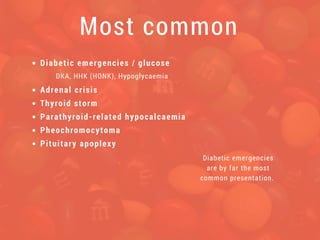
Most common
Diabetic emergencies / glucose
Adrenal crisis
Thyroid storm
Parathyroid-related hypocalcaemia
Pheochromocytoma
Pituitary apoplexy
DKA, HHK (HONK), Hypoglycaemia
Diabetic emergencies
are by far the most
common presentation.
The amazing endocrine system..
Case
37yo female
Found by family on the floor - last seen 2 days prior
GCS 10
BSL 'hi'
Cold to touch
PMHx - T1DM on humalog and novorapid (?doses)
- IVDU
- Previous admissions with hypoglycaemia
Case
On arrival: Agitated, combative
A- Patent
B - RR 20, Sats 100% RA, Chest clear
C - HR 80, BP 100/70, cool peripheries, HS dual no
murmur
D - GCS 10 (E3V2M5), PEARL, BSL 39
E - Temp 31.9
Secondary survey: No evidence head injury, abdo soft,
multiple bruises to legs, track marks to ACF bilat
Ketones 5
ABG
pH 6.8
pCO2 8
pO2 172
HCO3 1
BE ***
AG 31
Na 140
K 4.8
Cl 113
Ca 1.35
Lac 3
Glu 36
Creat 91
Hb 126
Diagnosis ?
Differentials?
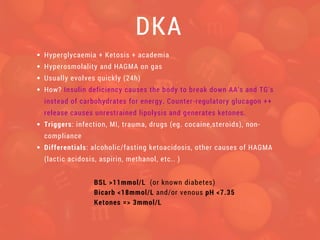
DKA
Hyperglycaemia + Ketosis + academia
Hyperosmolality and HAGMA on gas
Usually evolves quickly (24h)
How? Insulin deficiency causes the body to break down AA's and TG's
instead of carbohydrates for energy. Counter-regulatory glucagon ++
release causes unrestrained lipolysis and generates ketones.
Triggers: infection, MI, trauma, drugs (eg. cocaine,steroids), non-
compliance
Differentials: alcoholic/fasting ketoacidosis, other causes of HAGMA
(lactic acidosis, aspirin, methanol, etc.. )
BSL >11mmol/L (or known diabetes)
Bicarb <18mmol/L and/or venous pH <7.35
Ketones => 3mmol/L
NEW PROTOCOL (FSH) on scghed.com
Polyuria
Polydipsia
Vomiting
Abdominal pain
Dehydration
Tachypnoea
Sweet breath
Kussmaul Breathing
Altered mental state
Lethargy
Coma
DEATH
Case Cont.
Goal is to correct ketonaemia (and therefore the acidosis)
Once Ketones are cleared <0.6, insulin can be changed to S/C
WATCH OUT FOR:
Hypoglycaemia, Hypo/Hyperkalaemia, Cerebral Oedema, Pulmonary oedema
Second IV access
Bear hugger
IVH
Insulin - 50U in 500ml N.Saline at 40ml/H = 4U/hr
Arterial Line
Potassium replacement
CT Head
ICU admission
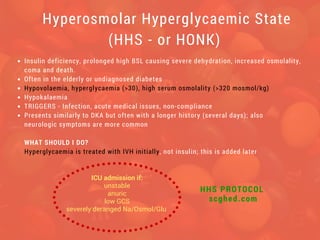
Hyperosmolar Hyperglycaemic State
(HHS - or HONK)
Insulin deficiency, prolonged high BSL causing severe dehydration, increased
osmolality, coma and death.
Often in the elderly or undiagnosed diabetes
Hypovolaemia, hyperglycaemia (>30), high serum osmolality (>320 mosmol/kg)
Hyperosmolar Hyperglycaemic State
(HHS - or HONK)
Insulin deficiency, prolonged high BSL causing severe dehydration, increased osmolality,
coma and death.
Often in the elderly or undiagnosed diabetes
Hypovolaemia, hyperglycaemia (>30), high serum osmolality (>320 mosmol/kg)
Hypokalaemia
TRIGGERS - Infection, acute medical issues, non-compliance
Presents similarly to DKA but often with a longer history (several days); also
neurologic symptoms are more common
WHAT SHOULD I DO?
Hyperglycaemia is treated with IVH initially, not insulin; this is added later
HHS PROTOCOL
scghed.com
ICU admission if:
unstable
anuric
low GCS
severely deranged Na/Osmol/Glu
Hyperosmolar Hyperglycaemic State
(HHS - or HONK)
Hyperosmolar Hyperglycaemic State
(HHS - or HONK)
Diaphoretic
Anxious
Palpitations & tachycardia,
Tremor
Confused with slurred speech
Blurry vision
SEIZURE...
HYPOGLYCAEMIA
TRIGGERS - insulin / alcohol / salicylate / other drugs (b-
blockers) / tumours (insulinoma) / liver dysfunction / adrenal
insufficiency / myxoedema
If conscious, treat PO
If not - 50ml 50% IV Dextrose / Glucagon 1mg IM / IV 10%
Dextrose
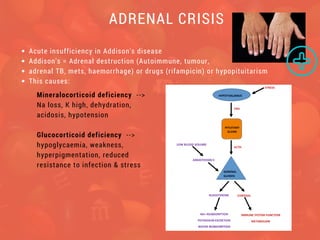
ADRENAL CRISIS
Mineralocorticoid deficiency --> Na loss, K high, dehydration, acidosis,
hypotension
Glucocorticoid deficiency --> hypoglycaemia, weakness, hyperpigmentation,
reduced resistance to infection & stress
Acute insufficiency in Addison's disease
Addison's = Adrenal destruction (Autoimmune, tumour,
adrenal TB, mets, haemorrhage) or drugs (rifampicin) or hypopituitarism
This causes:
Profound weakness, N&V, severe pain, HYPOTENSION, renal failure,
hypoglycaemia, pigmentation, extremes of temperature
crisis
ADRENAL CRISIS
Mineralocorticoid deficiency -->
Na loss, K high, dehydration,
acidosis, hypotension
Glucocorticoid deficiency -->
hypoglycaemia, weakness,
hyperpigmentation, reduced
resistance to infection & stress
Acute insufficiency in Addison's disease
Addison's = Adrenal destruction (Autoimmune, tumour,
adrenal TB, mets, haemorrhage) or drugs (rifampicin) or hypopituitarism
This causes:
Adrenal crisis
Management:
IV fluids, steroids, dextrose, evaluate cause (antibodies, adrenal imaging / CT )
Hyponatraemia (90%)
Hyperkalaemia (65%)
VBG: hypoglycaemia, high urea, anaemia, metabolic acidosis
crisis
Profound weakness, N&V, severe pain, HYPOTENSION, renal failure,
hypoglycaemia, pigmentation, extremes of temperature
THYROID STORM
A rare, life-threatening condition with severe clinical manifestations of
thyrotoxicosis.
Risk factors - untreated hyperthyroidism; surgery, trauma, infection; irregular use
of antithyroid drugs
Lab findings: Low TSH / High T4 and/or T3.
Hyperglycaemia secondary to catecholamine-induced inhibition of insulin release .
SYMPTOMS:
Hyperpyrexia, cardiovascular dysfunction, altered mental state, AF
WHAT SHOULD I DO?
b-blocker to control sx and reduce adrenergic tone
thionamide to block new hormone synthesis (eg. propylthiouracil PTU)
Iodine solution to block release of thyroid hormone
Glucocorticoids to reduce T4-T3 conversion
There are no universal guidelines for diagnosis.
The degree of hyperthyroidism is NOT a diagnostic criterion.
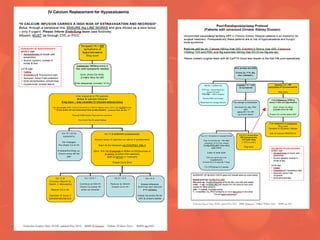
PTH related hypocalcaemia
hypoparathyroidism (AI, surgical, radiation, lesion)
magnesium deficiency (needed for PTH secretion)
failure of Ca release (osteomalacia, renal failure, hungry bone syndrome)
Calcium loss (blood transfusions, pancreatitis)
Failure of PTH or inability to release Ca from bone
Causes:
FEATURES: cramps, tingling esp. fingers & lips, carpopedal spasm, tetanic
contractions, seizure, hypotension, bradycardia, arrhythmia, CCF
WHAT SHOULD I DO? Urgent IV calcium gluconate, followed by infusion
Acute infarction of the pituitary due to ischaemia or haemorrhage (trauma,
radiation, anticoagulants)
Symptoms: Headaches, N&V, visual disturbance, meningism
Diagnosis: CT / history / visual field defect
WHAT SHOULD I DO? stabilise (ABC), hydrocortisone, fluid balance, neurosurg
PITUITARY APOPLEXY
PHAEOCHROMOCYTOMA
Catecholamine-secreting tumour of the adrenal medulla
Can cause HYPERTENSIVE EMERGENCIES
10% bilateral, male = female, mostly in adrenal medulla, <10% malignant
SECRETE: adrenaline, noradrenaline, dopamine
Symptoms: HTN, anxiety, panic, sweating, palpitations, flushing/pallor, headache,
pyrexia, tachycardia, arrhythmia
Diagnosis: check BSL, check K, urinary catecholamines, CT abdomen
WHAT SHOULD I DO? Rehydration, alpha blockade (phentolamine), then b-blockade,
surgical resection
SUMMARY
MOST ENDOCRINE EMERGENCIES relate to hypo/hyperglycaemia.
The remainder are rare.
KNOW WHERE TO FIND PROTOCOLS
Consider the diagnosis and the triggers
Don't delay treatment
SOURCES:
UpToDate
scghed.com
Slideshare "Endocrine Emergencies" (V. Chan 2011)
doctorportal.com
pixabay
Dr.James Wheeler

Endocrine emergencies

  • 1.
  • 2.
    Most common Diabetic emergencies/ glucose Adrenal crisis Thyroid storm Parathyroid-related hypocalcaemia Pheochromocytoma Pituitary apoplexy DKA, HHK (HONK), Hypoglycaemia Diabetic emergencies are by far the most common presentation.
  • 3.
  • 4.
    Case 37yo female Found byfamily on the floor - last seen 2 days prior GCS 10 BSL 'hi' Cold to touch PMHx - T1DM on humalog and novorapid (?doses) - IVDU - Previous admissions with hypoglycaemia
  • 5.
    Case On arrival: Agitated,combative A- Patent B - RR 20, Sats 100% RA, Chest clear C - HR 80, BP 100/70, cool peripheries, HS dual no murmur D - GCS 10 (E3V2M5), PEARL, BSL 39 E - Temp 31.9 Secondary survey: No evidence head injury, abdo soft, multiple bruises to legs, track marks to ACF bilat Ketones 5
  • 6.
    ABG pH 6.8 pCO2 8 pO2172 HCO3 1 BE *** AG 31 Na 140 K 4.8 Cl 113 Ca 1.35 Lac 3 Glu 36 Creat 91 Hb 126 Diagnosis ? Differentials?
  • 7.
    DKA Hyperglycaemia + Ketosis+ academia Hyperosmolality and HAGMA on gas Usually evolves quickly (24h) How? Insulin deficiency causes the body to break down AA's and TG's instead of carbohydrates for energy. Counter-regulatory glucagon ++ release causes unrestrained lipolysis and generates ketones. Triggers: infection, MI, trauma, drugs (eg. cocaine,steroids), non- compliance Differentials: alcoholic/fasting ketoacidosis, other causes of HAGMA (lactic acidosis, aspirin, methanol, etc.. ) BSL >11mmol/L (or known diabetes) Bicarb <18mmol/L and/or venous pH <7.35 Ketones => 3mmol/L
  • 8.
    NEW PROTOCOL (FSH)on scghed.com Polyuria Polydipsia Vomiting Abdominal pain Dehydration Tachypnoea Sweet breath Kussmaul Breathing Altered mental state Lethargy Coma DEATH
  • 9.
    Case Cont. Goal isto correct ketonaemia (and therefore the acidosis) Once Ketones are cleared <0.6, insulin can be changed to S/C WATCH OUT FOR: Hypoglycaemia, Hypo/Hyperkalaemia, Cerebral Oedema, Pulmonary oedema Second IV access Bear hugger IVH Insulin - 50U in 500ml N.Saline at 40ml/H = 4U/hr Arterial Line Potassium replacement CT Head ICU admission
  • 12.
    Hyperosmolar Hyperglycaemic State (HHS- or HONK) Insulin deficiency, prolonged high BSL causing severe dehydration, increased osmolality, coma and death. Often in the elderly or undiagnosed diabetes Hypovolaemia, hyperglycaemia (>30), high serum osmolality (>320 mosmol/kg)
  • 13.
    Hyperosmolar Hyperglycaemic State (HHS- or HONK) Insulin deficiency, prolonged high BSL causing severe dehydration, increased osmolality, coma and death. Often in the elderly or undiagnosed diabetes Hypovolaemia, hyperglycaemia (>30), high serum osmolality (>320 mosmol/kg) Hypokalaemia TRIGGERS - Infection, acute medical issues, non-compliance Presents similarly to DKA but often with a longer history (several days); also neurologic symptoms are more common WHAT SHOULD I DO? Hyperglycaemia is treated with IVH initially, not insulin; this is added later HHS PROTOCOL scghed.com ICU admission if: unstable anuric low GCS severely deranged Na/Osmol/Glu
  • 14.
  • 15.
  • 17.
    Diaphoretic Anxious Palpitations & tachycardia, Tremor Confusedwith slurred speech Blurry vision SEIZURE...
  • 18.
    HYPOGLYCAEMIA TRIGGERS - insulin/ alcohol / salicylate / other drugs (b- blockers) / tumours (insulinoma) / liver dysfunction / adrenal insufficiency / myxoedema If conscious, treat PO If not - 50ml 50% IV Dextrose / Glucagon 1mg IM / IV 10% Dextrose
  • 20.
    ADRENAL CRISIS Mineralocorticoid deficiency--> Na loss, K high, dehydration, acidosis, hypotension Glucocorticoid deficiency --> hypoglycaemia, weakness, hyperpigmentation, reduced resistance to infection & stress Acute insufficiency in Addison's disease Addison's = Adrenal destruction (Autoimmune, tumour, adrenal TB, mets, haemorrhage) or drugs (rifampicin) or hypopituitarism This causes: Profound weakness, N&V, severe pain, HYPOTENSION, renal failure, hypoglycaemia, pigmentation, extremes of temperature crisis
  • 21.
    ADRENAL CRISIS Mineralocorticoid deficiency--> Na loss, K high, dehydration, acidosis, hypotension Glucocorticoid deficiency --> hypoglycaemia, weakness, hyperpigmentation, reduced resistance to infection & stress Acute insufficiency in Addison's disease Addison's = Adrenal destruction (Autoimmune, tumour, adrenal TB, mets, haemorrhage) or drugs (rifampicin) or hypopituitarism This causes:
  • 22.
    Adrenal crisis Management: IV fluids,steroids, dextrose, evaluate cause (antibodies, adrenal imaging / CT ) Hyponatraemia (90%) Hyperkalaemia (65%) VBG: hypoglycaemia, high urea, anaemia, metabolic acidosis crisis Profound weakness, N&V, severe pain, HYPOTENSION, renal failure, hypoglycaemia, pigmentation, extremes of temperature
  • 24.
    THYROID STORM A rare,life-threatening condition with severe clinical manifestations of thyrotoxicosis. Risk factors - untreated hyperthyroidism; surgery, trauma, infection; irregular use of antithyroid drugs Lab findings: Low TSH / High T4 and/or T3. Hyperglycaemia secondary to catecholamine-induced inhibition of insulin release . SYMPTOMS: Hyperpyrexia, cardiovascular dysfunction, altered mental state, AF WHAT SHOULD I DO? b-blocker to control sx and reduce adrenergic tone thionamide to block new hormone synthesis (eg. propylthiouracil PTU) Iodine solution to block release of thyroid hormone Glucocorticoids to reduce T4-T3 conversion There are no universal guidelines for diagnosis. The degree of hyperthyroidism is NOT a diagnostic criterion.
  • 25.
    PTH related hypocalcaemia hypoparathyroidism(AI, surgical, radiation, lesion) magnesium deficiency (needed for PTH secretion) failure of Ca release (osteomalacia, renal failure, hungry bone syndrome) Calcium loss (blood transfusions, pancreatitis) Failure of PTH or inability to release Ca from bone Causes: FEATURES: cramps, tingling esp. fingers & lips, carpopedal spasm, tetanic contractions, seizure, hypotension, bradycardia, arrhythmia, CCF WHAT SHOULD I DO? Urgent IV calcium gluconate, followed by infusion
  • 27.
    Acute infarction ofthe pituitary due to ischaemia or haemorrhage (trauma, radiation, anticoagulants) Symptoms: Headaches, N&V, visual disturbance, meningism Diagnosis: CT / history / visual field defect WHAT SHOULD I DO? stabilise (ABC), hydrocortisone, fluid balance, neurosurg PITUITARY APOPLEXY PHAEOCHROMOCYTOMA Catecholamine-secreting tumour of the adrenal medulla Can cause HYPERTENSIVE EMERGENCIES 10% bilateral, male = female, mostly in adrenal medulla, <10% malignant SECRETE: adrenaline, noradrenaline, dopamine Symptoms: HTN, anxiety, panic, sweating, palpitations, flushing/pallor, headache, pyrexia, tachycardia, arrhythmia Diagnosis: check BSL, check K, urinary catecholamines, CT abdomen WHAT SHOULD I DO? Rehydration, alpha blockade (phentolamine), then b-blockade, surgical resection
  • 28.
    SUMMARY MOST ENDOCRINE EMERGENCIESrelate to hypo/hyperglycaemia. The remainder are rare. KNOW WHERE TO FIND PROTOCOLS Consider the diagnosis and the triggers Don't delay treatment SOURCES: UpToDate scghed.com Slideshare "Endocrine Emergencies" (V. Chan 2011) doctorportal.com pixabay Dr.James Wheeler