Endocrine emergencies
By Dr. Mohammed Al Ameen
Hypoglycemia
• <60mg/dl, <4mmol/L
• Protection against hypoglycemia is normally
provided by cessation of insulin release and
mobilization of counter-regulatory hormones
Causes
• Overdose of insulin or oral hypoglycaemic
agents
• Alcohol-induced hypoglycaemia
• Addison’s disease
• Insulinomas.
• Liver failure.
• Extra-pancreatic tumors.
• Pituitary insufficiency.
Signs and symptoms
• Signs and symptoms of hypoglycemia are caused by
excessive secretion of epinephrine and CNS dysfunction
• sweating, nervousness, tremor, tachycardia, hunger, and
neurologic symptoms ranging from bizarre behavior and
confusion to seizures and coma.
• hypoglycemia unawareness.
• Somogyi phenomenon
Investigations
• Blood glucose
• LFT
• Electrolytes
• ECG
• C-peptide
Management
• C A B
• 50% dextrose in water (D50W) is administered
intravenously
• Alcohol-thiamine
• <8yrs-25% (D25W) or even 10% (D10W) dextrose
• Glucagon 1mg
• Discharge- cause for the episode and fully recovered
Diabetic Ketoacidosis
• An acute metabolic complication of diabetes
characterized by
• hyperglycemia
• hyperketonemia
• metabolic acidosis
Causes
• Infection
• Infraction
• Insufficient insulin
Symptoms and signs
• Signs of dehydration
• GI symptoms
• Kussmaul respiration, fruity breath
• Neurological symptoms :altered level of conciousness
,confusion, coma and death – if not treated timely
Investigations
• Blood glucose
• ABG
• Serum ketones
• Infective screen
• Blood tests— urea and electrolytes, FBC, and
bicarbonate
• ECG and cardiac monitoring
Treatment
• A B C
• Fluid management -resuscitation
-replacement
• Insuline 0.1 unit/kg/hour, ketones do not fall by at least 0.5
mmol/L/hour the infusion rate should be increased by 1
unit/hour
• Change IV solution to D5W when glucose concentration is
≤300 mg/dL
• Potassium replacement
Over 5.5mmol/l Nil
3.5–5.5mmol/l 20 mmol/L
Below 3.5mmol/l 40–60 mmol/L (HDU support
required)
• Sodium, Phosphorus & magnesium
• Bicarbonates
• Monitoring: Fluid balance should be monitored,
aiming for a urine output > 0.5 ml/kg/hr. Blood
ketones and capillary glucose should be measured
hourly . ABG every 2 hrs.
Hyperosmolar hyperglycemic
nonketotic syndrome
• Pathophysiology: there is enough circulating insulin
to prevent ketogenesis , and therefore acidosis
• Clinical features similar to DKA
• Investigation: blood glucose >30mmol/l, serum
osmolality
• Management: similar to DKA
Acute adrenocortical
insufficiency
• Precipitants of an adrenal crisis include:
Infection.
Trauma.
Myocardial infarction.
Stroke.
Asthma.
Hypothermia.
Alcohol.
• Exogenous steroid withdrawal/reduction.
Clinical features
• Onset is usually insidious with features including
weight loss, lethargy, weakness, vague abdominal
pain, nausea
• Adrenal crisis the patient can be profoundly shocked
(tachycardic, hypotensive, vasoconstricted,oligouric)
and hypoglycaemic
Investigation
Serum cortisol and plasma ACTH
RFT:Hyponatraemia.
Hyperkalaemia.
Elevated urea and creatinine.
Blood glucose: Hypoglycaemia.
ABG: Metabolic acidosis.
To identify the precipitant : ECG, CT, CBC, blood culture,
CXR, urine routine .
Treatment
• A B C
• Hydrocortisone 100 mg IV should be given as soon as
an adrenal crisis is suspected.
• Fluid resuscitation
• Patients should be monitored for hypoglycemia.
• Treat the precipitant
Phaeochromocytoma
• functional tumors that arise from
chromaffin cells in the adrenal medulla
• Catecholamines α –receptors and β -receptors
Clinical features
• Hypertension.
• Palpitations.
• Sweating.
• Pallor.
• Headache.
• Anxiety.
• Pulmonary oedema.
• Nausea and vomiting.
• Altered level of consciousness (hypertensive
encephalopathy)
Diagnosis
• 24-hour urinary free catecholamines level
• CT/MRI
Treatment
• Phenoxybenzamine ( α -blocker) is the drug of
choice.
• Propranolol
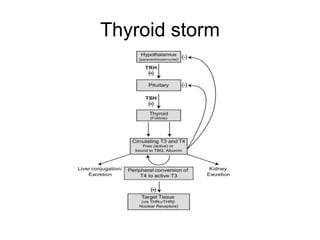
Thyroid storm
Precipitating factors of a thyroid
storm
• Infection
• Non-thyroidal trauma or surgery
• Parturition, pre-eclampsia
• Major acute medical conditions,
e.g.myocardial infarction, DKA,
HONK,hypoglycaemia.
• Radioiodine or high-doses of iodine-containing
compounds, e.g. contrast media, amiodarone.
• Discontinuation of anti-thyroid medication.
• Thyroid hormone overdose
• Thyroid injury (infarction of an adenoma, neck
trauma)
Clinical Feature
• Cardiovascular — severe tachycardia, atrial
fibrillation, congestive heart failure, hypertension.
• Neurological — agitation, confusion, delirium, coma.
• Gastrointestinal dysfunction — vomiting, diarrhoea,
acute abdomen.
• Fever.
Investigation
• Bloods — renal function, glucose, calcium, FBC,
thyroid function tests.
• Infective screen
• ECG
Treatment
• Inhibition of thyroid hormone synthesis and release
- propylthiouracil and carbimazole
- Iodide
• Inhibition of peripheral effects of thyroid hormone
-propranolol 80 mg PO
- hydrocortisone 100 mg IV or
dexamethasone 4 mg PO
• Treat underlying cause
• Supportive management
Myxoedema coma
• Myxoedema coma is a rare condition typically found
in elderly patients with undiagnosed or undertreated
hypothyroidism.
• Precipitants : infections or infractions
• Clinical features :- Altered mental state ranging from
poor cognitive function to coma.
-Hypothermia or the absence of fever
despite severe infection
• Management – Thyroid profile, Thyroid hormones,
Hydrocortisone, Rx precipitant
Thank you

Endocrine emergency

  • 1.
  • 2.
    Hypoglycemia • <60mg/dl, <4mmol/L •Protection against hypoglycemia is normally provided by cessation of insulin release and mobilization of counter-regulatory hormones
  • 3.
    Causes • Overdose ofinsulin or oral hypoglycaemic agents • Alcohol-induced hypoglycaemia • Addison’s disease • Insulinomas. • Liver failure. • Extra-pancreatic tumors. • Pituitary insufficiency.
  • 4.
    Signs and symptoms •Signs and symptoms of hypoglycemia are caused by excessive secretion of epinephrine and CNS dysfunction • sweating, nervousness, tremor, tachycardia, hunger, and neurologic symptoms ranging from bizarre behavior and confusion to seizures and coma. • hypoglycemia unawareness. • Somogyi phenomenon
  • 5.
    Investigations • Blood glucose •LFT • Electrolytes • ECG • C-peptide
  • 6.
    Management • C AB • 50% dextrose in water (D50W) is administered intravenously • Alcohol-thiamine • <8yrs-25% (D25W) or even 10% (D10W) dextrose • Glucagon 1mg • Discharge- cause for the episode and fully recovered
  • 7.
    Diabetic Ketoacidosis • Anacute metabolic complication of diabetes characterized by • hyperglycemia • hyperketonemia • metabolic acidosis
  • 8.
  • 10.
    Symptoms and signs •Signs of dehydration • GI symptoms • Kussmaul respiration, fruity breath • Neurological symptoms :altered level of conciousness ,confusion, coma and death – if not treated timely
  • 11.
    Investigations • Blood glucose •ABG • Serum ketones • Infective screen • Blood tests— urea and electrolytes, FBC, and bicarbonate • ECG and cardiac monitoring
  • 12.
    Treatment • A BC • Fluid management -resuscitation -replacement • Insuline 0.1 unit/kg/hour, ketones do not fall by at least 0.5 mmol/L/hour the infusion rate should be increased by 1 unit/hour • Change IV solution to D5W when glucose concentration is ≤300 mg/dL • Potassium replacement Over 5.5mmol/l Nil 3.5–5.5mmol/l 20 mmol/L Below 3.5mmol/l 40–60 mmol/L (HDU support required)
  • 13.
    • Sodium, Phosphorus& magnesium • Bicarbonates • Monitoring: Fluid balance should be monitored, aiming for a urine output > 0.5 ml/kg/hr. Blood ketones and capillary glucose should be measured hourly . ABG every 2 hrs.
  • 14.
    Hyperosmolar hyperglycemic nonketotic syndrome •Pathophysiology: there is enough circulating insulin to prevent ketogenesis , and therefore acidosis • Clinical features similar to DKA • Investigation: blood glucose >30mmol/l, serum osmolality • Management: similar to DKA
  • 15.
  • 17.
    • Precipitants ofan adrenal crisis include: Infection. Trauma. Myocardial infarction. Stroke. Asthma. Hypothermia. Alcohol. • Exogenous steroid withdrawal/reduction.
  • 18.
    Clinical features • Onsetis usually insidious with features including weight loss, lethargy, weakness, vague abdominal pain, nausea • Adrenal crisis the patient can be profoundly shocked (tachycardic, hypotensive, vasoconstricted,oligouric) and hypoglycaemic
  • 19.
    Investigation Serum cortisol andplasma ACTH RFT:Hyponatraemia. Hyperkalaemia. Elevated urea and creatinine. Blood glucose: Hypoglycaemia. ABG: Metabolic acidosis. To identify the precipitant : ECG, CT, CBC, blood culture, CXR, urine routine .
  • 20.
    Treatment • A BC • Hydrocortisone 100 mg IV should be given as soon as an adrenal crisis is suspected. • Fluid resuscitation • Patients should be monitored for hypoglycemia. • Treat the precipitant
  • 21.
    Phaeochromocytoma • functional tumorsthat arise from chromaffin cells in the adrenal medulla • Catecholamines α –receptors and β -receptors
  • 22.
    Clinical features • Hypertension. •Palpitations. • Sweating. • Pallor. • Headache. • Anxiety. • Pulmonary oedema. • Nausea and vomiting. • Altered level of consciousness (hypertensive encephalopathy)
  • 23.
    Diagnosis • 24-hour urinaryfree catecholamines level • CT/MRI
  • 24.
    Treatment • Phenoxybenzamine (α -blocker) is the drug of choice. • Propranolol
  • 25.
  • 26.
    Precipitating factors ofa thyroid storm • Infection • Non-thyroidal trauma or surgery • Parturition, pre-eclampsia • Major acute medical conditions, e.g.myocardial infarction, DKA, HONK,hypoglycaemia.
  • 27.
    • Radioiodine orhigh-doses of iodine-containing compounds, e.g. contrast media, amiodarone. • Discontinuation of anti-thyroid medication. • Thyroid hormone overdose • Thyroid injury (infarction of an adenoma, neck trauma)
  • 28.
    Clinical Feature • Cardiovascular— severe tachycardia, atrial fibrillation, congestive heart failure, hypertension. • Neurological — agitation, confusion, delirium, coma. • Gastrointestinal dysfunction — vomiting, diarrhoea, acute abdomen. • Fever.
  • 29.
    Investigation • Bloods —renal function, glucose, calcium, FBC, thyroid function tests. • Infective screen • ECG
  • 30.
    Treatment • Inhibition ofthyroid hormone synthesis and release - propylthiouracil and carbimazole - Iodide • Inhibition of peripheral effects of thyroid hormone -propranolol 80 mg PO - hydrocortisone 100 mg IV or dexamethasone 4 mg PO • Treat underlying cause • Supportive management
  • 31.
    Myxoedema coma • Myxoedemacoma is a rare condition typically found in elderly patients with undiagnosed or undertreated hypothyroidism. • Precipitants : infections or infractions • Clinical features :- Altered mental state ranging from poor cognitive function to coma. -Hypothermia or the absence of fever despite severe infection • Management – Thyroid profile, Thyroid hormones, Hydrocortisone, Rx precipitant
  • 32.