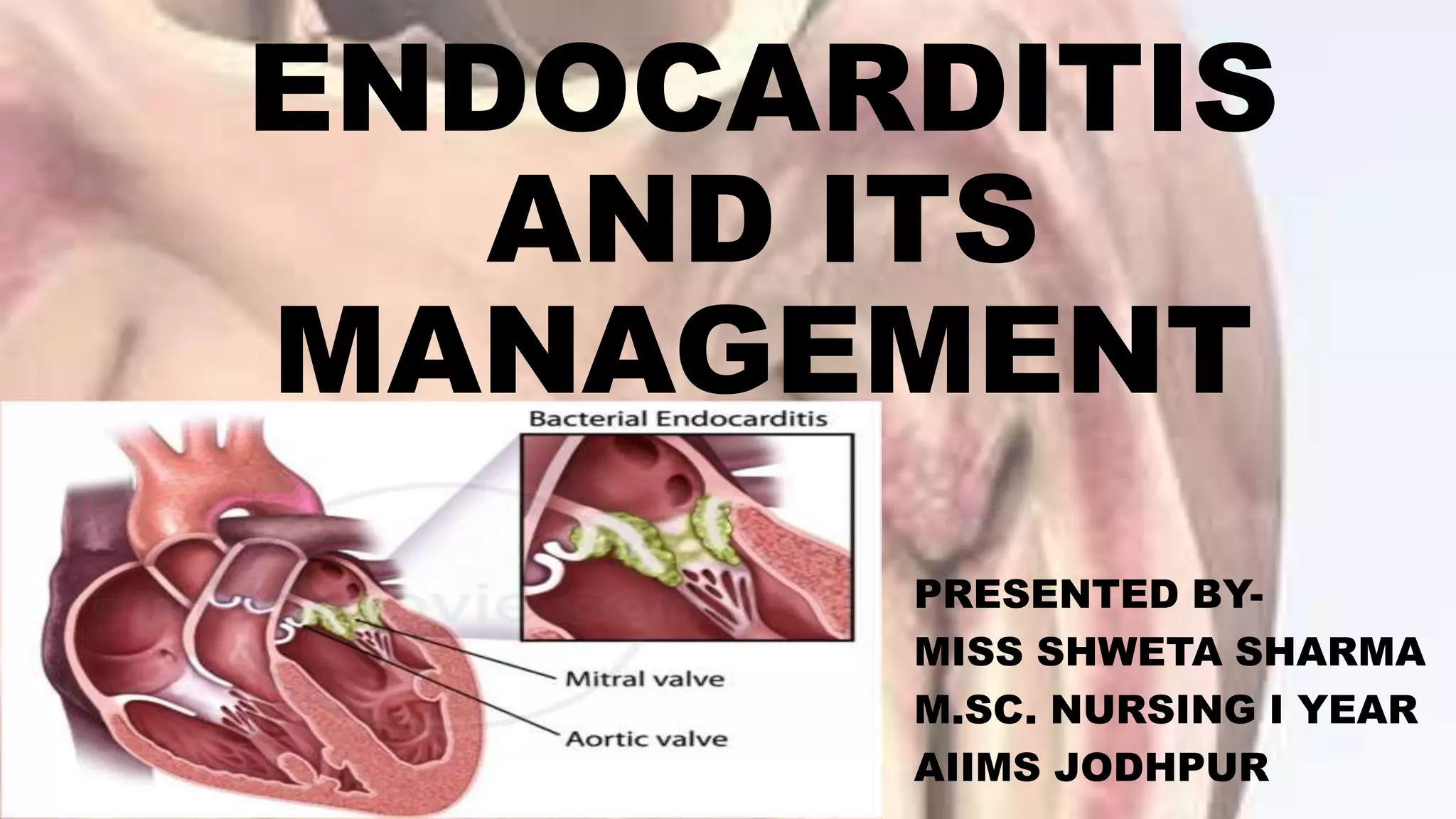
ENDOCARDITIS
AND ITS
MANAGEMENT
PRESENTED BY-
MISS SHWETA SHARMA
M.SC. NURSING I YEAR
AIIMS JODHPUR
INTRODUCTION
•Infective endocarditis is an infection of the
valves and endothelial surface of the heart.
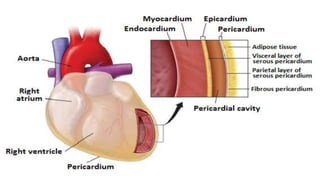
•Endocardium is the innermost layer of the
heart and heart valves.
•Endocarditis usually develops in people with
cardiac structural defects (e.g., valve
disorders).
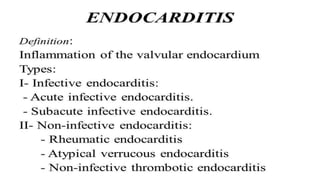
Classification of infective endocarditis:
•Acute form - Affects those with healthy valves and
manifests as a rapidly progressive illness.
•Subacute form – Affects those with pre-existing valve
disease and has a clinical course that may extend over
months.
•Infective endocarditis can also be classified based on
the cause (e.g., IV drug abuse IE, fungal endocarditis)
or site of involvement (e.g., prosthetic valve
endocarditis [PVE]).
EPIDEMIOLOGY
•More common in older people because of decreased
immunologic response to infection and the metabolic
alterations associated with aging.
•High incidence of staphylococcal endocarditis among IV drug
users who most commonly have infections of the right heart
valves.
•Incidence of IE is between 1.7 and 6.2 /100,000 cases per
year, and it has been on the increase and been changing in
recent years. Overall mortality remains increased, ranging
from 21–50%, over the past three decades.
ETIOLOGY
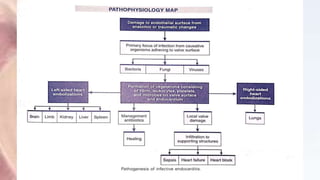
• Staphylococcus aureus (most common), Streptococcus viridans
• Some fungi and viruses
• Invasive procedures, particularly those involving mucosal surfaces,
can cause a bacteraemia. The bacteraemia rarely lasts for more
than 15 minutes.
• If a person has some anatomic cardiac defect, bacteraemia can
cause bacterial endocarditis. The combination of the invasive
procedure, the particular bacteria introduced into the
bloodstream, and the cardiac defect may result in infective
endocarditis.
Risk Factors
Cardiac Conditions
• Prior endocarditis
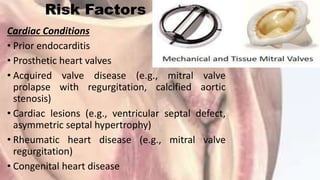
• Prosthetic heart valves
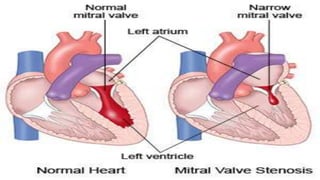
• Acquired valve disease (e.g., mitral valve
prolapse with regurgitation, calcified aortic
stenosis)
• Cardiac lesions (e.g., ventricular septal defect,
asymmetric septal hypertrophy)
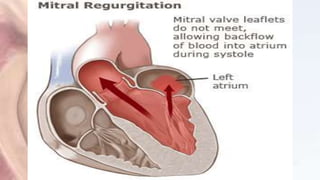
• Rheumatic heart disease (e.g., mitral valve
regurgitation)
• Congenital heart disease
•Pacemakers
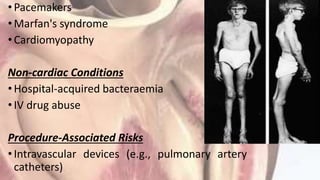
•Marfan's syndrome
•Cardiomyopathy
Non-cardiac Conditions
•Hospital-acquired bacteraemia
•IV drug abuse
Procedure-Associated Risks
•Intravascular devices (e.g., pulmonary artery
catheters)
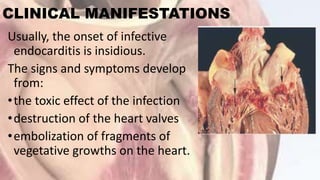
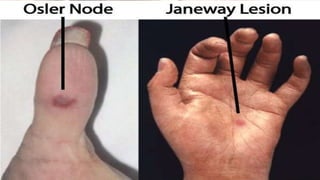
CLINICAL MANIFESTATIONS
Usually, the onset of infective
endocarditis is insidious.
The signs and symptoms develop
from:
•the toxic effect of the infection
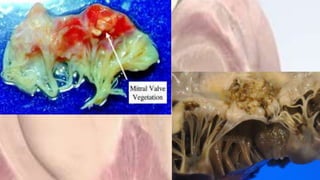
•destruction of the heart valves
•embolization of fragments of
vegetative growths on the heart.
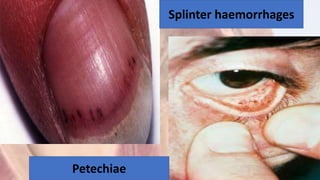
Splinter haemorrhages
Petechiae
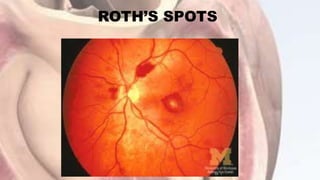
ROTH’S SPOTS
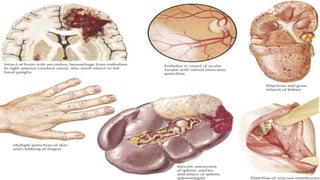
• Embolization to the spleen may cause sharp, left upper
quadrant pain and splenomegaly, local tenderness and
abdominal rigidity.
• Embolization to the kidneys may cause flank pain, haematuria,
and renal failure.
• Emboli may lodge in small peripheral blood vessels of the arms
and legs and may cause ischemia and gangrene.
• Embolization to the brain may cause neurologic damage
resulting in hemiplegia, ataxia, aphasia, visual changes, and
change in the level of consciousness.
• Pulmonary emboli may occur in right - sided endocarditis and
cause dyspnoea, chest pain, haemoptysis, and respiratory
arrest.
DIAGNOSTIC EVALUATION
•A diagnosis of acute infective endocarditis
is made when the onset of infection and
resulting valvular destruction is rapid,
occurring within days to weeks.
•The onset of infection may take 2 weeks
to months, diagnosed as subacute infective
endocarditis.
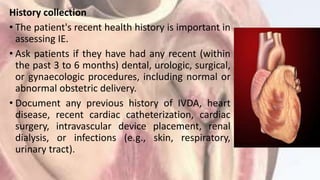
History collection
• The patient's recent health history is important in
assessing IE.
• Ask patients if they have had any recent (within
the past 3 to 6 months) dental, urologic, surgical,
or gynaecologic procedures, including normal or
abnormal obstetric delivery.
• Document any previous history of IVDA, heart
disease, recent cardiac catheterization, cardiac
surgery, intravascular device placement, renal
dialysis, or infections (e.g., skin, respiratory,
urinary tract).
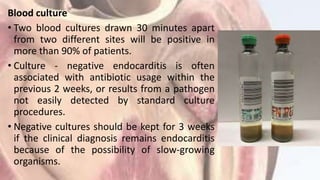
Blood culture
• Two blood cultures drawn 30 minutes apart
from two different sites will be positive in
more than 90% of patients.
• Culture - negative endocarditis is often
associated with antibiotic usage within the
previous 2 weeks, or results from a pathogen
not easily detected by standard culture
procedures.
• Negative cultures should be kept for 3 weeks
if the clinical diagnosis remains endocarditis
because of the possibility of slow-growing
organisms.
•Mild leucocytosis (uncommon in subacute).
•The erythrocyte sedimentation rate (ESR) and C -
reactive protein (CRP) levels may also be elevated.
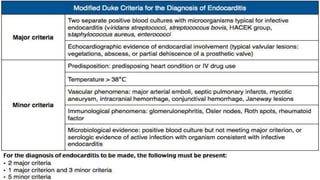
•Major criteria to diagnose IE include at least two of
the following: positive blood cultures, new or
changed heart murmur, or intracardiac mass or
vegetation noted on echocardiography.
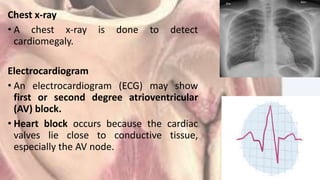
Chest x-ray
• A chest x-ray is done to detect
cardiomegaly.
Electrocardiogram
• An electrocardiogram (ECG) may show
first or second degree atrioventricular
(AV) block.
• Heart block occurs because the cardiac
valves lie close to conductive tissue,
especially the AV node.
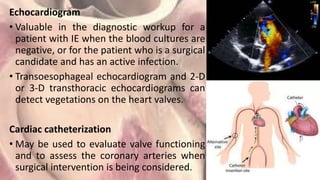
Echocardiogram
• Valuable in the diagnostic workup for a
patient with IE when the blood cultures are
negative, or for the patient who is a surgical
candidate and has an active infection.
• Transoesophageal echocardiogram and 2-D
or 3-D transthoracic echocardiograms can
detect vegetations on the heart valves.
Cardiac catheterization
• May be used to evaluate valve functioning
and to assess the coronary arteries when
surgical intervention is being considered.
Medical Management
• Antibiotic therapy for 2 to 6 weeks..
• Serum levels of antibiotic are monitored. If the serum does not
demonstrate bactericidal activity, increased dosages of the
antibiotic are prescribed, or a different antibiotic is used.
• Penicillin is usually the medication of choice.
• Blood cultures are taken periodically to monitor the effect of
therapy.
• In fungal endocarditis, an antifungal agent, such as amphotericin
B is the usual treatment.
• The patient’s temperature is monitored at regular intervals
because the course of the fever is one indication of the
effectiveness of treatment. However, febrile reactions also may
occur as a result of medication.
Surgical management
Surgical valve replacement
•It greatly improves the prognosis for patients with
severe symptoms from damaged heart valves.
•Aortic or mitral valve excision and replacement are
required for patients who develop congestive heart
failure despite adequate medical treatment, patients
who have more than one serious systemic embolic
episode, and patients with uncontrolled infection,
recurrent infection, or fungal endocarditis.
•Many patients who have prosthetic valve
endocarditis (i.e., infected prostheses) require valve
replacement.1
COMPLICATIONS
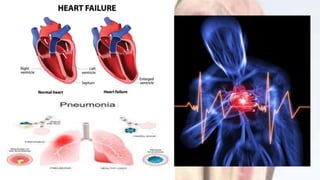
• Heart failure that may result from perforation of a valve leaflet,
rupture of chordae, blood flow obstruction due to vegetations, or
intracardiac shunts from dehiscence of prosthetic valves.
• Cerebral vascular complications, such as stroke, may occur
before, during, or after therapy.
• Valvular stenosis or regurgitation
• Myocardial damage
• Mycotic (fungal) aneurysms
• Many other organ complications can result from septic or non-
septic emboli, immunologic responses, abscess of the spleen,
mycotic aneurysms, and hemodynamic deterioration.
NURSING ASSESSMENT
•Monitor the patient’s temperature; the patient may have
fever for weeks.
•Assess the heart sounds; a new murmur may indicate
involvement of the valve leaflets.
•Monitor for signs and symptoms of systemic embolization,
or for patients with right heart endocarditis.
•Monitor for signs and symptoms of pulmonary infarction
and infiltrates.
•Assess for signs and symptoms of organ damage such as
stroke, meningitis, heart failure, myocardial infarction,
glomerulonephritis, and splenomegaly.
•All invasive lines and wounds should be assessed
daily for redness, tenderness, warmth, swelling,
drainage, or other signs of infection.
•Monitor laboratory data to determine the
effectiveness of the antibiotic therapy.
•Ongoing monitoring of the patient's blood cultures is
necessary to ensure destruction of the infecting
organism.
•Assess the patient for joint tenderness, decreased
range of motion and muscle tenderness.
NURSING DIAGNOSIS
1. Decreased cardiac output related to altered heart
rhythm, valvular insufficiency and fluid overload.
2. Hyperthermia related to infectious process.
3. Activity intolerance related to generalized weakness,
arthralgia, and alteration in oxygen transport secondary
to valvular dysfunction.
4. Anxiety related to illness and the outcome of treatment.
5. Deficient knowledge related to lack of experience and
information about disease and treatment process.
Antibiotic Prophylaxis to Prevent Endocarditis
Target Groups for Prophylactic Antibiotics
People with the following heart conditions should receive prophylactic
antibiotics when they have the conditions or procedures listed below:
• Prosthetic heart valve or prosthetic material used to repair heart valve
• Previous history of infectious endocarditis
• Congenital heart disease
• Unrepaired cyanotic CHD (including palliative shunts and conduits).
• Repaired congenital heart defect with prosthetic material or device for 6
months after the procedure
• Repaired CHD with residual defects at the site or adjacent to the site of
prosthetic patch or prosthetic device
• Cardiac transplantation recipients who develop heart valve disease
Conditions or Procedures Requiring Antibiotic Prophylaxis
When the target groups have the following conditions or procedures, they need
prophylactic antibiotics:
Oral
• Dental manipulation involving the gums or roots of the teeth
• Dental manipulation involving puncture of the oral mucosa
• Dental extractions or implants
• Prophylactic teeth cleaning with expected bleeding
Respiratory
• Respiratory tract incisions (e.g., biopsy)
• Tonsillectomy and adenoidectomy
Gastrointestinal and genitourinary
• Wound infection
• Urinary tract infection
Patient teaching
• Tell the patient to avoid people with infection, especially upper
respiratory tract infection, and to report cold, flu, and cough
symptoms.
• Stress the importance of avoiding excessive fatigue and the need to
plan rest periods before and after activity.
• Good oral hygiene, including daily care and regular dental visits, is
also important.
• To prevent problems related to reduced mobility, tell the patient to
wear elastic compression stockings, perform ROM exercises, and
deep breath and cough every 2 hours.
• Instruct the patient to inform health care providers performing
certain invasive procedures of the history of IE.
•Explain to the patient the relationship of follow - up care,
good nutrition, and early treatment of common infections
to maintain health.
•Instruct the patient about symptoms that may indicate
recurrent infection (e.g., fever, fatigue, chills). Tell the
patient to notify the health care provider if any of these
symptoms occur.
•Inform the patient about the importance of prophylactic
antibiotic therapy before certain invasive procedures.
•Refer the patient with a history of IVDA for drug
rehabilitation.
RESEARCH ARTICLES
In-hospital infective endocarditis following transcatheter aortic valve replacement:
a cross-sectional study of the National Inpatient Sample database in the USA.
Yeo I, Kim LK, Park SO and Wong SC conducted a cross sectional study in 2018 to
identify in-hospital IE following TAVR. All patients who underwent TAVR between
2012 and 2014 were taken. Of the 41,025 patients, 120 patients developed in-
hospital IE. Viridans group streptococci was the most frequent causative organism
for in-hospital IE, followed by Staphylococcus aureus and enterococci. Patients who
developed in-hospital IE after TAVR had significantly higher rates of death, septic
shock, acute kidney injury requiring haemodialysis, bleeding requiring transfusion,
etc. Independent predictors of in-hospital IE after TAVR include younger age, drug
abuse and HIV infection. It concluded that IE occurred in 0.3% of patients after
TAVR during the same hospitalization, resulting in higher rates of adverse
outcomes including mortality. Patients with younger age, a history of drug abuse
or HIV infection are at greater risk of in-hospital IE following TAVR, and would
benefit from vigilant preventive measures perioperatively.
Relationship of oral conditions to the incidence of infective
endocarditis in periodontitis patients with valvular heart disease: a
cross-sectional study.
Ninomiya M et al conducted a cross sectional study (2019) to examine
whether oral infectious conditions are associated with the occurrence
of IE in valvular heart disease (VHD) patients. A total of 119
periodontitis patients were enrolled. A significant increase in the
percentage of alveolar bone loss in VHD patients with IE was observed
compared with that of patients without IE. There was a significant
correlation between the occurrence of IE and clinical oral findings.
VHD patients with IE might have severe periodontitis compared with
patients without IE. The patients with IE had fewer remaining teeth,
more advanced bone resorption compared with those of patients
without IE. These findings suggest a possible association between the
occurrence of IE and periodontal infection.
SUMMARY AND CONCLUSION
• As discussed throughout the presentation, learning about
endocarditis and its management will help nurses to care for
an endocarditis patient.
• Nurses can do assessment of an endocarditis patient,
observe the sign and symptoms, provide the necessary
nursing care and support the patient psychologically.
• Nurses can also counsel the patients and their family for
various options available in treatment for endocarditis.
•Treatment of infective endocarditis with antibiotic therapy
has improved the prognosis of this disease.
REFERENCES
• 1. Janice L. Hinkle, Kerry H. Cheever. Brunner and Suddarth’s Textbook of Medical
Surgical Nursing. 2015. New Delhi. Wolters Kluwer.13th Edition. Volume 2. Pg. no. 780-
782.
• 2. Lewis. Medical Surgical Nursing Assessment and Management of clinical
problems.2015. New Delhi. Elsevier. 2nd Edition. Volume I. Pg. no. 847-851.
• 3. PubMed. Clinic microbiological spectrum of infective endocarditis - from a tertiary care
centre in south India. Iran J Microbiol. 2017 Oct; 9(5): 257–263. Available from
https://www.ncbi.nlm.nih.gov/pmc/articles/PMC5748443/ [cited 11 April 2020]
• 4. PubMed. In-hospital infective endocarditis following transcatheter aortic valve
replacement: a cross-sectional study of the National Inpatient Sample database in the
USA. J Hosp Infect. 2018 Dec;100(4):444-450. doi: 10.1016/j.jhin.2018.05.014. Epub 2018
May 25. Available from https://www.ncbi.nlm.nih.gov/pubmed/29803809 [cited 11 April
2020]
• 5. PubMed. Relationship of oral conditions to the incidence of infective endocarditis in
periodontitis patients with valvular heart disease: a cross-sectional study. Clin Oral
Investig. 2020 Feb;24(2):833-840. doi: 10.1007/s00784-019-02973-2. Epub 2019 Jun 13.
Available from https://www.ncbi.nlm.nih.gov/pubmed/31197658 [cited 11 April 2020]
Endocarditis and its management

Endocarditis and its management

  • 1.
    ENDOCARDITIS AND ITS MANAGEMENT PRESENTED BY- MISSSHWETA SHARMA M.SC. NURSING I YEAR AIIMS JODHPUR
  • 4.
    INTRODUCTION •Infective endocarditis isan infection of the valves and endothelial surface of the heart. •Endocardium is the innermost layer of the heart and heart valves. •Endocarditis usually develops in people with cardiac structural defects (e.g., valve disorders).
  • 5.
    Classification of infectiveendocarditis: •Acute form - Affects those with healthy valves and manifests as a rapidly progressive illness. •Subacute form – Affects those with pre-existing valve disease and has a clinical course that may extend over months. •Infective endocarditis can also be classified based on the cause (e.g., IV drug abuse IE, fungal endocarditis) or site of involvement (e.g., prosthetic valve endocarditis [PVE]).
  • 6.
    EPIDEMIOLOGY •More common inolder people because of decreased immunologic response to infection and the metabolic alterations associated with aging. •High incidence of staphylococcal endocarditis among IV drug users who most commonly have infections of the right heart valves. •Incidence of IE is between 1.7 and 6.2 /100,000 cases per year, and it has been on the increase and been changing in recent years. Overall mortality remains increased, ranging from 21–50%, over the past three decades.
  • 7.
    ETIOLOGY • Staphylococcus aureus(most common), Streptococcus viridans • Some fungi and viruses • Invasive procedures, particularly those involving mucosal surfaces, can cause a bacteraemia. The bacteraemia rarely lasts for more than 15 minutes. • If a person has some anatomic cardiac defect, bacteraemia can cause bacterial endocarditis. The combination of the invasive procedure, the particular bacteria introduced into the bloodstream, and the cardiac defect may result in infective endocarditis.
  • 8.
    Risk Factors Cardiac Conditions •Prior endocarditis • Prosthetic heart valves • Acquired valve disease (e.g., mitral valve prolapse with regurgitation, calcified aortic stenosis) • Cardiac lesions (e.g., ventricular septal defect, asymmetric septal hypertrophy) • Rheumatic heart disease (e.g., mitral valve regurgitation) • Congenital heart disease
  • 9.
    •Pacemakers •Marfan's syndrome •Cardiomyopathy Non-cardiac Conditions •Hospital-acquiredbacteraemia •IV drug abuse Procedure-Associated Risks •Intravascular devices (e.g., pulmonary artery catheters)
  • 11.
    CLINICAL MANIFESTATIONS Usually, theonset of infective endocarditis is insidious. The signs and symptoms develop from: •the toxic effect of the infection •destruction of the heart valves •embolization of fragments of vegetative growths on the heart.
  • 17.
  • 19.
  • 20.
    • Embolization tothe spleen may cause sharp, left upper quadrant pain and splenomegaly, local tenderness and abdominal rigidity. • Embolization to the kidneys may cause flank pain, haematuria, and renal failure. • Emboli may lodge in small peripheral blood vessels of the arms and legs and may cause ischemia and gangrene. • Embolization to the brain may cause neurologic damage resulting in hemiplegia, ataxia, aphasia, visual changes, and change in the level of consciousness. • Pulmonary emboli may occur in right - sided endocarditis and cause dyspnoea, chest pain, haemoptysis, and respiratory arrest.
  • 22.
    DIAGNOSTIC EVALUATION •A diagnosisof acute infective endocarditis is made when the onset of infection and resulting valvular destruction is rapid, occurring within days to weeks. •The onset of infection may take 2 weeks to months, diagnosed as subacute infective endocarditis.
  • 23.
    History collection • Thepatient's recent health history is important in assessing IE. • Ask patients if they have had any recent (within the past 3 to 6 months) dental, urologic, surgical, or gynaecologic procedures, including normal or abnormal obstetric delivery. • Document any previous history of IVDA, heart disease, recent cardiac catheterization, cardiac surgery, intravascular device placement, renal dialysis, or infections (e.g., skin, respiratory, urinary tract).
  • 24.
    Blood culture • Twoblood cultures drawn 30 minutes apart from two different sites will be positive in more than 90% of patients. • Culture - negative endocarditis is often associated with antibiotic usage within the previous 2 weeks, or results from a pathogen not easily detected by standard culture procedures. • Negative cultures should be kept for 3 weeks if the clinical diagnosis remains endocarditis because of the possibility of slow-growing organisms.
  • 25.
    •Mild leucocytosis (uncommonin subacute). •The erythrocyte sedimentation rate (ESR) and C - reactive protein (CRP) levels may also be elevated. •Major criteria to diagnose IE include at least two of the following: positive blood cultures, new or changed heart murmur, or intracardiac mass or vegetation noted on echocardiography.
  • 26.
    Chest x-ray • Achest x-ray is done to detect cardiomegaly. Electrocardiogram • An electrocardiogram (ECG) may show first or second degree atrioventricular (AV) block. • Heart block occurs because the cardiac valves lie close to conductive tissue, especially the AV node.
  • 27.
    Echocardiogram • Valuable inthe diagnostic workup for a patient with IE when the blood cultures are negative, or for the patient who is a surgical candidate and has an active infection. • Transoesophageal echocardiogram and 2-D or 3-D transthoracic echocardiograms can detect vegetations on the heart valves. Cardiac catheterization • May be used to evaluate valve functioning and to assess the coronary arteries when surgical intervention is being considered.
  • 29.
    Medical Management • Antibiotictherapy for 2 to 6 weeks.. • Serum levels of antibiotic are monitored. If the serum does not demonstrate bactericidal activity, increased dosages of the antibiotic are prescribed, or a different antibiotic is used. • Penicillin is usually the medication of choice. • Blood cultures are taken periodically to monitor the effect of therapy. • In fungal endocarditis, an antifungal agent, such as amphotericin B is the usual treatment. • The patient’s temperature is monitored at regular intervals because the course of the fever is one indication of the effectiveness of treatment. However, febrile reactions also may occur as a result of medication.
  • 30.
    Surgical management Surgical valvereplacement •It greatly improves the prognosis for patients with severe symptoms from damaged heart valves. •Aortic or mitral valve excision and replacement are required for patients who develop congestive heart failure despite adequate medical treatment, patients who have more than one serious systemic embolic episode, and patients with uncontrolled infection, recurrent infection, or fungal endocarditis. •Many patients who have prosthetic valve endocarditis (i.e., infected prostheses) require valve replacement.1
  • 31.
    COMPLICATIONS • Heart failurethat may result from perforation of a valve leaflet, rupture of chordae, blood flow obstruction due to vegetations, or intracardiac shunts from dehiscence of prosthetic valves. • Cerebral vascular complications, such as stroke, may occur before, during, or after therapy. • Valvular stenosis or regurgitation • Myocardial damage • Mycotic (fungal) aneurysms • Many other organ complications can result from septic or non- septic emboli, immunologic responses, abscess of the spleen, mycotic aneurysms, and hemodynamic deterioration.
  • 32.
    NURSING ASSESSMENT •Monitor thepatient’s temperature; the patient may have fever for weeks. •Assess the heart sounds; a new murmur may indicate involvement of the valve leaflets. •Monitor for signs and symptoms of systemic embolization, or for patients with right heart endocarditis. •Monitor for signs and symptoms of pulmonary infarction and infiltrates. •Assess for signs and symptoms of organ damage such as stroke, meningitis, heart failure, myocardial infarction, glomerulonephritis, and splenomegaly.
  • 33.
    •All invasive linesand wounds should be assessed daily for redness, tenderness, warmth, swelling, drainage, or other signs of infection. •Monitor laboratory data to determine the effectiveness of the antibiotic therapy. •Ongoing monitoring of the patient's blood cultures is necessary to ensure destruction of the infecting organism. •Assess the patient for joint tenderness, decreased range of motion and muscle tenderness.
  • 34.
    NURSING DIAGNOSIS 1. Decreasedcardiac output related to altered heart rhythm, valvular insufficiency and fluid overload. 2. Hyperthermia related to infectious process. 3. Activity intolerance related to generalized weakness, arthralgia, and alteration in oxygen transport secondary to valvular dysfunction. 4. Anxiety related to illness and the outcome of treatment. 5. Deficient knowledge related to lack of experience and information about disease and treatment process.
  • 35.
    Antibiotic Prophylaxis toPrevent Endocarditis Target Groups for Prophylactic Antibiotics People with the following heart conditions should receive prophylactic antibiotics when they have the conditions or procedures listed below: • Prosthetic heart valve or prosthetic material used to repair heart valve • Previous history of infectious endocarditis • Congenital heart disease • Unrepaired cyanotic CHD (including palliative shunts and conduits). • Repaired congenital heart defect with prosthetic material or device for 6 months after the procedure • Repaired CHD with residual defects at the site or adjacent to the site of prosthetic patch or prosthetic device • Cardiac transplantation recipients who develop heart valve disease
  • 36.
    Conditions or ProceduresRequiring Antibiotic Prophylaxis When the target groups have the following conditions or procedures, they need prophylactic antibiotics: Oral • Dental manipulation involving the gums or roots of the teeth • Dental manipulation involving puncture of the oral mucosa • Dental extractions or implants • Prophylactic teeth cleaning with expected bleeding Respiratory • Respiratory tract incisions (e.g., biopsy) • Tonsillectomy and adenoidectomy Gastrointestinal and genitourinary • Wound infection • Urinary tract infection
  • 37.
    Patient teaching • Tellthe patient to avoid people with infection, especially upper respiratory tract infection, and to report cold, flu, and cough symptoms. • Stress the importance of avoiding excessive fatigue and the need to plan rest periods before and after activity. • Good oral hygiene, including daily care and regular dental visits, is also important. • To prevent problems related to reduced mobility, tell the patient to wear elastic compression stockings, perform ROM exercises, and deep breath and cough every 2 hours. • Instruct the patient to inform health care providers performing certain invasive procedures of the history of IE.
  • 38.
    •Explain to thepatient the relationship of follow - up care, good nutrition, and early treatment of common infections to maintain health. •Instruct the patient about symptoms that may indicate recurrent infection (e.g., fever, fatigue, chills). Tell the patient to notify the health care provider if any of these symptoms occur. •Inform the patient about the importance of prophylactic antibiotic therapy before certain invasive procedures. •Refer the patient with a history of IVDA for drug rehabilitation.
  • 39.
    RESEARCH ARTICLES In-hospital infectiveendocarditis following transcatheter aortic valve replacement: a cross-sectional study of the National Inpatient Sample database in the USA. Yeo I, Kim LK, Park SO and Wong SC conducted a cross sectional study in 2018 to identify in-hospital IE following TAVR. All patients who underwent TAVR between 2012 and 2014 were taken. Of the 41,025 patients, 120 patients developed in- hospital IE. Viridans group streptococci was the most frequent causative organism for in-hospital IE, followed by Staphylococcus aureus and enterococci. Patients who developed in-hospital IE after TAVR had significantly higher rates of death, septic shock, acute kidney injury requiring haemodialysis, bleeding requiring transfusion, etc. Independent predictors of in-hospital IE after TAVR include younger age, drug abuse and HIV infection. It concluded that IE occurred in 0.3% of patients after TAVR during the same hospitalization, resulting in higher rates of adverse outcomes including mortality. Patients with younger age, a history of drug abuse or HIV infection are at greater risk of in-hospital IE following TAVR, and would benefit from vigilant preventive measures perioperatively.
  • 40.
    Relationship of oralconditions to the incidence of infective endocarditis in periodontitis patients with valvular heart disease: a cross-sectional study. Ninomiya M et al conducted a cross sectional study (2019) to examine whether oral infectious conditions are associated with the occurrence of IE in valvular heart disease (VHD) patients. A total of 119 periodontitis patients were enrolled. A significant increase in the percentage of alveolar bone loss in VHD patients with IE was observed compared with that of patients without IE. There was a significant correlation between the occurrence of IE and clinical oral findings. VHD patients with IE might have severe periodontitis compared with patients without IE. The patients with IE had fewer remaining teeth, more advanced bone resorption compared with those of patients without IE. These findings suggest a possible association between the occurrence of IE and periodontal infection.
  • 41.
    SUMMARY AND CONCLUSION •As discussed throughout the presentation, learning about endocarditis and its management will help nurses to care for an endocarditis patient. • Nurses can do assessment of an endocarditis patient, observe the sign and symptoms, provide the necessary nursing care and support the patient psychologically. • Nurses can also counsel the patients and their family for various options available in treatment for endocarditis. •Treatment of infective endocarditis with antibiotic therapy has improved the prognosis of this disease.
  • 42.
    REFERENCES • 1. JaniceL. Hinkle, Kerry H. Cheever. Brunner and Suddarth’s Textbook of Medical Surgical Nursing. 2015. New Delhi. Wolters Kluwer.13th Edition. Volume 2. Pg. no. 780- 782. • 2. Lewis. Medical Surgical Nursing Assessment and Management of clinical problems.2015. New Delhi. Elsevier. 2nd Edition. Volume I. Pg. no. 847-851. • 3. PubMed. Clinic microbiological spectrum of infective endocarditis - from a tertiary care centre in south India. Iran J Microbiol. 2017 Oct; 9(5): 257–263. Available from https://www.ncbi.nlm.nih.gov/pmc/articles/PMC5748443/ [cited 11 April 2020] • 4. PubMed. In-hospital infective endocarditis following transcatheter aortic valve replacement: a cross-sectional study of the National Inpatient Sample database in the USA. J Hosp Infect. 2018 Dec;100(4):444-450. doi: 10.1016/j.jhin.2018.05.014. Epub 2018 May 25. Available from https://www.ncbi.nlm.nih.gov/pubmed/29803809 [cited 11 April 2020] • 5. PubMed. Relationship of oral conditions to the incidence of infective endocarditis in periodontitis patients with valvular heart disease: a cross-sectional study. Clin Oral Investig. 2020 Feb;24(2):833-840. doi: 10.1007/s00784-019-02973-2. Epub 2019 Jun 13. Available from https://www.ncbi.nlm.nih.gov/pubmed/31197658 [cited 11 April 2020]