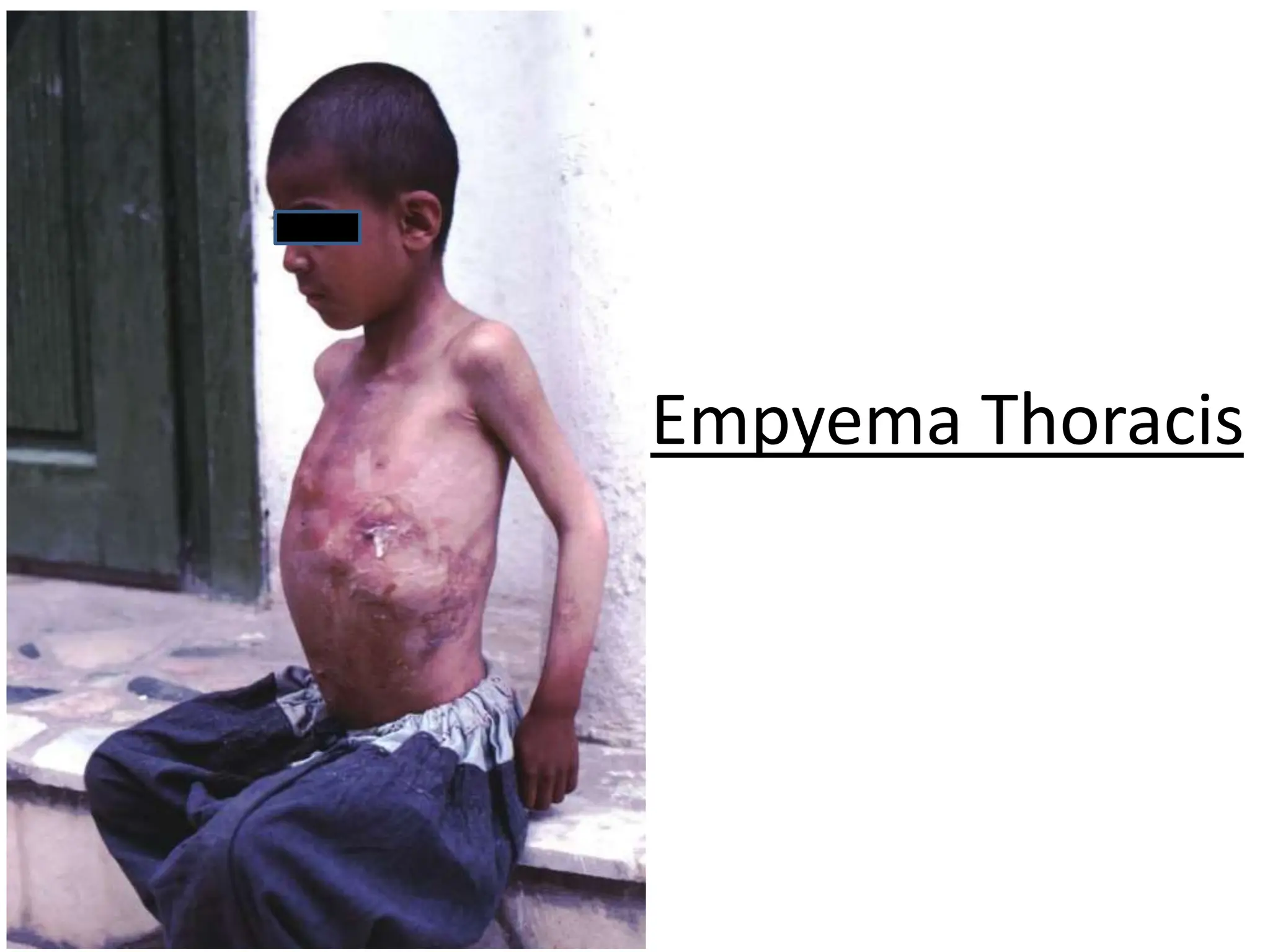
Empyema Thoracis
Empyema Thoracis
• Empyema thoracis is defined as an accumulation of pus
within the pleural cavity
• parapneumonic effusion and empyema is approximately
3.3 cases per 100,000 children
• 1 in every 150 children hospitalized with pneumonia will
develop an empyema(more in india)
• Hippocrates
• “if pus that flows after opening was mixed with blood, muddy
and foul smelling : death was likely
• and the pus was “pale and white” the patient would survive
• Pare described evacuation of infected blood from the pleural
cavity
• Wyman performed the first therapeutic pleural aspiration
• Playfair modified the technique of thoracocentesis to closed
tube drainage in 1875
• Fowler reported the first decortication in 1893
History
Etiology
• acute bacterial lobar pneumonia
• chicken pox and measles children
• chronic pulmonary diseases,
• long-term steroid therapy, organ transplantation
• immune suppression,
• recurrent aspiration
• secondary infection of a traumatic hemothorax contusion
• intrathoracic esophagus anastomotic dehiscence or rupture
following dilatation of an esophageal stricture
Pathogenesis
• rapidity with which pus accumulates
• virulence of the organisms,
• resistance offered by the host
• antibiotics and appropriate drainage procedures
• rupture of an amebic liver
• hydatid cysts rupture - - with secondary infection
• 10% of tuberculous effusions --secondary bacterial infection
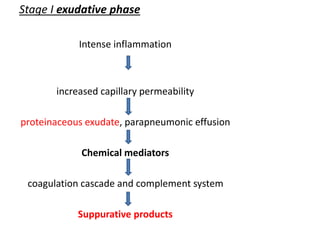
Stage I exudative phase
Intense inflammation
increased capillary permeability
proteinaceous exudate, parapneumonic effusion
Chemical mediators
coagulation cascade and complement system
Suppurative products
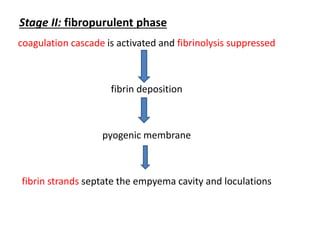
Stage II: fibropurulent phase
coagulation cascade is activated and fibrinolysis suppressed
fibrin deposition
pyogenic membrane
fibrin strands septate the empyema cavity and loculations
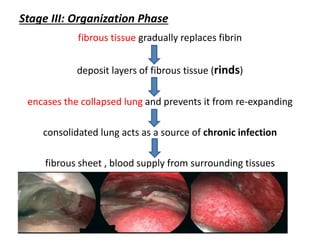
Stage III: Organization Phase
fibrous tissue gradually replaces fibrin
deposit layers of fibrous tissue (rinds)
encases the collapsed lung and prevents it from re-expanding
consolidated lung acts as a source of chronic infection
fibrous sheet , blood supply from surrounding tissues
Clinical Features
• cough, breathlessness,
• High grade fever, malaise
• loss of appetite
• decreased chest expansion,
• stony dullness to percussion,
• reduced or absent breath sounds,
• Scoliosis
• Mediastinal shift --tracheal deviation
Diagnosis
• Acute Phase Reactants
• Biochemistry,
• Blood, pleural fluid, sputum, Hematology
• Pleural Aspiration
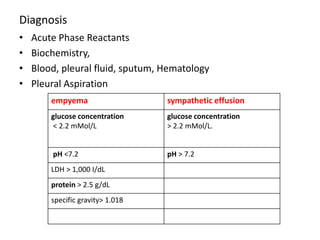
empyema sympathetic effusion
glucose concentration
< 2.2 mMol/L
glucose concentration
> 2.2 mMol/L.
pH <7.2 pH > 7.2
LDH > 1,000 I/dL
protein > 2.5 g/dL
specific gravity> 1.018
Radiology
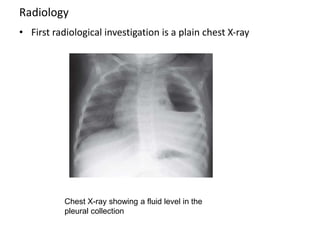
• First radiological investigation is a plain chest X-ray
Chest X-ray showing a fluid level in the
pleural collection
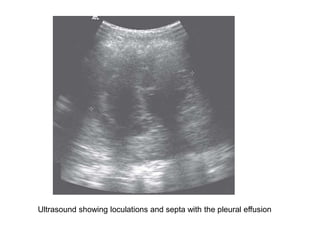
Ultrasound showing loculations and septa with the pleural effusion
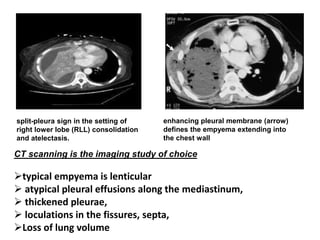
split-pleura sign in the setting of
right lower lobe (RLL) consolidation
and atelectasis.
enhancing pleural membrane (arrow)
defines the empyema extending into
the chest wall
CT scanning is the imaging study of choice
typical empyema is lenticular
 atypical pleural effusions along the mediastinum,
 thickened pleurae,
 loculations in the fissures, septa,
Loss of lung volume
Adv vs Dis
• CT scanning detects more parenchymal abnormalities than
chest radiography.
• the additional information does not alter management
• is unable to predict clinical outcome
• exposure of children to unnecessary radiation and costs.
• parenchymal lung abnormalities such as endobronchial
obstruction or a lung abscess, as well as helping with
mediastinal pathology
Early Primary VATS
Surgical Management
• The goal of surgery is to achieve full expansion
of the lung and resolution of the empyema.
• Early surgical intervention in childhood
empyema reduces morbidity.
• Treatment failure should be recognized early
to avoid disease progression.
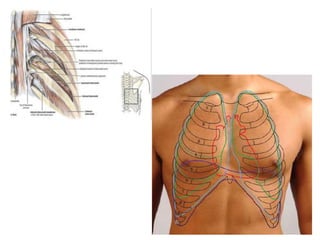
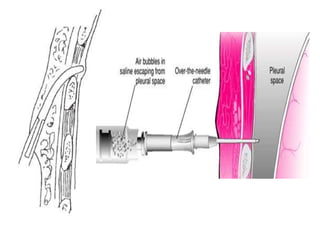
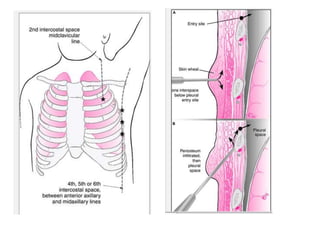
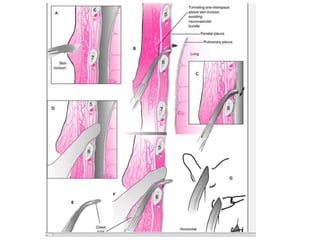
Intercostal Chest Tube Insertion
and Management
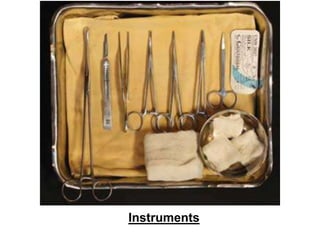
Instruments
Intercostal Chest Tube Insertion and Management
• Informed consent
• General anesthesia
• Skin antiseptic solution, e.g. povidone iodine (Betadine)
• Sterile gloves and gown
• Sterile drapes, Closed drainage system
• Plain bupivacaine 0.25% (maximum dose of 2 mg/kg (0.8 ml/kg)
• Empyema 16–24 F
• Fibrinolytic agents suggests that small-bore catheters 12–14 F
may be sufficient
• Seldinger introduction kits(Small-bore chest drains)
• “purse-string” sutures
(painful and produce a cosmetically unacceptable scar)
• Guide wire with dilators for Seldinger technique
• Chest tube: 10–12 FG appropriate for most children
• Connecting tubing
• Sterile universal containers and anaerobic blood culture
bottle for pleural fluid
• Steristrips and large transparent adhesive dressings
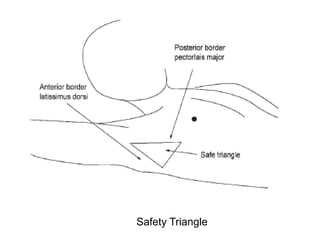
Safety Triangle
• Clinical picture: hospital admission
• Diagnostic imaging : CT scans should not be performed routinely
• Diagnostic analysis of pleural fluid: Blood, sputum, Tuberculosis and malignancy
• Referral to tertiary centre
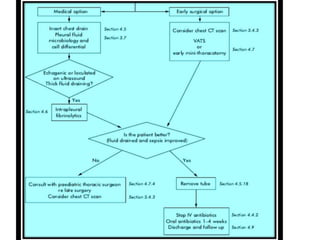
• Conservative management (antibiotics, simple drainage not for large effusion)
• Repeated thoracentesis: no role
• Antibiotics
• Chest drains
• Intrapleural fibrinolytics
• Surgery
• Other management
• Follow up
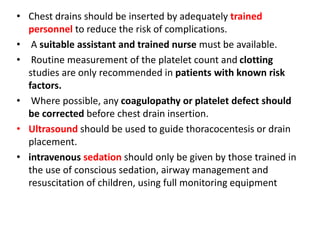
• Chest drains should be inserted by adequately trained
personnel to reduce the risk of complications.
• A suitable assistant and trained nurse must be available.
• Routine measurement of the platelet count and clotting
studies are only recommended in patients with known risk
factors.
• Where possible, any coagulopathy or platelet defect should
be corrected before chest drain insertion.
• Ultrasound should be used to guide thoracocentesis or drain
placement.
• intravenous sedation should only be given by those trained in
the use of conscious sedation, airway management and
resuscitation of children, using full monitoring equipment
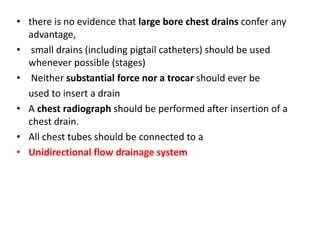
• there is no evidence that large bore chest drains confer any
advantage,
• small drains (including pigtail catheters) should be used
whenever possible (stages)
• Neither substantial force nor a trocar should ever be
used to insert a drain
• A chest radiograph should be performed after insertion of a
chest drain.
• All chest tubes should be connected to a
• Unidirectional flow drainage system
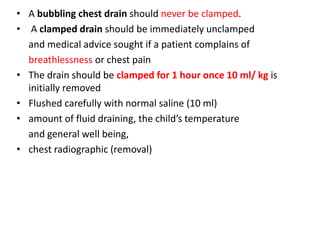
• A bubbling chest drain should never be clamped.
• A clamped drain should be immediately unclamped
and medical advice sought if a patient complains of
breathlessness or chest pain
• The drain should be clamped for 1 hour once 10 ml/ kg is
initially removed
• Flushed carefully with normal saline (10 ml)
• amount of fluid draining, the child’s temperature
and general well being,
• chest radiographic (removal)
• Older children can be asked to perform a Valsalva’s maneuver
while the drain is removed.
• In younger children the drain should be removed as rapidly
as possible during expiration
• Antipyretics should be given.
• Analgesia is important to keep the child comfortable,
particularly in the presence of a chest drain.
• Early mobilisation and exercise is recommended.
• Secondary scoliosis noted on the chest radiograph is common
but transient; no specific treatment is required but resolution
must be confirmed
Cochrane database by Coote (2002)
it was suggested that primary video-assisted thoracoscopic
surgical (VATS) drainage had a significantly higher success rate
with shorter duration of hospital stay compared with patients
managed with chest tube drainage with streptokinase
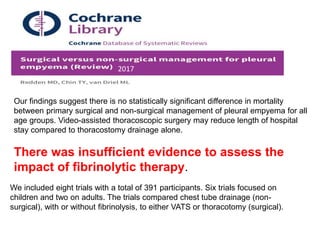
Our findings suggest there is no statistically significant difference in mortality
between primary surgical and non-surgical management of pleural empyema for all
age groups. Video-assisted thoracoscopic surgery may reduce length of hospital
stay compared to thoracostomy drainage alone.
There was insufficient evidence to assess the
impact of fibrinolytic therapy.
We included eight trials with a total of 391 participants. Six trials focused on
children and two on adults. The trials compared chest tube drainage (non-
surgical), with or without fibrinolysis, to either VATS or thoracotomy (surgical).
2017
The treatment of ET is complex. Failure to adequately evacuate
the pleural space and/or persistent signs of infection should
prompt surgical intervention.
Surgical therapy is preferred for advanced stages of ET.
Delaying definitive surgical treatment is largely responsible for
prolonging hospital course.
[Am J Med Sci 2003;326(1):9–14.]
Clin Pulm Med 2002;9(2):97–104
Currently there are no data available that indicate the exact time a patient
with pleural disease should undergo decortication.
Although late-stage empyema characterized by a constrictive peel
often requires decortication,
management of patients with multiloculated fibrinopurulent effusion is
controversial
Results
One hundred fifteen patients had 159 interventions over the study period.
Fifty-four children were successfully treated with intercostal drainage (ICD) and
urokinase fibrinolysis alone. There were 19 primary video assisted
thoracoscopic surgeries (VATS) and 12 VATS after initial intercostal
drains. Thirty-three children required a thoracotomy, a reduction of 26%
from the previous era (p = 0.009). The median length of stay was 9 days (range 2–
54).
Conclusion
a proportion requires further surgical intervention,
increased utilisation of fibrinolysis and VATS occurred with a corresponding
decrease in the need for thoracotomy.
Patients needing thoracotomy all had severe disease on
ultrasound, but ultrasound did not reliably predict failure of
fibrinolytic therapy.
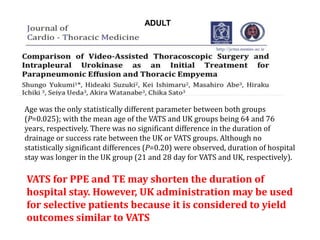
VATS for PPE and TE may shorten the duration of
hospital stay. However, UK administration may be used
for selective patients because it is considered to yield
outcomes similar to VATS
Age was the only statistically different parameter between both groups
(P=0.025); with the mean age of the VATS and UK groups being 64 and 76
years, respectively. There was no significant difference in the duration of
drainage or success rate between the UK or VATS groups. Although no
statistically significant differences (P=0.20) were observed, duration of hospital
stay was longer in the UK group (21 and 28 day for VATS and UK, respectively).
ADULT
Tuberculosis-Empyema
• Pediatric Medicine has discussed
Take home message
• Early recognition of symptoms,
• Initiation of Antibiotics and judicious use,
• Chest physiotherapy,
• Intercostal drainage,
• Early referral to Pediatric Surgery,
• VATS is still considered gold standard in ideal
cases.
• Avoid unnecessary Radiation (Xray/CT)

Empyema .ppt

  • 1.
  • 2.
    Empyema Thoracis • Empyemathoracis is defined as an accumulation of pus within the pleural cavity • parapneumonic effusion and empyema is approximately 3.3 cases per 100,000 children • 1 in every 150 children hospitalized with pneumonia will develop an empyema(more in india)
  • 4.
    • Hippocrates • “ifpus that flows after opening was mixed with blood, muddy and foul smelling : death was likely • and the pus was “pale and white” the patient would survive • Pare described evacuation of infected blood from the pleural cavity • Wyman performed the first therapeutic pleural aspiration • Playfair modified the technique of thoracocentesis to closed tube drainage in 1875 • Fowler reported the first decortication in 1893 History
  • 5.
    Etiology • acute bacteriallobar pneumonia • chicken pox and measles children • chronic pulmonary diseases, • long-term steroid therapy, organ transplantation • immune suppression, • recurrent aspiration • secondary infection of a traumatic hemothorax contusion • intrathoracic esophagus anastomotic dehiscence or rupture following dilatation of an esophageal stricture
  • 6.
    Pathogenesis • rapidity withwhich pus accumulates • virulence of the organisms, • resistance offered by the host • antibiotics and appropriate drainage procedures • rupture of an amebic liver • hydatid cysts rupture - - with secondary infection • 10% of tuberculous effusions --secondary bacterial infection
  • 7.
    Stage I exudativephase Intense inflammation increased capillary permeability proteinaceous exudate, parapneumonic effusion Chemical mediators coagulation cascade and complement system Suppurative products
  • 8.
    Stage II: fibropurulentphase coagulation cascade is activated and fibrinolysis suppressed fibrin deposition pyogenic membrane fibrin strands septate the empyema cavity and loculations
  • 9.
    Stage III: OrganizationPhase fibrous tissue gradually replaces fibrin deposit layers of fibrous tissue (rinds) encases the collapsed lung and prevents it from re-expanding consolidated lung acts as a source of chronic infection fibrous sheet , blood supply from surrounding tissues
  • 10.
    Clinical Features • cough,breathlessness, • High grade fever, malaise • loss of appetite • decreased chest expansion, • stony dullness to percussion, • reduced or absent breath sounds, • Scoliosis • Mediastinal shift --tracheal deviation
  • 11.
    Diagnosis • Acute PhaseReactants • Biochemistry, • Blood, pleural fluid, sputum, Hematology • Pleural Aspiration empyema sympathetic effusion glucose concentration < 2.2 mMol/L glucose concentration > 2.2 mMol/L. pH <7.2 pH > 7.2 LDH > 1,000 I/dL protein > 2.5 g/dL specific gravity> 1.018
  • 12.
    Radiology • First radiologicalinvestigation is a plain chest X-ray Chest X-ray showing a fluid level in the pleural collection
  • 13.
    Ultrasound showing loculationsand septa with the pleural effusion
  • 14.
    split-pleura sign inthe setting of right lower lobe (RLL) consolidation and atelectasis. enhancing pleural membrane (arrow) defines the empyema extending into the chest wall CT scanning is the imaging study of choice typical empyema is lenticular  atypical pleural effusions along the mediastinum,  thickened pleurae,  loculations in the fissures, septa, Loss of lung volume
  • 15.
    Adv vs Dis •CT scanning detects more parenchymal abnormalities than chest radiography. • the additional information does not alter management • is unable to predict clinical outcome • exposure of children to unnecessary radiation and costs. • parenchymal lung abnormalities such as endobronchial obstruction or a lung abscess, as well as helping with mediastinal pathology
  • 17.
    Early Primary VATS SurgicalManagement • The goal of surgery is to achieve full expansion of the lung and resolution of the empyema. • Early surgical intervention in childhood empyema reduces morbidity. • Treatment failure should be recognized early to avoid disease progression.
  • 18.
    Intercostal Chest TubeInsertion and Management
  • 19.
  • 20.
    Intercostal Chest TubeInsertion and Management • Informed consent • General anesthesia • Skin antiseptic solution, e.g. povidone iodine (Betadine) • Sterile gloves and gown • Sterile drapes, Closed drainage system • Plain bupivacaine 0.25% (maximum dose of 2 mg/kg (0.8 ml/kg) • Empyema 16–24 F • Fibrinolytic agents suggests that small-bore catheters 12–14 F may be sufficient • Seldinger introduction kits(Small-bore chest drains) • “purse-string” sutures (painful and produce a cosmetically unacceptable scar)
  • 21.
    • Guide wirewith dilators for Seldinger technique • Chest tube: 10–12 FG appropriate for most children • Connecting tubing • Sterile universal containers and anaerobic blood culture bottle for pleural fluid • Steristrips and large transparent adhesive dressings
  • 22.
  • 27.
    • Clinical picture:hospital admission • Diagnostic imaging : CT scans should not be performed routinely • Diagnostic analysis of pleural fluid: Blood, sputum, Tuberculosis and malignancy • Referral to tertiary centre • Conservative management (antibiotics, simple drainage not for large effusion) • Repeated thoracentesis: no role • Antibiotics • Chest drains • Intrapleural fibrinolytics • Surgery • Other management • Follow up
  • 28.
    • Chest drainsshould be inserted by adequately trained personnel to reduce the risk of complications. • A suitable assistant and trained nurse must be available. • Routine measurement of the platelet count and clotting studies are only recommended in patients with known risk factors. • Where possible, any coagulopathy or platelet defect should be corrected before chest drain insertion. • Ultrasound should be used to guide thoracocentesis or drain placement. • intravenous sedation should only be given by those trained in the use of conscious sedation, airway management and resuscitation of children, using full monitoring equipment
  • 29.
    • there isno evidence that large bore chest drains confer any advantage, • small drains (including pigtail catheters) should be used whenever possible (stages) • Neither substantial force nor a trocar should ever be used to insert a drain • A chest radiograph should be performed after insertion of a chest drain. • All chest tubes should be connected to a • Unidirectional flow drainage system
  • 30.
    • A bubblingchest drain should never be clamped. • A clamped drain should be immediately unclamped and medical advice sought if a patient complains of breathlessness or chest pain • The drain should be clamped for 1 hour once 10 ml/ kg is initially removed • Flushed carefully with normal saline (10 ml) • amount of fluid draining, the child’s temperature and general well being, • chest radiographic (removal)
  • 31.
    • Older childrencan be asked to perform a Valsalva’s maneuver while the drain is removed. • In younger children the drain should be removed as rapidly as possible during expiration • Antipyretics should be given. • Analgesia is important to keep the child comfortable, particularly in the presence of a chest drain. • Early mobilisation and exercise is recommended. • Secondary scoliosis noted on the chest radiograph is common but transient; no specific treatment is required but resolution must be confirmed
  • 32.
    Cochrane database byCoote (2002) it was suggested that primary video-assisted thoracoscopic surgical (VATS) drainage had a significantly higher success rate with shorter duration of hospital stay compared with patients managed with chest tube drainage with streptokinase
  • 33.
    Our findings suggestthere is no statistically significant difference in mortality between primary surgical and non-surgical management of pleural empyema for all age groups. Video-assisted thoracoscopic surgery may reduce length of hospital stay compared to thoracostomy drainage alone. There was insufficient evidence to assess the impact of fibrinolytic therapy. We included eight trials with a total of 391 participants. Six trials focused on children and two on adults. The trials compared chest tube drainage (non- surgical), with or without fibrinolysis, to either VATS or thoracotomy (surgical). 2017
  • 34.
    The treatment ofET is complex. Failure to adequately evacuate the pleural space and/or persistent signs of infection should prompt surgical intervention. Surgical therapy is preferred for advanced stages of ET. Delaying definitive surgical treatment is largely responsible for prolonging hospital course. [Am J Med Sci 2003;326(1):9–14.]
  • 35.
    Clin Pulm Med2002;9(2):97–104 Currently there are no data available that indicate the exact time a patient with pleural disease should undergo decortication. Although late-stage empyema characterized by a constrictive peel often requires decortication, management of patients with multiloculated fibrinopurulent effusion is controversial
  • 36.
    Results One hundred fifteenpatients had 159 interventions over the study period. Fifty-four children were successfully treated with intercostal drainage (ICD) and urokinase fibrinolysis alone. There were 19 primary video assisted thoracoscopic surgeries (VATS) and 12 VATS after initial intercostal drains. Thirty-three children required a thoracotomy, a reduction of 26% from the previous era (p = 0.009). The median length of stay was 9 days (range 2– 54). Conclusion a proportion requires further surgical intervention, increased utilisation of fibrinolysis and VATS occurred with a corresponding decrease in the need for thoracotomy. Patients needing thoracotomy all had severe disease on ultrasound, but ultrasound did not reliably predict failure of fibrinolytic therapy.
  • 38.
    VATS for PPEand TE may shorten the duration of hospital stay. However, UK administration may be used for selective patients because it is considered to yield outcomes similar to VATS Age was the only statistically different parameter between both groups (P=0.025); with the mean age of the VATS and UK groups being 64 and 76 years, respectively. There was no significant difference in the duration of drainage or success rate between the UK or VATS groups. Although no statistically significant differences (P=0.20) were observed, duration of hospital stay was longer in the UK group (21 and 28 day for VATS and UK, respectively). ADULT
  • 39.
  • 40.
    Take home message •Early recognition of symptoms, • Initiation of Antibiotics and judicious use, • Chest physiotherapy, • Intercostal drainage, • Early referral to Pediatric Surgery, • VATS is still considered gold standard in ideal cases. • Avoid unnecessary Radiation (Xray/CT)
Editor's Notes

  • #5 Osler later wrote “It is sad to think of number of lives which are sacrificed annually by the failure to recognise that empyema should be treated as an ordinary abscess by free incision.”
  • #8 Bacterial infection of the lung (pneumonia) causes intense inflammation resulting in increased capillary permeabilty. vasoactive amines, vasoactive polypeptides, and products of cascade enzyme systems activate the fibrinolytic system, which further increase capillary permeability
  • #10 Lung trapping and decrease in lung volume,
  • #13 Obliteration of the costophrenic angle is the earliest sign of a pleural effusion, and a rim of fluid may be seen ascending the lateral chest wall (meniscus sign) on a posteroanterior or anteroposterior radiograph When there is a ‘‘white out’’ it is not always possible to differentiate solid underlying severe lung collapse/ consolidation from a large effusion. Radiographs alone cannot differentiate an empyema from a parapneumonic effusion
  • #14 Although ultrasound cannot reliably establish the stage of pleural infection, it can estimate the size of the effusion, differentiate free from loculated pleural fluid, and determine the echogenicity of the lung Ultrasound may also demonstrate pleural thickening and assist in the diagnosis of effusion secondary to tuberculosis (for example, the presence of diffuse small nodules on the pleural surface) Ultrasound has also been shown to be good at distinguishing fluid from solid material in the pleural space
  • #15 Radiation from a CT chest scan can be high (depending on several factors including the machine, scanning technique, and size of the child), ranging from up to 400 chest radiograph equivalents to as few as 20 scanning of the chest with contrast enhancement assists in delineating loculated pleural fluid and can also detect airway or parenchymal lung abnormalities such as endobronchial obstruction or a lung abscess, as well as helping with mediastinal pathology
  • #28 Broncho Pleural fistula Avoid using more force
  • #30 All cases should be treated with intravenous anti- biotics and must include cover for Streptococcus pneumoniae. Broader spectrum cover is required for hospital acquired infections, as well as those secondary to surgery, trauma and aspiration.
  • #34 Children should be followed up after discharge until they have recovered completely and their chest radiograph has returned to near normal.
  • #36 Urokinase should be given twice daily for 3 days (6 doses in total) using 40 000 units in 40 ml 0.9% saline for children weighing 10 kg or above, and 10 000 units in 10 ml 0.9% saline for children weighing under 10 kg. mean 3100 units/kg/day