Emphysematous pyelonephritis(EPN)
•Dr.kambiz ghassemi
•Pediatric nephrologist(HUMS)
Emphysematous
pyelonephritis(EPN)
EPN is a life threatening , rapidly progressive, necrotizing infection of kidney and
adjacent tissue that results in gas formation in renal parenchymal, collecting
system and perinephric tissue
The mechanism of gas formation is because of mixed acid fermention and rapid
tissue catabolism and in improper transport of the end product at the
inflammatory site,. Nitrogen, hydrogen, carbon dioxide and oxygen are the major
components of the gas formed in emphysematous pyelonephritis .
associated
comorbidities
• EPN occurs most commonly in women, and diabetic populations are at
increased risk of infection
• renal stone disease
• Structural abnormalities of the urinary tract
• Immunosuppression
factors have been implicated in the pathogen-
esis of EPN
• (i) gas-forming bacteria
• (ii) a high tissue glucose level (favoring rapid bacterial growth)
• (iii)
impaired tissue perfusion (diabetic nephropathy can lead to additional compromise
of regional oxygen delivery in the kidney, which results in tissue ischemia and
necrosis
• (iv) a defective immune response due to an impaired vascular supply. Ureteral
obstruction causes local tissue ischemia that provokes infection
Etiology of EPN
• Escherichia coli is the most commonly encountered organism
• others being- Klebsiella, Proteus, Pseudomonas, Clostridium,
Streptococcus, Candida, Aspergillus and Cryptococcus species
• sometimes polymicrobial infections
DIAGNOSIS
• The mainstay of diagnosis is characteristic radiologic findings
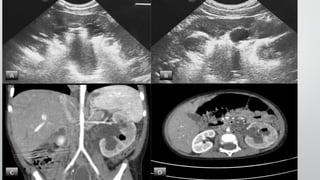
• Renal sonogram is helpful in diagnosis; it often shows high amplitude echoes
within renal parenchyma.
• Currently, computed tomography scan with or without contrast is preferred
because it provides comprehensive anatomic detail of dis-
ease.
Medical management
•prompt fluid resuscitation and institution of systemic
antibiotics.
•emergency nephrectomy was considered the treatment
of choice for EPN in the past
•The current strategy is to save the nephron by
percutaneous drainage plus intravenous antibiotics
•In children, obstruction of the urinary system,
vesicoureteral reflux and immunosuppression are the
major potential risk factors
Case 1
• 9 months of age with Escherichia coli septicemia
• OliguriaOn clinical examination, he was a well-grown male infant.
• systolic blood pressure was 70 mm Hg
• On abdominal examination, he had ascites with hepatosplenomegaly and palpable kidneys
• Urine dipstick had significant proteinuria, hematuria and glycosuria.The complete blood count
showed a leukocytosis of 44, 9 × 10⁹/L with a neutrophil predominance of 73%, anemia (hemoglobin
of 5.5 g/dl) and a normal platelet count.
• The partial thromboplastin time was prolonged (51 seconds) and the
blood urea nitrogen (BUN) was 45.7 mg/dl and creatinine was 670
μmol/L.
case1
• E. coli was cultured from blood
• Abdominal ultrasound demonstrated perirenal fluid on the right more than the left
• (CT) scan of the abdomen showed bilateral enlarged kidneys (right kidney was 6.8
cm and left was 7.1 cm).The left kidney had perinephric, intraparenchymal and
intracalyceal gas with an air fluid level at the inferior pole
• A dimercaptosuccinic acid scan and a diethylene triamine
pentacaetic acid scan showed bilateral nonfunctioning kidneys
case1
• Peritoneal dialysis was started and a percutaneous drain was inserted to drain the
perinephric fluid surrounding the right kidney.
• Purulent material was obtained that grew E. coli susceptible to cefotaxime.
• Once the patient clinically improved, the child was discharged
home to continue with home dialysis
• The child was readmitted 2 months later with gastroenteritis and a history of
herbal intoxication. Clinically the child had features of severe acute malnutrition,
peritonitis and septic shock and died in hospital. E. coli was cultured from the blood
case2
• 2-year-and-10-month-old female child presented with persistent diarrhea and oral sores. She was previously
admitted with a bronchopneumonia and herpes stomatitis and was also diagnosed with HIV infection
• complete blood count revealed a significant anemia (hemoglobin 3.3 g/dl), low mean corpuscular volume of 72.2.
• elevated C-reactive protein of 310 mg/L, impaired renal function (BUN was 8.7 mg/dl and creatinine was 103
μmol/L), a calculated glomerular filtration rate (using the Schwartz formula) of 39 ml/min/m2
• Enterococcus faecium was cultured from
the urine
case2
• intravenous fluids, a blood transfusion and cefotaxime for her UTI.
• renal sonar showed bilateral enlarged kidneys (the right kidney was 9.5 cm
and the left kidney was 11.5 cm) with extensive air in the renal parenchyma
and collecting systems of the left kidney.
• A CT scan of the abdomen confirmed the diagnosis of EPN of the left kidney
• She was treated with intravenous cefotaxime for 21 days.
CASE3
• 12-yr-old boy who had end-stage renal disease secondary to neurogenic bladder and highgrade
vesico-ureteric reflux in a solitary
right kidney He underwent successful pre-emptive living-related renal transplant from his
mother.
• Following transplantation, he had three episodes of urinary tract infection that responded to
appropriate antibiotic therapy.
• Five months post-transplantation he was admitted with high fever, chills, vomiting and
abdominal pain.When examined he appeared ill
looking, mildly dehydrated, tachycardic (heartrate 128/min), febrile (temperature 39.1 C), and
normotensive.
• His allograft was diffusely tender,and the rest of the examination was within normal limits
• leukocytosis with a left shift (initial white cellcount was 13 500 ·109/L with 79% polymorphs) and increased
serum creatinine
• intravenous fluids and broad-spectrum antibiotics was initiated
• Renal allograft ultrasound showed gas in the renal collecting system
• A renal biopsy was performed on the fifth day because ofthe persistent elevation in serum creatinine to rule
out other causes of graft dysfunction, primarily acute rejection
• renal biopsy showed features consistent with severe pyelonephritis and no sign of acute rejection.
• lowering the tacrolimus dose and holding myco-phenolate, and treatment with intravenous antibiotics was
continued for 2 weeks
case3
• No surgical intervention was undertaken as the patient started to
show improvement on clinical and biochemical grounds, with
complete resolution of symptoms and signs of acute pyelonephritis,
and return of hematological parameters to normal,
• 2 weeks after completion of therapy.The patient was discharged
home in good condition,
Case4
Emphysematous Pyelonephritis in a Child with
Nephrolithiasis
• A 4-year-oldCaucasian female presented with abdominal pain, emesis, and fever.
• She had been having recurrent urinary tract infections over the past year prior to
admission.
• She has had multiple urine cultures positive for Escherichia coli.
• Three days prior to admission,a renal ultrasound was performed and multiple renal stones
were detected
• computed tomography of the abdomenand pelvis was performed on admission and
showed multiplerenal calculi with the largest measuring 11 13 mm. In addition there was
gas noted within the right renal collecting
system
case4
• intravenous meropenem, and a cystoscopy was performed with placement of a right
ureteral stent.
• urine cultures grew extended spectrum beta lactamase producing Escherichia coli,
• treated the patient with 7 days of intravenous meropenem.
• During the hospitalization, the patient’s clinical status improved significantly, her fever
resolved, and her pain resolved.
‫تشکر‬ ‫با‬

Emphysematous pyelonephritis

  • 1.
  • 2.
    Emphysematous pyelonephritis(EPN) EPN is alife threatening , rapidly progressive, necrotizing infection of kidney and adjacent tissue that results in gas formation in renal parenchymal, collecting system and perinephric tissue The mechanism of gas formation is because of mixed acid fermention and rapid tissue catabolism and in improper transport of the end product at the inflammatory site,. Nitrogen, hydrogen, carbon dioxide and oxygen are the major components of the gas formed in emphysematous pyelonephritis .
  • 3.
    associated comorbidities • EPN occursmost commonly in women, and diabetic populations are at increased risk of infection • renal stone disease • Structural abnormalities of the urinary tract • Immunosuppression
  • 4.
    factors have beenimplicated in the pathogen- esis of EPN • (i) gas-forming bacteria • (ii) a high tissue glucose level (favoring rapid bacterial growth) • (iii) impaired tissue perfusion (diabetic nephropathy can lead to additional compromise of regional oxygen delivery in the kidney, which results in tissue ischemia and necrosis • (iv) a defective immune response due to an impaired vascular supply. Ureteral obstruction causes local tissue ischemia that provokes infection
  • 5.
    Etiology of EPN •Escherichia coli is the most commonly encountered organism • others being- Klebsiella, Proteus, Pseudomonas, Clostridium, Streptococcus, Candida, Aspergillus and Cryptococcus species • sometimes polymicrobial infections
  • 6.
    DIAGNOSIS • The mainstayof diagnosis is characteristic radiologic findings • Renal sonogram is helpful in diagnosis; it often shows high amplitude echoes within renal parenchyma. • Currently, computed tomography scan with or without contrast is preferred because it provides comprehensive anatomic detail of dis- ease.
  • 9.
    Medical management •prompt fluidresuscitation and institution of systemic antibiotics. •emergency nephrectomy was considered the treatment of choice for EPN in the past •The current strategy is to save the nephron by percutaneous drainage plus intravenous antibiotics •In children, obstruction of the urinary system, vesicoureteral reflux and immunosuppression are the major potential risk factors
  • 10.
    Case 1 • 9months of age with Escherichia coli septicemia • OliguriaOn clinical examination, he was a well-grown male infant. • systolic blood pressure was 70 mm Hg • On abdominal examination, he had ascites with hepatosplenomegaly and palpable kidneys • Urine dipstick had significant proteinuria, hematuria and glycosuria.The complete blood count showed a leukocytosis of 44, 9 × 10⁹/L with a neutrophil predominance of 73%, anemia (hemoglobin of 5.5 g/dl) and a normal platelet count. • The partial thromboplastin time was prolonged (51 seconds) and the blood urea nitrogen (BUN) was 45.7 mg/dl and creatinine was 670 μmol/L.
  • 11.
    case1 • E. coliwas cultured from blood • Abdominal ultrasound demonstrated perirenal fluid on the right more than the left • (CT) scan of the abdomen showed bilateral enlarged kidneys (right kidney was 6.8 cm and left was 7.1 cm).The left kidney had perinephric, intraparenchymal and intracalyceal gas with an air fluid level at the inferior pole • A dimercaptosuccinic acid scan and a diethylene triamine pentacaetic acid scan showed bilateral nonfunctioning kidneys
  • 12.
    case1 • Peritoneal dialysiswas started and a percutaneous drain was inserted to drain the perinephric fluid surrounding the right kidney. • Purulent material was obtained that grew E. coli susceptible to cefotaxime. • Once the patient clinically improved, the child was discharged home to continue with home dialysis • The child was readmitted 2 months later with gastroenteritis and a history of herbal intoxication. Clinically the child had features of severe acute malnutrition, peritonitis and septic shock and died in hospital. E. coli was cultured from the blood
  • 13.
    case2 • 2-year-and-10-month-old femalechild presented with persistent diarrhea and oral sores. She was previously admitted with a bronchopneumonia and herpes stomatitis and was also diagnosed with HIV infection • complete blood count revealed a significant anemia (hemoglobin 3.3 g/dl), low mean corpuscular volume of 72.2. • elevated C-reactive protein of 310 mg/L, impaired renal function (BUN was 8.7 mg/dl and creatinine was 103 μmol/L), a calculated glomerular filtration rate (using the Schwartz formula) of 39 ml/min/m2 • Enterococcus faecium was cultured from the urine
  • 14.
    case2 • intravenous fluids,a blood transfusion and cefotaxime for her UTI. • renal sonar showed bilateral enlarged kidneys (the right kidney was 9.5 cm and the left kidney was 11.5 cm) with extensive air in the renal parenchyma and collecting systems of the left kidney. • A CT scan of the abdomen confirmed the diagnosis of EPN of the left kidney • She was treated with intravenous cefotaxime for 21 days.
  • 15.
    CASE3 • 12-yr-old boywho had end-stage renal disease secondary to neurogenic bladder and highgrade vesico-ureteric reflux in a solitary right kidney He underwent successful pre-emptive living-related renal transplant from his mother. • Following transplantation, he had three episodes of urinary tract infection that responded to appropriate antibiotic therapy. • Five months post-transplantation he was admitted with high fever, chills, vomiting and abdominal pain.When examined he appeared ill looking, mildly dehydrated, tachycardic (heartrate 128/min), febrile (temperature 39.1 C), and normotensive. • His allograft was diffusely tender,and the rest of the examination was within normal limits
  • 16.
    • leukocytosis witha left shift (initial white cellcount was 13 500 ·109/L with 79% polymorphs) and increased serum creatinine • intravenous fluids and broad-spectrum antibiotics was initiated • Renal allograft ultrasound showed gas in the renal collecting system • A renal biopsy was performed on the fifth day because ofthe persistent elevation in serum creatinine to rule out other causes of graft dysfunction, primarily acute rejection • renal biopsy showed features consistent with severe pyelonephritis and no sign of acute rejection. • lowering the tacrolimus dose and holding myco-phenolate, and treatment with intravenous antibiotics was continued for 2 weeks
  • 17.
    case3 • No surgicalintervention was undertaken as the patient started to show improvement on clinical and biochemical grounds, with complete resolution of symptoms and signs of acute pyelonephritis, and return of hematological parameters to normal, • 2 weeks after completion of therapy.The patient was discharged home in good condition,
  • 18.
    Case4 Emphysematous Pyelonephritis ina Child with Nephrolithiasis • A 4-year-oldCaucasian female presented with abdominal pain, emesis, and fever. • She had been having recurrent urinary tract infections over the past year prior to admission. • She has had multiple urine cultures positive for Escherichia coli. • Three days prior to admission,a renal ultrasound was performed and multiple renal stones were detected • computed tomography of the abdomenand pelvis was performed on admission and showed multiplerenal calculi with the largest measuring 11 13 mm. In addition there was gas noted within the right renal collecting system
  • 19.
    case4 • intravenous meropenem,and a cystoscopy was performed with placement of a right ureteral stent. • urine cultures grew extended spectrum beta lactamase producing Escherichia coli, • treated the patient with 7 days of intravenous meropenem. • During the hospitalization, the patient’s clinical status improved significantly, her fever resolved, and her pain resolved.
  • 20.