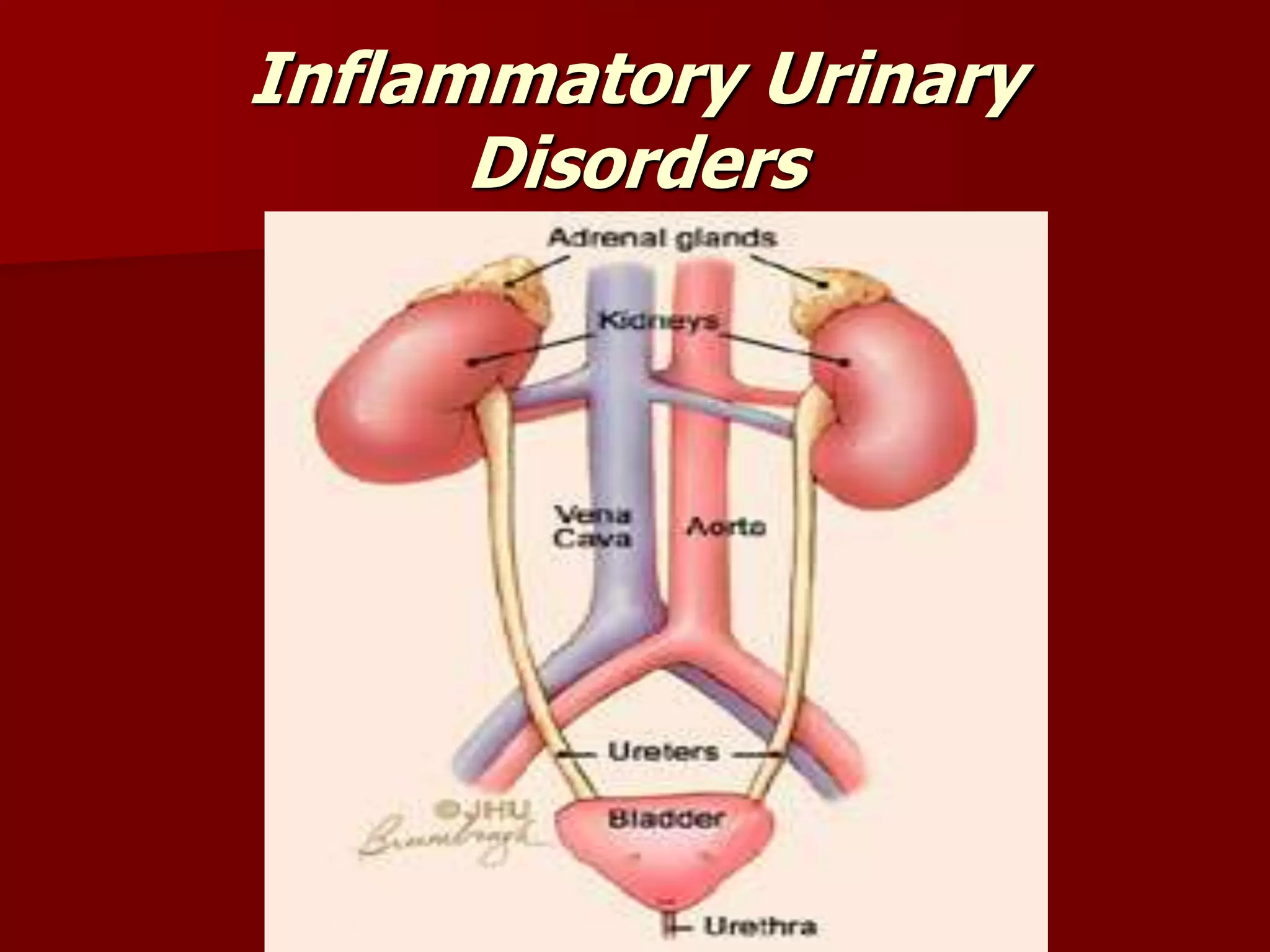
Inflammatory Urinary
Disorders
URINARY TRACT INFECTION
 The urinary tract infection may be broadly classified
as upper and lower urinary tract infections.
 The patient may have both an upper and a lower
urinary tract infection. The frequency of urinary
tract infections varies with age and sex and may be
acute or chronic.
Risk Factors For Urinary Tract
Infection
 Inability or failure to empty the bladder
completely
 Obstructed urinary flow ,from congenital
anomalies, from urethral strictures ,
contracture of the bladder neck, bladder
tumors , calculi in the ureters or kidneys
compression of the ureters and neurologic
abnormalities.
 Contributing conditions as:
 diabetes mellitus
 Pregnancy
 Neurologic disorders
 Gout
 Urinary stasis
 Inflammations or abrasions in the urethral
mucosa
 Instrumentations of the urinary tract
 Immunosuppressant's
PATHOPHYSIOLOGY OF URINARY
TRACT INFECTION
 Urethrovesical Reflux” back flow of urine “ with:
 Coughing
 Sneezing
 Straining
 Routes of infection:
 Ascending infection e.g.
Because the female urethra is short, also several
Studies show that sexual intercourse is the major
precipitating factor of UTI in women.
Clinical Manifestations of UTI
1. Urgency
2. Dysuria
3. Slight to gross hematuria
4. Bacteriuria and positive urine cultures as
the basis for diagnosing lower urinary
tract infections.
Diagnostic findings of UTI
 Urine cultures
 Testing methods
– Leukocyte esterase test is positive “WBCs in urine”
– STD”sexual transmitted disease” may be performed
 Computerized Tomography ”C.T.” to detect pyelonephritis,
abscess
 Ultrasonography to detect obstruction, abscess, tumors,
cysts.
 Intravenous pyelography to detect strictures or stones.
Specific Nursing Care for UTI
1. The medication “anti bacterial” must be
given on a time on a regular schedule.
2. The nurse must follow complete aseptic
technique if instrumentation is indicated.
3. Sitz bath may provide to relieve pain or
itching.
Pyelonephritis
Definition:
 It is an bacterial infections that involves both the
parenchyma and the pelvis of the kidney, it may
affect one or both kidneys.
 It is frequently secondary to ureterovesical reflux
 It may be acute or chronic when it is chronic the
kidneys are scarred, contracted and non-functioning
Clinical Findings of Acute
peylonephritis
A.Symptoms :
1. Chills, moderate to high fever.
2. Constant loin pain unilateral or bilateral.
3. Symptoms of cystitis :
- frequency
- nocturia
- urgency
- dysuria
4. Nausea, vomiting and diarrhea are common.
5. Young children complain of abdominal discomfort.
B.Signs :
1. The patient appears quite ill.
2. Intermittent chills with fever ranging 38.5 : 40C.
3. Tachycardia (90 beat/m : 140 beat/m).
4. Abdominal distention.
Specific Nursing Care for
peylonephritis
1.Health promotion and maintenance measures should be
applied.
2.Early treatment for cystitis to prevent ascending infections.
3.Encourage the patient to drink at least 2000 ml of fluid
everyday.
4.Antibiotic therapy according to results of urine cultures.
5.Serial urine cultures and other evaluation studies must be
continued.
Chronic Pyelonephritis
 Repeated attacks of acute pyelonephritis
may lead to chronic pyelonephritis
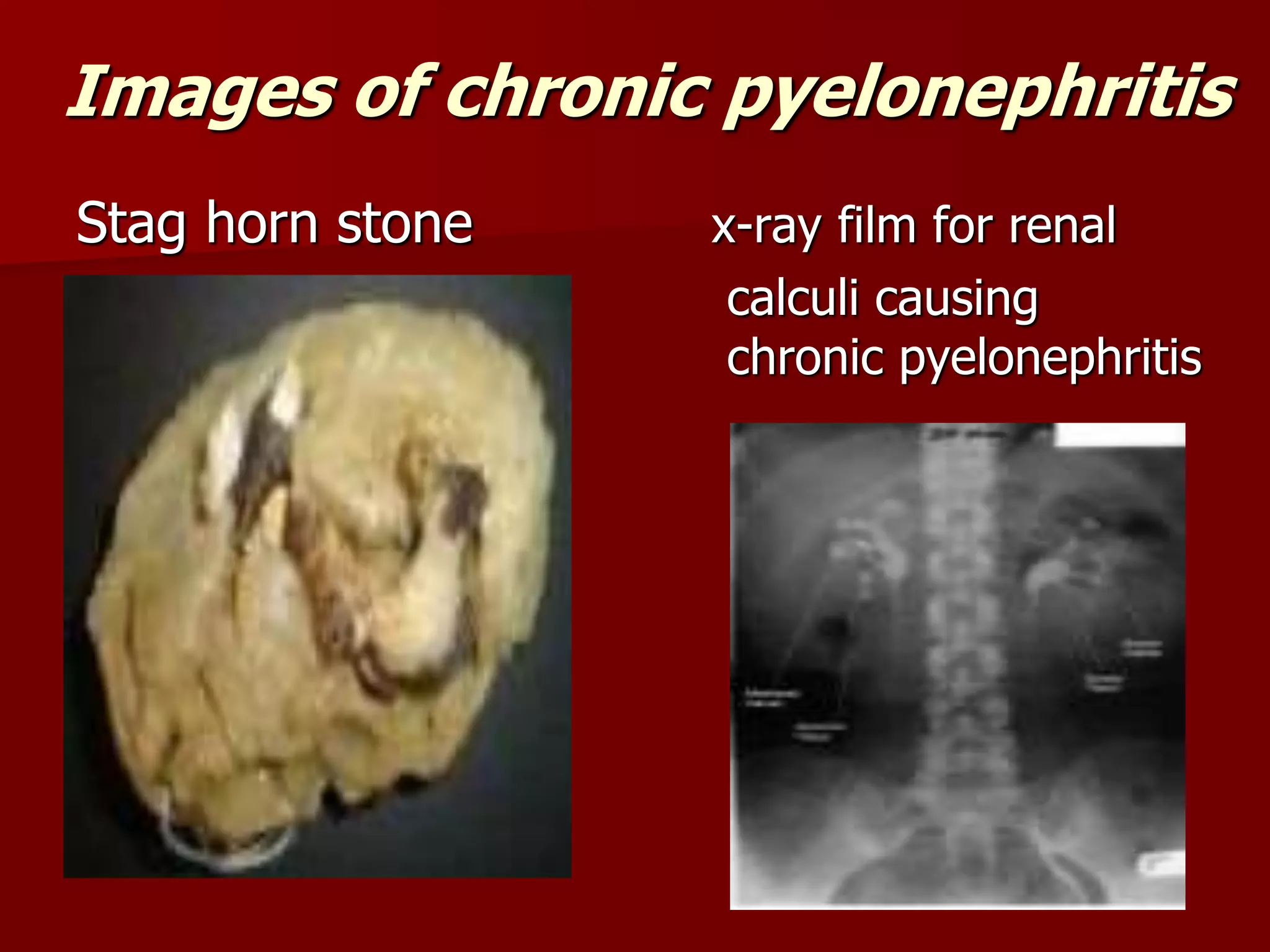
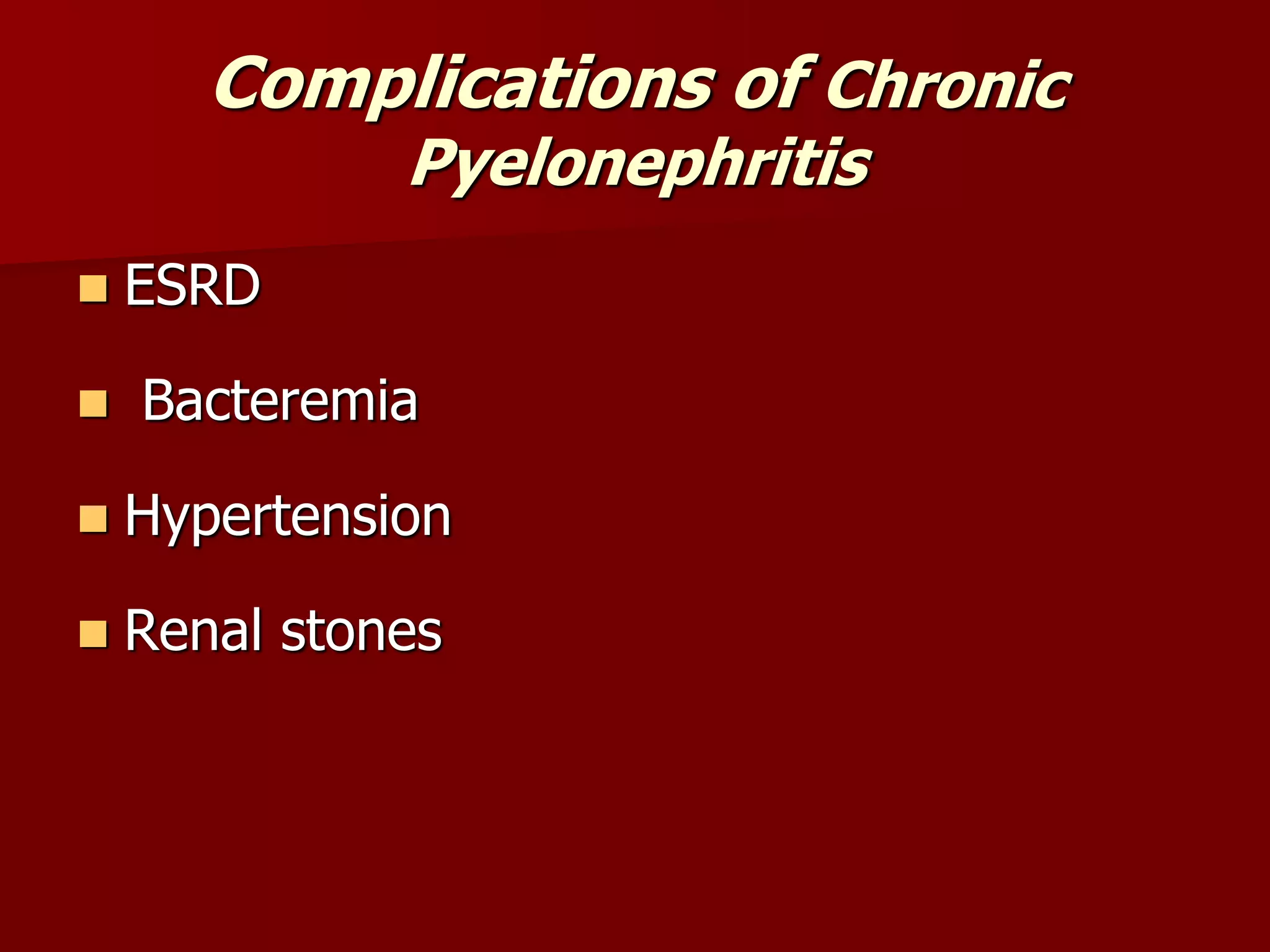
Images of chronic pyelonephritis
Stag horn stone x-ray film for renal
calculi causing
chronic pyelonephritis
Pathology of Chronic Pyelonephritis
The kidney shows atrophy of variable degree
depending upon the severity of the
involvement. In minimal involvement, the
kidney shows scarring in the renal surfaces
while in extensive involvement, there is a
fibrosis specially in the pelvic mucosa.
Clinical manifestations of chronic
peylonephritis
 It does not have symptoms of infection
 Fatigue
 headache
 Poor appetite
 Polyuria
 Excessive thirst
 Weight loss
Complications of Chronic
Pyelonephritis
 ESRD
 Bacteremia
 Hypertension
 Renal stones
Specific Nursing Care for chronic
Pyelonephritis
1.The nurse must instruct the patient to continue
antibiotic and antimicrobial therapy even after
symptoms resolve.
2.Encourage the patient to drink 3 liters/day of fluids
unless otherwise instructed.
3.Monitor urinary output and report if there is oliguria
or intake more than output.
4.Weighing daily and instruct the patient to
report immediately about weight gain.
5. Teach the patient measures to prevent
infection and early seek for medical advice
if there are signs of urinary infection.
6.Continue with medical follow-up and get
follow-up urine cultures as instructed.
Interstitial Cystitis
 It is a Chronic inflammatory condition of
bladder wall, frequently remained undiagnosed
 It can be occur at any age , in both genders
 Almost 90% of the affected patients are
women why?
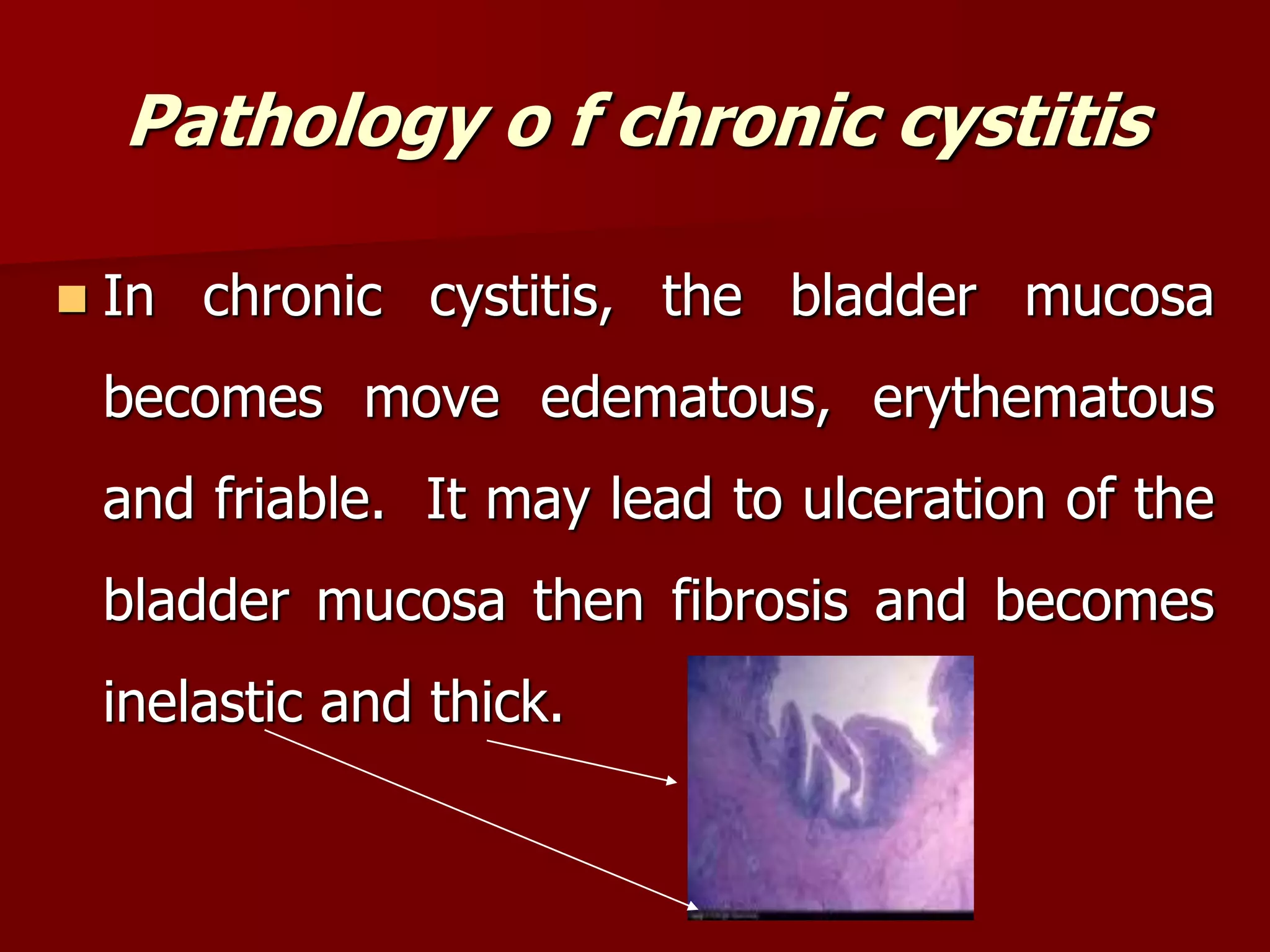
Pathology o f chronic cystitis
 In chronic cystitis, the bladder mucosa
becomes move edematous, erythematous
and friable. It may lead to ulceration of the
bladder mucosa then fibrosis and becomes
inelastic and thick.
Clinical manifestations of chronic
cystitis
 Severe ,irritable voiding at day and night
 Frequency
 Nocturia
 Urgency
 Pain “ suprapubic pressure
 Irritable bowl syndrome
 Chronic tension type headache
Treatment of chronic cystitis
 Anti-microbial therapy based on culture
and sensitivity testing.
 Appropriate correction of contributing
factors when possible.
Primary Glomerular Diseases
A variety of diseases can affect the glomerular
capillaries, including acute and chronic
glomerulonephritis
Acute Glomerulonephritis
It is an inflammation of the glomerular
capillaries
It is primarily occurs with children but it can
occurs at any age.
Clinical Manifestations
 Clear hematuria” either micro/macroscopic”
 RBCs and protein plugs or casts “indicate glomerular
injury”
 Proteinuria due to increased permeability of the
glomerular membrane
 BUN, creatinine
 urine output
 Headache, malaise, flank pain
 Some degree of edema
 Hypertension in 75% of the cases
 in old age ; circulatory overload
Assessment and Diagnostic
Findings
 A: Kidney: large, swollen, and congested
 ASOT: Anti Streptolysin O Titre due to
streptococcal infection
 D: Kidney: biopsy
 If the patient improves ,urine increases and
urinary protein diminish
 If not, dialysis will be needed for survival
Complications
 Hypertensive encephalopathy
 Heart failure
 Pulmonary edema
 Optic neuropathy ”rare”
 ERSD ” in poor prognosis ”
Medical Management
 Treating symptoms
 Treating complications
 Treat streptococcal infection by penicillin
 Corticosteroids and immunosuppressant for
rapidly progressive acute glomerulonephritis
 protein and salt in diet in case of edema
and hypertension
 Diuretics to control hypertension
Nursing Management
 carbohydrate in diet to provide energy
 Fluid balance chart carefully
 Daily weighing to patient
 Fluid intake according loss considering
insensible loss
 Teach patient how to care him/her self at
home
 Care of edema
 Care of Skin
Chronic Glomerulonephritis
 Repeated attacks of acute Glomerulonephritis
due to:
 Hypertensive nephrosclerosis
 Hyperlipidemia
 Glomerular sclerosis
 Clinically:
 the kidneys shrinks
 reduce its size
 It has rough and irregular surface
 Thickened renal artery
Glomerular damage
ESRD
Clinical Manifestations
 Most of cases has no symptoms until hypertension
or BUN/ creatinine elevation can be detected
 The disease may be discovered during routine eye
examination
 The first indication might be :
 Severe Nose Bleeds
 Stroke
 Seizure
 General symptoms as:
 Loss of weight
 Increase irritability
 Headache
 Dizziness
 Nocturia
 GIT disturbances
 Swollen feet specially at night
 The patient appears poorly nourished
 Blood pressure may be normal or severely
elevated
 Mucous membranes are pale because of
anemia
 Peripheral neuropathy occurs late in the
disease
Assessment and Diagnostic
Findings
 A:
 Chest x-ray shows
 Cardiomegaly *Pulmonary edema
 Distended neck veins
 Crackles can be heared in the lungs
D:
 Urine analysis …
 specific gravity is 1.010 * Proteinuria
 Urinary casts due to glomerular damage
 Impaired nerve conduction due to
uremia
 Blood chemistry…
 Hyperkalemia
 Anemia”lack of erythropoiesis”
 Hypoalbuminemia due to protein
loss
 Increased phosphorus and
decreased calcium in blood
Medical Management
 Treat hypertension
 Restrict sodium and water
 Monitor weight daily
 Diuretics to overcome fluid overload
 Increase protein in diet
 Initiation of dialysis as early as possible “benefits”:
 Optimal physical condition
 Minimize risk of complications
 Prevent fluid and electrolyte imbalances
Nursing Management
 Observe signs of fluid and electrolyte
imbalances
 Report changes in fluid and electrolyte status
, cardiac and neurologic status.
 Emotional support to alleviate anxiety
 Teach patient self care
Nephrotic Syndrome
 It is a primary glomerular disease characterized by
the following:
 Marked increase in protein in the urine
 Decrease in albumin in the blood
 Edema
 High serum cholesterol
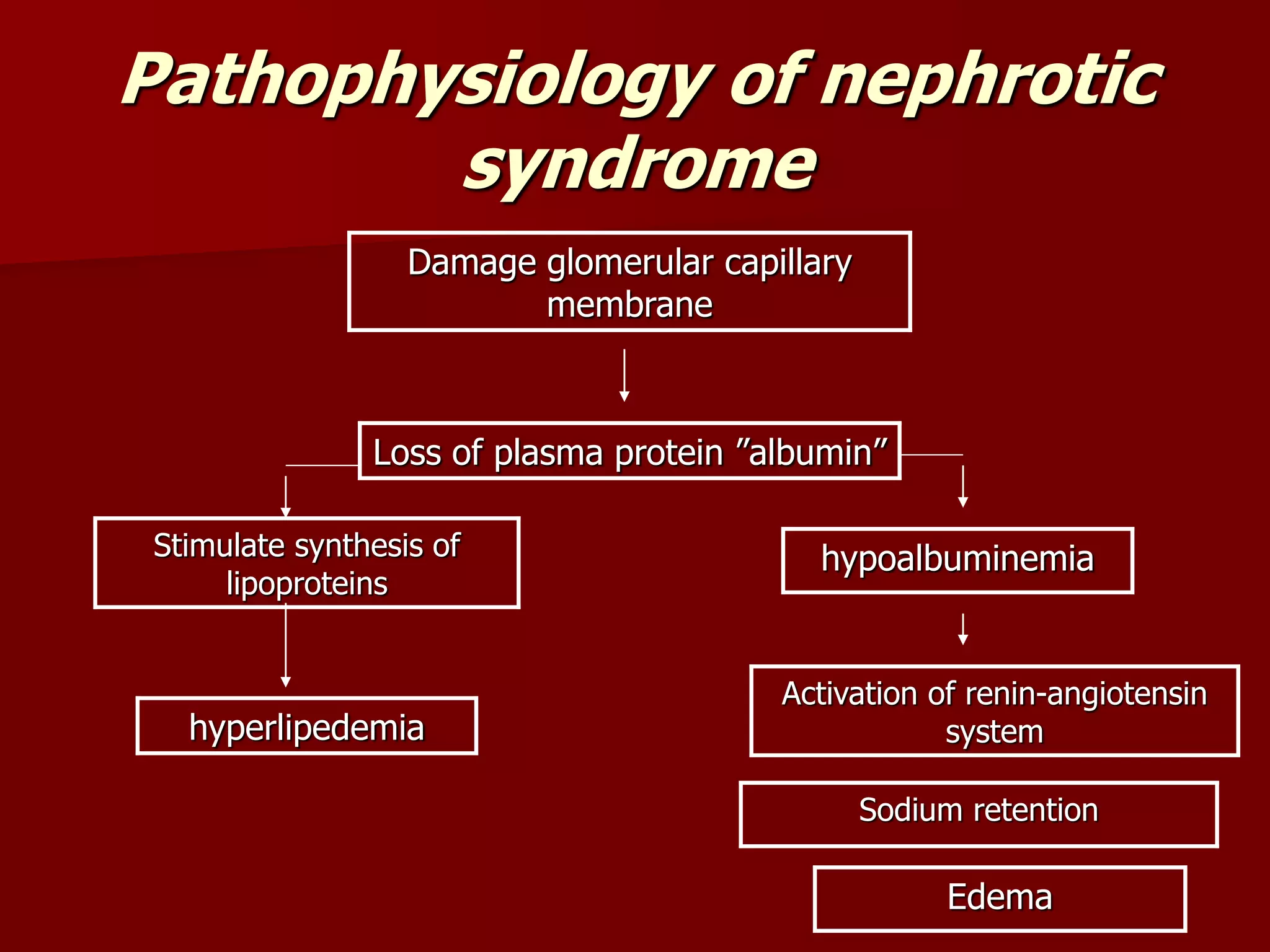
Pathophysiology of nephrotic
syndrome
Damage glomerular capillary
membrane
Loss of plasma protein ”albumin”
Stimulate synthesis of
lipoproteins
hyperlipedemia
hypoalbuminemia
Activation of renin-angiotensin
system
Sodium retention
Edema
Clinical Manifestations of nephrotic
syndrome
 Edema
 Pitting
 Soft
 Commonly around eyes
 Malaise
 Headache
 Irritability
 fatigue
Diagnostic Findings of nephrotic
syndrome
Needle biopsy of the kidney may be performed
for histologic examination of renal tissue
Complications of nephrotic
syndrome
 Infection ”low immune response”
 Thromboembolism” renal vein”
 Pulmonary emboli
 Acute renal failure
 Accelerated athrosclerosis
”due to hyperlipedemia”
Management of Nephrotic
Syndrome
 Diuretics for edema
 Immunosupprsant medications
 Low salt diet
 Protein in diet around 0.8 gm g/kg/day
 Patients with nephrotic syndrome need instructions towards:
 Dietary regimen
 Referral system
 medications
Thanks for your attention

Inflammatory urinary disorders

  • 1.
  • 2.
    URINARY TRACT INFECTION The urinary tract infection may be broadly classified as upper and lower urinary tract infections.  The patient may have both an upper and a lower urinary tract infection. The frequency of urinary tract infections varies with age and sex and may be acute or chronic.
  • 3.
    Risk Factors ForUrinary Tract Infection  Inability or failure to empty the bladder completely  Obstructed urinary flow ,from congenital anomalies, from urethral strictures , contracture of the bladder neck, bladder tumors , calculi in the ureters or kidneys compression of the ureters and neurologic abnormalities.
  • 4.
     Contributing conditionsas:  diabetes mellitus  Pregnancy  Neurologic disorders  Gout  Urinary stasis  Inflammations or abrasions in the urethral mucosa  Instrumentations of the urinary tract  Immunosuppressant's
  • 5.
    PATHOPHYSIOLOGY OF URINARY TRACTINFECTION  Urethrovesical Reflux” back flow of urine “ with:  Coughing  Sneezing  Straining  Routes of infection:  Ascending infection e.g. Because the female urethra is short, also several Studies show that sexual intercourse is the major precipitating factor of UTI in women.
  • 6.
    Clinical Manifestations ofUTI 1. Urgency 2. Dysuria 3. Slight to gross hematuria 4. Bacteriuria and positive urine cultures as the basis for diagnosing lower urinary tract infections.
  • 7.
    Diagnostic findings ofUTI  Urine cultures  Testing methods – Leukocyte esterase test is positive “WBCs in urine” – STD”sexual transmitted disease” may be performed  Computerized Tomography ”C.T.” to detect pyelonephritis, abscess  Ultrasonography to detect obstruction, abscess, tumors, cysts.  Intravenous pyelography to detect strictures or stones.
  • 8.
    Specific Nursing Carefor UTI 1. The medication “anti bacterial” must be given on a time on a regular schedule. 2. The nurse must follow complete aseptic technique if instrumentation is indicated. 3. Sitz bath may provide to relieve pain or itching.
  • 9.
    Pyelonephritis Definition:  It isan bacterial infections that involves both the parenchyma and the pelvis of the kidney, it may affect one or both kidneys.  It is frequently secondary to ureterovesical reflux  It may be acute or chronic when it is chronic the kidneys are scarred, contracted and non-functioning
  • 10.
    Clinical Findings ofAcute peylonephritis A.Symptoms : 1. Chills, moderate to high fever. 2. Constant loin pain unilateral or bilateral. 3. Symptoms of cystitis : - frequency - nocturia - urgency - dysuria 4. Nausea, vomiting and diarrhea are common. 5. Young children complain of abdominal discomfort. B.Signs : 1. The patient appears quite ill. 2. Intermittent chills with fever ranging 38.5 : 40C. 3. Tachycardia (90 beat/m : 140 beat/m). 4. Abdominal distention.
  • 11.
    Specific Nursing Carefor peylonephritis 1.Health promotion and maintenance measures should be applied. 2.Early treatment for cystitis to prevent ascending infections. 3.Encourage the patient to drink at least 2000 ml of fluid everyday. 4.Antibiotic therapy according to results of urine cultures. 5.Serial urine cultures and other evaluation studies must be continued.
  • 12.
    Chronic Pyelonephritis  Repeatedattacks of acute pyelonephritis may lead to chronic pyelonephritis
  • 13.
    Images of chronicpyelonephritis Stag horn stone x-ray film for renal calculi causing chronic pyelonephritis
  • 14.
    Pathology of ChronicPyelonephritis The kidney shows atrophy of variable degree depending upon the severity of the involvement. In minimal involvement, the kidney shows scarring in the renal surfaces while in extensive involvement, there is a fibrosis specially in the pelvic mucosa.
  • 15.
    Clinical manifestations ofchronic peylonephritis  It does not have symptoms of infection  Fatigue  headache  Poor appetite  Polyuria  Excessive thirst  Weight loss
  • 16.
    Complications of Chronic Pyelonephritis ESRD  Bacteremia  Hypertension  Renal stones
  • 17.
    Specific Nursing Carefor chronic Pyelonephritis 1.The nurse must instruct the patient to continue antibiotic and antimicrobial therapy even after symptoms resolve. 2.Encourage the patient to drink 3 liters/day of fluids unless otherwise instructed. 3.Monitor urinary output and report if there is oliguria or intake more than output.
  • 18.
    4.Weighing daily andinstruct the patient to report immediately about weight gain. 5. Teach the patient measures to prevent infection and early seek for medical advice if there are signs of urinary infection. 6.Continue with medical follow-up and get follow-up urine cultures as instructed.
  • 19.
    Interstitial Cystitis  Itis a Chronic inflammatory condition of bladder wall, frequently remained undiagnosed  It can be occur at any age , in both genders  Almost 90% of the affected patients are women why?
  • 20.
    Pathology o fchronic cystitis  In chronic cystitis, the bladder mucosa becomes move edematous, erythematous and friable. It may lead to ulceration of the bladder mucosa then fibrosis and becomes inelastic and thick.
  • 21.
    Clinical manifestations ofchronic cystitis  Severe ,irritable voiding at day and night  Frequency  Nocturia  Urgency  Pain “ suprapubic pressure  Irritable bowl syndrome  Chronic tension type headache
  • 22.
    Treatment of chroniccystitis  Anti-microbial therapy based on culture and sensitivity testing.  Appropriate correction of contributing factors when possible.
  • 23.
    Primary Glomerular Diseases Avariety of diseases can affect the glomerular capillaries, including acute and chronic glomerulonephritis Acute Glomerulonephritis It is an inflammation of the glomerular capillaries It is primarily occurs with children but it can occurs at any age.
  • 24.
    Clinical Manifestations  Clearhematuria” either micro/macroscopic”  RBCs and protein plugs or casts “indicate glomerular injury”  Proteinuria due to increased permeability of the glomerular membrane  BUN, creatinine  urine output  Headache, malaise, flank pain  Some degree of edema  Hypertension in 75% of the cases  in old age ; circulatory overload
  • 25.
    Assessment and Diagnostic Findings A: Kidney: large, swollen, and congested  ASOT: Anti Streptolysin O Titre due to streptococcal infection  D: Kidney: biopsy  If the patient improves ,urine increases and urinary protein diminish  If not, dialysis will be needed for survival
  • 26.
    Complications  Hypertensive encephalopathy Heart failure  Pulmonary edema  Optic neuropathy ”rare”  ERSD ” in poor prognosis ”
  • 27.
    Medical Management  Treatingsymptoms  Treating complications  Treat streptococcal infection by penicillin  Corticosteroids and immunosuppressant for rapidly progressive acute glomerulonephritis  protein and salt in diet in case of edema and hypertension  Diuretics to control hypertension
  • 28.
    Nursing Management  carbohydratein diet to provide energy  Fluid balance chart carefully  Daily weighing to patient  Fluid intake according loss considering insensible loss  Teach patient how to care him/her self at home  Care of edema  Care of Skin
  • 29.
    Chronic Glomerulonephritis  Repeatedattacks of acute Glomerulonephritis due to:  Hypertensive nephrosclerosis  Hyperlipidemia  Glomerular sclerosis  Clinically:  the kidneys shrinks  reduce its size  It has rough and irregular surface  Thickened renal artery Glomerular damage ESRD
  • 30.
    Clinical Manifestations  Mostof cases has no symptoms until hypertension or BUN/ creatinine elevation can be detected  The disease may be discovered during routine eye examination  The first indication might be :  Severe Nose Bleeds  Stroke  Seizure  General symptoms as:  Loss of weight  Increase irritability  Headache  Dizziness  Nocturia  GIT disturbances  Swollen feet specially at night
  • 31.
     The patientappears poorly nourished  Blood pressure may be normal or severely elevated  Mucous membranes are pale because of anemia  Peripheral neuropathy occurs late in the disease
  • 32.
    Assessment and Diagnostic Findings A:  Chest x-ray shows  Cardiomegaly *Pulmonary edema  Distended neck veins  Crackles can be heared in the lungs D:  Urine analysis …  specific gravity is 1.010 * Proteinuria  Urinary casts due to glomerular damage
  • 33.
     Impaired nerveconduction due to uremia  Blood chemistry…  Hyperkalemia  Anemia”lack of erythropoiesis”  Hypoalbuminemia due to protein loss  Increased phosphorus and decreased calcium in blood
  • 34.
    Medical Management  Treathypertension  Restrict sodium and water  Monitor weight daily  Diuretics to overcome fluid overload  Increase protein in diet  Initiation of dialysis as early as possible “benefits”:  Optimal physical condition  Minimize risk of complications  Prevent fluid and electrolyte imbalances
  • 35.
    Nursing Management  Observesigns of fluid and electrolyte imbalances  Report changes in fluid and electrolyte status , cardiac and neurologic status.  Emotional support to alleviate anxiety  Teach patient self care
  • 36.
    Nephrotic Syndrome  Itis a primary glomerular disease characterized by the following:  Marked increase in protein in the urine  Decrease in albumin in the blood  Edema  High serum cholesterol
  • 37.
    Pathophysiology of nephrotic syndrome Damageglomerular capillary membrane Loss of plasma protein ”albumin” Stimulate synthesis of lipoproteins hyperlipedemia hypoalbuminemia Activation of renin-angiotensin system Sodium retention Edema
  • 38.
    Clinical Manifestations ofnephrotic syndrome  Edema  Pitting  Soft  Commonly around eyes  Malaise  Headache  Irritability  fatigue
  • 39.
    Diagnostic Findings ofnephrotic syndrome Needle biopsy of the kidney may be performed for histologic examination of renal tissue
  • 40.
    Complications of nephrotic syndrome Infection ”low immune response”  Thromboembolism” renal vein”  Pulmonary emboli  Acute renal failure  Accelerated athrosclerosis ”due to hyperlipedemia”
  • 41.
    Management of Nephrotic Syndrome Diuretics for edema  Immunosupprsant medications  Low salt diet  Protein in diet around 0.8 gm g/kg/day  Patients with nephrotic syndrome need instructions towards:  Dietary regimen  Referral system  medications
  • 42.
    Thanks for yourattention