Emphysematous
Cholecystitis
Pricilia Donna Esperansa Sea – 2012 060 106
Emphysematous Cholecystitis
• EC is a severe form of acute colesystitis.
• Rapidly fatal, risk for gangrene and perforation, high risk
mortality.
• Life-threathening anaerobic infection. Gas-forming
bacteria (Clostridium welchii/perfingrens, Escherichia
coli and Bacteroides fragilis)
• Men are affected twice as commonly as women. Mostly
patients are between 50 and 70 years of age, and have
underlying diabetes melitus.
• Can be detected using CT or USG. Gas in gallblader or
abnormal communication with GIT
• Pain in right upper quadrant.
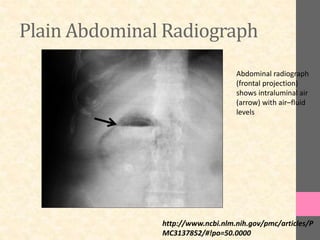
Plain Abdominal Radiograph
Abdominal radiograph
(frontal projection)
shows intraluminal air
(arrow) with air–fluid
levels
http://www.ncbi.nlm.nih.gov/pmc/articles/P
MC3137852/#!po=50.0000
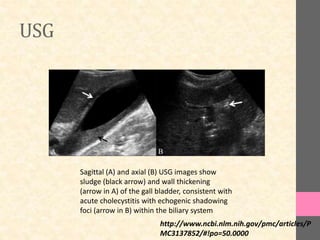
USG
Sagittal (A) and axial (B) USG images show
sludge (black arrow) and wall thickening
(arrow in A) of the gall bladder, consistent with
acute cholecystitis with echogenic shadowing
foci (arrow in B) within the biliary system
http://www.ncbi.nlm.nih.gov/pmc/articles/P
MC3137852/#!po=50.0000
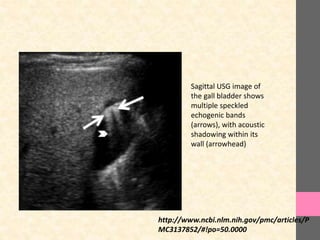
Sagittal USG image of
the gall bladder shows
multiple speckled
echogenic bands
(arrows), with acoustic
shadowing within its
wall (arrowhead)
http://www.ncbi.nlm.nih.gov/pmc/articles/P
MC3137852/#!po=50.0000
CT
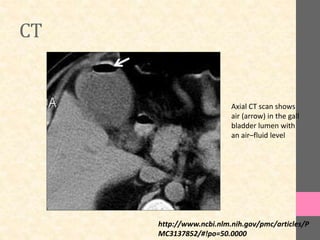
Axial CT scan shows
air (arrow) in the gall
bladder lumen with
an air–fluid level
http://www.ncbi.nlm.nih.gov/pmc/articles/P
MC3137852/#!po=50.0000
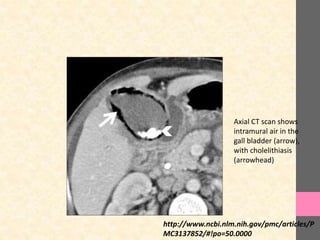
Axial CT scan shows
intramural air in the
gall bladder (arrow),
with cholelithiasis
(arrowhead)
http://www.ncbi.nlm.nih.gov/pmc/articles/P
MC3137852/#!po=50.0000
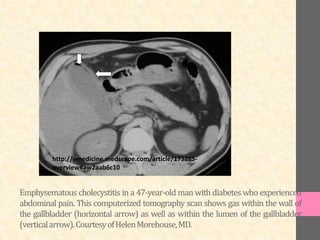
Emphysematous cholecystitis in a 47-year-old man with diabetes who experienced
abdominal pain. This computerized tomography scan shows gas within the wall of
the gallbladder (horizontal arrow) as well as within the lumen of the gallbladder
(verticalarrow).CourtesyofHelenMorehouse,MD.
http://emedicine.medscape.com/article/173885-
overview#aw2aab6c10
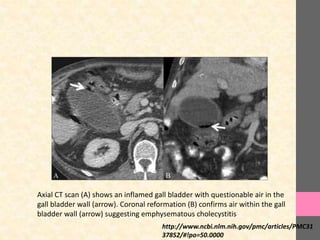
Axial CT scan (A) shows an inflamed gall bladder with questionable air in the
gall bladder wall (arrow). Coronal reformation (B) confirms air within the gall
bladder wall (arrow) suggesting emphysematous cholecystitis
http://www.ncbi.nlm.nih.gov/pmc/articles/PMC31
37852/#!po=50.0000
MRI
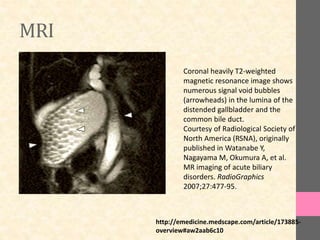
Coronal heavily T2-weighted
magnetic resonance image shows
numerous signal void bubbles
(arrowheads) in the lumina of the
distended gallbladder and the
common bile duct.
Courtesy of Radiological Society of
North America (RSNA), originally
published in Watanabe Y,
Nagayama M, Okumura A, et al.
MR imaging of acute biliary
disorders. RadioGraphics
2007;27:477-95.
http://emedicine.medscape.com/article/173885-
overview#aw2aab6c10
Daftar Pustaka
• Emphysematous Cholecystitis. April 9, 2015 [cited May 12, 2015];
Retrieved from: http://emedicine.medscape.com/article/173885-
overview
• Sunnapwar A, Raut AA, Nagar AM, Katre R. Emphysematous
cholecystitis: Imaging findings in nine patients. Indian J Radiol
Imaging. 2011;21(2):142–6.
• http://radiopaedia.org/articles/emphysematous-cholecystitis

Emphysematous cholecystitis

  • 1.
  • 2.
    Emphysematous Cholecystitis • ECis a severe form of acute colesystitis. • Rapidly fatal, risk for gangrene and perforation, high risk mortality. • Life-threathening anaerobic infection. Gas-forming bacteria (Clostridium welchii/perfingrens, Escherichia coli and Bacteroides fragilis) • Men are affected twice as commonly as women. Mostly patients are between 50 and 70 years of age, and have underlying diabetes melitus. • Can be detected using CT or USG. Gas in gallblader or abnormal communication with GIT • Pain in right upper quadrant.
  • 3.
    Plain Abdominal Radiograph Abdominalradiograph (frontal projection) shows intraluminal air (arrow) with air–fluid levels http://www.ncbi.nlm.nih.gov/pmc/articles/P MC3137852/#!po=50.0000
  • 4.
    USG Sagittal (A) andaxial (B) USG images show sludge (black arrow) and wall thickening (arrow in A) of the gall bladder, consistent with acute cholecystitis with echogenic shadowing foci (arrow in B) within the biliary system http://www.ncbi.nlm.nih.gov/pmc/articles/P MC3137852/#!po=50.0000
  • 5.
    Sagittal USG imageof the gall bladder shows multiple speckled echogenic bands (arrows), with acoustic shadowing within its wall (arrowhead) http://www.ncbi.nlm.nih.gov/pmc/articles/P MC3137852/#!po=50.0000
  • 6.
    CT Axial CT scanshows air (arrow) in the gall bladder lumen with an air–fluid level http://www.ncbi.nlm.nih.gov/pmc/articles/P MC3137852/#!po=50.0000
  • 7.
    Axial CT scanshows intramural air in the gall bladder (arrow), with cholelithiasis (arrowhead) http://www.ncbi.nlm.nih.gov/pmc/articles/P MC3137852/#!po=50.0000
  • 8.
    Emphysematous cholecystitis ina 47-year-old man with diabetes who experienced abdominal pain. This computerized tomography scan shows gas within the wall of the gallbladder (horizontal arrow) as well as within the lumen of the gallbladder (verticalarrow).CourtesyofHelenMorehouse,MD. http://emedicine.medscape.com/article/173885- overview#aw2aab6c10
  • 9.
    Axial CT scan(A) shows an inflamed gall bladder with questionable air in the gall bladder wall (arrow). Coronal reformation (B) confirms air within the gall bladder wall (arrow) suggesting emphysematous cholecystitis http://www.ncbi.nlm.nih.gov/pmc/articles/PMC31 37852/#!po=50.0000
  • 10.
    MRI Coronal heavily T2-weighted magneticresonance image shows numerous signal void bubbles (arrowheads) in the lumina of the distended gallbladder and the common bile duct. Courtesy of Radiological Society of North America (RSNA), originally published in Watanabe Y, Nagayama M, Okumura A, et al. MR imaging of acute biliary disorders. RadioGraphics 2007;27:477-95. http://emedicine.medscape.com/article/173885- overview#aw2aab6c10
  • 11.
    Daftar Pustaka • EmphysematousCholecystitis. April 9, 2015 [cited May 12, 2015]; Retrieved from: http://emedicine.medscape.com/article/173885- overview • Sunnapwar A, Raut AA, Nagar AM, Katre R. Emphysematous cholecystitis: Imaging findings in nine patients. Indian J Radiol Imaging. 2011;21(2):142–6. • http://radiopaedia.org/articles/emphysematous-cholecystitis