Emotional Intelligence
By : Kshitij S Deshmukh
Emotional Intelligence
 Michigan university conducted
research of most valuable leaders
and finding shows it is essential
trait of 78 % of leaders.
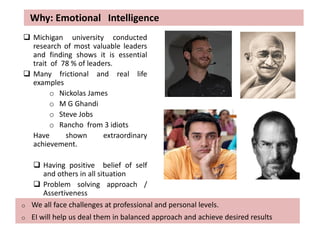
 Many frictional and real life
examples
o Nickolas James
o M G Ghandi
o Steve Jobs
o Rancho from 3 idiots
Have shown extraordinary
achievement.
 Having positive belief of self
and others in all situation
 Problem solving approach /
Assertiveness
Why: Emotional Intelligence
o We all face challenges at professional and personal levels.
o EI will help us deal them in balanced approach and achieve desired results
Contents
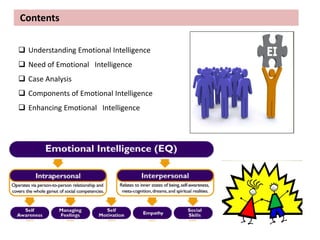
 Understanding Emotional Intelligence
 Need of Emotional Intelligence
 Case Analysis
 Components of Emotional Intelligence
 Enhancing Emotional Intelligence
Definition : Emotional Intelligence
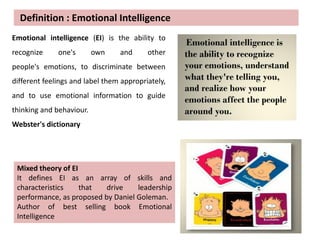
Emotional intelligence (EI) is the ability to
recognize one's own and other
people's emotions, to discriminate between
different feelings and label them appropriately,
and to use emotional information to guide
thinking and behaviour.
Webster's dictionary
Mixed theory of EI
It defines EI as an array of skills and
characteristics that drive leadership
performance, as proposed by Daniel Goleman.
Author of best selling book Emotional
Intelligence
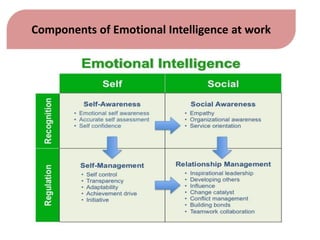
Components of Emotional Intelligence at work
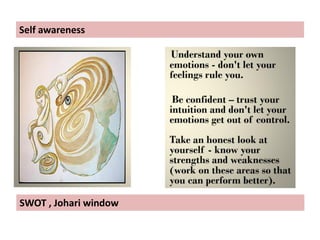
Self awareness
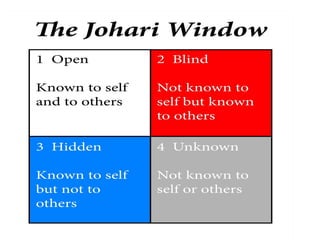
SWOT , Johari window
© Nihilent Technologies 2013
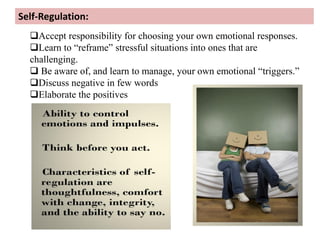
Self-Regulation:
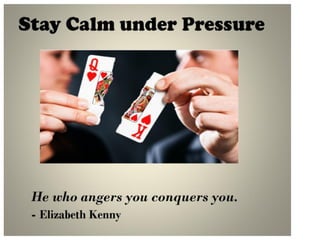
Accept responsibility for choosing your own emotional responses.
Learn to “reframe” stressful situations into ones that are
challenging.
 Be aware of, and learn to manage, your own emotional “triggers.”
Discuss negative in few words
Elaborate the positives
Self-Motivation:
 No one can de-motivate unless you allow them
 Intrinsic motivation
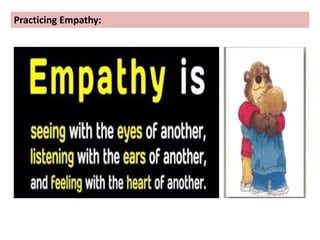
Practicing Empathy:
Practicing Empathy:
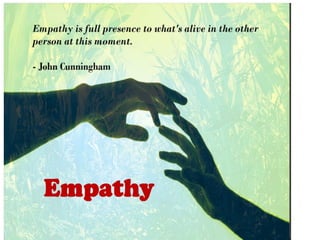
 Empathy means recognizing, and responding
appropriately to, the emotions of others.
 By expressing empathy, you also create empathy in others.
 Realize that emotions impact such measurable goals as
 productivity and safety.
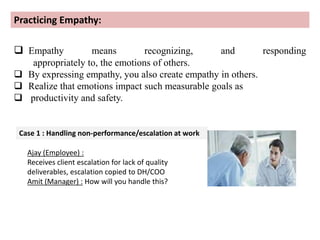
Case 1 : Handling non-performance/escalation at work
Ajay (Employee) :
Receives client escalation for lack of quality
deliverables, escalation copied to DH/COO
Amit (Manager) : How will you handle this?
Creating Effective Relationships:
 Employ all your emotional competencies – awareness,
regulation, motivation, and empathy – to:
 Influence and persuade others.
 Motivate and inspire yourself and others
 Build consensus and support for team goals.
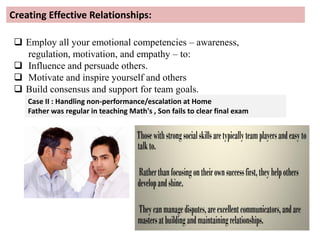
Case II : Handling non-performance/escalation at Home
Father was regular in teaching Math's , Son fails to clear final exam
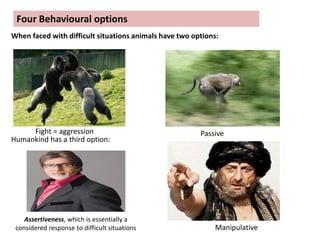
When faced with difficult situations animals have two options:
Humankind has a third option:
Fight = aggression Passive
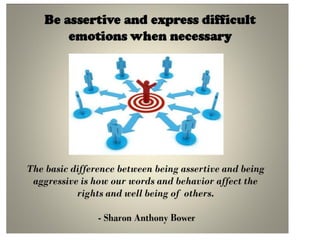
Assertiveness, which is essentially a
considered response to difficult situations
Four Behavioural options
Manipulative
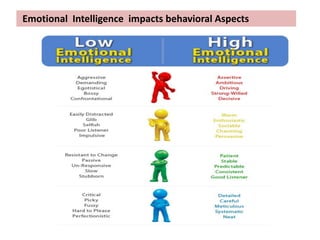
Emotional Intelligence impacts behavioral Aspects
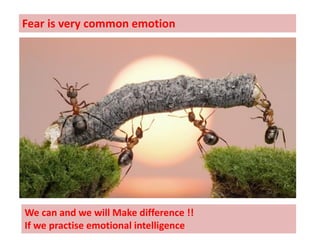
We can and we will Make difference !!
If we practise emotional intelligence
Fear is very common emotion

Emotional intellegence

  • 1.
    Emotional Intelligence By :Kshitij S Deshmukh
  • 2.
  • 6.
     Michigan universityconducted research of most valuable leaders and finding shows it is essential trait of 78 % of leaders.  Many frictional and real life examples o Nickolas James o M G Ghandi o Steve Jobs o Rancho from 3 idiots Have shown extraordinary achievement.  Having positive belief of self and others in all situation  Problem solving approach / Assertiveness Why: Emotional Intelligence o We all face challenges at professional and personal levels. o EI will help us deal them in balanced approach and achieve desired results
  • 7.
    Contents  Understanding EmotionalIntelligence  Need of Emotional Intelligence  Case Analysis  Components of Emotional Intelligence  Enhancing Emotional Intelligence
  • 8.
    Definition : EmotionalIntelligence Emotional intelligence (EI) is the ability to recognize one's own and other people's emotions, to discriminate between different feelings and label them appropriately, and to use emotional information to guide thinking and behaviour. Webster's dictionary Mixed theory of EI It defines EI as an array of skills and characteristics that drive leadership performance, as proposed by Daniel Goleman. Author of best selling book Emotional Intelligence
  • 9.
    Components of EmotionalIntelligence at work
  • 10.
    Self awareness SWOT ,Johari window
  • 11.
  • 12.
    Self-Regulation: Accept responsibility forchoosing your own emotional responses. Learn to “reframe” stressful situations into ones that are challenging.  Be aware of, and learn to manage, your own emotional “triggers.” Discuss negative in few words Elaborate the positives
  • 13.
    Self-Motivation:  No onecan de-motivate unless you allow them  Intrinsic motivation
  • 14.
  • 15.
    Practicing Empathy:  Empathymeans recognizing, and responding appropriately to, the emotions of others.  By expressing empathy, you also create empathy in others.  Realize that emotions impact such measurable goals as  productivity and safety. Case 1 : Handling non-performance/escalation at work Ajay (Employee) : Receives client escalation for lack of quality deliverables, escalation copied to DH/COO Amit (Manager) : How will you handle this?
  • 16.
    Creating Effective Relationships: Employ all your emotional competencies – awareness, regulation, motivation, and empathy – to:  Influence and persuade others.  Motivate and inspire yourself and others  Build consensus and support for team goals. Case II : Handling non-performance/escalation at Home Father was regular in teaching Math's , Son fails to clear final exam
  • 17.
    When faced withdifficult situations animals have two options: Humankind has a third option: Fight = aggression Passive Assertiveness, which is essentially a considered response to difficult situations Four Behavioural options Manipulative
  • 18.
  • 34.
    We can andwe will Make difference !! If we practise emotional intelligence Fear is very common emotion