Emotional
Intelligence
    lli
What is IQ?
• IQ is a measure of relative intelligence
 determined by a standardized test. The
 first intelligence test was created in
 1905 by Alfred Binet and Théophile
 Simon to determine which French
 school children were too “slow” to
 benefit from regular instruction.
Emotion & Intelligence

Emotion is a feeling that is private and subjective.
  Humans can report an extraordinary range of
  states, which they can feel or experience. In
  many cases, the emotions we note in ourselves
  seem to be blends of different states.

Intelligence is defined as general cognitive
  problem-solving skills. A mental ability involved
  in reasoning, perceiving relationships and
  analogies, calculating, learning quickly… etc.
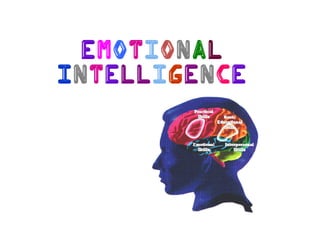
Parts of the brain involved in EI

                      Amygdala


                    Prefrontal Cortex


                    Thalamus
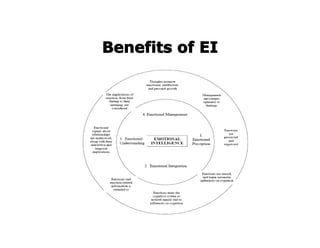
Benefits of EI
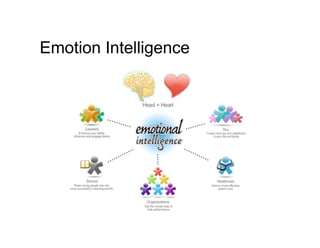
Emotion Intelligence
Emotional Quotient
• The EI factor quantified using the various
  measurement tools is referred as the Emotional
  Quotient of an individual.

        – Self Awareness The ability to recognize
          and understand your moods, emotions
          and drives, as well as their effect on
          others.
        – Self Regulation The ability to control or
          re-direct disruptive impulses and moods
          and the propensity to suspend judgment
          and think before acting.
Emotional Quotient
     – Motivation A passion to work for
       reasons that go beyond money and
       status and a propensity to pursue goals
       with energy and persistence.

     – Social Skills A proficiency in managing
       relationships and building networks

     – Empathy The ability to understand the
       emotional makeup of other people.
Emotional Balance
  • Rationalize responses

  • Be assertive not aggressive

  • Be conscious of a hijack situation

  • Understand the emotional turbulence in another
Symptoms of Amygdala Hijack
    • Quick responses

    • Strong emotions

    • Remorse on action taken
How do we prevent a E hijack?

    – Be aware of your emotions

    – Find a model

    – Understand the body signals

    – Short circuit a hijack

    – Repeat the steps
What is in it for ME?
    • Manage Stress

    • Adaptability

    • Self motivation

    • Create a positive vibe

    • Be a better person
Emotional intelligence

Emotional intelligence

  • 1.
  • 2.
    What is IQ? •IQ is a measure of relative intelligence determined by a standardized test. The first intelligence test was created in 1905 by Alfred Binet and Théophile Simon to determine which French school children were too “slow” to benefit from regular instruction.
  • 3.
    Emotion & Intelligence Emotionis a feeling that is private and subjective. Humans can report an extraordinary range of states, which they can feel or experience. In many cases, the emotions we note in ourselves seem to be blends of different states. Intelligence is defined as general cognitive problem-solving skills. A mental ability involved in reasoning, perceiving relationships and analogies, calculating, learning quickly… etc.
  • 4.
    Parts of thebrain involved in EI Amygdala Prefrontal Cortex Thalamus
  • 5.
  • 6.
  • 7.
    Emotional Quotient • TheEI factor quantified using the various measurement tools is referred as the Emotional Quotient of an individual. – Self Awareness The ability to recognize and understand your moods, emotions and drives, as well as their effect on others. – Self Regulation The ability to control or re-direct disruptive impulses and moods and the propensity to suspend judgment and think before acting.
  • 8.
    Emotional Quotient – Motivation A passion to work for reasons that go beyond money and status and a propensity to pursue goals with energy and persistence. – Social Skills A proficiency in managing relationships and building networks – Empathy The ability to understand the emotional makeup of other people.
  • 10.
    Emotional Balance • Rationalize responses • Be assertive not aggressive • Be conscious of a hijack situation • Understand the emotional turbulence in another
  • 11.
    Symptoms of AmygdalaHijack • Quick responses • Strong emotions • Remorse on action taken
  • 12.
    How do weprevent a E hijack? – Be aware of your emotions – Find a model – Understand the body signals – Short circuit a hijack – Repeat the steps
  • 13.
    What is init for ME? • Manage Stress • Adaptability • Self motivation • Create a positive vibe • Be a better person