Emotional
Intelligence
Master Trainer
Qulb e Abbas
03364493801
Time Line
• Intelligence
to
• Emotional-Social Intelligence
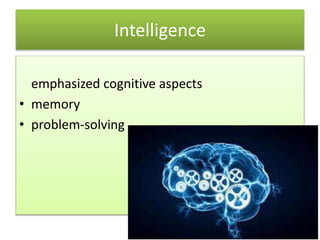
Intelligence
emphasized cognitive aspects
• memory
• problem-solving
E.L. Thorndike (1920)
“Social Intelligence”
• skill of understanding and managing other
people
• the ability to get along with other people.
David Wechsler (1940)
“Intelligent Behavior”
• influence of non-intellective factors on
intelligent behavior
• affective components of intelligence may be
essential to success in life.
Abraham Maslow (1950)
“Emotional Strength”
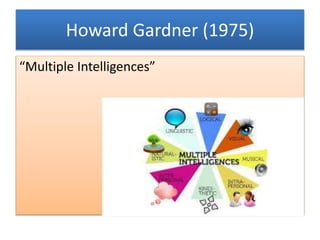
Howard Gardner (1975)
“Multiple Intelligences”
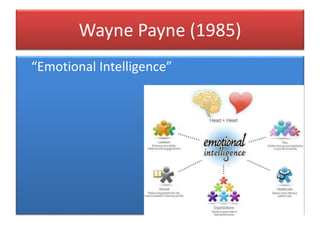
Wayne Payne (1985)
“Emotional Intelligence”
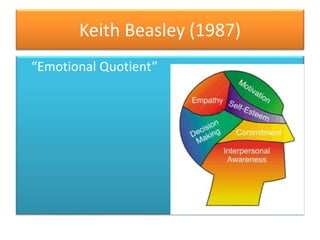
Keith Beasley (1987)
“Emotional Quotient”
Peter Salovey andemotional
information John Mayer (1990)
Emotional Information
SOCIAL INTELLIGENCE
Daniel Goleman (1995)
Four (4) Major Domains
Mastering the skills of
• Self-Awareness,
• Self-Management,
• Social-Awareness, and
• Relationship Management
SUCCESSFUL LIFE
Domain 1 : Self-Awareness
• learned competency
• involves a deep understanding of one’s
emotions, strengths, weakness, beliefs and
values
Domain 2 : Self-Management
• control disruptive emotions and impulses
MEANS
• honest
• trustworthy and
• flexible
in the face of change
Domain 3 : Social-Awareness
• thoughts and feelings of those around them
MEAN
• decision-making and
• politics
Domain 4 : Relationship Management
• ability to manage relationships i.e. healthy
combination of skills
Emotional-Social Intelligence
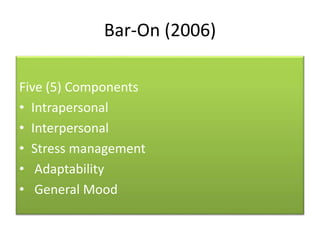
Bar-On (2006)
Five (5) Components
• Intrapersonal
• Interpersonal
• Stress management
• Adaptability
• General Mood
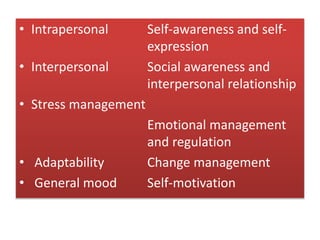
• Intrapersonal Self-awareness and self-
expression
• Interpersonal Social awareness and
interpersonal relationship
• Stress management
Emotional management
and regulation
• Adaptability Change management
• General mood Self-motivation
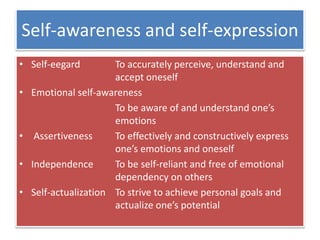
Self-awareness and self-expression
• Self-eegard To accurately perceive, understand and
accept oneself
• Emotional self-awareness
To be aware of and understand one’s
emotions
• Assertiveness To effectively and constructively express
one’s emotions and oneself
• Independence To be self-reliant and free of emotional
dependency on others
• Self-actualization To strive to achieve personal goals and
actualize one’s potential
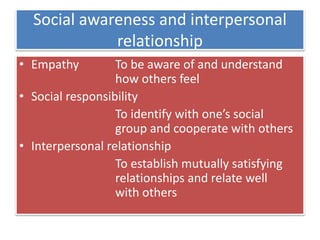
Social awareness and interpersonal
relationship
• Empathy To be aware of and understand
how others feel
• Social responsibility
To identify with one’s social
group and cooperate with others
• Interpersonal relationship
To establish mutually satisfying
relationships and relate well
with others
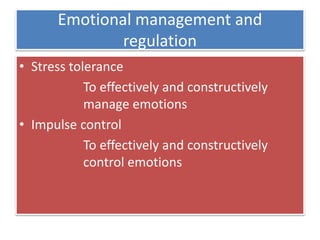
Emotional management and
regulation
• Stress tolerance
To effectively and constructively
manage emotions
• Impulse control
To effectively and constructively
control emotions
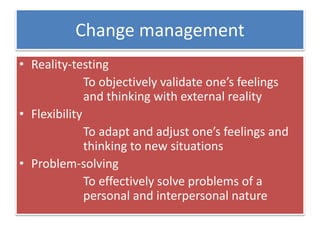
Change management
• Reality-testing
To objectively validate one’s feelings
and thinking with external reality
• Flexibility
To adapt and adjust one’s feelings and
thinking to new situations
• Problem-solving
To effectively solve problems of a
personal and interpersonal nature
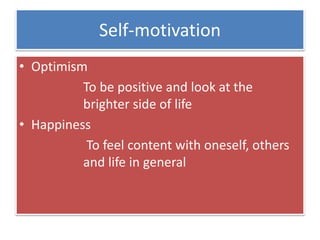
Self-motivation
• Optimism
To be positive and look at the
brighter side of life
• Happiness
To feel content with oneself, others
and life in general
Emotional intelligence

Emotional intelligence