Emerging Role of Virtual reality
A.J. Jenifer Divya
M. Ed Iyr
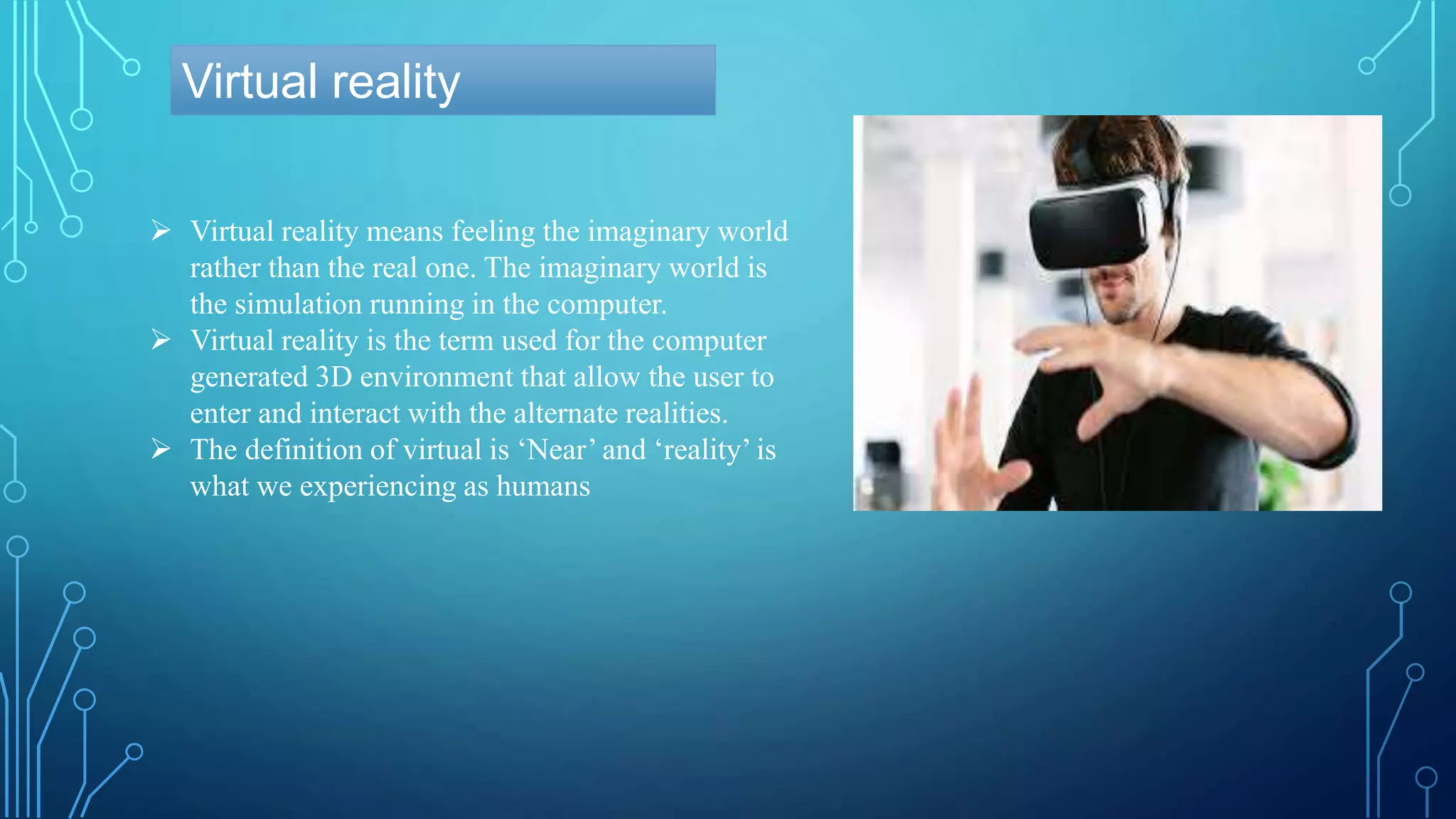
Virtual reality
 Virtual reality means feeling the imaginary world
rather than the real one. The imaginary world is
the simulation running in the computer.
 Virtual reality is the term used for the computer
generated 3D environment that allow the user to
enter and interact with the alternate realities.
 The definition of virtual is ‘Near’ and ‘reality’ is
what we experiencing as humans
Data
&content
Context
• Context I created or re-created ,
presented with in a dedicated
headset or special smart phone
viewer
• Data and content are presented at
the same time.
History of Virtual Reality
• More than one person has been
involved in the development of this
technological system.
• In 1950’s Visionary cinematographer
Morton Heilig built a single user
console called sensaroma.
• In 1961, Philco corporate engineers
developed the first HMD known as
Head sight
• In 1965 Ivan Sutherland
Envisioned what he called the
ultimate display.
• In 1988 commercial development
of VR begun.
• In 1991, first commercial VR
system
• “virtuality” was released.
Types of Virtual Reality
1.Immersive Virtual reality( see simulated world and be in
the simulated world)
2.Non Immersive Virtual reality (see information about real
world presented via computer-Location based services)
3.Augmented reality (stay in real world but see simulated
objects)
IMMERSIVE VIRTUAL
REALITY
• Immersive virtual reality means is a perception of
being physically present in a non physical world.
• Elements of Virtual environment that increases the
immersions of the experience.
1. Continuity of surroundings
2. Conformance to human vision
3. Freedom of movement
4. Physical Interaction
5. Feed back
NON IMMERSIVE VIRTUAL REALITY
Large display but does not surround the user
Augmented Reality
Stay in real world but see stimulated objects
Eg: HMD
APPLICATIONS OF VIRTUAL
REALITY
BUSINESS
• Virtual tours of a business environment.
• Training of new employees
• A 360 view of product
Engineering and Design
• It is widely used in Engineering and design
process
• It gives better understanding of the design
and facilitates changes where ever necessary.
• It helps to reduce the time and cost factor.
Example: Car designing ,Building designing
Medical
 Health care is one of the biggest
adopters of virtual reality which
encompasses surgery simulation
phobia treatment, Robotic surgery and
skills training.
 VR find its application in nursery,
dentistry, health issues for the
disabled.
Entertainment
• Virtual Museum
• Gaming
• Virtual theme parks
Education
Learning through experience
Learning through reflection
Learning through Creation
Learning through collaboration
Device Used in Virtual Reality
Head mounted display Cave automatic Virtual Environment
Data gloves
3D Audio
Data Suit
• Virtual reality creates realistic world.
• It enables user to explore places
• Through virtual reality user can
experiment with an artificial
environment.
• Virtual reality makes the education
more easy and comfort
• The equipment's used in virtual
reality are more expensive.
• It consist of complex technology
• In virtual reality environment we
cant move like our own like in the
real world.
Advantages Disadvantages
Thank You

Emerging role of virtual reality

  • 1.
    Emerging Role ofVirtual reality A.J. Jenifer Divya M. Ed Iyr
  • 2.
    Virtual reality  Virtualreality means feeling the imaginary world rather than the real one. The imaginary world is the simulation running in the computer.  Virtual reality is the term used for the computer generated 3D environment that allow the user to enter and interact with the alternate realities.  The definition of virtual is ‘Near’ and ‘reality’ is what we experiencing as humans
  • 3.
    Data &content Context • Context Icreated or re-created , presented with in a dedicated headset or special smart phone viewer • Data and content are presented at the same time.
  • 4.
    History of VirtualReality • More than one person has been involved in the development of this technological system. • In 1950’s Visionary cinematographer Morton Heilig built a single user console called sensaroma.
  • 5.
    • In 1961,Philco corporate engineers developed the first HMD known as Head sight • In 1965 Ivan Sutherland Envisioned what he called the ultimate display. • In 1988 commercial development of VR begun. • In 1991, first commercial VR system • “virtuality” was released.
  • 6.
    Types of VirtualReality 1.Immersive Virtual reality( see simulated world and be in the simulated world) 2.Non Immersive Virtual reality (see information about real world presented via computer-Location based services) 3.Augmented reality (stay in real world but see simulated objects)
  • 7.
    IMMERSIVE VIRTUAL REALITY • Immersivevirtual reality means is a perception of being physically present in a non physical world. • Elements of Virtual environment that increases the immersions of the experience. 1. Continuity of surroundings 2. Conformance to human vision 3. Freedom of movement 4. Physical Interaction 5. Feed back
  • 8.
    NON IMMERSIVE VIRTUALREALITY Large display but does not surround the user
  • 9.
    Augmented Reality Stay inreal world but see stimulated objects Eg: HMD
  • 10.
  • 11.
    BUSINESS • Virtual toursof a business environment. • Training of new employees • A 360 view of product
  • 12.
    Engineering and Design •It is widely used in Engineering and design process • It gives better understanding of the design and facilitates changes where ever necessary. • It helps to reduce the time and cost factor. Example: Car designing ,Building designing
  • 13.
    Medical  Health careis one of the biggest adopters of virtual reality which encompasses surgery simulation phobia treatment, Robotic surgery and skills training.  VR find its application in nursery, dentistry, health issues for the disabled.
  • 14.
    Entertainment • Virtual Museum •Gaming • Virtual theme parks
  • 15.
  • 16.
  • 17.
  • 18.
  • 19.
    Device Used inVirtual Reality Head mounted display Cave automatic Virtual Environment
  • 20.
  • 21.
  • 22.
    • Virtual realitycreates realistic world. • It enables user to explore places • Through virtual reality user can experiment with an artificial environment. • Virtual reality makes the education more easy and comfort • The equipment's used in virtual reality are more expensive. • It consist of complex technology • In virtual reality environment we cant move like our own like in the real world. Advantages Disadvantages
  • 23.