1
Contents
 What is Virtual Reality?
 History
 Types of Virtual Reality
 Hardware used in Virtual Reality
 Applications of Virtual Reality
 Advantages and Disadvantages
2
What is Virtual Reality?
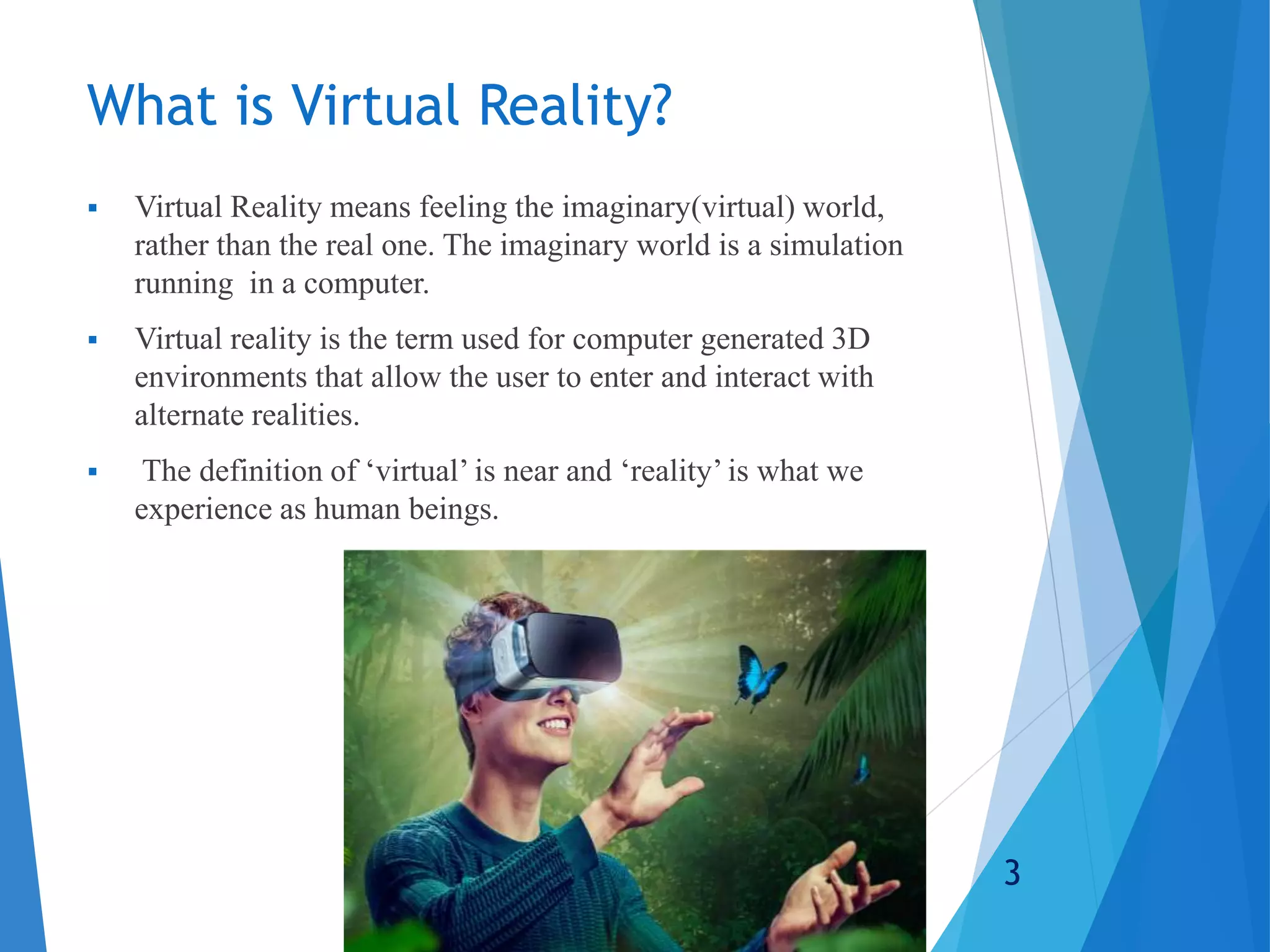
 Virtual Reality means feeling the imaginary(virtual) world,
rather than the real one. The imaginary world is a simulation
running in a computer.
 Virtual reality is the term used for computer generated 3D
environments that allow the user to enter and interact with
alternate realities.
 The definition of ‘virtual’ is near and ‘reality’ is what we
experience as human beings.
3
History
 More than one person has been involved in the development of
this technological system.
 In 1950’s visionary cinematography Morton Heilig built a single
user console called Sensorama. This enabled the user watch
television in 3 dimensional ways.
4
Types of Virtual Reality
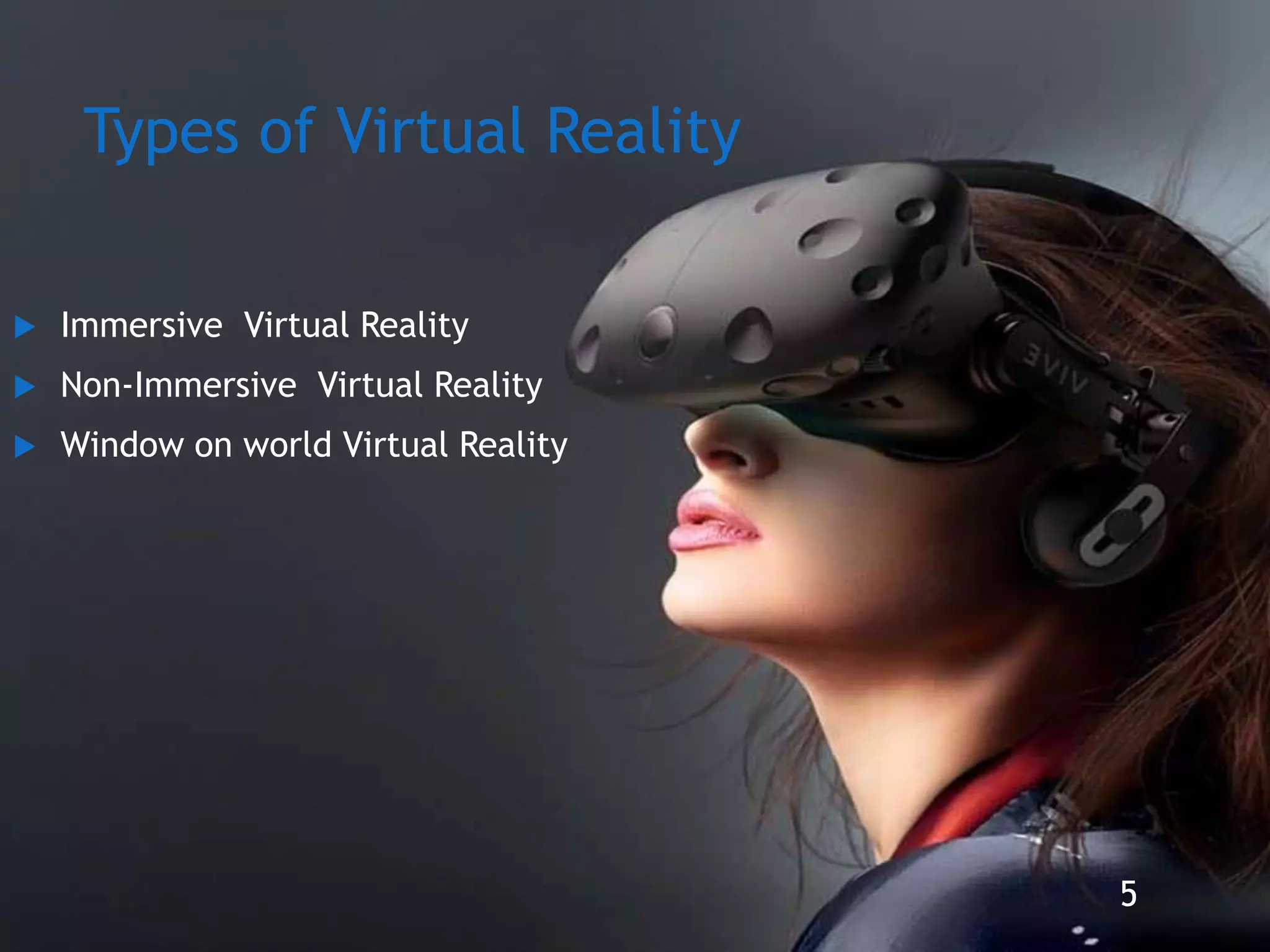
 Immersive Virtual Reality
 Non-Immersive Virtual Reality
 Window on world Virtual Reality
5
•Immersive Virtual Reality
Immersive Virtual Reality
Immersion into virtual reality is a perception of being
physically present in a non-physical world.
Elements of virtual environments that increase the
immersiveness of the experience:
1. Continuity of surroundings
2. Conformance to human vision
3. Freedom of movement
4. Physical interaction
5. Physical feedback
6
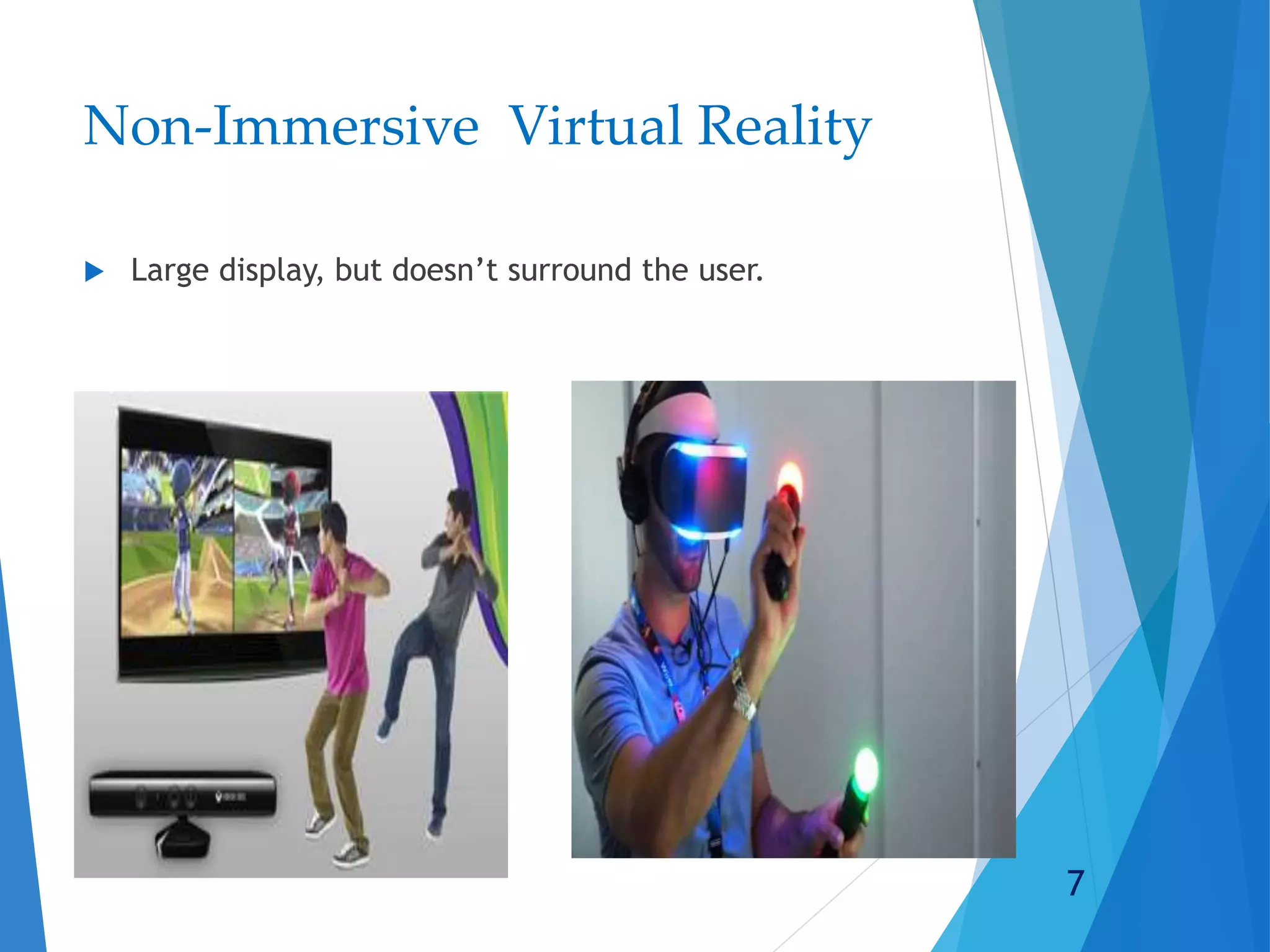
Non-Immersive Virtual Reality
 Large display, but doesn’t surround the user.
7
Window on world Virtual Reality
 Desktop- based Virtual Reality involves displaying a
3-dimensional virtual on regular desktop display without use of
any specialized movement tracking environment.
8
Hardware Devices
 Input Devices
 Output Devices
9
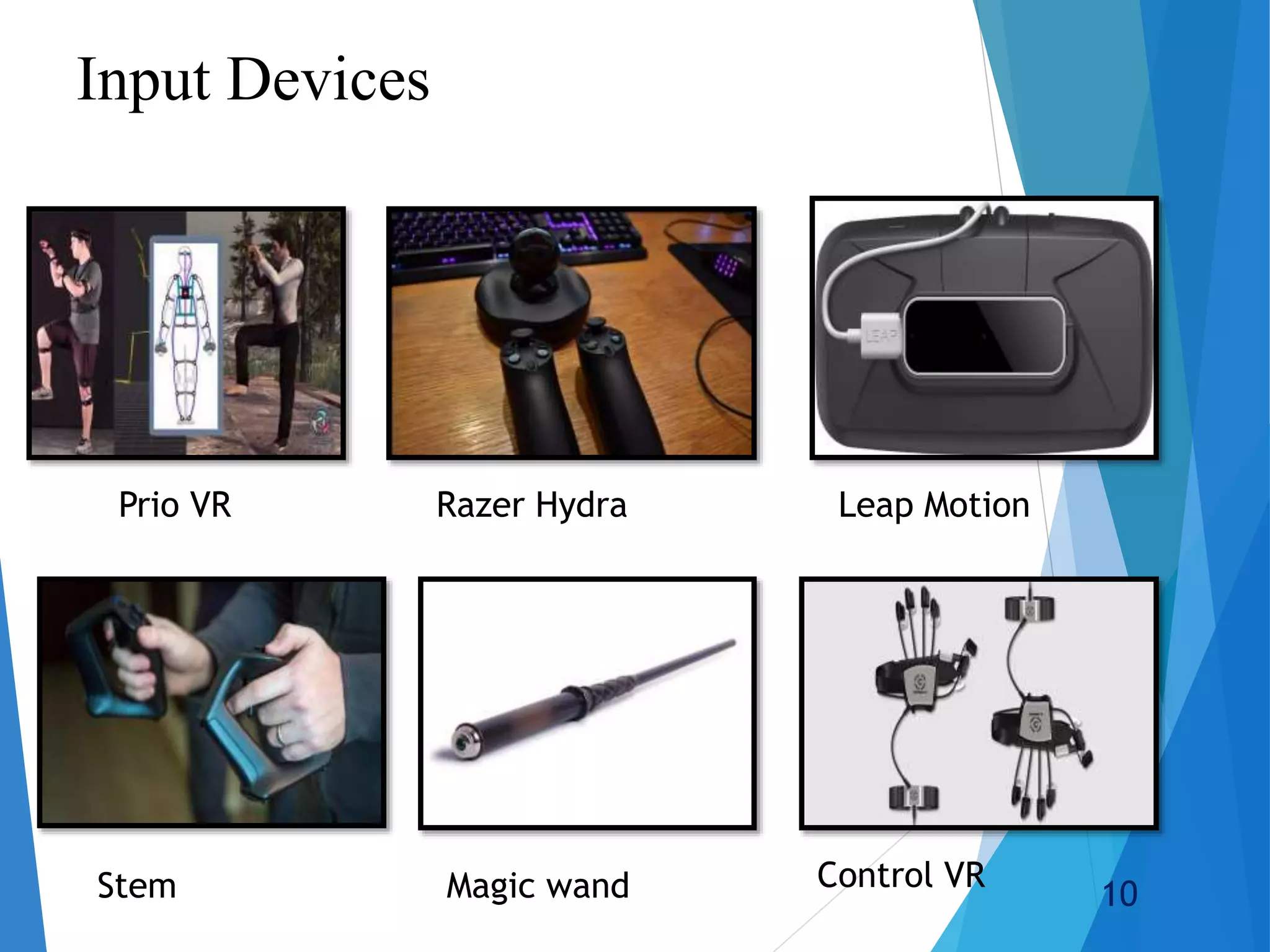
Magic wand
Prio VR
Stem
Razer Hydra Leap Motion
Control VR
Input Devices
10
Sensing Gloves
3D Audio
Output Devices
Helsinki
Headset
11
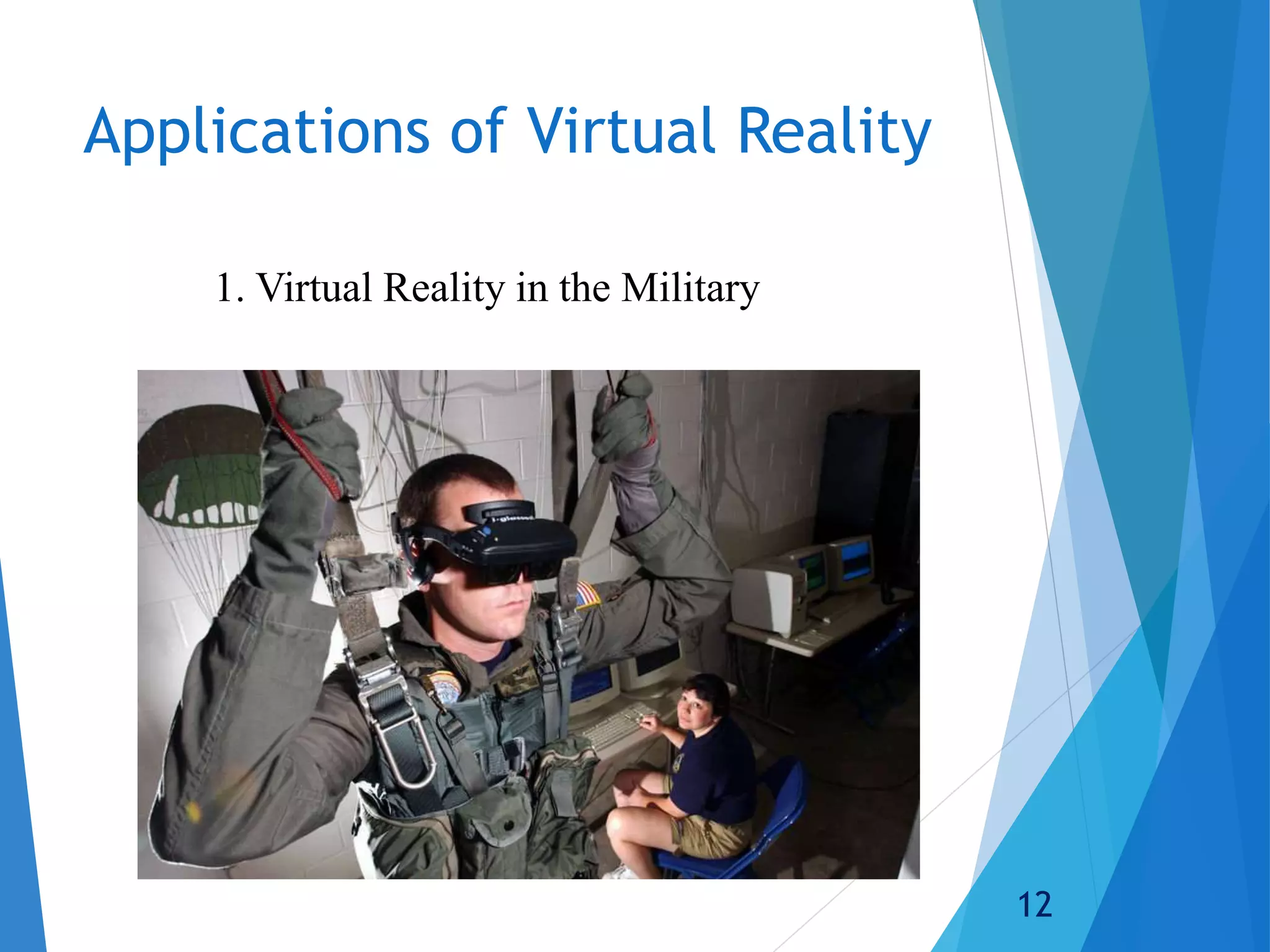
Applications of Virtual Reality
1. Virtual Reality in the Military
12
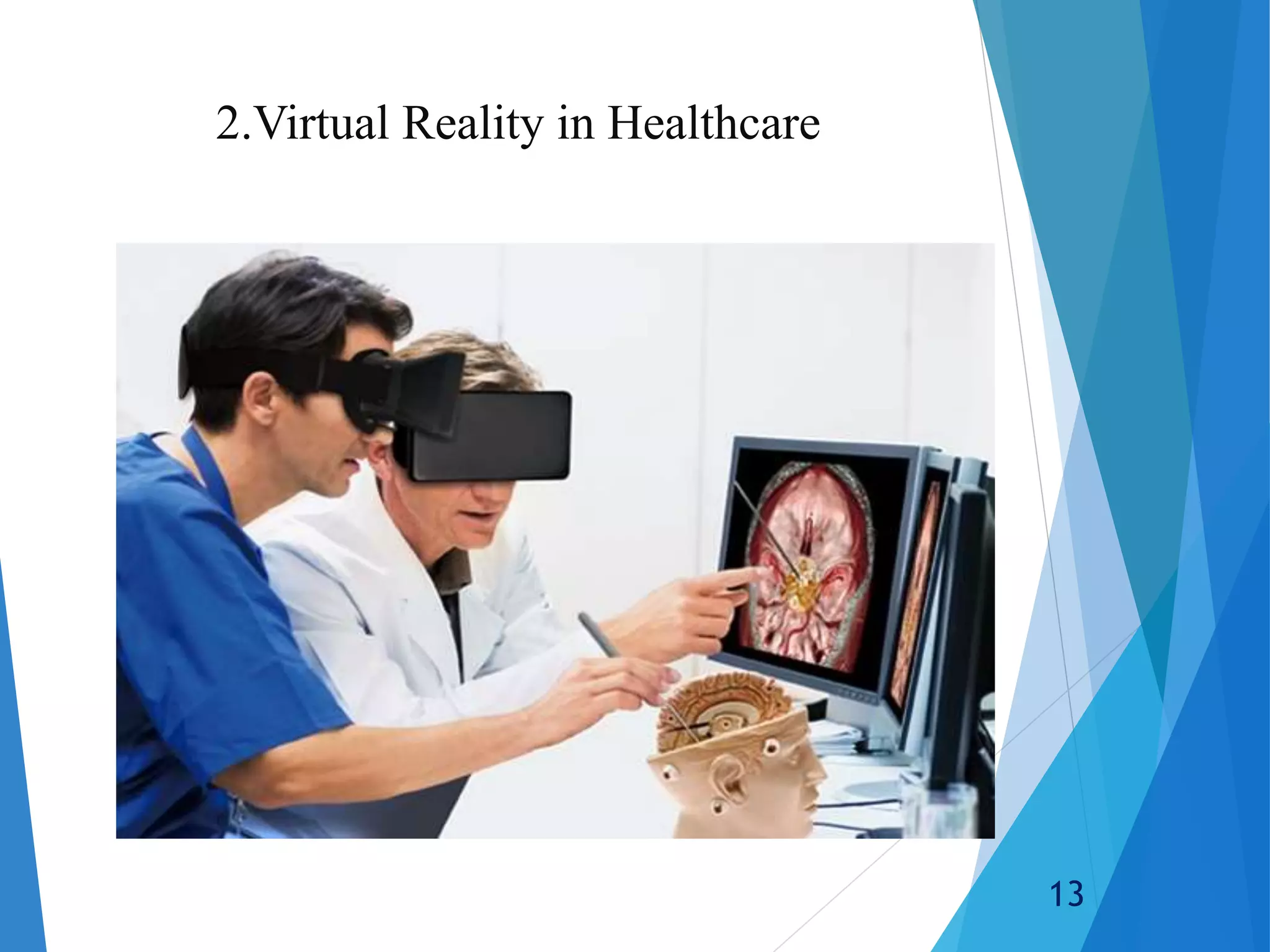
2.Virtual Reality in Healthcare
13
3.Virtual Reality and Education
14
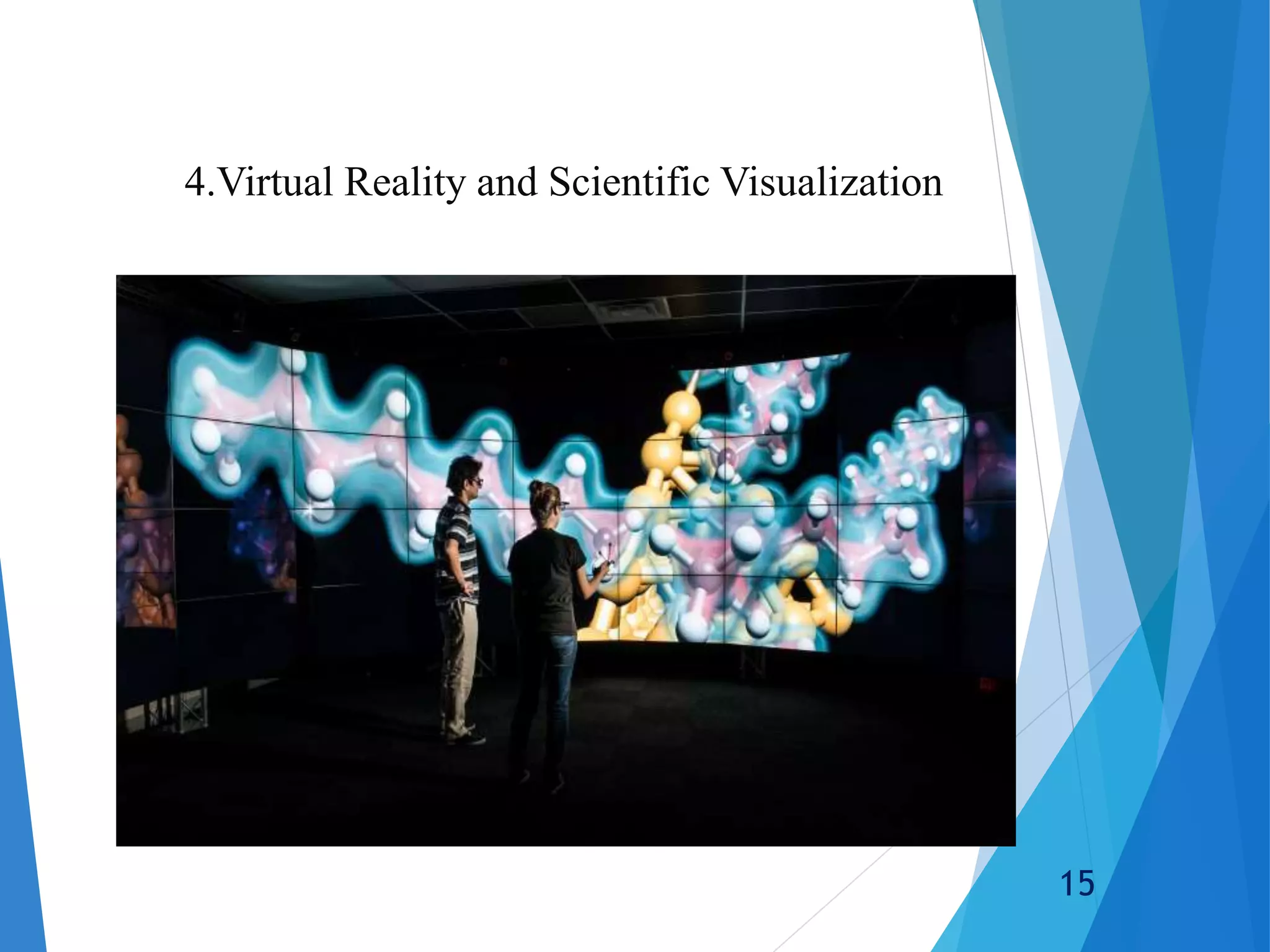
4.Virtual Reality and Scientific Visualization
15
5.Virtual Reality in Entertainment
16
Advantages and Disadvantages
Advantages
 Virtual reality creates a
realistic world.
 It enables user to explore
places.
 Through Virtual Reality
user can experiment with
an artificial environment.
 Virtual Reality make the
education more easily and
comfort.
 The equipments used in
virtual reality are very
expensive.
 It consists of complex
technology.
 In virtual reality
environment we cant
move by our own like in
the real world.
Disadvantages
17
18

Virtual reality ppt

  • 1.
  • 2.
    Contents  What isVirtual Reality?  History  Types of Virtual Reality  Hardware used in Virtual Reality  Applications of Virtual Reality  Advantages and Disadvantages 2
  • 3.
    What is VirtualReality?  Virtual Reality means feeling the imaginary(virtual) world, rather than the real one. The imaginary world is a simulation running in a computer.  Virtual reality is the term used for computer generated 3D environments that allow the user to enter and interact with alternate realities.  The definition of ‘virtual’ is near and ‘reality’ is what we experience as human beings. 3
  • 4.
    History  More thanone person has been involved in the development of this technological system.  In 1950’s visionary cinematography Morton Heilig built a single user console called Sensorama. This enabled the user watch television in 3 dimensional ways. 4
  • 5.
    Types of VirtualReality  Immersive Virtual Reality  Non-Immersive Virtual Reality  Window on world Virtual Reality 5
  • 6.
    •Immersive Virtual Reality ImmersiveVirtual Reality Immersion into virtual reality is a perception of being physically present in a non-physical world. Elements of virtual environments that increase the immersiveness of the experience: 1. Continuity of surroundings 2. Conformance to human vision 3. Freedom of movement 4. Physical interaction 5. Physical feedback 6
  • 7.
    Non-Immersive Virtual Reality Large display, but doesn’t surround the user. 7
  • 8.
    Window on worldVirtual Reality  Desktop- based Virtual Reality involves displaying a 3-dimensional virtual on regular desktop display without use of any specialized movement tracking environment. 8
  • 9.
    Hardware Devices  InputDevices  Output Devices 9
  • 10.
    Magic wand Prio VR Stem RazerHydra Leap Motion Control VR Input Devices 10
  • 11.
    Sensing Gloves 3D Audio OutputDevices Helsinki Headset 11
  • 12.
    Applications of VirtualReality 1. Virtual Reality in the Military 12
  • 13.
    2.Virtual Reality inHealthcare 13
  • 14.
  • 15.
    4.Virtual Reality andScientific Visualization 15
  • 16.
    5.Virtual Reality inEntertainment 16
  • 17.
    Advantages and Disadvantages Advantages Virtual reality creates a realistic world.  It enables user to explore places.  Through Virtual Reality user can experiment with an artificial environment.  Virtual Reality make the education more easily and comfort.  The equipments used in virtual reality are very expensive.  It consists of complex technology.  In virtual reality environment we cant move by our own like in the real world. Disadvantages 17
  • 18.