Point of View in a Short Story
Objective Point of View
In the objective point of view, the writer tells
   what happens without stating more than
  can be inferred from the story's action and
                   dialogue.
The narrator never tells the reader anything
   about what the characters thinks or feels,
    and remains a detached observer of the
                     story.
First Person Point of View
In the first person point of view, the narrator
      participates in the action of the story.
    When reading stories in the first person,
   you need to realize that what the narrator
    is recounting might not be the objective
         truth. You should question the
  trustworthiness of the narrators account of
              the events of the story.
Third Person Point of View
  In the third person point of view the
narrator does not participate in the action
 of the story as one of the characters, but
 lets us know exactly how the characters
     think and feel. We learn about the
  characters through this outside voice.
There are two different types of point of
       view; limited and Omniscient.
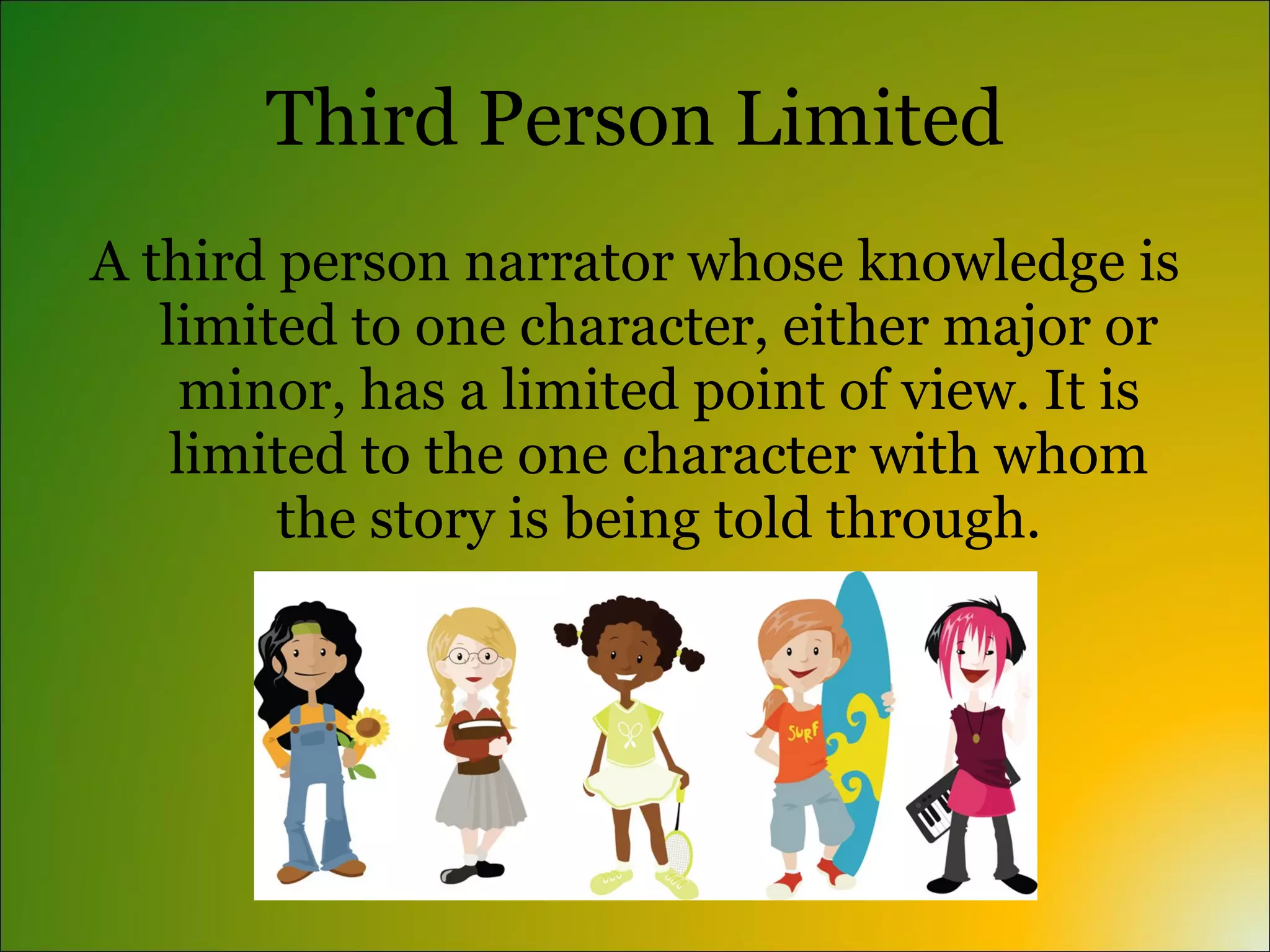
Third Person Limited
A third person narrator whose knowledge is
   limited to one character, either major or
     minor, has a limited point of view. It is
    limited to the one character with whom
        the story is being told through.
Third Person Omniscient


   A third person narrator who knows
 everything about all the characters is all-
knowing, or omniscient. The reader knows
 about the thoughts and feelings of all the
          characters in the story.
As you read a piece of fiction think
           about these things:
• How does the point of view affect your
  responses to the characters?
• How is your response influenced by how
  much the narrator knows and how
  objective he or she is?
• First person narrators are not always
  trustworthy. It is up to you to determine
  what is the truth and what is not.
Point Of View

Point Of View

  • 1.
    Point of Viewin a Short Story
  • 2.
    Objective Point ofView In the objective point of view, the writer tells what happens without stating more than can be inferred from the story's action and dialogue. The narrator never tells the reader anything about what the characters thinks or feels, and remains a detached observer of the story.
  • 3.
    First Person Pointof View In the first person point of view, the narrator participates in the action of the story. When reading stories in the first person, you need to realize that what the narrator is recounting might not be the objective truth. You should question the trustworthiness of the narrators account of the events of the story.
  • 4.
    Third Person Pointof View In the third person point of view the narrator does not participate in the action of the story as one of the characters, but lets us know exactly how the characters think and feel. We learn about the characters through this outside voice. There are two different types of point of view; limited and Omniscient.
  • 5.
    Third Person Limited Athird person narrator whose knowledge is limited to one character, either major or minor, has a limited point of view. It is limited to the one character with whom the story is being told through.
  • 6.
    Third Person Omniscient A third person narrator who knows everything about all the characters is all- knowing, or omniscient. The reader knows about the thoughts and feelings of all the characters in the story.
  • 7.
    As you reada piece of fiction think about these things: • How does the point of view affect your responses to the characters? • How is your response influenced by how much the narrator knows and how objective he or she is? • First person narrators are not always trustworthy. It is up to you to determine what is the truth and what is not.