ENG I  LiteraryTerms
What is a Short Story?
• a brief work of fiction, often
less than 50 pages
Types of Stories:
• Fiction: prose writing that tells about
imaginary characters and events
• Non-Fiction: true stories
Plot
• A series of related
events that present
and resolve a conflict
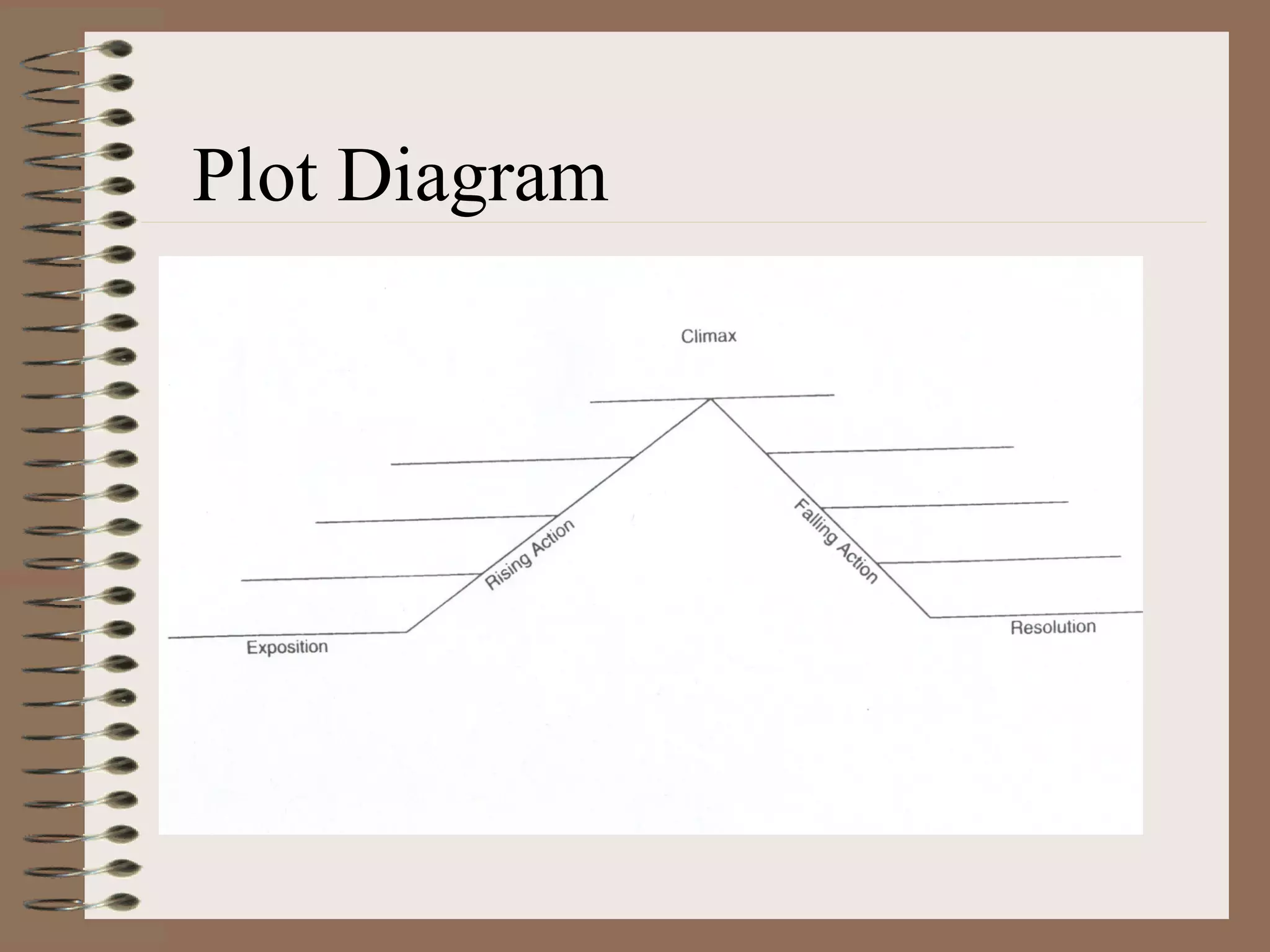
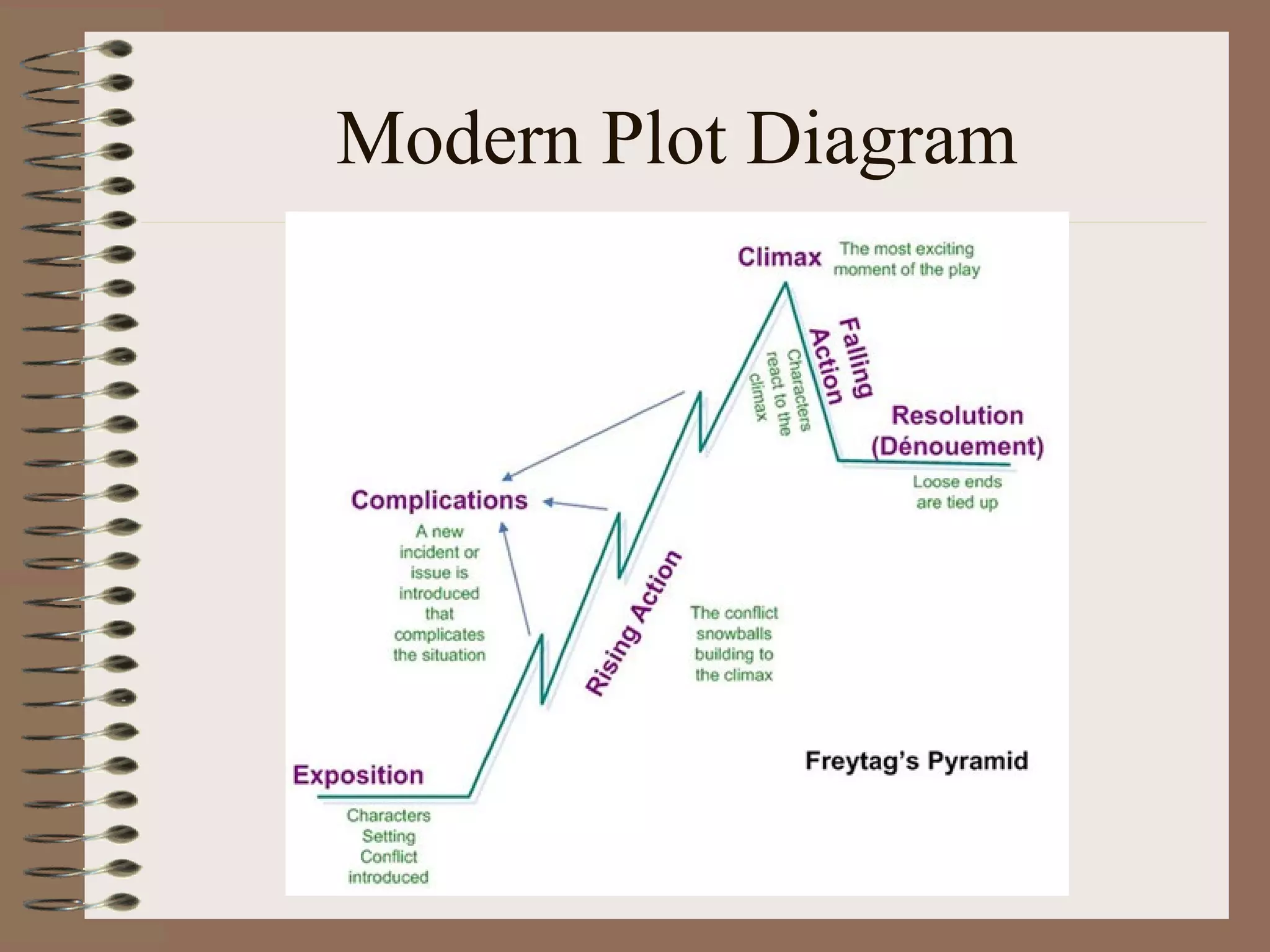
Plot Diagram
Modern Plot Diagram
Plot Diagram Terms
• Exposition: the part of the story that
introduces the characters, the setting, and
the basic situation
• Rising Action: all of the events of a story
leading up to the climax
Plot Diagram Terms (cont)
• Climax
– The most exciting point
in the story, when the
conflict is decided
Plot Diagram Terms (cont)
• Falling Action: the events after the
climax
• Resolution: the story is brought to a
close, and a general insight or change is
conveyed
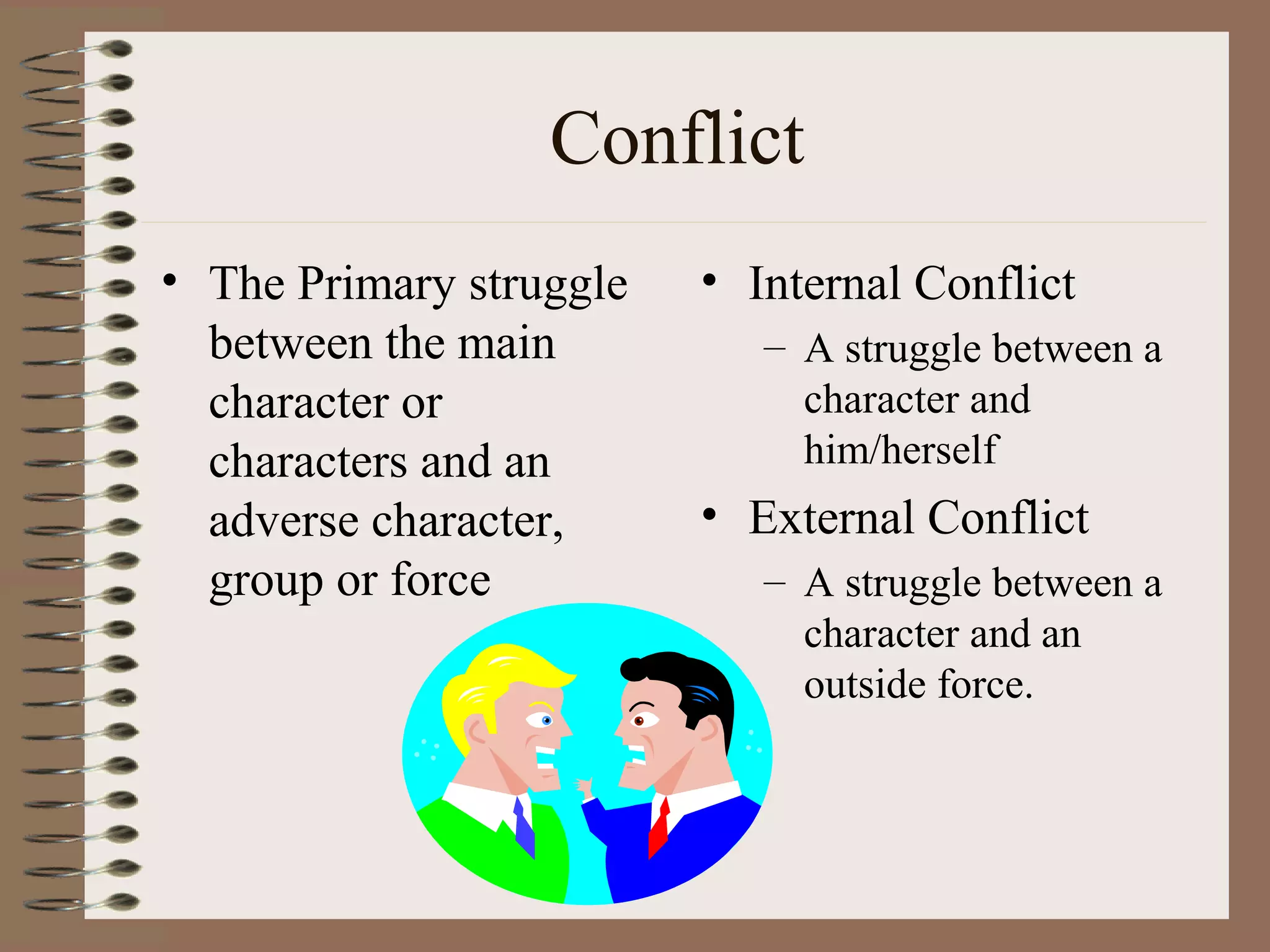
Conflict
• The Primary struggle
between the main
character or
characters and an
adverse character,
group or force
• Internal Conflict
– A struggle between a
character and
him/herself
• External Conflict
– A struggle between a
character and an
outside force.
Types of Characters
• Character: person or animal that takes
part in the action of a literary work
– Dynamic: character develops and grows
during the course of the story
– Flat: shows only one trait
– Round: Shows many different traits, good
and bad
– Static: character does not change through the
course of the story
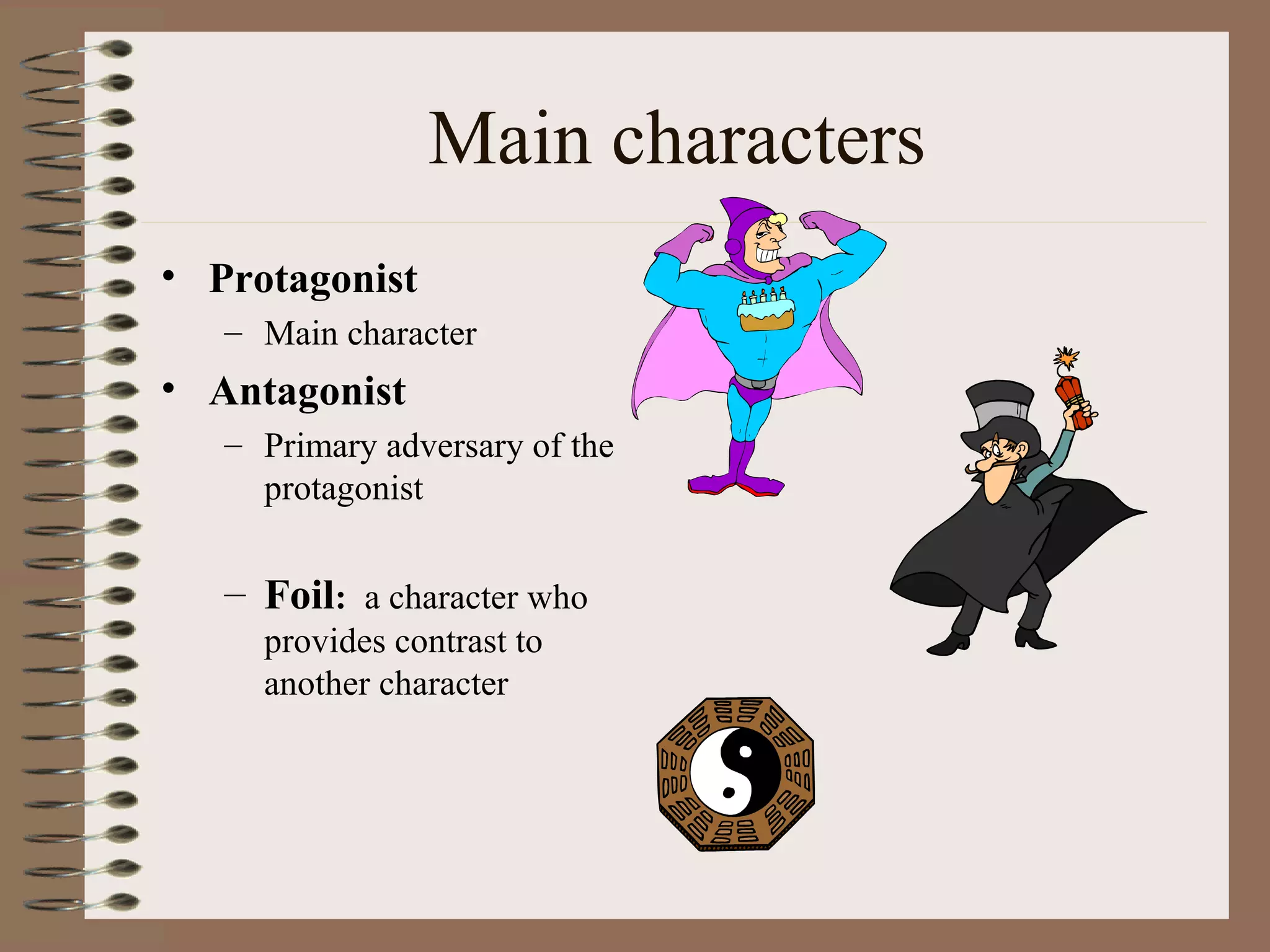
Main characters
• Protagonist
– Main character
• Antagonist
– Primary adversary of the
protagonist
– Foil: a character who
provides contrast to
another character
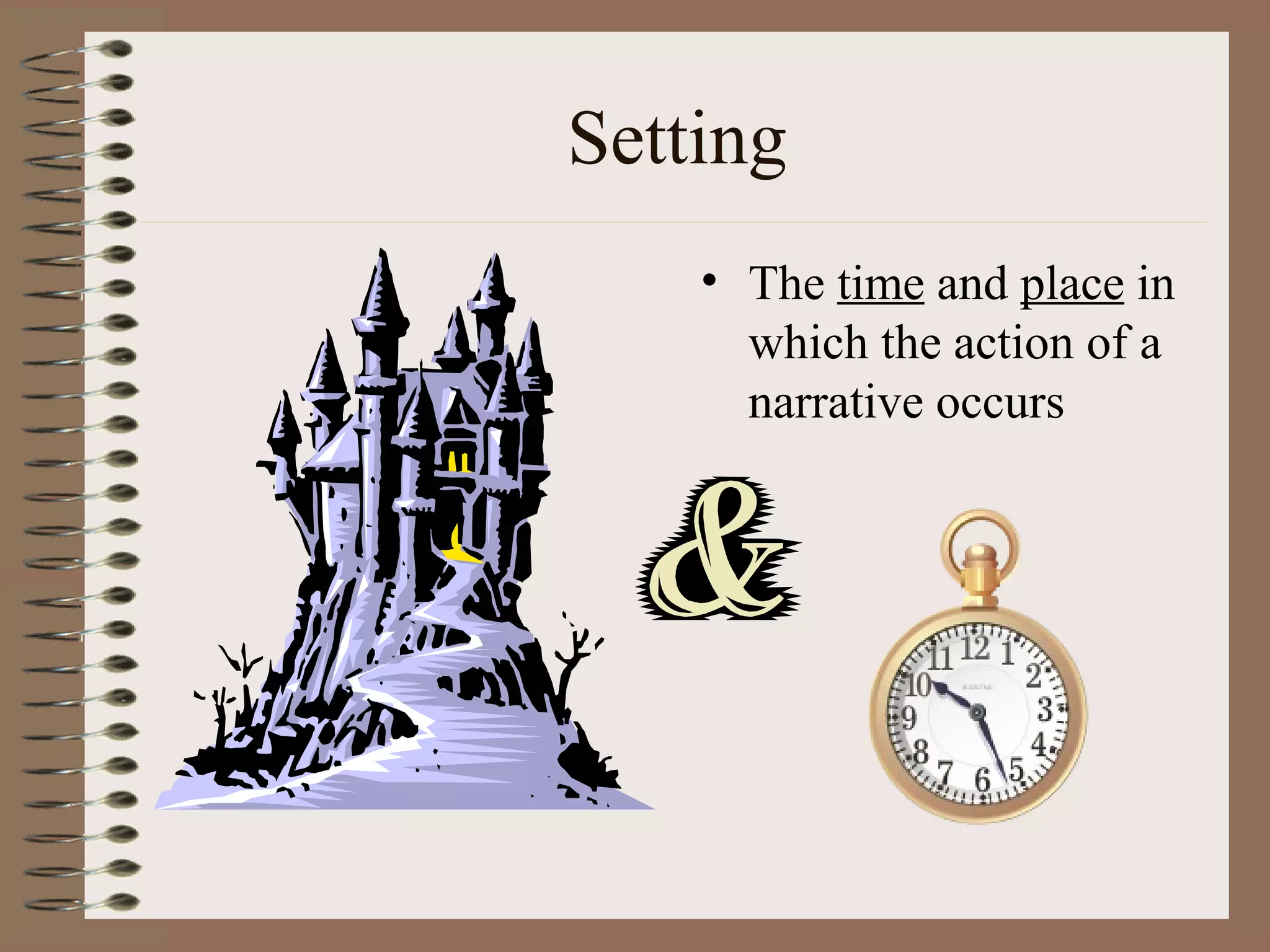
Setting
• The time and place in
which the action of a
narrative occurs
Theme
• The underlying
meaning of a literary
work.
• This is not the
topic/subject but the
author’s statement of
opinion about that
subject.
• Some literary works
have more than one
theme.
Author’s message/lesson
we can learn about the
subject of the story
Point of View
• Narrator/Speaker:
the voice speaking in
the story or poem;
who tells the story
• Narrator is NOT the
same as author
• Types of POV:
– First Person
– Third Person,
• Objective
• Omniscient
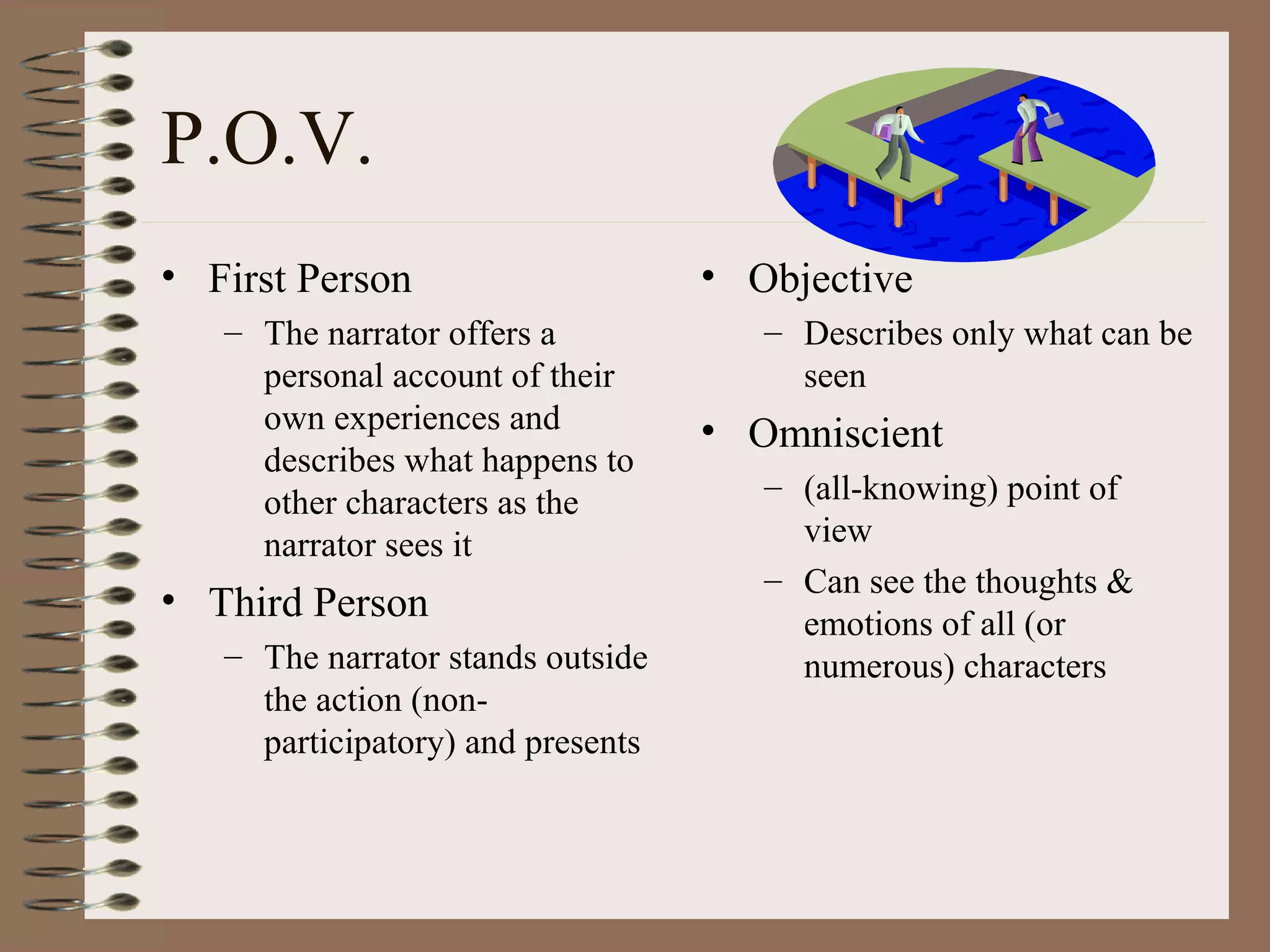
P.O.V.
• First Person
– The narrator offers a
personal account of their
own experiences and
describes what happens to
other characters as the
narrator sees it
• Third Person
– The narrator stands outside
the action (non-
participatory) and presents
• Objective
– Describes only what can be
seen
• Omniscient
– (all-knowing) point of
view
– Can see the thoughts &
emotions of all (or
numerous) characters
Storytelling Techniques
• Dialect: the form of language spoken by
people in a particular region or group
• Dialogue: a conversation between
characters
• Drama: a story written to be performed
by actors
Storytelling Techniques (cont)
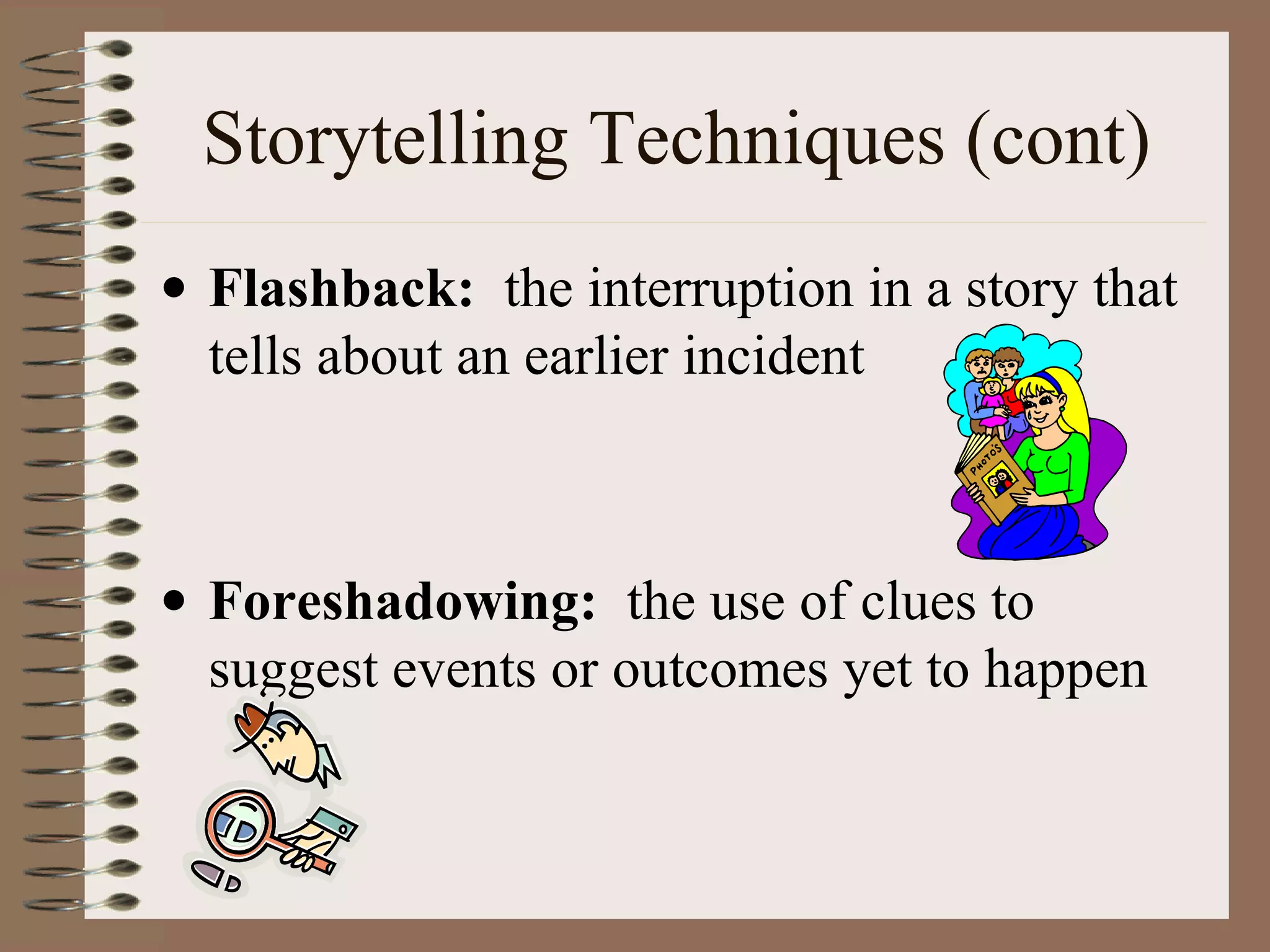
• Flashback: the interruption in a story that
tells about an earlier incident
• Foreshadowing: the use of clues to
suggest events or outcomes yet to happen
Storytelling Techniques (cont)
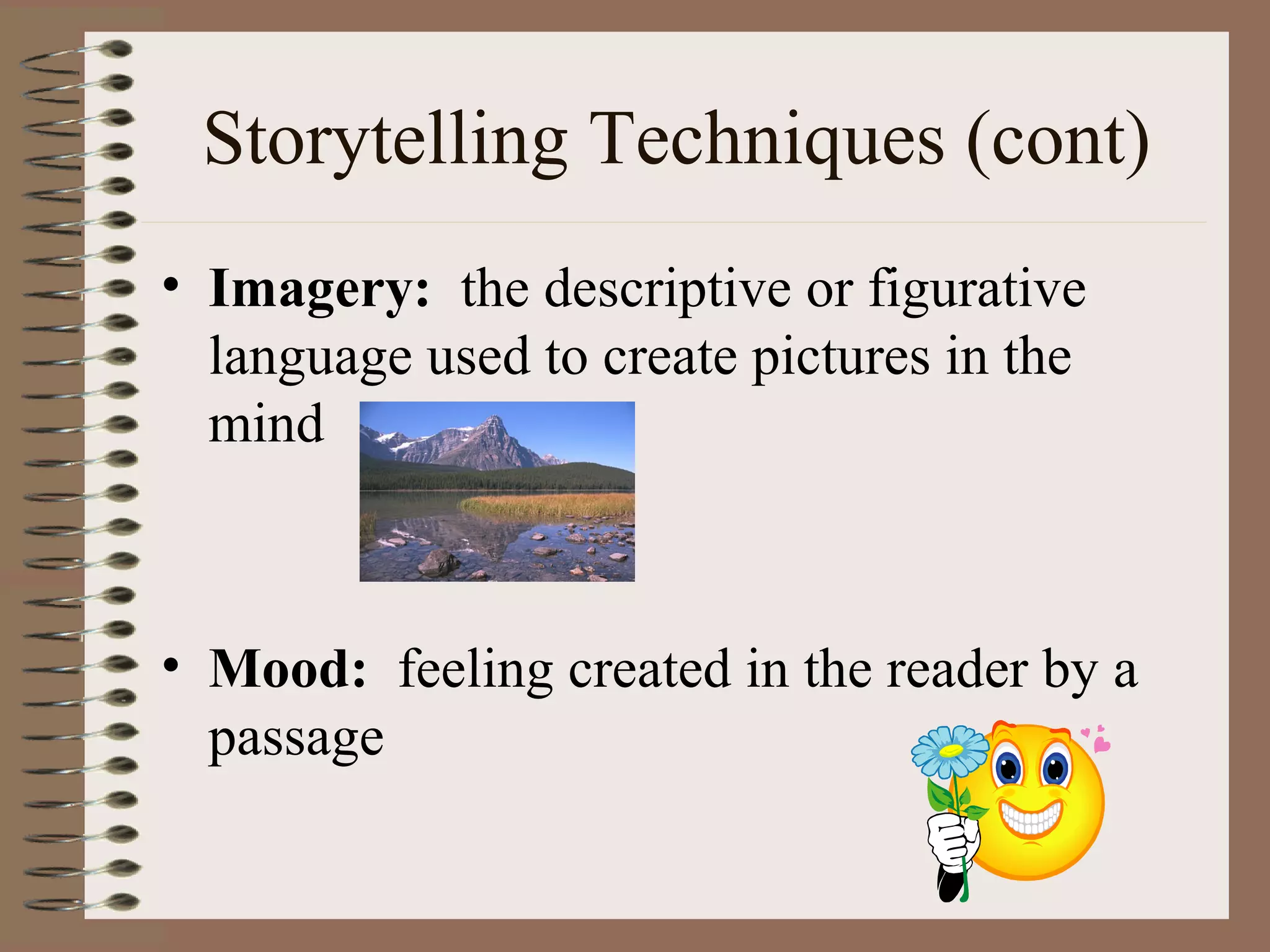
• Imagery: the descriptive or figurative
language used to create pictures in the
mind
• Mood: feeling created in the reader by a
passage
Storytelling Techniques (cont)
• Irony: differences in appearance and
reality or expectations and results
•Stereotype: a character that acts to
a narrow set of actions associated
with a particular group
Storytelling Techniques (cont)
• Personification: a nonhuman subject is
given human characteristics
Storytelling Techniques (cont)
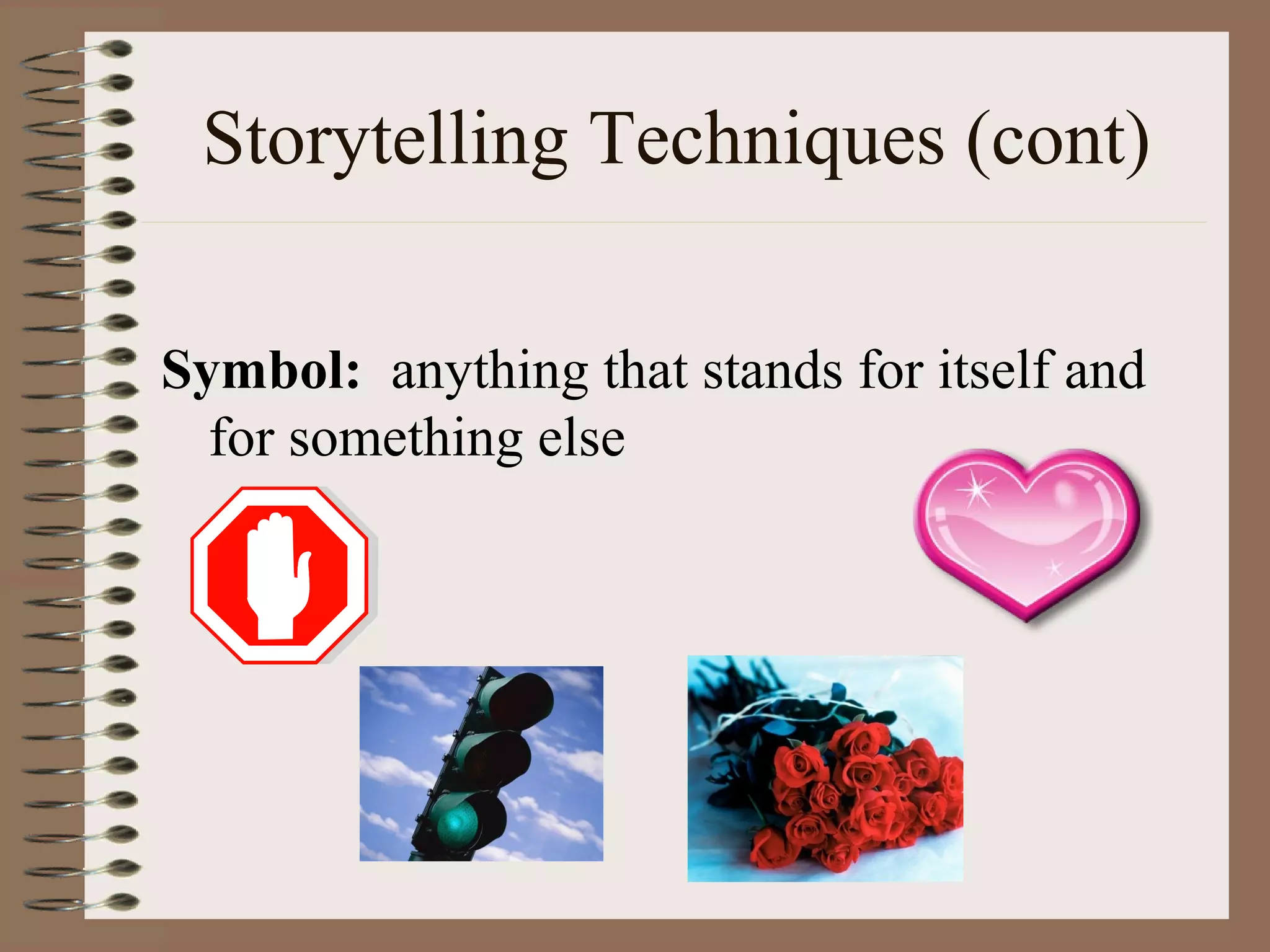
Symbol: anything that stands for itself and
for something else
Storytelling Techniques (cont)
• Style: the way an author writes
•Tone: the writer’s attitude
toward audience and subject
Additional Terms
• Title
– The name of a work
• Tragedy
– Literary work where the characters meet an
unhappy ending
SHORT STORIES
NOT NEARLY THE END

Literary Terms Review

  • 1.
    ENG I LiteraryTerms
  • 2.
    What is aShort Story? • a brief work of fiction, often less than 50 pages Types of Stories: • Fiction: prose writing that tells about imaginary characters and events • Non-Fiction: true stories
  • 3.
    Plot • A seriesof related events that present and resolve a conflict
  • 4.
  • 5.
  • 6.
    Plot Diagram Terms •Exposition: the part of the story that introduces the characters, the setting, and the basic situation • Rising Action: all of the events of a story leading up to the climax
  • 7.
    Plot Diagram Terms(cont) • Climax – The most exciting point in the story, when the conflict is decided
  • 8.
    Plot Diagram Terms(cont) • Falling Action: the events after the climax • Resolution: the story is brought to a close, and a general insight or change is conveyed
  • 9.
    Conflict • The Primarystruggle between the main character or characters and an adverse character, group or force • Internal Conflict – A struggle between a character and him/herself • External Conflict – A struggle between a character and an outside force.
  • 10.
    Types of Characters •Character: person or animal that takes part in the action of a literary work – Dynamic: character develops and grows during the course of the story – Flat: shows only one trait – Round: Shows many different traits, good and bad – Static: character does not change through the course of the story
  • 11.
    Main characters • Protagonist –Main character • Antagonist – Primary adversary of the protagonist – Foil: a character who provides contrast to another character
  • 12.
    Setting • The timeand place in which the action of a narrative occurs
  • 13.
    Theme • The underlying meaningof a literary work. • This is not the topic/subject but the author’s statement of opinion about that subject. • Some literary works have more than one theme. Author’s message/lesson we can learn about the subject of the story
  • 14.
    Point of View •Narrator/Speaker: the voice speaking in the story or poem; who tells the story • Narrator is NOT the same as author • Types of POV: – First Person – Third Person, • Objective • Omniscient
  • 15.
    P.O.V. • First Person –The narrator offers a personal account of their own experiences and describes what happens to other characters as the narrator sees it • Third Person – The narrator stands outside the action (non- participatory) and presents • Objective – Describes only what can be seen • Omniscient – (all-knowing) point of view – Can see the thoughts & emotions of all (or numerous) characters
  • 16.
    Storytelling Techniques • Dialect:the form of language spoken by people in a particular region or group • Dialogue: a conversation between characters • Drama: a story written to be performed by actors
  • 17.
    Storytelling Techniques (cont) •Flashback: the interruption in a story that tells about an earlier incident • Foreshadowing: the use of clues to suggest events or outcomes yet to happen
  • 18.
    Storytelling Techniques (cont) •Imagery: the descriptive or figurative language used to create pictures in the mind • Mood: feeling created in the reader by a passage
  • 19.
    Storytelling Techniques (cont) •Irony: differences in appearance and reality or expectations and results •Stereotype: a character that acts to a narrow set of actions associated with a particular group
  • 20.
    Storytelling Techniques (cont) •Personification: a nonhuman subject is given human characteristics
  • 21.
    Storytelling Techniques (cont) Symbol:anything that stands for itself and for something else
  • 22.
    Storytelling Techniques (cont) •Style: the way an author writes •Tone: the writer’s attitude toward audience and subject
  • 23.
    Additional Terms • Title –The name of a work • Tragedy – Literary work where the characters meet an unhappy ending
  • 24.