The effect of strain and frequency on the
harvested energy of an electrostrictive
polymer composite
Miss Kavalin Raya
ID 5510210555
Department of physics Prince of Songkla university
P105, 12th October 2015, 1.00-3.30 P.M.
1
OUTLINE
•Introduction1.
•Experimentation2.
•Result & Discussion3.
•Conclusions4.
2
Energy harvesting
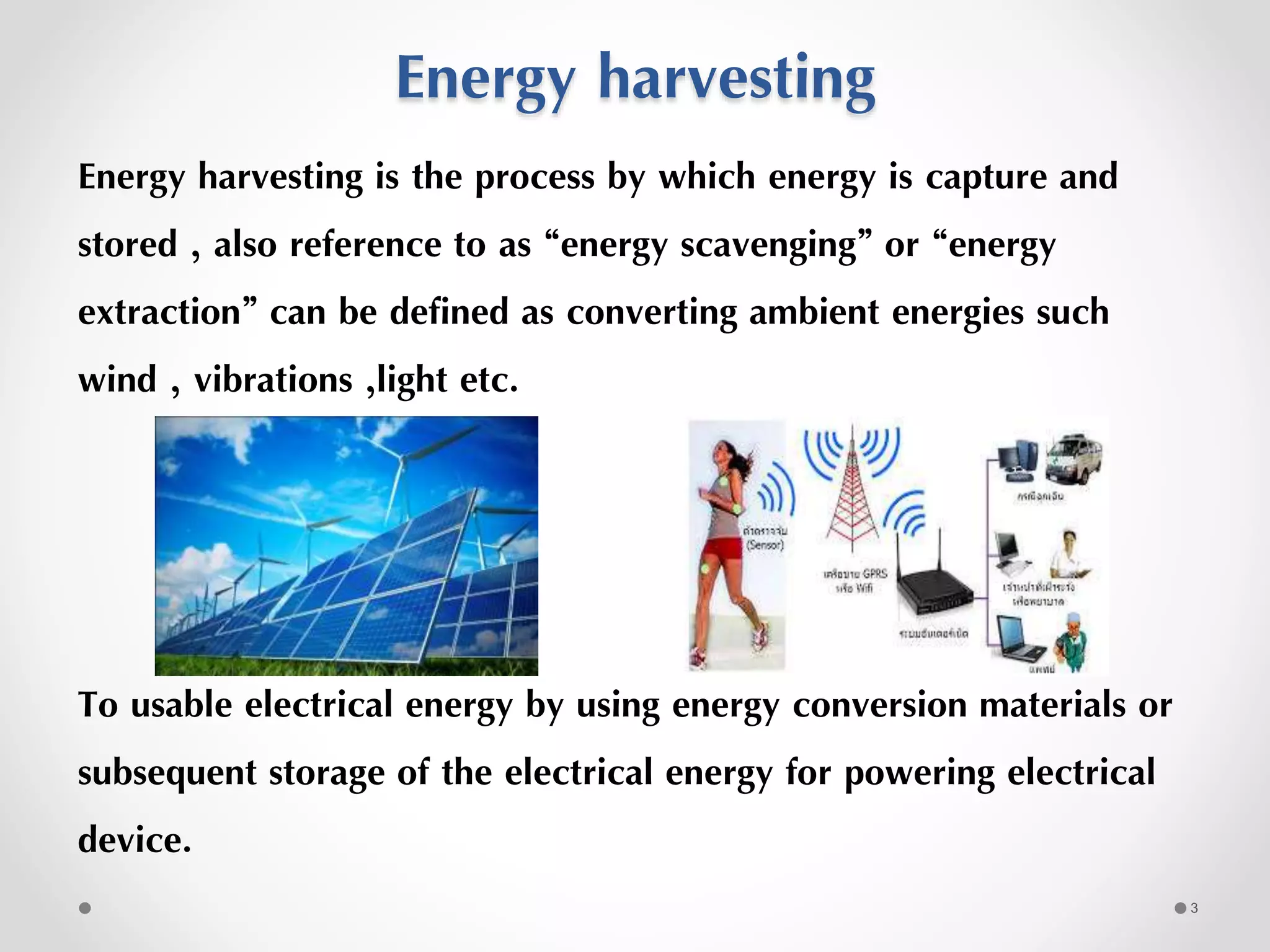
Energy harvesting is the process by which energy is capture and
stored , also reference to as “energy scavenging” or “energy
extraction” can be defined as converting ambient energies such
wind , vibrations ,light etc.
To usable electrical energy by using energy conversion materials or
subsequent storage of the electrical energy for powering electrical
device.
3
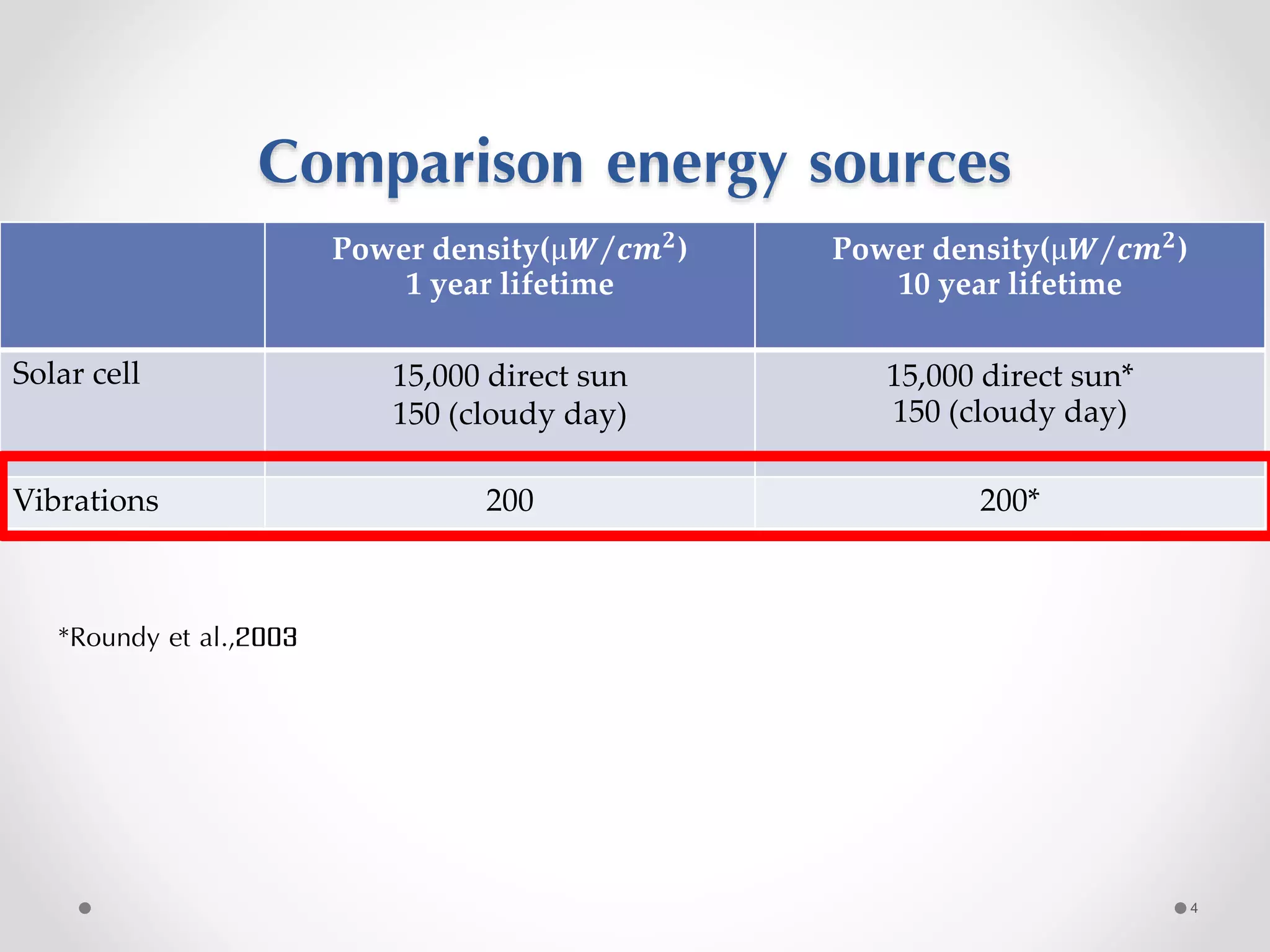
Comparison energy sources
Power density(μ𝑾 𝒄𝒎 𝟐
)
1 year lifetime
Power density(μ𝑾 𝒄𝒎 𝟐
)
10 year lifetime
Solar cell 15,000 direct sun
150 (cloudy day)
15,000 direct sun*
150 (cloudy day)
Vibrations 200 200*
*Roundy et al.,2003
4
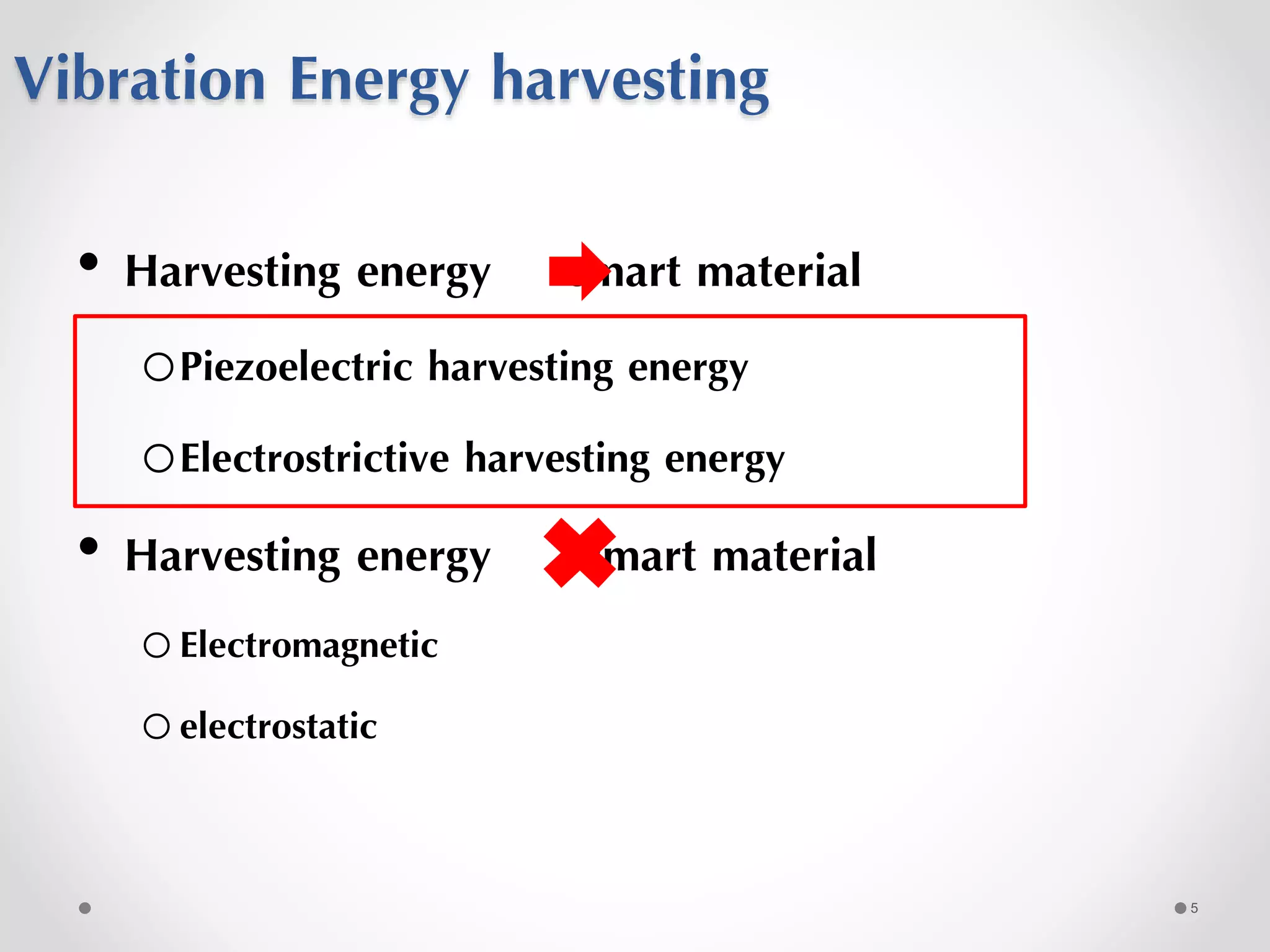
Vibration Energy harvesting
• Harvesting energy smart material
oPiezoelectric harvesting energy
oElectrostrictive harvesting energy
• Harvesting energy smart material
oElectromagnetic
oelectrostatic
5
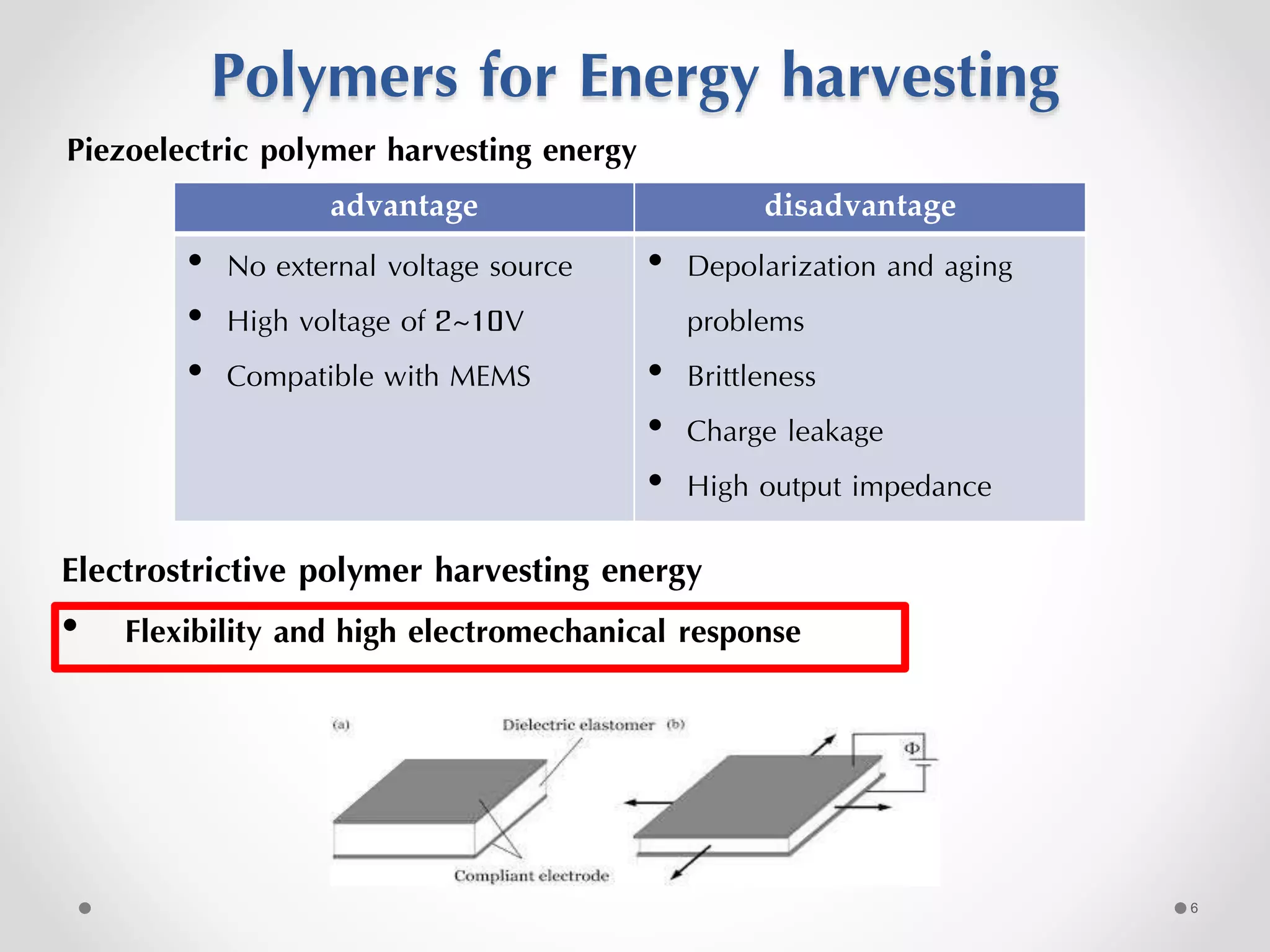
Polymers for Energy harvesting
advantage disadvantage
• No external voltage source
• High voltage of 2~10V
• Compatible with MEMS
• Depolarization and aging
problems
• Brittleness
• Charge leakage
• High output impedance
Piezoelectric polymer harvesting energy
Electrostrictive polymer harvesting energy
• Flexibility and high electromechanical response
6
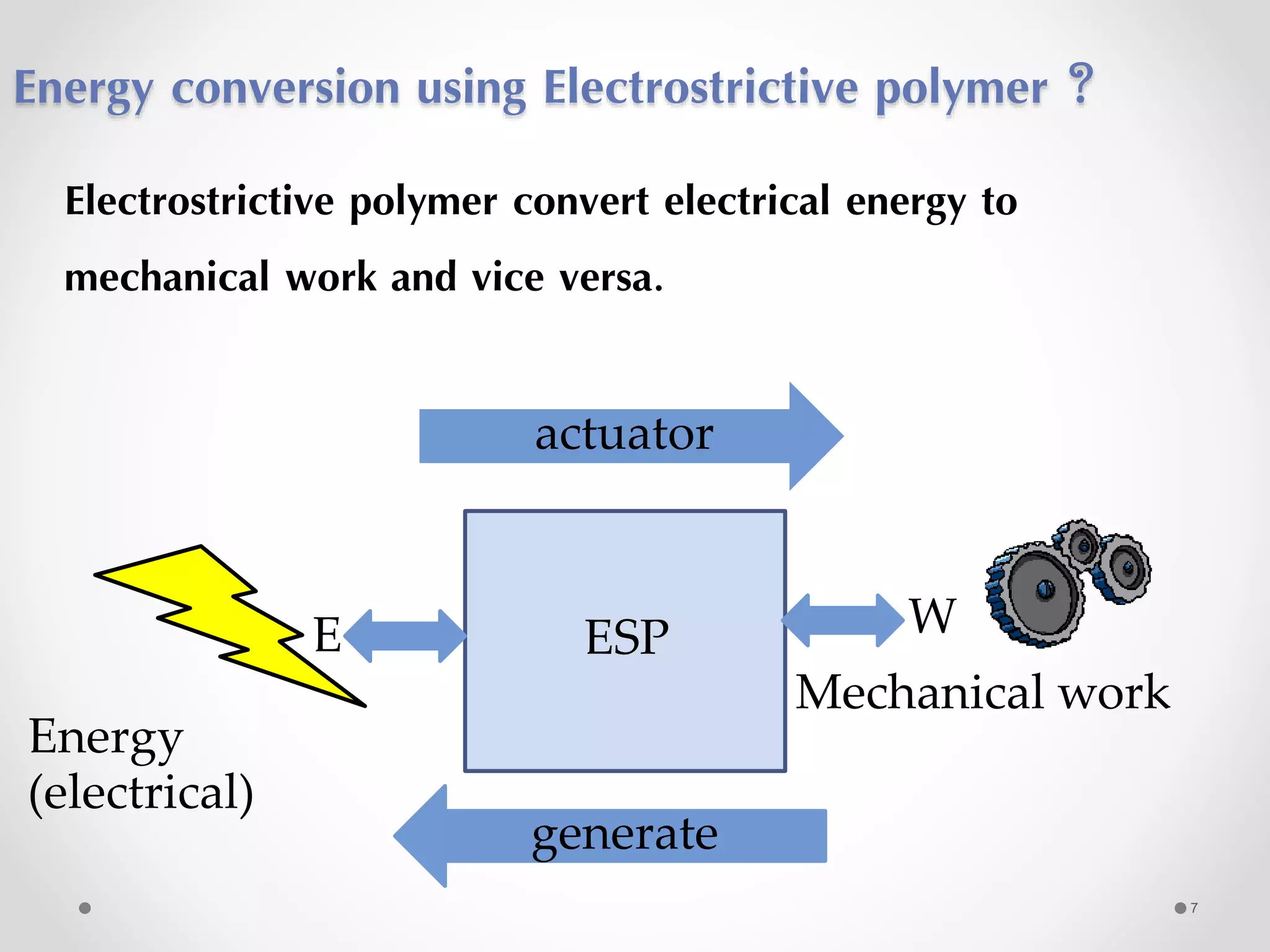
Energy conversion using Electrostrictive polymer ?
ESP
Energy
(electrical)
generate
actuator
Mechanical work
E W
Electrostrictive polymer convert electrical energy to
mechanical work and vice versa.
7
The purpose of this paper is a study of a effect of
strain amplitude and operating frequency on the harvested
current of the electrostrictive polymer composite.
8
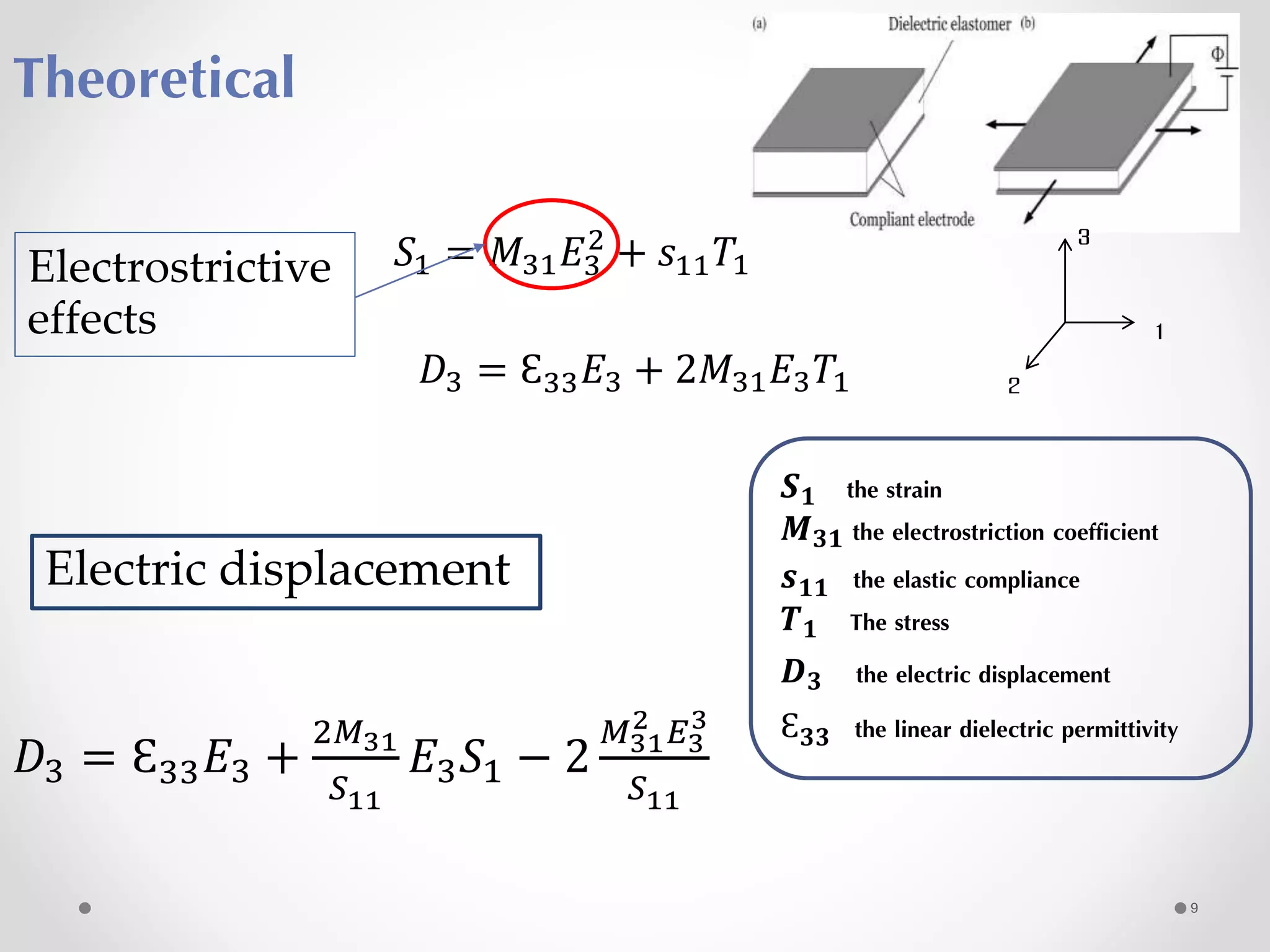
Theoretical
𝑆1 = 𝑀31 𝐸3
2
+ 𝑠11 𝑇1
𝐷3 = Ԑ33 𝐸3 + 2𝑀31 𝐸3 𝑇1
𝐷3 = Ԑ33 𝐸3 +
2𝑀31
𝑆11
𝐸3 𝑆1 − 2
𝑀31
2 𝐸3
3
𝑆11
Electrostrictive
effects
Electric displacement
3
2
1
𝑺 𝟏 the strain
𝑴 𝟑𝟏 the electrostriction coefficient
𝒔 𝟏𝟏 the elastic compliance
𝑻 𝟏 The stress
𝑫 𝟑 the electric displacement
Ԑ 𝟑𝟑 the linear dielectric permittivity
9
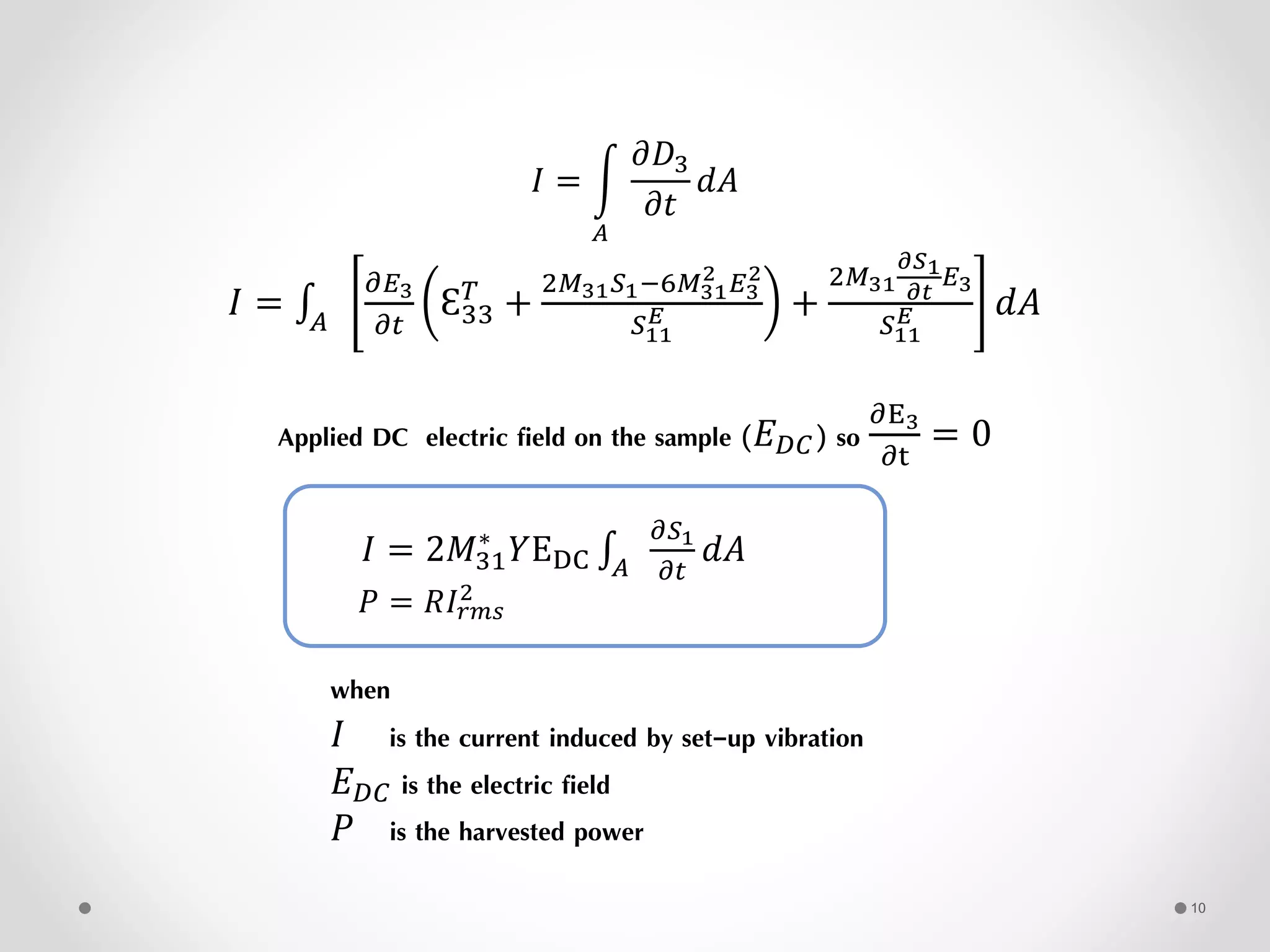
𝐼 =
𝐴
𝜕𝐷3
𝜕𝑡
𝑑𝐴
𝐼 = 𝐴
𝜕𝐸3
𝜕𝑡
Ԑ33
𝑇
+
2𝑀31 𝑆1−6𝑀31
2 𝐸3
2
𝑆11
𝐸 +
2𝑀31
𝜕𝑆1
𝜕𝑡
𝐸3
𝑆11
𝐸 𝑑𝐴
Applied DC electric field on the sample (𝐸 𝐷𝐶) so
𝜕E3
𝜕t
= 0
𝐼 = 2𝑀31
∗
𝑌EDC 𝐴
𝜕𝑆1
𝜕𝑡
𝑑𝐴
𝑃 = 𝑅𝐼𝑟𝑚𝑠
2
when
𝐼 is the current induced by set-up vibration
𝐸 𝐷𝐶 is the electric field
𝑃 is the harvested power
10
Experimentation
o Film preparation
o Energy conversion with electrostrictive polymer
11
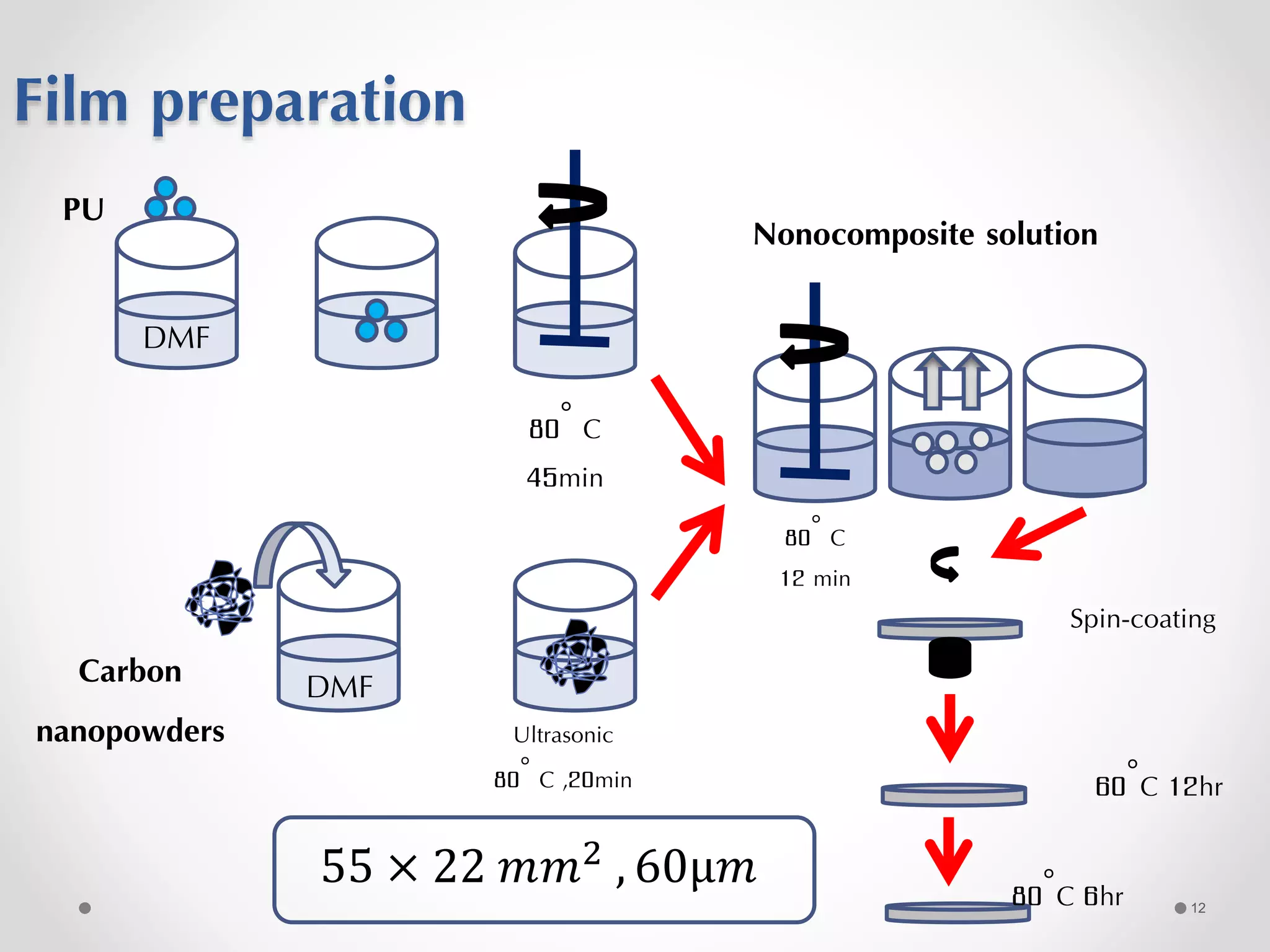
Film preparation
PU
80° C
45min
DMFCarbon
nanopowders
80° C
12 min
DMF
60°C 12hr
80°C 6hr
Ultrasonic
80° C ,20min
Nonocomposite solution
Spin-coating
55 × 22 𝑚𝑚2 , 60μ𝑚
12
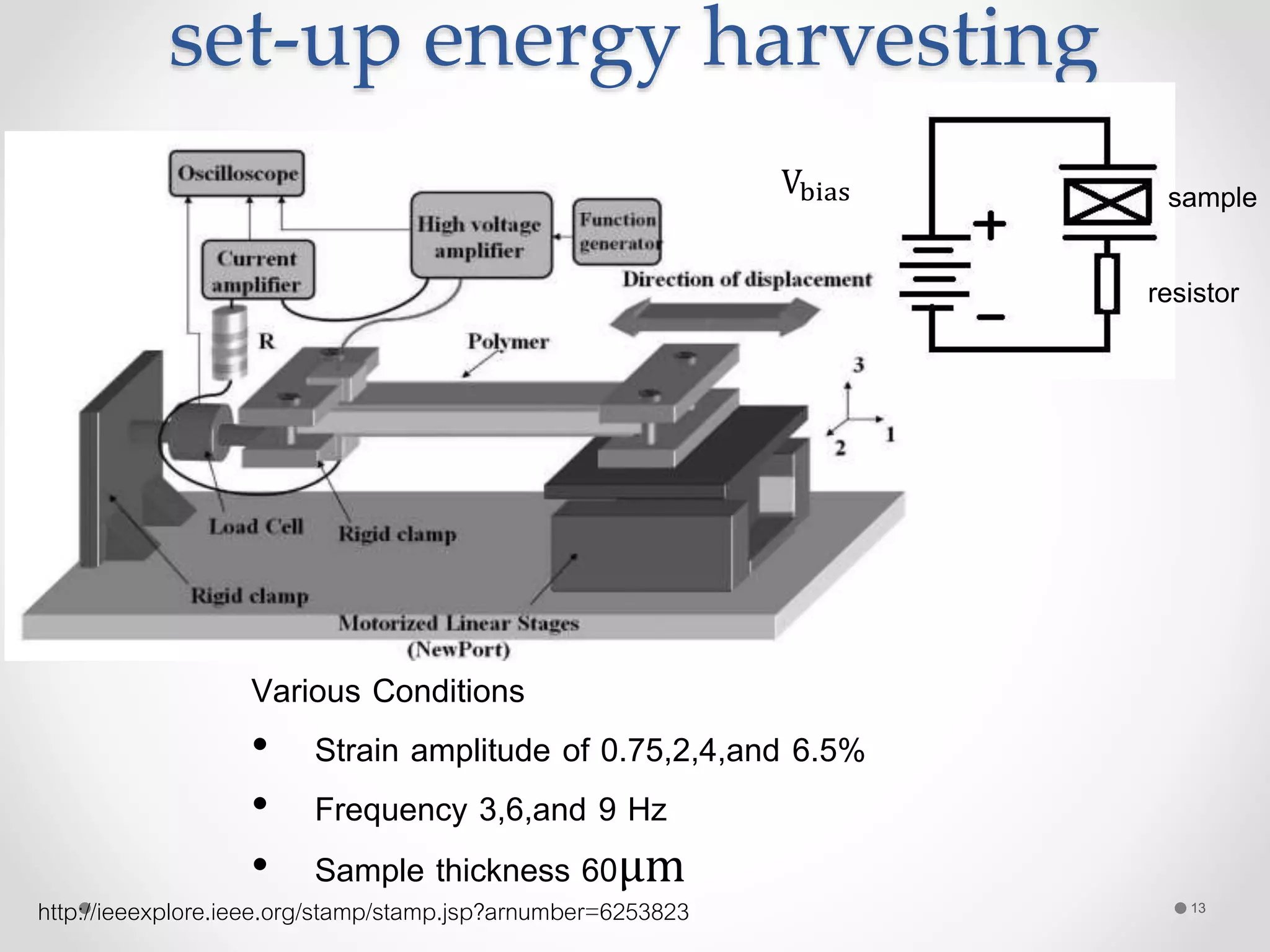
set-up energy harvesting
http://ieeexplore.ieee.org/stamp/stamp.jsp?arnumber=6253823
Various Conditions
• Strain amplitude of 0.75,2,4,and 6.5%
• Frequency 3,6,and 9 Hz
• Sample thickness 60μm
sample
resistor
Vbias
13
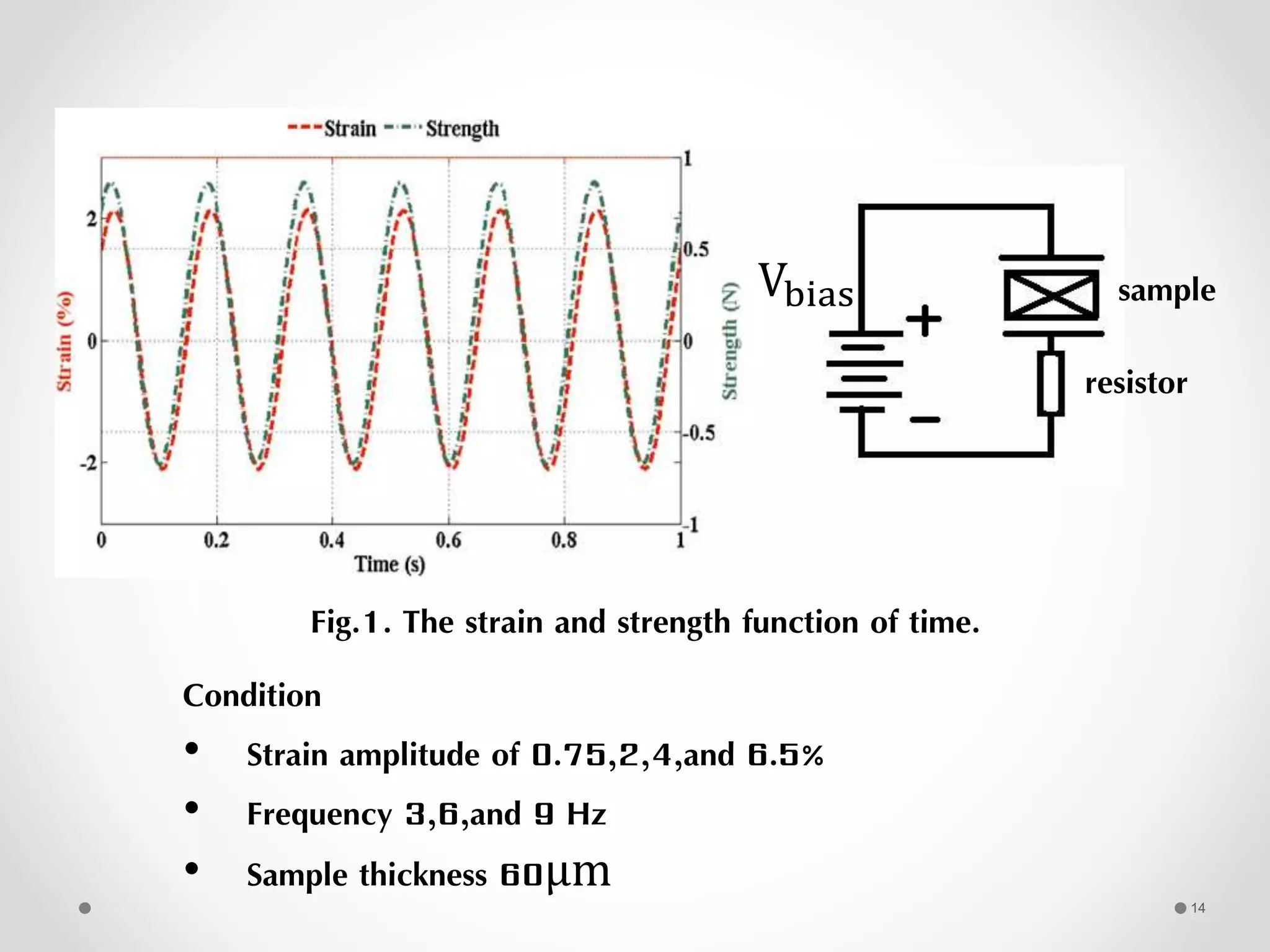
Fig.1. The strain and strength function of time.
Condition
• Strain amplitude of 0.75,2,4,and 6.5%
• Frequency 3,6,and 9 Hz
• Sample thickness 60μm
sample
resistor
Vbias
14
Results and discussions
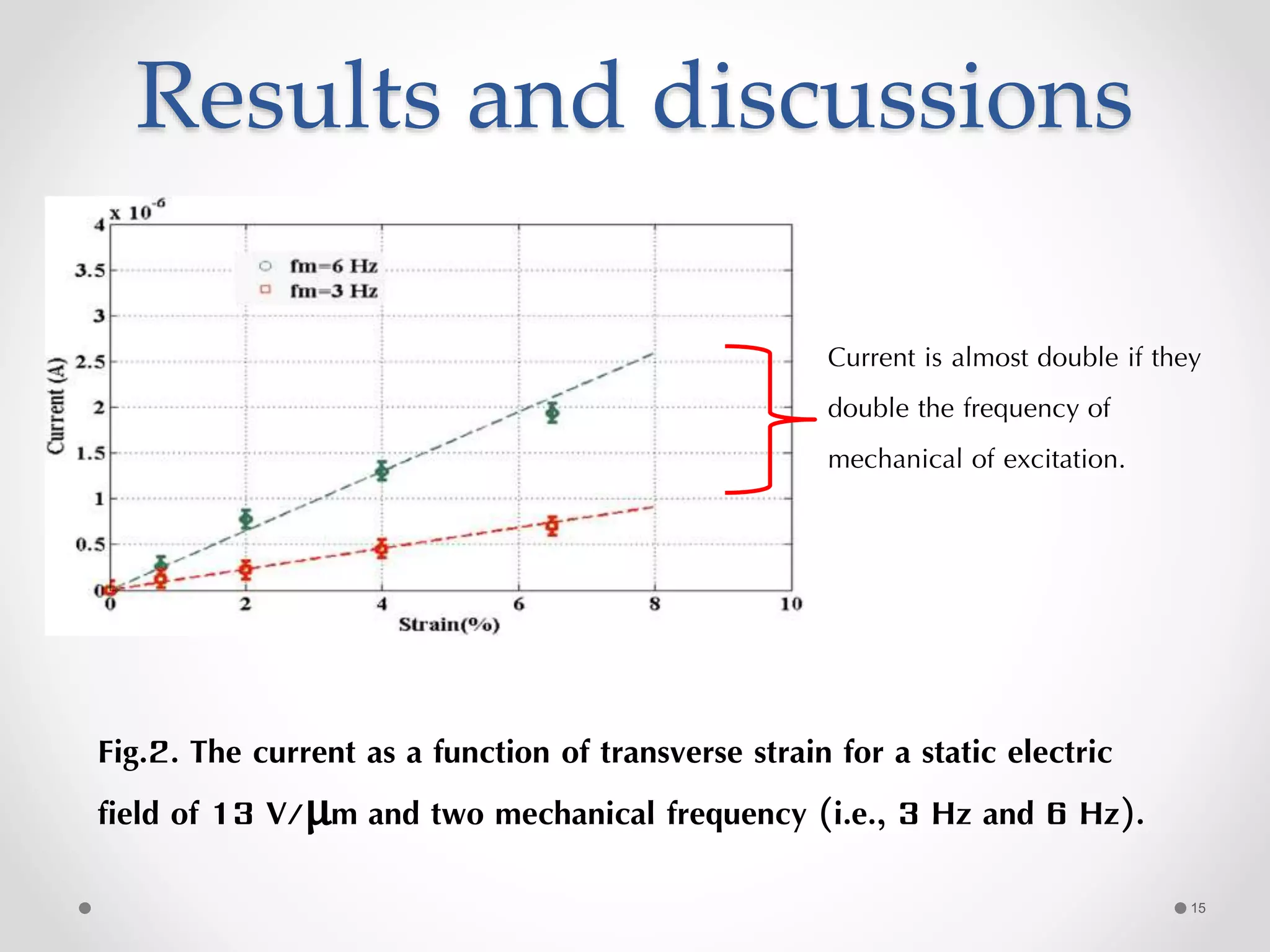
Fig.2. The current as a function of transverse strain for a static electric
field of 13 V/μm and two mechanical frequency (i.e., 3 Hz and 6 Hz).
Current is almost double if they
double the frequency of
mechanical of excitation.
15
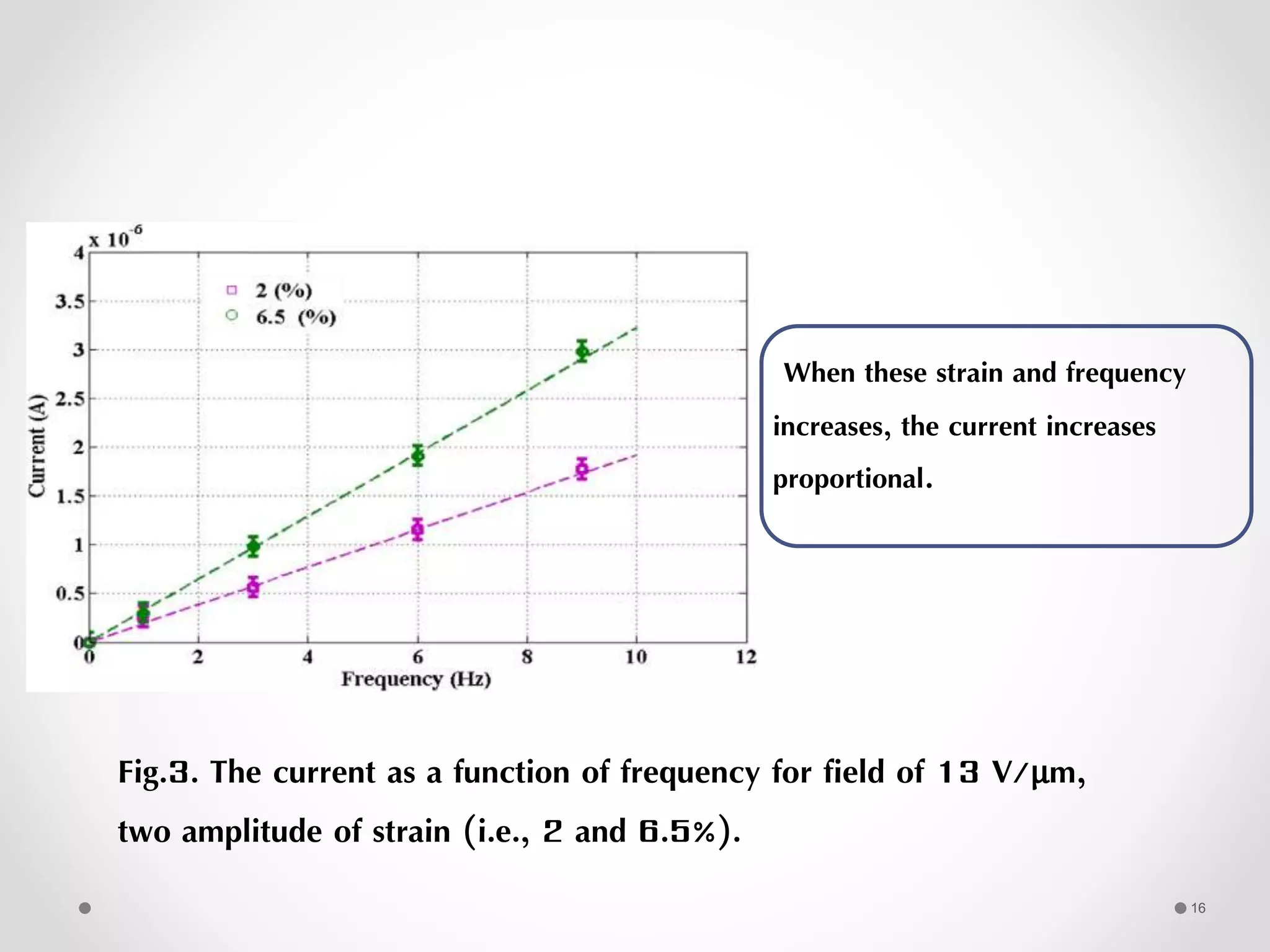
Fig.3. The current as a function of frequency for field of 13 V/μm,
two amplitude of strain (i.e., 2 and 6.5%).
When these strain and frequency
increases, the current increases
proportional.
16
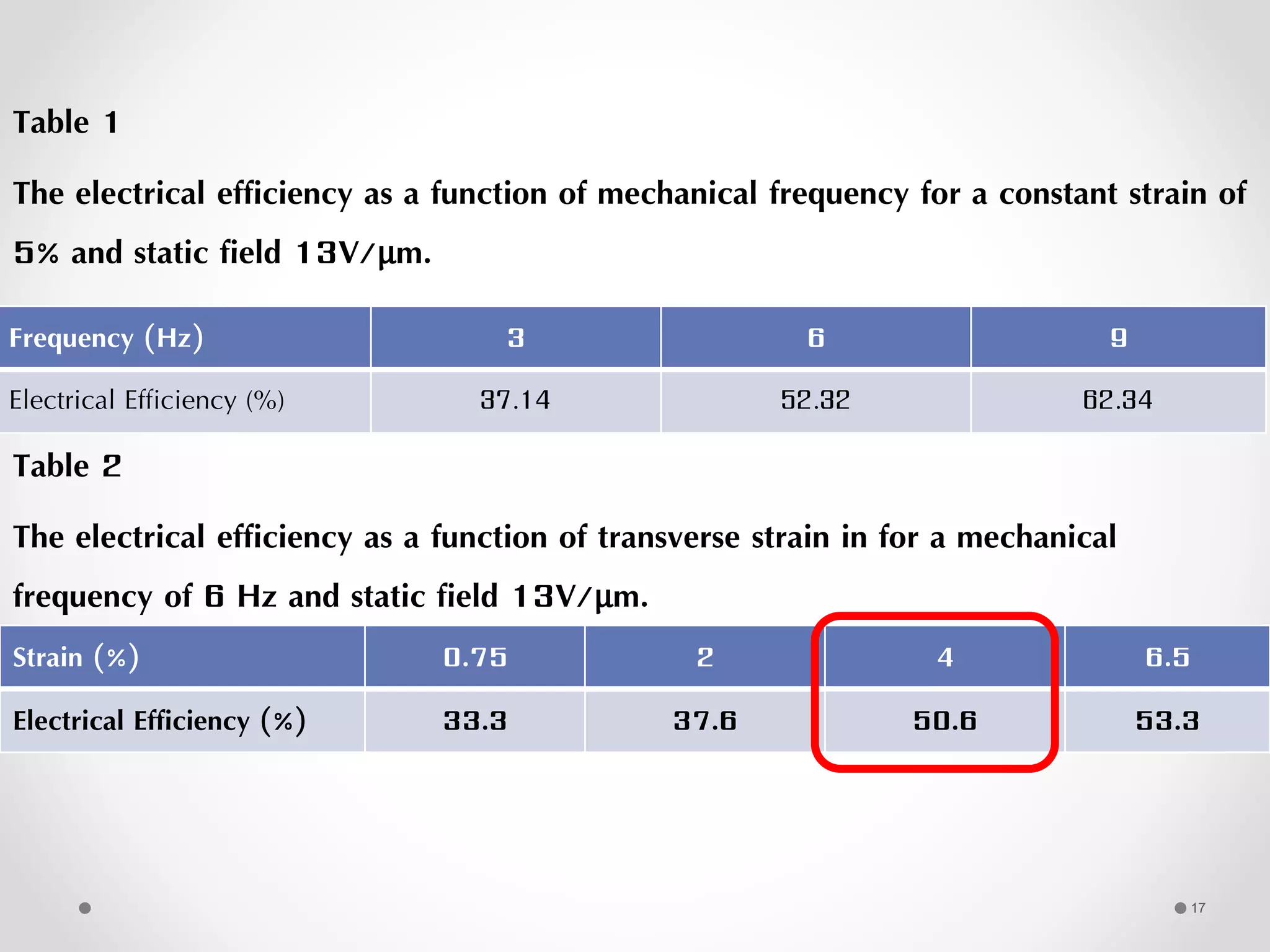
Table 1
The electrical efficiency as a function of mechanical frequency for a constant strain of
5% and static field 13V/μm.
Table 2
The electrical efficiency as a function of transverse strain in for a mechanical
frequency of 6 Hz and static field 13V/μm.
Frequency (Hz) 3 6 9
Electrical Efficiency (%) 37.14 52.32 62.34
Strain (%) 0.75 2 4 6.5
Electrical Efficiency (%) 33.3 37.6 50.6 53.3
17
Conclusions
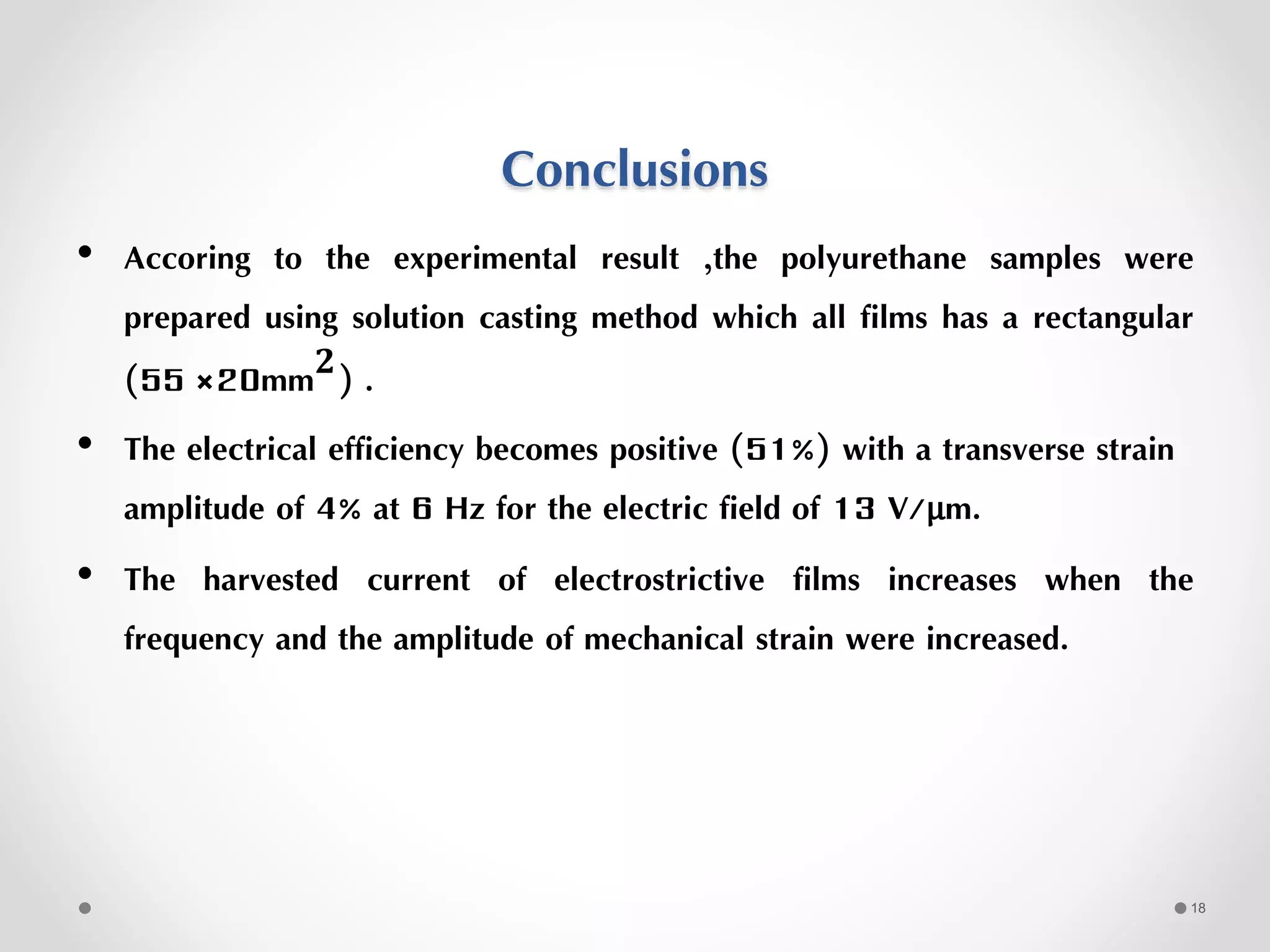
• Accoring to the experimental result ,the polyurethane samples were
prepared using solution casting method which all films has a rectangular
(55 ×20mm 𝟐) .
• The electrical efficiency becomes positive (51%) with a transverse strain
amplitude of 4% at 6 Hz for the electric field of 13 V/μm.
• The harvested current of electrostrictive films increases when the
frequency and the amplitude of mechanical strain were increased.
18
References
 Mounir Medded, Adil Eddiai, Abdelowahed Hajaji, Yahia Boughaleb, Daniel
Guyomar, Mohamed Filyou, Synthetic Metals,188, 72– 76, 2014.
 Adil Eddiai, Mounir Meddad , Khalid Sbiaai, Yahia Boughaleb,
Abdelowahed Hajjaji, Daniel Guyomar, Optical Materials ,36 ,13–17, 2014
 Chatchai Putson,Energy convertion from electroactive materials and
Modeling of behaviour on these materialss,2010
19
Acknowledgement
 Asst Prof Dr.Chatchai Putson
 Committee of Physics seminar
 Department of Physics, Prince of Songkla University
 Friends and family
20
21
22
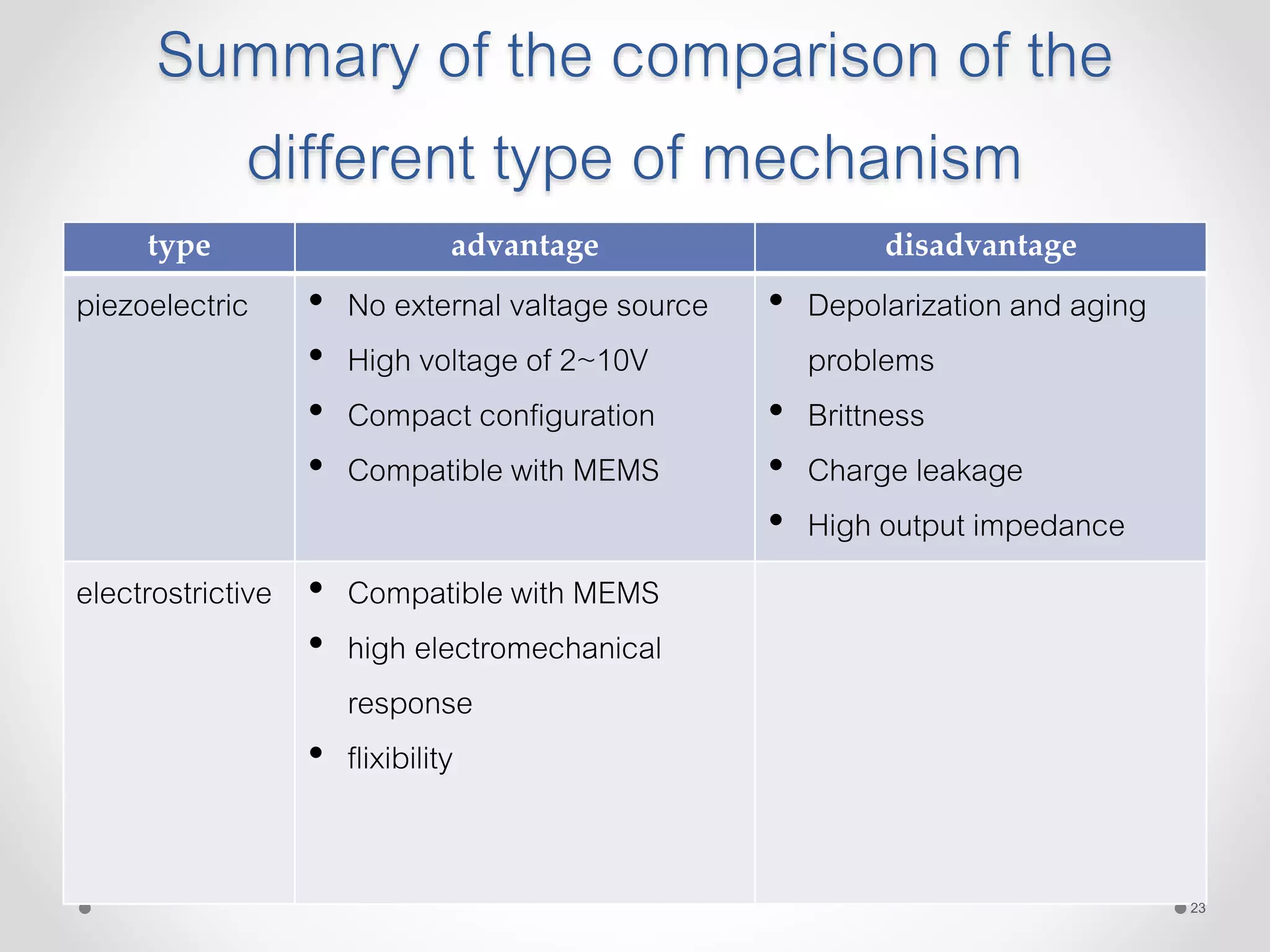
Summary of the comparison of the
different type of mechanism
type advantage disadvantage
piezoelectric • No external valtage source
• High voltage of 2~10V
• Compact configuration
• Compatible with MEMS
• Depolarization and aging
problems
• Brittness
• Charge leakage
• High output impedance
electrostrictive • Compatible with MEMS
• high electromechanical
response
• flixibility
23
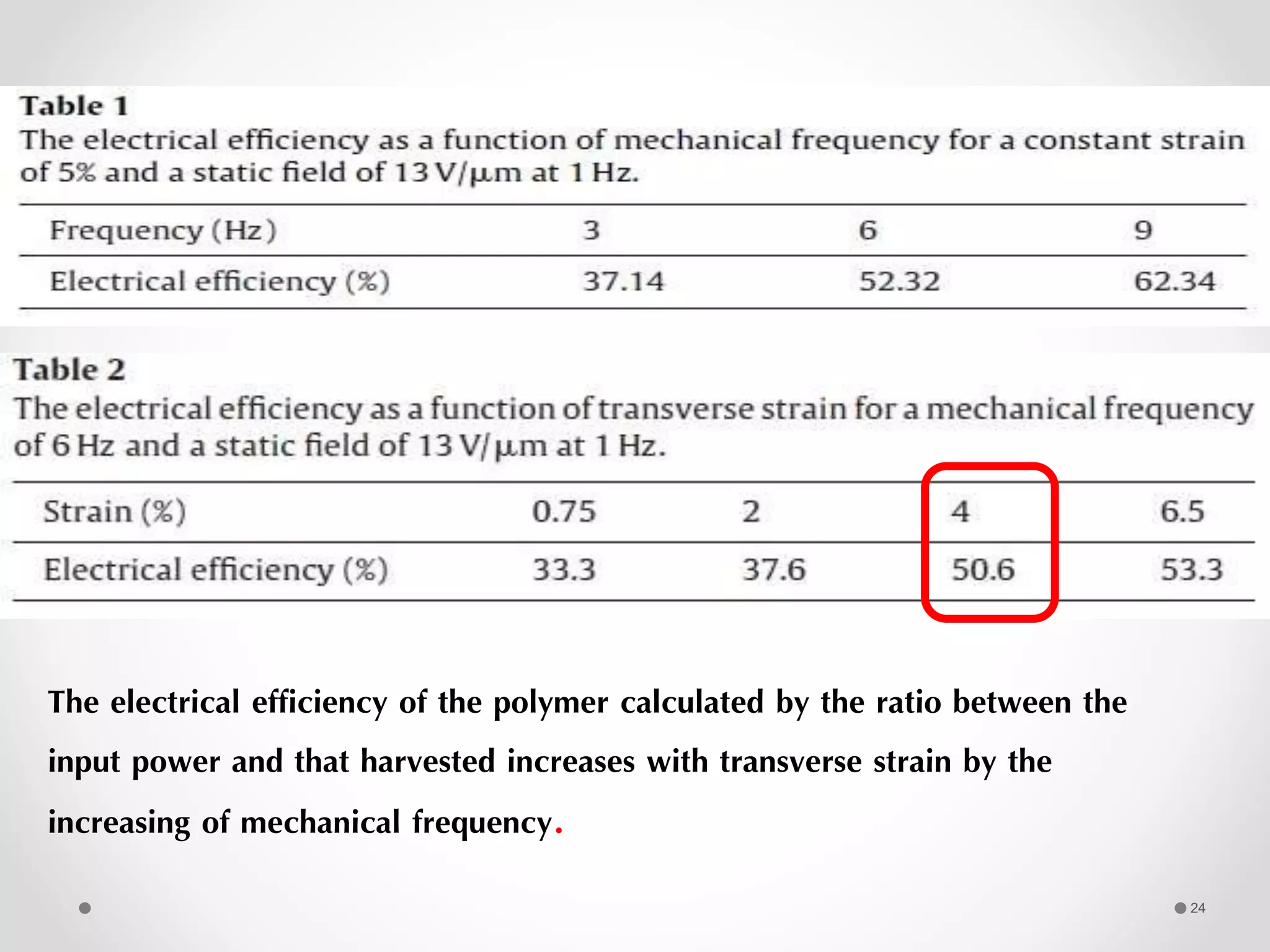
The electrical efficiency of the polymer calculated by the ratio between the
input power and that harvested increases with transverse strain by the
increasing of mechanical frequency.
24

Electrostrictive polymer composite

  • 1.
    The effect ofstrain and frequency on the harvested energy of an electrostrictive polymer composite Miss Kavalin Raya ID 5510210555 Department of physics Prince of Songkla university P105, 12th October 2015, 1.00-3.30 P.M. 1
  • 2.
  • 3.
    Energy harvesting Energy harvestingis the process by which energy is capture and stored , also reference to as “energy scavenging” or “energy extraction” can be defined as converting ambient energies such wind , vibrations ,light etc. To usable electrical energy by using energy conversion materials or subsequent storage of the electrical energy for powering electrical device. 3
  • 4.
    Comparison energy sources Powerdensity(μ𝑾 𝒄𝒎 𝟐 ) 1 year lifetime Power density(μ𝑾 𝒄𝒎 𝟐 ) 10 year lifetime Solar cell 15,000 direct sun 150 (cloudy day) 15,000 direct sun* 150 (cloudy day) Vibrations 200 200* *Roundy et al.,2003 4
  • 5.
    Vibration Energy harvesting •Harvesting energy smart material oPiezoelectric harvesting energy oElectrostrictive harvesting energy • Harvesting energy smart material oElectromagnetic oelectrostatic 5
  • 6.
    Polymers for Energyharvesting advantage disadvantage • No external voltage source • High voltage of 2~10V • Compatible with MEMS • Depolarization and aging problems • Brittleness • Charge leakage • High output impedance Piezoelectric polymer harvesting energy Electrostrictive polymer harvesting energy • Flexibility and high electromechanical response 6
  • 7.
    Energy conversion usingElectrostrictive polymer ? ESP Energy (electrical) generate actuator Mechanical work E W Electrostrictive polymer convert electrical energy to mechanical work and vice versa. 7
  • 8.
    The purpose ofthis paper is a study of a effect of strain amplitude and operating frequency on the harvested current of the electrostrictive polymer composite. 8
  • 9.
    Theoretical 𝑆1 = 𝑀31𝐸3 2 + 𝑠11 𝑇1 𝐷3 = Ԑ33 𝐸3 + 2𝑀31 𝐸3 𝑇1 𝐷3 = Ԑ33 𝐸3 + 2𝑀31 𝑆11 𝐸3 𝑆1 − 2 𝑀31 2 𝐸3 3 𝑆11 Electrostrictive effects Electric displacement 3 2 1 𝑺 𝟏 the strain 𝑴 𝟑𝟏 the electrostriction coefficient 𝒔 𝟏𝟏 the elastic compliance 𝑻 𝟏 The stress 𝑫 𝟑 the electric displacement Ԑ 𝟑𝟑 the linear dielectric permittivity 9
  • 10.
    𝐼 = 𝐴 𝜕𝐷3 𝜕𝑡 𝑑𝐴 𝐼 =𝐴 𝜕𝐸3 𝜕𝑡 Ԑ33 𝑇 + 2𝑀31 𝑆1−6𝑀31 2 𝐸3 2 𝑆11 𝐸 + 2𝑀31 𝜕𝑆1 𝜕𝑡 𝐸3 𝑆11 𝐸 𝑑𝐴 Applied DC electric field on the sample (𝐸 𝐷𝐶) so 𝜕E3 𝜕t = 0 𝐼 = 2𝑀31 ∗ 𝑌EDC 𝐴 𝜕𝑆1 𝜕𝑡 𝑑𝐴 𝑃 = 𝑅𝐼𝑟𝑚𝑠 2 when 𝐼 is the current induced by set-up vibration 𝐸 𝐷𝐶 is the electric field 𝑃 is the harvested power 10
  • 11.
    Experimentation o Film preparation oEnergy conversion with electrostrictive polymer 11
  • 12.
    Film preparation PU 80° C 45min DMFCarbon nanopowders 80°C 12 min DMF 60°C 12hr 80°C 6hr Ultrasonic 80° C ,20min Nonocomposite solution Spin-coating 55 × 22 𝑚𝑚2 , 60μ𝑚 12
  • 13.
    set-up energy harvesting http://ieeexplore.ieee.org/stamp/stamp.jsp?arnumber=6253823 VariousConditions • Strain amplitude of 0.75,2,4,and 6.5% • Frequency 3,6,and 9 Hz • Sample thickness 60μm sample resistor Vbias 13
  • 14.
    Fig.1. The strainand strength function of time. Condition • Strain amplitude of 0.75,2,4,and 6.5% • Frequency 3,6,and 9 Hz • Sample thickness 60μm sample resistor Vbias 14
  • 15.
    Results and discussions Fig.2.The current as a function of transverse strain for a static electric field of 13 V/μm and two mechanical frequency (i.e., 3 Hz and 6 Hz). Current is almost double if they double the frequency of mechanical of excitation. 15
  • 16.
    Fig.3. The currentas a function of frequency for field of 13 V/μm, two amplitude of strain (i.e., 2 and 6.5%). When these strain and frequency increases, the current increases proportional. 16
  • 17.
    Table 1 The electricalefficiency as a function of mechanical frequency for a constant strain of 5% and static field 13V/μm. Table 2 The electrical efficiency as a function of transverse strain in for a mechanical frequency of 6 Hz and static field 13V/μm. Frequency (Hz) 3 6 9 Electrical Efficiency (%) 37.14 52.32 62.34 Strain (%) 0.75 2 4 6.5 Electrical Efficiency (%) 33.3 37.6 50.6 53.3 17
  • 18.
    Conclusions • Accoring tothe experimental result ,the polyurethane samples were prepared using solution casting method which all films has a rectangular (55 ×20mm 𝟐) . • The electrical efficiency becomes positive (51%) with a transverse strain amplitude of 4% at 6 Hz for the electric field of 13 V/μm. • The harvested current of electrostrictive films increases when the frequency and the amplitude of mechanical strain were increased. 18
  • 19.
    References  Mounir Medded,Adil Eddiai, Abdelowahed Hajaji, Yahia Boughaleb, Daniel Guyomar, Mohamed Filyou, Synthetic Metals,188, 72– 76, 2014.  Adil Eddiai, Mounir Meddad , Khalid Sbiaai, Yahia Boughaleb, Abdelowahed Hajjaji, Daniel Guyomar, Optical Materials ,36 ,13–17, 2014  Chatchai Putson,Energy convertion from electroactive materials and Modeling of behaviour on these materialss,2010 19
  • 20.
    Acknowledgement  Asst ProfDr.Chatchai Putson  Committee of Physics seminar  Department of Physics, Prince of Songkla University  Friends and family 20
  • 21.
  • 22.
  • 23.
    Summary of thecomparison of the different type of mechanism type advantage disadvantage piezoelectric • No external valtage source • High voltage of 2~10V • Compact configuration • Compatible with MEMS • Depolarization and aging problems • Brittness • Charge leakage • High output impedance electrostrictive • Compatible with MEMS • high electromechanical response • flixibility 23
  • 24.
    The electrical efficiencyof the polymer calculated by the ratio between the input power and that harvested increases with transverse strain by the increasing of mechanical frequency. 24