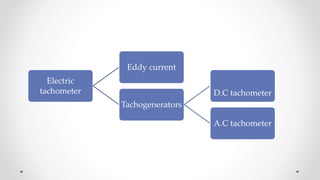
1) An electrical tachometer measures angular velocity using electrical transducers instead of mechanical components, providing advantages like fast response, no inertia effects, and less power loss.
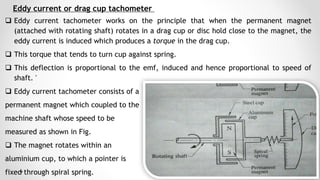
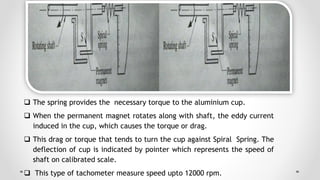
2) An eddy current tachometer works by inducing eddy currents in an aluminum cup using a rotating permanent magnet, creating torque that is proportional to rotational speed.
3) The torque causes deflection of the cup and pointer against a spring, with the pointer position on a calibrated scale indicating shaft speed. Eddy current tachometers can measure speeds up to 12,000 rpm and are used in automobile speedometers and modified versions in locomotives.