TESTS FOR
CARBOHYDRATES
Dr.S.Sethupathy
•Conc.Sulfuric acid dehydrates
carbohydrates into furfural
derivatives.
•Pentoses yield furfurals
•Hexoses yield 5-Hydroxy methyl
furfurals
•Furfurals condense with α –
naphthol to form colored products
Molisch test
Importance
•General test for carbohydrates
•Nucleic acids , Glycoproteins and
glycolipids give a positive test due
to their carbohydrate content.
Benedict’s test
• Reducing sugars give positive Benedict’s test due to their
free aldehyde or keto group.
•
Glucose + 2 Cu++ + 2 H2O Gluconic acid + Cu2+O
+4H+
• Cu2+O - red precipitate
The principle of Benedict's test
• When reducing sugars are heated in the presence of an
alkali, they become powerful reducing compounds known
as enediols.
• Enediols reduce the cupric ions (Cu2+) present in the
Benedict's reagent to cuprous ions (Cu+) which get
precipitated as insoluble red Cuprous oxide(Cu2O).
Benedict’s reagent
•Copper sulfate- Cupric ions
•Sodium carbonate – Alkaline
Medium for enediol formation
•Sodium citrate – prevents
precipitation and keeps cupric
ions in solution
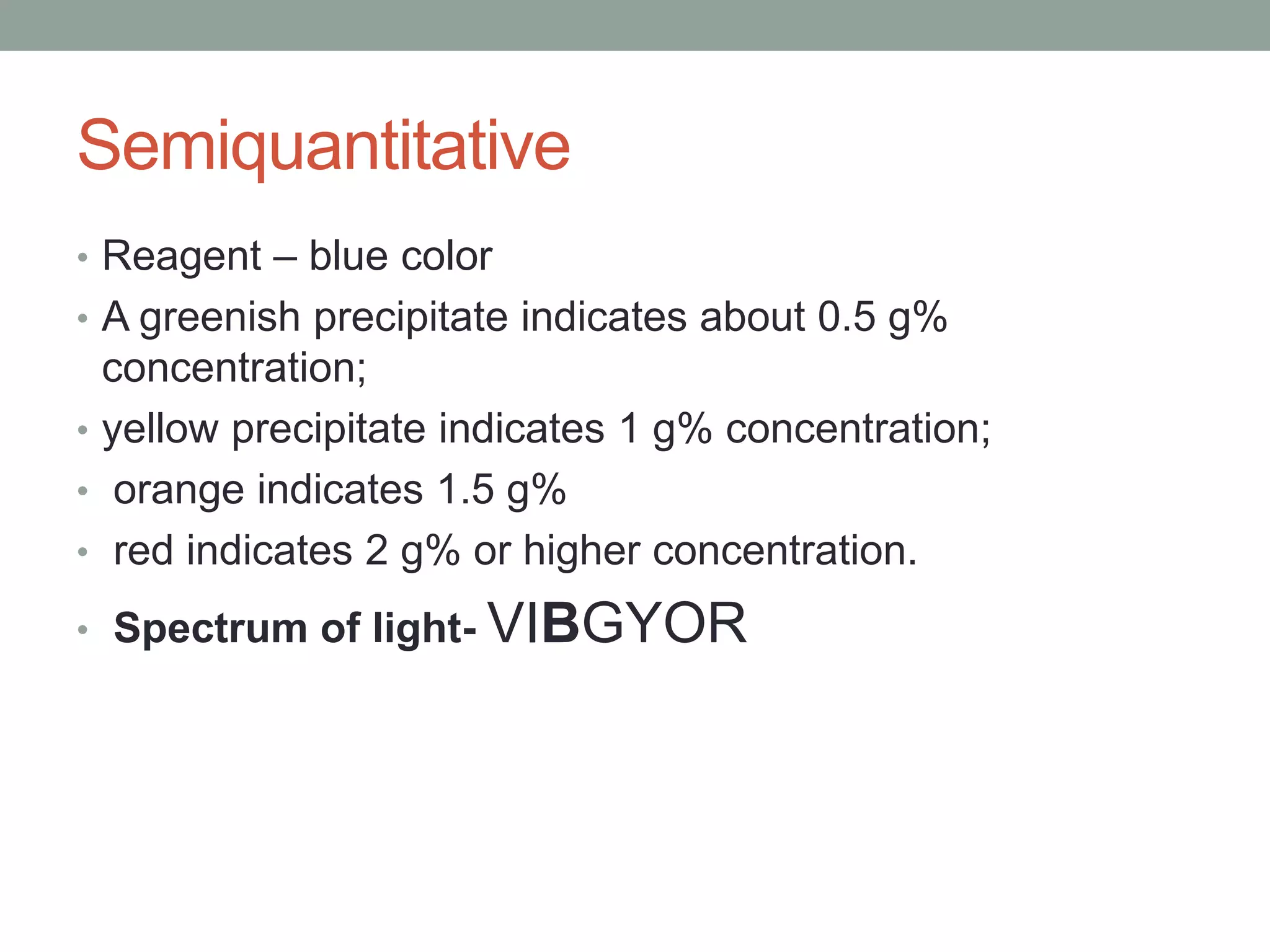
Semiquantitative
• Reagent – blue color
• A greenish precipitate indicates about 0.5 g%
concentration;
• yellow precipitate indicates 1 g% concentration;
• orange indicates 1.5 g%
• red indicates 2 g% or higher concentration.
• Spectrum of light- VIBGYOR
Blue,Green,Yellow,Orange,Red
Bial’s rest for pentoses
• HCl in the Bial’s reagent dehydrates pentoses to furfural
derivatives
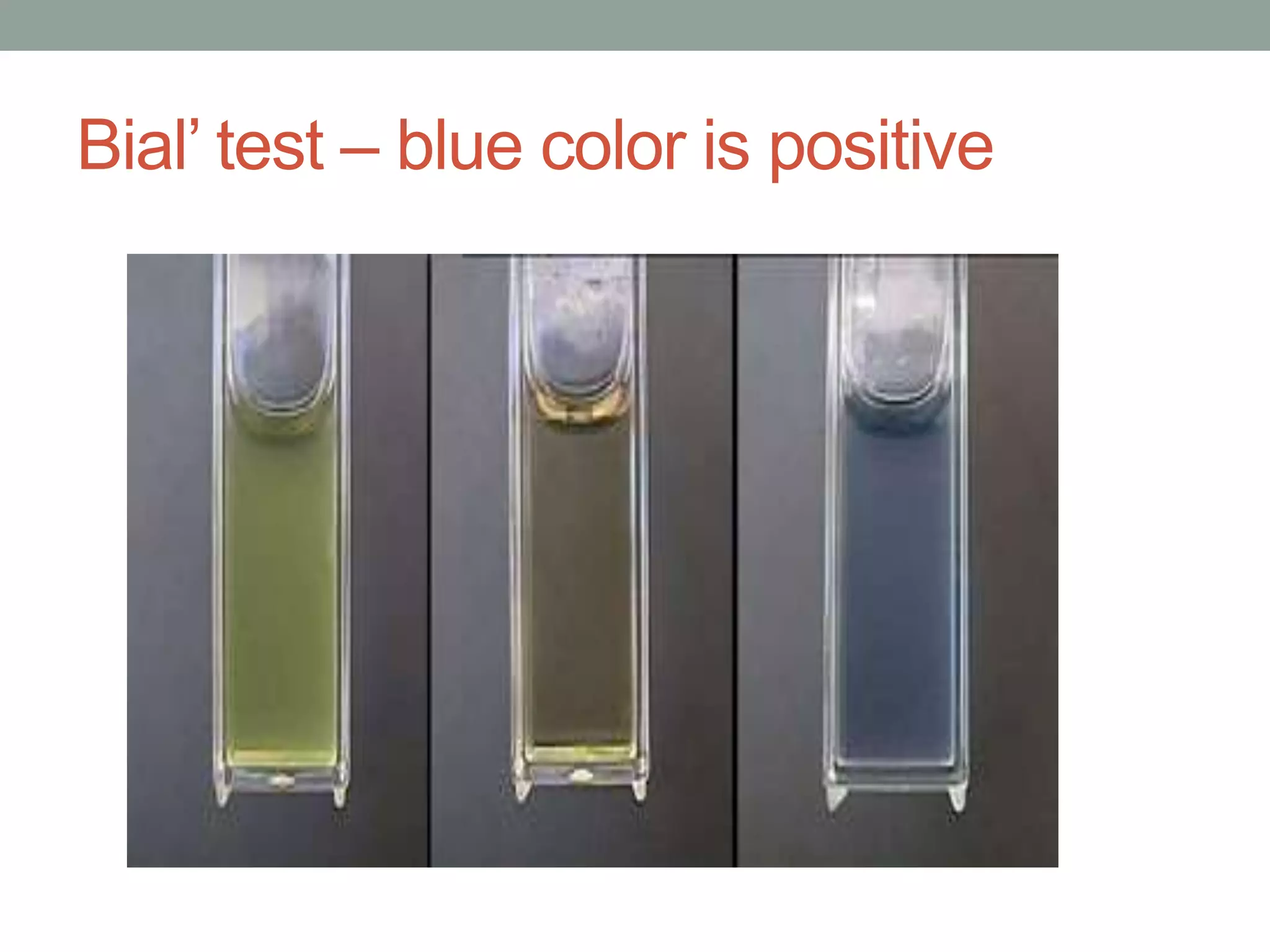
• Furfural reacts with orcinol and ferric ions in the reagent
to form blue color product
• Procedure: 2 ml solution is treated with 2 ml Bial’s reagent
and gently heated
• Formation of bluish color indicates the presence of
pentoses
• Hexoses give different colors such as brown, yellow , red
etc.
Bial’ test – blue color is positive
Osazones
• Reducing sugar solution when heated with phenyl
hydrazine , characteristic crystalline yellow colored
oazones are formed
• Needle shaped crystals by glucose, sunflower shaped
crystals by maltose and powder puff shaped crystals by
lactose are formed.
• Sugar phenyl hydrazine Osazone
Osazones
Mucic acid test for galactose
• The mucic acid test is used to identify the
presence of the sugar galactose
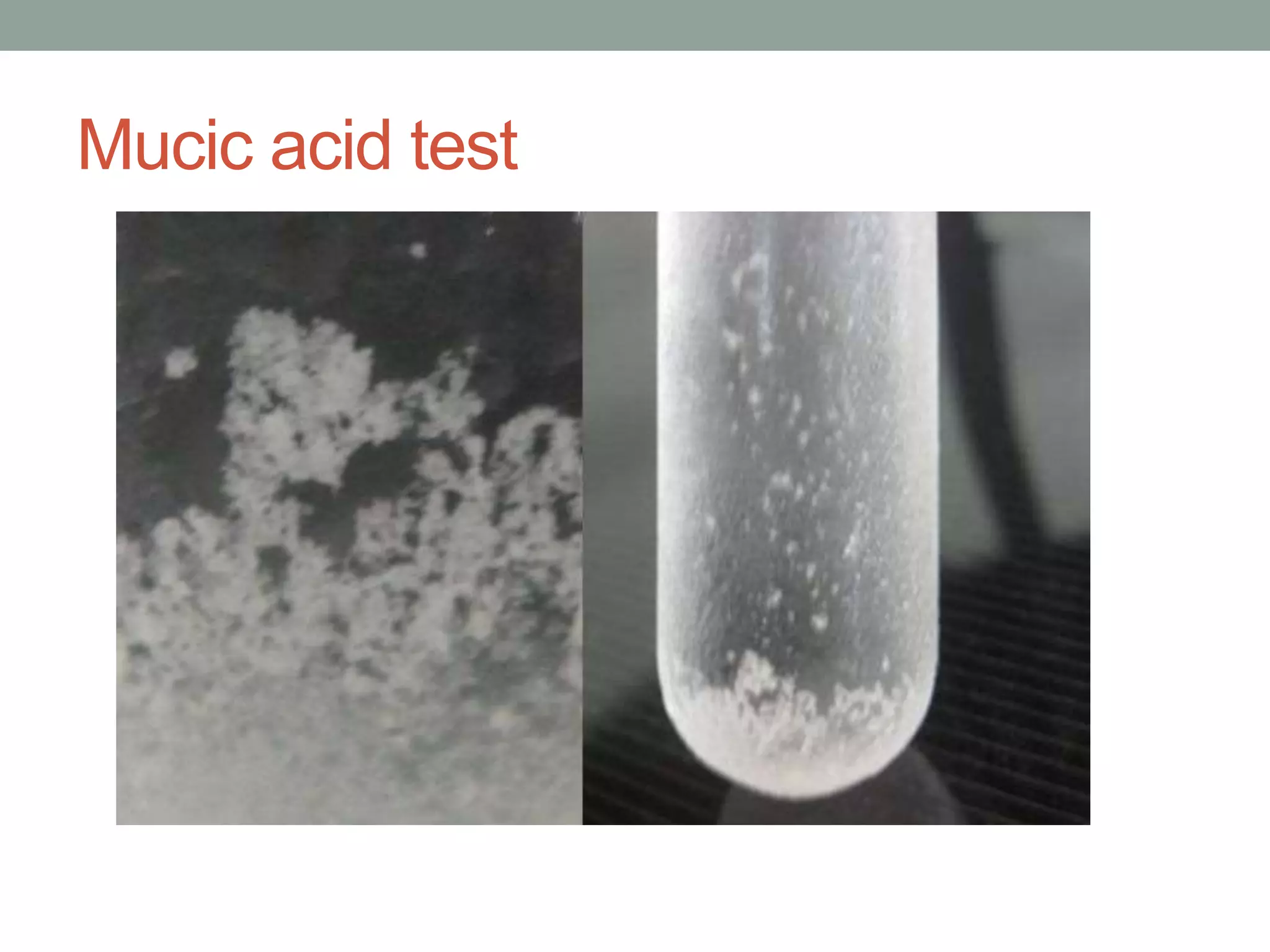
• When galactose solution is heated with
concentrated nitric acid, a
dicarboxylic acid called mucic acid or
galactaric acid is formed as a white
precipitate, which counts as a positive
result.
•
Mucic acid test
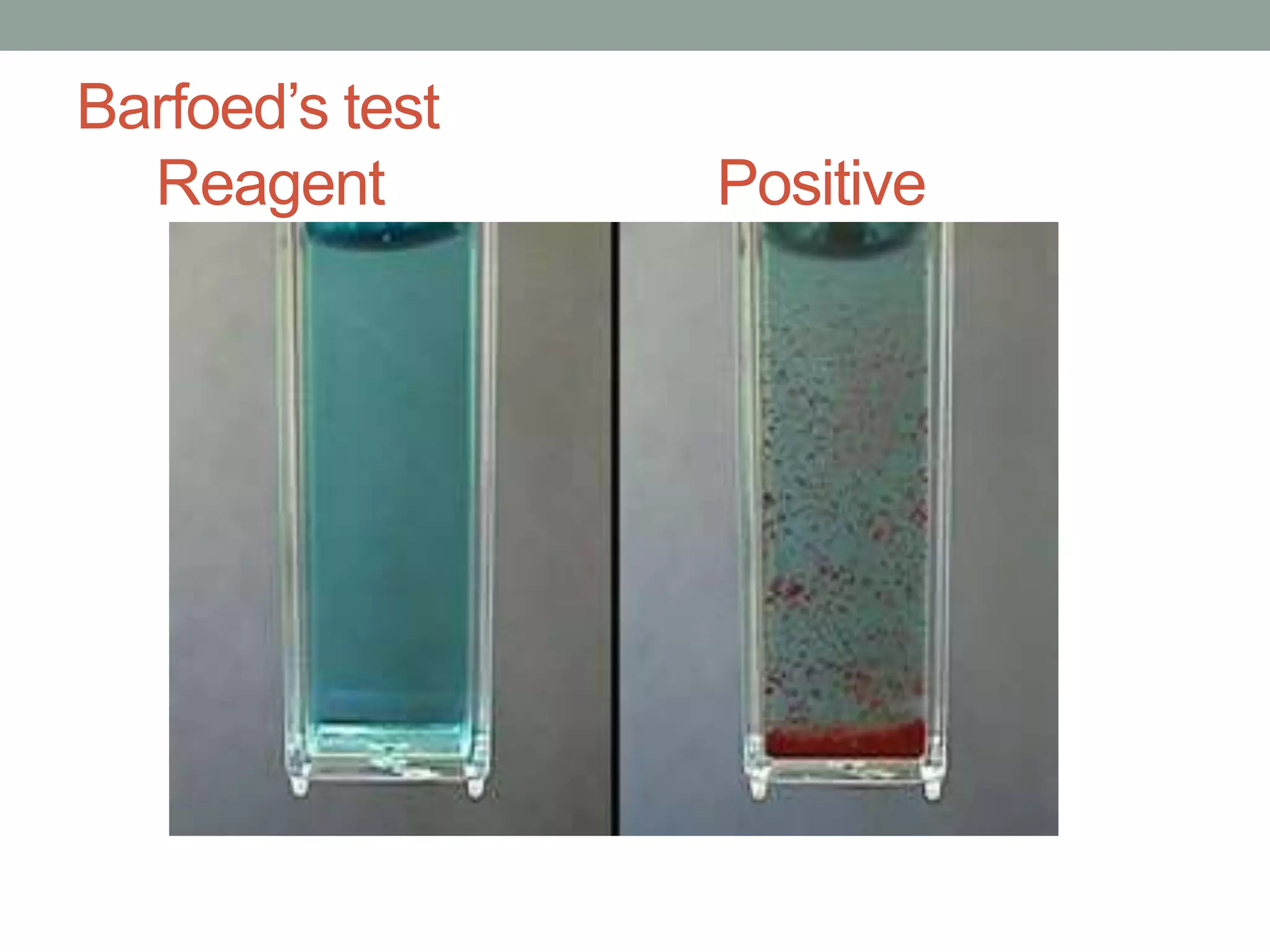
Barfoed’s test
• Monosaccharides react faster with
Barfoed’s reagent than disaccharides and
form reddish precipitate within three
minutes of heating whereas disaccharides
reacts slowly
• Barfoed's reagent consists of a 0.3
m solution of neutral copper acetate in
1% acetic acid solution.
Barfoed’s test
Reagent Positive
Iodine test for starch
• Addition of a few drops of iodine solution to starch, gives
a dark blue color.
Iodine test – dark blue - positive
Thank you

Tests for Carbohydrates

  • 1.
  • 3.
    •Conc.Sulfuric acid dehydrates carbohydratesinto furfural derivatives. •Pentoses yield furfurals •Hexoses yield 5-Hydroxy methyl furfurals •Furfurals condense with α – naphthol to form colored products
  • 5.
  • 6.
    Importance •General test forcarbohydrates •Nucleic acids , Glycoproteins and glycolipids give a positive test due to their carbohydrate content.
  • 7.
    Benedict’s test • Reducingsugars give positive Benedict’s test due to their free aldehyde or keto group. • Glucose + 2 Cu++ + 2 H2O Gluconic acid + Cu2+O +4H+ • Cu2+O - red precipitate
  • 8.
    The principle ofBenedict's test • When reducing sugars are heated in the presence of an alkali, they become powerful reducing compounds known as enediols. • Enediols reduce the cupric ions (Cu2+) present in the Benedict's reagent to cuprous ions (Cu+) which get precipitated as insoluble red Cuprous oxide(Cu2O).
  • 9.
    Benedict’s reagent •Copper sulfate-Cupric ions •Sodium carbonate – Alkaline Medium for enediol formation •Sodium citrate – prevents precipitation and keeps cupric ions in solution
  • 10.
    Semiquantitative • Reagent –blue color • A greenish precipitate indicates about 0.5 g% concentration; • yellow precipitate indicates 1 g% concentration; • orange indicates 1.5 g% • red indicates 2 g% or higher concentration. • Spectrum of light- VIBGYOR
  • 11.
  • 12.
    Bial’s rest forpentoses • HCl in the Bial’s reagent dehydrates pentoses to furfural derivatives • Furfural reacts with orcinol and ferric ions in the reagent to form blue color product • Procedure: 2 ml solution is treated with 2 ml Bial’s reagent and gently heated • Formation of bluish color indicates the presence of pentoses • Hexoses give different colors such as brown, yellow , red etc.
  • 13.
    Bial’ test –blue color is positive
  • 14.
    Osazones • Reducing sugarsolution when heated with phenyl hydrazine , characteristic crystalline yellow colored oazones are formed • Needle shaped crystals by glucose, sunflower shaped crystals by maltose and powder puff shaped crystals by lactose are formed. • Sugar phenyl hydrazine Osazone
  • 15.
  • 16.
    Mucic acid testfor galactose • The mucic acid test is used to identify the presence of the sugar galactose • When galactose solution is heated with concentrated nitric acid, a dicarboxylic acid called mucic acid or galactaric acid is formed as a white precipitate, which counts as a positive result. •
  • 17.
  • 18.
    Barfoed’s test • Monosaccharidesreact faster with Barfoed’s reagent than disaccharides and form reddish precipitate within three minutes of heating whereas disaccharides reacts slowly • Barfoed's reagent consists of a 0.3 m solution of neutral copper acetate in 1% acetic acid solution.
  • 19.
  • 20.
    Iodine test forstarch • Addition of a few drops of iodine solution to starch, gives a dark blue color.
  • 21.
    Iodine test –dark blue - positive
  • 22.