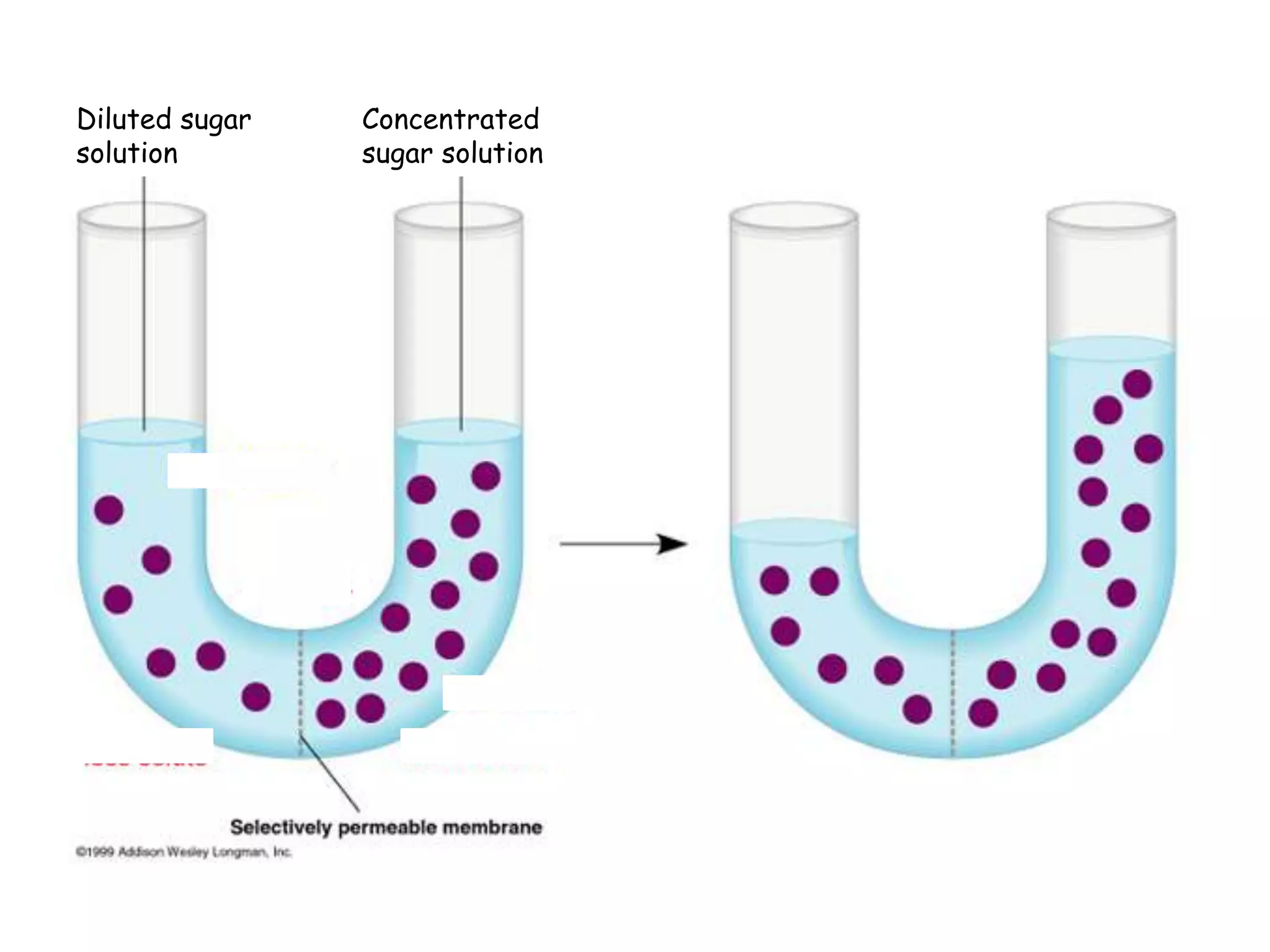
Diluted sugar   Concentrated
solution        sugar solution
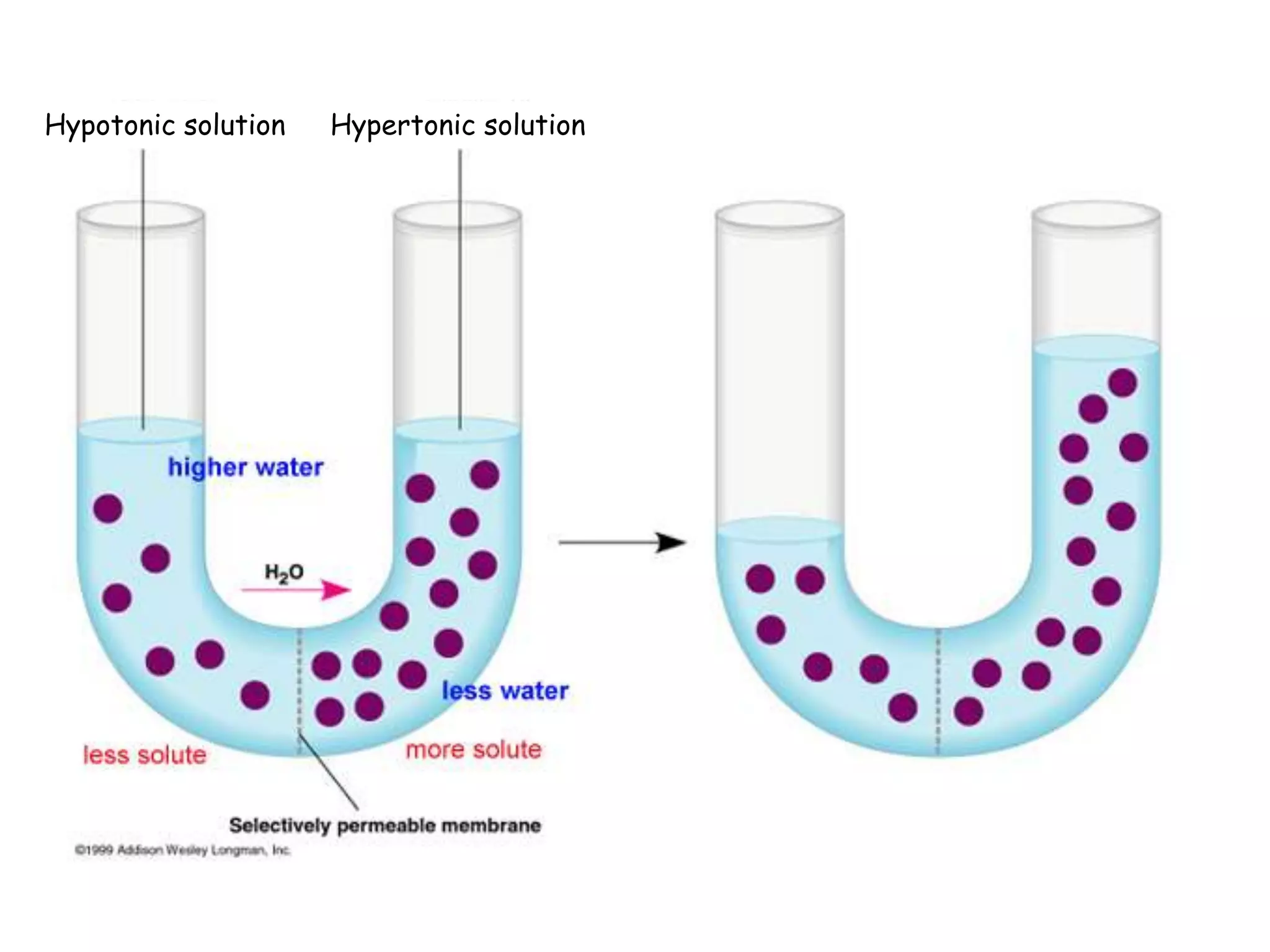
Hypotonic solution   Hypertonic solution
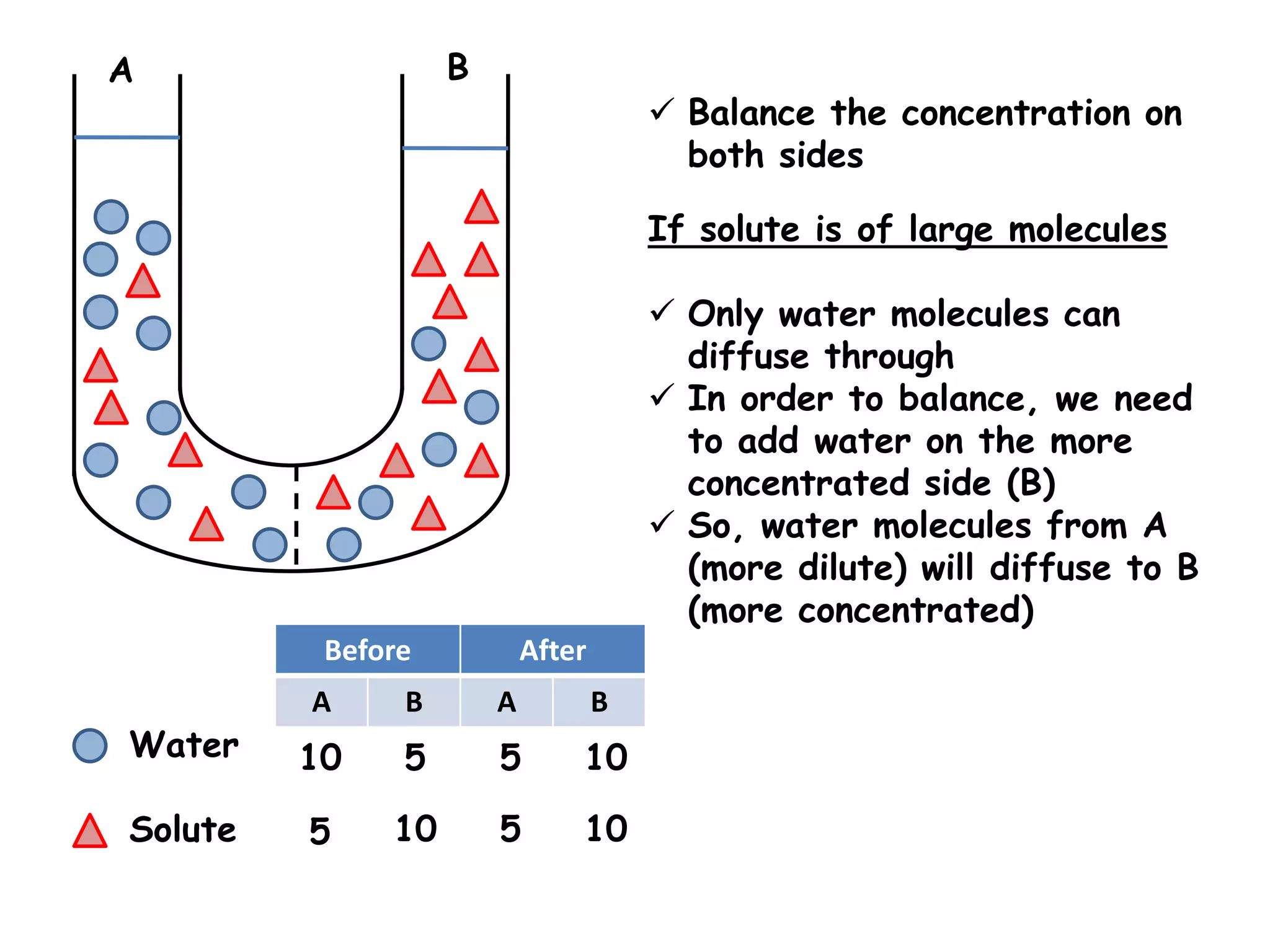
A                  B
                                        Balance the concentration on
                                         both sides

                                       If solute is of large molecules

                                        Only water molecules can
                                         diffuse through
                                        In order to balance, we need
                                         to add water on the more
                                         concentrated side (B)
                                        So, water molecules from A
                                         (more dilute) will diffuse to B
                                         (more concentrated)
          Before           After
         A     B       A           B
Water    10    5       5       10

Solute   5    10       5       10
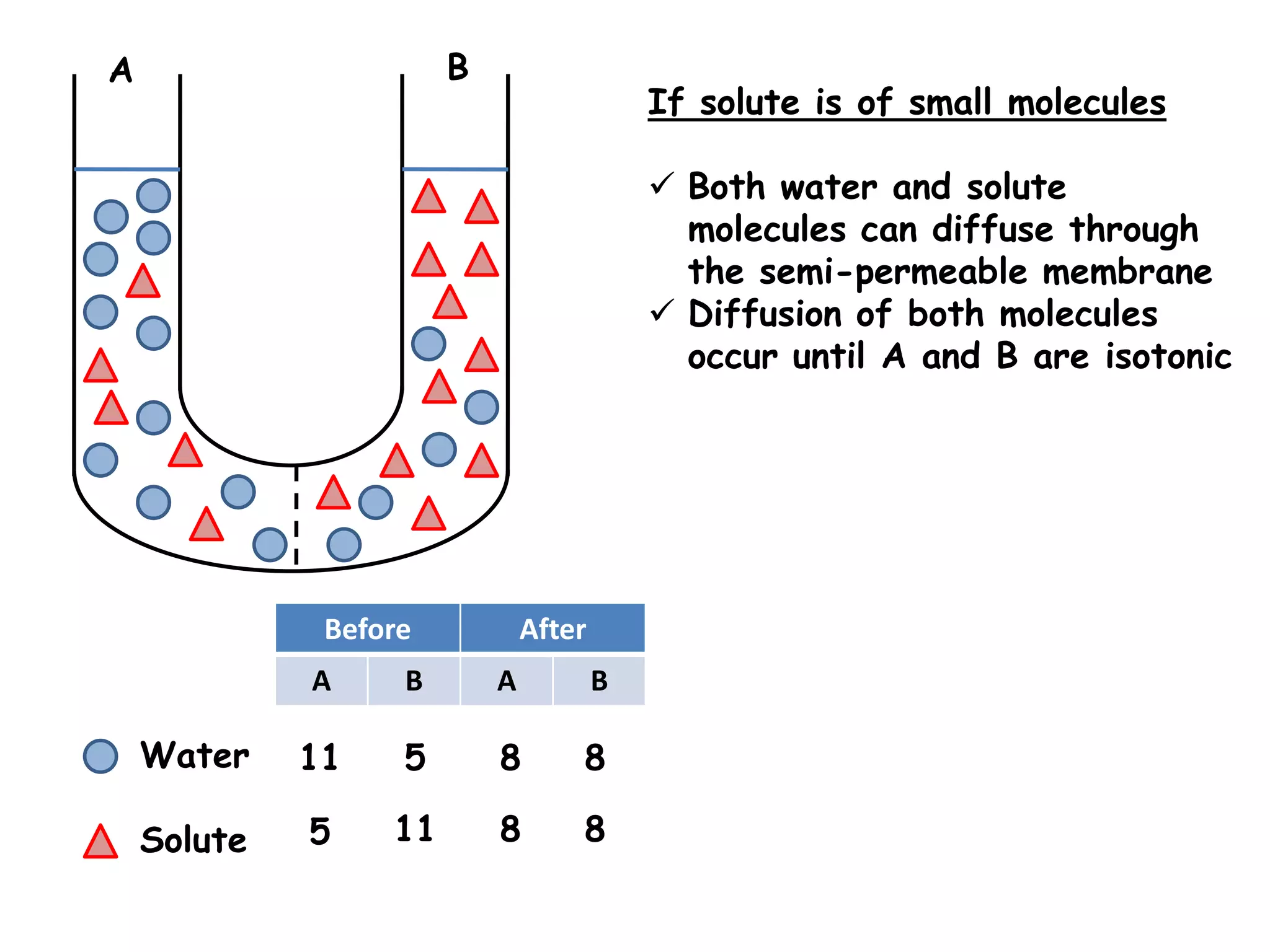
A                      B
                                           If solute is of small molecules

                                            Both water and solute
                                             molecules can diffuse through
                                             the semi-permeable membrane
                                            Diffusion of both molecules
                                             occur until A and B are isotonic


              Before           After
             A     B       A           B

    Water    11    5       8       8

    Solute   5    11       8       8
By now, you should know that:

 Movement of substances across plasma membrane
  depends on the concentration of the solutions.

 Water diffuse from more dilute solution (hypotonic) to
  more concentrated solution (hypertonic).
Terms to take note and remember!!

 Hypertonic – solution with higher concentration of
               solutes than cell

 Hypotonic – solution with lower concentration of
              solutes than cell

 Isotonic – solution of equal solute concentration with
             cell


Which one has high solute concentration and low water
 concentration? Hypertonic
The process where water diffuses across plasma
 membrane from hypotonic soln. to hypertonic soln. is ...?
 Osmosis
Effects of hypertonic, hypotonic & isotonic solutions on
 plant cells

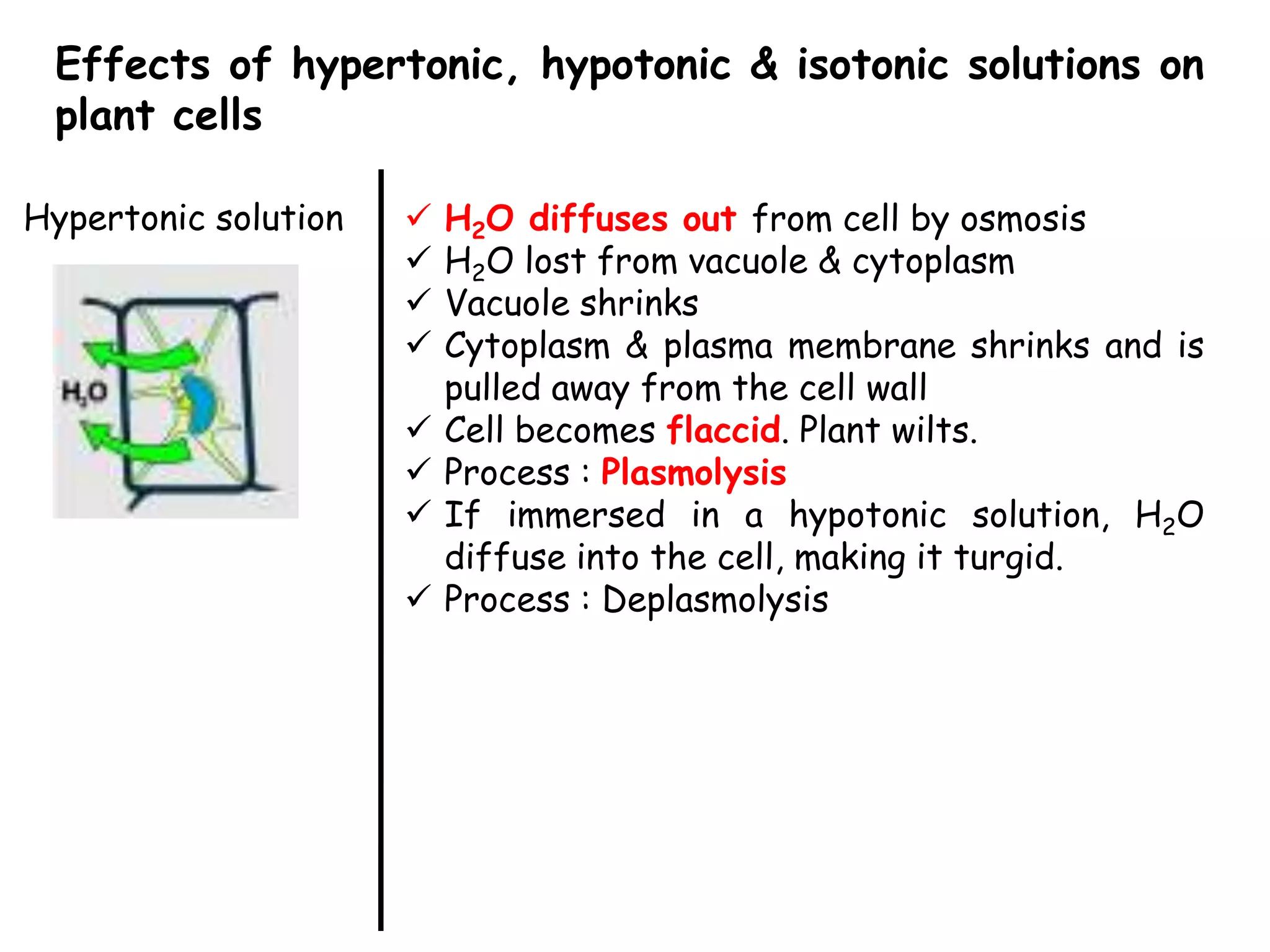
Hypertonic solution      H2O diffuses out from cell by osmosis
                         H2O lost from vacuole & cytoplasm
                         Vacuole shrinks
                         Cytoplasm & plasma membrane shrinks and is
                          pulled away from the cell wall
                         Cell becomes flaccid. Plant wilts.
                         Process : Plasmolysis
                         If immersed in a hypotonic solution, H2O
                          diffuse into the cell, making it turgid.
                         Process : Deplasmolysis
Effects of hypertonic, hypotonic & isotonic solutions on
 plant cells
Hypotonic solution
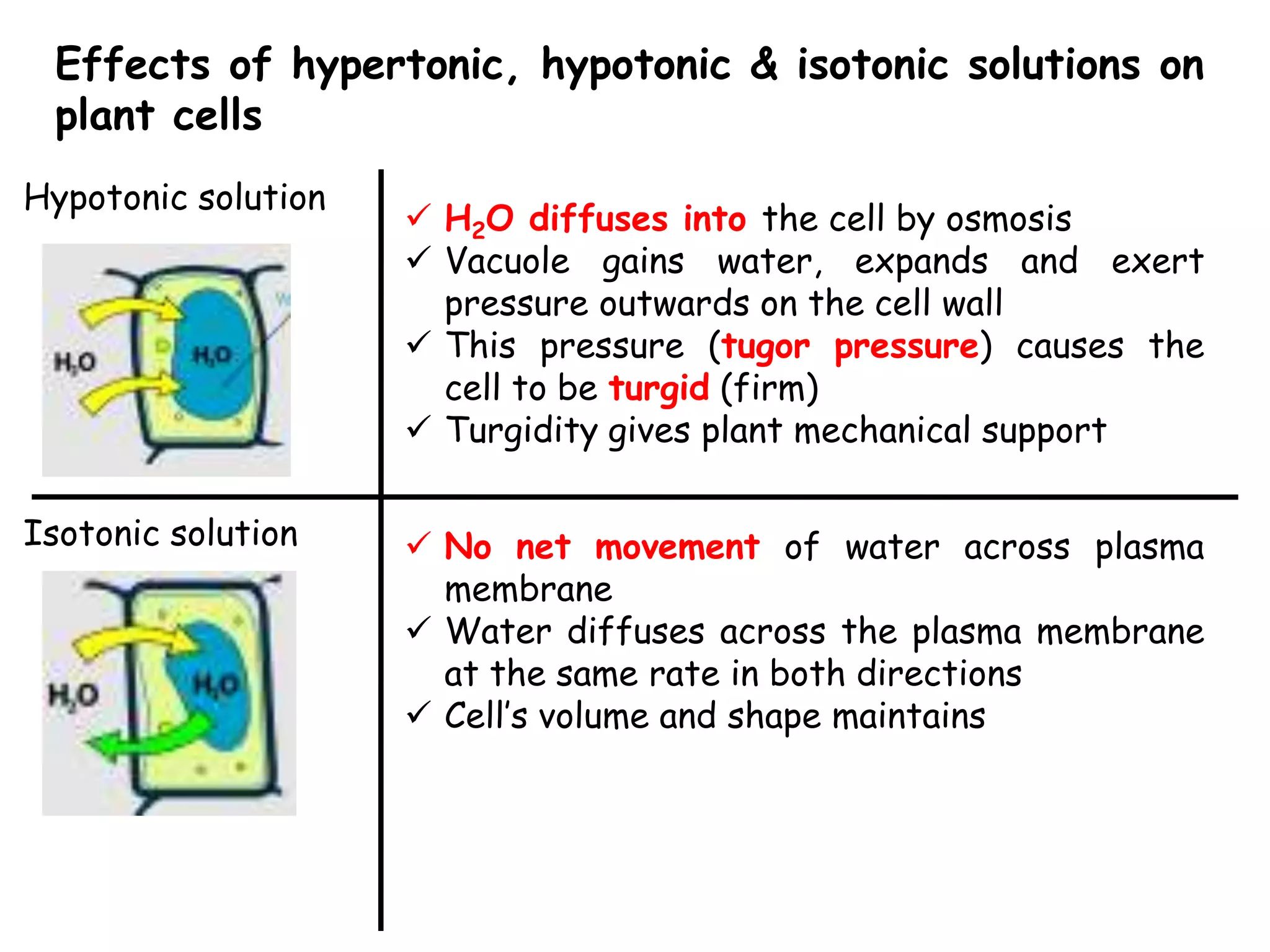
                      H2O diffuses into the cell by osmosis
                      Vacuole gains water, expands and exert
                       pressure outwards on the cell wall
                      This pressure (tugor pressure) causes the
                       cell to be turgid (firm)
                      Turgidity gives plant mechanical support

Isotonic solution     No net movement of water across plasma
                       membrane
                      Water diffuses across the plasma membrane
                       at the same rate in both directions
                      Cell’s volume and shape maintains
Effects of hypertonic, hypotonic & isotonic solutions on
 animal cells
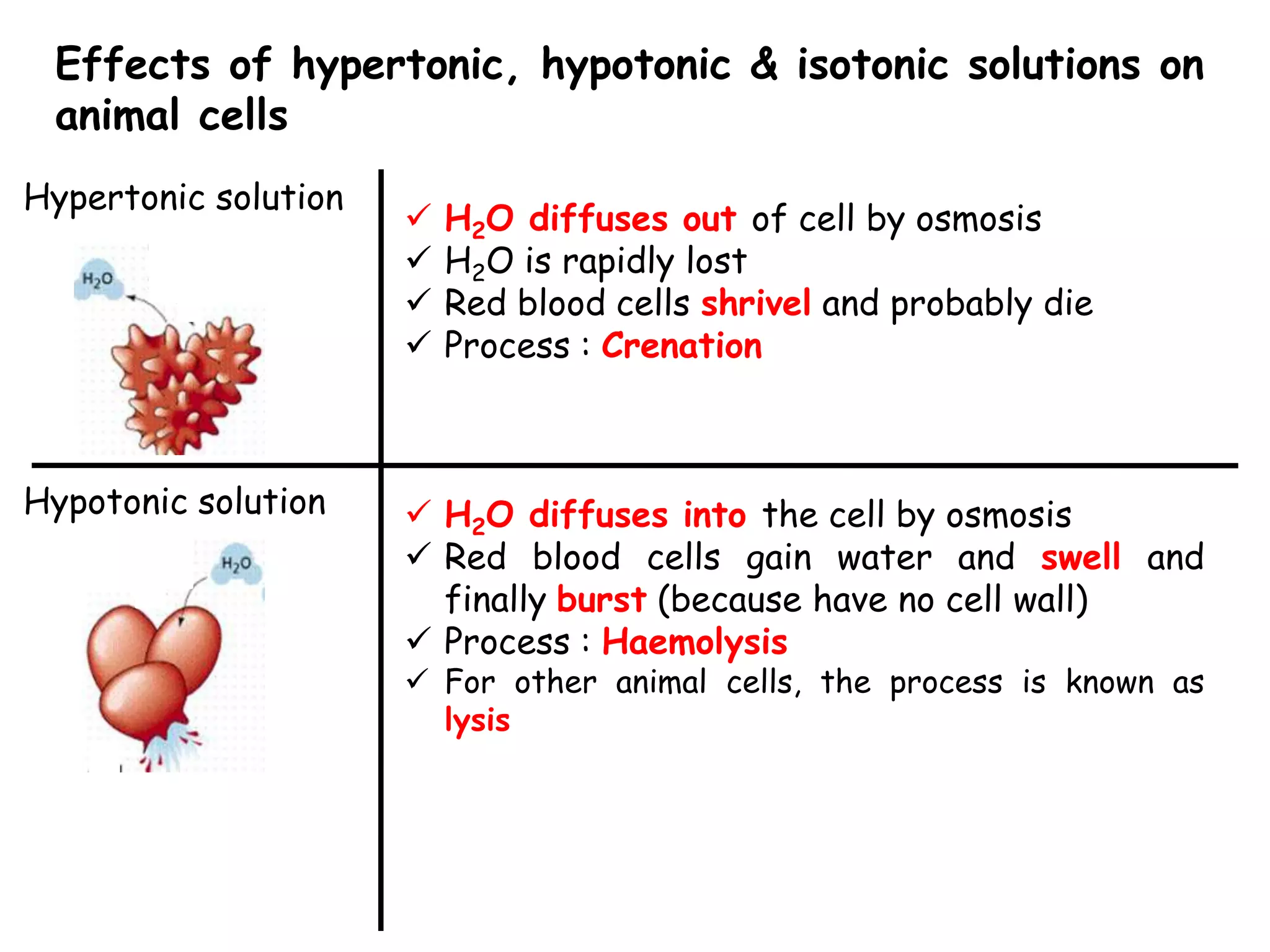
Hypertonic solution
                         H2O diffuses out of cell by osmosis
                         H2O is rapidly lost
                         Red blood cells shrivel and probably die
                         Process : Crenation


Hypotonic solution     H2O diffuses into the cell by osmosis
                       Red blood cells gain water and swell and
                        finally burst (because have no cell wall)
                       Process : Haemolysis
                       For other animal cells, the process is known as
                        lysis
Effects of hypertonic, hypotonic & isotonic solutions on
 animal cells
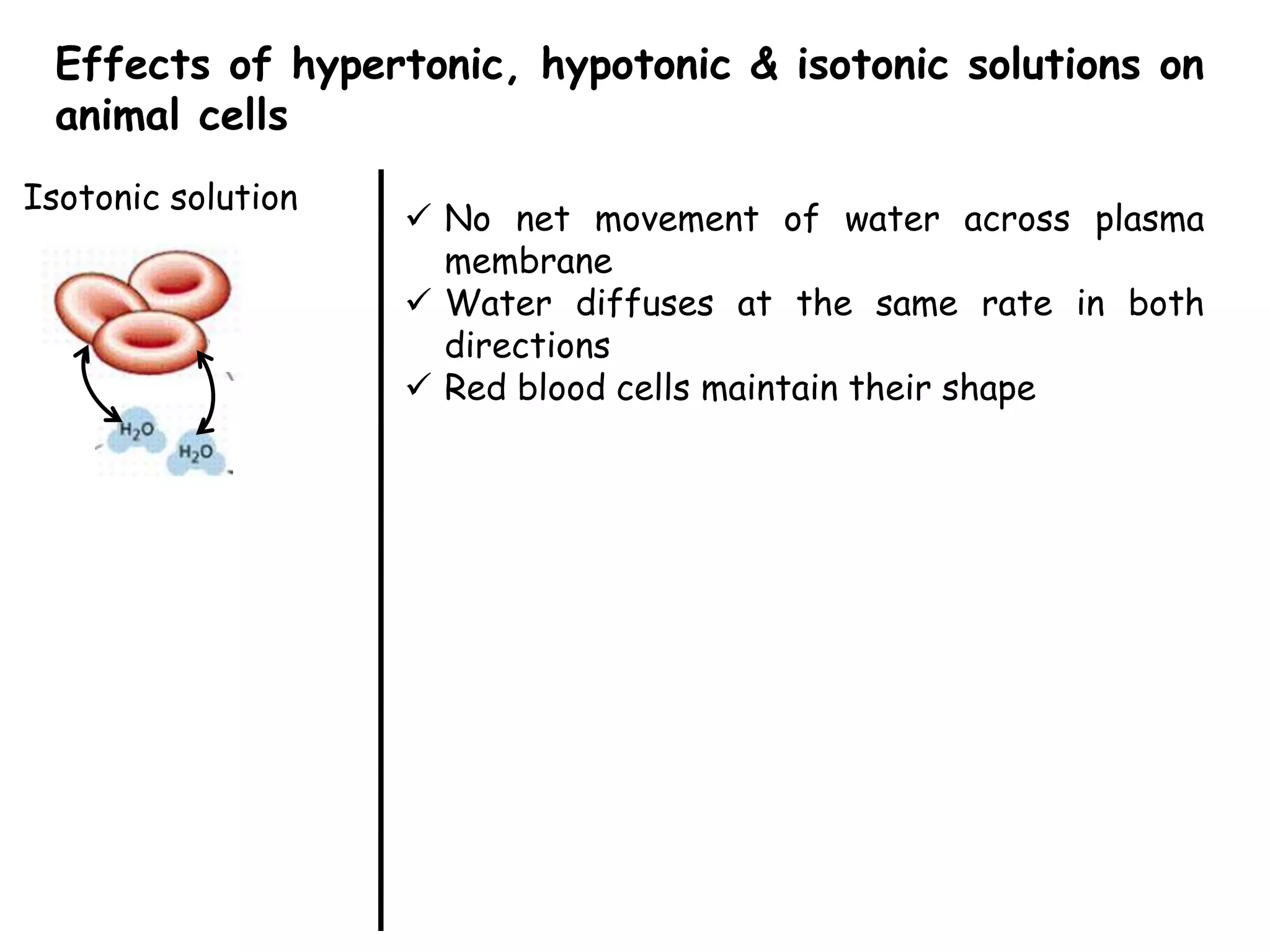
Isotonic solution
                     No net movement of water across plasma
                      membrane
                     Water diffuses at the same rate in both
                      directions
                     Red blood cells maintain their shape
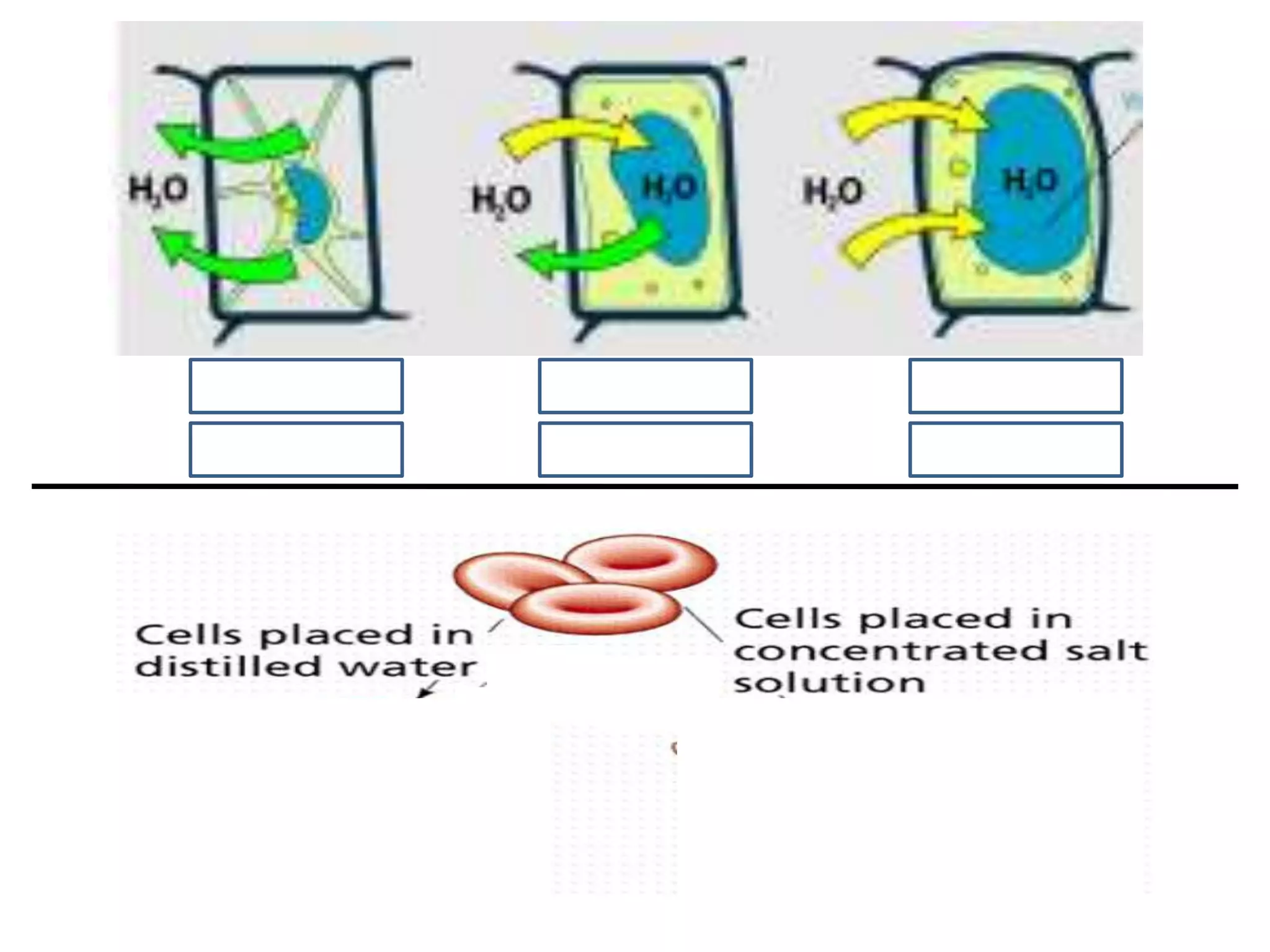
Hypertonic    Isotonic   Hypotonic

 Flaccid     No change    Turgid
Osmosis in everyday life

1. Wilting plants
    Excess use of chemical fertilisers which dissolve in
     soil
    Soil becomes hypertonic to the root cells
    Water diffuses out from root cells into soil
    Root cells becomes flaccid and undergo plasmolysis
    Wilt and may eventually dies

2. Preservation of food
    Salted fish
    Preserved fruits

Topic 3.2

  • 1.
    Diluted sugar Concentrated solution sugar solution
  • 2.
    Hypotonic solution Hypertonic solution
  • 3.
    A B  Balance the concentration on both sides If solute is of large molecules  Only water molecules can diffuse through  In order to balance, we need to add water on the more concentrated side (B)  So, water molecules from A (more dilute) will diffuse to B (more concentrated) Before After A B A B Water 10 5 5 10 Solute 5 10 5 10
  • 4.
    A B If solute is of small molecules  Both water and solute molecules can diffuse through the semi-permeable membrane  Diffusion of both molecules occur until A and B are isotonic Before After A B A B Water 11 5 8 8 Solute 5 11 8 8
  • 5.
    By now, youshould know that:  Movement of substances across plasma membrane depends on the concentration of the solutions.  Water diffuse from more dilute solution (hypotonic) to more concentrated solution (hypertonic).
  • 6.
    Terms to takenote and remember!!  Hypertonic – solution with higher concentration of solutes than cell  Hypotonic – solution with lower concentration of solutes than cell  Isotonic – solution of equal solute concentration with cell Which one has high solute concentration and low water concentration? Hypertonic The process where water diffuses across plasma membrane from hypotonic soln. to hypertonic soln. is ...? Osmosis
  • 7.
    Effects of hypertonic,hypotonic & isotonic solutions on plant cells Hypertonic solution  H2O diffuses out from cell by osmosis  H2O lost from vacuole & cytoplasm  Vacuole shrinks  Cytoplasm & plasma membrane shrinks and is pulled away from the cell wall  Cell becomes flaccid. Plant wilts.  Process : Plasmolysis  If immersed in a hypotonic solution, H2O diffuse into the cell, making it turgid.  Process : Deplasmolysis
  • 8.
    Effects of hypertonic,hypotonic & isotonic solutions on plant cells Hypotonic solution  H2O diffuses into the cell by osmosis  Vacuole gains water, expands and exert pressure outwards on the cell wall  This pressure (tugor pressure) causes the cell to be turgid (firm)  Turgidity gives plant mechanical support Isotonic solution  No net movement of water across plasma membrane  Water diffuses across the plasma membrane at the same rate in both directions  Cell’s volume and shape maintains
  • 9.
    Effects of hypertonic,hypotonic & isotonic solutions on animal cells Hypertonic solution  H2O diffuses out of cell by osmosis  H2O is rapidly lost  Red blood cells shrivel and probably die  Process : Crenation Hypotonic solution  H2O diffuses into the cell by osmosis  Red blood cells gain water and swell and finally burst (because have no cell wall)  Process : Haemolysis  For other animal cells, the process is known as lysis
  • 10.
    Effects of hypertonic,hypotonic & isotonic solutions on animal cells Isotonic solution  No net movement of water across plasma membrane  Water diffuses at the same rate in both directions  Red blood cells maintain their shape
  • 11.
    Hypertonic Isotonic Hypotonic Flaccid No change Turgid
  • 12.
    Osmosis in everydaylife 1. Wilting plants  Excess use of chemical fertilisers which dissolve in soil  Soil becomes hypertonic to the root cells  Water diffuses out from root cells into soil  Root cells becomes flaccid and undergo plasmolysis  Wilt and may eventually dies 2. Preservation of food  Salted fish  Preserved fruits