Downloaded 978 times

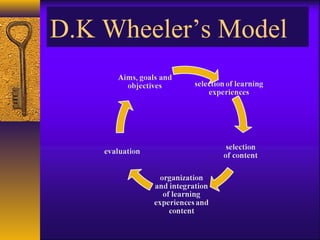

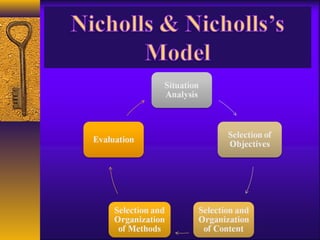


This document discusses cyclical models of curriculum development. Cyclical models view elements of curriculum as interrelated and incorporate aspects of both rational and dynamic models. They provide a logical and sequential approach. One example is D.K. Wheeler's model, which suggests five interrelated phases in the curriculum process. Another example is the cyclical approach of Audrey and Howard Nicholls, which briefly but succinctly covers curriculum elements. Strengths of cyclical models include their logical structure, use of situational analysis, and flexibility. A potential weakness is the time required for effective situational analysis.


