Wheeler Model of
Curriculum
Development
SIR ISRAEL UCHENNA
D. K. Wheeler developed and extended the ideas
through his work which was influenced by the works of
Tyler, Taba, and Bloom. The wheeler curriculum model
is prescriptive as well as cyclical. His model is a widely
used approach to curriculum development and has
been applied in a variety of educational settings. It is
usually used in conjunction with other models of
curriculum development, such as the Tyler model or the
ADDIE model.
What is Wheeler's Model of Curriculum Development?
The Wheeler model of curriculum development is a
systematic process for designing and implementing
educational programs. It was proposed by Wheeler, an
American educator and researcher, in the 1960s as a
way to help educators plan and implement effective
and meaningful curricula. Wheeler defined “curriculum”
as the planned experiences offered to the learner under
the guidance of the school.
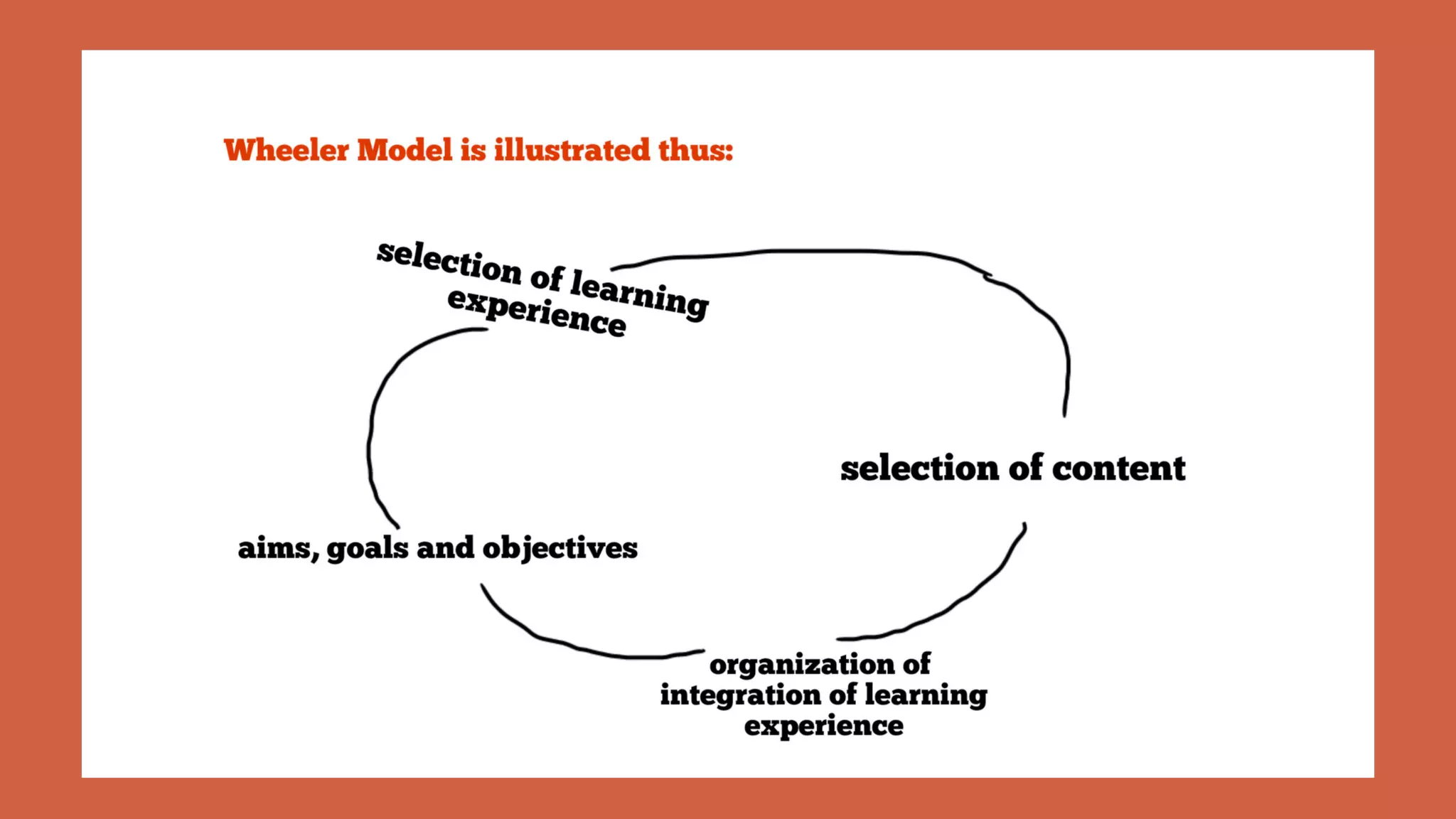
Wheeler described the curriculum as a process that consists of five phases, which
include:
1. The selection of aims, goals and objectives
2. Selection of learning experiences calculated to help in attainment of these goals,
aims and objectives
3. Selection of the content (subject matter)
4. Organization and integration of learning experiences and content
5. Evaluation of the effectiveness of all aspects of Phase 2, 3, and 4 in attaining the
goals in phase 1.
Phases of Wheeler's Curriculum Development Model
1. Provides a structured approach to curriculum
development
2. Ensures that the curriculum is comprehensive and
covers all of the necessary content and skills.
3. The Wheeler model can be useful for helping
educators evaluate the effectiveness of their curricula.
Strengths of Wheeler Curriculum Model
1. Wheeler's Model may not be appropriate for all
educational contexts.
2. Wheeler's Model does not adequately address issues
of equity and inclusion.
3. The curriculum development process may not allow
for much room for creativity or innovation.
Weaknesses of Wheeler Model of Curriculum
Development
1. It provides a structured approach.
2. It helps ensure that the curriculum is comprehensive.
3. Ensure the curriculum aligns with the educational
program goals.
4. It can be useful for evaluating the effectiveness of the
curriculum.
Advantages of Wheeler's Model of Curriculum
Development
1. It may not be appropriate for all educational contexts.
2. It may not adequately address issues of equity and
inclusion.
3. It may be too prescriptive and inflexible.
4. It may not adequately consider the needs and
interests of learners.
Disadvantages of Wheeler's Model of Curriculum
Development
Wheeler Model of Curriculum Development

Wheeler Model of Curriculum Development

  • 1.
  • 2.
    D. K. Wheelerdeveloped and extended the ideas through his work which was influenced by the works of Tyler, Taba, and Bloom. The wheeler curriculum model is prescriptive as well as cyclical. His model is a widely used approach to curriculum development and has been applied in a variety of educational settings. It is usually used in conjunction with other models of curriculum development, such as the Tyler model or the ADDIE model.
  • 3.
    What is Wheeler'sModel of Curriculum Development? The Wheeler model of curriculum development is a systematic process for designing and implementing educational programs. It was proposed by Wheeler, an American educator and researcher, in the 1960s as a way to help educators plan and implement effective and meaningful curricula. Wheeler defined “curriculum” as the planned experiences offered to the learner under the guidance of the school.
  • 4.
    Wheeler described thecurriculum as a process that consists of five phases, which include: 1. The selection of aims, goals and objectives 2. Selection of learning experiences calculated to help in attainment of these goals, aims and objectives 3. Selection of the content (subject matter) 4. Organization and integration of learning experiences and content 5. Evaluation of the effectiveness of all aspects of Phase 2, 3, and 4 in attaining the goals in phase 1. Phases of Wheeler's Curriculum Development Model
  • 5.
    1. Provides astructured approach to curriculum development 2. Ensures that the curriculum is comprehensive and covers all of the necessary content and skills. 3. The Wheeler model can be useful for helping educators evaluate the effectiveness of their curricula. Strengths of Wheeler Curriculum Model
  • 6.
    1. Wheeler's Modelmay not be appropriate for all educational contexts. 2. Wheeler's Model does not adequately address issues of equity and inclusion. 3. The curriculum development process may not allow for much room for creativity or innovation. Weaknesses of Wheeler Model of Curriculum Development
  • 7.
    1. It providesa structured approach. 2. It helps ensure that the curriculum is comprehensive. 3. Ensure the curriculum aligns with the educational program goals. 4. It can be useful for evaluating the effectiveness of the curriculum. Advantages of Wheeler's Model of Curriculum Development
  • 8.
    1. It maynot be appropriate for all educational contexts. 2. It may not adequately address issues of equity and inclusion. 3. It may be too prescriptive and inflexible. 4. It may not adequately consider the needs and interests of learners. Disadvantages of Wheeler's Model of Curriculum Development