KEY DIFFERENCES BETWEEN ADULTS AND CHILDREN AS 
LEARNERS
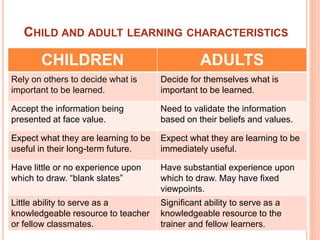
CHILD AND ADULT LEARNING CHARACTERISTICS 
CHILDREN ADULTS 
Rely on others to decide what is 
important to be learned. 
Decide for themselves what is 
important to be learned. 
Accept the information being 
presented at face value. 
Need to validate the information 
based on their beliefs and values. 
Expect what they are learning to be 
useful in their long-term future. 
Expect what they are learning to be 
immediately useful. 
Have little or no experience upon 
which to draw. “blank slates” 
Have substantial experience upon 
which to draw. May have fixed 
viewpoints. 
Little ability to serve as a 
knowledgeable resource to teacher 
or fellow classmates. 
Significant ability to serve as a 
knowledgeable resource to the 
trainer and fellow learners.
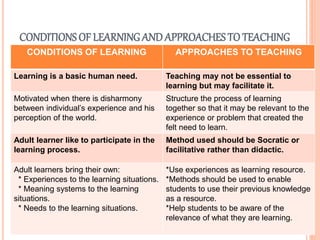
CONDITIONS OF LEARNING AND APPROACHES TO TEACHING 
CONDITIONS OF LEARNING APPROACHES TO TEACHING 
Learning is a basic human need. Teaching may not be essential to 
learning but may facilitate it. 
Motivated when there is disharmony 
between individual’s experience and his 
perception of the world. 
Structure the process of learning 
together so that it may be relevant to the 
experience or problem that created the 
felt need to learn. 
Adult learner like to participate in the 
learning process. 
Method used should be Socratic or 
facilitative rather than didactic. 
Adult learners bring their own: 
* Experiences to the learning situations. 
* Meaning systems to the learning 
situations. 
* Needs to the learning situations. 
*Use experiences as learning resource. 
*Methods should be used to enable 
students to use their previous knowledge 
as a resource. 
*Help students to be aware of the 
relevance of what they are learning.
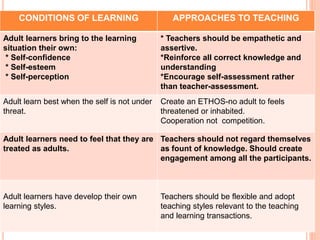
CONDITIONS OF LEARNING APPROACHES TO TEACHING 
Adult learners bring to the learning 
situation their own: 
* Self-confidence 
* Self-esteem 
* Self-perception 
* Teachers should be empathetic and 
assertive. 
*Reinforce all correct knowledge and 
understanding 
*Encourage self-assessment rather 
than teacher-assessment. 
Adult learn best when the self is not under 
threat. 
Create an ETHOS-no adult to feels 
threatened or inhabited. 
Cooperation not competition. 
Adult learners need to feel that they are 
treated as adults. 
Teachers should not regard themselves 
as fount of knowledge. Should create 
engagement among all the participants. 
Adult learners have develop their own 
learning styles. 
Teachers should be flexible and adopt 
teaching styles relevant to the teaching 
and learning transactions.
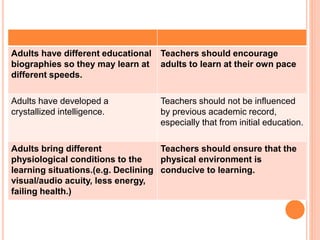
Adults have different educational 
biographies so they may learn at 
different speeds. 
Teachers should encourage 
adults to learn at their own pace 
Adults have developed a 
crystallized intelligence. 
Teachers should not be influenced 
by previous academic record, 
especially that from initial education. 
Adults bring different 
physiological conditions to the 
learning situations.(e.g. Declining 
visual/audio acuity, less energy, 
failing health.) 
Teachers should ensure that the 
physical environment is 
conducive to learning.
GLOBALIZATION 
 Also known as Web 2.0 
Technological advancement 
 Opens new possibilities for world-wide information exchange and 
communication.
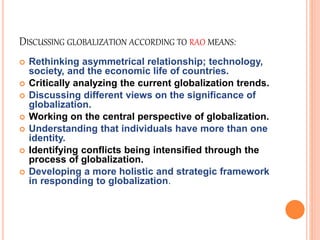
DISCUSSING GLOBALIZATION ACCORDING TO RAO MEANS: 
 Rethinking asymmetrical relationship; technology, 
society, and the economic life of countries. 
 Critically analyzing the current globalization trends. 
 Discussing different views on the significance of 
globalization. 
 Working on the central perspective of globalization. 
 Understanding that individuals have more than one 
identity. 
 Identifying conflicts being intensified through the 
process of globalization. 
 Developing a more holistic and strategic framework 
in responding to globalization.
INDIGENOUS PEOPLE 
Three sources of Human Rights; 
•The concept of universal human rights. 
•The system of protection of minorities within 
existing states; and 
•The right of people to self-determination.
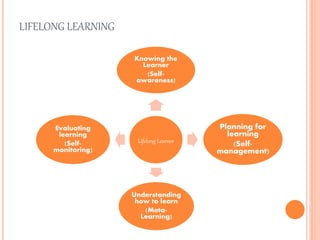
LIFELONG LEARNING 
Knowing the 
Learner 
(Self-awareness) 
Lifelong Learner 
Planning for 
learning 
(Self-management) 
Understanding 
how to learn 
(Meta- 
Learning) 
Evaluating 
learning 
(Self-monitoring)
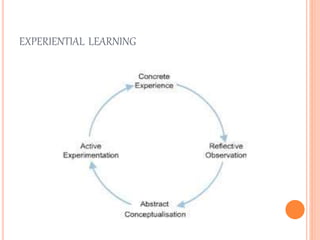
EXPERIENTIAL LEARNING
EDUC 10

EDUC 10

  • 1.
    KEY DIFFERENCES BETWEENADULTS AND CHILDREN AS LEARNERS
  • 2.
    CHILD AND ADULTLEARNING CHARACTERISTICS CHILDREN ADULTS Rely on others to decide what is important to be learned. Decide for themselves what is important to be learned. Accept the information being presented at face value. Need to validate the information based on their beliefs and values. Expect what they are learning to be useful in their long-term future. Expect what they are learning to be immediately useful. Have little or no experience upon which to draw. “blank slates” Have substantial experience upon which to draw. May have fixed viewpoints. Little ability to serve as a knowledgeable resource to teacher or fellow classmates. Significant ability to serve as a knowledgeable resource to the trainer and fellow learners.
  • 3.
    CONDITIONS OF LEARNINGAND APPROACHES TO TEACHING CONDITIONS OF LEARNING APPROACHES TO TEACHING Learning is a basic human need. Teaching may not be essential to learning but may facilitate it. Motivated when there is disharmony between individual’s experience and his perception of the world. Structure the process of learning together so that it may be relevant to the experience or problem that created the felt need to learn. Adult learner like to participate in the learning process. Method used should be Socratic or facilitative rather than didactic. Adult learners bring their own: * Experiences to the learning situations. * Meaning systems to the learning situations. * Needs to the learning situations. *Use experiences as learning resource. *Methods should be used to enable students to use their previous knowledge as a resource. *Help students to be aware of the relevance of what they are learning.
  • 4.
    CONDITIONS OF LEARNINGAPPROACHES TO TEACHING Adult learners bring to the learning situation their own: * Self-confidence * Self-esteem * Self-perception * Teachers should be empathetic and assertive. *Reinforce all correct knowledge and understanding *Encourage self-assessment rather than teacher-assessment. Adult learn best when the self is not under threat. Create an ETHOS-no adult to feels threatened or inhabited. Cooperation not competition. Adult learners need to feel that they are treated as adults. Teachers should not regard themselves as fount of knowledge. Should create engagement among all the participants. Adult learners have develop their own learning styles. Teachers should be flexible and adopt teaching styles relevant to the teaching and learning transactions.
  • 5.
    Adults have differenteducational biographies so they may learn at different speeds. Teachers should encourage adults to learn at their own pace Adults have developed a crystallized intelligence. Teachers should not be influenced by previous academic record, especially that from initial education. Adults bring different physiological conditions to the learning situations.(e.g. Declining visual/audio acuity, less energy, failing health.) Teachers should ensure that the physical environment is conducive to learning.
  • 6.
    GLOBALIZATION  Alsoknown as Web 2.0 Technological advancement  Opens new possibilities for world-wide information exchange and communication.
  • 7.
    DISCUSSING GLOBALIZATION ACCORDINGTO RAO MEANS:  Rethinking asymmetrical relationship; technology, society, and the economic life of countries.  Critically analyzing the current globalization trends.  Discussing different views on the significance of globalization.  Working on the central perspective of globalization.  Understanding that individuals have more than one identity.  Identifying conflicts being intensified through the process of globalization.  Developing a more holistic and strategic framework in responding to globalization.
  • 8.
    INDIGENOUS PEOPLE Threesources of Human Rights; •The concept of universal human rights. •The system of protection of minorities within existing states; and •The right of people to self-determination.
  • 9.
    LIFELONG LEARNING Knowingthe Learner (Self-awareness) Lifelong Learner Planning for learning (Self-management) Understanding how to learn (Meta- Learning) Evaluating learning (Self-monitoring)
  • 11.