



CHAPTER VI: 
ASSESSING LEARNING 
EDDIE T. ABUG 
University of Rizal System 
Cainta Rizal
THIS BRIEF, CONCLUDING CHAPTER 
SHALL ACQUAINT YOU 
WITH SOME 
BASICS PRINCIPLES ON 
ASSESSMENT OF LEARNING 
AND WITH FEW 
EFFECTIVE 
ASSESSMENT STRATEGIES
The process of communicating 
information about students’ 
achievement and progress gained 
from the assessment process is 
typically referred to as 
‘assessment of learning’.
BASIC PRINCIPLE : 
ASSESSMENT 
AS AN 
INTEGRAL PART 
OF TEACHING
TEACHING CANNOT BE 
WHOLE AND COMPLETE 
WITHOUT YOU ASSESSING 
LEARNING 
AND YOU DOING SOMETHING 
AFTER YOU HAVE 
ASSESSED STUDENTS’ LEARNING
1. 
THE USE OF THE TRADITIONAL 
PAPER-AND-PENCIL TEST 
IS NOT ADEQUATE TO 
MEASURE THE MANY 
TYPES OF LEARNING
Tomlinson argues the commitment to 
cater for individual differences, 
 In A differentiated classroom multiple 
ongoing assessments are used, yet in a 
traditional classroom assessment is used 
to see “who got it” 
(Marsh 2004).
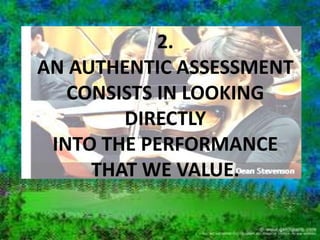
2. 
AN AUTHENTIC ASSESSMENT 
CONSISTS IN LOOKING 
DIRECTLY 
INTO THE PERFORMANCE 
THAT WE VALUE.
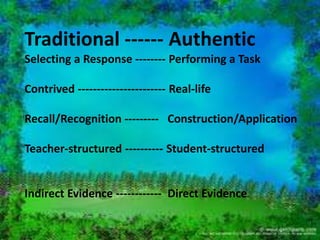
Traditional ------ Authentic 
Selecting a Response -------- Performing a Task 
Contrived ----------------------- Real-life 
Recall/Recognition --------- Construction/Application 
Teacher-structured ---------- Student-structured 
Indirect Evidence ------------ Direct Evidence
: 
3. ASSESSMENT IS 
FORMATIVE AND SUMMATIVE. 
 iT IS NOT WISE TO RESERVE ASSESSMENT 
ONLY AT THE END OF EACH GRADING 
PERIOD. 
IT WILL BE QUITE LATE, IF ONLY BY THEN 
YOU DISCOVER THAT SOME PREREQUISITE 
SKILLS WERE NOT LEARNED AT THE 
BEGINNING.
Formative assessment 
 Utilized to immediately determine whether students 
have learned what the instructor intended. 
This type of assessment is intended to help instructors 
identify material which needs to be clarified or re-taught 
and should not be used to evaluate or grade students. 
Results of formative assessment can assist instructors to 
ascertain whether curriculum or learning activities need to 
be modified during a class session or before the next class 
meets.
Summative assessment 
 Cumulative in nature and is 
utilized to determine whether 
students have met the course goals 
or student learning outcomes at 
the end of a course or program.
FORMATIVE 
Draw a concept map in class to 
represent their understanding of a topic 
Submit one or two sentences 
identifying the main point of a lecture 
SUMMATIVE 
a midterm exam, a final project 
a paper, a senior recital
4. SELF-ASSESSMENT 
A PEDAGOGICALLY SOUND 
PRACTICE.
Self-assessment 
is the process of looking at oneself in 
order to assess aspects that are 
important to one's identity. 
It is one of the motives that drive self-evaluation, 
along with self-verification 
and self-enhancement. 
Sedikides (1993)
BUILD COMFORT INTO LEARNING 
TO MAKE YOUR STUDENTS 
RESPOND POSITIVELY
WHEN YOUR STUDENTS ARE 
INVOLVED 
IN THE ASSESSMENT PROCESS, 
THEY TAKE GREATER INTEREST 
IN THEIR 
OWN LEARNING.
SOME 
TEACHER-TESTED 
(EFFECTIVE) 
ASSESSMENT 
STRATEGIES
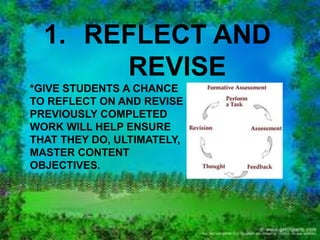
1. REFLECT AND REVISE 
GIVE STUDENTS A CHANCE 
TO REFLECT ON AND REVISE 
PREVIOUSLY COMPLETED 
WORK WILL HELP ENSURE 
THAT THEY DO, ULTIMATELY, 
MASTER CONTENT 
OBJECTIVES.
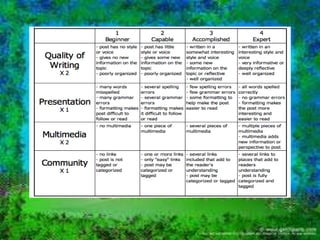
2. USE RUBRICS 
STUDENTS CAN USE THE SAME TOOL TO 
SELF-AND-PEER-ASSESS ASSIGNMENTS THAT 
TEACHERS EMPLOY TO ASSESS THEIR WORK. 
IF STUDENTS WRITE A SUMMARY OF AN 
ARTICLE THEY READ, 
FOR EXAMPLE, THEY CAN 
USE A RUBRIC TO DETERMINE HOW WELL 
THEIR WORK MEETS THE ESTABLISHED 
CRITERIA FOR THE ASSIGNMENT.
3. THE EXIT SLIP 
GIVE STUDENTS A CHANCE TO ASSESS THE 
TEACHER, TOO. 
TEACHERS CAN GIVE STUDENTS A FORM TO 
FILL OUT AND TURN IN AT THE END OF THE 
CLASS.
THANK YOU.

Education 7 assessing learning

  • 1.
    CHAPTER VI: ASSESSINGLEARNING EDDIE T. ABUG University of Rizal System Cainta Rizal
  • 2.
    THIS BRIEF, CONCLUDINGCHAPTER SHALL ACQUAINT YOU WITH SOME BASICS PRINCIPLES ON ASSESSMENT OF LEARNING AND WITH FEW EFFECTIVE ASSESSMENT STRATEGIES
  • 3.
    The process ofcommunicating information about students’ achievement and progress gained from the assessment process is typically referred to as ‘assessment of learning’.
  • 4.
    BASIC PRINCIPLE : ASSESSMENT AS AN INTEGRAL PART OF TEACHING
  • 5.
    TEACHING CANNOT BE WHOLE AND COMPLETE WITHOUT YOU ASSESSING LEARNING AND YOU DOING SOMETHING AFTER YOU HAVE ASSESSED STUDENTS’ LEARNING
  • 6.
    1. THE USEOF THE TRADITIONAL PAPER-AND-PENCIL TEST IS NOT ADEQUATE TO MEASURE THE MANY TYPES OF LEARNING
  • 7.
    Tomlinson argues thecommitment to cater for individual differences,  In A differentiated classroom multiple ongoing assessments are used, yet in a traditional classroom assessment is used to see “who got it” (Marsh 2004).
  • 8.
    2. AN AUTHENTICASSESSMENT CONSISTS IN LOOKING DIRECTLY INTO THE PERFORMANCE THAT WE VALUE.
  • 9.
    Traditional ------ Authentic Selecting a Response -------- Performing a Task Contrived ----------------------- Real-life Recall/Recognition --------- Construction/Application Teacher-structured ---------- Student-structured Indirect Evidence ------------ Direct Evidence
  • 10.
    : 3. ASSESSMENTIS FORMATIVE AND SUMMATIVE.  iT IS NOT WISE TO RESERVE ASSESSMENT ONLY AT THE END OF EACH GRADING PERIOD. IT WILL BE QUITE LATE, IF ONLY BY THEN YOU DISCOVER THAT SOME PREREQUISITE SKILLS WERE NOT LEARNED AT THE BEGINNING.
  • 11.
    Formative assessment Utilized to immediately determine whether students have learned what the instructor intended. This type of assessment is intended to help instructors identify material which needs to be clarified or re-taught and should not be used to evaluate or grade students. Results of formative assessment can assist instructors to ascertain whether curriculum or learning activities need to be modified during a class session or before the next class meets.
  • 12.
    Summative assessment Cumulative in nature and is utilized to determine whether students have met the course goals or student learning outcomes at the end of a course or program.
  • 13.
    FORMATIVE Draw aconcept map in class to represent their understanding of a topic Submit one or two sentences identifying the main point of a lecture SUMMATIVE a midterm exam, a final project a paper, a senior recital
  • 14.
    4. SELF-ASSESSMENT APEDAGOGICALLY SOUND PRACTICE.
  • 15.
    Self-assessment is theprocess of looking at oneself in order to assess aspects that are important to one's identity. It is one of the motives that drive self-evaluation, along with self-verification and self-enhancement. Sedikides (1993)
  • 16.
    BUILD COMFORT INTOLEARNING TO MAKE YOUR STUDENTS RESPOND POSITIVELY
  • 17.
    WHEN YOUR STUDENTSARE INVOLVED IN THE ASSESSMENT PROCESS, THEY TAKE GREATER INTEREST IN THEIR OWN LEARNING.
  • 18.
    SOME TEACHER-TESTED (EFFECTIVE) ASSESSMENT STRATEGIES
  • 19.
    1. REFLECT ANDREVISE GIVE STUDENTS A CHANCE TO REFLECT ON AND REVISE PREVIOUSLY COMPLETED WORK WILL HELP ENSURE THAT THEY DO, ULTIMATELY, MASTER CONTENT OBJECTIVES.
  • 20.
    2. USE RUBRICS STUDENTS CAN USE THE SAME TOOL TO SELF-AND-PEER-ASSESS ASSIGNMENTS THAT TEACHERS EMPLOY TO ASSESS THEIR WORK. IF STUDENTS WRITE A SUMMARY OF AN ARTICLE THEY READ, FOR EXAMPLE, THEY CAN USE A RUBRIC TO DETERMINE HOW WELL THEIR WORK MEETS THE ESTABLISHED CRITERIA FOR THE ASSIGNMENT.
  • 22.
    3. THE EXITSLIP GIVE STUDENTS A CHANCE TO ASSESS THE TEACHER, TOO. TEACHERS CAN GIVE STUDENTS A FORM TO FILL OUT AND TURN IN AT THE END OF THE CLASS.
  • 24.