FormativeAssessment
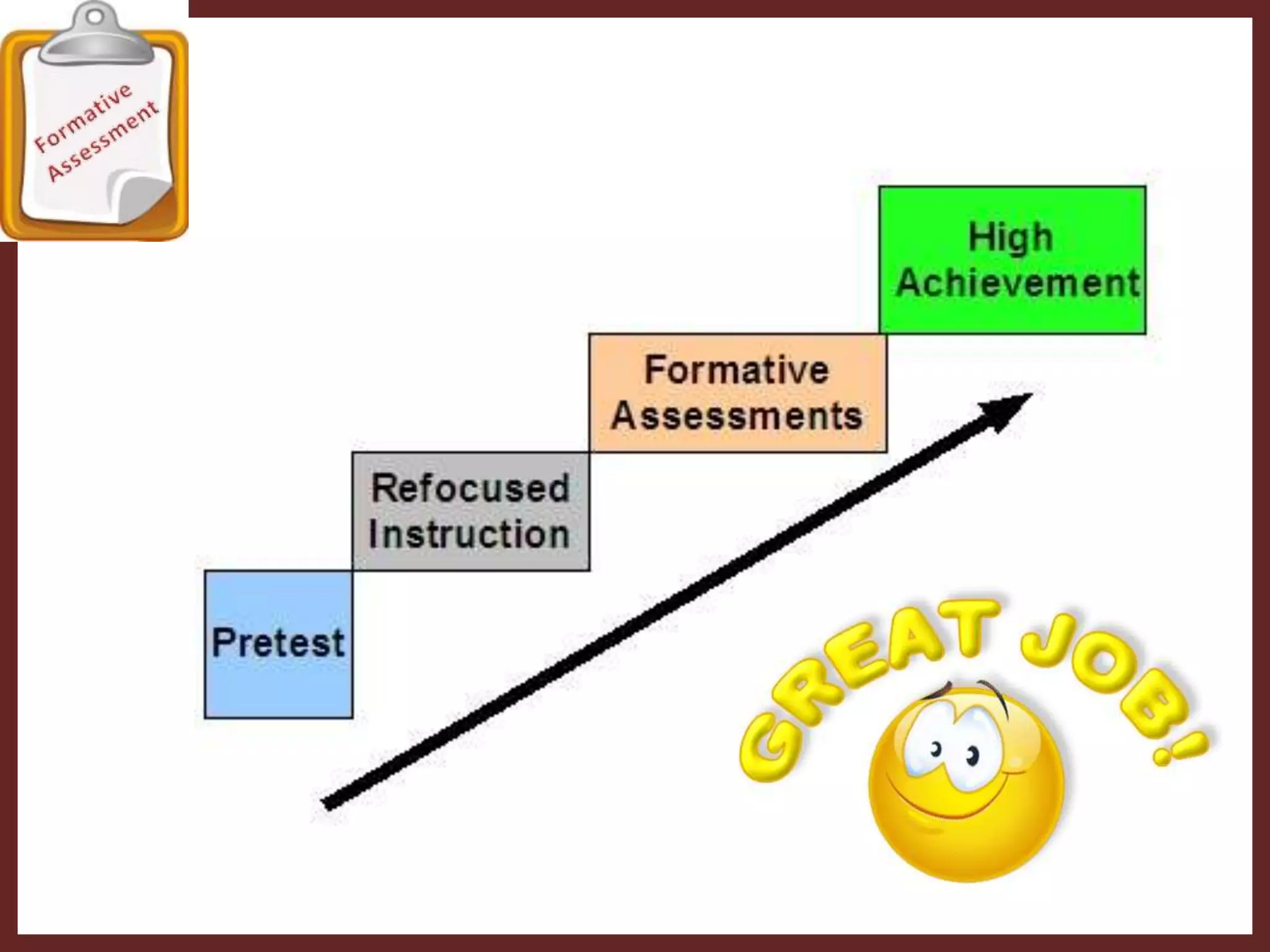
 Assessments include all activities that teachers and students undertake to get information that can be used diagnostically to alter teaching and learning. teacher observation,
 classroom discussion, and
 analysis of student work, including homework and tests. Assessments become formative when the information is used to adapt teaching and learning to meet student needs.
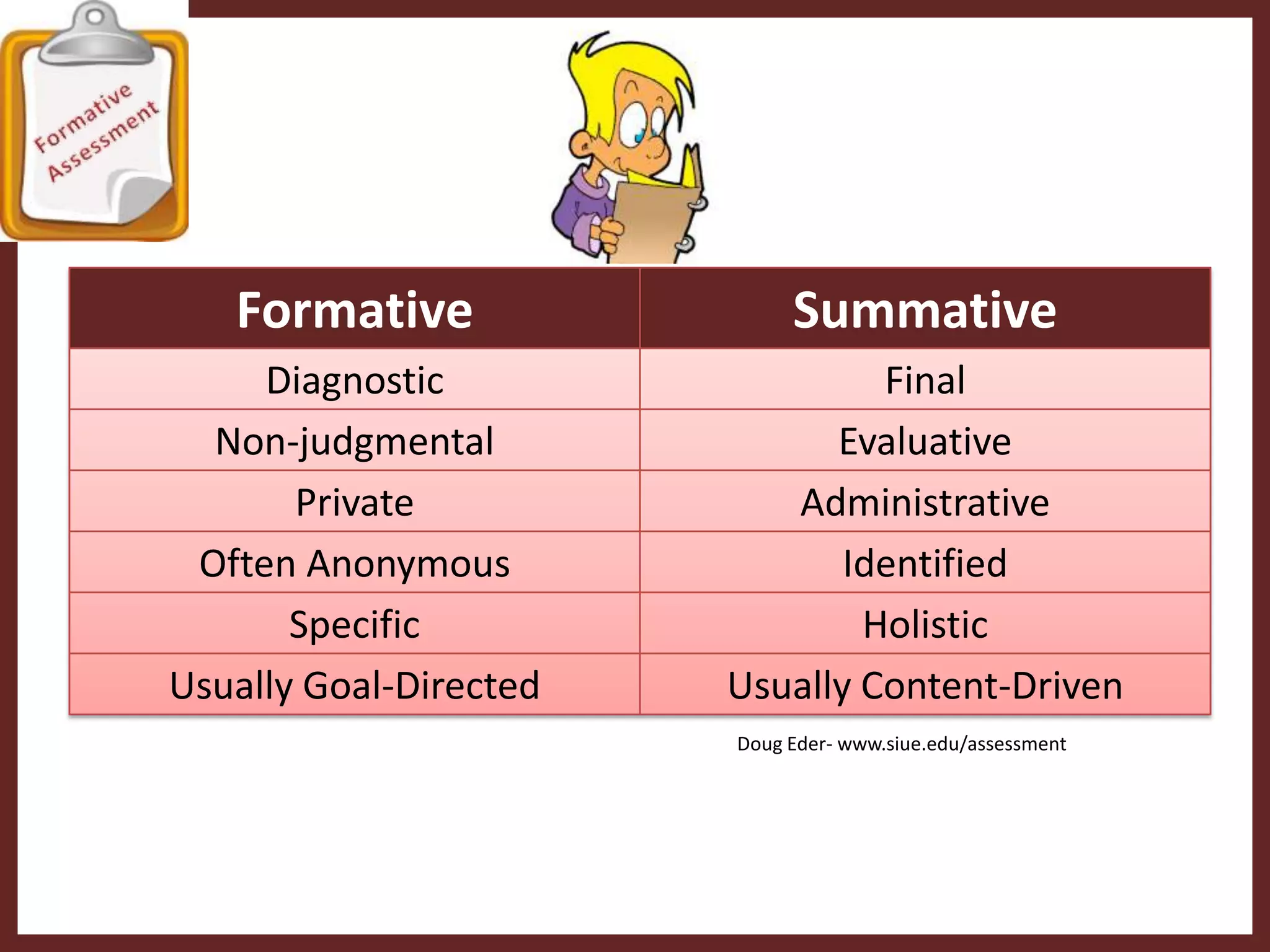
Doug Eder- www.siue.edu/assessment
Details or Execution OfFormative Assessment
1. Anything the student does can be used as an assessment tool.                                                                                  Again, there is no best practice; it’s whatever works for the teacher and this particular set of students.
              2. Teacher should determine the purpose.                 In order to administer any good assessment, be it formative or summative, there must be a clearly defined purpose. Ask these questions:What concept, skill or knowledge am I trying to assess?
What should the students know?
At what level are my students performing?
At what level would I like them to be performing?            3. Create rubrics. Research has shown that showing                                                students what is expected of them, and why, gives them                           the opportunity to become active in their own                 education. It also helps them take responsibility for                     their work and their own learning. Determine what a successful project will look like via clearly defined criteria. What makes it a “1” vs. “5”?

Formative Assessment

  • 1.
  • 2.
    Assessments includeall activities that teachers and students undertake to get information that can be used diagnostically to alter teaching and learning. teacher observation,
  • 3.
  • 4.
    analysis ofstudent work, including homework and tests. Assessments become formative when the information is used to adapt teaching and learning to meet student needs.
  • 5.
  • 7.
    Details or ExecutionOfFormative Assessment
  • 8.
    1. Anything thestudent does can be used as an assessment tool. Again, there is no best practice; it’s whatever works for the teacher and this particular set of students.
  • 9.
    2. Teacher should determine the purpose. In order to administer any good assessment, be it formative or summative, there must be a clearly defined purpose. Ask these questions:What concept, skill or knowledge am I trying to assess?
  • 10.
    What should thestudents know?
  • 11.
    At what levelare my students performing?
  • 12.
    At what levelwould I like them to be performing? 3. Create rubrics. Research has shown that showing students what is expected of them, and why, gives them the opportunity to become active in their own education. It also helps them take responsibility for their work and their own learning. Determine what a successful project will look like via clearly defined criteria. What makes it a “1” vs. “5”?
  • 13.
    List important aspectsof performance; no more than 10 (Ex: usingvocabulary words, punctuation…etc).Be clear
  • 14.
  • 15.
    Post the criteria:e.g. slice of pizza (supporting detail, vocabulary, punctuation)4. Choose the activity: formal vs. informal Informal; students do not know they are being assessed. Classroomdiscussions; discussions between students; minute papers; homemadeassessments; peer instruction; student journals; student self-evaluationsheets; editing.Formal; students know there is a grade associated with the result.Homework assignments; classroom assessments; student journals;classroom presentations; portfolios; editing.
  • 16.
    5. Monitor feedback.Using both formal and informal, examine if students have mastery of subject. Where are the gaps?
  • 17.
    Are therethings that most students do not understand? If so, then is it ateaching problem or a content problem?
  • 18.
    90% of whatis considered “impossible”is, in fact, possible.The other 10% will become possiblewith passage of time and technology.