Assessing Affective
Outcomes
Measuring and Evaluating learning Outcomes:
A Textbook in Assessment of Learning 1 & 2 by Carlo D. Garcia, Ed. D
Nebres, Ma. Jessa Kristine C.
BSED III-English
•close or pre-categorized type
• open or free-response type
a systematic, objective, and
quantitative examination of
free response material
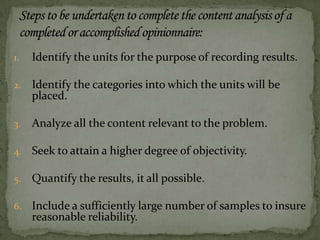
1. Identify the units for the purpose of recording results.
2. Identify the categories into which the units will be
placed.
3. Analyze all the content relevant to the problem.
4. Seek to attain a higher degree of objectivity.
5. Quantify the results, it all possible.
6. Include a sufficiently large number of samples to insure
reasonable reliability.
used when there is a need to explore
students’ feelings and attitudes in order to
get their covert reactions to a phenomenon
 Word Association
The student is presented a word and is directed
to say the first word that comes to his mind
Presented to the student for him or her to
complete with any thought he or she has or
say whatever comes to mind
 The student are presented a story that has no ending
 Characteristics:
 It should be deal with real life situations;
 It should encourage the students to consider a
number of solutions to a problem; and
 It should encourage the students to analyze their
own attitudes and gain insight into their own
feelings and the feelings of others.
 Provide the students opportunities to express
their own ideas or feelings about themselves and
others

Chapter 17

  • 1.
    Assessing Affective Outcomes Measuring andEvaluating learning Outcomes: A Textbook in Assessment of Learning 1 & 2 by Carlo D. Garcia, Ed. D Nebres, Ma. Jessa Kristine C. BSED III-English
  • 2.
    •close or pre-categorizedtype • open or free-response type
  • 3.
    a systematic, objective,and quantitative examination of free response material
  • 4.
    1. Identify theunits for the purpose of recording results. 2. Identify the categories into which the units will be placed. 3. Analyze all the content relevant to the problem. 4. Seek to attain a higher degree of objectivity. 5. Quantify the results, it all possible. 6. Include a sufficiently large number of samples to insure reasonable reliability.
  • 5.
    used when thereis a need to explore students’ feelings and attitudes in order to get their covert reactions to a phenomenon
  • 6.
     Word Association Thestudent is presented a word and is directed to say the first word that comes to his mind
  • 7.
    Presented to thestudent for him or her to complete with any thought he or she has or say whatever comes to mind
  • 8.
     The studentare presented a story that has no ending  Characteristics:  It should be deal with real life situations;  It should encourage the students to consider a number of solutions to a problem; and  It should encourage the students to analyze their own attitudes and gain insight into their own feelings and the feelings of others.
  • 9.
     Provide thestudents opportunities to express their own ideas or feelings about themselves and others